Blog Archives
Shadows, Roads, & Redemption: A Memoir


In Shadows, Roads, & Redemption, Jac Winters opens the long-locked rooms of memory and traces a life shaped by childhood trauma, silence, trucking, emotional exile, and the difficult grace of survival. The memoir moves from early images of safety, like the jingle of a stepfather’s keys and the strange wonder of being lifted by Johnny Cash, into the devastating shadow cast by Jane, then onward through years on the road and the eventual healing presence of Joanna. It’s a book about harm, yes, but more deeply it’s about naming what happened, reclaiming the child who was silenced, and finding a way to keep driving toward the open air.
Winters doesn’t write about trauma as something tidy or easily converted into wisdom. He lets it remain jagged. The recurring images of roads, engines, perfume, hay, silence, and weathered memory give the memoir a visceral pull, and at its strongest, the prose has the rumbling cadence of a rig moving through the dark. I found the early scenes especially affecting because they understand how childhood can hold wonder and danger in the same hand. Dougie, the neighborhood outcast, becomes a gentle counterpoint to Jane, whose warmth slowly curdles into control. That contrast gives the book its ache. It reminded me that safety is not always where the world tells us to look for it, and danger is sometimes dressed in familiarity.
I also appreciated the book’s insistence that ideas matter as much as confession. Winters is not only recounting pain; he is trying to understand the machinery of it. His reflections on grooming, complicity, trauma bonding, and silence are blunt, sometimes raw, and often deeply clarifying. The meteor and asteroid metaphor lingers because it captures the cruel mismatch between what others may see and what the survivor is left to live with. The writing can become emphatic, especially when it circles the same language of fire, poison, and redemption, but even that repetition feels emotionally true to the subject. The mind returns to the site of impact until it can finally name the crater. The chapters about trucking bring needed breath and texture, giving the memoir muscle, grit, and a broader sense of identity beyond injury.
The book’s conclusion, with Joanna as an anchor and the final poem “Firestorm” as a kind of earned ascent, doesn’t erase the darkness, but it does offer a hard-won tenderness that feels sincere. Shadows, Roads, & Redemption is best suited for readers drawn to survivor memoirs, trauma recovery narratives, and personal stories rooted in working-class life, especially those who appreciate candid reflection, emotional intensity, and writing that wears its scars without apology.
Pages: 94 | ASIN : B0H31LPCHT

Cruelty & Redemption


Cruelty and Redemption is a memoir about Douglas Van Tassell’s long passage from childhood terror to hard-won purpose. The book begins in a house ruled by violence, silence, and abandonment, then follows him through homelessness, street survival, drugs, fighting, juvenile detention, the Marines, San Quentin, a shattered marriage, fatherhood, powerlifting, coaching, and ultimately the creation of a life centered on protecting young people who remind him of who he once was. What gives the memoir its shape is not simply the extremity of what Van Tassell survives, but the way he keeps returning to one central question: how does a person who was taught to become a weapon learn to become shelter instead?
I found the book most affecting when it refuses to soften the damage. The early scenes are almost unbearable, especially the closet, the broken feet, and the terrible realization of a child deciding that no one is coming. Yet the memoir doesn’t wallow in pain. It has an unusually clear moral memory, one that allows tenderness to appear without sentimentality. Grandma D, with her sandwiches, hard candies, and quiet willingness to play along when a lonely boy invents a grandmother for himself, moved me because the scene understands how small kindness can become enormous when a child has been starved of gentleness. I also appreciated how the book treats brotherhood with complexity. DJ and the crew give Van Tassell belonging and confidence, but that belonging exists beside drugs, violence, and danger. The memoir is at its strongest when it lets those contradictions breathe.
The writing has a blunt, rhythmic force that suits the material. Van Tassell often writes in short, hammering sentences, and that cadence mirrors the mind of someone trained by fear to assess, endure, and keep moving. At times, the repetition becomes almost incantatory, especially around ideas of worthlessness, survival, and not quitting. I did occasionally feel the book could benefit from more restraint in places, since some reflections are repeated after the reader has already absorbed them emotionally. Still, the directness is part of its power. The ideas are not tidy, and I respected that. Redemption here isn’t presented as a clean absolution or an inspirational slogan. The memoir carries real shame, especially around the boy who dies after the hallway assault, the video store robbery, prison, and the harm Van Tassell knows he caused. That honesty makes the later chapters feel earned rather than convenient. When powerlifting, coaching Robin, helping Marcus, and building a charity enter the story, they don’t erase the past. They answer it.
By the end, I felt I had read a memoir less about triumph than about responsibility. Van Tassell’s move into family, business, coaching, youth advocacy, and public service feels powerful by the end because the book never lets us forget the boy in the closet or the man in the cage. The concluding image of the worn chair in the quiet gym is simple, but it lands with real weight: here is a survivor who has built a place where other wounded young people can sit, breathe, and perhaps begin again. Cruelty and Redemption is a painful, candid, and ultimately humane memoir, and I’d recommend it to readers drawn to stories of trauma recovery, criminal justice, mentorship, masculinity, addiction, second chances, and the difficult, unfinished work of becoming better than what happened to you.
Pages: 180 | ASIN : B0FRXHC9Q2
Emotional, Mental, and Spiritual Well-being

In TRAUMA RECOVERY, you provide a guide to understanding trauma and healing based on biblical reflection, psychology, attachment theory, and personal experience. Why was this an important book for you to write?
This book is especially close to my heart, as my own experience with trauma and recovery fostered a deep compassion for others on similar journeys. My passion is to help people discover that healing is possible and that greater emotional, mental, and spiritual well-being can open the door to a life of renewed wholeness and purpose.
You describe trauma as affecting the brain, body, emotions, relationships, identity, and faith. Which of these areas do you think is most often overlooked?
This is a challenging question, but if I had to choose, I would say the impact of trauma on spiritual wellbeing is often the most overlooked. There has been significant research—and growing public awareness—about how trauma affects the brain, emotions, relationships, self-worth, and, increasingly, the body through studies such as the Adverse Childhood Experiences (ACEs) Study. By comparison, the spiritual consequences of trauma receive far less attention. Yet it is understandable that traumatic experiences can damage a person’s trust in themselves, in other people, and in God. Traumas can raise profound questions about meaning, safety, purpose, and faith, making spiritual healing an important, though often neglected, part of recovery.
Why do you think the gardening metaphor resonates so strongly when talking about trauma and healing?
A gardening metaphor resonates strongly when talking about trauma and healing because:
- It captures the impact of environmental factors on growth. Just as poor weather, insect pests, lack of water or nutrients, and poor soil can impede a plant’s growth, so also abuse, neglect, and other traumatic experiences can hinder human growth and development.
- It reflects the reality that trauma recovery is usually a process. Just as a garden requires time, care, patience, and the right conditions to flourish, so also does healing from trauma
- It acknowledges both vulnerability and resilience. A plant may be bent by a storm, yet survive and grow in new ways. Likewise, trauma can profoundly impact a person’s life without determining their future.
- It conveys hope. A well-cared-for garden can produce new life, beauty, and abundance even after hardship. In the same way, people who have experienced trauma can experience healing, growth, and renewed purpose when given the care and support they need.
If readers could take away just one message from Trauma Recovery, what would you want it to be?
If readers could take just one message from Trauma Recovery, I would want them to align their hearts with God’s caring heart for those impacted by trauma. When we begin to see ourselves and others through the lens of God’s compassion, healing becomes more possible. This perspective encourages healthy growth in self-awareness, self-compassion, and self-care—not as acts of self-indulgence, but as responses to God’s grace and love. My hope is that readers will come away with a deeper understanding of trauma and a greater commitment to extending the same compassion to themselves and others that God extends to us.
Author Links: Amazon | GoodReads
We react to life’s suffering in ways that either hinder or promote growth. Jesus explained in His parable of the four soils that some hearts are hardened, others shallow, others crowded with worries, and others are ready to flourish.
Trauma Recovery helps readers recognize these internal “soil conditions” and find the path to relational, spiritual, and emotional restoration. Integrating biblical truth with psychological research, Trauma Recovery offers ways to nurture healthy attachment, deepen faith, and produce enduring results. Healing is possible.
In this book, you will:
Understand how trauma shapes your thoughts, emotions, and relationships
Identify your personal “soil condition” and how it impacts your growth
Learn how attachment patterns influence your connection with others and with God
Gain practical tools to move from survival patterns toward healing and stability
Strengthen your sense of identity, purpose, and emotional resilience
Experience a deeper integration of faith and psychological insight
Move toward lasting relational, spiritual, and emotional wholeness
Mari’s Light Burning Bright

Kaitlyn Marquart’s Mari’s Light Burning Bright is a young adult contemporary fiction novel about Mari, a teenage girl trying to live with memories of childhood abuse, self-harm, a family move, and the fear that she may never feel whole again. As the sequel to Amber Luna My Bright Light, the book follows Mari after Camp Evergreen as she enters Northstar Wellness Center, meets other young people carrying their own pain, and slowly begins to understand that healing is not a straight path. It is messy. It is brave. And sometimes it starts with simply letting someone sit beside you.
Mari’s voice is raw without feeling forced, and Marquart gives her room to be angry, funny, scared, judgmental, tender, and wrong. I appreciated that. Teenagers are not tidy people, especially teenagers in crisis, and the book does not try to polish Mari into someone instantly inspirational. Her thoughts loop, flare, retreat, and return. That rhythm felt honest to me. The scenes at Northstar could have easily become heavy in a flat way, but the author balances them with small flashes of humor and human detail, like Scrabble games, awkward meals, and characters who are much more than the reasons they are there.
I also found myself thinking a lot about the author’s choices around faith, family, and recovery. Mari’s Mormon background is not treated as a simple answer or a simple problem, which makes the story more interesting. Her family loves her, but they often miss what she is trying to say. That hurt to read because it felt real. People can care and still fail to understand. The book is candid about pain, but it is careful with it. It doesn’t turn Mari’s suffering into a spectacle. Instead, it keeps asking a quieter question: what does it take for someone to believe she is worth saving when shame has been speaking louder than everyone else? The answer comes slowly, through therapy, friendship, memory, music, and the fragile courage to try again.
I would recommend Mari’s Light Burning Bright to readers who appreciate reflective young adult fiction with emotional depth, especially stories about mental health, trauma recovery, friendship, and finding a voice after silence. It’s not a light read, and readers sensitive to self-harm or childhood abuse should approach it with care. But for those who value hopeful, character-driven fiction that understands healing as a long walk rather than a sudden rescue, this book has a steady glow.
Pages: 153 | ASIN : B0H56ZX1V8
TRAUMA RECOVERY: Integrating Biblical and Psychological Perspectives for Emotional, Relational, and Spiritual Wholeness

Karen Gustafson’s Trauma Recovery is a faith-centered and research-informed guide to understanding trauma and healing from it. The book brings together biblical reflection, psychology, attachment theory, personal experience, and practical recovery tools in a way that feels sincere and purposeful. Gustafson writes from both professional training and lived grief, which gives the book a grounded, compassionate voice.
This is a book about wounds and restoration. Gustafson explains trauma as something that can affect the brain, body, spirit, emotions, relationships, identity, and even a person’s relationship with God. Early on, she writes, “Post-traumatic emotions can last for years, but it’s possible to understand and recover from them so that they don’t last a lifetime.” That sentence captures the book’s steady tone: trauma is taken seriously, but healing is treated as real and reachable.
One of the book’s strongest threads is the comparison between the biblical parable of the four soils and the psychological framework of attachment styles. Gustafson returns to this image often, using it to show how environments shape people and how healthier emotional and relational “soil” can be cultivated over time. The gardening metaphor works well because it keeps the discussion of trauma from becoming abstract. It gives readers a simple way to picture growth, damage, patience, and repair.
The book is also practical. Chapters move from the impact of trauma into recovery, covering emotional healing, differentiation of self, relational repair, and recovery in one’s relationship with God. Gustafson’s tone is often instructional, but it stays warm because she’s clearly writing for people who may be carrying pain. When she says, “There is no better reward than seeing those who have been trapped in trauma symptoms experience the benefits of trauma recovery!” it reflects the book’s larger sense of mission.
Trauma Recovery is a thoughtful resource for Christian readers who want a bridge between counseling concepts and biblical faith. It’s part teaching guide, part devotional reflection, and part recovery roadmap. Gustafson gives readers language for what trauma does, but she also gives them a hopeful picture of what healing can look like: deeper self-compassion, safer relationships, renewed faith, and a life that can grow again.
Pages: 466 | ASIN : B0H4WN84NV
My Mother Was an Asshole: How to Recognize, Survive, and Heal from Covert Narcissistic Abuse


When I picked up My Mother Was an Asshole, I expected a raw memoir, and that’s exactly what I found, but it was also more than that. Tammy Drost takes us through her personal story of growing up with a covertly narcissistic mother, explaining what that abuse looked like behind closed doors. She moves from her childhood experiences of manipulation, silence, and conditional love to the heavy family roles she was forced into, and finally to the healing work she’s done to reclaim her identity. The book weaves her own memories with clear explanations, reflection prompts, and encouragement for survivors who are still carrying similar wounds. It’s both a testimony and a guide.
Reading this, I felt an odd mix of relief and sorrow. Relief because so many of her stories and observations rang true, as if she was putting words to things that never quite made sense until now. Sorrow because the pain she describes is the kind that lingers for decades and shapes entire lives. Her writing doesn’t hold back. She paints the covert narcissist not as the dramatic caricature we often picture, but as the smiling, churchgoing, casserole-bearing woman who suffocates her child with guilt instead of shouting. I appreciated the way she broke down family roles like the golden child, the scapegoat, the lost child, the mascot, and the flying monkeys. It made me think hard about how dysfunction assigns identities we never asked for.
At the same time, I was struck by how much courage it must have taken for her to write this book. It’s blunt, sometimes funny in a cutting way, and often gut-wrenching. There were parts I had to put down for a moment because the stories hit too close to home. But then I’d pick it up again, because the voice she writes in feels like sitting across from a friend who finally dares to say the thing you’ve both been swallowing for years. The writing isn’t clinical or dressed up in jargon. It’s plainspoken, raw, and full of the kind of honesty that makes you squirm, then breathe easier.
I would recommend this book to anyone who has ever walked away from a family gathering with that hollow feeling of “what just happened?” and couldn’t put their finger on why. It’s especially for daughters of narcissistic mothers, but I think anyone tangled in family dysfunction will find pieces of themselves here. It’s not always an easy read, but it’s a necessary one, and it leaves you feeling less alone. For me, that’s the highest praise I can give. It’s a book that tells the truth, even when the truth hurts.
You Are the Boss of You: Cultivate the Mindset and Tools to Live Life on Your Terms
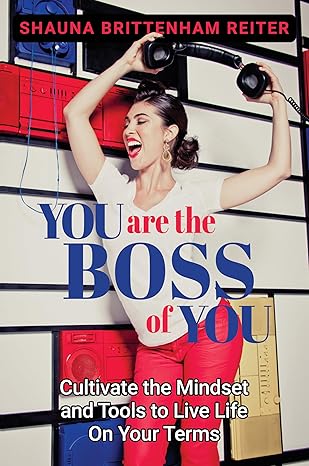
You Are the Boss of You is an introspective guide for reclaiming personal power and healing. Shauna Brittenham Reiter combines her personal struggles with trauma and mental health with a toolkit of practical strategies. The book weaves her story of resilience with lessons on setting boundaries, healing trauma, self-soothing, and redefining self-worth. Each chapter explores a key aspect of personal growth, from softening perfectionism to honoring sleep, with actionable advice for creating a life aligned with your deepest desires.
One thing I appreciated about the book is its honest vulnerability. Reiter’s willingness to share her journey, like the forty-day fast that landed her in a psychiatric ward, is not only brave but creates a strong connection with the reader. The chapter on healing trauma resonated with me, where she unpacks how unresolved childhood experiences echo into adulthood. Her perspective on recognizing these patterns and gently confronting them is relatable and encouraging. The anecdotes make you feel like you’re sitting with someone who has “been there” and genuinely wants to help.
I also found the writing style straightforward and powerful. The chapter on boundaries, for instance, dives into why we often say “yes” when we mean “no” and how that erodes our self-respect over time. Her examples of practicing saying “no,” like declining a party invite without overexplaining, are simple but effective. It hit home for me because I tend to overcommit and then regret it. Her guidance felt like a friend reminding me to put myself first without guilt.
Chapter 9, “Advocating for Yourself,” stood out to me as one of the most empowering sections of the book. It struck a perfect balance between relatable examples and actionable advice, encouraging readers to take control of their own narratives. What I liked most about this chapter was its focus on the emotional and psychological blocks that prevent people from standing up for themselves and the practical strategies Reiter offers to overcome these challenges.
You Are the Boss of You, by Shauna Brittenham Reiter, is an empowering read. It would resonate with anyone navigating trauma recovery, struggling with boundaries, or simply seeking a more fulfilling life. Reiter’s raw honesty, paired with practical tools, makes this a great book for readers ready to reclaim their agency and live authentically. If you’re ready to become “the boss of you,” this book is worth the read.
Pages: 288 | ASIN : B0DBVN56ZG


