Blog Archives
Let the Story Lead Itself

The Best Worst Christmas Ever follows a father and his three children trapped by a blizzard on Christmas Eve, who, after the power goes out, spend the evening on a magical adventure through their shared imagination. What was the inspiration for the setup of your story?
After writing five adult mysteries, I wanted to challenge myself with something completely different and decided to cross over to a fantasy. I started brainstorming ideas not long before Christmas, so it was an easy decision to choose a holiday setting. I thought it would be fun to see the story from different points of view as it progressed, and what better way to do that than to have it told by children of different ages with different ideas of what the story should be. The power outage was the only way I could think of to force bickering children to sit still and listen to each other talk. It also created more of a cozy atmosphere in the home.
Are there any emotions or memories from your own life that you put into your character’s life?
I have three daughters, all grown now, that I used to read to every night at bedtime. Much of their interactions with each other and reactions to the stories, including their likes and dislikes, found their way into the voices of the children in this story.
When you first sat down to write this story, did you know where you were going, or did the twists come as you were writing?
I had my first novel all planned out, but by the third chapter, it had taken itself in a totally different direction, and I never used most of what I’d plotted in advance, so I’ve learned to just let the story lead itself as I write. Virtually all of the events in this book were the result of ideas that only entered my mind while writing the chapter before it. It’s surprising how different parts end up fitting together even without following an outline.
What is the next novel that you are working on, and when will that be available?
I wrapped up my five-mystery series in a way that would make it unfair to the characters to bring them back and put them in harm’s way again. Now, though, I’ve had several requests to write a prequel, including one from my editor. It’s an intriguing idea that I may pursue this winter, but at this point, it’s only a concept that will require a lot of gray hair to bring to reality, so the release of an actual book is hard to imagine at this stage.
Author Links: GoodReads | X (Twitter) | Facebook | Website | Amazon
You Are Always in My Heart


You Are Always in My Heart, by Rebecca Choy, is a tender and honest children’s book about love, loss, and the power of memory. It’s told from both a grown-up’s and a child’s perspective, showing how they each face the idea of death and saying goodbye. Through gentle words and warm illustrations, it explains that while death means someone can’t come back, love never goes away. The story also gives children comforting ways to remember someone, by writing, drawing, hugging a favorite toy, or looking at photos. It’s bilingual, too, written in both English and Cantonese, which adds a special cultural touch.
This is a heartfelt children’s book. The language is simple, but the feelings are big. I found myself tearing up more than once, especially when the child wonders if the parent will die and how they’ll cope. The way the author handles that fear is so real and compassionate. There’s no sugarcoating, just honesty mixed with comfort. I also loved how it quietly teaches emotional resilience, reminding both kids and adults that it’s okay to cry, to be angry, to be scared. The writing feels like a soft hug during a hard talk.
What really stood out to me was the cultural layer about Cantonese traditions and how death is often not talked about. That part felt so important. It makes the story not just about love and grief, but about breaking the silence and giving children permission to ask tough questions. It’s thoughtful and brave, but still full of warmth. And the illustrations, crafted by Choy and her daughter Bella, are full of heart. They draw young readers into the story with a beautiful simplicity.
I’d recommend You Are Always in My Heart to parents, teachers, or anyone who wants to help a child understand loss in a gentle way. It’s not just for kids who have experienced grief, but for any family that wants to build openness and empathy. This is the kind of picture book you keep close, maybe even read together when life feels a little too big. It’s tender, healing, and full of love.
Pages: 48 | ISBN : 978-1-7389652-1-2
Illuminating Human Connection

Navigate Family Technology explores the modern family’s dilemma of how to help children thrive without letting technology consume them, focusing on topics such as communication struggles, social media traps, empathy loss, anxiety, and sleep disruption. Did you find anything in your research of this story that surprised you?
I learned so much while researching the book, I’ll try to narrow the answer down to a few!
- That most Modern Tech executives strictly limit their family’s tech-use time and send the kids to low-tech schools
- The number of online predators actively working every day
- The amount of information we take in daily compared to 20 years ago
- The staggering number of hours of screen time displaces connection and well-being activities
What were some ideas that were important for you to share in this book?
My mission is about illuminating human connection in a disconnected modern world. Technology is one of the key drivers of this. We are often alone together on individual devices.
I also found it important to cover technology’s impact on empathy and distress tolerance.
What is one thing that you hope readers take away from Navigate Family Technology?
That overuse of technology is not our fault. Or our kids’ fault. But now that we understand the problem, it’s our responsibility to be intentional about it. And that we can do it – we have so much living to do and real-world connections to make.
Author Links: GoodReads | Facebook | Instagram | LinkedIn | Website | Amazon
Modern tech is an invaluable resource though its rapid development has created downsides. Nora provides accessible strategies to live our tech lives with intention rather than constant reaction mode. The content inspires hope for connection and comfort in knowing we do not face tech challenges alone.
Entertain a quest to level up your knowledge of modern tech’s influence and explore how to navigate its challenges
Hope of Recovery
In Being Broken, you share the traumas of your childhood, heartbreaking losses, and how you were able to face the damage that shaped your life. Why was this an important book for you to write?
I had to understand how things could have gone so terribly wrong that my sister had to pay the ultimate price, with her life. I’m not a spiritual person, so I needed to believe that this was preventable; that there was a rational and reasonable explanation for this tragedy. Not only that, I needed to better understand my part and be able to forgive myself for either my inability to act in time, or if I had become apathetic to her plight from years of dealing with it. But the journey allowed me to view my own life from a better perspective. It allowed me to dig deep into the traumas of my past and move forward with forgiveness of myself and the fact that I was not responsible for what happened to either of us.
I appreciated the honesty and raw emotion throughout your memoir. What was the hardest thing for you to write about?
Top of that list is my sister’s death. I was so overcome with shame and guilt about not being able to save her, the only way to deal with it was to write about it. I was having a hard time articulating what I was going through, and to write it all out was relieving since the rumination during grief can be very overwhelming. However, equal to how difficult her death was, learning and writing about my sister’s rape was extremely difficult. As I wrote in the book, our parents downplayed my sister’s rape to the point where they were trying to convince me it didn’t happen. Because of their manipulation, I believed them, and the guilt and shame I felt when I read about it in her journals was heartbreaking. Knowing that I wasn’t there for her like I should have been while she was dealing with that trauma, alone, made me feel absolutely horrible. Understanding now it is not my fault, but the fault of my parents’ manipulation of me, that I wasn’t there for her during the most difficult time of her life allowed me to forgive myself.
What is one misconception you believe many people have about growing up in abusive homes?
That children, and even adults, can see and understand that they are being abused, and that escaping the situation is obvious. Many people in abusive relationships are unaware that they are experiencing abuse. I didn’t understand that my sister and I were being abused by our parents until after her death. The narcissistic front of family perfection that our parents projected out into the world made it very difficult for anyone to believe us when we talked about what was going on in that house. Further, the nature of the abuse caused us to live in fear of talking about it. To even consider sharing what was going on with us, we knew the consequences would be severe. And lastly, the amount of control my parents had over my sister’s life precluded any ability for her to escape. They had full control over everything in her life: her car, her lease/rental properties, her phone, money, even her son when she was deemed incapable of caring for him – and they constantly threatened to take it all away if she didn’t behave as they wanted. Truly understanding what was happening to us took a lot of study on my part; years of work through my sobriety, and then grief. By then, it was too late for her, but it continues to help me heal.
What is one thing you hope readers take away from your experiences?
That if you are experiencing the same type of abuse, or have in your past, that you are not alone and there is hope of recovery. The common statistic is that 1 in 4 children experiences a form of abuse. It doesn’t have to be physical or sexual abuse, the most horrific types; it could be any type of mental or emotional abuse. Everyone experiences trauma, even the same trauma, differently based on their formative childhood years. Studies show that a child who experiences repeated forms of abuse has a very altered brain than one who does not. However, through neuroplasticity, therapy, and work, we can manage the challenges of Complex Post-Traumatic Stress Disorder to rewire our brains to live healthy, improved lives and still accept and integrate what we faced as children.
Author Links: GoodReads | Bluesky | Facebook | Website | Amazon
The son, brother, stepson is the only one left to pick up the pieces. He begins a journey of the self and finds out the truth of his family. After going over letters, notes, emails, videos, and text messages, he uncovers a disturbing picture of the abuse his sister suffered at the hands of their parents. He also begins to better understand his own struggles with mental health and substance addiction because of the trauma and abuse he also suffered from their parents.
Follow the son as he looks through his family history to discover the generational abuse that trickled down through the years. Learn about how parents who suffer from narcissistic personality disorder emotionally abuse and manipulate their children. See how the abuse and trauma becomes mental illness in the abused, and how they fall into vicious traps of addiction, eating disorders, self-harm, and complex post-traumatic stress disorder. Witness the transformational change of the son as he works on the recovery of his inner child and tries to become the man he was meant to be.
Deserving of Grace
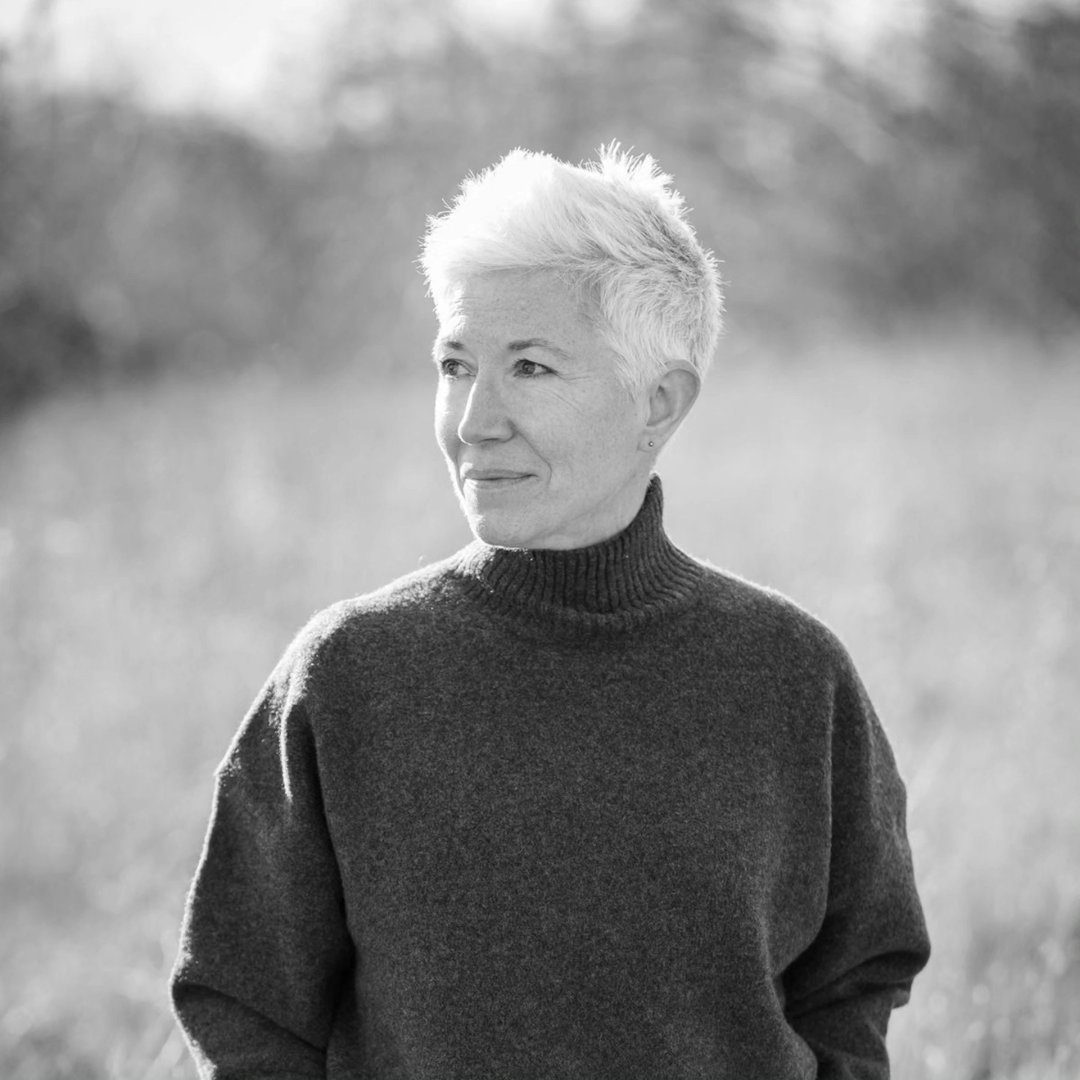
Should Have Told You Sooner follows a museum professional navigating the complexities of motherhood, the aftermath of divorce, and a career opportunity that leads her abroad. Where did the idea for this novel come from?
The idea for Should Have Told You Sooner came to me while I was immersed in a book of Welsh folk tales. One story in particular, “The Lady of Llyn Y Fan Fach,” captivated me and set my imagination racing. In it, a young farmer named Gwyn visits the lake named in the title, and while he is there, a most beautiful fairy rises from the water and speaks to him. She is Nelferch, and in an instant, Gwyn is in love. Nelferch agrees to marry him, sacrificing the watery world she knows for a life with him on dry land, but their union ends in disappointment and pain. Long after finishing the story, I kept thinking about Nelferch and Gwyn and all the ways we might harm those we profess to love. It wasn’t long before I stopped thinking about the folk tale characters and began imagining a more contemporary pair.
What is one pivotal moment in the story that you think best defines Noel?
After Noel leaves a heart-to-heart talk with Henry, the young artist she’s been working with, she makes a side trip to an art museum instead of returning right back to work. Their conversation has shaken her – and I won’t say why because spoilers! – and as she’s walking through all the London neighborhoods that were her haunts while she was a student, both Henry’s words and her memories are running through her head, and she’s letting them. Until this moment, she’s been the person who put her memories in a box and closed the lid tight on them because the idea of revisiting that part of her life was too painful. I think it becomes clear here how hard it’s been for her to live with the memories and also how hard it’s been to live without acknowledging them, and not only for herself. She realizes something has to change.
Is there any moral or idea that you hope readers take away from the story?
I always hope my stories make readers think about how complex and flawed and yet deserving of grace we all are. That living is all about change and growth and doing the work that helps us heal both ourselves and our relationships with others.
What is the next book you are working on, and when will it be available?
I’m currently working on the sequel to Should Have Told You Sooner, and I have two other novel projects that are in early planning stages. If the sequel is finished within the year, it could be out as early as 2027.
Author Links: GoodReads | Facebook | Instagram | Website | Amazon
While studying art history at a London university, Noel Enfield falls passionately in love with aspiring artist and art school student Bryn Jones. Shortly after Bryn leaves for a five-month painting trip through Italy, Noel discovers she is pregnant. She is ecstatic and believes Bryn will be too—they have plans to marry, after all. But mishaps part the two lovers, and a desperate Noel makes a split-second choice to move forward in a way that will change not only her life but also the lives of everyone she loves.
Three decades later, when she is offered a six-month secondment to a London museum, Noel decides it’s time to prove she really has moved on from that difficult period by returning to the city where she met and lost Bryn. But rather than proving she has persevered, the move lands Noel in the thick of London’s insular art world, with only one or two degrees of separation from her past and the people she once loved. After she reconnects with an old, dear friend and learns finally what kept Bryn from returning to her all those years ago, the very underpinnings of her life are rocked to their core. Some decisions made in the past can never be put behind her, she realizes, and armed with this new understanding, she sets out on a journey to reclaim what—and who—she left behind.
A Father’s Presence
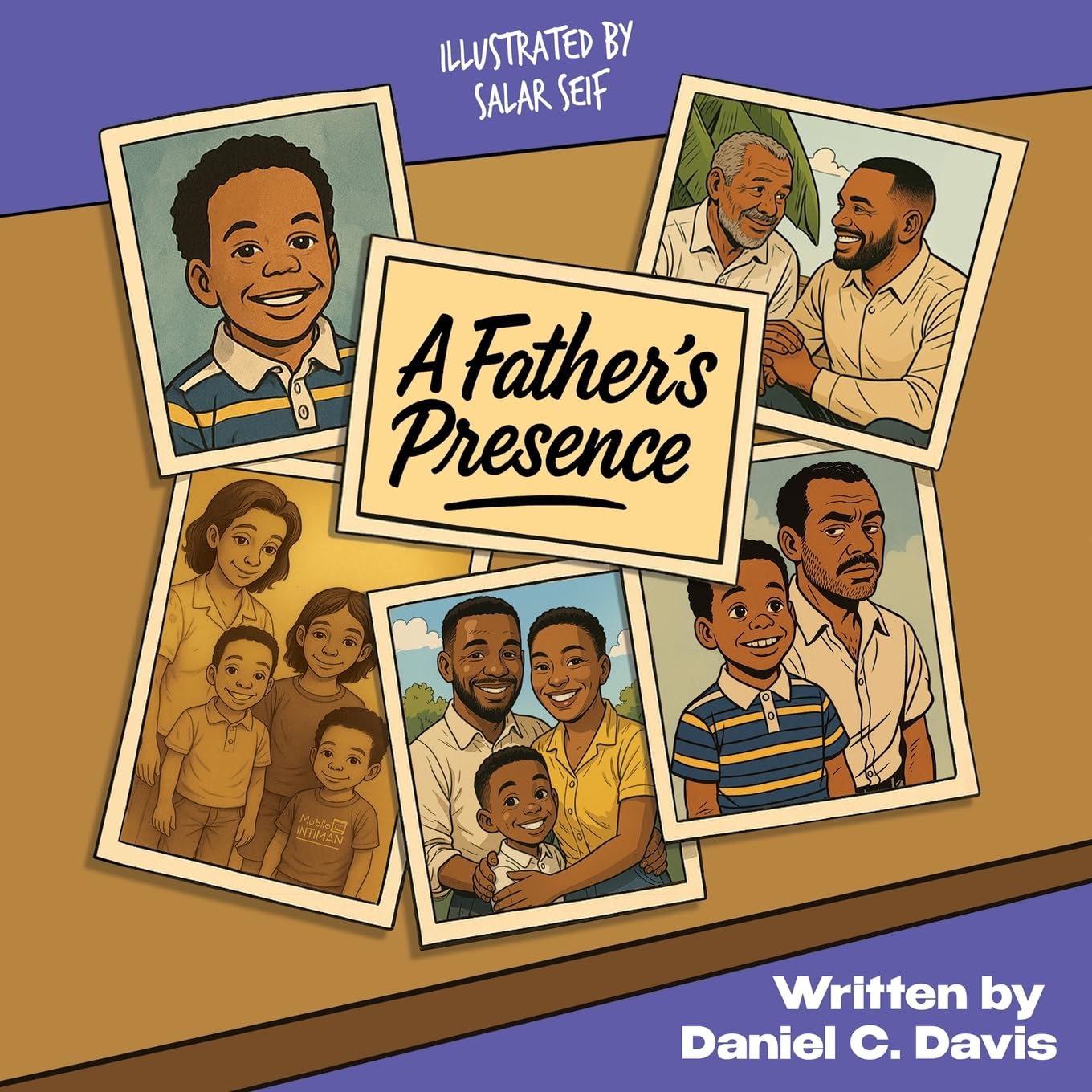
A Father’s Presence tells the story of Curtis and his father, tracing the ripples of absence that echo through generations of men learning what it truly means to “be there.” It begins with a boy whose father, though physically present, feels distant, carrying the quiet ache of growing up without his own dad. Through small, tender moments and the wisdom of mentors like a patient coach, Curtis learns how listening and empathy can heal old wounds. The story blooms into a celebration of connection, showing how one family breaks free from the heavy weight of inherited silence to build something whole and loving.
Reading this children’s book stirred something deep in me. The writing feels honest and simple, yet it cuts right to the heart. Each page carries warmth and quiet power through its words and its illustrations. The author doesn’t hide behind fancy words or big speeches. Instead, he shows us the small gestures like a pat on the head, an empty chair, a son’s whispered promise, that build and break a life. The pacing is gentle, but the emotions sneak up on you. By the end, I wasn’t just reading about Curtis and his father. I was thinking about my own family, about the times I could have listened more or spoken less. There’s something raw and comforting about that.
I loved how the book balances pain and hope. The illustrations by Salar Seif add another layer of heart, soft and sincere, helping the story feel alive. The scene where Curtis and his dad finally spoke, not as man and boy, but as two souls trying to understand each other, that scene hit me hardest. It reminded me that presence isn’t about showing up, it’s about seeing, hearing, and feeling with someone.
I’d recommend A Father’s Presence to anyone who’s ever wished for a deeper connection with their parents, their children, or themselves. It’s a picture book for fathers trying to unlearn the quiet, for sons who crave more than words, and for anyone brave enough to break old cycles. This children’s book doesn’t just tell a story. It gives you a reason to sit down, listen, and start again.
Pages: 20 | ASIN : B0FRQ28YTJ

If I Had One Wish: I’d Wish That You Were Here

If I Had One Wish: I’d Wish That You Were Here, by August E. Allen, introduces us to Wynter, a snowman whose heart aches with loneliness. One quiet winter’s night, he lifts his gaze to the stars and makes a simple wish, for friends to share the snowy world around him. His wish is answered with gentle magic as a pair of cardinals and a colony of bunnies arrive, filling his days with laughter, warmth, and companionship. Though Wynter delights in this newfound joy, a quiet longing remains. He comes to understand that those he misses are never truly gone; they remain close, tucked deep within his heart, and with friends by his side, he will never be alone again.
Wynter is a character brimming with charm and relatability. His yearning for connection mirrors our own human need for belonging. The story’s closing realization, that love endures across distance and even loss, is both poignant and universal. It speaks to anyone who has felt the absence of a loved one and found comfort in the strength of family and friends.
The illustrations enrich the narrative beautifully. They capture Wynter’s solitude with quiet grace, then burst into joy and warmth as his companions gather around him. The snowy scenes evoke the enchantment of winter nights and the anticipation of the holiday season, adding layers of coziness and wonder to the tale.
If I Had One Wish: I’d Wish That You Were Here is a gentle reminder, cloaked in snowy wonder and touched with starlight. For young readers, it offers a way to understand the complexities of missing someone, whether through loss, distance, or change. For adults, Allen provides a reminder of the healing power of companionship. Heartfelt, tender, and visually delightful, If I Had One Wish is a perfect winter read for families to share.
Pages: 30 | ASIN : B0FNDJ4JQ5

The Unabridged Life of Missy Kinkaid

The book follows Missy Kinkaid, a fifty-something woman navigating the mess of family baggage, complicated friendships, and the ghosts of old loves. It digs into her rocky relationship with her mother, who spent most of her life institutionalized, her bond with her late father, who adored her, and her often-fractured but deeply entwined connection with her cousin Margo. Around her orbit, other women, like Scarlet and Amber, form her circle of truth-telling, wine-drinking allies. What unfolds is not a neat story but a layered patch.
Reading it felt like sitting across from a friend who doesn’t sugarcoat anything. I laughed out loud at Missy’s breakdown in the cereal aisle, and then I teared up when she admitted how much her mother’s coldness still cut into her. The writing had this strange magic. At times, it was witty and biting, other times, it felt like someone opening an old wound right in front of me. Some parts rambled, but even then, I didn’t want to look away. It felt messy in the best way, like life itself.
I found myself torn between wanting to hug Missy and wanting to shake her. Her bitterness toward Margo stung, but I understood it, and the honesty of that relationship was one of my favorite parts. The book isn’t afraid to show women being selfish, being cruel, and being brave, sometimes all at once. That’s what hooked me most, the refusal to paint anyone as simply good or bad. The emotional swings kept me on my toes. One page I was chuckling at sarcastic banter, the next I was heavy with grief. It felt real in a way most novels don’t.
I was left thinking about how family shapes us, even when we try to escape it, and how friendship can carry us through the darkest corners of memory. I’d recommend this book to readers who like character-driven stories that don’t flinch away from uncomfortable truths. It’s especially for women who have lived through complicated families, failed relationships, and the ache of trying to start over. If you want something tidy, this isn’t it. But if you want to feel like you’ve lived a whole other life, then Missy Kinkaid’s story is worth your time.
Pages: 288 | ASIN : B0FPYKKFTP



 LITERARY TITAN