Blog Archives
That Such Men Lived
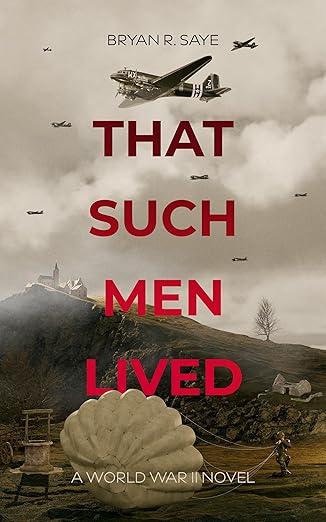

That Such Men Lived tells the story of Johannes Schmitt, a young German Jew whose life is torn apart on Kristallnacht and who is thrust into the chaos of World War II. From the loss of his father to the pain of leaving his mother behind, Johannes’s journey takes him from Europe to America and eventually back again into the war that claimed everything he knew. The book blends historical events with a deeply personal narrative, capturing the fear, the anger, and the small rays of hope that kept people alive during the darkest of times.
I liked the writing style. It’s vivid without being overworked, and it has a rhythm that keeps pulling you forward. The dialogue feels alive, like conversations overheard rather than scripted, and that makes the heartbreak hit even harder. There are moments where I found myself smiling at the playful teasing between characters, only to be gutted pages later by violence or loss. That unpredictability gave the story weight. The author doesn’t shy away from horror, but he doesn’t revel in it either. It’s honest, sometimes painfully so, but never gratuitous.
This is an emotional novel. I felt Johannes’s fear of being powerless, his shame at leaving loved ones behind, and his stubborn determination to carry on anyway. I related to his anger, too, that blend of grief and fury at injustice that has nowhere to go. Some passages made me put the book down just to breathe. Others I read twice because they carried a beauty that didn’t quite sink in the first time. The author doesn’t just tell you what happened, he makes you feel it, and that’s the kind of storytelling I admire most.
I’d say this book is for readers who want more than dates and battles in their World War II stories. It’s for people who care about the human side, the quiet moments in kitchens and churches and letters home, as much as the grand sweep of history. If you’re drawn to novels that are raw and heartfelt, that let you walk in someone else’s shoes, this is a book you shouldn’t miss.
Pages: 374 | ASIN : B0FP3W98J6

The Impossible Choice
Time Lines follows a group of characters who move between the Nazca desert, space stations, collapsed civilizations, and alternate timelines, trying to find a timeline that saves humanity. What was the inspiration for the setup of your story?
Originally, this idea was supposed to be a Mayan prophecy story/idea that I had back around 2010. It mostly involved the main foundation of my ultimate story – with 2012 approaching, I thought it would be interesting to revolve a story around the memory of a cataclysmic event involving the moon that would be sent back in the time with the astronauts who then help send a message forward. That moment came and went, and I never committed to writing the story.
My brother Peter passed away in June of 2021, and that experience and feeling of loss is what drove me to finally start writing. My brother was always an inspiration – a person who always worked to better himself and never left anything on the table, so to speak. The grief I felt after losing him inspired me to get this story out of my head. It became my outlet.
I have always been fascinated by ancient cultures – the Nazcan lines and the Nazcan people in particular and thought I could weave some of their unexplained history into my story. I admit, the story became a whole other thing after that.
I know that the combining of philosophy, some hard sci-fi, and the palatable feelings of loss and grief create what is perhaps a unique story. I wrote the story and then put it all together in a purposeful nonlinear flow that I hope will resonate with future readers. Memory isn’t linear, and neither is my story.
I agree it can be frustrating to read at times. That is purposeful. I want you to feel that sense of frustration and feeling of living similar moments over and over again – but set in different timelines. I want the reader to feel the same sense of loss that one of our characters feels after losing their family to the past. Only in the end do I allow the reader to see the story for what it is – A story of sacrifice, loss, and the wish to spend one more day with those you love that are now gone.
This story was and is at its very soul a story written to allow me to grieve in my own way. Once I wrote it, I then decided I owed it to the memory of my brother and to myself to share it. I have been fully committed to that endeavor since the book was published.
What are some things that you find interesting about the human condition that you think make for great fiction?
The human condition truly is a beautifully flawed idea to me. We call it a condition, as if it has been diagnosed with some ailment or disease. We, the ones bestowed with this condition, are not perfect, not even close. We strive to be better through our own actions, and many times, thankfully, with the help of those around us. If we are lucky, this gift can allow us to be better – to help tender our fire and hopefully in time that fire will grow into something even more beautiful.
What were some themes that were important for you to explore in this book?
Time Lines isn’t just a story about time travel. It’s a story of love, of loss, and of the impossible choice to leave your family in the past… so the rest of us might have a future.
It is also a story of grief and trying to take something back from the thief that is time, so that we have the hopeful chance to get it right just once.
Where do you see your characters after the book ends?
I hope that wherever they are – lost in time or those who have made the final sacrifice so that the rest could have a future will know that they had purpose. I see Elly, Max, Sunita, Renée, Sam, and Peter as they are in my mind – people who have lived a thousand lifetimes and have always been the best of humanity.
Through fractured memories created from these many lifetimes, these characters never cracked. Others, trapped in their shattered lives, could never move forward.
Author Links: GoodReads | Facebook | Instagram | TikTok | Website | Amazon
Four suits. Four names. No astronauts missing. No mission logged.
The spacesuits had been there for 2000 years—how did they get there?
When archaeologists uncovered them beneath the Nazca desert, time itself began to fracture.
What followed wasn’t just discovery. It was memory—echoing across centuries. It was sacrifice, carried from the Moon to the ancient past. And it was the desperate search for the only timeline that worked.
Time Lines is a haunting, non-linear science fiction novel where the past collides with the future, and memory itself becomes the battlefield.
Perfect For Fans Of
- Neal Stephenson’s Seveneves
- Arrival and thought-provoking, idea-driven sci-fi
- Emily St. John Mandel’s Station Eleven
- Post-apocalyptic and time-travel thrillers
Why You’ll Love It
- Nonlinear storytelling that mirrors memory itself
- Ancient mysteries intertwined with futuristic science
- Emotional depth: love, sacrifice, and the cost of survival
- A pulse-pounding finale where not every astronaut makes it home
Time Lines isn’t just a story about time travel. It’s a story of love, of loss, and of the impossible choice to leave your family in the past… so the rest of us might have a future.
The past is buried in the desert. The future is written in the stars.
Discover Time Lines today.
Small Town Feel

Sweet Secrets on Mackinac Island follows a freshly unemployed marketing executive who suddenly inherits her great-aunt’s fudge shop on Mackinac Island, sending her on an unplanned adventure. What was the inspiration for the setup of your story?
I knew I wanted to create a cozy mystery novel with a bit of romance thrown in. I really came up with the local first and started brainstorming from there, wondering what type of person would end up on Mackinac Island and how they would adjust to the new environment. I wanted someone completely out of their element. The idea of someone in the corporate world came to me, and I thought it would be funny to see how they would handle the island environment, and especially the small town feel of it. That’s really how Lucy came about.
Was there anything from your own life that you put into the characters in your novel?
Well, the cats were based on two of our seven cats, Thor and Winnie LOL. The rest of the characters really just came from my imagination. I’ve been to Mackinac several times and used my experience of my time there in shaping the local.
How did the mystery develop for this story? Did you plan it before writing, or did it develop organically?
Initially, there was a completely different mystery involving hidden treasure. I had a rough draft and gave it to my daughter, Maddie, who serves as my editor. She read it and pointed out several plot holes. We went round and round with this draft, trying to make it make sense, and in the end ended up ditching it and starting over with the current murder mystery. The story was very planned out and went through many revisions before we were finally satisfied.
When will Book Two be available? Can you give us an idea of where that book will take readers?
I am hoping to have book two, tentatively titled Sweet Revenge on Mackinac Island, available by November, fingers crossed. That story will continue to follow Lucy as she navigates life as a fudge shop owner and will also introduce some new quirky characters that will join the ones from the first book. The plan is to release the books with each season. Book one is set in the summer, book two will be in the fall, then the last two will be in winter and spring.
Author Links: GoodReads | Facebook | Website | Amazon
Fresh from a corporate marketing job and a messy breakup in Chicago, Lucy is determined to prove she can run Mabel’s Marvelous Fudge—even if she can barely tell a candy thermometer from a tire gauge. With help from her quirky teenage employees and the island’s self-appointed Fudgeamentals committee (a group of elderly confectionery enthusiasts with strong opinions about everything), Lucy slowly finds her footing in her sweet new life.
But when the island’s wealthy power couple turns up dead under suspicious circumstances, Lucy discovers that paradise has a dark side. Between dodging the Fudgeamentals’ amateur detective theories, navigating romantic tension with rugged bike shop owner Jake Miller and polished lawyer Ethan Hayes, and earning the approval of Felix—the island’s most discerning feline critic—Lucy has her hands full.
When someone vandalizes her shop and leaves threatening messages, Lucy realizes the killer isn’t finished. With Felix as her unlikely sidekick and the Fudgeamentals as her enthusiastic backup, she’ll need all her marketing skills and newfound island connections to solve the mystery before she becomes the next victim.
A deliciously entertaining cozy mystery filled with small-town charm, romantic entanglements, and one very opinionated cat who might just be the best detective on the island.
Captivating and Steamy

Love at the Evening Ball follows a refined Southern gentleman who spots an enchanting woman across the ballroom floor, igniting a spark of chemistry that quickly blossoms into passionate flames. What was the inspiration for the setup of your story?
The setup was inspired by the history of my family and hometown. Being from Shreveport, our family once owned and worked on a plantation, described as the one that is brought to life in Love at the Evening Ball.
What were some of the emotional and moral guidelines you followed when developing your characters?
I wanted to make this captivating and steamy. I wanted to do it in such a way as to create excitement in the reader, but not so graphic as to push away.
What draws you to the Southern culture and makes it ripe for you to write such a great erotic romance story in it?
I was born, raised in, and now live in the “deep” South. My ancestors were a mix of both enslaver and enslaved, with relationships that defy the mainstream norm. Terry’s outfit carried hints of the Confederate Gray, while Hiyeon’s ball dress would be typical of Southern belles of the era.
What is the next book that you are working on, and when can your fans expect it to be out?
I am currently working on a biography of a 3rd great-grandfather of mine. He is a Civil War Veteran. I have already published one similar on a 3rd great-grandfather. While history is my genre, I may author another title in a Steamy Southern Nights series, as I enjoyed jumping into a new genre and writing Love at the Evening Ball!
Author Links: GoodReads | Facebook | Website | Amazon
What begins as a polite invitation soon ignites into a night of steamy indulgence, playful teasing, and intimate vulnerability. With lush descriptions and fiery encounters, Love at the Evening Ball invites you into a world of southern romance where every touch lingers, every look promises more, and surrender becomes the sweetest escape. For lovers of sensual storytelling and rich atmosphere, this tale is a passionate celebration of connection, pleasure, and magic of candlelit encounters.
The Beauty of Life
A Sea Tail follows a retired dentist who is shown a dead fish with scales and skin, leading him to embark on an adventure to determine if mermaids exist. What was the inspiration for the setup of your story?
I started working on A Sea Tail on a week-long vacation to Topsail Island, North Carolina. I had recently finished my first book, Shall Die by the Sword, and had gotten bogged down in the sequel. So, I was in a space where I was not writing anything major at the time. Being the father of two daughters, however, I was always trying to write books that appealed to them. And nothing appeals to a preteen girl like a mermaid. Furthermore, since I was a child, I have always been interested in fantasy and folklore. The final stimulus was a small sequence in one of the Pirates of the Caribbean movies that had a side story about a mermaid. That got me writing. And as for Venice, it is the most beautiful city in the world, and what a place to merge water, fantasy, and story.
What was your inspiration for Dr. Manque’s character, and how did you craft his outlook on life?
For the lead character I wanted someone with some quirks, and in contrast to my first book, I wanted to write the main character as a little older. Also, I wanted to paint him as someone who could be stone deaf to the beauty of Venice.
What were some themes that were important for you to explore in this book?
That’s a good question. There are a lot of things I could talk about: how our modern age can be so sterile for one, and how we have distanced ourselves from our past for another, but maybe the theme I was most interested in was beauty, and by that I don’t mean physical beauty, although the mermaid is portrayed as staggeringly beautiful, what I was exploring was the beauty of life, and becoming aware of how a beautiful life is one connected to others. And how discovering that someone needs us is just about the most beautiful thing in the world.
What is the next book that you’re working on, and when can your fans expect it out?
Thank you for asking. My next book is The Ordinary Adventures of Somerset Soames von Hesse. This is a coming-of-age novel about a young boy growing up in a missionary family in Egypt, Lebanon, and the coming back to the states in the 60’s. The story centers around the fourth child, Somerset, and his quirks, and his fascinations. It also deals with the tension because he likes the Beatles and fiction, and both of those are highly discouraged in his faith group. The book will be out in paperback within the next couple of weeks.
Beyond that, I will be working on Volume 2 of my epic fantasy series.
Author Links: GoodReads | Facebook | Amazon
Audible version coming soon!
The World Persists

Ghost of Nostalgia follows a woman living in an impoverished village who is taught to suppress all emotions or risk death at the hands of mysterious, ethereal beings drawn to human emotions. What was the inspiration for the setup of your story?
As cliché as it sounds, I had a dream. In this dream, there was a magnificent city floating in the sky surrounded by a spherical energy barrier. The land around the city was a complete wasteland, and underneath the city was a pile of battered cylindrical tubes. Suddenly, a hatch along the bottom of the city opened, and a silver tube dropped and landed on the pile. Something happened next, but for the sake of spoilers, I’ll have to keep the rest to myself.
The dream stayed with me for a long time, until I finally decided to take it to the page. The feeling of it was so bleak. The isolation is absolute. I realized the reason I remembered the dream so perfectly was because of how it made me feel. I sought to capture those emotions by making emotions the center of my world. I wanted them to be something that could set you free or lead you to death. But as I find with all my writing, it doesn’t come out quite the same as the inspiration. The dream was definitely more hardcore science fiction, but as I’m quite a romantic at heart, the result ended up softer with a heavy dose of romance. Even with those changes, I sought to have Gavril’s world be one that stirred the heart in many ways.
I find the world you created in this novel brimming with possibilities. Where did the inspiration for the setting come from, and how did it change as you were writing?
I’m glad you think so! Steampunk played a heavy role in inspiring the setting, but as much as I love it, I wanted to branch out into something that had a similar feeling but with its own flavor. This is one reason I decided to go with an electric-based power system rather than a steam-based one. As for the cultural inspiration, Victorian England was out, so I did a bit of research and landed on pre-revolutionary France. It had everything I was looking for: elaborate fashion, notable architecture, and a stark class divide. Gavril’s home, Nostalgie, is a village literally made of scraps. They have nothing but hope. I wanted to show the progression of “moving up” as Gavril travels to different towns, and how, instead of sympathy, the rich feel nothing but contempt for the “lesser.” Since each town is isolated in its own barrier, they feel like different worlds of their own. There is no camaraderie, just hope for the government’s favor. As Gavril learns along her travels, even the most beautiful place can be a cover for ugly behavior.
What were some themes that were important for you to explore in this book?
One of the biggest themes of Ghost of Nostalgia is control. Controlling emotions, controlling citizens, and controlling towns. All of these are accomplished in different ways and play different roles. As the story progresses, it becomes less clear who actually benefits from this behavior, and despite the suffering of some citizens, the world persists as is. Part of this is the class divide, and yet, no one rises to challenge the authority of the land.
Other themes are more personal to Gavril. She’s seen as a burden, and then the town’s fate rests on her shoulders. Self-worth, sacrifice, and being true to yourself are challenges she faces, especially in this patriarchal world, which sees her as only worth what she can birth. Her view of the world is full of despair, but sometimes hope can be found in the unlikeliest of places. Finding one’s truth is central to the story.
What is the next book that you are working on, and when will it be available?
The sequel! The sequel, which is tentatively called Sphere of Ardent, is currently in the editing process at Indigo River Publishing. We do not have a release date yet, but I’m hopeful I’ll be able to make an official announcement by the first half of next year. I’m very excited about it. The world-building really takes off, and the themes blow up in such unexpected ways.
Since I’m a glutton, I’ve already started writing the third book, which will finish out the intended trilogy.
Author Links: GoodReads | X (Twitter) | Facebook | Website | Amazon
Gavril follows the rules. Don’t dream. Don’t imagine a better future. Don’t cross the barrier, and whatever you do, don’t open your heart to emotions-especially the most powerful one: love.
Breaking the rules is deadly. Phases surround Gavril’s rural, impoverished village of Nostalgie. These mysterious ethereal beings, attracted to human emotion, suck passion and soul from anyone they touch-if the victim survives the encounter. Despite the danger, demanding questions linger in Gavril’s heart. What might life be like beyond the electrical barrier keeping the Phases at bay? What happened to her father, a legendary Résonateur gifted with the ability to combat Phases, who vanished several years ago? What does freedom feel like?
When the Solenoid powering the village’s barrier begins to die, Nostalgie’s mayor offers Gavril’s hand in marriage to the son of a nobleman in the distant village of Envie-a woman of a Résonateur bloodline to raise the family’s prominence in exchange for a new Solenoid. Gavril has no choice but to comply. If she refuses, the barrier will fall.
Gavril will do anything to save her mother and fellow villagers-even if it means breaking a few rules.
Led by a heart that suppressed curiosity and compassion for far too long, Gavril befriends a Phase named Morrow. When her actions are discovered, she is deemed a traitor by her future in-laws and sent to the Capital, Éthéré Coeur, for judgement. Commandant Serein, a Résonateur like her father, escorts her to her destiny.
In the whirlwind of French-influenced, retro-futuristic adventure that follows, Gavril’s spirit is freed. She meets wonders of human achievement-from motorized automatrams and flying soulevers to massive electronic libraries holding the world’s secrets.She encounters the rich, vibrant, and sometimes horrifying world beyond Nostalgie . . . and she falls in love.
Once you break the rules, where do you draw the line?
Ghost of Nostalgia will resonate with readers drawn to rich worldbuilding, emotional rebellion, and character-driven dystopian fantasy. For fans of lyrical prose, slow-burn tension, and stories that challenge what it means to feel—this journey lingers long after the final page.
Identity and Loneliness

Allie’s Adventure on the Wonder follows a teenage girl navigating life with Auditory Processing Disorder (APD) and what it feels like to live in a world where words don’t always connect the way they’re supposed to, and how exhausting and isolating that can be. What was the inspiration for the setup of your story?
For those who don’t know, Auditory Processing Disorder (APD) is a neurological condition that affects the way the brain takes in and processes information. I was diagnosed when I was about two years old, as I was not responding to certain sounds or forming words when I should have been. Despite the name, however, I am in no way deaf, nor do I have any kind of physical brain damage. There is currently no medication or cure.
My novel originally began as a college project at UMD (University of Minnesota Duluth) back in 2012. Childhood in Literature and Culture was a course in which I studied the depiction of young people in various media from different cultures, eras, and demographics (i.e., The Cat in the Hat, Children of the Corn, and The Bad Seed, among many others). For my final project, I wrote an original short story based on a studied text of my choice—Alice’s Adventures in Wonderland—with an explanatory 5-page essay attached. This was the first draft of Allie’s Adventure on the Wonder. (For those interested, this draft is available to view on my website, elatales.com.) As I was working out the plot, I realized that much of the faulty logic Alice displays in Lewis Carroll’s story (her tender age of seven years notwithstanding) mirrors many of the symptoms of APD. Like me, she can be easily distracted, doesn’t always think things through before acting on them, overthinks pointless details, and makes inappropriate or inapplicable comments in a given conversation.
Are there any emotions or memories from your own life that you put into your character’s life?
Several. Many side characters are based on real people in my life, with given or only slightly altered names. (I’d rather not reveal these for the sake of privacy.) Many incidents mentioned also in fact happened. For example, at the suggestion of my speech therapist at the time, I once entered an art contest in which kids had to draw cartoon characters on posters; only after it was all over—another girl won for drawing the speech-impeded Scooby Doo—did I find out that mine, featuring Winnie the Pooh and Tigger, had been disqualified because it was drawn so well the judges thought I had traced it, which was against the rules. (I feature a picture of it in the “Photos” section toward the end of the book.) And my fifth-grade art teacher really did dismiss my drawing of Rafiki from The Lion King before lecturing me on how real animators don’t use How to Draw guides. It can be the most maddening feeling in the world when doing my best is considered too good as well as not good enough, especially by those whose job it literally is to encourage children’s gifts and potential. Even worse is how, even in college, I’d sometimes misunderstand or mishear school assignments to the point where it feels like the teacher is suddenly mentioning it for the very first time just to mess with me when I know deep down that’s not true. It can feel like a desperate gamble, hoping and praying that my work or understanding will satisfy someone else’s unknown/arbitrary standards juuuust enough for them to leave me in peace, never mind give me praise. And even now, I still have fears of how APD will negatively affect my professional and personal relationships and my ability to do important tasks, like paying bills or doing taxes, during times when I will inevitably have no one (with or without patience) to guide me.
What were some themes that were important for you to explore in this book?
Identity and loneliness. If there is one lesson that living with APD has taught and ingrained in me, it’s the old proverb, “Every story has two sides.” It’s easy to talk about how Alice is the one “normal” person in the “crazy” world of Wonderland. But I think what many miss is that Alice is the one who invades Wonderland and makes trouble for its inhabitants, whether in a relatively minor way like insulting/disturbing the birds and sea creatures by carelessly talking about her violent cat, or in a much more devastating way like nearly destroying the White Rabbit’s house from the inside as a giant after effectively stealing a growing potion. One person’s curiosity can be another person’s carelessness. But is one truly right and the other truly wrong? How, when, and why? Where do such distinctions and meanings come from? Who decides such things? Of course, objective, irrefutable truths do exist, but there are times when one can’t answer such questions, with the results being confusing at best and detrimental at worst. This can lead to even more negative and painful questions regarding one’s right to voice their thoughts and whether they have any worth. All too often, we forget that everyone sees the world in different lights, good and bad, and constantly shifting in meaning, or lack thereof, depending on a limitless number of circumstances. More than anything, though, I really want to reiterate through my story that just because APD isn’t as dangerously debilitating as some other conditions, mental or otherwise, doesn’t mean that those afflicted with it are any less deserving of help, guidance, and patience. Nor should they be labeled “stupid” or “lazy” just because they may be more prone to making obvious but honest mistakes than the average person without the luxury of such conditions as an excuse.
Will there be a follow-up novel to this story? If so, what aspects of the story will the next book cover?
I very much doubt it. While I still research APD for my own personal reasons and well-being, I feel I’ve said my piece on the subject and have little interest in pursuing it as far as writing and publishing are concerned. At the end of the day, like many, if not all, fiction writers, I write to escape real life! Not to mention, as much as I adore the original Alice books, there’s only so much I can add or reinterpret considering all the other Alice re-writings and reimagings floating around out there. Right now, besides my story-highlight radio show, The Tale Collector, I want to focus on a speculative science fiction novel, my first for an adult audience, along with some unfinished fantasy short stories that I’d like to compile into an anthology someday.
But of course, never say never!
Author Links: GoodReads | Facebook | Website | YouTube | Soundcloud | Audioport | Amazon
But one day, during a field trip on a ferry named the Wonder, Allie meets an odd character named Charlie and sees the creative genius and unadulterated joy that madness can bring.
A semi-autobiography of the author’s personal experiences growing up with APD, reimagined through the lens of Lewis Carroll’s timeless nonsensical classic Alice’s Adventures in Wonderland, here is a contemporary fairy tale about learning—and accepting—the methods in one’s madness to navigate the real world.
Literary Titan Gold Book Award: Fiction

The Literary Titan Book Award honors books that exhibit exceptional storytelling and creativity. This award celebrates novelists who craft compelling narratives, create memorable characters, and weave stories that captivate readers. The recipients are writers who excel in their ability to blend imagination with literary skill, creating worlds that enchant and narratives that linger long after the final page is turned.
Award Recipients






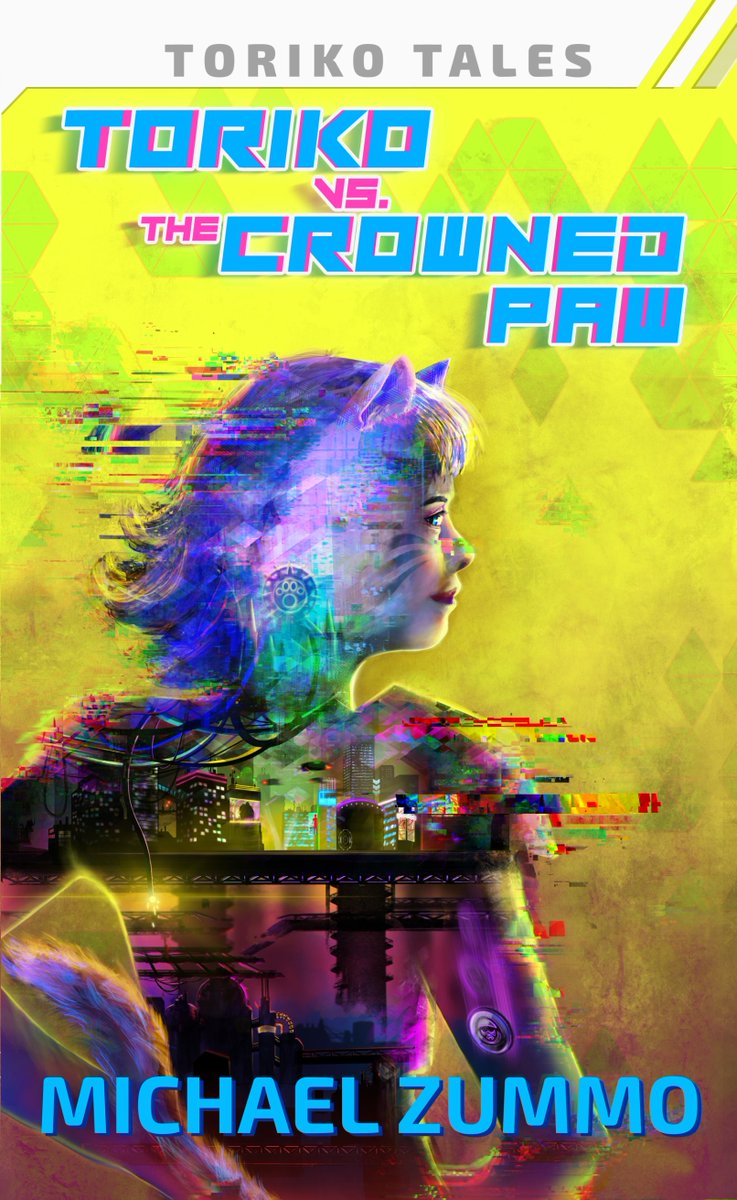


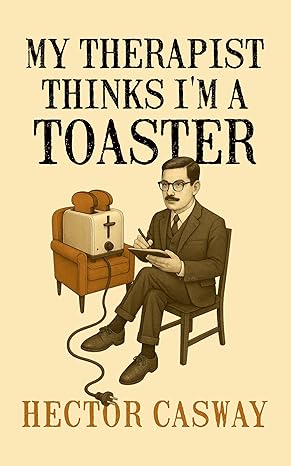

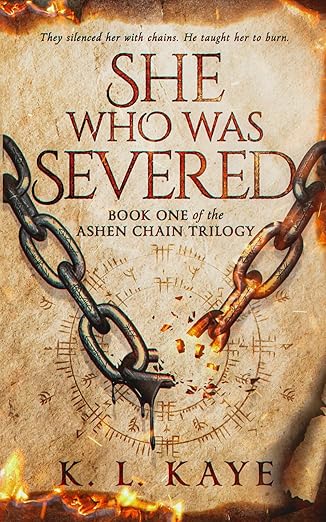
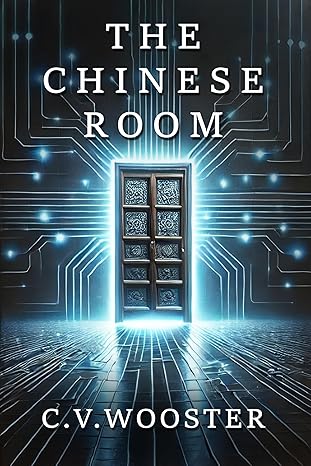














Wednesday Night Whites by Marci Lin Melvin
Visit the Literary Titan Book Awards page to see award information.



 LITERARY TITAN