Blog Archives
How Magic Operates

Azazel’s Scriptures follows a trio of friends who find themselves entangled in a mystery surrounding dark folklore and demonic beings. Where did the idea for this novel come from?
I read a lot of historical fiction and love history in general, especially English history. When my eldest son, who is a huge fantasy fan, asked me to read one of his favorite books (The Name of the Wind by Patrick Rothfuss), I did. And I like it. A lot. I decided to combine the magical elements that initially drew me into this fantasy with my interest in historical fiction to create a unique blend of “realistic fantasy.” The concept for the plot developed gradually. I first imagined three friends sitting around a table, with candles flickering, wine poured, and a fire crackling beside them. Then I named these friends, and with each name, their distinct personalities began to emerge, and with that, their story.
How did you handle balancing the power and use of magic in the story?
I aimed to develop a logical framework for how magic operates, linking it to folklore and history. The enigmatic and wise Druids appeared to be the perfect choice for battling the evil Daegons, who are the foot soldiers of Azazel, a demon from the Bible.
What were some books or movies that you think were your main sources of inspiration for this novel?
I appreciated the medieval vibe from Game of Thrones and aimed to create something similar, but set in the English Tudor period.
What is the next book you are working on, and when can we expect it to be available?
I’m working on a novel set in the 1970s. A young girl who is bullied discovers her ability to enter people’s dreams, using this power to navigate her difficult life.
Author Links: GoodReads | X (Twitter) | Facebook | Website | Amazon
In 16th-century England, Newt, a reluctant monk, discovers that a demonic book with a chilling history—Azazel’s Scriptures—has been hidden in his monastery for centuries. Intrigued and terrified, he shares the story with his friends Simon and Hugh. When Hugh decides to publish a version of this incredible tale, it triggers a series of events that lead to the resurfacing of the Daegons—a group of immortal beings who harvest innocent souls to fuel the dark ambition of the demon Azazel. This also draws the attention of a knowledgeable professor and three powerful Druid sisters—Ravenel, Sibyl, and Elswyth—whose ancestors once battled the Daegons and knew their dark ways. After Thomas Bromwell, the Daegon leader, persuades the unsuspecting King Henry to break with the Catholic Church and close the monasteries to search for the scriptures, his men recover the book and resume turning and reaping souls. Now, the three friends, along with the professor and Druid sisters, must unite in a race against time to find the scriptures and stop the Daegons from destroying humanity
Beyond the Paddock
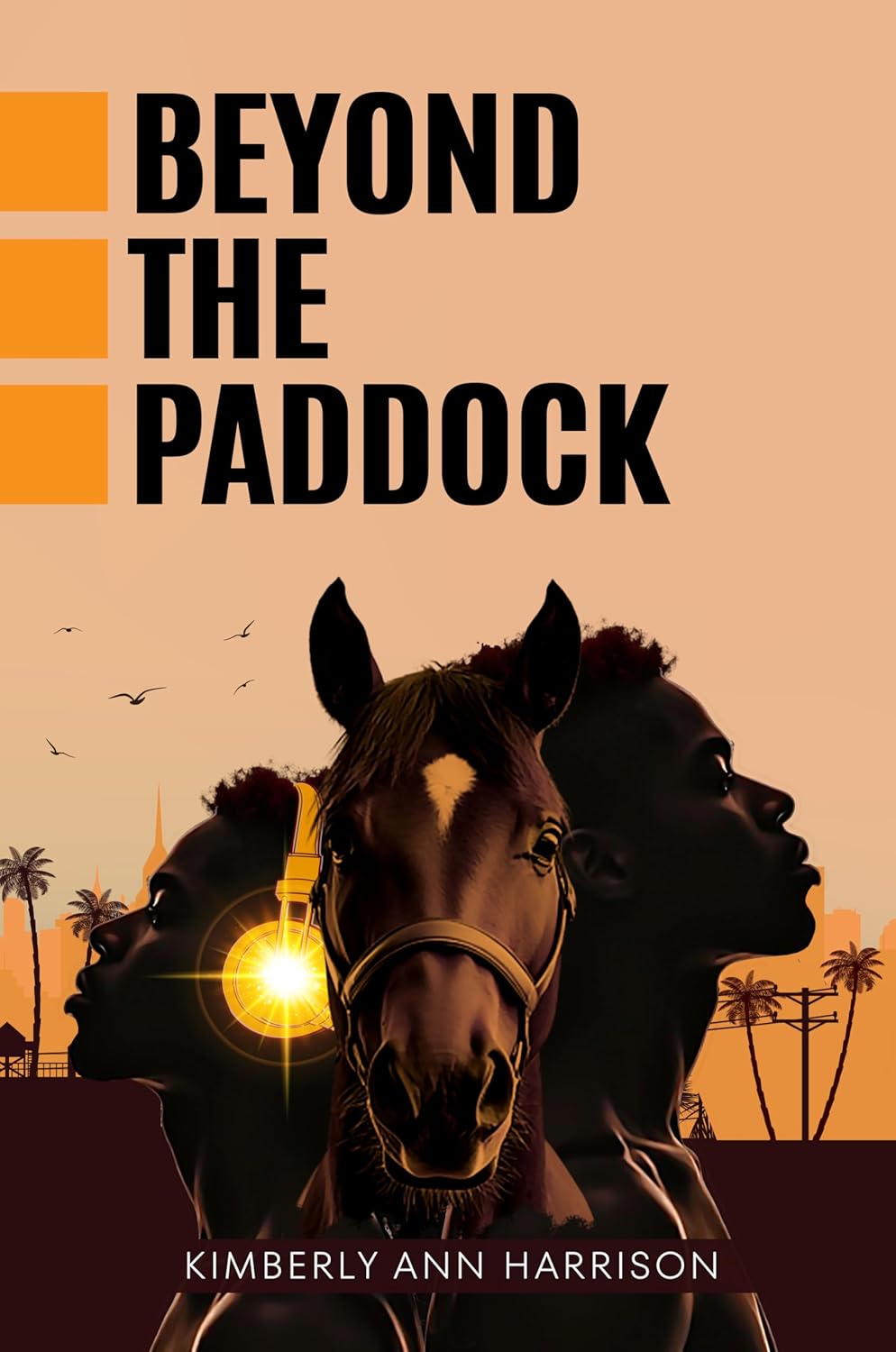

Beyond the Paddock is a coming-of-age novel that weaves together street racing, foster care, and elite equestrian sport into a powerful story of brotherhood and transformation. Set against the vibrant and chaotic backdrop of Inglewood and the tranquil horse farms of Kentucky, the book follows foster brothers Julian and Cameron Taylor, two Black teens navigating a world stacked against them. After a brush with the law, they are unexpectedly placed in the custody of their court-appointed attorney, Reign Brooks, and sent to rural Kentucky to live under the eye of her estranged father, a horse trainer embroiled in scandal. What begins as punishment slowly transforms into purpose, as the boys discover their unlikely talent in show jumping, ultimately rewriting the legacy of their upbringing.
What struck me most about Beyond the Paddock was how seamlessly Kimberly Ann Harrison blends grit and grace. Her writing is rich with texture. The dialogue pops, especially between the brothers. It’s fast, funny, and raw. The emotional tension never lets up, but it doesn’t feel heavy-handed. Harrison balances moments of fear and heartbreak with humor and hope, creating a rhythm that feels like real life. I appreciated the details of the world she built, from the foster system’s red tape to the unfamiliar traditions of equestrian sport; every element felt lived-in and personal.
What really got me, though, was the heart. This story isn’t just about fast cars and fancy horses. It’s about found family, second chances, and fighting like hell to stay together. Julian’s fierce protectiveness over his brother resonated with me. His desire to rise above and still cling to his roots is painfully relatable. And Cameron is a spark, sometimes reckless, always real. Watching him fall in love with horses, despite himself, made me feel like I was falling too. The arc they travel together is bumpy and full of bad decisions, but it’s never without love. Harrison makes you root for them, even when they’re messing up big time.
Beyond the Paddock is a story about rewriting the rules and reclaiming your place in a world that never expected much from you. It’s gripping and full of swagger, but it’s also soft where it counts. I’d recommend this to anyone who’s ever felt out of place, especially teens and young adults who crave stories where street smarts and heart collide. If you loved The Hate U Give or Friday Night Lights, this one’s for you.
Pages: 447 | ASIN : B0FBHCXKGQ

Explore Indigenous History

Diablo Canyon follows a burnt-out writer searching for inspiration in Diablo Canyon, who instead uncovers a dark history and an evil, ancient entity that is out for blood. What was the inspiration for the setup of your story?
The spark actually came from a dream—kind of a wild one. I go into the full story in the afterword of the book, but that dream stuck with me. I used to live in Elizabeth Lake, and it’s just one of those places that feels… different. Beautiful, but mysterious. Over time, I started hearing these strange, fascinating stories from locals. Then I found out the lake’s original name was La Laguna del Diablo, which translates to The Devil’s Lake. That was it—I started researching, and everything started clicking into place. With that foundation, the story practically wrote itself. Honestly, about 60% of it is rooted in real events and local legends.
All your characters felt real, giving the story an emotional pull that connects readers to them. What character did you enjoy writing for? Was there one that was more challenging to write for?
It was honestly a blast to write them all, but it was also a balancing act. I really wanted a diverse set of characters, each with their own voice and purpose. Writing for the Tataviam Tribe members meant doing a lot of thoughtful rewrites—I wanted to treat their story and culture with the respect it deserves, so that took time and care. As for the hardest character? Probably Jack. Capturing his inner conflict—the grief, the guilt, the tension with his daughter—that was tough, but also really fulfilling. He’s the emotional anchor of the book in a lot of ways.
What were some themes that were important for you to explore in this book?
A few things really drove this story. First, I wanted to shine a light on the beauty and history of the Elizabeth Lake area—especially the stories that often go untold. Through Tibu’s storyline, I was able to explore Indigenous history and voices that history tends to erase. I wanted to honor that.
There’s also a strong theme of grief and how it shapes us. Jack’s journey is wrapped in loss, and that grief fuels a lot of his choices—some good, some not so good. Trauma, if we don’t face it, can lead us down dangerous paths.
And of course, the danger of unchecked curiosity plays a big role. Whether it’s digging into the past or awakening something ancient, Diablo Canyon reminds us that some doors are closed for a reason. Once you open them, there’s no going back.
What is the next book that you are working on, and when can your fans expect it to be out?
Right now, I’ve got a few irons in the fire. I’m working on a four-book series called The Elementals, which dives into a supernatural mythology that I’m really excited about. I’m also building a paranormal detective series centered on a character named Smoke Ravenstein—the first book’s called The Demon on the Hill, and it’s halfway done.
And then there’s The Body Farm, which is a dark horror comedy we’re actually filming this summer. That one’s a wild ride with a twisted sense of humor. I’m not sure exactly when the next book will hit the shelves, but hopefully soon. Stay tuned! Stay Spooky!
Author Links: GoodReads | TikTok | X (Twitter) | Instagram | Website | Amazon
More than a century later, Jack Morrison, a burned-out novelist, arrives in the canyon looking for inspiration—but what he finds is far worse than writer’s block. As he digs into the dark history of the land, he uncovers chilling stories of vanished settlers, vengeful spirits, and men who disappeared only to return… changed. The deeper Jack goes, the more the lines blur between past and present, until the horrors that haunted Tibu’s time come clawing their way into his own.
This is not just a story about outlaws and gold—this is a story about the things that lurk beneath the earth, waiting. The kind of nightmares that do not just haunt the past, but infect the present, whispering promises of power in exchange for blood. Diablo Canyon is a tale of monstrous men, vengeful spirits, and the unrelenting grip of an ancient evil that does not forgive… and never forgets.
If you think evil stays buried, you’ve never been to Diablo Canyon.
Mythical Creatures: The Worldbuilding Guide to Korean Fantasy
Huck Kahng’s Mythical Creatures is a whimsical and insightful guide into the world of Korean fantasy folklore, woven with humor, reverence, and practical advice for writers and worldbuilders. Structured in three parts—Human, Animals, and Monsters—it introduces readers to foundational myths, clever animals, and fearsome (yet often lovable) monsters from Korean tradition. Each chapter blends storytelling with cultural context and concludes with a “Worldbuilder’s Workshop” full of exercises meant to spark creativity and deepen understanding of the lore.
What really won me over was the writing style. Kahng isn’t lecturing here—he’s inviting you into his living room, handing you a warm cup of tea, and telling you tales that have been passed down through generations, all while cracking jokes like someone who knows exactly how to make you care. The tone is breezy but deeply informed. He doesn’t bog down the reader with scholarly jargon or dry history. Instead, he pulls you into each legend with personality and punch. The bear who becomes a woman? Heartwarming and oddly inspiring. The tigers who get tricked by rabbits and scared of dried fruit? Flat-out hilarious. I laughed more than once, and I don’t usually do that when reading reference books.
Beyond the humor, there’s heart. Kahng treats these stories not as museum artifacts but as living tools for creative use. I appreciated how he encourages writers to look at mythology not just as background noise but as a guiding force in story building. His workshops at the end of each chapter are gold—practical, fun, and weirdly motivating. He makes you want to write. I walked away with half a dozen ideas for stories, games, or just odd little creatures I want to sketch.
If you’re a writer, game developer, dungeon master, or just a lover of folklore who’s tired of the same old dragons and elves, Huck Kahng’s Mythical Creatures is a breath of fresh mountain air. I’d especially recommend it to fantasy fans who want to break out of Western tropes and discover something new, strange, and joyful. It’s a toolkit, a storybook, and a love letter to Korean myth all wrapped into one delightful package.
The Ancient Fire

The Ancient Fire is the first in the Triple Goddess series by Ellen Read. It’s a fantasy novel rooted in rich Celtic mythology and filled with lush imagery, suspenseful action, and themes of identity, legacy, and awakening power. The story follows Bree, a young woman raised in isolation with her aunt Áine, who discovers her divine lineage as the daughter of Brigid, the Triple Goddess. When an earthquake shakes their hidden world and the sacred fire she’s sworn to protect begins to change, Bree is thrust into a dangerous journey back to her homeland of Tír na nÓg. Alongside the brash warrior god Lu, Bree must come to terms with her powers, her grief, and the peril threatening her people.
I couldn’t put this one down. Read’s writing is poetic without being too flowery, and the pacing dances between quiet introspection and bursts of action. Bree is a character I wanted to root for—clever, curious, brave, and deeply human even as her godhood awakens. The dynamic between her and Lu had me grinning. There’s tension, banter, and just enough mystery to keep things spicy. What I loved most was how the magic felt sacred and elemental—more myth than wizardry, more essence than spectacle. And the fairies were delightful. The scene where Bree uses fire to chase off trolls? I actually cheered.
The lore, while fascinating, occasionally teetered on overwhelming. There’s a lot to absorb—names, places, histories—and at times I wished for a breather or a bit more grounding. Also, Lu’s macho swagger sometimes grated. I get that he’s a warrior god and all, but maybe chill. Thankfully, Bree holds her own and then some. Her transformation from cave-bound girl to rising goddess is powerful, and her grief for a mother she never knew is heartbreakingly real. Those emotional notes hit hard, and that’s what gave the book its heart.
The Ancient Fire lit something in me. It’s more than a fantasy, it’s about becoming who you were meant to be, even when you didn’t know you had it in you. I’d recommend this to anyone who loves myth-rich world-building, fierce heroines, and the spark of magic hiding in ancient stories. This book’s for the dreamers, the rebels, and those who believe stories shape the world.
Pages: 260 | ASIN : B0DTT2YFYN
Diablo Canyon
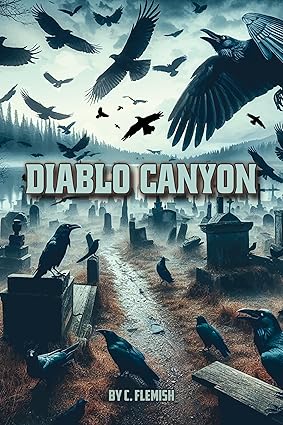

Diablo Canyon is a tale that hurtles through time and landscape with raw force. Set initially in 19th-century California, it follows José and Tibu, two men bound by loyalty and betrayal, against the backdrop of outlaws, vengeance, and survival. The story crackles with tension as it unfolds across dusty deserts, haunted hills, and bleeding battlegrounds, eventually connecting to the modern day with a sharp, emotional twist involving a struggling writer trying to hold his life together. Flemish crafts a saga that feels larger than life but roots it in personal pain, revenge, and a hunger for redemption that refuses to be silenced.
I loved the writing style. Flemish doesn’t waste words. The scenes are vivid—almost painfully real—and the emotions are front and center, bleeding right out of the page. The way the author handled the pacing was excellent too. Chapters punched hard and fast, never lingering long enough to lose momentum. Dialogue felt gritty and believable. I found myself really caring about these characters—flawed, broken, brutal as they were. Tibu’s evolution from a boy to a nightmare was brutal but so believable it hurt. And Jack’s story in the present day, fraying under the weight of fame and failure, resonated with me.
There were moments that almost tipped into melodrama. Some of the violence was so intense it made me put the book down for a breather, but it fits the world Flemish built. And even though the jump from historical Western outlaw life to modern Los Angeles worked in the end, the transition felt jarring at first. Still, when I let myself just ride with it, the story’s gut-punch emotional honesty pulled me right back in.
Diablo Canyon is for anyone who loves a good, messy, bloody, heartbreaking story about broken people doing the best (and sometimes the worst) they can. If you like your Westerns rough and your thrillers dark, this one’s for you.
Pages: 326 | ASIN : B0F3VBWDVS
A Writting Journey

Lycan: Solomon’s Odyssey, Chapter 1 follows a young man with a devil-may-care attitude who finds himself placed into a position of leadership in his community. What was the inspiration for the setup of your story?
The writing of the story itself actually went on quite a journey. This was the first book or comic that I have ever written. The original version of the script was like a sort of mix between a regular book and a comic script. I had given that out to friends and family for feedback in order to help shape the story itself. Eventually one of my friends put me in touch with an editor – Onrie Kompan, who took me under his wing and showed me how to write a comic script. He also gave me other graphic novels to read to get a better idea of how to write, such as A Contract With God by Will Eisner.
Originally the story was told from two different time periods, starting off in the future, or at least the end of the series and then jumping back and forth as a sort of “life flashing before his eyes” kind of situation. However, as Onrie and I laid out the book I decided to remove that storytelling device and focus solely on telling the story from Solomon’s point of view as it was happening. In terms of picking the setting, I had two goals. One was setting the story far enough back that I avoid any currently held ideas of the world’s first werewolf, such as King Lycaon of Greek mythology. But, I also wanted to be able to use the mythology of the world as a sort of sandbox to have this character exist in, traveling along the same path of history as our own, but told as though magic and monsters exist in hushed whispers and operating in the shadows.
This first book sets up the series so certain things need to happen in order to launch the character onto this path. I wanted to show this aloof character be forced into an unfamiliar situation, and while his intentions are pure, making hasty decisions out of desperation, lead to certain consequences that impact him and shape him for the remainder of his journey.
A lot of time was spent crafting the character traits in this novel. What was the most important factor for you to get right in your characters?
For me, the goal was to have characters that are both enjoyable to read about, but also are believable. The interactions between Solomon and his brother, or his friends, is similar to interactions I might have with my brothers or friends. I also wanted to make the reader care about these characters. I love eliciting emotions from people through my work. The interactions between characters are meant to make people feel a bit of that camaraderie or familial spirit, and any losses are meant to make the reader feel a similar level of sadness that Solomon feels. If I can make the audience feel a certain way throughout the books, then I feel I’ve done my job as a writer in properly entertaining them. Even if sometimes what I write might be tragic.
In fantasy novels it’s easy to get carried away with the magical powers characters have. How did you balance the use of supernatural powers?
The thing I like about werewolves, or magical creatures in general, is that they can be incredibly powerful, fear inducing, and awe inspiring, and yet they always have rules. While it does not appear in the book, werewolves, as well as many other monsters, have an aversion to silver. A werewolf, typically, can’t transform unless under the light of the full moon. And with that, the human part of the equation usually loses all control of their own body. It is almost as though it is an entirely different entity behind the wheel at that point. In the story, as Solomon is given this curse, even in a human form he is much stronger, faster, and has enhanced senses and a healing ability. Against normal unprepared humans, it’s not much of a fight. Against another supernatural creature, it is a much tougher fight. He is not completely invulnerable. For the other supernatural character in the book, he seems almost infinitely powerful in comparison to even Solomon, but one thing I always like to think about, is that there is ALWAYS a bigger fish out there. There’s always something more powerful.
Where does the story go in the next book, and where do you see it going in the future?
The next book in the series takes place immediately following the first book. It really delves into Solomon trying to deal with the aftermath of the first book, focusing on guilt and PTSD. The second book also introduces other supernatural elements such as magic and other mythological creatures. The idea with each book is that with each installment, it opens the world up a little more and a little more. The first book was the origin story, it sets everything in motion. Every book in the series after that, while still following Solomon, explores other regional mythologies, folklore, monsters, and gods. The second book delves into ancient Arabic mythology. The third book is best described as HP Lovecraft meets Gilgamesh. And so on. I have the entire series planned out all the way to the last page of the final book. Right now I am planning on a 15 book run, with 3 arcs each being 5 chapters. This will let me really play around with some fun mythology from around the world!
Author Website
The first book in this series is the origin story of Solomon, a man with a devil-may-care attitude who is thrust into a position of responsibility. Desperate circumstances lead to desperate decisions, which could affect the world in unforeseen ways for millenia to come. What would someone be willing to sacrifice to save those they care about most?
Darke Realms: One Tough Temporary She Alpha (Arcana 2)

Michele L. Sayre’s Darke Realms – One Tough Temporary She Alpha drops you into a world where supernatural beings, werewolf politics, and the remnants of a brutal war collide. The book follows Leiry Matthis, a reluctant alpha, forced back to her pack after the death of her rogue mate and father. The stakes are high. Her son is in danger, a self-proclaimed Rogue Alpha King is on the rise, and she has no patience for anyone trying to control her fate. With power struggles, deep emotional wounds, and a fierce determination to protect her own, Leiry embodies the grit and resilience that define Sayre’s heroines.
One of the strongest aspects of this book is its protagonist. Leiry is not your typical heroine. She’s hardened by loss, unapologetically strong, and yet emotionally vulnerable in moments that make her feel incredibly real. From the first chapter, where she steps back onto the packlands she once fled, the weight of her past is palpable. The author does a great job balancing her toughness with raw emotional depth, like when she recalls her mate’s death during the Arcana-Kabaltz War. The trauma is still fresh, and Sayre doesn’t shy away from showing how that grief shapes Leiry’s choices.
The world-building in this book is layered with supernatural history, werewolf customs, and high-stakes politics. Sayre weaves in elements of mythology and war lore, making the conflict feel bigger than just a personal struggle. It’s about survival, legacy, and the balance between light and dark. The concept of the Arcana, beings of light who oppose the Kabaltz, agents of darkness, adds an epic scope to the story. The inclusion of treaties, sacred burial rites, and pack dynamics makes the world feel lived-in, though at times, the sheer amount of detail can slow things down. Still, it’s a rich setting that fantasy lovers will appreciate.
There are moments where the pacing slows, particularly in the middle of the book. Some sections take their time delving into exposition, especially when exploring the mythology and history of this world. While these details add depth and intrigue, they occasionally pause the action. Similarly, some dialogue leans into exposition, particularly when characters reflect on past events. However, Sayre’s snappy writing style and Leiry’s sharp inner monologue keep the story engaging, ensuring the book moves forward in an enjoyable way.
Darke Realms – One Tough Temporary She Alpha (Arcana 2) is a gripping read for fans of supernatural fantasy, particularly those who enjoy strong female leads and intricate world-building. If you love stories with werewolves, war-torn pasts, and heroines who don’t take crap from anyone, this book will be right up your alley.
Pages: 542 | ASIN : B0DXKH34D2



 LITERARY TITAN