Blog Archives
The Haunted Purse


Kimberly Baer’s The Haunted Purse tells the story of Libby, a teenage girl who stumbles upon an old denim purse in a thrift store, an object that quickly proves to be anything but ordinary. What begins as a quirky tale about misplaced homework turns into a strange, emotional journey, blending the everyday struggles of adolescence with eerie, supernatural twists. The purse makes things vanish and reappear, leading Libby to uncover pieces of another girl’s life while also grappling with her own fractured family, fragile friendships, and the heavy weight of being far more responsible than a 15-year-old should be.
What I really liked about this book is the way Baer balances the supernatural element with the gritty realism of Libby’s life. Right from the first chapter, when her history report goes missing only to reappear later in the depths of her purse, I was hooked. The purse feels almost like a character itself, playful, mysterious, and sometimes cruel. But what kept me reading wasn’t just the magic. It was Libby herself. She’s sharp, sarcastic, and quietly hurting, and her voice feels completely authentic. When her mom breezes back into her life for a night of fake promises and cigarette smoke, the ache in Libby’s words made me want to both hug her and cheer her resilience.
Another standout for me was the friendship between Libby and Toni. It’s messy and complicated in exactly the way teenage friendships usually are. Toni is bossy, dramatic, and sometimes dismissive, like when Libby finally confides in her about the purse’s supernatural powers and Toni just laughs it off as “woo-woo crap”. Yet, despite all their friction, the bond is real. Their arguments over school dances and borrowed clothes feel so grounded, and it’s through these moments that the story explores deeper themes, loyalty, envy, and the fear of being left behind.
And then there’s the haunting itself. I loved how Baer keeps the paranormal subtle and slippery, never giving us easy answers. Objects vanish, like the bottle of perfume or Toni’s brand-new jeans, and sometimes they reappear, sometimes not. The uncertainty adds tension, but it also works as a metaphor for Libby’s unstable life. She’s constantly holding on to things, friends, family, dreams, that seem to slip through her fingers no matter how tightly she grips them. The purse is magical, yes, but it’s also heartbreakingly symbolic.
By the end, I was both unsettled and moved. The story never veers into outright horror, but it carries a steady undercurrent of dread, softened by the warmth of Libby’s determination to keep pushing forward. Baer’s writing is vivid but unpretentious, full of small, sharp details that make the characters and their world feel lived in.
I’d recommend The Haunted Purse to anyone who likes their coming-of-age stories with a supernatural twist. It’s perfect for readers who appreciate strong, flawed teenage voices, or for anyone who remembers what it felt like to navigate the messy in-between of adolescence, when friendships, family, and self-identity all feel like they could disappear at any second. For me, it was equal parts strange, sad, and hopeful, and that combination made it a book I won’t forget anytime soon.
Pages: 265 | ASIN : B0FLWK2DQM

Live Through Grief and Trauma

The Coldmoon Café follows a rotating cast of mourners, monsters, and misfits who stumble into a mysterious café that only seems to exist for the broken. What was the inspiration for the setup of your story?
The inspiration was simple; to share the experiences that our close group of friends had. Not only for each other, but with the world. Before it was all forgotten forever.
The supporting characters in this novel, I felt, were intriguing and well-developed. Who was your favorite character to write for?
While it’s hard to pick just one character (as each added their own voice), for me personally, Simon, Mourns and Charity will always share a special place in my heart.
What were some themes that were important for you to explore in this book?
The most important themes in The Coldmoon are the same ones that every being faces in life. Finding a way to live through grief and trauma, finding love/friendship, and perseverance. Even when the odds seem insurmountable.
Is this the first book in the series? If so, when is the next book coming out, and what can your fans expect in the next story?
The Coldmoon Cafe took place every night, over many years, but was never intended to survive the test of time. Logs weren’t even recorded for the first 1/2 of its time, and most of the rest became lost to the digital graveyards of floppy and Jazz disks. In this first book, I was able to present some of the most important storylines. While there were many not touched from which a second book could be done, they would all be from after the decline of the Cafe. I could definitely do a follow-up short book to address and wrap things up for the readers if there’s a call for it later. But for now, I’m just happy that The Coldmoon is published and out there to share a part of the darkness most people would never get to experience otherwise.
With this project behind me, I’m currently working on my next books, which will be part of a high fantasy adventure series, comprising at least 3 books. I greatly appreciate your time and attention toward my book, and can’t wait until its release date on Oct. 7th!
Author Links: GoodReads | Amazon
In a town where magic simmers just beneath the skin, the Coldmoon Café offers a liminal sanctuary—for monsters, misfits, and haunted hearts that refuse to disappear.
☕ The coffee’s always hot.
💀 The regulars don’t ask questions.
🫀 And if you sit long enough, you might hear a heartbeat that isn’t yours.
Inside This Book
✔ Found family
✔ Vampires and supernatural drama
✔ Grief, memory, and slow-burning healing
✔ Shapeshifters, secrets, and cozy horror
✔ Sad immortals with great boots
Just be careful what you order. Some hungers can’t be satisfied.
Recommended for mature teens and adult readers.
Contains emotionally intense themes and moments of intimacy—nothing explicit.
Small Town Feel

Sweet Secrets on Mackinac Island follows a freshly unemployed marketing executive who suddenly inherits her great-aunt’s fudge shop on Mackinac Island, sending her on an unplanned adventure. What was the inspiration for the setup of your story?
I knew I wanted to create a cozy mystery novel with a bit of romance thrown in. I really came up with the local first and started brainstorming from there, wondering what type of person would end up on Mackinac Island and how they would adjust to the new environment. I wanted someone completely out of their element. The idea of someone in the corporate world came to me, and I thought it would be funny to see how they would handle the island environment, and especially the small town feel of it. That’s really how Lucy came about.
Was there anything from your own life that you put into the characters in your novel?
Well, the cats were based on two of our seven cats, Thor and Winnie LOL. The rest of the characters really just came from my imagination. I’ve been to Mackinac several times and used my experience of my time there in shaping the local.
How did the mystery develop for this story? Did you plan it before writing, or did it develop organically?
Initially, there was a completely different mystery involving hidden treasure. I had a rough draft and gave it to my daughter, Maddie, who serves as my editor. She read it and pointed out several plot holes. We went round and round with this draft, trying to make it make sense, and in the end ended up ditching it and starting over with the current murder mystery. The story was very planned out and went through many revisions before we were finally satisfied.
When will Book Two be available? Can you give us an idea of where that book will take readers?
I am hoping to have book two, tentatively titled Sweet Revenge on Mackinac Island, available by November, fingers crossed. That story will continue to follow Lucy as she navigates life as a fudge shop owner and will also introduce some new quirky characters that will join the ones from the first book. The plan is to release the books with each season. Book one is set in the summer, book two will be in the fall, then the last two will be in winter and spring.
Author Links: GoodReads | Facebook | Website | Amazon
Fresh from a corporate marketing job and a messy breakup in Chicago, Lucy is determined to prove she can run Mabel’s Marvelous Fudge—even if she can barely tell a candy thermometer from a tire gauge. With help from her quirky teenage employees and the island’s self-appointed Fudgeamentals committee (a group of elderly confectionery enthusiasts with strong opinions about everything), Lucy slowly finds her footing in her sweet new life.
But when the island’s wealthy power couple turns up dead under suspicious circumstances, Lucy discovers that paradise has a dark side. Between dodging the Fudgeamentals’ amateur detective theories, navigating romantic tension with rugged bike shop owner Jake Miller and polished lawyer Ethan Hayes, and earning the approval of Felix—the island’s most discerning feline critic—Lucy has her hands full.
When someone vandalizes her shop and leaves threatening messages, Lucy realizes the killer isn’t finished. With Felix as her unlikely sidekick and the Fudgeamentals as her enthusiastic backup, she’ll need all her marketing skills and newfound island connections to solve the mystery before she becomes the next victim.
A deliciously entertaining cozy mystery filled with small-town charm, romantic entanglements, and one very opinionated cat who might just be the best detective on the island.
Literary Titan Gold Book Award: Fiction

The Literary Titan Book Award honors books that exhibit exceptional storytelling and creativity. This award celebrates novelists who craft compelling narratives, create memorable characters, and weave stories that captivate readers. The recipients are writers who excel in their ability to blend imagination with literary skill, creating worlds that enchant and narratives that linger long after the final page is turned.
Award Recipients







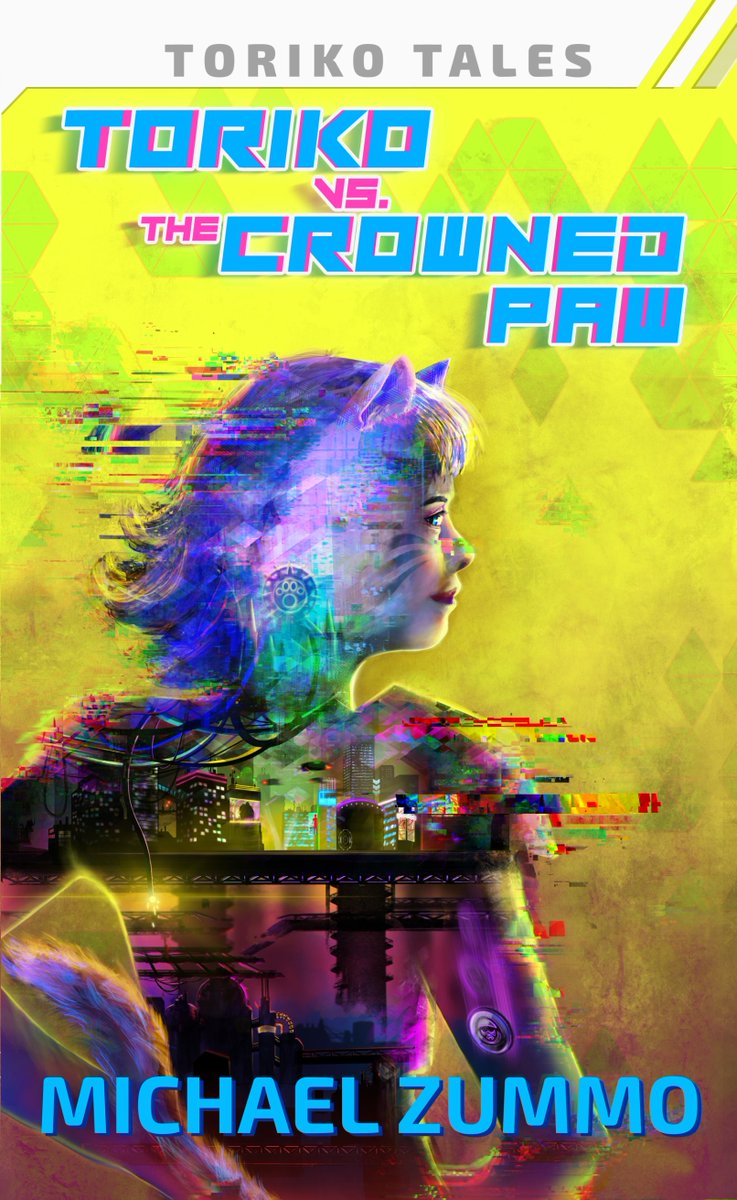


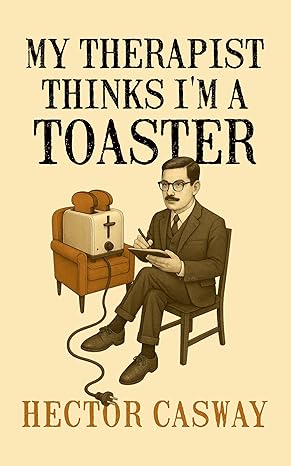

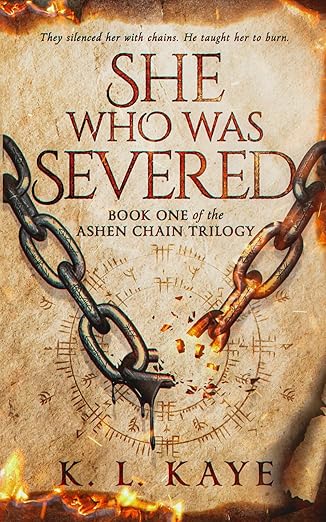
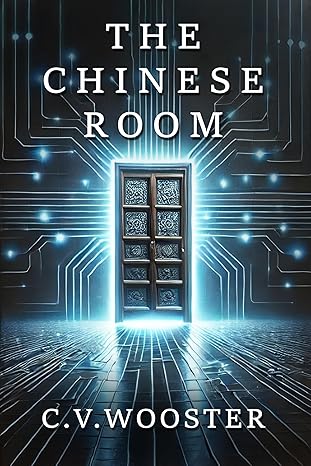
















Wednesday Night Whites by Marci Lin Melvin
Visit the Literary Titan Book Awards page to see award information.
Literary Titan Silver Book Award
Celebrating the brilliance of outstanding authors who have captivated us with their skillful prose, engaging narratives, and compelling real and imagined characters. We recognize books that stand out for their innovative storytelling and insightful exploration of truth and fiction. Join us in honoring the dedication and skill of these remarkable authors as we celebrate the diverse and rich worlds they’ve brought to life, whether through the realm of imagination or the lens of reality.
Award Recipients
























Just Play Like You Do in the Basement: Coming of Age as The Drummer for The Greatest Entertainer in the World by Rick Porrello
An Inconvenient Witness: The Weight of Ordinary Things by Kevin Casebier
Visit the Literary Titan Book Awards page to see award information.
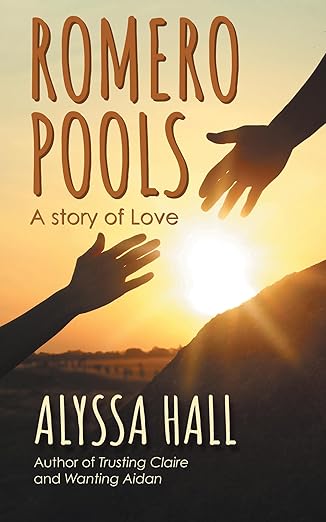
Romero Pools

Romero Pools, by Alyssa Hall, is an intense love story wrapped in the sharp, sunlit folds of the Arizona desert. The book follows Marin, a young woman still grappling with grief and guilt years after a traumatic accident claimed her fiancé, Tyler. While hiking alone, she stumbles upon Adam, an injured man who has just fallen down a ridge. Their shared journey down the mountain becomes more than a physical one, it’s emotional, raw, and revelatory. As their connection deepens, so too does the mystery surrounding Tyler’s death, ultimately pulling the reader into a web of memory, secrets, and healing.
I really enjoyed Hall’s ability to make the desert come alive with so much character. The way she writes about light, heat, and silence makes you feel the weight of every step on the trail and every breath between two people learning to trust. The dialogue flows naturally, sometimes playful, sometimes heavy, but always honest. Marin and Adam feel like real people, broken but trying, hurt but still relatable. I found myself rooting for both of them in a way that made the end surprisingly heartbreaking. It didn’t feel like a gimmick. It felt like life.
I did feel the writing leaned on telling more than showing at times. The exposition, especially when the backstory was shared through dialogue, could get a bit weighty. I wished for more scenes to unfold slowly instead of being relayed in a block of conversation. Still, there’s something comforting about the voice Hall uses. It’s gentle, it’s warm, and even when the story dips into darkness, it doesn’t feel hopeless. The twisty thread of maybe-Tyler-still-being-alive added a quiet tension that never quite resolved, and honestly, I didn’t mind. The book was never about plot fireworks; it was about emotional honesty.
Romero Pools left me thoughtful and a little wistful. It’s a book for anyone who’s lost something they didn’t think they could live without, and for those trying to start again, however messy that looks. I’d recommend this to readers who love slow-burn romance, quiet personal dramas, and stories that find beauty in the ordinary.
Pages: 232 | ASIN : B09NB63P58

A Flawed Obsessive

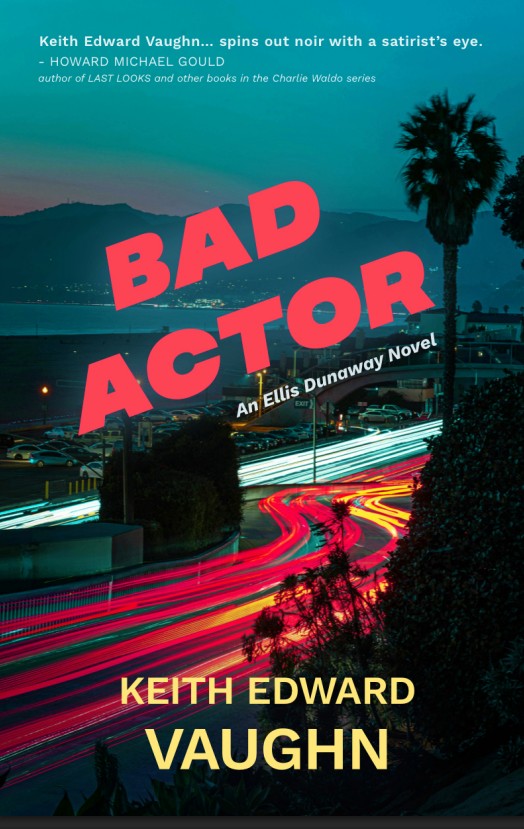
Bad Actor follows a washed-up TV writer turned private investigator who is investigating the death of a high-profile agent while struggling with his own personal issues. What was the inspiration for the setup of your story?
As always, I set out to place my work in the lineage of L.A. noir—from James M. Cain to Joseph Schneider; Sunset Boulevard to Mulholland Drive—with its damaged characters on the razor’s edge of glamor and desperation. While I was outlining the book, I saw something on TV about the Beltway Sniper, and it changed the direction of what I was writing. That was when Bad Actor took shape.
What was the inspiration for Ellis Dunaway’s character traits and dialogue?
Like most–if not all–detectives in hardboiled crime fiction, Ellis Dunaway is a flawed obsessive. His voice reveals his unique sentimentality and sense of the absurd, filtered through Gen-X media literacy (reruns) and lots of weed.
What were some themes that were important for you to explore in this book?
All the characters struggle with problems resulting from a combination of family dysfunction, identity crisis, and malignant ambition.
Can you tell us more about what’s in store for Ellis Dunaway and the direction of the next book?
The log line is Terms of Endearment meets I Wake Up Screaming, plus weed.
Author Links: GoodReads | Website | Amazon
A Shared Gift

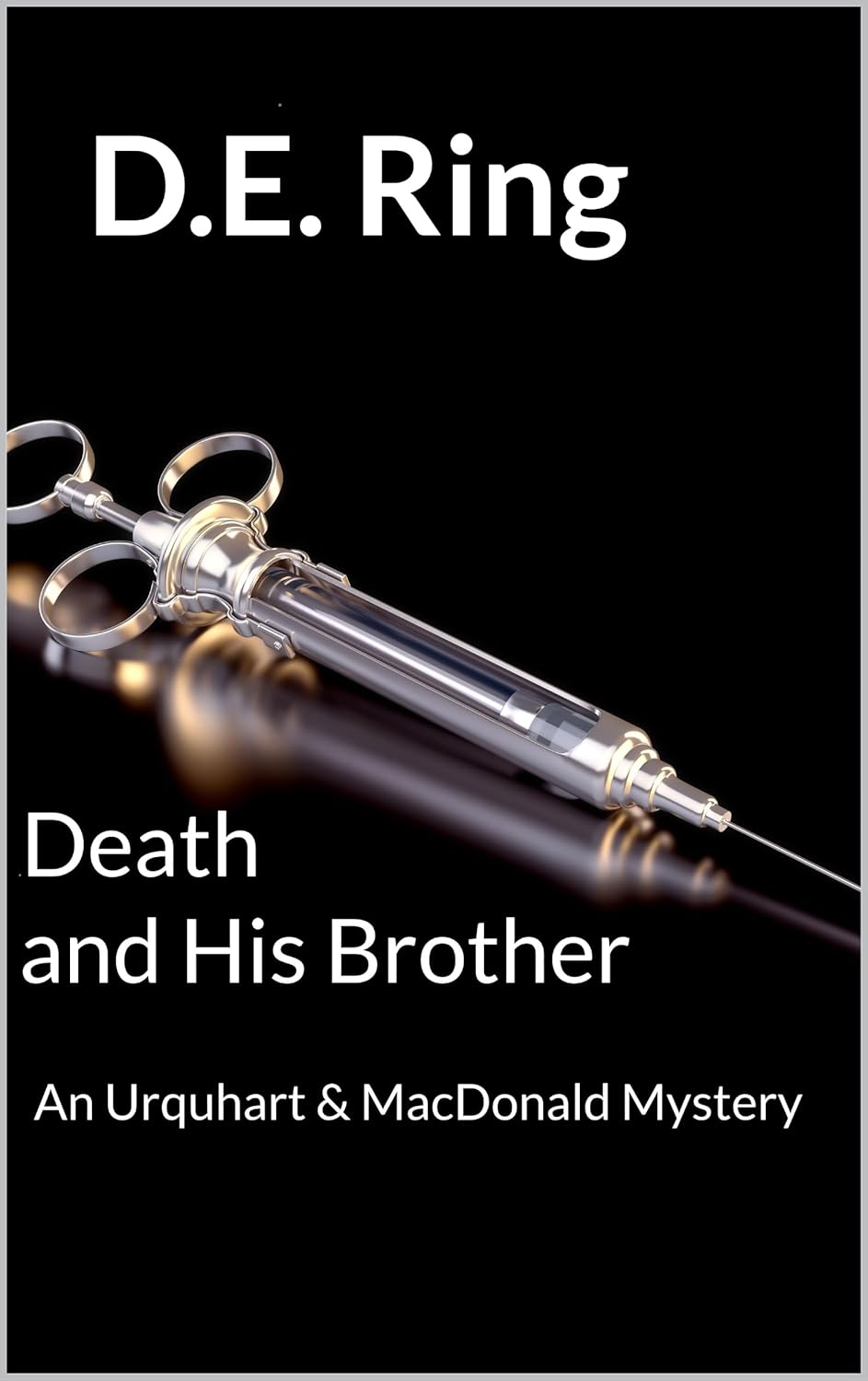
Death and His Brother follows a group of musicians, an inspector, and his reporter wife who discover that no one is manning their train, and it is a race to stop the runaway train. What was the inspiration for the setup of your story?
When I was a boy, we lived in a house on the edge of a small town. We were surrounded by meadows and beyond those, fields of corn and barley. Beyond that, there was a railway line. On it, three times a day on round trips, ran a Buddliner coach – a single-carriage commuter train – with no locomotive. Self-propelled. It travelled about eighty miles on each round trip, with a small two-person crew. It ran between Stratford, Ontario – the home of the Stratford Shakespeare Festival – and a town on the shores of Lake Huron.
Theatre, music, train travel, water.
I think the train, the theatre, and the lake have been rolling around together in my head for a long time. That little Buddliner didn’t have the look or romance of a big passenger train, but it must have taken interesting people to places that some of them really wanted to visit.
A year ago, I happened upon a poem, “The Clattering Train,” in which a sleeping two-man railway crew could not prevent a fatal accident. Not a great poem, but it was based on a real accident in England in the 1890s. The image of a sleeping crew brought to mind the two-person Buddliner. And so, a mystery began to take shape.
Why were they asleep?
I found the interaction between the characters that meet on the train to be one of the highlights of your book. What was your approach to writing the interactions between characters?
I was an actor for years and a director and playwright. Handling dialogue becomes second nature after a while, but it’s a learned skill. It’s all about exploring.
Each character enters a scene – whether on stage or in a book – from somewhere. They are in a state of mind; they already are someone, whether we know them or not. The important thing in developing sound interactions between and amongst characters is staying true to who they are.
That’s not to say my characters can’t surprise me. They do all the time.
As a director, I used to advise actors who were having a hard time incorporating a particular line into their performance that they needed to go back and rethink their characterization.
The line that has been so difficult is almost always important – it usually represents something in the character that you’ve overlooked.
The same thing happens when I write conversations in my novels. Characters often say things I do not expect them to say. When it happens, I have to rethink the character. Who are they really? What is it that they really want out of the conversation? The characters are sometimes more articulate than I am.
I go back and revise what I’ve written to reflect these new dimensions of a character. When people are talking, they are exploring each other. Learning, telling, hiding, showing off.
But here’s the really important thing: it’s not who says what that makes dialogue work. It’s how the next person reacts. And that’s always down to the same thing. Who’s listening?
What were some themes that were important for you to explore in this book?
Kindness and generosity, especially in the face of difficulty.
Listening – and there’s no better example of that than a jazz player.
The pain of the outsider and how it’s so often hidden and hard to reach.
Humour in the bleak moments. Humour is a shared gift; it’s how we all get through things together.
Will there be another Urquhart & MacDonald mystery in the future? If so, what can your fans expect in the next installment?
Absolutely.
I plan on at least one new Urquhart & MacDonald mystery each year, maybe two – along with a new historical adventure novel in my General Torrance Series.
The next book, The Price of Peril, will be the seventh in the Urquhart and MacDonald series. This book will concentrate more on the women in the community, four in particular: Sandy Urquhart, Connie Del Barba, Florrie MacDonald, and an old friend of Sandy’s we haven’t met before – an aviator raising money to fund a dangerous flight that has never before been accomplished, neither by man nor woman.
It will be set in Cape Breton, as always. It’s an island of determined folk with a lively appreciation of life’s absurdities. That’s how they get through a life that’s not always easy. But here’s the thing — they also have a long history of invention and daring, including up in the skies.
Author Links: GoodReads | Facebook | Website | Amazon


 LITERARY TITAN