Blog Archives
Sacred Celebrations: Designing Rituals to Navigate Life’s Milestone Transitions


Sacred Celebrations is a warm and soulful guide to marking life’s transitions with intention and love. Elizabeth Barbour weaves stories from her own life with practical teachings about rituals, ceremonies, and the ways we gather around beginnings and endings. The book moves through birth, marriage, loss, illness, and the everyday moments that often slip by. It shows how rituals can help us slow down, breathe, and feel anchored in a world that moves too fast. Her stories are tender and sometimes raw, and they shine a light on the human need for connection during joyful and difficult times.
Barbour’s writing carries an honesty that caught me off guard, and I kept pausing just to sit with her words. The scene where she describes her mother’s final days was emotional. I felt the weight of that love and conflict. I also laughed at simpler moments, like the chaos of celebrations that go sideways or the small joys tucked into everyday rituals. Her style is comforting. It’s like listening to a friend who has lived a lot and is willing to tell the truth about how messy life can be. I appreciated how she took rituals out of the realm of “big spiritual practices” and grounded them in regular life. This made the whole idea feel doable for anyone.
What struck me most was how gentle her guidance felt. She never pushes. She invites. The book nudged me to look at my own transitions, even the quiet ones I usually gloss over, and I found myself thinking about the moments I rushed through without honoring how they shaped me. Some parts made me emotional because they stirred up memories I didn’t expect to revisit. Other parts lit me up with curiosity. I kept thinking about how simple actions, like a walk to a creek or lighting a candle, can shift the way we move through the world. The book feels both practical and mystical in a way that surprised me. I kept underlining sentences and dog-ear pages.
I would recommend Sacred Celebrations to people who crave meaning in their routines, anyone moving through a major transition, and those who want to deepen their emotional or spiritual life without anything too complicated. It’s also a lovely fit for caregivers, coaches, therapists, ministers, or anyone who holds space for others. The book feels like a soft place to land, and it left me wanting to create more intentional moments in my own life.
Pages: 252 | ISBN : 0972468692

The Moments Between Choices

The Moments Between Choices tells the story of Omar Rashid, a man who drifts through life on autopilot until a sudden accident tears open the hidden cost of his choices. The book jumps between the present and his past. It shows the small moments where he hurt the people who loved him. It also shows the glimpses of kindness that hinted at the man he could have been. The final pages follow his quiet reckoning as his life slips out of his hands and into something stranger. The whole thing feels like watching a life replay in fast flashes that hit harder each time.
The language is simple, almost disarmingly so, and then a scene hits like a falling brick. Moments that seem harmless at first crack open into something sad. I kept thinking about the gap between intention and impact. The author doesn’t scream the message. He lets it sit there. The scenes with Omar ignoring his daughter or brushing off his wife felt too real. I felt annoyed with him at first. Then I felt uneasy. Then I felt guilty for how easy it is to slip into the same habits. The emotional rhythm jumps between warmth, frustration, and dread, and the shifts kept me on edge in a good way.
I also liked how the book handles memory. The childhood chapters were surprisingly vivid. The prank with the glue made me laugh. The pepper incident made me wince. The moment with the old janitor honestly touched me. These scenes felt like tiny snapshots that carried more weight than I expected. The book moves fast. I wanted more breathing room in a few spots, but the pace gave the story a kind of heartbeat. I never felt bored. I just sometimes felt shaken. And maybe that was the point. The structure carries this idea that life is stitched together through small choices. And those choices keep echoing, whether we like it or not.
By the time I reached the final chapter, I felt a mix of anger, pity, and something like hope. The ending left me quiet for a minute. It didn’t try to fix everything. It offered clarity. And I appreciated that. It made the story feel honest rather than preachy.
I’d recommend The Moments Between Choices to readers who enjoy emotional stories that keep you thinking about them. People who like character-driven arcs. People who reflect on their own habits and relationships. Anyone who wants a book that nudges them to sit and think about the tiny decisions they make every day. It’s not a light read, but it’s a meaningful one.
Pages: 116
One Last Question Before You Go: Why You Should Interview Your Parents
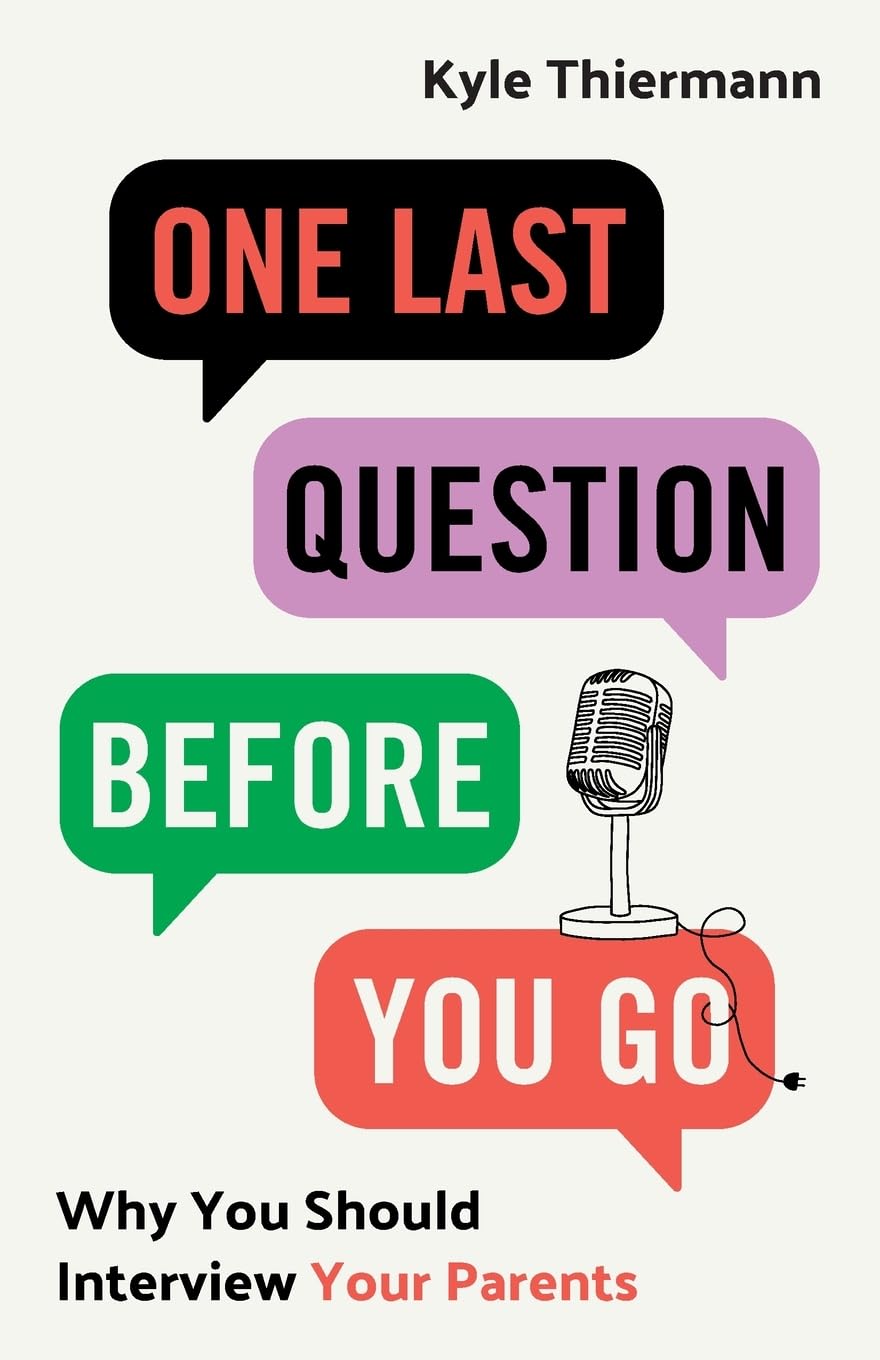
Kyle Thiermann’s One Last Question Before You Go is part memoir, part field guide for emotional courage. It begins as a practical project, recording conversations with his parents before it’s too late, but evolves into a moving exploration of love, misunderstanding, and reconciliation. Thiermann opens his life with remarkable honesty, describing a childhood shaped by idealism, tension, and unconventional choices. His storytelling blurs the line between instruction and confession, reminding readers that asking questions can be both a form of preservation and an act of healing.
Thiermann’s writing balances clarity and lyricism. He recounts moments from his youth in Santa Cruz with humor and unease: surf sessions laced with danger, family debates over truth and science, and a mother whose belief in conspiracy theories fractures their bond. When he writes, “Now when my mom and I look up at the same blue sky, she sees chemtrails, where I see clouds,” the simplicity of the line reveals something profound about distance and love. It’s this honesty, direct, unsentimental, but deeply felt, that gives the book its emotional weight.
His reflections on interviewing parents are both practical and philosophical. Thiermann treats listening as a skill that requires humility and patience. His advice to start with simple questions, to let silence breathe, feels genuine and attainable. He doesn’t posture as an expert but as someone learning in real time. When he describes forcing himself to write “bad questions” until something true appears, it captures the imperfect process of reaching toward another person.
The book’s rhythm is conversational yet purposeful. Thiermann alternates between intimate family vignettes and broader reflections on communication, mortality, and forgiveness. He resists the urge to offer neat resolutions, allowing discomfort and ambiguity to remain. That restraint makes his insights resonate more deeply.
One Last Question Before You Go manages to be both instructive and profoundly human. It’s a reminder that asking hard questions is not about control or closure, it’s about connection. This is a book for readers who value sincerity over polish, who want to bridge emotional gaps with their own parents, or who simply wish to understand their family stories before time takes them. Thoughtful, unguarded, and deeply affecting, Thiermann’s work lingers long after the final page.
Pages: 156 | ASIN : B0FR8JLM98
Finley’s Song

From the first page, Finley’s Song drew me into a story that mixes music, grief, and the stubborn hope that follows loss. At its heart, the book tells the story of Finley, a pianist whose husband dies in a sudden accident, leaving her to raise their son, Max, while stumbling through her own guilt and despair. The novel moves between their shared silence at home, their escape to Paris, and the healing they cautiously piece together through new connections, old memories, and the enduring pull of music. I liked how much this is not just Finley’s story but Max’s too, a portrait of a mother and son mourning in parallel yet trying to keep each other afloat.
The writing had me hooked and sometimes unsettled in the best way. Kathryn Mattingly paints grief with raw strokes, never dressing it up, never trying to make it neat. Some passages felt like a gut punch, especially when Finley blames herself for Simon’s death. The guilt is heavy, almost suffocating, and I could feel the weight of it. But then there are these glimmers, moments with Max by the river, or Finley staring at the Eiffel Tower, that break through like sunlight. I found myself both aching and rooting for them, wanting them to reach those fragile pockets of beauty again. The language isn’t flowery for the sake of it. It’s direct yet tender, and it left me pausing more than once just to sit with the feeling it stirred.
Sometimes Finley’s voice frustrated me. Her self-blame circles back so often that I caught myself whispering “let yourself breathe.” Yet, that honesty made her real. People stuck in grief do repeat themselves, and the author didn’t shy away from that truth. I also found Max’s perspective refreshing and painfully accurate. His teenage awkwardness, his longing for his father, his quiet way of observing the world, they rang true. If anything, his sections gave the book a balance it needed, grounding Finley’s spiraling thoughts with the bluntness of youth. That duality is what made the story so enjoyable for me.
Finley’s Song is filled with small, luminous moments that feel earned. I’d recommend it to anyone who wants to read about loss in a way that doesn’t smooth the edges but instead embraces the messiness of it. Fans of books like Little Fires Everywhere or Where the Crawdads Sing will find a similar mix of emotional depth and vivid sense of place, but Finley’s Song feels more personal and raw, like a private journal you’ve been allowed to read.
Pages: 226 | ISBN : 978-1952909344
The Unabridged Life of Missy Kinkaid

The book follows Missy Kinkaid, a fifty-something woman navigating the mess of family baggage, complicated friendships, and the ghosts of old loves. It digs into her rocky relationship with her mother, who spent most of her life institutionalized, her bond with her late father, who adored her, and her often-fractured but deeply entwined connection with her cousin Margo. Around her orbit, other women, like Scarlet and Amber, form her circle of truth-telling, wine-drinking allies. What unfolds is not a neat story but a layered patch.
Reading it felt like sitting across from a friend who doesn’t sugarcoat anything. I laughed out loud at Missy’s breakdown in the cereal aisle, and then I teared up when she admitted how much her mother’s coldness still cut into her. The writing had this strange magic. At times, it was witty and biting, other times, it felt like someone opening an old wound right in front of me. Some parts rambled, but even then, I didn’t want to look away. It felt messy in the best way, like life itself.
I found myself torn between wanting to hug Missy and wanting to shake her. Her bitterness toward Margo stung, but I understood it, and the honesty of that relationship was one of my favorite parts. The book isn’t afraid to show women being selfish, being cruel, and being brave, sometimes all at once. That’s what hooked me most, the refusal to paint anyone as simply good or bad. The emotional swings kept me on my toes. One page I was chuckling at sarcastic banter, the next I was heavy with grief. It felt real in a way most novels don’t.
I was left thinking about how family shapes us, even when we try to escape it, and how friendship can carry us through the darkest corners of memory. I’d recommend this book to readers who like character-driven stories that don’t flinch away from uncomfortable truths. It’s especially for women who have lived through complicated families, failed relationships, and the ache of trying to start over. If you want something tidy, this isn’t it. But if you want to feel like you’ve lived a whole other life, then Missy Kinkaid’s story is worth your time.
Pages: 288 | ASIN : B0FPYKKFTP
Lasting Impacts
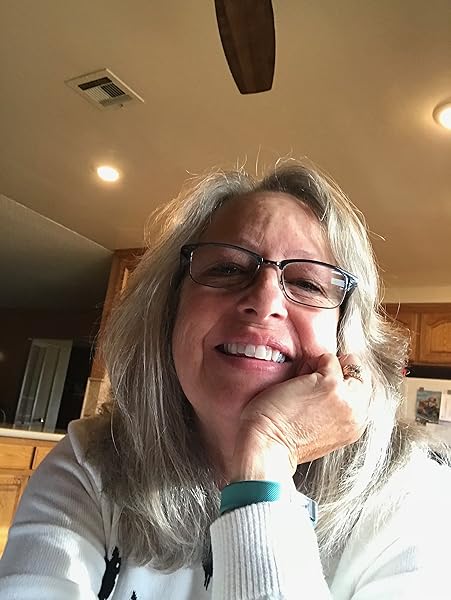
Buckaloo follows a couple opening a dog training academy and preparing for their wedding, who are navigating past traumas, the complexities of relationships, and the chaos of planning two major life events at the same time. What was the inspiration for the setup of your story?
When people find each other and choose to marry, they come with baggage from past relationships. Sometimes one partner is an open book, and the other holds close to their secrets. The story explores what happens when trust builds enough to share every truth. It’s about a couple with a relationship that can withstand whatever comes their way. That kind of maturity takes work but pays dividends. Offering two major life events, each with challenges, allows the reader to embrace the couple and cheer for their successes.
What were some of the emotional and moral guidelines you followed when developing your characters?
Early on, the reader learns that Bill is a “still waters run deep” kind of guy. His concern, respect, and acceptance of others have clearly been a long learning curve. Once inside his cadre, he’d give you anything. It took a long time to let Harley inside. Harley’s charisma brings people together. As an introvert, she has longed for a village to call on. In the novel, she realizes that her friends and family village was her doing. She shows love and acceptance to everyone in her ever-growing circle, watching as each one embraces their talent. Harley aches when things don’t go the way her friends or family might want. Central to Harley’s circle are dog lovers, with many dog owners in her crew. Harley wants others to have the close, respectful relationship she has with Gemma. The reader learns that her maturity has grown from several challenges, and we find she can still struggle over life’s triggers.
What were some themes that were important for you to explore in this book?
Weaved throughout the novel are four key themes. The first of these is that mid-life relationships are essential. The people in these relationships can help your life flourish, even if they haven’t been lifelong friends. Another theme conveyed in the work focuses on the human-canine relationship and how deep those relationships can become, with love, respect, and training. Another theme is how momentous life events can happen in planned and unplanned ways, and what matters is how you react. The other theme is how we humans form communities or villages, and especially how those have lasting impacts on our lives in large and small ways.
Will there be a follow-up novel to this story? If so, what aspects of the story will the next book cover?
Another novel with many of these characters and several new ones is planned. There will be continued focus on Bill and Harley, and their dogs Gemma, Blackjack, and their newest, Coda. Now that a few friends have become neighbors, there will be more focus on them, as well as the dog training academy. Additionally, Harley and Gemma are sure to find themselves assisting on a trail adventure.
Author Links: GoodReads | Facebook | Website | Amazon
Throughout Harley and Gemma’s adventures, they have made friends in states as far east as Washington, D.C. and as far west as Oregon. Those friends and more have assisted Harley and her fiancé, Bill Harris, with their engagement and in their home designing and ranch developing endeavors. Those same friends gather once more to assist Harley and Bill with the academy opening. Since the friends have travelled far once again, Harley and Bill have agreed to have the academy opening one weekend with the wedding taking place the following weekend.
Before the events can happen, Harley and Gemma are called away for another dangerous adventure where Harley’s and Gemma’s skills are required. Before and between the life-changing events, friends and family arrive with their dogs, their own imperfect relationships, and their areas of expertise to help Harley and Bill. The story of Buckaloo revolves around excellent food, enjoyable conversation, especially those taking place at the fire pit, and dreams that might come true, though likely in unexpected ways.
Hurricane, twelve dogs, a training academy, glamping tents, and a black-clad stranger intertwine in this story of middle-aged friendships.
Blood on the Mountain

Blood on the Mountain, by Kristian Daniels, is a deeply personal coming-of-age story set against the backdrop of family conflict, small-town traditions, and the slow unraveling of childhood innocence. The story follows Noah as he navigates a tangle of faith, family expectations, and the painful realities of growing up different. Through his eyes, we see the sting of bullying, the quiet terror of not fitting in, and the tentative steps toward self-discovery both in terms of identity and sexuality. The novel blends these intimate struggles with generational drama, love stories, and moments of hope, creating a portrait of adolescence that feels as raw as it does real.
The writing pulls you right into the emotional center of each scene. The author captures the ache of wanting to belong and the fear of being yourself, especially in a world that can be both judgmental and unkind. The depictions of bullying are tough to read but impossible to ignore. They’re sharp and often mirror the subtle cruelties that linger after the school bell rings. Against this backdrop, Noah’s quiet journey toward accepting his sexuality unfolds in small, tender moments that contrast beautifully with the hostility around him.
The ideas here resonate on multiple levels. This isn’t just a story about teenage hardship. I think it’s about the courage to live authentically in the face of fear. The book speaks to the LGBTQ experience without turning it into a cliché or a token subplot. Instead, it weaves identity and sexuality into the fabric of Noah’s growth. It also asks hard questions about family loyalty, faith, and the cost of speaking your truth in environments that demand silence. While I enjoyed the novel, I believe that some of the antagonists felt a bit too black-and-white, but the emotional honesty in Noah’s perspective more than balances that out.
I’d recommend Blood on the Mountain to readers who value heartfelt and character-driven stories. Especially those interested in LGBTQ narratives, anti-bullying themes, and the messy, beautiful process of self-discovery. It’s a moving, sometimes difficult, but ultimately hopeful read.
Pages: 393 | ASIN : B0FLVW2J1J
Intervention in Church Conflict

In Intervention in Church Conflict, Dorothy R. Dann shares her personal and professional journey of navigating congregational conflict using a blend of narrative therapy and family systems theory. Rooted in her doctoral work and lived pastoral experience, the book recounts how she developed and applied a model for healing a divided church community. Through a series of phases, listening, externalizing, deconstructing, and rewriting, the intervention unfolds with theological grounding, leadership development, and a commitment to wholeness. The book is part memoir, part field guide, and part theological reflection.
This book was a surprisingly emotional experience for me. I expected an academic treatment, something heavy with theory and light on humanity. But Dann writes with a raw honesty that caught me off guard. Her vulnerability and deep compassion for the congregation she served shine through every page. I could feel her struggle to hold steady as a new pastor, tasked with helping a broken community rediscover itself. The writing is accessible, even when she’s discussing dense theoretical concepts. What really struck me was her belief that healing begins with storytelling, not fixing, not diagnosing, but listening. That resonated with me. It reminded me that leadership isn’t about having the answers but about being present in the hard moments.
Some chapters, particularly those summarizing academic sources, felt like detours from the gripping story of the actual church intervention. I found myself craving more narrative and fewer summaries of systems theory. Still, the theory has its place, and I get why she included it. For a pastor or counselor walking into their own conflict zone, those resources might be lifelines. The blend of scholarship and heart is ultimately what gives the book its depth. I just wished for more moments where the personal story took center stage, because when it did, it sang.
I’d wholeheartedly recommend this book to pastors, seminarians, church leaders, and anyone trying to navigate messy group dynamics, whether in faith communities or elsewhere. It’s especially valuable for those who feel in over their heads but want to walk with integrity and love through tough seasons. This book doesn’t offer quick fixes. It’s not a how-to manual with step-by-step guarantees. But what it does offer is wisdom, humility, and hope, and sometimes that’s exactly what you need when all you see is conflict.
Pages: 97 | ASIN : B0CW1L7FG2



 LITERARY TITAN