Blog Archives
“Time” is Not Our Enemy
Understanding Time and Eternity takes readers on a thought-provoking and ambitious journey to explore how humans perceive, conceptualize, and live within the realms of time and eternity. What was the inspiration for the original and fascinating idea at the center of the book?
The idea to write this book came to me many years ago, seeking to understand the connection between us and “time”. I have always been concerned with how time “flows” and how it influences us. I was also interested in how time “modifies” our bodies, aging them. I wondered if there were no more eternity, would we be eternal?
My visit to Japan in 2023 catalyzed the process of writing this book and gave it its final form. Following this visit, I tried to understand “time” in a broader way, going beyond just the Western vision of time. I studied the Western and Eastern visions of the concepts of “time” and “eternity” in comparison. To my surprise, I found that they have many common elements, of course, in addition to the elements specific to each religion or philosophy.
One thing that stood out was the extent of your research and how you drew from multiple disciplines to form your theory, rather than relying solely on science or religion. Did you find anything in your research of this story that surprised you?
Yes. While doing research for this book, I was often surprised to find many common elements in both Eastern and Western religions or philosophies. I was surprised that “time” as a concern of man has been at the core of human philosophy since ancient times. Man – regardless of faith – has correlated the idea of “time” with the concept of divinity. Another “goal” that appeared almost obsessively was how man seeks to continue his own earthly existence in a certain way through “eternity.” It was also surprising for me to observe how different and sometimes opposing the Western vision is to the Eastern one regarding certain aspects of “time” or “eternity” and at the same time how close this same vision is for other views related to “time” and “eternity”.
What were some ideas that were important for you to share in this book?
Through this book, I tried to convey more of the idea.
First of all, understanding the concepts of “time” and “eternity” helps us to better integrate into society and have a broader vision of humanity. Also, understanding how these concepts influence people’s thinking and shape their religious beliefs contributes to the general progress of humanity.
“Understanding Time and Eternity” shows my own vision of “time”, namely the fact that time “exists” in the form of “timelines” that can be individual or societal, as well as my vision that time can also be in the form of “loops”, not only cyclical or linear. I also emphasized the idea that these “timelines” can “interact” with the “eternity lines” as well as my concept related to “time travel”.
However, I concluded that the emergence of a new temporal system is inevitable in the future due to the evolution of human society and the increasing influence of artificial intelligence.
What is one thing that you hope readers take away from Understanding Time and Eternity?
Through my book, I would like readers to understand that knowing ourselves and our relationship with what is around us will come to define us as individuals. When we appear in this world, we are not asked, and when we leave this world, we are also not asked for the accord. We come to this world from eternity, and after we die, we go again into eternity. From these aspects, we should start our introspection and analysis of the relationship between us and “time”.
We must understand that “time” is not our enemy and death is not the end. Regardless of our philosophy of life or our faith, temporality and eternity are intertwined, and we must each find our own “niche” that ensures our emotional stability and personal fulfillment.
I wish that my readers in the West gain a better understanding of Eastern philosophy and those in the Far East gain a clearer vision of how Westerners live their daily lives.
But are we really in a battle with time? Is it our enemy? Can’t we make it our friend during our earthly life? Regardless of whether we consider it a friend or an enemy, time leaves visible the effects of its passage through our individual lives or our collective lives as a society.
In this book, I was exclusively concerned with time in a philosophical sense, specifically with how humans perceive it and how they relate time to their philosophical conceptions and religious beliefs. I explored the relationship between temporality and eternity, and I have concluded that, although time and eternity are opposites from all points of view (in the general view), in my view—which I have presented in this book—they are not as opposites. Still, they interpenetrate and influence each other.
I have concluded that not only does the past influence our future, but the future can also influence the past.
This book is a continuation of my previous works, which explore philosophical and religious themes and complement my philosophical and theological vision regarding the reality around us and what lies beyond it.
I have analyzed the concept of time from a philosophical and theological perspective.
I examined the concepts of “time” and “eternity” from the perspective of the Abrahamic religions (Christianity, Islam, Judaism) but also from the standpoint of Eastern religions/philosophies from the Far East (Buddhism, Daoism, Hinduism, Shintoism, Confucianism, Jainism). It was essential for me to examine how humans relate to “time” and “eternity,” as well as the impact of these philosophical concepts on the lives of common people throughout the millennia.
A significant chapter was the realization of a comparative analysis between Eastern and Western thought regarding temporality and eternity.
At the end of the book, I conclude that the emergence of a new temporal system is inevitable in the future, given humanity’s evolution and the increasing influence of AI on human society.
Understanding the concepts of “time” and “eternity” helps us integrate better into society and have a broader, more inclusive vision of humanity.
I hope that the readers from the West will gain a deeper understanding of Eastern philosophy and that those from the Far East will have a clearer vision of how Westerners live their daily lives.
This book aims to decipher the “energies and philosophies” that shape a community’s behavior, whether it behaves similarly or differently from other communities. Religions and philosophies are essential for the health of communities, and the concepts of “time” and “eternity” are crucial to them Therefore, their understanding is essential for the general progress of humanity.
FEISTY: Dangerously Amazing Women Using Their Voices & Making An Impact
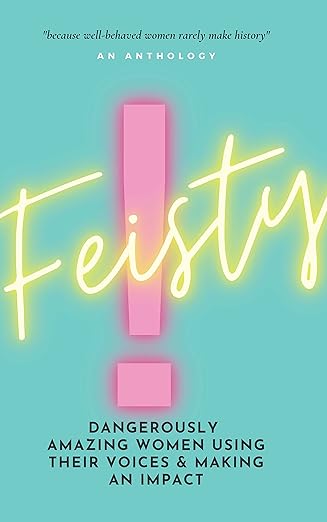

Feisty is a powerful anthology filled with essays, memoirs, and poetry by over twenty women who each share their personal battles with shame, oppression, trauma, and the search for self-worth. From raw, searing accounts of domestic abuse to triumphant awakenings of creative and spiritual freedom, this book presents a vivid mosaic of female resilience. Each story is deeply personal, yet collectively they echo a shared defiance of being called “too much,” “too loud,” or “too emotional.” Through these narratives, the authors reclaim the word “feisty” as a badge of honor.
What I loved most was the book’s refusal to sugarcoat the truth. The writing is honest, even when it’s uncomfortable. Some passages left me gutted, like Adrienne MacIain’s story of surviving assault or Mimi Rich’s slow unraveling and eventual reclaiming of her life after intimate partner violence. These women don’t pretend to be saints. They tell the truth. Their voices, different in style and rhythm, pulse with pain and fire. The range of experiences is striking, covering motherhood, racism, sexual trauma, divorce, and identity, all of which weave in and out, but each tale feels grounded in something fierce and unbreakable. As a reader, I didn’t just learn about their lives; I felt their rage, their heartbreak, and their quiet victories.
The format of the book offers a vibrant diversity of thought and emotion, allowing each woman to speak in her own way, whether through raw poetry or richly detailed memoir. Every story has its own rhythm and tone, and that variety keeps the reading experience fresh and dynamic. I found myself drawn into some pieces, surprised by others, and always curious about what would come next. These women aren’t telling one tidy story. They’re sharing their own truths, in their own style, and that’s what makes the book feel so alive.
Feisty left me both exhausted and inspired. This isn’t a book you read to escape. It’s a book you read to understand. To witness. To honor. I’d recommend it to anyone who wants to hear what courage actually sounds like, not the polished kind, but the scratchy, trembling, soul-shouting kind. This is for readers who are ready to feel something real, who might be grappling with their own dragons, and who need to hear that they are not alone, and that “too much” might actually be just enough.
Pages: 214 | ASIN : B09Q5923Y6

Joe Gross is Dead
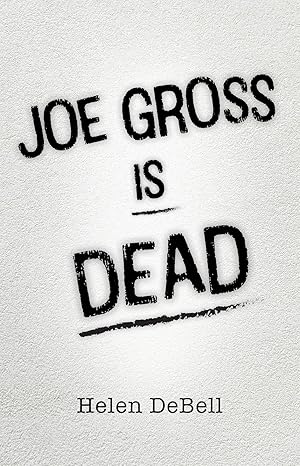
Helen DeBell’s Joe Gross Is Dead is a raw and deeply personal memoir chronicling her battle with depression, bullying, and self-worth, and how her life was radically transformed through her faith in Jesus Christ. Growing up as the youngest child in a large Iowa farm family, DeBell weaves memories of her loving home life with the intense isolation and cruelty she experienced from peers. The nickname “Joe Gross,” cruelly given to her in high school, became a symbol of deep shame and self-loathing. But over the course of her story, we witness a spiritual awakening. DeBell shares how the voice of God intervened in her darkest moments, eventually leading her to a life of purpose, joy, and ministry. Her journey from the pain of near-suicide to becoming a mother, writer, and Christian leader is both heartbreaking and inspiring.
Reading this book was like stepping into someone’s diary and watching the pages of hurt slowly turn into a hymn. What struck me most was Helen’s ability to balance poetic honesty with gritty memories that don’t sugarcoat anything. The way she describes the moment she nearly took her own life felt like time stopped. Her writing is simple but full of emotion. It never felt distant or rehearsed. She made me feel like I was there beside her, in her childhood barn, in her quiet heartbreak, and later, in her healing. I admired her strength in exposing wounds that many people would rather forget. There’s something rare and brave about the way she holds nothing back.
But what really moved me wasn’t just the pain. It was the change. The book doesn’t just say “things got better.” It shows it. Her love story with Randy, her discovery of worship music, and the moment she gave her life to Christ, those pages glowed. You can sense her joy, not just in the words but in the way she lifts the weight off the story. There’s a powerful beauty in the way she reclaims the insult “Joe Gross” and turns it into “Jehovah’s Gardener.” It’s rare to read something that feels so personal and still leaves space for the reader to reflect on their own story.
Joe Gross Is Dead is for anyone who has ever felt invisible or broken, for anyone who’s been labeled and left out. It’s especially meaningful for people of faith or those curious about finding hope in God during deep pain. This isn’t a perfect, polished redemption arc, it’s a real one. I wouldn’t call it light reading, but I would call it necessary. If you’ve ever needed proof that people can come back from the edge and find life again, this book is it.
Pages: 42 | ASIN : B0F7C9F4BM
Understanding Time and Eternity


In Understanding Time and Eternity, Vasile Ghiuta sets out on an ambitious journey to explore how humans perceive, conceptualize, and live within the realms of time and eternity. Drawing from a vast array of sources like Western philosophy, Eastern religions, Christian theology, modern physics, and psychology, he examines how time has been viewed through history and what it might truly mean. From ancient philosophers like Aristotle to contemporary scientific ideas about spacetime, and from Buddhist cycles to Christian eschatology, Ghiuta dissects and compares how cultures, thinkers, and faiths have tried to grasp these elusive ideas. A central thread running through the book is his personal thesis that time and eternity are not opposites but intertwined states of being that bleed into each other, influencing the fabric of our lives and identities.
Ghiuta writes with passion and a sense of awe, but sometimes it felt like he was trying to fit the whole universe into one bottle. There were times I was completely drawn in, like when he described time as an illusion we all share, or the theory of temporal and eternal “loops” intersecting in our souls. I found that idea beautiful and haunting. But other parts, especially those heavy with historical summaries or theological debates, felt academic. He clearly has deep respect for every tradition he references. That said, his sincerity shined through, and I appreciated that he wasn’t afraid to say when he disagreed with figures like Plato or Nietzsche. He wasn’t just retelling what others thought, he was wrestling with it all in his own voice.
What really stuck with me was how Ghiuta returned, again and again, to the personal side of time, how it shapes us, how it defines our memories and our fears, how it quietly holds hands with eternity in everything we do. His reflections on death, legacy, and the “timeless” qualities of love and kindness felt honest and moving. It’s not every day you read a book that jumps from astrophysics to Japanese cultural concepts like “Ma,” and still tries to land on the question of what happens when we die. That wild scope was the book’s strength. It made me think hard, and I never stopped being curious about where he would go next.
I’d recommend this book to people who like big questions and don’t mind taking the scenic route through philosophy, religion, and science to get some answers, or more likely, better questions. If you’re the type who likes to read slowly, underline a lot, and sit quietly with your thoughts afterward, you’ll find something rich here. It’s for seekers, wanderers, and lovers of deep thought, Ghiuta’s book might just shift how you think about your own clock, and what lies beyond it.
Pages: 492 | ISBN : 978-1-7775695-4-9
Jesus Help Me Know You More: How to Experience the Depths of God’s Love

Jake Huffman’s Jesus, Help Me Know You More is a heartfelt and conversational guide to deepening your relationship with Jesus. It’s a blend of personal stories, biblical reflection, and gentle spiritual coaching, all meant to help readers experience the love of God in a more real and intimate way. Huffman breaks the journey into chapters focused on rediscovering love, clearing spiritual clutter, facing suffering, and embracing joy, grace, and identity through Christ. Each chapter ends with reflection questions, inviting readers not just to learn but to live what they’ve read.
This book surprised me. A lot of Christian devotionals feel either too stiff or too shallow. Huffman threads the needle with warmth and clarity. His voice feels familiar, like a trusted friend sharing what helped him crawl out of spiritual dryness. The personal stories, especially those involving family and friends facing hardship, made the abstract truths stick. There’s a kind of quiet power in his writing. He doesn’t shout or preach. He just invites, gently and consistently, into a deeper knowing. I appreciated how he doesn’t sugarcoat the struggle. The chapter on suffering, for instance, hit close to home and didn’t try to explain it away; it just sat with it, and that honesty was refreshing.
One of the book’s strengths is its gentle, steady tone. Huffman stays grounded, offering simple truths through scripture and warm metaphors like “sitting by the fire.” There’s a comforting rhythm to the way he revisits key themes, circling back to the heart of knowing Jesus in different ways. For readers who are weary from striving or burned out on performance-based faith, this kind of repetition isn’t just helpful; it’s healing. The book’s simplicity becomes its strength, offering a quiet space to breathe and reconnect.
I’d recommend Jesus, Help Me Know You More to anyone looking to slow down and realign with the heart of their faith. If you’ve drifted or feel numb in your walk with God, this book could be like cool water for a parched soul. It’s a relational wake-up call. For new believers, tired churchgoers, or anyone who just wants to feel close to Jesus again, this book feels like a gentle hand on your shoulder saying, “Hey, He’s still right here.”
Pages: 241 | ASIN : B0F3PFXKPM
The Widow Chose Red?: My Journey with Jesus, John, and ALS

The Widow Chose Red? is a deeply personal memoir chronicling the life of Rachel Kerr Schneider, from her whirlwind romance with John Schneider through decades of marriage, parenting, and professional shifts, culminating in John’s heartbreaking battle with ALS. Told through a lens of faith and fierce devotion, the book walks readers through the joys of new beginnings, the messiness of real relationships, and the crushing weight of terminal illness, all while clinging to the hope and grace found in God.
The writing is conversational, often funny, and incredibly raw. Rachel doesn’t hide behind platitudes. She’s honest when things are hard, she laughs when they’re absurd, and she leans into her faith with a kind of vulnerability that feels both courageous and familiar. The structure, split into sections of life stages, reflects how grief and growth aren’t linear. I loved how she wove in reflections after each major chunk of the story. It gave me space to breathe and think alongside her.
There were times when I felt gutted by the emotional weight of it all. Watching John’s health decline through Rachel’s eyes was both beautiful and brutal. Her love for him doesn’t flinch. It holds steady through every stage of ALS, even when things got messy and uncertain. But this isn’t just a moving book; it’s a book about showing up. It’s about surviving with grace when life doesn’t let you plan ahead. I admired how Rachel let us see the struggle to stay spiritually grounded when everything feels unfair. And somehow, even in the grief, she writes with humor.
The Widow Chose Red? is a love letter to John, to her sons, and to the God who walked through every minute of it with her. If you’ve ever cared for someone who’s sick, if you’ve wondered where God is in your pain, or if you just want to feel less alone in your own tough season, you’ll find something in Rachel’s story. I’d recommend it to caregivers, to women figuring out who they are after loss, and to anyone trying to make peace with the messiness of life. You don’t need to be religious to connect with her heart.
Pages: 224 | ISBN : 978-1966561101
What It Really Means To Give

Tithing and Giving: A Biblical Study guides readers through an in-depth exploration of biblical tithing, contrasting Old Testament mandates with New Testament freedoms, structured around the idea that the commonly accepted modern practices of tithing, especially monetary, are misunderstood and not supported by Scripture. What inspired you to write this important book?
That is a good question. In truth I had no intention on writing a book about tithing and especially had no plans to teach on giving. This all began with the idea to take some study material I had already done on biblical tithing and do a short study on it for my family.
The title was literally A short Study on Tithing. However, when I began to type things out I felt that the Holy Spirit was leading me to write a book. It was some what terrifying for me as I did not feel qualified and was not looking forward to the heavy pushback that I would get. Since this was not the first time I have had this experience with the Holy Spirit as far as being inspired to teach as he instructed me, which is what happened with The Beauty of Tribulation, I decided not to fight. Once I gave in it felt more like he was using my fingers to convey the message he desired and I was just along for the ride. It did not even feel like time was passing at a significant rate as my fingers danced across the keyboard. Then the next scary thing happened, he had me teach on giving. I was not prepared to do such a thing and did not really want to do so, who in the world am I to teach anyone on financial stewardship? Again, I yielded and the rest is officially history. I am learning more and more that it is not about being comfortable, competent or prepared when God desires you to obey.
What is the most common misconception you feel people have about tithing in today’s world?
This is not an easy question since I feel the misconceptions are all equally concerning. One that God taught me through writing this book is that Christians should not expect God to give them a reward just because they have done as he has commanded. God owes us nothing but is greatly moved by obedience. Even so you will not get like for like as a precedent set in stone regardless of how much you give or do. The reason that this one is so damaging is that it is used greatly in so-called messages about prosperity.
What were some ideas that were important for you to share in this book?
As I was writing these are some of the important ideas that God brought to my attention in this teaching.
· What Paul taught about when not to give.
· What it really means to give hilariously or cheerfully.
· What sacrificial giving actually is?
· That the act of giving is the blessing not what you get because you gave.
What is one thing that you hope readers take away from Tithing and Giving?
One thing I pray that readers take away from Tithing and Giving is the freedom to give to God from their heart not out of obligation, fear, tradition or because they feel that they must so that they can truly experience his blessedness as well as the understanding that giving to God is also looking out first for those who are members of his body and then those who are without.
Author Links: GoodReads | X | Facebook | Website
What does the Bible really say about tithing, giving, and Christian stewardship?
Is tithing a command for today—or a misunderstood tradition?
Tithing and Giving: A Biblical Study is a comprehensive guide for believers who want to understand God’s plan for finances, generosity, and blessing. With clarity and compassion, author J.A. Cox explores what Scripture actually teaches about biblical tithing, New Testament giving, and the difference between religious obligation and Spirit-led generosity.
✅ Inside this Bible-based study, you’ll discover:
What the Bible says about tithing in the Old and New Testaments
The difference between biblical stewardship and church tradition
How to discern truth from myths in Christian financial teaching
Whether Christians are still required to tithe today
What it means to give with faith, freedom, and love
The true connection between giving and God’s blessing
This book is written for thoughtful believers who want to grow in faith while also handling money in a way that pleases God. If you’ve ever asked, “Is tithing biblical?” or “Should Christians tithe today?” — this study is for you.
By the end of your journey, you’ll gain a deeper understanding of scriptural giving, a renewed appreciation for Christian generosity, and practical guidance on how to walk in biblical financial stewardship—free from guilt and full of grace.
Tithing and Giving A Biblical Study
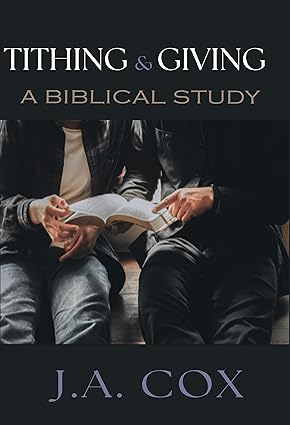
In Tithing and Giving, J.A. Cox walks readers through an in-depth exploration of biblical tithing, contrasting Old Testament mandates with New Testament freedoms. The book is structured around the idea that the commonly accepted modern practices of tithing, especially monetary tithing, are deeply misunderstood and not supported by Scripture under the new covenant. Cox builds his argument with a step-by-step examination of Hebrew terms, priestly duties, Old Testament law, the sacrificial system, and its fulfillment in Jesus Christ. He stresses that obligatory tithing, once rooted in supporting the Levitical priesthood, has no place in the life of a Christian after the death and resurrection of Christ, who he argues has fulfilled and replaced the entire priestly system.
I admired Cox’s commitment to sticking with Scripture, often going to great lengths to explain each passage and how it fits within the larger biblical story. At times, the repetition felt heavy, but it also showed just how passionate he is about getting this point across. I didn’t always agree with every conclusion, but I couldn’t deny the depth of thought behind it. Cox’s argument that many churches today push tithing based on verses taken out of context was uncomfortable but also thought-provoking.
I did find the writing style to be pretty raw at points. There were parts where I wished for smoother transitions. But then again, that direct and sometimes urgent tone also gave it character. It read less like a theology textbook and more like a heartfelt letter to fellow believers who might be misled. The emotional weight behind his convictions was clear. You can feel his frustration over what he sees as false teaching, and also his deep care for the truth of Scripture. That kind of honesty gave the book power, even when the prose didn’t always flow easily.
I think Tithing and Giving will really connect with readers who are looking for a strong biblical case against mandatory tithing in the modern church. It’s not light reading, and it’s certainly not trying to sugarcoat anything. But if you’re a pastor, a Bible teacher, or just a Christian who’s tired of feeling guilty over giving, this book will give you something to think about. I’d recommend it to anyone open to rethinking what the Bible really says about giving.
Pages: 121 | ASIN : B0F9TZCK7W


 LITERARY TITAN