Blog Archives
A Single Tapestry

Transcendence is a sweeping exploration of how the mind bridges science and spirit, revealing the brain as an oracle that connects intuition, dreams, and divine dialogue. What inspired you to weave neuroscience and mysticism together?
I’ve always felt that science and spirit aren’t rivals — they’re different languages describing the same mystery. Neuroscience gives us the wiring, but mysticism gives us the meaning. The inspiration came from realizing that breakthroughs in brain research — about memory, dreams, or intuition — echo things mystics have said for centuries. Writing this book was my way of drawing those threads together into a single tapestry. Since I was a child, I came to realize that in a way, people in the world around me appear in my dream world. Some people call it the astral realm or the ethers. It’s usually not for the better. I have had to learn boundaries, because they have tried to bring me down, or steal from me. Electromagnetic field (EMF) theories of mind/brain integration have been proposed to explain brain function for over seventy years. Interest in this theory continues to this day because it explains mind-brain integration and it offers a simple solution to the “binding problem” of our unified conscious experience.
Were there particular case studies or personal experiences that most convinced you of the brain’s “oracle” potential?
Yes. There are clinical cases where patients, in altered states of consciousness, reported insights or visions that later proved astonishingly accurate — like dreams predicting events or intuitions guiding survival decisions. But just as important were my own moments of deep meditation and dream recall, where the brain seemed to act less like a machine and more like a messenger. It convinced me that the brain isn’t just processing data — it’s participating in a dialogue larger than itself. From my own personal experience? In the past 15 years, I have had dreams of events that have happened. The dreams do not easily portray each future in a straightforward way. Sometimes, I might view an event from a completely different point of view, but when the event takes place, I am like, “Oh that is what that was.” So I had to study this to understand the “why” I get such visions.
The sections on dreams and prophecy are especially powerful. How do you personally practice dreamwork, and what have you learned from it?
I keep a dream journal. Writing first thing in the morning allows the symbols and emotions to stay vivid before they fade. Over time, patterns emerge — recurring images, motifs, even warnings. What I’ve learned is that dreams aren’t random static. They are coded messages from the deeper self, and sometimes from something beyond the self. They’ve taught me patience, humility, and a willingness to listen to what reason alone might dismiss.
Looking ahead, how do you imagine transhumanism and artificial intelligence reshaping our capacity for transcendence?
We’re entering an era where technology will blur the line between the natural and the artificial. AI might expand our access to knowledge, while neural interfaces could deepen our ability to map consciousness itself. But the real challenge will be ensuring that these tools don’t reduce us to data points, but rather help us reach further into the mystery of being human. My hope is that transhumanism doesn’t strip transcendence away but amplifies it — giving us new ways to experience awe, connection, and meaning.
Author Links: GoodReads
Bridging modern neurotheology with ancient wisdom traditions, Transcendence examines how prophetic dreams, intuitive cognition, and spiritual sensitivity are not anomalies but core features of the evolved human mind. Each chapter peels back layers of illusion to reveal how time, identity, memory, and perception are intertwined with sacred geometry, the aura, the gut-brain axis, and quantum possibility.
From the teachings of mystics and prophets to cutting-edge insights into magnetoreception, biofields, and heart-brain coherence, this book maps a path forward for the spiritual seeker in a digital age. It investigates technospirituality, lucid dreaming, neurodivergent sensitivity, and the destiny of the awakened soul in a rapidly shifting world.
Transcendence is not just a book—it is an invocation to reclaim your inner oracle. You will discover practices, questions, and revelations that align intuition with divine will, empowering you to walk your highest timeline with confidence and clarity.
Perfect for readers of Joe Dispenza, Carl Jung, Gregg Braden, or Michael Harner, this book is a must-read for mystics, visionaries, spiritual empaths, and anyone drawn to the sacred intelligence of the cosmos.
Literary Titan Book Award: Nonfiction

The Literary Titan Book Award recognizes outstanding nonfiction books that demonstrate exceptional quality in writing, research, and presentation. This award is dedicated to authors who excel in creating informative, enlightening, and engaging works that offer valuable insights. Recipients of this award are commended for their ability to transform complex topics into accessible and compelling narratives that captivate readers and enhance our understanding.
Award Recipients
















Just a Little Witch, Mostly a Mom by Diana Jonas
Visit the Literary Titan Book Awards page to see award information.
Lord, Lord – a heavenly mystery

Lord, Lord – a heavenly mystery tells the story of Liza, a small-town reporter who suddenly finds herself in Heaven after her untimely death. What follows is not a harp-filled, cloud-floating afterlife but a layered, curious introduction to eternity where angels sip tea, Heaven looks like an Ivy League dean’s office, and “tourists” are given soft landings before judgment. Through conversations with Michaela, her welcoming angel, Liza begins to unpack her life, her choices, her loves, and her mistakes, all while navigating the strange mix of humor and gravity that this version of the afterlife offers.
Author Kathleen Cochran writes with a conversational ease, almost like sitting down with a sharp-witted friend who isn’t afraid to poke at your doubts and faith. The dialogue carried most of the story, and it was both quick and playful, though sometimes it wandered so much I caught myself rereading passages to stay grounded. Still, there were moments that stopped me in my tracks, like when Michaela explained the Bible as a kind of recruiting tool.
Liza’s questioning sometimes circled back on itself, and a few of the explanations felt a little more direct than I expected. Still, the story would then shift into a tender memory or drop in a line of humor that caught me off guard in the best way, and those moments made me appreciate the guidance rather than resist it. The balance between skepticism and belief felt real. I never doubted Liza’s cynicism because it sounded so much like my own inner voice when I wrestle with faith.
By the end, I felt like I’d been through both a lighthearted play and a quiet sermon. It isn’t a book for someone who wants tidy theology or a straight path to answers. It’s better suited for readers who like their mysteries with a side of laughter, who don’t mind Heaven being described with Persian rugs and Waterford lamps, and who want to explore faith without losing the messiness of doubt. I’d recommend it to anyone who enjoys thought-provoking fiction with a spiritual edge, especially if they don’t mind a story that feels more like a conversation than a plot-driven march.
Pages: 168 | ASIN : B0161ZHCWQ

Transcendence: The Spiritual Power of the Mind
Transcendence is a sweeping exploration of how the mind can serve as a bridge between the physical and the spiritual. It blends neuroscience with mysticism, moving from the science of intuition and the gut-brain axis to dreams, synchronicity, and even future-facing ideas like transhumanism and artificial intelligence. The author positions the brain as an oracle, a receiver of divine messages, and presents a path of practices like meditation, dream journaling, and ritual as ways to activate this hidden potential. Case studies, spiritual traditions, and speculative science are woven together into a tapestry that aims to show how human beings are wired for transcendence and divine dialogue.
Reading this book felt like opening a window into a world where science and spirit refuse to sit in separate corners. I loved the boldness of tying brain structures like the amygdala and insula to things like gut feelings and sacred intuition. The author doesn’t shy away from lofty claims. I found myself charmed by the sincerity and the sense of wonder. The sections on dreams and prophecy especially stirred something in me. I could feel the awe the writer clearly carries, and it reminded me of how powerful and strange it feels when life hands you one of those uncanny coincidences that makes you stop in your tracks.
There were parts where the writing was loaded with mystical terms and scientific terminology that sat side by side. Some sections left me desiring fewer layers of theory and more grounded stories. The poetic tone works well in moments, but it can also drift into repetition. Still, I couldn’t deny the author’s conviction. It’s rare to read something that manages to be both earnest and ambitious, and I respect that the book aims not just to inform but to transform. It wants to shift how you see yourself and your mind, and that’s no small thing.
I think this book will speak loudest to seekers who love crossing boundaries between science and spirit, people who journal their dreams or meditate, and also read about quantum mechanics for fun. If you’re open to being carried along by a vision that ties brainwaves to divine whispers, this book will likely resonate with you. For me, it left me reflecting on my own inner signals and how much more there may be to listen to.
Pages: 223 | ASIN: B0FG1TTTF8
Prepare to Quit

After reading Prepare to Quit: Finding the Keys to a Spirit-Filled Life Beyond Alcohol by Rose Ann Forte, I found myself deeply moved, both as a reader and as someone who values honest, faith-centered transformation. The book is a heartfelt and structured guide for those who are considering breaking free from alcohol dependency. It walks through eight “keys,” each representing a step toward not just sobriety, but a more meaningful, Spirit-filled life. Forte combines personal testimony, Scripture, neuroscience, and actionable exercises to help readers reframe their relationship with alcohol. Rather than jumping straight to quitting, she focuses on preparing to quit mentally, emotionally, and spiritually, which feels more compassionate and more effective.
Reading this book felt like listening to a wise friend who has been through it. Forte doesn’t lecture or shame. She opens up with real vulnerability about her own drinking habits, the way alcohol snuck into every part of her life, and how hard it was to admit it had become a problem. I enjoyed the honesty. And then she ties that into how God led her through recovery, not with force or fear, but with patience and truth. The writing is plainspoken, sometimes even chatty, but always sincere. I liked how she used simple, relatable metaphors like puzzles, paths, keys, and crosses to illustrate big, complex ideas. It helped the book feel grounded and made the process of quitting alcohol feel like a journey you can actually take.
What I appreciated most was how practical the book is without ever being rigid. Forte suggests journaling, support groups, visualization, and self-investment, but never in a “this is the only way” kind of tone. She invites you in. She gives tools and Scripture, then steps aside and lets you wrestle with what works for you. That level of grace and flexibility is rare in self-help books, especially those tackling addiction. I did sometimes wish the writing had more variation in tone, it leans on encouragement and Scripture, which is beautiful, but I think a little more narrative storytelling or emotional contrast might’ve made certain moments land harder.
I’d recommend Prepare to Quit to Christians who feel stuck in a cycle with alcohol or who are just beginning to question their drinking habits. It’s gentle, but not soft. It’s hopeful, but not naïve. And most of all, it’s built on a foundation of faith and renewal, rather than shame. Whether you’re exploring a sober-curious path or seriously considering giving up alcohol for good, this book can help you feel less alone and far more equipped.
Pages: 120 | ASIN : B0F1TMH2D2
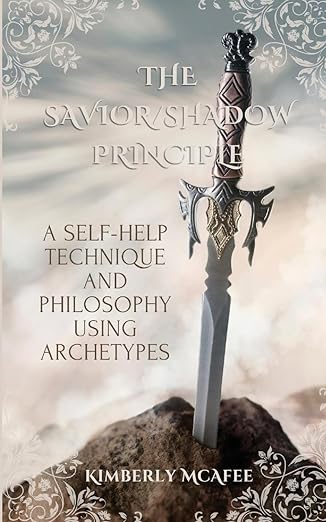
The Savior/Shadow Principle: A Self-Help Technique and Philosophy Using Archetypes

The book is both a personal memoir and a guide to a self-help technique the author calls the Savior/Shadow Principle. It blends mythology, psychology, and spirituality, drawing especially from the figures of Hekate and Jesus. McAfee takes readers through her journey from traditional Christianity into ChristoPaganism, then back into a reimagined Christianity. Along the way, she shares how she developed a meditative practice that uses archetypes of light and shadow to encourage self-honesty, growth, and healing. The book weaves in Jungian psychology, mythological parallels, and personal reflection, while offering readers practical ways to explore their inner lives through story and symbol.
I didn’t expect the writing to be so approachable. The author’s voice is warm, even when she’s discussing heavy topics like shame, fear, or midlife crises. She doesn’t hide behind theory or pretend to be an expert. Instead, she writes like someone who’s been in the dark, stumbled around, and finally found a lantern worth sharing. That sincerity resonated with me. At times, the language wanders, especially in sections heavy with history or myth, but that wandering matches the subject. The whole book is about exploration, so the digressions feel more like trails branching off a main path rather than distractions.
I loved the emotional undercurrent. I could feel the author’s vulnerability, her wrestling with faith, and her refusal to gloss over contradictions. That gave the philosophy weight. When she described Hekate lighting the way through shadow, or Jesus pulling someone into the light, it didn’t read like fantasy; it read like a relatable metaphor.
This isn’t a book for someone who wants a neat formula or a rigid system. It’s for seekers. It’s for people who are tired of shallow answers and who want to dig into the messy mix of spirituality, psychology, and story. If you’ve ever felt caught between belief systems, or if you’re curious about how myth and archetype can help uncover truth about yourself, this book has something to offer. It’s personal, heartfelt, and comforting.
Pages: 174 | ASIN : B0F8PLQMJB
Conflict & Peace: At Home with Jesus
When I first opened Conflict & Peace: At Home with Jesus, I expected a familiar retelling of biblical stories, but instead I found something far richer and more layered. The book walks through twelve figures ranging from Matthew and Mark to Constantine and Luther and explores how each shaped, struggled with, or even fractured the Christian story. Eric D. Hovee doesn’t shy away from pointing out contradictions, tensions, and the uneasy balance between faith and evidence. What emerges is less a polished theology and more a raw chronicle of pioneers wrestling with belief, doubt, politics, and power. The book argues that Christianity has always lived at the crossroads of conflict and peace, heresy and orthodoxy, struggle and hope.
The writing style surprised me. It’s not slick or overly academic, and that’s what makes it work. Hovee mixes scholarship with a kind of candid storytelling that feels personal and searching. He admits where his own faith has faltered, where scholarship has raised more questions than answers, and where interpretations may lean too heavily in one direction. I appreciated this honesty. The detail can be overwhelming at times, with deep dives into language debates or church history that slow down the flow, but even then, I never felt the effort was wasted. It gave weight to his central claim that truth isn’t always clean or easy.
What I liked most, though, was the emotional undercurrent. This isn’t just about doctrine, it’s about Hovee’s father, about legacy, about the ache of wanting faith to feel real in a world of contradictions. I felt that ache with him. When he points out Matthew’s overreach on prophecy, or the way Constantine’s empire-building warped Christianity, I didn’t just learn facts, I felt the tension of a man trying to reconcile devotion with doubt. The book left me inspired. It made me look at my own beliefs with sharper eyes and a softer heart.
I think Hovee’s work is best for readers who want faith that is not easy, neat, or dogmatic. It’s for Christians wrestling with the weight of history, skeptics curious about the roots of belief, and anyone who values honesty over certainty. If you want a book that stirs you, challenges you, and leaves you thinking long after you close it, then Conflict & Peace: At Home with Jesus is well worth the read.
Pages: 401 | ASIN : B0F5641XR1
The Hope of Heaven

Singing Through Fire shares with readers how your life took an unexpected turn when you developed a chronic illness, leading you to cross paths with a youth pastor facing terminal cancer, and falling in love even though you knew your time together was limited. Why was this an important book for you to write?
Singing Through Fire was important for me to write because I knew God was calling me to share my story to encourage other sufferers. Walking through illness and loss was never the path I would have chosen, but it became a place where God’s presence and grace shone most clearly. Writing the book was an act of obedience, a way to testify to His goodness even in seasons of deep suffering. My hope was simply to be faithful with the story He entrusted me with.
What is one piece of advice someone gave you that changed your perspective on God and faith?
One of the most life-changing truths someone shared with me was that our present suffering, as heavy as it feels, is not the end of the story. Scripture reminds us that the eternal glory awaiting us far outweighs the pain we endure now. That perspective shifted my focus from asking “why me?” to lifting my eyes toward the hope of Heaven. It doesn’t erase the grief, but it gives it meaning and frames it in light of eternity.
What was the most challenging part of writing your memoir, and what was the most rewarding?
The hardest part was returning to memories that were still raw with grief and pain. Writing about them meant reliving them, and at times I wondered if my heart could handle it. But the most rewarding part was seeing how God had been present through it all, and how He wove beauty and love even into suffering. Putting it on paper gave me perspective, gratitude, and a way to honor the people and moments that shaped my story.
What do you hope is one thing readers take away from your story?
I hope readers come away with the assurance that even in the darkest seasons, God has not abandoned them. Life may not unfold as we expect, and suffering may come in ways that feel unbearable, but God is still faithful. If my story encourages someone to hold on to hope and to trust His heart, even when His plan feels hidden, then the book will have done its work.
Author Links: GoodReads | X (Twitter) | Facebook | Website | YouTube | Instagram | Amazon
Enter Matthew Silverman: a witty, wise, and impossibly joyful youth pastor and professor facing terminal cancer. What begins with a few random encounters soon ignites an extraordinary, God-written love story that neither of them saw coming.
As their unlikely romance unfolds between medical crises, late-night laughter, and unexpected musical performances, Matthew’s unshakable faith challenges everything Lara thinks she knows about God’s goodness—and what it means to walk with Christlike faith, resilience, and joy in the face of overwhelming grief and suffering.
But with time against them, one question looms louder than the rest: What if this gift is only for a moment?
Surprisingly funny and spiritually rich, Singing Through Fire is a modern-day “Job meets Lucille Ball.” It explores what it means to suffer, love, and even laugh and make music while your life is burning down around you. It eloquently gives voice to the aching questions many sufferers quietly carry—then takes readers inside the breathtaking story of two people who found miraculous love and defiant joy amid heartbreaking loss.
It reveals how God can use even our deepest pain to write the most beautiful love stories—even on the cusp of eternity.



 LITERARY TITAN