Blog Archives
Accept the Adventure
The All Canadian Story Book is a collection of deeply human, often funny, sometimes heartbreaking short stories, each a snapshot of a person, a place, or a moment that feels achingly real. What was the inspiration for this collection of stories?
I just deleted my initial response to the question of inspiration, and replaced it with this, only because my book is a collection that goes back to 1983, providing fifteen unique inspirations to consider. I’m just not the guy to tackle such a task.
But I do have moments in my earlier life that, in retrospect, nudged me down the path to this milestone of my writing life. When I was fifteen, I boarded with my mother for a year while I decompressed from one of my dark and rowdy periods. We lived in Toronto and the only condition for the warm meals and the roof over my head was that I spend my time writing while she was at work. Mum was a research librarian. She was a poet, modelling herself after her grandfather Archibald Lampman, a revered Canadian poet. I lived for a year at her kitchen table, forcing myself to find something to put down on the piles of loose-leaf paper strewn at my fingertips. “Show, don’t tell,” and “just feel the words” and other such wisdoms were prompts that I at first ignored – it was more relaxing to stare out the window at the crows on the wires – but, quite suddenly, I got swept up in the task, and dug right into verse-bits and story-starts and character highlights. I started borrowing ‘writing’ books – I even returned some of them.
Two years later my ancient smoking and drinking Aunt Mary died. I was on my own again, and for some reason the family asked me to write her obituary. I loved Aunt Mary’s love for hockey, the Leafs, and her passion for feeding the birds in the depths of the Ontario winters. I wrote about those things, and I was told that some people were moved.
I kept on scratching away through some turbulent years; in spurts and spasms, (I even did some ghost-writing for Monsanto Chemicals. I’d go into a tiny, weed free office in downtown Toronto, and they would hand me a tape of some farmer in the American Midwest, in a small town diner, chatting about his farm and his tough life and his pigs and casually dropping the company’s products into the conversation) until I began to see that although ten cents a word was not my idea of a get rich quick scheme, it represented a meaning and a direction in my life. So now I can look back and see the sun rise.
When I see a weed now, I just pour some vinegar on it. Smells like a basket of fries. Dig in. Yummy.
What are some things that you find interesting about the human condition that you think make for great fiction?
Good posture and nice teeth are nice human conditions, but I love fighting; not so much the punchem-out variety – more the spirited, resilient, unbreakable type. The fight is, of course, in the character. It can be gritty, or it can be gentle, but it makes things happen and it can be disguised heavily in the garb of other characteristics. It’s not a direction so much as an engine, perhaps waiting to be fueled and fired up. I dislike Angst. I will never write a story about a martyr/ (well, I guess if they de-martyred themselves? But then would they turn Angsty because they were no longer martyrs. I don’t know, and I don’t want to find out.)
I think any human conditions and characteristics need to be pushed a little, or a lot, and need to be pumped up and pressurized before they are brought to life in the mind’s eye of a reader. A hermit living in a cave, for instance, who is never discovered in the darkness of his hole, raves at the Bats hanging above him, and perhaps scratches without purpose on the rock walls that entomb him. Why read on? He’s a goner. But the moment he tries to escape the cave, he, or she, becomes the dynamic subject of a real story. Yay, read on!
With this question, you have opened a vein in me that wants to gush out thoughts and ideas and opinions, undisciplined conjecture in all directions, and all at once. But I know, deep down, that I don’t have the skills or insights powerful enough to answer it properly. I will always rely on the goodness and humour of the humans that I most admire, in everyone’s writing and in my day-to-day life.
What were some themes that were important for you to explore in this book?
Growing up, but not just growing up – growing into something worthwhile…recognising the steps, the supports for you, hiding always in plain sight. Always remembering the past, not trying to repeat it – but using it like a tool, car jack, to change your worn down tires when needed. Smiling at everything and everyone you can, and laughing sometimes even if it makes you you cry. Getting on the boat, leaving the harbour -taking to the sea – accepting the adventure. Recognising the beauty around us, in the quiet moments, in the deep waters at our bows and swirling in our wakes.
What is the next book that you are working on, and when can your fans expect it to be out?
……….First off, I have to collect 37,000 words that I like the sound of – from my English Dictionary, or free-range from the wilds – and then I need to figure out how to arrange them somehow. Large, small, subtle, grumpy, silly and pithy, long or stubby – pretentious and blunt. All of them; they will all have a place, all their own, to live in – forever side by side – cheek to cheek, cozied up between the covers. Right now, I’ve snared 582 of the words I need. I am on my way, but the course is yet foggy and unknown. Here I am, pitching the next book to myself. It had better be interesting. It had better not be naval gazing or self indulgent. It’s got to be fun to read and create lots of surprises and mysteries. It has to have an abundance of Arletta’s wonderful illustrations in it. And…it had better have a woman in it who adopts her own son. That’s good, because that part’s done.
Author Links: GoodReads | X | Facebook | Website
This collection offers a diverse mix of previously published material alongside fresh, vigorous new pieces that add vitality and depth to the book. The writing is consistently high in quality, providing a delightful and engaging experience for readers. You’ll find a bright and adventurous journey through well-written content that reflects the richness and diversity of Canadian life. From old timers to new favorites, each piece is infused with positivity and creative flair, making it a true celebration of storytelling.
Perfect for those who appreciate a good read, The All Canadian Story Book is not just a collection but an experience that promises to entertain, inspire, and leave a lasting impression. The ‘Story Book’ isn’t just a collection—it’s an experience. It promises to entertain, inspire, and leave a lasting impression, all penned by a real-life, unapologetically human author…Peter.
The All Canadian Story Book


Right from the first story, The All Canadian Story Book hooked me. It’s a collection of deeply human, often funny, sometimes heartbreaking short stories, each one a snapshot of a person, a place, or a moment that feels achingly real. Some tales are memoir-like and nostalgic; others are quirky, surreal, or poetic. But what ties them all together is the voice—sharp, emotional, and unapologetically honest.
The opening piece, “My Hysterical Friend,” resonated with me personally. It’s the kind of story that sneaks up on you. It starts with banter and dark humor and ends in quiet devastation. The friendship between Bobby and Ben unfolds with such raw, unfiltered intimacy that you feel like you’re eavesdropping on something sacred. That final moment at the hospital, with the “flat” line on the monitor mysteriously rising upward, hit harder than I expected. It left me staring at the wall for a minute. And when Jenny dies exactly six minutes after Ben, you almost believe in fate—or magic—or at least in the kind of love that bends time.
The writing isn’t polished in a flowery way, but that’s part of what makes it sing. It’s got this unpretentious rhythm. You can feel the characters breathing, scratching their heads, and breaking down quietly in the dark. “Mentors” is another standout. It’s gritty and painful and packed with rough edges and sharp truths. Jay Smith’s story, especially his time with Franklin, a lonely old man with a goitre and a heart full of ghosts, was strangely touching. There’s humor too, like in “Chicken of the Sea.”
“The Permanent Robin” is one of those quiet little stories that sneaks in near the end of the book and catches you off guard. It’s tender, short, and full of that bittersweet kind of magic that lingers. The robin—stubborn, loyal, maybe a bit symbolic—refuses to migrate, sticking around through the cold. And in that small, simple image, the author somehow captures themes of grief, memory, and holding on when everything else has moved on.
This book is for folks who’ve lived a little—or a lot. If you’ve ever watched someone you love fall apart, or disappear, or come back different… this book might feel familiar. It’s perfect for readers who like their stories with some bite, a lot of soul, and just enough weird to keep things interesting. It’s messy. It’s tender. It’s beautifully Canadian in that understated, heartbreaking kind of way. Read it. Let it wreck you a little. Let it warm you back up.
Pages: 244 | ASIN : B0DPTVYKN5

Silent Conversations
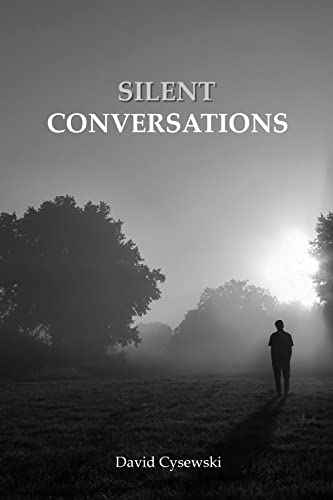
Silent Conversations by David Cysewski is an enthralling spiritual book that features a collection of poems, verses, and mutterings, all written to share the universal truth that transcends all. The author’s visionary reminder explores various events from the last few decades and presents his unique perspective on them. Additionally, the book includes intellectual narrations about his muse, drawn from both his private life and worldly affairs.
Throughout the book, David Cysewski engages readers in a profound and enlightening silent conversation, sharing his concept of life. His abstract writings explore intense perspectives in a friendly tone and exhibit his sagacious impression of life. The author’s range is remarkable, evoking tears in one paragraph and laughter in another. His diverse poetry is not only ravishing but also truly euphoric. David Cysewski’s enlightened writing style reflects his wealth of life experience, and his perspective on the world is both fascinating and captivating. He encourages readers to look within themselves and acknowledge the things that have been driving them. Cysewski’s intimate mutterings are a gentle reminder that the muse is everywhere and that creativity feeds on it.
It is impossible to walk away from this impassioned book without growing. There is something in this collection for everyone to stir their mind and their memories and give them a moment of pause. Silent conversations are another way of looking at the concept of listening. David Cysewski gives readers something worth listening to in order to grow within. The emotions his writing awakens will stay with the reader and bring them back to revisit the words again in the future.
Overall, Silent Conversations is a riveting book that conveys an everlasting message. David Cysewski’s ability to engage readers in a silent conversation is remarkable, and his profound insights into life are both thought-provoking and inspiring. This book is a must-read for anyone seeking spiritual guidance and enlightenment.
Pages: 282 | ASIN : B0BRTGJR56
MAYA: Lifting the Veil
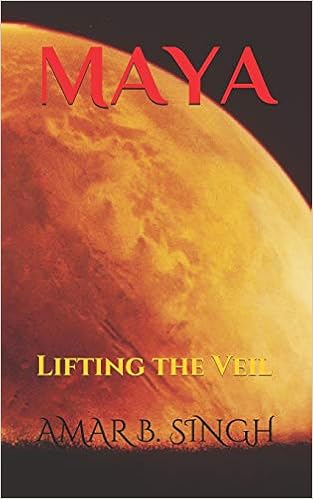

Maya: Lifting the Veil by Amar B. Singh is a though-provoking piece of literature that is written in verse. The book contemplates the human experience, life and our desire to understand how and why life works. It philosophizes on the immense task of knowing God and what his intentions might be. With this idea, the story follows Krishna and Arjuna who meet on the battlefield of Kurukshetra. They are two spirited and valiant warriors, but stand helpless against nature and set out to search for fundamental answers from the Creator.
The most exceptional aspect about this book is how it utilizes enthralling poetic verse to relay a captivating story. It’s a gripping piece of epic poetry that creatively uses philosophy to explore questions we all have and answers we may never have. The story is told through a conversation that Arjun is having, which reminds me of how ancient Roman philosophers would often write their own philosophical books.
Arjun’s family meets a disastrous fate along their journey home. Arjun is distraught and in this moment we get to empathize with him. He questions God, his pain, and the meaning of life. The emotion is palpable and is amplified by the stirring poetic verses that Amar B. Singh expertly uses. Krishna is able to explain the cycle of life and goes on to wax philosophical about life, the human condition, and the world.
I enjoyed the peppering of eastern philosophy found throughout Maya: Lifting the Veil. You can think of this as a long form poem that artfully portrays one mans suffering through the lens of thoughtful reflection. This is a spiritual journey I think many readers will enjoy.
Pages: 77 | ASIN: B087C56K4B

Civil War Over Ideology
 The Empty One is an epic fantasy novel setup like other epic poetry in the past; Beowulf for example. Why did you choose to write in verse for the book and what was your experience writing in this style?
Verse can set a tone that cannot ordinarily be achieved through the use of prose, and by using poetic phrases, more can be conveyed in just a single line than in an entire paragraph otherwise. For example by using short, quick words in succession, you can convey a kind of rushed and hurried atmosphere; conversely, longer phrasing sets up a more relaxed scene. Subtle keys such as these allow for a lot fewer ex-positional portions within the novel, and make room for action and character development. While writing in this style, I took a lot of inspiration from the epic poems of India, such as the Bhagavad Gita and the Upanishads – and as these dealt with fantastic situations and characters, poetry seemed a natural choice for my book, as well. When it came to my experience with writing in this style, it was challenging and rewarding at the same time. It took several weeks to come up with just the right phrasing in certain parts, because I simply didn’t like the mood or atmosphere of a particular section. (The hardest part was chapter twenty-six; it took so many rewrites to get that chapter just the way I wanted it, for a while I considered removing it altogether). Additionally, while not being an established writer, I made many safe choices when it came to the rhyme schemes I used – such as only using end rhymes in most places. However, I fully intend to advance to more complex styles in the future entries of the series.
In your novel I picked up some inspiration from other fantasy novels and mythology of the past that I thought played well in the story. What were some of your sources of inspiration for this book?
As mentioned, I took inspiration from The Bhagavad Gita, but I was also influenced by some Greek mythology surrounding The Titans and the Gnostic text The Reality of the Rulers.
In The Empty One there are two nations against one another, The Akalan Nation and the City States of Shaweh, that represent good and evil in the story. How did you create the dichotomy between these two nations?
The history of the two nations is that they were once one land, but split due to a civil war over ideology. They have a common history, language, and even culture in many aspects – but they cannot get past their differences over the definition of morality. They are therefore like brothers that grew apart over the ages, so much so that they have disowned each other. However, just as you might be furious with a loved one if they committed something atrocious yet still feel the need to help them, this is how the two nations exist. Both see the other as completely wrong and evil, but on some level they still feel inexorably connected.
In fantasy novels it’s easy to get carried away with the magical powers characters have. How did you balance the use of supernatural powers in The Empty One?
Magic is incidental to the story, and this was always the intention. The characters were the focus of the narrative. To achieve this, there was an idea that I always kept in mind: Supernatural powers would just be commonplace for any supernatural being, just as locomotion might seem supernatural to a plant but is ordinary for humans. Therefore any character in the book with these types of abilities would not use them to show off and instead they would use them only when the need arose.
What is the next book that you’re working on? When can you fans expect it to come out?
I am working on two books right now: The sequel to The Empty One, which is currently titled The Reaper, and it is also written in the same style (as an epic poem). This second entry into The Fallen Conviction should be out by early 2017. The other work that I have going is a horror story, not written in verse, which is much less closer to being done, called Mind.
Connect with the author on GoodReads
Two superpowers – The Akalan Nation and the City States of Shaweh – are at war. The Akalan Nation is a brutal theocracy that believe the City States are evil for not following their beliefs, and both sides are decimated from the years of fighting. In a desperate move to try and win the war for his people and his faith, the king of the Akalans, Darius, enlists the power of a mysterious man with supernatural powers named Lialthas, who claims to be an angel sent to help the righteous win the war against the disbelievers. However, as Darius soon discovers, Lialthas is not who he says he is – and he has his own motives and aspirations to power.



 LITERARY TITAN