Author Archives: Literary_Titan
Anything Can Be Denied
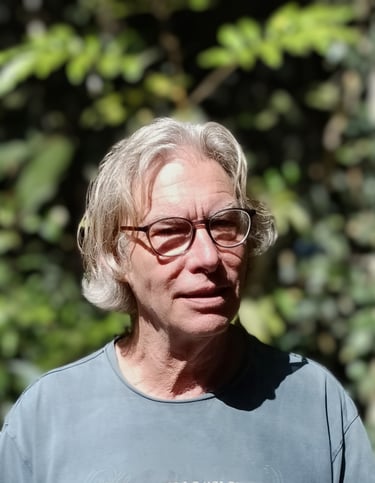
Shaking the Trees follows Jake, an environmental activist, who is pushed to sabotage a coal rail line in a desperate act of protest that sets off a chain of events that can threaten his future. What was the inspiration for the setup of your story?
There were two inspirations: the first was climate change itself and specifically a coral reef scientist telling me how little time the Great Barrier Reef had to survive. The Reef has had a profound influence on me. That news sent me into a prolonged depression shadowed by both grief and anger. From there, the book’s initial scene of sabotage took hold.
The second was less an inspiration than an epiphany – I wanted a shadow story for the story of Jake and climate change. Out of some deep recess in my subconscious, I said, ‘The Siege of Sarajevo’. Literally, I stopped and said aloud, ‘but Jeremy, you don’t know anything about the Siege of Sarajevo.’ And that turned out to be, in good part, the point. It was a war ignored not only by those who could have stopped it, but those, like me, who thought I was paying attention. I began to realise that anything can be denied.
A significant amount of time was spent crafting the character traits in this novel. What was the most important factor for you to get right in your characters?
Two factors stand out: the need to integrate the political and the personal. Activists don’t see these as separate, for anyone. They are intimately linked even when they are not always easy to reconcile and even when the relationship between one’s personal life and political life isn’t always clear. Even withdrawal from the plethora of events in our lives that are political, is a direct and political response to a society that feels too brutal, ugly or cold.
The characters wanted to show me how much of what we face or are forced to face in the world is entangled not only in politics but in our own histories and even histories older than we are – family and community histories. Excavating these histories is not a simple or rapid task. Like an archaeologist who finds an object deeply buried, we must gently remove a lifetime of encrustations and then – equally hard – try to make sense of what this strange object from our past is, what it signifies, whether it is only a small part of a larger whole.
I began to realise that the characters, forced by circumstances and choices none of the characters could entirely control, were living out their psychological histories in new and often damaging ways. I had to listen closely to the characters, to explore how histories of love and lovelessness, trauma, fear, ambition, repression, denial were still alive in them as the story unfolded. I often had no idea what the characters would show me.
What themes were particularly important for you to explore in this book?
1 – The various faces and types of denial. Denial can be personal and a useful form of self -protection. Often, when the need for self-protection is gone the behaviour remains. Like an auto-immune disease the brain responds in destructive ways to news or information it desperately wants to be untrue. Sometimes, particularly, amongst our leaders denial has no excuse, no value except in serving the interests, usually pecuniary, of themselves or other members of their privileged class. I was particularly interested in how we – individually and as a society navigate between the necessary and the destructive? How do we face the reality that anything can be denied, just as anything can be believed? How to think about faith? Is it destructive, protective, or simply a kind of disappearing from the world? And is love, too, a kind of faith?
2 – I didn’t know when I started the novel how important the theme of love would be – its many faces, its profound power and profound capacity, if love is lost, to tear us from our moorings. I also didn’t know when I started that I would find the heart of the book to be the effort of Jake to try and reconcile his love for the planet and his love for Julie, loves perhaps too large for any single person to hold.
3 – Finally, I wanted to explore activism. How people choose to face conflicts that can radically subvert their ideas of democracy, community and shared ideals. How activists struggle with a life’s work primarily characterised by failure and in a system that at every turn makes activism and change harder. Watching a political system treat activists like criminals and corporate criminals like friends is the kind of stark reality that activists experience throughout their working lives. It’s confronting work. So many activists leave this work in order to do something more immediately rewarding and kind. That said, young activists keep coming into activism, with new energy, new ideas, and old ideas they think are new. They give of themselves in ways impossible not to admire.
What is the next book that you are working on, and when will it be available?
I am completing a last edit on a manuscript that was shortlisted in 2024 for the Dorothy Hewett award in Australia. The book is called Vanishment, the story of a young man who fights to protect a species threatened with extinction. It is loosely based on the true story of the extinction of the Christmas Island Pipistrelle and loosely based on Christmas Island, often called the ‘Galapagos of the Indian Ocean’ but also an island subject to a dismal history of misery industries – phosphate mining, a massive casino for high rollers from Jakarta and finally a detention centre carved out of the Island’s unique rainforest. Love and loss are the dominant themes and like Shaking the Trees, both those themes have many faces.
I don’t have a publisher yet so I’m not sure when it will be available, but I hope next year.
Author Links: GoodReads | Facebook | Website
When Jake, a passionate environmental activist, desperate for action on climate change, starts to take drastic action, he sets off a chain of events that threatens everything he holds dear—his freedom, his future, and the woman he loves. As the storm he ignited grows more violent, Jake loses control even over his own life.
Meanwhile, his father Ian—an aging academic and firm climate sceptic—faces a reckoning of his own. With the death of his wife comes the uncovering of long-buried truths, including a cache of unopened letters from his sister lost to war and trauma. Letters that speak of survival, betrayal, and a city under siege.
Spanning continents and generations, Shaking the Trees is a gripping novel about the legacies we inherit and the choices that shape us. It asks how far we’re willing to go for what we believe—and whether love can endure the fallout.
A Parody Turned Novel

The Eye of Osiris follows a Mexican American woman working at a law firm whose boss turns up dead, and her being accused of murder, while an ancient Egyptian curse is the real cause. What was the inspiration for the setup of your story?
As regaled in my introduction to this book series, it was a way of survival while working in a toxic environment. I’m a workaholic and I need to be busy. I had run out of work while my creepy, abusive boss was out of town. So my fingers started moving vigorously typing a story about how he got murdered! Yes, it was like a parody that turned into a novel. That is definitely a happy ending to a bad job. (No, he did not die – only in my mind.) And, it still makes me giggle.
I found Moriah Maizon to be an intriguing character. What was your inspiration for this character?
This was my first book; inspired by my circumstances of that time in my life. In many ways, Moriah is a reflection of me. Although Moriah is in many ways much more serious than I ever hope to be. However, I did go through some life changing events reflected in Moriah’s story, such as losing a brother. I have a great deal of passion about life and through this character, I was able to express it.
There is one huge difference, I was born in El Paso, Texas where almost every Mexican American speaks both English and Spanish. I was very surprised at how little many Mexican Americans in Northern California didn’t speak Spanish and how little they knew about our wonderful culture. Of course, as time went by I realized how much racism there was against us and why many did not want to open that can of worms.
Speaking of worms, I am very lucky to be living in Mexico today where I can speak any language I wish without fear of unlawful detainment by the American Nazi-like Gestapo now known as Ice Agents. Why, you might ask, would I compare these armed soldiers to worms? Because they are people who oppress by means of unfair opposition (gangs) and threats of violence. In the end, they will crawl away, just like a worm, in shame.
Can you tell us where the book goes and where we’ll see the characters in the next book?
In the next book, Osiris the Second Coming, Moriah is married to Luis Mendoza who is now an attorney. They have a son, Thomas and their life is perfect. Then, the evil cult starts up all over again in San Francisco. The city is under siege and the Osiris cult is on a new mission to get to her and her family. Through Luis’s family who has an extensive library and knowledge of all things ancient, they search for the key. When the Heliacal rising of Sirius arrives, Moriah is ready for the trip into an unknown world and another dimension.
In Osiris 333, she returns to San Francisco along with her son and best friend Veronica; while Luis and family continue with their research. Still, the cult is in hot pursuit and on the trail of Moriah, their long, lost, reincarnated princess. They take refuge in Florida. A major clue is found by a couple in San Francisco after purchasing a home in the Sunset District. Their find is a unique Mayan Codex written in three languages. From that, they travel to Chichen Itza.
The Osiris Trilogy Mystery series is an adventure about cultural history, challenges, family, friendship, and the glue that holds it all together, love.
Author Links: GoodReads | X | Facebook | Instagram | Website Books | Website Author | Scrib Intel
Disturbing the dead is never a good idea. Stealing from the dead is even worse. Importing ill-gotten goods from the sands of Egypt; that is definitely the road to hell. Unsuspecting beneficiaries of a sacred Egyptian papyrus had no idea this gift was the result of an unholy theft.The curse started with donor, Jim Patton, partner at a law firm located in the Pyramid Building in San Francisco. When news of the sacred papyrus gets out, the Eye of Osiris cutl emerges on a mission.
Moriah Maizon, his legal assistant, was next. She suddenly finds herself in jail for Jim Patton’s gruesome murder. And that, was just the beginning.
The Osiris Mystery Trilogy Series is about a Mexican American family on a mission to stop an Egyptian curse.
Be Clear and Intentional
Communicate Like a Champion provides straightforward advice for enhancing professional communication, along with strategies that emphasize clarity and empathy. Why was this an important book for you to write?
This book was important for me to write because I’ve seen time and again that the success or failure of projects, teams, and even careers often comes down to communication. As a leader in telecommunications and during my doctoral studies, I recognized how often components of communications, such as clarity and empathy, were missing in professional exchanges. I wanted to create something concise, practical, and easy to use, something people could apply immediately in their workplace, whether they’re leading teams, collaborating across departments, or simply trying to be better understood.
What is one misconception you believe many people may have regarding effective communication in the workplace?
One of the biggest misconceptions is that communication means more words. People often think that long emails or detailed presentations equal effectiveness. In reality, effective communication is about being clear and intentional, saying the right thing, not everything. Another misconception is assuming silence means agreement. “No questions” doesn’t always mean understanding or alignment, and that’s where leaders need to confirm, follow up, and create space for feedback.
Did you learn anything that surprised you while you were researching and writing Communicate Like a Champion?
What surprised me most was how consistently small actions can create significant results. It wasn’t the grand speeches or high-stakes presentations that made the most significant difference; it was the everyday habits that mattered most. Things like summarizing a meeting in a single clear sentence, asking one good clarifying question, or pausing to reflect before responding. Those small, consistent habits are what transform someone into a “champion communicator.”
What is one thing you hope readers take away from this book?
If there’s one thing I want readers to take away, it’s that communication is a skill you can practice and improve. It’s not just for extroverts, executives, or “natural speakers.” With small, intentional steps clarifying intent, listening actively, and following up, you can become the kind of communicator who builds trust, fosters collaboration, and leads with confidence. That’s what “communicating like a champion” is all about.
Whether you’re a new professional, a seasoned leader, or someone navigating the complexities of hybrid teams, Communicate Like a Champion offers practical, proven strategies for improving your connection, leadership, and collaboration in the workplace.
This concise and actionable guide walks you through the core elements of strong communication—from clarifying your intentions to using empathy and follow-up effectively. With relatable examples, reflection prompts, and a 28-day challenge to build habits over time, this book helps you go beyond just “getting your point across.”
You’ll learn how to:
Communicate clearly across departments, hierarchies, and mediums
Recognize internal and external factors that influence every message
Use tone, clarity, and follow-up to earn trust and foster collaboration
Apply tools and tech that elevate your tone and clarity
Lead conversations with empathy, even when conflict is unavoidable
Whether you’re sending an email, running a meeting, or managing change, this book provides a reliable framework for ensuring your message lands and builds stronger relationships.
The Dangers of Time Travel

Furniture Sliders follows a former intelligence officer who is pulled back in to discover what has happened to a classified project and the people working on it, which controls time, memory, and identity, and is now missing. What was the inspiration for the setup of your story?
I have always been a fan of both film noir and espionage novels plus I have a tech background and a fascination with quantum mechanics. I wanted to write a story that felt like a 1940s Cold War spy thriller written in noir style—then break it wide open with the addition of speculative science fiction. I had a question: what if you take the characteristics of quantum mechanics such as superposition and entanglement and instead of applying them to atomic particles, you applied them to human beings? To spies? Can you be in two places at once or two timelines at the same time? Firstly, apply the ability to manipulate space and time and then take it even further by playing in panpsychism – the concept that every inanimate object can be sentient. Of course, you would have to have some form of technology to do all of this – the Mirror is exactly that inspired by the one in my hall at home. The title literally came from a box of plastic furniture sliders that were on the table at home with the box looking like a paperback book – Furniture Sliders on the spine! Sliders was a perfect description for agents moving through space and time and their organization is called the Bureau, along with the Mirror, giving the initial tongue-in-cheek furniture connection.
I found Max Calder to be an intriguing character. What was your inspiration for this character?
Max Calder is the kind of character I love; deeply broken but still pushing forward through the fog. It isn’t about a single character or character flaw but about weaving influences together. I guess Max carries echoes of Raymond Chandler’s Philip Marlowe and Graham Greene’s morally ambiguous operatives. He isn’t polished like Bond, but weary, suspicious, and prone to moral compromise – a man affected by the machine he serves. I tried to deliberately write against cliché by grounding him in history and psychology. His gaps, duplications, and doubts reflect not only the dangers of espionage but the fragility of identity itself. Unlike many spy archetypes, Calder isn’t defined by conquest or success, but by survival, mistrust, and fear of irrelevance — hopefully making him come across as human, flawed, and complex. In many espionage novels, agents and spies are unaffected by what they do and are amazing at executing their role. In the case of Max, I wanted him to be very affected. Remorse, regret, and inner demons.
What themes were particularly important for you to explore in this book?
Primarily the consequences of messing with time and how doing so can also mess with you physically, potentially drive you insane and affect your memory while creating echoes or even doppelgangers as time threads overlap. All caused by, or underpinned by, the human-applied characteristics of quantum mechanics. It was important to explore relationships especially between protagonists and antagonists and between espionage agents and technology pitching various spy agencies against each other – even if they are supposed to have great relationships. I also wanted to introduce fictionalized real-life characters to the storyline which in this book includes Alan Turing, Hugh Sinclair and William Stephenson.
Where does the story go in the next book, and where do you see it going in the future?
There are two more books coming in the series. Angus Sliders and Cuban Sliders. Angus Sliders is planned to publish on the 15th December. One of the challenges with quantum-based technology like the Mirror is that many want to get their hands on it in many cases for various nefarious reasons. In Furniture Sliders it was the Russians and ex Nazis. In Angus Sliders, Max Calder discovers that some major occurrences in Furniture Sliders didn’t really happen and that MI6 is very involved. Even a fictionalized Kim Philby is involved as is Charles Fraser-Smith who was the inspiration for James Bond’s Q. Max Calder is more and more affected by what the Mirror can do to you. In Cuban Sliders the Russians are back in the game and so is the CIA. Through all of this the Mirror becomes even more difficult to control or destroy. The big question is – can it be destroyed at all or even stopped and who gets to control it? Are there more storylines past the initial trilogy? Yes indeed!
Author Links: Facebook | Blog | Website | Amazon | Barnes & Noble
The Bureau is chasing a secret called the Mirror—a project so classified that even its architects have vanished or been silenced. It’s said to control time, memory, even identity itself. As Calder tracks the Mirror’s echoes across empty safehouses and wartime graveyards, the lines between hunter and hunted begin to blur.
Artemis may be an ally. Or she may be a weapon. And Calder? He may not even be who he thinks he is.
As bodies pile up and truths unravel, Calder must navigate a world where nothing stays still—where every room slides just a few inches sideways when you’re not looking. In the end, he’ll face one impossible choice:
Burn the truth… or become it.
Avoiding the Scam Artists
Seniors vs Crime is a collection of real-life stories set in The Villages, Florida, where elder citizens find themselves targeted by a range of con artists, shady contractors, and even predatory loved ones. Why was this an important book for you to write?
I am an other-oriented person, meaning I tend to care about other people and their situations perhaps more than most people. My career as a wealth advisor afforded me an opportunity to help other people retire. When I retired in 2008 in The Villages, FL. I looked for a way to help people. Seniors Vs. Crime was that perfect opportunity. I wrote the book to provide the elderly with an opportunity to learn about scams and their artists to help them avoid possible harm.
What were some ideas that were important for you to share in this book?
One of the ideas I wanted to share was how easy it is to be duped by scam artists who credibly seem to care about you. The doctor’s wife, who befriended the Doctor’s patient and then captured the patient’s widow’s entire estate, is a good example.
I also wanted to try to urge victims to report the scam. Many people are embarrassed that they were “stupid” enough to fall for the scam. I wanted them to know that we all make mistakes, but to not report the scam is a bigger “mistake.”
Could you share more information with us about the Seniors vs. Crime program? Is it something that is still running?
Seniors vs Crime in Florida is not only still working but growing every year. It was started by the Attorney General back several decades ago as a speaker’s forum and developed into what it is today… a functioning arm of the Attorney General’s Office fighting scams and harms to seniors. It has offices all over Florida. When a senior is scammed or otherwise harmed, they can come to any of our offices to make a claim. They can also enter a claim online at Seniorsvscrime.org. The claim is entered into our system and resides at both the Attorney General’s Office as well as the local SVC office. My office is located in Brownwood, Florida in the police annex building. Once a claim is submitted the voluntary “sleuths” will begin to help the senior recover their loss.
What is one thing that you hope readers take away from Seniors vs Crime?
Many seniors feel their loss is irreparable. I want them to know that most of their losses are recoverable.
Creative Non-Fiction

Leftwich Blues/Elfwitch Rules follows twin twelve-year-olds from a broken home who are abducted by the Elfwitch and taken to another world, where they must now find a way to get back home and heal their broken home. What was the inspiration for the setup of your story?
The idea started with the title. I like to make lists of titles from time to time. The title made me think who is Leftwich? Why does he have the blues? Who is the Elfwitch and why is she trying to rule? This image came to mind: a witch travelling through the air with twins she had kidnapped. One twin gets away, but the Elfwitch tricks the other twin into serving her. The escaped twin finds an oppressed people who need encouragement in fighting against the Elfwitch. So, the twin has to lead an uprising against the Elfwitch and try to free the other twin who turned against their original selves.
The idea reminds me of the many Saturday morning TV shows by Sid and Marty Krofft: H.R. PufnStuff or Lidsville plus other portal fantasies or science fiction movies like Alice in Wonderland or Planet of the Apes (the original from 1968, not the watered down remakes/reboots) where a stranger ends up in a strange land and has to keep their identity intact while turning from fugitive to hero/heroine to survive in a harsh new reality.
Your characters are wonderfully emotive and relatable. Were you able to use anything from your own life to inform their character development?
The twins’ first names I borrowed from my cousins. Their last name also belongs to distant cousins. I find that the more real or personal I can make the character or backstory, the more I can dig into it to adapt and change it according to how the story dictates. I was a mental health paraprofessional for a few years (so I have been to family court a few times) and worked at a charitable thrift store as well as conducting a twelve-step program and now I am a public educator. I have had ex-clients as my students and have come to know the families. I understand better the dynamic in households and the problems children bring to the classroom.
My writing has been called “creative non-fiction.” I never thought of it like that, but it’s true as I need a heavy dose of realism in my fiction before I introduce the weird and fantastical.
What themes were particularly important for you to explore in this book?
The idea of twins separated and working against each other and having to reconcile was the starting point. Then it became a study of duality: two sides or polar opposites that feed or synergize entities or issues: tyranny and freedom, good and evil, lies and truth, night and day, family/friends and foes, forgiveness and unforgiving.
Is this the first book in the series? If so, when is the next book coming out, and what can your fans expect in the next story?
This was written as a stand-alone. However, I am brewing ideas for a sequel (which I would make into a cliffhanger for a duology). That project will have to wait as I have two other current projects I am working on plus I am currently promoting my first collection of short stories: ghostly shudder tales.
Author Links: GoodReads | Website | Substack
Meaningful Improvement

One Percent 365 lays out a simple but powerful idea: small daily efforts, as little as one percent, can add up to huge changes over time without feeling overwhelming. Why was this an important book for you to write?
To share what I have found to be useful in improving outcomes and personal perspectives in my life. TO break it down to be manageable, no matter the stress endured, real or perceived.
What were some ideas that were important for you to share in this book?
To show the possibilities and value of applying this to many aspects of our day-to-day living.
What is one thing that people point out after reading your book that surprises you?
That I have revoiced a known one percept concept and shown how applicable it can be to many aspects of our lives besides weight loss and work metrics. Kindness and forgiveness, as applied, appear to impact my readers.
What is one thing that you hope readers take away from One Percent 365?
This concept can be tailored to each of us in a way that is palatable and shows a meaningful improvement over time.
Author Links: GoodReads | Facebook | Website
The author takes the reader on a journey to illustrate the possibilities of change that we can examine, address, and begin to make progress one percent at a time, each day. The simplest truth will become evident that each of us can tackle any aspect of our lives and work toward a desired goal with small incremental efforts while making steady, daily gains.
Teaching Respect For Wildlife

Clover follows a curious bunny as he guides children through his daily life, teaching readers how rabbits live, where they find shelter, what they like to eat, and the natural challenges they face. What was the inspiration for your story?
Wildlife in our backyard, especially squirrels and cottontail bunny rabbits. Their antics are fun to watch and baby bunnies are cute just like baby squirrels. We provide nuts for the squirrels and apple chunks and grapes for the squirrels and bunnies. My husband allows for one small clover patch to remain in place just for the bunnies. Truly inspiring.
What were some educational aspects that were important for you to include in this children’s book?
It’s important for children to know about wildlife that run through their own yards. Knowing what they nibble on and how they interact keeps children from trying to catch them, or chasing them. Watching them is fine. Nature is always a good thing. Children need to respect these furry animals.
How does your writing process for children’s books differ from writing your romance novels, as far as getting in the right mindset and how you work?
The wildlife in our area inspires me and I always look at my past career as a registered nurse. I choose a critter and a current topic that children need to read and learn about. I used mice in a book about bullies and how to overcome being bullied. I know the start and the end, so I create a story for the middle part of the galley.
Is this the first book in the series? If so, when is the next book coming out, and what can your fans expect in the next story?
Clover is a standalone book and I’ve released four books this year. I plan to have my next one completed in 2026.
Author Links: Goodreads | X | Facebook | Website



 LITERARY TITAN