Talismans


Talismans drops readers into a continent with a long memory and a short temper: bent-backed Lord Borman maps a land route through the Northern Desert so Craig P. Miller’s Makari “True Lords” can strike at Tambourtynne, while far from the Peer’s silken war-tent a potter’s son, Ross Cambridge, is yanked into the living mathematics of Quathiels Dance, where talismans, Bindings, and old gods-with-calluses tug on the same threads. The story braids courtly cruelty (and its logistics) with a ground-level friendship-and-survival line, then snaps tight in a flood-born crescendo: Ross completes a Water talisman that helps crack ancient Bindings and turns the invaders’ fire into a problem the river can finally solve.
What hooked me first wasn’t a prophecy or a chosen-one glow, it was the book’s appetite for consequences. Borman’s opening chapters feel like watching a careful man do dangerous arithmetic in sand: he’s not the biggest predator in the Hunt, so he survives by being precise, by noticing, by building “subtler means” into the world’s seams. And when the Peer’s campaign machinery comes into view, the novel doesn’t flinch, there’s a nauseating efficiency to how power is maintained (the projection tower fed by Bound men, refreshed on schedule like lamp oil). It made me angry in the good way: not “this is edgy,” but “this is what domination looks like when it’s normalized.”
My other big reaction was delight, the kind that creeps up on you while you’re trying to stay skeptical. The Quathiels magic isn’t just “spellcasting with new nouns,” it has a tactile, almost musical structure (Pukana, Dance, stanzas, codas) that makes Ross’s learning curve feel earned rather than granted. The climax, especially, worked on me: Ross’s Water talisman lands like a hard-won instrument finally tuned, and the fallout is messy, physical, and morally complicated. Even the “after” carries weight, Maeve’s survival depends on slow, exacting unbinding, not a cinematic pop of light, and that restraint made the hope feel sturdier.
If you like your epic fantasy, secondary-world fantasy, magic-system fantasy, political intrigue, and military fantasy with a vein of ecological myth, this is for you, especially if you enjoy protagonists who win by craft and stamina rather than destiny. Readers who vibe with Brandon Sanderson’s engineered magic or Robert Jordan’s multi-POV sprawl will recognize the pleasure here, though Miller’s tone is earthier, more mud, less marble. Talismans left me with one clean conviction: power breaks things; mercy rearranges the river.
Pages: 305 | ASIN : B0G9KTNL5K

Strength and Vulnerability

Watery Eyes is a collection of poems centered around womanhood, love, loss, and devotion. What inspired you to write this particular collection of poems?
I’ve enjoyed writing poetry for decades. It is how I best express myself. I believe what comes from the heart reaches the heart. I hope my writing resonates with people. I want to connect with my readers to spread faith, hope, and love.
Do you have a favorite poem in the book, and if so, why does it hold special meaning for you?
My favorite poem is “Teach me to love,” because it describes my belonging to Ethiopia, as a woman in the diaspora. I sprinkle Amharic words throughout the poem to give it a little flavor. It speaks to my soul! I carry my identity with me, as an Ethiopian-American, wherever I go. I sincerely convey the admiration I feel for being part of the Ethiopian community within an American context. I write from a youthful perspective, never losing touch with genuine idealism.
Are there any recurring symbols or images in your poems that hold special significance?
I talk a lot about themes being unique and universal. Through the specific, we access the spiritual. Often, what I experience is common to all. Love and loss are situations most everyone has found themselves in. I write to embrace subtle ways of feeling more human and more alive. I share my strength and vulnerability with diverse audiences in an effort to connect with my readers.
How has this poetry book changed you as a writer, or what did you learn about yourself through writing it?
I learned that it’s important to tackle big ideas. I did my best to portray life in a way that was romantic and realistic. I am grateful when people engage with my writing. It’s an honor and a privilege for my work to be welcomed in different homes. Through writing, all things are possible. Unity. Beauty. Purpose. Significance.
I learned to trust myself and stretch my capacity. Writing this book increased my confidence in sharing my truth. It gave me the grace to demonstrate true courage. I am grateful for the opportunity to explore the depths and heights of human emotion with like-minded individuals. It taught me to dig a little deeper and bare my soul.
Author Links: GoodReads | Website | Amazon
The Great Question of Life

Army of Three follows two brothers bound by loss and impossible power whose fragile alliance is shattered by the murder of the woman they love; grief drives one brother to gamble with time, destiny, and reality itself. What was the inspiration for the setup of your story?
The inspiration for Army of Three began with the most tragic day of my life. At age twenty‑one, I lost my father in a deeply traumatic way. Shortly afterward, I went through my first serious heartbreak. Axel’s great loss in the story represents these two events combined into one tragic incident. There were very few people who could understand the weight that had suddenly been cast over my life. My three brothers and my two closest friends became a new kind of brotherhood. Anyone who has lost someone close has wrestled with the great question of life: What if? What if I could have saved them? What if there were a way to go back?
As for the brothers and the family dynamic, my family was always a “family first” kind. Growing up the third of four, and moving constantly, left us with only each other more times than I can count.
A major part of my inspiration was J.R.R. Tolkien. Although my stories differ greatly from his, the creation of these tales came from the same logic: to write something meaningful enough to change how a reader thinks and feels. That kind of power can truly influence—and, God willing, make a positive impact on—a struggling world. I believe the call to writing isn’t simply enjoying books or earning an English degree. Those may help, but the calling runs deeper. The true call to writing is experiencing life in a way that shapes you, and feeling inspired to use that experience and knowledge to help others.
Axel’s choices can be frustrating yet understandable. Were there moments when you struggled with his decisions yourself?
Yes and no. Most of Axel’s choices reflected the tenderness of the human spirit. The idea is that true love is so powerful it defies logic, and the idea that love can be dangerous lives in that same space. The struggle didn’t happen when my pen pressed into the paper. It happened when I made the poor decisions that inspired Axel’s—when I was wrestling with them myself.
What were some themes that were important for you to explore in this book?
Love, Loss, redemption, and brotherhood. Most importantly, in real life it isn’t always a happy ending, but there can almost always be happiness found in the ending. When my father passed, it felt like we had lost. Eleven years later, I reflected on that feeling again and realized I had grown into a far greater man than I ever could have imagined if I hadn’t suffered and endured what I have.
What is the next book that you are working on and when will it be available?
Psychic Kids: The Secret of the Orphanage will exist within the same universe but following a completely new set of characters. It is fairly early in development and the earliest you could expect it would be January 2027.
Author Links: GoodReads | Website | Amazon
Axel and Karl Fassbinder were never meant to live ordinary lives. One survived a fall no human should endure; the other grew into a man strong enough to take on armies. Together they became a whispered legend — the Army of Two.
Everything changes when Azrael joins them. Scarred by tragedy and bound to a terrifying ritual where blood costs blood, she turns their duo into the Army of Three.
But her murder rips their world apart. Axel’s grief twists into a relentless drive that hurls him into conspiracies, android ambushes, and a future drowning under rising oceans. Desperate to undo the moment that broke him, he turns to the only force more dangerous than his enemies: a machine that can bend time.
Every step threatens the world he’s trying to save, and every choice pushes him toward one unescapable truth:
Some destinies can only be changed through sacrifice.
Inside these pages:
Two brothers shaped by impossible wounds — and the woman whose death may unravel time itself.
A future swallowed by storms, corruption, and shadows no one dares name.
Silent android killers, buried conspiracies, and a forbidden ritual that demands a soul in exchange for power.
Battles that defy logic, escapes no one should survive, and technology capable of bending reality.
A descent into grief, vengeance, and loyalty — and a dangerous question echoing through every chapter: How far would you go to rewrite fate?
Warning: This book will steal your sleep. Once you step into Axel’s world, the hours disappear, the pages won’t stop turning, and you won’t escape until the very last word.
Raw, cinematic, and unflinchingly emotional, Army of Three tears open a world built on broken promises and impossible choices — and refuses to let you look away.
Not just science fiction. Not just action.
A story about what we sacrifice for the people we love — even if it destroys us.
This is the book that grips readers while everyone else is still sleeping on it.
Buy Now and don’t be the last one to feel what everyone else is losing their minds over.
Lola & Sophie’s ABC Adventure


Lola & Sophie’s ABC Adventure is a sweet ABC romp about two dogs named Lola and Sophie. Each letter ties to a tiny dog moment. Adoption. Barking. Car rides. Costumes. Naps. Vet visits. It moves fast and keeps things light. The idea is simple. Young readers will learn their letters while hanging out with two very lovable pups.
The tone of the book feels bouncy and playful. The writing is loose and fun. Short lines. Cute sounds. Lots of woofs and yips. Some letters feel extra clever. The rhythm keeps kids moving along. The ideas are gentle and kind. Rescue. Family. Being naughty and nice. Big feelings made small. I loved how Lola and Sophie feel different from each other. One loud. One chill. It sneaks in a nice message about everyone being their own kind of good.
The artwork on each page really pulls readers in because Lola and Sophie are just so cute. Their faces say everything. Happy. Silly. Nervous. Sleepy. You always know how they feel without needing extra words. The colors pop and feel bright and friendly. Each page feels fun to look at and easy for little eyes to follow. I loved how the drawings match the mood of each letter. The style feels warm and cozy and full of personality.
I would recommend this children’s book for toddlers and preschool kids. Dog lovers will also love this story. Parents who like educational books will enjoy this book too. And anyone looking for a quick bedtime read will have fun with this book, as their kids are wrapped up in the colorful pictures while their parents read.
Pages: 34 | ASIN : B0G5RKYQGK

The Quiet After
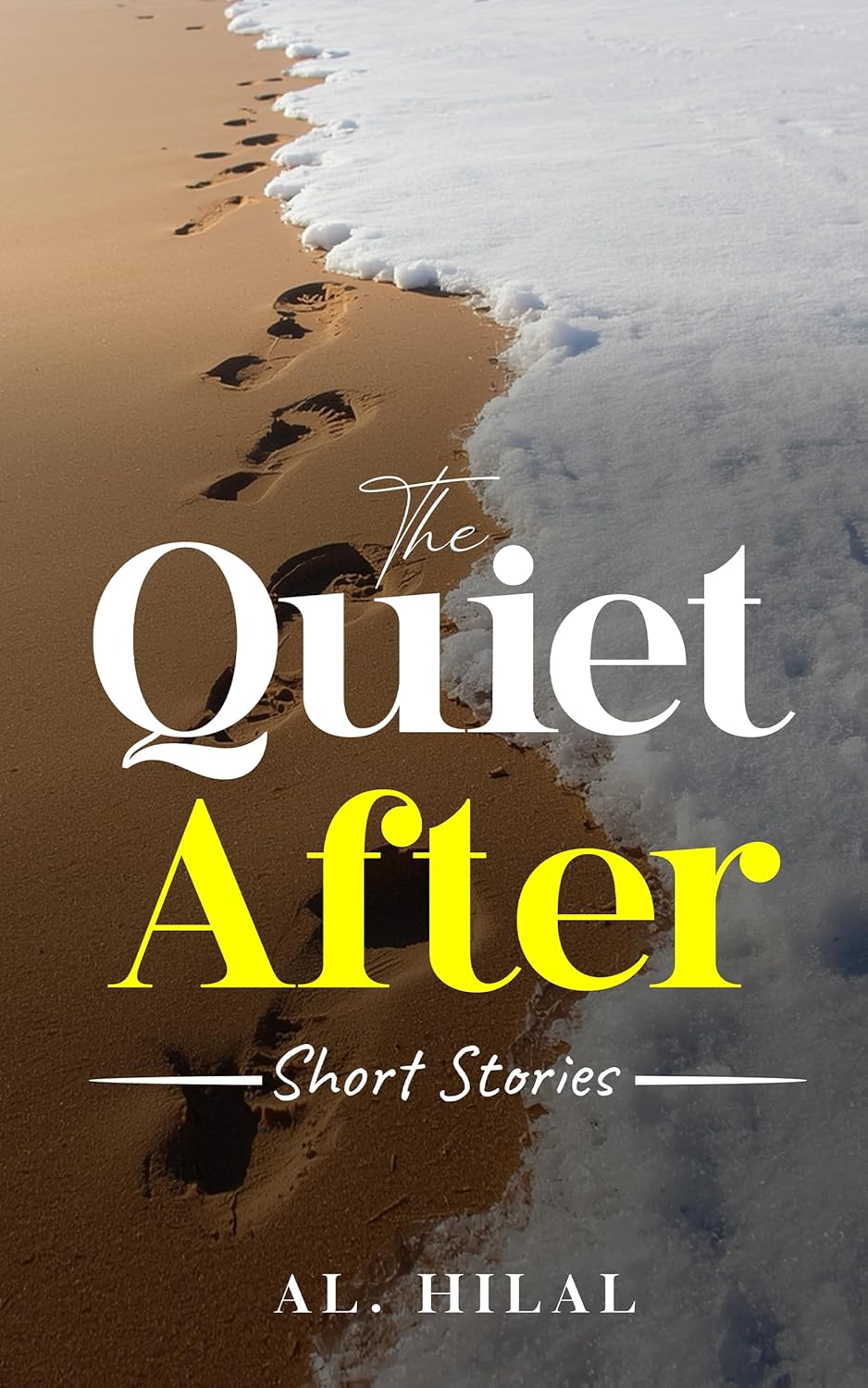
The Quiet After is a collection of linked creative nonfiction stories that trace an Iraqi man’s journey from Baghdad through war, displacement, and finally to a fragile, hard-won peace in the American Northwest. The pieces move between barbershops, markets, kitchens, churches, border crossings, and battlefields, and they circle the same core questions again and again. What does it mean to belong. How do you father a child while carrying a history full of ghosts. Where does faith sit after the bombs stop falling and the paperwork starts. The book calls itself creative nonfiction, and it reads that way. Memory on the page. Crafted scenes and dialogue. A steady thread of reflection on war, migration, and the slow, quiet work of rebuilding a life.
This is an emotionally stirring book. The prose feels careful and musical without drifting into showoff territory. I kept noticing how concrete the images are. Hair falling like snow in a barbershop. A kitchen so overdesigned it has everything but a knife. A boy’s name bumping against a school hallway that does not yet know how to pronounce it. The sentences lean on repetition, rhythm, and simple words, and that choice makes the hard moments land even harder. A few passages stack metaphor on metaphor, and I would have liked one plain line, just for contrast. But then a scene like “Loofah” or “The Intruder” arrives and the language feels exactly right for the horror and tenderness it carries, so I forgave the occasional excess without much struggle.
I laughed in some of the lighter pieces, like the confusion over “showers” in a church or the culture shock around silent car horns in Idaho. Those stories have a dry, self-aware humor that kept me from drowning in grief. Then I would turn a page and land in something brutal. The assault and killing in “Loofah” is one of those scenes that I almost wanted to look away from, yet the author refuses to sensationalize it. He stands close, he names the harm, he lets the consequences sit. Later stories that move toward adoption, fatherhood, and small gestures of kindness in American kitchens and barbershops softened me in a very different way.
The book keeps circling the tension between being Arab and being American, between being seen as a threat and trying to live a quiet, decent life. It speaks to the aftershocks of war more than the explosions themselves. Identity, exile, and belonging sit at the center, but they are grounded in very ordinary moments, not speeches. A kid asks his father if they are terrorists. A grieving widower snaps at a barber, then cracks open in the chair. A man misreads the word “hard” on a bottle of lemonade and stumbles into a lesson about grace and fine print. The faith in these pages feels earned and complicated, not neat. God appears in silence, in survival, in paperwork, in the choice to adopt instead of hate. The author is clear about political violence and betrayal, yet he refuses to flatten Americans into villains or Iraqis into saints. That nuance felt honest and rare.
The Quiet After is a deeply humane and powerful book. I would recommend it to readers who like literary memoir, creative nonfiction, or short story collections that sit close to real life. It will speak strongly to people from immigrant or refugee backgrounds, to veterans and aid workers, to anyone who has tried to build a new life in a place that once met them with fear. It would also be a rich read for book clubs, faith communities, and therapists who want to understand the lived texture of war’s aftermath. The stories are short enough for a busy schedule, but the echoes stay.
Pages: 204 | ASIN : B0G4KY1ZDL
Unapologetic Wealth: Rewrite Your Money Story from Any Beginning

Unapologetic Wealth by Marcia Dawood is a mindset-driven book about money, power, and choice, with a clear focus on women and the emotional baggage many of us carry around finances. Dawood argues that wealth is not just about dollars or net worth. It is about time, health, relationships, and agency. She walks through how money beliefs are inherited, how guilt keeps people playing small, and how redefining wealth can lead to a calmer and more intentional life. The book blends personal stories, history, and reflection exercises to help readers rewrite their money story from the inside out.
The tone of the book felt like a thoughtful conversation rather than a lecture. Dawood writes with warmth and honesty, and I appreciated how little posturing there was. She does not pretend money is simple or neutral. She names the awkwardness, the shame, and the silence around it. That made me feel seen. I also liked that she avoided flashy promises. There is no hustle energy here. Instead, the writing invites you to slow down and actually notice your reactions to money. The pacing sometimes felt gentle to the point of repetitive, but I understood why. She is trying to undo years of conditioning, not rush the reader to a finish line.
The sections on generational beliefs and quiet money guilt felt uncomfortably accurate. I caught myself nodding more than once. The concept of financial fluidity really worked for me. It felt humane and realistic. Not rigid. Not preachy. I did wish there were moments with more concrete examples of change in action, especially for readers who crave structure. Still, the emotional clarity of the ideas outweighed that for me. This book is not about telling you what to do with your money. It is about helping you believe you are allowed to decide at all.
By the end, I felt calmer and more grounded, which is not something I usually associate with money books. I would recommend Unapologetic Wealth to anyone who feels competent in life but oddly hesitant around money, especially women in mid-career or transition. It is also a good fit for readers who are tired of aggressive finance advice and want something more reflective and human. If you want permission to think bigger without losing yourself, Unapologetic Wealth is worth reading.
Pages: 212 | ASIN : B0G6Q45PK9
Hostage: A Memoir of Terrorism, Trauma, and Resilience

Hostage tells the true story of a young American woman who survives the 1970 Dawson’s Field hijackings and the brutal weeks that follow. The book moves through the terror inside the plane, the suffocating days in the desert, the chaos of the civil war around Amman, and the long stretch of waiting that wears people down. Nichter looks back on the ordeal with the sharper eyes of the person she became later. She uses her journals and memories to pull the reader into each moment of fear, confusion, and small hope that kept her going. The narrative follows her from boarding the plane in Tel Aviv to her release many days later, and the story feels both intimate and historical at the same time. I felt the heat inside the grounded plane, the sting of sand in the air, and the strange mix of stillness and danger that marked every hour.
This was a very emotional book for me. I found myself leaning in, almost holding my breath, because the writing feels so honest. The way she describes the hijackers pacing the aisles or the passengers tearing up passports hit me hard. Her voice is calm at times, almost steady, and then it wobbles in a way that made me feel the shock and disbelief with her. I could sense how young she was, how much she wanted to keep a grip on normal life, and how that life slipped further away each day. The details she notices, like the smell of sweat in the cabin or the way a baby’s crying cut through everything, felt strangely tender to me. The story is frightening, yes, but I also felt a deep sadness that sits underneath her words. She had to grow up fast. The world forced it on her.
What I found most interesting was how she carries her identity through the ordeal. She writes about being one of the Jewish passengers who were kept behind while others were freed, and I felt the weight of that moment. Her fear rises and falls in waves, but she never stops thinking, never stops trying to understand the people holding her. She lets us see her anger, her doubts, her guilt, and even her dark humor. That honesty shaped my reaction more than any single event. The writing feels grounded and human. There were moments when I wanted to reach into the book and tell her she wasn’t alone.
By the end, I felt tired in the best way, like I had walked alongside her. The story is gripping and painful and strangely hopeful. I would strongly recommend this book to anyone who wants a survivor’s view of political violence and its emotional aftershocks. It is not a dry historical account. It is a personal journey written with clarity and courage. Readers who like memoirs that face trauma directly will find a lot here. Students of history, psychology, or Middle Eastern politics will gain insight, too. And anyone who wants to understand what it means to hold on to yourself when the world becomes unpredictable will find something worth remembering.
Pages: 232 | ASIN : B0FWPGVP4M


