Blog Archives
Posttraumatic Stress Is Very Common

Fit for Off-Duty is a self-help book targeted at firefighters but is a useful resource for anyone dealing with PTSD and their families. Why was this an important book for you to write?
Having been raised by a firefighter, and having a brother who is a firefighter, I experienced the impact that work-related trauma exposure had on my family members and how even subtle changes in thought, feeling, and behavior impact the family system. This book was inspired by that as well as the thousands of first responders I treat in my practice, and I wanted to offer a resource that could help first responders and their families make sense of some of the conflicts that arise as a result of traumatic stress.
What is a common misconception you feel people have about PTSD?
That it is not common. Posttraumatic stress is very common, not just in first responders, but within the general population. People refer to it as many other things, but we certainly underestimate how many people are living in survival mode as a result of unresolved traumatic stress.
What do you hope is one thing readers take away from your book?
I hope the book will help people give themselves permission to heal from the unnecessary suffering that posttraumatic stress causes.
What is the next book that you are working on and when will it be available?
I published a Law Enforcement version of the Fit For Off-Duty book which is currently available on Amazon, and I will be publishing another self-help/self-improvement book that is aimed more toward the general population that will be available sometime in May or June of this year.
Author Links: Twitter | Facebook | Website
A Little Bit of Drama

Broken Revelations: Calamity of the Gods follows a Nephal and his wives through time into the past and to the land of the Gods to search for a thief. What was your inspiration for the wild journey you take readers on in this novel?
I wanted to play with how the gods of various pantheons would interact with each other and shine some light on some lesser-known gods that I think are pretty cool.
Was there anything from your own life that you put into the characters in your novel?
Yes. I put a little bit of drama from my life into each novel but I won’t say what bits I write about I’ll leave that for my readers to have fun figuring out.
What was your favorite character to write for and why? Was there a scene you felt captured the character’s essence?
I love writing for Sun Wukong! He’s my favorite pagan god his mythology is full of things that I can write about and play with like I did when Adrian and the gang went to Diyu in Calamity of the Gods.
Will there be a follow-up novel to this story? If so, what aspects of the story will the next book cover?
Yes, I am planning a follow up novel as we speak it will focus on Adrian being stuck in the Nexus and how he will go about saving his wives from the hands Kar’ma and Erlking.
Author Links: Amazon | GoodReads
He united the angelic factions with his marriage just in time for the Dominess to give him the task of investigating a series of thefts of relics that has the pagan pantheons preparing to go to war with one another, he discovers that one of the stolen items were the only thing containing terrible beings known as the Calamities and the trail of the thieves leads Adrian and his wives from the top of Mount Olympus to the depths of Tartarus , into the halls of Valhalla through the lands of Duat and the courts of Diyu into a portal where they found themselves eons in the past in the land of Mu: the land of the gods!
With the help of Wukong and Ezriel , Adrian and his wives learn the untold story of the gods and their homeland while searching for a way to stop the thieves , the Calamities and return to their own time before they too become ancient history.
Craziness and Humor
The College Shrink follows a recently divorced woman that takes a job at a college where the students end up helping her as much as she helps them. What was the inspiration for the setup to your story?
This story was built upon many unspecific tales that I have heard over the past two decades from a person who has spent their life as a college psychologist. It’s a hard job and the challenges are sometimes unimaginable. At the same time, there can be a good amount of craziness and humor working for a college, something I have learned over many years of being a witness to that world. But with the explosion of mental health issues among teenagers, it is a story that was well worth exploring.
Did you create an outline for how Emily would develop before you started writing or did her personality grow organically as you were writing?
Good question, Karen. I had developed an outline before launching into writing The College Shrink. As it is a character driven story, the personalities of each of the people (not just Emily), ultimately drove the story in a different way than I had originally planned. They were rich characters, and I grew quite fond of them. Some of their actions I applauded, and some made me cringe. In many ways, they wrote the story.
What were some themes that were important for you to explore in this book?
There are many difficult topics touched on in The College Therapist, all of which took a fair amount of research. Anxiety, depression, body image issues, substance abuse, racism, assault, rape, suicide. All of which, unfortunately, are omnipresent on college campuses. And, of course, central to all human beings is the theme of how relationships work in the midst of these difficult topics.
What is the next book that you are working on and when will it be available?
My next book is closer to home for me. Where poverty, Asperger’s, pedophilia, and churches make for strange bedfellows. It is a story of a family where dysfunction seems the norm. The manuscript is close to completion. The question is whether I can bring myself to publish it.
Book Review
An Ontological Thriller

The Deep Translucent Pond follows two students that go on an extremely emotional journey led by their mentor, The Black Magus. What was the inspiration for the setup to your story?
In literature, emotional journeys are usually between two people in a relationship. I felt that journey could be made even more powerful if taken on by three people—in effect, three people locking arms and trying to get to a higher place together rather than just two. So how do you create a setting to make that happen? The weekly meetings of the poetry fellowship unexpectedly provide that catalyst, the Black Magus, shaman-like, entwining the cords of the physical with the meta-physical to create a dynamic that continually expands into spaces that were not there before, taking the three characters with it.
The Black Magus is characterized as philosophic. What were some driving ideals behind your character’s development?
At one point an old friend of the Black Magus’s characterizes him as a cross between Jean Paul Sartre and Jim Morrison. Such a crossing of a “disciplined philosophic approach” with “unpredictable ecstatic leaping” is going to create a huge flexibility in terms of where that character can go, what he can say. Add some history of mental illness and a kind of religious intensity and you have a character who—if he can hold it together—will burn at a very high temperature. Although it can’t last for too long. In the case of the novel, the Black Magus makes it last for the ten intensively transformative weeks of the fellowship.
What were some themes that were important for you to explore in this book?
Most novels struggle between surface action—plot essentially—which is fast moving and lurid and keeps you reading, and the probing for deeper meanings through character development or insights into the human condition. That second part is almost always secondary, because the book has to sell. I felt there was a way to focus primarily on the latter, the deeper parts, while at the same time giving those parts a “surface action” which will keep reader’s avidly turning the page. An ontological thriller, if you will, with a transcendent climax even more resonant than if a horrible crime was solved.
What is the next book that you are working on and when will be available?
Since The Deep Translucent Pond focuses on a poetry fellowship with the three characters transformed by that fellowship, the novel includes poetry produced by the three characters, used to drill deeper and faster into their interior lives. In a surprising way, the three characters in the novel—Jerome, Natalija, and The Black Magus—have continued writing poetry beyond the book. Their book of new poems is my intended next book.
Author Links: GoodReads | Website
The key to re-enchantment is The Deep Translucent Pond which the Black Magus has identified as “a hideout of the fugitive gods.” If he can reach into it—as placid as a reactor cooling pool—and retrieve a mysterious object from the bottom, re-enchantment will be ignited. He elaborately recruits his two fellowship “students” to help. For their part, they accommodate his severe eccentricities in exchange for flashes of insight into their lives and a feeling that he is guiding them to a higher place.
James Shelley has spent his professional life shifting between the underworld and higher places. He’s been a psychiatric attendant, land surveyor, arts critic, mental health case worker, archivist for the Rockefellers, and a bagpiper playing at the funerals of men and women he’s never met. As an educator, his innovative work at an Ohio college supporting at-risk male students has attracted national interest.
As a writer, Shelley started out writing plays for experimental theatre before shifting to fiction, early efforts earning him an Ohio Arts Prize. In his published poetry and fiction, he has always been fascinated with how prosaic moments can unexpectedly transcend, expanding into spaces that were not there before.
“What if they were serial killers?”
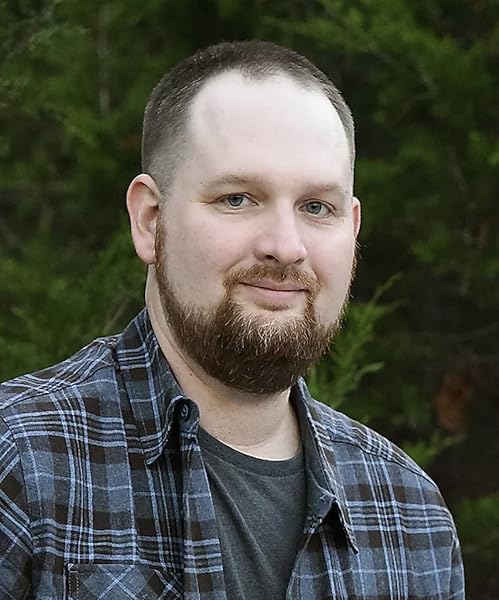
Burning Without Knowing follows a journalist that falls into a world of corruption, secrets, and ties to the mafia. What was the inspiration for the setup to your story?
Burning Without Knowing is a follow-up to In the Country Dark (Literary Titan Review Here). I wrote In the Country Dark to be a deconstruction of small town Appalachian life. The reviews came back describing it as a thriller, which I had not given much consideration to while writing it. For Burning Without Knowing, I wanted to tell a similar story in the same world based on the consequences of the first novel, but this story was written firmly with the thriller elements in mind. The spark of the story came from three Mennonite women whom I observed crammed in the front seat of a van, utilizing the wifi in the front row of a Virginia grocery store. Something about the scene made me wonder what they could be researching on their devices. Then part of me asked the question, “What if they were serial killers?” The story idea unfolded from there.
Shawna grows a lot through this novel in order to survive. What were some driving ideals behind your character’s development?
I struggled with nailing down Shawna’s personality. She had to be resourceful but make mistakes, calm but with rage bubbling under the surface, witty but unsure of herself. It wasn’t until I started writing practice dialogue between her and Cabel (the protagonist from In the Country Dark) that I began to see her arc. She was like a bone that needed to be broken in order to heal back stronger, and her development was based around that idea.
What were some themes that were important for you to explore in this book?
“In the Country Dark” dealt with the theme of losing friends in your 20s. Because Cabel is older now, I wanted the theme to be a trauma you would experience more frequently in your 30s. That theme became losing children. In this novel every supporting character has lost a child. Shawna is a lost child herself, and Cabel is going to extremes to safeguard his daughters’ futures.
The series as a whole has always had a theme of darkness and light. This novel’s theme is an eclipse, where light is flushed out temporarily; but if one stares at the light too long, blindness, and permanent darkness, can ensue.
What is the next book that you are working on and when will it be available?
The next novel I am working on is called “The Ghost Circuit,” which follows four characters in four different time periods of a historic (and supposedly haunted) mental hospital. There is currently no release date.
Author Links: GoodReads | Twitter | Facebook | Website
Totally Out Of My Genre

Young Davy Crockett: The Wild Frontier with Dinosaurs follows a young hunter that must find out what is happening to the missing hunters. What was the inspiration for the setup to your story?
A bunch of years ago, my mentor, Jonathan Maberry, sent me a message basically challenging me to write a middle grade horror book. This is something totally out of my genre. I normally write in epic fantasy, horror, urban fantasy, and paranormal romance. I was like…write something for kids? I don’t write for kids! Yet, at the same time, I’m not one to back down from a challenge.
I like history. So, I brainstormed historical figures. Who could I write about in their younger years? The answer came quick. After some research (I love research), I found my character: Young Davy Crockett.
How much research did you need to do for this book?
I did a lot of reading about Davy. Turns out he had a lot of adventures in his youth, so I was not stretching the facts. Most kids back then had to learn skills and put them to use in the towns and on the farms. Davy was a hard worker and being such a popular American historical figure, it was easy to find information about him.
What has helped or hindered you most when writing a book?
I had to remind myself…over and over…that I was writing for MG. I had to tone things down. Remember the language. And remember that, although brave and a skilled outdoorsman at a young age, Davy had to speak to adults like a kid. Not on par with them.
This was hard for me at times.
When my editor first read the book, she told me it read like YA writing. I tried my best to fix it to a MG style. Since then, I have had readers and reviewers come back saying it is MG and others saying it is YA. I’m proud of it regardless of which age range it lands more prominently in.
I found that trying to imagine the book as a cartoon helped. Like an 80’s cartoon. Remember the ABC WEEKEND SPECIALS? It was a series that featured a different kid’s books each week. I tried to paint it as one of those episodes back then. 🙂
Has writing and publishing so many books changed the way you see yourself?
I guess I look at myself as the grizzled old veteran now. I fought hard. I’ve had amazing victories and terrible losses. But I keep at it. My motto is: Write Makes Might! It means a lot of things to different people. Basically, to me, it means writing brings you strength. It can be helpful and cathartic. Do it for yourself above all others.
I have written nine books. Most of which are around 100,000 words or more. I am working on book ten and I recall, with great clarity, when I was on my first book and would see people on their tenth. I remember thinking, wow, I will never finish ten books.
Well, guess what? It turns out I will.
At one point or another, every book I have written has been, or is, published. But it was a struggle. It’s a battlefield out there. I have had deals with shady publishers, I have had publishers print and sell my books only to suddenly stop paying me. I have had books get published multiple times by different publishers. I have had an agent. I have had movie deals sent my way and offers to write TV shows. I have been nominated for huge awards and won smaller ones. It spins my head when I think about it all.
A wise man once said, “Life is like a hurricane…” This is very true for authors and artists. 🙂
Author Links: GoodReads | Twitter | Facebook | Website
In YOUNG DAVY CROCKETT: THE WILD FRONTIER WITH DINOSAURS, a nearly fourteen-year-old Davy Crockett is tested by his angry and often drunk father, his brothers, the wilds, and some mysterious goings-on. Somehow, prehistoric beasts are appearing in the forests of Holston Valley, threatening Davy’s family and his way of life. Curious to a fault, Davy seeks answers and attempts to hunt them…a creature no hunter has ever faced before.
This Divide In Our World
Mystical Force: Volume 2 Angels and Demons follows the story of a human and a demon that fall in love and must figure out how to survive in a world where their love is forbidden. What was the inspiration for the setup to your story?
There wasn’t so much a specific incident or event that inspired me, it was more the general idea of prejudice. I’ve always like works such as “Star Trek” or “X-men” which used aliens, mutants or other species as a metaphor for our relations with each other, be it race, gender or sexual orientation. It always amazes me that even in this day and age there still seems to be this divide in our world, this attitude of “our kind against their kind”. Many people are beginning to realize that we are all one, that race, religion, gender, sexual orientation ultimately don’t matter. Unfortunately there are still those out there who still see those who don’t conform to their rigid, dogmatic views on such matter as enemies. It’s especially hypocritical when religion preaches such intolerance. It’s amazing (and frankly sad) how much shame we as a society, have created around love, yet we have no problems with violence and hatred. As the character Jimomaru says in the book, “[People] claim to value freedom of speech yet when someone says something they don’t agree with, they’re quick to do everything they can to silence them! They claim to value the right to choose, yet are intolerant of those who make different choices than them!”
What were the morals you were trying to capture while creating your characters?
- That we are all one and that by teaching people to fear and hate those who are different we are essentially teaching people to fear and hate ourselves. We’re only giving others more reasons to fear and hate us.
- That we were given free will to use it, not to blindly follow the teachings of others. That’s the main thing about the series. You’ve got characters like Shi-ria, Mystic and Noonien who make their own choices in life, they decide for themselves what’s right and what’s wrong. By contrast you’ve got the Order of the Cross which teaches blind dogmatism, “This is the way God wants it! Don’t question it, just accept it!” This is essentially the inner conflict that Sister Rose has to deal with throughout the series. The Order continually tells her one thing while her heart, her conscience tells her something else.
Can you tell us where the next book goes and where we’ll see the characters in the next book?
Volume 3: The Kolri and the Koldar, was actually published before I found out about Literary Titan, so it’s already available. That one specifically focuses on Shi-ria and the Taman Knights. We get to see her home world of Thalia and learn more about the Taman Knights as well as their dark counterparts the Koldar Warriors. It shows more about Shi-ria’s religion and the contrast between it and Sister Rose’s. It’s like comparing Catholic nuns to Shaolin monks. Also, Volume 4: Many are 1, 1 is 0 has just recently come out. Which introduces a new character called 0 (Zero), a mad god with omnipotent powers who loves causing chaos for his own amusement.
Hollywood is knocking and they want to make your book into a TV series. Who do you cast as the leads?
To be perfectly honest I’ve never really given it much thought. Personally I’ve always wanted to do it as an animated adaption, in a Japanese anime style. I know that many people in America (and my country Canada) are still stuck in this idea that animation = children’s program, thus many would insist that Mystical Force is inappropriate for children, no matter how many times you tell them it’s not targeted for kids. I’ve always been concerned about letting the Hollywood studio system get their hands on my work. It’s the same old story, “We love your series, but we feel the only way to make it a hit is to change everything about it.” The last thing I want is a bunch of suits changing Mystical Force to the point where the only thing the TV series and the books have in common are the title. As far as who should play the main characters, I’ve never really thought about, “Oh [celebrity X] would be perfect for Shi-ria. Oh [actress Y] would make a great Sister Rose.” Maybe I’m the exception instead of the rule, but I watch movies and TV shows because I’m a fan of the work itself, not because it stars [insert celebrity name here].
Author Links: GoodReads | Website | LinkedIn | Instagram
While out on a date, Tokijin and Valerie Rose are
ambushed by a demon from Tokijin’s past: Jimomaru,
an old friend turned enemy, one who hates humans as
much as the Order of the Cross hates his kind, and he’s
determined to show Tokijin why humans and demons
can never live in peace. Meanwhile, Mystic, Noonien and
Shi-ria run into a sorceress named Aanjay, Noonien’s ex-fiance, who also harbours a deep grudge against humanity. Together, Aanjay and Jimomaru mean to show Tokijin why humans are the ones that should be hated and destroyed, by whatever means necessary.
Now, in order to save Tokijin, Sister Rose must team up with Mystic, Noonien and Shi-ria before it’s too late, before Aanjay and Jimomaru escalate the anger, hatred, fear and violence, and before Valerie looses Tokijin forever . . .
A Childhood Paracosm
Strung follows a woman in a forced engagement as she discovers the world of the Faye, and becomes enraptured with the world she finds. What was the inspiration for the setup to your story?
The world and story of Strung began as a childhood paracosm and continued to evolve over the following decades. After so long, it’s difficult for me to pinpoint each original source of inspiration, but I do specifically recall an early fascination with the romantic power imbalance in Disney’s Aladdin. These days, Jasmine’s trope might be classified as a very light “Alpha Female”, but it was a totally new concept for me at the time. I believe that idea seeded the initial daydream, but many, many other influences found their way into the narrative over time, too.
Did you create an outline for the characters in the story before you started writing or did the characters personalities grow organically as you were writing?
In a sense, yes to both. The characters grew as I did, so there was indeed an outline before I sat down to write—just not a typical one! I ended up cutting several plot points and character interactions in order to keep the book below 140k words, but the ultimate path of each character’s development remained the same.
What were some themes that were important for you to explore in this book?
The story’s themes include each definition and colloquial use of the word “strung”. For instance: interpersonal tethering, adherence to tradition, tightly wound anxiety, emotional resonance, threads of fate, and for better or worse, how each of these forms has the power to control our actions by stringing us as puppets or instruments.
What is the next book that you are working on and when will it be available?
To be honest, Strung is the only story I absolutely needed to tell. If there was demand for a sequel, I’d consider one. Otherwise, who knows? Maybe I’ll have a new world to jot down in another 25 years.
Author Links: GoodReads | Twitter | Facebook | Website



 LITERARY TITAN