Blog Archives
Behaviors That Got Us Stuck

No Plaid Suits: How Not to Have a Boring Normal Life is a unique approach to self-help that shares life skills that will improve a person’s quality of life in practical ways. Why was this an important book for you to write?
No Plaid Suits grew out of a desire to share what I’ve learned about personal resilience, finding joy, and creating a life of adventure and freedom with a broad audience. I’ve always been most interested in helping people experience the world in new ways, whether through making art, learning to move in yoga and breathing practices, or seeing new perspectives and options through the coaching and workshops I offer.
The book is a series of essays that began as daily blog posts. I’d write in the local coffee shop for a few hours each morning. Occasionally I’d get stuck for a topic so I’d ask the person next to me, “What is one thing you’d love to know by the time you go to sleep tonight?”, and I’d write about that. In asking the question, it opened the door to some wonderful conversations and to my growing awareness that my professional life has been, what one person termed, “a portfolio career”. When I laughed and asked what that actually meant, she said that I had tried my hand at so many things and created overlapping work in divergent areas, all while being willing to move around the country in search of a place that felt like home.
To many people, this sounds either brave or stupid. For me, it’s always been about looking hard at what is not working well and releasing it. Sometimes that’s a job, a relationship, or where I’m living. Other times it’s habits or patterns of my own behavior that I see are holding me back. So I ditch them and figure out what action I need to take next. That’s really what all change is about for each of us—and sometimes that change is harder to make by yourself, so that’s why I coach and why I wrote the book.
I really want people to understand that there are always choices in life. Every minute we have a choice of what action to take next. Often we gloss over the habitual actions we take and they pile up until we find ourselves stuck in jobs or relationships or places that don’t feed our souls. In those moments it can be impossible to see what the chain of actions was unless we take some time to dive deep inside ourselves and be totally honest about how we got here. That’s where good self-development books, or a great coach or coaching workshop, can help. They can each help us see our blind spots, and once we recognize them for ourselves, we can change the behaviors that got us stuck in the first place.
I appreciated the candid nature with which you told your story. What was the hardest thing for you to write about?
The hardest parts were the memoir sections because I don’t tend to think of my life as all that extraordinary. To me, it was just what I did, or where I lived and what I learned from each experience, but I kept hearing from people that my life is remarkable in many ways and that I should share not only what I know, but how I gained that knowledge in the first place.
I tend to be fairly shy about myself so it was definitely a challenge for me to step outside myself and imagine what I would want to read from an author. What would I want to know about the person who was offering this information? What would help me understand and trust what I was reading and that it would actually help me? I started from that place in writing the four more personal essays and did my best to write them as conversations I was having with an individual reader.
I love it when I can imagine an author’s voice speaking to me. Like hearing Brené Brown, Salman Rushdie, or Jhumpa Lahiri’s voice when I am reading their essays. I hope that readers feel welcomed into the conversation as I do when I read these kinds of writers.
What were some ideas that were important for you to share in this book?
Well, you can tell from the sections that I range from the simple and mundane, like how to set up a pantry or make your house feel like a home, or what to learn to change a tire, to the “harder questions” such as dealing with grief and death and ending relationships. All these are situations that we encounter in life and often think of them as individual events.
There are two levels that feel important to me. First, I want to give readers really practical know-how. Practices and techniques that I have learned through doing a lot! Second, I want to invite readers into a deeper exploration of their own habits and assumptions, because this is where real change takes place. You’ll see this in several of the essays where the object I’m writing about might be something simple like a tire or an eggplant or an origami swan, but the deeper investigation is about increasing one’s resilience or creativity or grit. So it’s that practical, I-want-to-change-the-world-for-the-better aspect that is really the most important for me to share with my readers.
What is the next book that you are working on and when will it be available?
Great question! So… if you’ve ever written a book, or tried to, you’ll know that most often as you sit to write the one you think you’re working on…other books show up clamoring to be written first. You have to be kind to each one of these. You sit with each of them for a few minutes, tell it how much you love the ideas and how you’ll write down the gist so you don’t forget them and you swear up, down, and center that you’ll return after you have finally finished this first book and would they please stop interrupting because if you don’t get this first book finished, you’ll get stuck and then none of them will get out into the world where they can be read! Sometimes they listen and let you go on with what you’re working on. Other times, they just take over and write themselves even when all you intended on doing was a five-minute set of notes.
Next up is a series of three kids’ books, though my writer’s group tells me they are actually parables about the universe and humanity. I literally set out to jot a couple of notes down and each time one of the books took over and I found myself, cramp-handed after four hours of writing, with a fairly complete story. So those are next up. The stories are linked, each main character goes on a journey taking them through the world and inviting them to discover something held deep within themselves. They show my naturalist tendencies and beliefs that stories of nature combined with a willingness to open our imaginations can help us return home to our hearts.
They are stories or parables that I hope will help people of all ages find something that brings them hope, joy and a renewed sense of connection to self.
Not sure of the publication dates yet, but keep your eyes peeled!
Author Links: GoodReads | Amazon
In this sparkling how-to guide, accomplished life and career coach Amrita Rose gives you the low-down on everything from how to schedule your time or create a meal from “nothing”, to ending any relationship and dealing with grief. Easy exercises, inspiring tales and humorous advice from someone who’s been there, helping you to:
Build resilience, feel confident and laugh a whole lot more.
Discover the kind of home and career that makes your heart sing, right NOW.
Experience adventure, laughter and fun in life while creating true success.
A Deep Personal Journey

Capricorn, Utopia & Days Gone By is a collection of novellas that incorporates philosophical meaning into three different but highly entertaining stories. Was it intentional to write stories with a moral message or did it happen organically?
I had a good idea how each story was going to end before I started writing, but the roadmap was fluid, and not set in stone.
The main characters are flawed in various ways. Their shortcomings had to carry a lot of weight and their triumphs had to be powerful. My goal was to show hopelessness in such a way that it brought hope to my audience. Yes, things are bad, but in the end, there is something to take away. Sometimes tragedy is capable of bringing the best out of people.
Utopia stood out as my favorite story from this volume. Do you have a story that you personally enjoy more out of the three?
I think Capricorn resonates with me the most. This isn’t just a story to save a loved one, but one that contains a deep personal journey into one’s own salvation. Montague is surrounded by evil, and he believes the only way to combat it is to become it. He becomes lost to it while admitting his views in dark, poetic soliloquies. In his mind everyone is guilty, and humanity is not worth saving until finding one who was never part of it. This pure innocence begins to shift the way he thinks.
Did you write these stories for this collection or did you write them over time and then combined them?
Each story was written years apart as separate screenplays before being published individually. After rewriting and extending these stories I decided to combine them into a 2-volume novella set to make the books cost effective.
Do you have plans to write more novellas through other outlets, like Kindle Vella?
I had considered using Kindle Vella for Apocalypsia, but now that I have all my titles published, I’ll continue working on promoting my books over trying to break into another area where I will either need a new story or try to market to a different audience. Although, I hope to one day have my stories reach more people, so I’m not closed to the concept just yet.
Author Links: GoodReads | Twitter | Website
The City is a Cancer. They are the Cure .
In the aftermath of a civil war the city is in ruins and without order. Montague administers his idea of justice with his black steel sword until he discovers Capricorn. He becomes drawn to her and vows to protect her, but this is challenged when a group of thugs kidnap her.
Montague is sent on a determined rescue mission, but in order to succeed he must battle the thugs of the city and their leader. Montague then finds himself on a path of seven trials in order to gain entry into Mammon’s domain to save the one he loves.
UTOPIA
Sometimes perfect comes with fine print.
Brian Troth is a defense attorney, who after being shot in the head, awakes from a coma thirty years later. He is told that the world is now perfect where everything is provided. He is given a new job, a posh apartment and, to his surprise, the perfect romantic match.
However, when he questions the sudden disappearance of a colleague and stumbles upon a concealed government secret; he and his loved one become targeted for a swift removal.
DAYS GONE BY
Hope.
Three days after Christmas an auto accident left Caleb partially disabled and took the life of his five-year-old nephew. Now on the anniversary, four years later, Caleb is afraid to leave his house; even to attend his brother’s upcoming wedding.
Soon past friends and deceased relatives mysteriously begin showing up in his home to deliver their messages and help him through his phobia by showing him glimpses of his past, present and possible future.
Enjoyment Out Of Everyday Things

Lilah Loves Life follows a young girl through a typical day where she enjoys life and does a variety of fun activities. What was the inspiration for the setup of your story?
My inspiration was my 3-year-old granddaughter, Lilah. Ever since she was a baby she almost always had a smile on her face, and when she learned to talk she enjoyed saying hi to her friends and neighbors, and even to complete strangers. As she got older and went to pre-school she quickly made friends and got involved in numerous activities. It just made me realize that she’s a child who loves to embrace the moment and get maximum enjoyment out of everyday things that kids do.
The art in the book is wonderful. What was the art collaboration process like with illustrator Laura Watson?
Laura is just so great to work with. She also did the illustrations for my first book, Beau Wants to Know, which was inspired by Lilah’s older brother, Beau. For that book we had to create a character from scratch, with me giving her some general guidelines of how I saw the character. She took those guidelines and came up with about a half-dozen prototypes that we continued to tweak until we had the character that I had imagined. Fortunately, creating the Lilah character was quite a bit simpler because we had already done all the heavy lifting with Beau. We used the same basic character design because we knew we needed them to have a family resemblance, so Laura created several female prototypes with different clothing and we whittled them down to the final Lilah character. As far as her illustrations in general, I would give her a scenario for each spread, along with one or two elements that I felt were necessary to include. From there, Laura would create these wonderful, whimsical scenes that always included bright colors and extra touches, such as insects in the garden, a rabbit hopping in the background, different plants and flowers popping up all over, etc. All of those extra touches make the illustrations come alive and make the story more enjoyable. I can only hope that Laura will be the illustrator for any future projects that I undertake.
What were some ideas that were important for you to share in this book?
I had several ideas that I wanted to share. First and foremost, I think, was that it is very good for our spiritual and mental health to be able to find joy in life, even in the little things. My granddaughter is able to do that, and that made a big impression on me early on in her development. So I wanted the Lilah character to be able to look forward to all the ways she might find to enjoy her day. Another idea I wanted to share is that it’s never too early to think about what inspires you and makes you happy, and what you might like to do with your life. Lilah in the book dreams of being a chef, a baseball player and a ballerina while she’s doing various things throughout her day. I think it’s healthy for kids to have dreams about what their lives might be like when they’re adults. The other thing I wanted to do with this book was to encourage kids to look for fun activities that don’t require electronic devices and don’t require them to be looking at screens. Most of us who are adults remember our childhoods and the way we would spend hours playing catch and riding our bikes, and doing many of the things that Lilah does in the book. In my opinion, those are the most rewarding types of activities for kids because they don’t need money or devices or passwords. They just need to be able to enjoy the simple pleasures that life has to offer.
Do you have more stories planned featuring Lilah?
Well, I now have a third grandchild, Dylan, so it looks like this series of books is going to be at least a trilogy. But as for Lilah and Beau, I don’t think we’ve seen the last of them. In fact, there might be an installment featuring all three of them someday. That’s my hope, anyway. In regard to Lilah specifically, her message of joy and positivity has resonated with readers and reviewers, so I’m very interested in seeing her adventures continue, most likely with a friend.
Author Links: Amazon | GoodReads
Join Lilah as she joyfully makes her way through a typical day and inspires youngsters to think positive and dream big.
I Never Forgot That Little Tree
Needles, the Forgotten Christmas Tree tells the story of a small tree who wants to bring holiday joy to a family but must persevere in order to find the right family for him. What was the inspiration for the setup of your children’s book?
It’s actually based upon a real-life experience. When I was 14 a Christmas tree was delivered to our home by a business associate of my dad’s. It was a small tree, a little scraggly, but not a bad specimen. The problem was that we had already decorated a tree in the house. We tried to find someone to take the extra tree, but couldn’t find anyone, so that little tree sat on the side of the house for the entire holiday period. I felt so sorry for that little tree. I always wondered what might have been. It could have made someone very happy. I never forgot that little tree, and for many, many years I wanted to write a story based on that experience. Finally, I did.
The illustrations in this book are beautiful. What was the art collaboration process like with illustrator Sydni Kruger?
Frankly, I didn’t know it would be so hard to find a good illustrator. I had over twenty illustrators do test drawings before I settled on Sydni Kruger. Every one of them drew differently. It was amazing, yet frustrating, as I had distinct ideas on what I wanted. I did not want a cartoon-type book. I wanted Needles to be a real tree, and the characters to look normal. I also wanted rich colors. Sydni started out with a darker complexion in the drawings due to the “forgotten” tone of the book. I felt that as a children’s book, it should be brighter in nature and have a more positive feel. This, I think, Sydni nailed, and I also think the illustrations capture the essence of the story in a somewhat elegant fashion.
What were some themes that were important for you to explore in this book?
There are several teachable concepts. First and foremost, in life one must persevere and never give up on dreams, hopes, and life itself. Second, beauty is in the eye of the beholder. Emily adores Needles. Needles adores Emily. Neither is perfect, but so what? Life is not perfect, and we all have our own challenges. Third, it is good to have dreams and positive thoughts about what you want in life. However, it may take determination and steadfastness to get there.
What is the next book that you are working on and when will it be available?
I want to see how this book does before launching into a new story. So far, the reception for Needles has been wonderful. I could see more adventures for Needles, and I have other ideas that are history related for children. We’ll see.
Author Links: Amazon | GoodReads
My Urban Dark Fantasy World
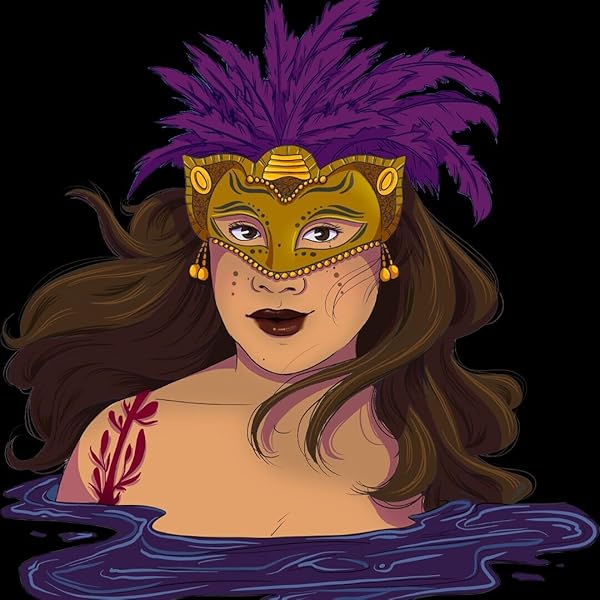
The Girl is a riveting coming-of-age story that blends spiritual, supernatural, and modern elements into a well-written story. What was the inspiration for the setup to your story?
The idea came about during one of those sleepless, insomnia, panic attack evenings after coming down from a tough day at work. I studied Public Health in college, so my first few jobs after graduation were in various hospital systems, including a few children’s psychiatric areas. So, my early career adventures and some of my heritage from pre-colonial Filipino and Pacific Island mythology and gods helped create my urban dark fantasy world.
Your characters are intriguing and well developed. What were some driving ideals behind your character’s development?
In developing characters, even if they may not be the focus or play a supporting role, I overwrote during the first draft phase, so I had a LOT of material to slice and dice. I enjoyed looking more at certain traits, or even behavior patterns and thought patterns, of a person rather than their specific stories in character development. Sometimes, just one or two qualities, because adding magic to any aspect of a story makes everything fictitious. With each character as much as I might know why they’re doing things, I also like to remember that my main character often does not.
What were some themes that were important for you to explore in this book?
The Girl centers very much on themes of coming of age, nature versus nurture, and even the beginning of a journey of how a quest can be more for your own self-worth, and that goal is worth more than any treasure sometimes. Can you do good if you come from something terrible where you’re told repeatedly that nothing “likable” can come from? Be Good? One central theme I wanted to explore was the dangers because “likeability” or even “popularity” means “goodness.” I also wanted to expand on what we could envision as thematic motifs for “stories centered with fantastical and horror elements.,” or the literal definition of the dark fantasy genre that the Western high fantasy tropes have often dominated. The Pacific islands, while beautiful, are filled with many things that cause death and pain: the volcanic ring of fire, typhoons, and mosquitoes carrying yellow or dengue fever. The Girl will hopefully be the first glimpse into some tales of our pre-colonial gods and nightmares that became our own myriad of wives’ tales and stories that genuinely acted as a guide to keeping people, especially children, alive. Stories about creatures who haunt the jungles, waiting for the unsuspecting child to eat. Or the shape-shifting, blood-drinking aswang, a female predator able to hide amongst the living. Hopefully, The Girl will be another gateway for readers to discover the diaspora for the first time or add another dimension to the growing mythos.
What is the next book that you are working on and when will it be available?
I definitely like to have something brewing all the time. Before attempting to write a novel, I started my career as a short story writer in predominantly dark fantasy/horror for the past few years. I have a short story that should be available on The Creepy Podcast. As for another book, I can’t imagine not coming back to The Girl, assuming there is enough interest.
Author Links: GoodReads | Twitter | Facebook | Website
The average person on the streets of Los Angeles would look at the girl and see a young woman with dark chocolate eyes, curly long hair, and tanned skin of her Filipina heritage. Her teachers praised her for her scholarly achievements and extracurricular activities, from academic decathlon to cheer.
The girl knew she was different, especially as she grew to accept that the other children’s parents didn’t despise them. Her parents whispered about their pact as odd and disturbing occurrences continued to happen around her. The girl thought being an evil demon should require the skies to bleed, the ground to tremble, an animal sacrifice to seal the bargain, or at least cause some general mayhem. Did other demons work so hard to find friends, do well on their homework, and protect their spoiled younger brother?
The demon was patient. It could afford to wait, to remind the girl when she was hurt that power was hers to take. She needed only embrace it. It could wait. The girl’s parents were doing much of its work already.
An Alien Version of David Bowie
To Those We Found follows an alien that is sent to a world similar to Earth to investigate and report back, what he finds is corruption, greed, and a disregard for each other. What was the inspiration for the setup to your story?
The main inspiration for the book came to me during a trip to the desert country of Morocco. I was intrigued by the language and culture of the local tribes. The Berber aka. Amazigh people. The sound and the strange geometrical symbols of their language really made me feel as if I was on a completely different world. I’ve even used their language for some of the character names and significant places/things in the book.
Did you create an outline for the characters in the story before you started writing or did the character’s personalities grow organically as you were writing?
Before I even wrote a single word, I first took one year to research everything that I could need to craft the world of the book. Apart from astrophysics, orbital mechanics, engineering, and biology the topics ranged from economics to psychology, philosophy and religion. I wasn’t aiming to create a believable world, to me, it had to be real. But simultaneously characters came into my mind that could populate the world. Some were inspired by people I know from everyday life, but there also other, larger than life people that influenced my characters. Stars like Freddie Mercury and David Bowie were one of the most dominant figures to draw from. While writing the main character Taman Yedder I even imagined an alien version of David Bowie. But personality wise, there’s a lot of me in it of course.
What were some themes that were important for you to explore in this book?
One of the main themes that were driving my story was the concept of truth. In our world, there seems to be an infinite number of truths, depending on what line of evidence or philosophy you follow or the political stance you take. I think that aspect played a large part in the way I designed the world characters and plot of the story.
The second theme is the idea or perception of foreign-/alienness. That’s why for example I chose my main character to be gay. Because the experience is alien to me, and I wanted to explore it, understand it. Also, the world as a whole was designed to feel real, relatable, but also strange and alien at the same time. In a way, it’s a queer mirage of our own world, populated with beings that are shockingly like us in some ways and in others not.
Just imagine staring into a telescope and discovering beings that seem to be an alien version of you.
What is the next book that you are working on and when will it be available?
Writing this book has been incredibly exhausting, mentally, physically and financially. I had a strict writing regime. I’ve forced myself to write every single day and on weekends, even if I absolutely did not want to. I literally had two full-time jobs during that writing period.
I was also aware, with English not being my first language, that I couldn’t possibly finish the project on my own. So I’ve hired professional editors who worked in the publishing industry, to make sure is up to standard.
Originally I’ve planned this book to be its own thing. But as time went by, I felt that I definitely want to continue the story as there were so many ideas that I couldn’t possibly put into one book. When that is going to happen however, I can not say at the moment. As it’s nearly impossible to sell enough books this day to be profitable. It’s always a losing game for most indie authors.
Author Links: Amazon | GoodReads
Let this book take you to a world beyond the cosmological horizon, and find the answer.
In a far-off galaxy, the purple-skinned alien, Taman Yedder, left his home colony for the motherworld Yemma.
As one among billions, he was chosen to represent his home system and compete against six other chosen ones, in a grand contest called, the Anermis-report.
A welcome message that’s intended to be sent to another species that they have discovered.
After meeting his sponsor, he embarks on a high-speed journey to locations of historical and cultural significance. This way he must capture the essence of his species. Yet on his way, angry mobs of protesters, seemingly try to stop his progress. They are terrorists, he is told.
But are they truly as evil as the government says? And will Taman survive to finish the contest?
Mac Has Hit A Bottom
MacGregor’s Final Battle follows a man who forgoes cancer treatment and sets out on a cross-country trip where he meets a nurse and inspires her to restart her life. What motivated you to write a biographical fiction novel about Mac?
A couple of things came together. I was challenged to write a novel for National Novel Writing Month (NaNoWriMO) in 2020. I had a chapter written in response to a question about my autobiography (not written and never will be). So, initially it was a spur of the moment adventure while I was recovering from writing and publishing Demented. But it led to some serious research about some serious issues. I wanted to write a romance – hence Mac and Kate – but I couldn’t pass on an opportunity to talk about family.
What were some obstacles that you felt were important in defining your characters in the story?
Mac has hit a bottom. He’s old. His wife of 40 years has recently died. He is dying of brain cancer. His family has abandoned him. But he has to do something. He has to make readers fall in love and root for him while accepting that he is going to die. He has to be tough as nails but vulnerable. In Chapter 2, he takes on armed robbers and misguided cops. In Chapter 4, Kate exposes his vulnerability. The great obstacle for the characters in this story is the age and social gap between Mac and Kate. They have to learn to get along together.
What were some ideas that were important for you to share with readers in this book?
Ageing and dying are foremost. What do we do with people who are falling apart before our eyes – perhaps suffering from an incurable disease or a disabling handicap or injury?
How we relate to others both as individuals and as a society: Tim’s race; Eddie and wound vet with hispanic heritage; our native American neighbors Our wars – Vietnam is especially difficult for Mac and me but it’s a repeating pattern that affects (perhaps defines) Eddie’s life.
Where do you see Kate Graham a couple of years after the story ends?
For the moment, Kate will continue as Eddy’s wife and partner. Their family will grow. She will rise to Nurse Practitioner.
Author Links: GoodReads | Twitter | Facebook | Website
I Went A Little Crazy

The Death of Harry Crow follows an investigator who uncovers an inexplicable link between a missing girl and a deadly accident which leads him to an uninhabited island and a madman. What was the inspiration for the setup of your story?
Many years ago, a real-life tragedy occurred within my own family. I was so enraged by the lack of consequence for the perpetrator of the crime (he vanished and was never charged) I believe, for a while, I went a little crazy. During that time, I fantasized about finding the guy and killing him. Eventually, in the hope that I might gain some peace from those violent thoughts, I decided to write about the crime as a kind of therapy. While memorializing the various diabolical punishments I so desperately wished to bestow upon the real perpetrator (should I ever encounter him) a fictional story emerged that was not dissimilar to the real story–it was a fantasy born out of the madness of my own mind. I called that fantasyThe Finding Man (not yet published). Several other books followed: Beneath the Bridge, and The Barnes and Blackwell Affair (not yet published). I then wrote The Death of Harry Crow, a book I finally believed worthy of an audience. I’ve recently completed the sequel to The Death of Harry Crow called The Man in the Moon. Today I’m working on a sequel to The Man in the Moon called The Weight. When finished, The Weight will be the sixth book in The William Snow Series.
I enjoyed the mystery at the heart of this story. Did you plan it before writing or did it develop organically while writing?
I believe that because I spent a number of years after the tragedy writing three books, The Death of Harry Crow came to me of its own volition. I had no plan for it, no initial thoughts or feelings. In fact, the story seemed to write itself, unfolding each day as I went to my computer. I had as much fun discovering new details to the mystery as any reader might. From one day to the next, I had no idea where the story was going. When the true nature of the mystery unfolded and I realized the full scope of it, I was surprised! Writing The Death of Harry Crow was so much fun!
What were some ideas that were important for you to explore in this book?
It was important for me to explore the notion of karma, which is somewhat like Newton’s Third Law, “With every action in nature there is an equal and opposite reaction”. In other words, the bad guy always has to pay. (I am, after all, writing thrillers) Yet, at the same time, I wanted to explore the forces behind acts of madness; somehow, this led me to the realization that compassion is essential to healing. I’m not sure how that happened. But, if one is to discover that they have the capacity for true compassion, should they then only parse it out only to those they admire? Don’t we all deserve a break? It was this question that led to the evolution of an evil character who’s as human as the rest of us. Not just a character who is horrifically flawed, but one who is as vulnerable as the rest of us “good guys”.
What is the next book that you are working on and when will it be available?
I’m excited about finding ways to make the other five books in the series available: Beneath the Bridge, The Barnes and Blackwell Affair, The Finding Man, The Man in the Moon, and The Weight.
Author Links: GoodReads | Twitter | Facebook | Website
Four years after the accident, Amanda suddenly vanishes, and her boyfriend is found murdered. Getting little assistance from the police, Amanda’s mother seeks the help of William Snow, a local man with a reputation for finding missing children.
Snow begins an investigation and soon uncovers an inexplicable link between Amanda’s disappearance and her father’s deadly accident. As Snow digs further into this bizarre connection, more people start to disappear. The case eventually leads him to an uninhabited island, a madman known as The Driver, and the twisted truth behind the death of Harry Crow.



 LITERARY TITAN