Blog Archives
Heart & Soul of Marketing


Heart & Soul of Marketing lays out a clear and practical roadmap for charities that want to strengthen their marketing efforts and understand their audiences more deeply. The book walks through a 10-part framework that starts with clarifying context, moves into idea generation, planning, testing, and evaluation, and eventually arrives at long term impact and integration. It blends real-world examples, simple tools, and reflective exercises to help charities link their marketing decisions to strategic goals. The tone is warm, supportive, and grounded in lived experience, with the author drawing on more than a decade of work across charities, foundations, and community groups to guide readers toward purposeful, confident communication.
I enjoyed how down-to-earth the writing felt. Nothing came across as academic or stiff. Instead, the author speaks with a kind of gentle honesty about the confusion charities often face and the sheer volume of noisy advice out there. The sections on context and audience were especially strong because they focus on real people and real conversations rather than abstract models. I liked how the author kept returning to the theme of clarity. It made me feel like he genuinely wanted readers to cut through the clutter and trust their own instincts rather than chase the latest marketing trend.
I also appreciated the book’s rhythm. It moves between practical worksheets, reflective prompts, personal stories, and examples from well-known charities in a way that kept me engaged. It felt personal and relatable. Some of the ideas were thought-provoking, especially the reminder that inspiration often shows up when you stop trying so hard to force it. The writing has a relaxed quality that makes you feel as if you’re talking with someone who has been in the trenches and simply wants to help you avoid the mistakes he’s already seen too many times. That sincerity gave the framework more emotional weight.
I’d recommend Heart & Soul of Marketing to charity leaders, small teams, volunteers, or anyone who feels overwhelmed by the idea of marketing but knows they can’t ignore it anymore. It’s approachable and forgiving, and it respects the challenges charities face. If you want a guide that’s practical without being pushy, structured without feeling rigid, this book will serve you well. It’s also a great fit for people who prefer advice that feels grounded in real experience rather than theory.
Pages: 256 | ISBN: 9781763680135
Messy and Imperfect is Still Meaningful

In Rainbow Gold, you share your losses, lessons learned, and the long-term effects of making meaningful choices as you transitioned from struggling restaurant owner to building a thriving aviation insurance group. Why was this an important book for you to write?
Rainbow Gold was important for me to write because it captures the philosophy that has shaped every stage of my life, that you can build something valuable and meaningful at the same time. During my early struggles owning a restaurant and retail business in South Africa, I made many missteps and got some hard lessons in business and leadership, and success seemed elusive and distant. Over time, I realized the real reward isn’t at the end of the road; it’s woven into the journey; the relationships, resilience, impact, and identity you build along the way.
When my teams surprised me one holiday season with deeply personal notes about why they loved working at our company, it crystallized what I now call Rainbow Gold: the belief that fulfillment doesn’t need to be deferred. You can build it into your business and your life right now.
I wrote this book to show entrepreneurs and leaders that the process of building something, or learning how to build something, even in its messy, imperfect stages, can be just as meaningful as the outcome.
I appreciated the candid nature with which you told your story. What was the hardest thing for you to write about?
The hardest parts to write were the chapters where I had to revisit failures, missteps, and emotionally heavy moments, both from my early ventures in South Africa and later, from navigating sensitive family partnership dynamics in our current business. Those years were formative, but they also involved painful mistakes and setbacks that I hadn’t revisited in a long time.
As a leader who values responsibility and clarity, admitting where I fell short required vulnerability. But leaving those moments out would have made the lessons less authentic. Readers don’t benefit from a polished highlight reel; they benefit from the full picture, including the chapters where the stakes were high and things didn’t go right.
Those candid moments ended up being some of the most resonant for readers, which affirmed why they needed to be in the book.
Did you learn anything about yourself as you wrote this book?
Absolutely. Writing Rainbow Gold reaffirmed that resilience is built in the small, daily choices you make when no one is watching, those “butterfly effect” moments, not in dramatic turning points. As I revisited years of experiences, I saw that it wasn’t one brilliant strategy or one lucky break that moved me forward; it was consistency, perseverance, and staying anchored to my values even in uncertainty.
I also learned that people, my teams, clients, mentors, and family, have always been my true driving force. I learned from my father and I’ve said for years that relationships matter more than anything in business, but writing the book helped me understand how deeply this principle has shaped my identity and my approach to leadership.
What is one thing you hope readers take away from Rainbow Gold?
If readers take only one idea away, I hope it’s this: You don’t have to choose between building a successful business and building a meaningful life.
When you invest in people, relationships, and values-driven decisions, financial success will follow organically and it will be financial success that is sustainable and legacy building.
Rainbow Gold is about rejecting the idea that fulfillment comes only at the end of the journey. Instead, it shows that the “pot of gold” is much broader than profit alone. Making money and being financially successful is certainly an important part of it, but equally important is the legacy you create, the people you grow, the impact you make, and the pride you can take in the work you do every day. When you get your business to the point where you can both fill your wallet and fill your soul, you’ve struck Rainbow Gold!
If this book encourages someone to build a business with purpose instead of pressure, with sustainability instead of scale, and to enjoy the journey instead of waiting for one perfect moment, then it will have been a success from my perspective.
Author Website
“David Hampson has written the antidote to startup culture’s obsession with quick exits and venture capital. Rainbow Gold presents a compelling case for building businesses that become life’s work-sustainable, profitable enterprises that provide both financial rewards and deep personal fulfillment. Through his journey from restaurant owner in South Africa to aviation insurance entrepreneur, Hampson demonstrates that the real treasure isn’t reaching the end of the rainbow, but enjoying every step of the journey while building something lasting for your family and community.”-J.J. Hebert, Founder & CEO, MindStir Media; USA Today, WSJ, and #1 Amazon Bestselling Author
In Rainbow Gold, David Hampsonshares his journey from a college student immersed in science courses—with no formal business education—to becoming a successful acquisition entrepreneur and recognized industry thought leader. This book is for aspiring and seasoned entrepreneurs alike, offering a candid look at the challenges, triumphs, and transformative lessons of finding and building a business that is not just a stepping stone but the ultimate destination. Central to the narrative is the “butterfly effect”; the idea that small, decisive actions can create monumental shifts in your life and business. Through David’s story, readers will learn how embracing opportunities and acting decisively can lead to extraordinary outcomes, often in unexpected ways. Rainbow Gold shows what the real “end game” looks like: not an exit strategy, but a deeply fulfilling business that doesn’t need to be sold because its value goes far beyond dollars. It’s about creating a business that represents the pot of gold at the end of your rainbow, one that provides both tangible and intangible rewards. And once obtained, rainbow gold doesn’t trade in fiat currency! With humor, honesty, and practical advice, Rainbow Gold inspires readers to see entrepreneurship not just as a career path, but as a calling that can transform their lives and the lives of those around them.
The MACH-10 PM: AI-Powered Product Management at Hypersonic Speed

The MACH-10 PM lays out a clear promise. Product managers can use AI to move at “hypersonic speed” without losing judgment or empathy. The book walks through the whole product life cycle, from discovery and roadmapping to launches, growth, and leadership. Each chapter mixes stories from Qualcomm and GoPro with simple models, tool suggestions, and concrete prompts that show how to pull AI into real work rather than treat it like a toy. The main idea is simple. You stop trying to outwork the chaos and instead use AI to gain leverage, clarity, and what Riggs calls “speed with soul.”
The tone of the book is punchy and direct, almost like a seasoned PM talking across a whiteboard after a long sprint. Sentences stay short, the examples feel real, and the metaphors around “MACH-10” and “radar” stick in my head. I liked the way each chapter closes with questions and small exercises, because that nudged me to picture my own workflow instead of just skimming along. The visuals and little tables, like the “AI-powered discovery loop” and the roadmap comparisons, break up the text and make the main arguments easy to recall later.
I found a lot to like. I really appreciated the focus on AI as a multiplier, not a replacement. The sections on discovery, feedback synthesis, and roadmap scenarios felt grounded and very practical. The prompt examples are useful, and the insistence on pairing AI with ethics and judgment kept the whole thing from sliding into tool worship. I also liked the recurring message that PMs should measure themselves by impact, not output, and that the real job is to orchestrate people and systems, not just ship tickets.
I would recommend The MACH-10 PM to working product managers who already know the basics and want a push to rethink how they use AI day to day. I think it will be especially useful for people in mid-level roles who feel stuck in meetings and backlogs and want language and tools to reclaim time for strategy. Leaders of product teams could also use it as a shared playbook for running experiments and setting expectations around AI use. If you want a sharp, fast, and pretty human guide on how to work with AI without losing your soul, this book fits that slot nicely.
Pages: 270 | ASIN : B0FSP1Z1C4

Sustained Courage

The Price of Nice lays out a sharp argument that our cultural obsession with being “nice” keeps us stuck in cycles of false comfort and stalled progress that preserves the status quo at home, in workplaces, and across society. What is the Think–Feel–Do–Revisit framework, and how does it help people break the cycle of niceness?
The Think–Feel–Do–Revisit framework was born out of my work in behavioral communications, not theory for theory’s sake, but years of studying how people actually change.
In my professional work, we borrow heavily from sociology, psychology, and behavioral science to answer very practical questions: What do people believe? What do they feel? Who do they trust? And how does that shape what they will do, and keep doing? We know that behavior doesn’t change just because information is correct or presented. It changes when beliefs and emotions are addressed first.
What clicked for me is that those same tools apply individually, especially when it comes to niceness.
When people stay “nice” in moments that require courage, it’s rarely because they don’t know better. It’s because of what they’re thinking, often unconscious stories about risk or belonging, and what they’re feeling, fear, obligation, loyalty, or discomfort. Those two things quietly determine what they do, usually nothing, and then the cycle repeats.
This framework helps interrupt that pattern. It gives people a way to name what’s happening internally before defaulting to silence. By revisiting the outcome, they build awareness and agency over time. That’s how mindset shifts stick. Not through one brave moment, but through understanding and practicing behavior change on purpose.
What were some ideas that were important for you to share in this book?
One of the most important ideas I wanted to name is that niceness is not neutral.
Growing up and throughout my career, I was praised for being “easy,” “gracious,” and “not difficult.” But I realized those compliments often came up just as I was quietly absorbing harm. Niceness became a way for the system to stay comfortable while I paid the price.
I also wanted to challenge the idea that courage has to look loud or reckless. In the book, I introduce the idea of nerve as sustained courage. Not the big speech once, but the daily practice of choosing yourself, again and again, even when there’s pushback.
And finally, I wanted to make it clear that this isn’t about becoming harsh or cruel. It’s about replacing performative niceness with intentional kindness, the kind that takes action, tells the truth, and is willing to disrupt.
What is one thing you hope readers take away from The Price of Nice?
I hope readers walk away knowing that the discomfort they feel isn’t a personal failing. It’s often a signal that they’re outgrowing the rules they were given.
So many people, especially women and people of color, think they’re broken because being “nice” isn’t working anymore. What I want them to see is that their instincts are intact. They’re just bumping up against systems that rely on their silence.
If readers take away one thing, I hope it’s this: You’re not required to be palatable to be powerful. And choosing nerve doesn’t make you dangerous. It makes you daring.
Author Links: GoodReads | Website | LinkedIn | YouTube | Instagram | TikTok | Bluesky | Amazon
“What’s wrong with nice?!” A simple and powerful question. It demands we interrogate the unspoken rules that shape our lives, often without our realizing it.
“It costs nothing to be nice!” What a travesty of logic. Niceness is not free—it comes at a steep price. It’s a velvet glove over an iron fist, stifling dissent, prioritizing comfort over progress, and conditioning us to accept the status quo. Niceness is one of the most insidious social constructs, keeping us compliant, silent, and complicit in inequity. If we don’t question it, we stay exactly where power wants us—agreeable, easy to manage, and stuck.
The Price of Nice is about breaking free. Amira Barger deconstructs our cultural obsession with niceness, exposes its hidden costs, and offers a practical framework for real change. With sharp analysis and personal insight, she helps readers disrupt the narratives that keep them stuck and reclaim their power.
Guided by four dimensions rooted in social psychology—think, feel, do, revisit—this book offers immediate, adaptable practices for creating change. Because breaking free isn’t only what you know—it’s what you do next.
If you’re tired of “good enough,” this book will challenge you, change you, and call you to more.
The Right Fit

The Right Fit lays out a full roadmap for hiring, developing, and keeping great people. It walks through the entire employee journey with a calm, steady hand. It starts with understanding your culture, then moves into selection, onboarding, engagement, development, and long-term retention. The book blends practical advice, clear steps, and real stories, all while rooting everything in one theme. Success comes from treating people with intention and care. The message is simple but strong. If you want a thriving team, you must build the environment in which they can thrive.
The writing feels warm and direct, like a mentor talking to you over coffee. I loved how the author breaks down big ideas into small, doable actions. At times, the tone feels almost fatherly, full of calm encouragement, and I appreciated that. I also enjoyed the focus on culture and values. It reminded me how often organizations skip that part and head straight into hiring tactics. The book insists that you cannot choose the right person if you do not know who you are as an organization. That felt honest and grounded.
Some chapters hit me on a more emotional level, especially the parts on inclusion and employee wellness. There is a real sense of care in the writing. It is clear that the author believes deeply in people and wants workplaces to be better for them. That sincerity makes the book feel human. I will say there were moments when the structure felt dense, and I found myself wanting a little more storytelling to break up the instructional tone. Still, the ideas are solid, and the consistency of the message kept me hooked. The parts on career development, mentorship, and non-linear growth were especially refreshing. They made me reflect on my own path and the kinds of support that helped me.
I closed the book feeling hopeful. The Right Fit offers a positive vision of work that feels both reachable and worth striving for. I would recommend this book to new managers, HR professionals, and leaders who struggle with turnover or culture issues. It would also be great for small business owners who want to hire smarter and build stronger teams. The book gives them a clear and steady guide and reminds them that people are not just resources. They are the heartbeat of the whole operation.
PagesL 116 | ASIN: B0F8N7X9SM
Literary Titan Book Award: Nonfiction

The Literary Titan Book Award recognizes outstanding nonfiction books that demonstrate exceptional quality in writing, research, and presentation. This award is dedicated to authors who excel in creating informative, enlightening, and engaging works that offer valuable insights. Recipients of this award are commended for their ability to transform complex topics into accessible and compelling narratives that captivate readers and enhance our understanding.
Award Recipients























Visit the Literary Titan Book Awards page to see award information.
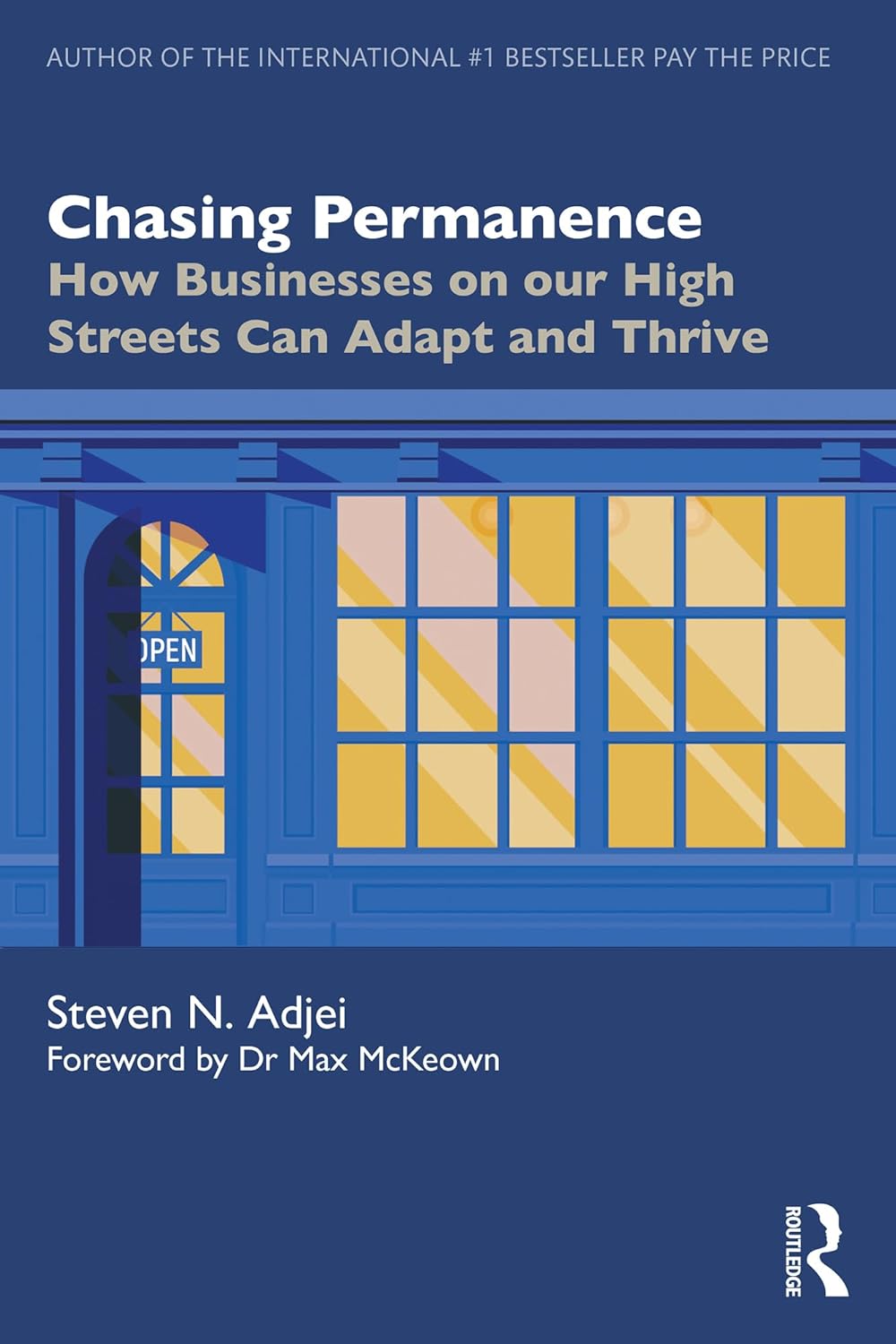
Chasing Permanence: How Businesses on Our High Streets Can Adapt and Thrive
Chasing Permanence explores why some High Street businesses fade while others seem to hold on with surprising strength. Author Steven N. Adjei blends research, interviews, personal history, and real-world case studies to show how companies can adapt and thrive even as the world around them shifts. He lays out seven mindsets, five determinants, and a set of strategies that give owners and leaders a clearer way to build resilience and community in a time when storefronts close by the thousands. The book reads like a roadmap for anyone who wants to understand not just how businesses survive, but how they can shape their own future even when conditions look bleak.
Adjei writes with a kind of grounded warmth that makes the research feel personal. His stories about his mother working at Selfridges and his own early days on the High Street pulled me in right away. Those scenes made the later arguments hit harder, because they show the emotional cost behind the statistics. At times, the writing surprised me with its honesty. I found myself nodding along when he talked about the hollow excuses we make about market forces and how easy it is to blame the world instead of looking at what a business can actually change. I liked that he didn’t shy away from calling out lazy thinking. It made the whole message feel more alive and a bit braver.
I also found myself wrestling with some of the ideas. Adjei argues that businesses need to embrace collaboration, community, and what he calls Permanence, but he never paints it as a simple formula. The mix of mindset, strategy, and realism made me stop more than once and think about how often we expect business success to come from some magic trick. There were moments when I wished he had expanded on certain examples, especially when he talked about towns that felt like ghosts. Still, the rhythm of the book kept pulling me forward. His insistence that companies can shape their own destiny felt hopeful without drifting into fantasy.
The book made me look at High Streets with fresh eyes. It reminded me just how much these places mean to people and how much potential sits in the hands of owners, staff, and communities who care enough to adapt. I would recommend Chasing Permanence to entrepreneurs, local leaders, and anyone who wants to understand why some businesses hold their ground while others disappear. It’s practical, heartfelt, and surprisingly moving. And it’s a great fit for readers who want guidance, but also want a story that speaks to real human experience as much as business theory.
Pages: 391 | ASIN : B0F4R8G9BC
Visibility is Everything

Be Recognized is a step-by-step guide that lays out a clear path for experts who want to build authority, grow their business, and embrace AI rather than fear it so that they can stand out in the crowd. Why was this an important book for you to write?
This book had to be written! Jenn and I saw this huge shift happening right before our eyes. AI was exploding, and people were either running toward it with curiosity or running away in fear. We thought, what if we could show experts how to embrace it? Because let’s face it: if you’re not standing out, you’re blending in, and no one gets discovered by hiding in the shadows.
We’ve helped hundreds of authors build their brands through books, but this time, we wanted to take it up a notch. We wanted to empower entrepreneurs, coaches, speakers, and business owners to not only be seen but to be recognized as the authority in their space. And AI, when used right, can supercharge that.
AI has a negative reputation, particularly in the creative and publishing industries. What advice do you have to help those hesitant to use AI recognize its value, the direction this technology is taking, and how it can add value to their industry and business?
AI is not here to replace your voice. It’s here to amplify it. The way we look at it is this: AI is a tool, just like your laptop, just like your phone. It’s how you use it that matters.
I always say, imagine having a research assistant, an idea bouncer, a content booster, all available 24/7. That’s AI! And in publishing? It helps with brainstorming, outlines, editing, and even marketing strategies. But the soul of your book, your brand, your story, that’s all you. AI just helps you get it out there faster, smarter, and more efficiently.
So my advice? Don’t ignore it. Leverage it. Learn to work with it and let it enhance your creativity, not replace it.
What were some ideas that were important for you to share in this book?
There were so many, but a few key ones stand out. First, visibility is everything. You can’t be in business if no one knows you exist. So we really hammer in on how to build your personal brand strategically, through publishing, speaking, and showing up online consistently.
Second, authenticity beats perfection. AI can help polish and scale your message, but your story, your voice, that’s what makes the difference. And finally, we wanted to show that being a thought leader isn’t reserved for celebrities. You can start right where you are with the knowledge you already have. You just need the right engine, and that’s what we give you in this book.
What is one thing that you hope readers take away from Be Recognized: The AI Authority Engine for Experts Who Want to Be Known, Be Profitable, and Be Published?
If there’s one thing, it’s this: you already have everything inside you to be recognized. You don’t need to wait for someone to discover you. You have a story, expertise, and value the world is waiting for. The only thing you need is a system to shine, and that’s what this book gives you.
I want every reader to walk away feeling inspired, equipped, and empowered to show up as the authority they are. And when you combine that with the tools of today, like AI and publishing, there’s no limit to what you can achieve.
Author Links: GoodReads | Facebook | Instagram | YouTube | Website | Amazon
Dominate your niche. Automate your growth. Become the authority.
In a world where AI is reshaping every industry at lightning speed, standing still is not an option. Be Recognized: The AI Authority Engine for Experts Who Want to Be Known, Be Profitable, and Be Published is the ultimate playbook for business owners, CEOs, consultants, and thought leaders ready to rise above the noise and lead with unstoppable momentum.
Authors Melanie Johnson and Jenn Foster, trailblazers in digital marketing and authority publishing, pull back the curtain on how high-level experts are using AI not just to survive, but to scale, sell, and succeed faster than ever before. This isn’t a book about future trends or theory. It’s a step-by-step execution plan to:
Position yourself as a Category King in your industry
Build an AI-powered content machine that never sleeps
Automate customer engagement, sales, and visibility
Turn a single book into a lead-generating empire
Launch high-ticket offers with authority and ease
Future-proof your brand with intelligent systems that scale
Whether you’re just AI-curious or already experimenting with tools like ChatGPT, this book meets you where you are and takes you where you need to go. The strategies inside have already helped countless entrepreneurs go from overlooked to iconic.If you’re ready to stop dabbling and start dominating, Be Recognized is your blueprint to become the face of your field in the AI age.
The old game is over. It’s time to build your authority engine and own your future.



 LITERARY TITAN