Blog Archives
The Day We Forgot to Smile


The Day We Forgot to Smile by Anthony Owens is a linked collection of life-centered stories about childhood, family, grief, violence, love, endurance, and the small mercies that keep people from disappearing inside their pain. The book moves from Bushwick fire escapes, church shoes, radiators, bodegas, and bruised family rooms into adult stories of marriage, guilt, friendship, loss, and renewal. Its subtitle, “Stories from the Tender Corners of Life,” is apt: these pieces are interested less in spectacle than in the private weather of ordinary people trying to remain whole.
Owens writes with a strong sense of place; Bushwick isn’t merely a setting but a living instrument, rattling trains, hissing heat, sidewalk music, corner-store candy, and danger braided together until memory feels almost tactile. I found the early stories especially affecting because they understand childhood without making it soft. The boys on the fire escape are funny, watchful, hungry, frightened, and inventive all at once. That mixture gives the book its unique feel: sweetness is never allowed to stay simple, but bitterness is never allowed to have the final word.
My strongest reaction was to the way the book honors survival without polishing it into a slogan. Some stories are painful: domestic violence, grief, betrayal, loneliness, but the narration keeps searching for the human shape inside the wound. The prose leans into reflection. Owens has a gift for making humble objects feel charged with meaning: a radiator becomes a lullaby, a polished shoe becomes faith, a basil plant becomes grief learning to sit quietly in the room.
The target audience is readers of memoirs, literary short stories, inspirational fiction, family drama, coming-of-age, and resilience narratives, especially those drawn to books about ordinary people carrying extraordinary emotional burdens. Readers who appreciate the intimate, memory-soaked storytelling of James McBride or the hard-won tenderness of The Color Purple may find a similar moral warmth here, though Owens’s voice is more direct and testimonial. The Day We Forgot to Smile is a book about pain, yes, but more importantly, it’s about the stubborn human talent for finding a little light and naming it home.
Pages: 248 | ASIN : B0G4B4V9Z3

Fly Stone, Fly
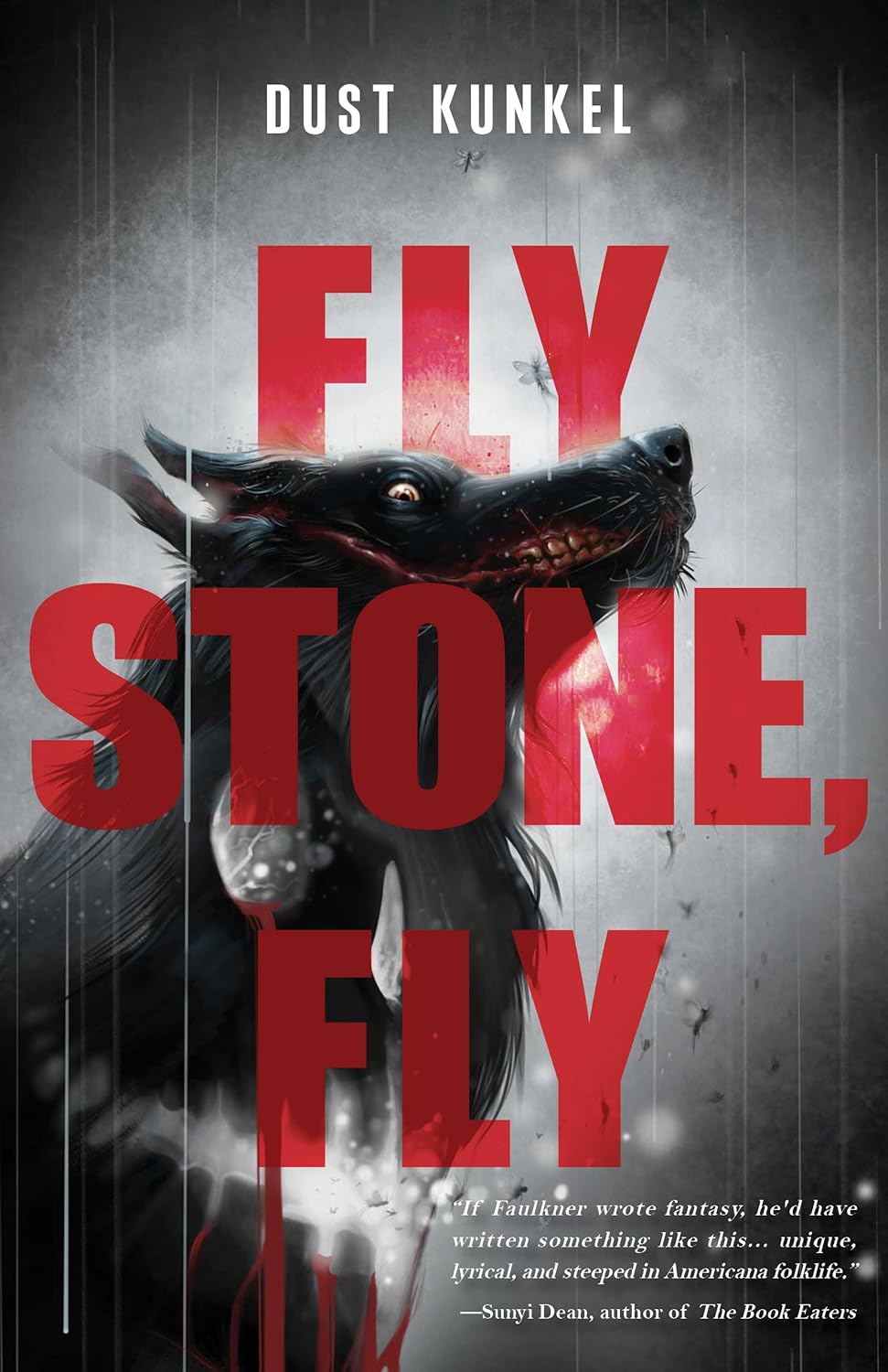

Fly Stone, Fly by Dust Kunkel is a feral, river-haunted dark fantasy about Clayton Bergmann, a boy left alone in the Idaho wilderness after his parents disappear, who grows into grief, prophecy, and revenge with a foul-mouthed dog named Dammit, a Shakespeare-soaked mind, and a family curse snapping at his heels. The story moves from survival tale to Western Gothic blood-feud, with Big Jim looming as both villain and nightmare, and with stoneflies, river water, old stories, and bad dogs carrying more meaning than they first seem to bear.
I admired how strange this book is willing to be. Its voice has burrs on it: funny, wounded, profane, lyrical, and sometimes gloriously overgrown. Clayton narrates like someone trying to lash a broken raft together while already in the rapids, and that urgency gives the novel its pulse. The Shakespeare references could have felt ornamental, but here, they’re weighty, private, and handled often. The book’s best passages do not merely describe wilderness; they make the canyon feel sentient, accusatory, almost liturgical.
What I enjoyed most was the book’s refusal to sand down pain into easy nobility. Clayton’s loneliness is not pretty. His friendships are not tidy. Dammit, Lina, MK, and the rest feel carved from contradictions: loyal and dangerous, comic and damaged, ridiculous and mythic. The novel’s maximal style asks for patience; it can wander and double back. But that excess is also part of its charm.
The target audience is readers who want dark fantasy, Western Gothic, revenge fantasy, mythic coming-of-age, and literary fantasy with a rough comic streak. Readers who like Neil Gaiman’s myth-in-the-modern-world sensibility or Stephen King’s gift for giving childhood terror a local address will find something kin here they enjoy, though Kunkel’s voice is more backwoods-baroque and river-drunk.
Pages: 498 | ASIN : B0DTDDG3T8

Sawadika American Girl


Sawadika American Girl is a tender, immersive coming-of-age novel about Piper Lewis, an American teenager growing up in Bangkok during the Vietnam War. Daria Sommers frames Piper’s story through the lens of a Third Culture Kid, then drops us into a city where embassy life, military R&R, Thai domestic rhythms, teenage longing, and the war’s long shadow all exist side by side. The book’s world feels lived in, from samlors and monsoon air to piano lessons in a Thai prince’s compound.
At the heart of the novel is Piper’s search for a place to put her grief, talent, anger, and desire. Music gives her that place. Her lessons with Prince Suriwongse are some of the book’s strongest scenes because they turn piano technique into emotional language. When he tells her, “You think too much Piper. Won’t work that way,” it works as more than advice about Beethoven. It’s also a way of reading Piper herself, a girl trying to control feelings that keep slipping past her.
The novel also becomes a brief, intense love story when Piper meets Jack Gallagher, a nineteen-year-old soldier on R&R from Vietnam. Their connection works because Sommers doesn’t treat it like a fantasy escape. Jack brings the war with him, Piper brings her loneliness and her complicated American life in Thailand, and together they create a small pocket of recognition. One of the book’s loveliest ideas is that belonging can appear suddenly, even in a place where no one fully belongs.
Sommers is especially good at showing how history filters into ordinary rooms: a stepmother’s pregnancy announcement in traffic, a teenage party, a protest outside the embassy, a piano lesson, a hotel lobby full of soldiers. The war isn’t just background scenery. It shapes where people live, what they believe, who they can love, and what they’re able to admit. The Prince’s explanation of khwam sao sok, “a sorrow many people have together,” becomes the book’s emotional key.
Sawadika American Girl has become a story about memory finding a home. Piper’s return to Jack’s name at the Vietnam Veterans Memorial gives the novel a quiet, earned release, because it finally gets witnessed. The book is historical fiction, a love story, a Bangkok novel, and a portrait of a young artist learning how to feel without looking away. It’s intimate, sensory, and generous with its characters, even when they’re lost.
Pages: 304 | ISBN: 3988322121
What We Found Last Summer

What We Found Last Summer is a compact, propulsive coming-of-age thriller built around a very 1980s kid-adventure setup: bikes, woods, fireworks, treehouses, comics, neighborhood rivalries, and parents who are just far enough away for trouble to bloom. The hook is simple and effective: Calvin and Derek find a bag of mob money in an abandoned treehouse, and their summer suddenly becomes much bigger than scraped knees and boyhood dares. The book knows exactly what it’s playing with when it invokes “Kids on bikes,” but it gives that familiar shape a sharper adult edge.
What makes the story work is that it isn’t just nostalgia dressed up as danger. Author Javier De Lucia fills the neighborhood with specific, lived-in relationships: Calvin and his brother Ryan, Calvin and Ravi’s strained friendship, Derek’s restless bravado, Rochelle’s divided loyalty, Lolo’s quiet vigilance, and the uneasy presence of adults whose choices are spilling into the kids’ world. The mob plot gives the novel momentum, but the real texture comes from the way every kid is trying to understand power, loyalty, fear, and belonging with only a twelve-year-old’s emotional toolkit.
The tone is probably the book’s strongest asset. It’s funny in a blunt, profane, very character-driven way, and then it can turn tense fast without feeling like it has changed books. Agent Baker’s line, “We follow the money,” could’ve been pulled from a straight crime novel, but here it sits beside comic-book arguments, treehouse engineering, and kids making decisions they’re nowhere near ready to make. That mix gives the novel its personality: half suburban adventure, half crime story, with the two halves rubbing against each other in interesting ways.
I also liked how the book lets the kids be messy without sanding them down into symbols. Calvin is cautious but tempted, Derek is bold but scared, Ravi is annoying because he’s often right, and Rochelle sees more than the adults realize. Lolo, meanwhile, becomes one of the book’s most memorable presences because he understands the danger before the kids fully do. The story has a real affection for childhood imagination, but it’s also honest about how quickly imagination can collapse when actual violence enters the frame.
By the end, What We Found Last Summer feels like a memory that’s been sharpened into a pulp adventure, then complicated by an adult narrator who knows memory and fiction don’t always sit in separate rooms. The afterword’s idea that “Everything counts” fits the book nicely, because this is a story about the way childhood incidents can become myths, wounds, jokes, and origin stories all at once. It’s a fast read, but it has more going on than its premise suggests, and its best moments come from how confidently it treats a neighborhood summer as something big enough to change everyone who lived through it.
Pages: 105 | ASIN : B0GT26H2ZM
Thunderclap & The Fight for Sasquatch Earth

Thunderclap & The Fight for Sasquatch Earth is a speculative adventure thriller with a strong young-adult coming-of-age streak. Author T. B. Ross builds an alternate world where Sasquatch are not myth but a threatened people living behind the Great Wall of Pines in a protected sanctuary. The story begins with a violent kidnapping: Avery Sky, daughter of a tech billionaire, is taken by Thunderclap and the Sasquatch Liberation Front, setting off a rescue mission that pulls in law enforcement, family history, old friendships, and a group of brave kids who refuse to stay on the sidelines.
Ross writes with the pace of an action movie, and the chapters often feel built to keep you turning pages. The setup is bold, even wild, but the book commits to it completely. The Sasquatch world has rules, politics, wounds, and history, which gives the genre material more weight than a simple monster story. At times, the prose is blunt, especially when the violence spikes. Still, there is an earnestness underneath it that kept me engaged. The book wants to entertain, but it also wants to say something.
I found the author’s choices most interesting when the story blends adventure with questions about prejudice, sovereignty, addiction, loyalty, and inherited pain. Thunderclap is frightening, but he’s not presented as random evil. His rage grows out of a broken system, even when the book never excuses what he does. That tension gives the story its better moments. I also appreciated the kid-centered rescue thread, because Ben and his friends bring the book back to something more human and immediate. They are scared, reckless, funny, and loyal. That mix gives the story some warmth when the larger conflict gets grim. Not every emotional beat lands cleanly, but the friendship and survival elements help ground the spectacle.
I would recommend Thunderclap & The Fight for Sasquatch Earth to readers who enjoy fast, high-stakes speculative thrillers, especially ones with creature lore, wilderness action, and young heroes thrown into danger before they are ready. It’s probably best for readers who like their adventure big, loud, and a little over the top, but still want some social and moral weight beneath the chase. If you want a strange, energetic genre ride with Sasquatch politics, rescue missions, and a pulpy heart, this will likely hit the spot.
Pages: 300 | ASIN : B0FLX4HDKF
When the Forest Dreams

When the Forest Dreams, by Andrea Ezerins, follows Emma Jablonski, a dutiful Polish American bakery daughter living in a cramped Upper East Side apartment, who believes she may be on the brink of inheriting her mother’s illness and decides she has only a little time to begin living before life closes around her for good. What unfolds is a romance of awakening: Emma slips from obedience into appetite, from silence into speech, and from mere survival into a more enchanted attentiveness to birds, trees, food, friendship, and love. The novel braids immigrant family pressure, illness anxiety, Central Park birding, and a slow-blooming relationship with Jake into a story that is at once tender and self-consciously dreamy.
I was taken most by how emotional the book is. Emma’s voice has an inward intensity that could have grown claustrophobic, but instead it becomes the novel’s chief pleasure: she is funny, pious, exasperated, lonely, sensuous, and faintly feral all at once. Her private vocabulary of birds gives the story an animating pulse; the white-eyed vireo, the kingfisher, the wood duck, even the idea of the elusive ivory-bill make the natural world feel less decorative than salvific. I liked that the book understands how deprivation can make beauty feel almost violent. A plush quilt, a duck on a pond, a hand on the shoulder, fresh parmesan, a cup of tea these are not trimmings here. They arrive with the force of revelation.
This isn’t a book embarrassed by sincerity, and that gives it a certain old-fashioned glow. The prose is lush, and the emotional beats are worn close to the skin, but I found that part of its charm; the book is unabashed about wanting transformation, romance, and a reprieve from beige existence. Veronica also gives the story a welcome texture, preventing it from collapsing into a sealed two-person fantasy. Beneath the romance, I felt a persuasive argument that a life can narrow by increments, and that reclaiming it may begin in something as humble as cooking for someone, naming what you love, or admitting that duty alone is a meager gospel.
I’d recommend When the Forest Dreams to readers who gravitate toward contemporary romance, women’s fiction, coming-of-age fiction, immigrant family drama, and nature-inflected romantic fiction. Especially readers who like introspective heroines and stories where emotional thaw matters as much as plot. It will likely appeal to people who love L. M. Montgomery’s The Blue Castle or readers of Emily Henry who wouldn’t mind a more sheltered, more devotional, more bird-struck heroine; the author’s note makes that lineage explicit, and you can feel it in the book’s faith in reinvention.
Pages: 344 | ASIN : B0FWZXGTXC
Finding Home

The Diaries of a Teenage Pilgrim: The Early Journey is a coming-of-age memoir about finding your spiritual identity under pressure, when your family moves from rural Wisconsin to Israel. What do you remember most vividly about the moment you learned you were moving to Israel?
I already had a firm foundation in the faith before we moved. I was baptized at nine years old and had a charismatic experience of speaking in the “tongues of Canaan” at that age as well. Being a pastor’s kid was not always simple, and there were seasons of struggling on a tight budget where I could not always afford what my peers had. During my tweens, my heart was not as close to the Lord as it once was, but in my thirteenth year, I experienced a spiritual revival and a growing sense that He was preparing me for a great adventure with Him.
In some ways, the move did make my faith more fragile, but that fragility drew me closer to God. Fragility can do one of two things: it can ruin you, or it can cause you to lean on the Good Shepherd. I chose the latter, and it was in that leaning that my love for bridal poetry was born.
Readers who want to follow that thread further will find it woven throughout my next memoir. There, I hope to continue the journey, sharing my experiences in the Israeli-Lebanese borderlands. The story builds toward the Israeli withdrawal from the buffer zone in 2000, when my father’s work in South Lebanon was brought to a close. The story does not end there. The series is intended to continue well into my adult years, as there is much more of the journey still to share.
How did moving across cultures affect your understanding of faith? Did your beliefs feel stronger, more fragile, or simply different during that time?
When I was thirteen, and my parents said, “We’re going home” to Israel, I thought, but I am already home. However, home for me was Spooner, Wisconsin: the smell of pancakes with real maple syrup, mom’s piano filling the rooms, Dad home and not deployed, and hours of rollerskating on a Friday night. That was my definition of home, but it would keep changing.
Then the whole story flipped. I would spend years as a Third Culture Kid searching for home, crossing oceans, borders, and the wreckage of my own expectations.
A romantasy reader knows this, even if she has never opened a Bible. She knows what it is to be hunted by a love that will not be reasoned out of finding you. She knows the moment the Beloved crosses every border and descends into every darkness, not because you were worthy, but because you were wanted. She has felt the shock of being seen by someone who walks straight past every wall you built and finds the thing you buried deepest. He found me a displaced teenager with fifteen moves under her skin, and He said, “You are not a stranger to me. You are lovely, and you are mine.” Now, suddenly, it did not matter where I was. He was where I was. Home was not a place I was trying to reach; rather, Home was the One who had already reached me.
One day, I will go home to Him: into that final consummation that Revelation calls a wedding. However, in the meantime, in the liminal wilderness years, His Holy Spirit had already taken up residence in me.
He did not call me “stranger.” He called me “lovely.”
Yes, home can be a place. But at its deepest, truest, most unshakeable sense, home is a Person who chose you before you knew His name, who crossed every wilderness, who makes displacement holy ground and wandering a romance.
Here is what I know now that I did not know at thirteen, about to embark on a lifelong pursuit of finding home. He did not just come to bring me home. He placed the road inside me.
There is a song by Petra that resounds in my head:
There is a road inside of you, inside of me, there is one too — no stumbling pilgrim in the dark, the road to Zion’s in your heart.
If you could speak to your teenage self, what would you tell her?
Writing this book was itself a way of speaking to her. Going through my journals, I awakened memories I had long since forgotten, some of them buried for good reason. One that surfaced was a fight scene involving the entire boys’ hockey team, a memory I had blocked out for years. Writing it was harder for me than even the car accident scene, because embedded in it was a deep shame I had carried silently. Shame in the lies that had been spoken about me, and shame in having fought back, because I believed we were called to be peacemakers.
However, writing as a pilgrimage changes you. It makes you look again at what really happened. As I sat with that scene, I started to view it differently. It was the turning point of the whole journey. That was the moment I stopped looking for an earthly hero to save me and began leaning on my Heavenly One. God saw me in that very moment. He knew my name. He was not leaving me to walk alone as a stranger in a strange land.
So what would I tell her? I would tell her not to be ashamed of who she was and not to carry false guilt. I would tell her to be brave, to believe, and not to be afraid of becoming what her Beloved Heavenly King had destined her to be.
Author Links: GoodReads | The Diaries of a Teenage Pilgrim | Facebook | Website | Amazon
Lydia takes you on a journey to Jerusalem, living in a Jewish neighborhood, attending an Arab school in East Jerusalem, then moving to the Israeli-Lebanese border. She joins a hockey team and a speed skating team. Rockets fly overhead while her father works in South Lebanon with Christian radio. As the only believer in Jesus among her friends, she grapples with how to live set apart for God. But as tensions build, she runs away to the Ozarks to live with her Grandma and experience a normal American high school life. During that time, she comes face to face with her dreams and the deeper calling placed on her life. She has a destiny set before her, but will she choose the comfort of familiar ground, or will she return to the Galilean Hills where Someone was waiting for her?
This is the raw testimony of a girl and how she began to see how heaven and hell fought over her. As one who has moved between many places, she discovers a single constant: the mystical presence of God. He opens to her the language of the Song of Songs and reveals that He wants her for a Bride, drawing her into deeper intimacy through poetry and Divine love. This is the true story of a teenager who begins her journey and slowly finds the Lover of her soul. This is the early journey. Part two is coming, as the mountains of spices await Lydia’s return.
Lydia wrote in her diary as a teenager. She wrote this book as an adult who never forgot what it cost. For readers thirteen and beyond. Her story and poetry speak to anyone who has ever felt like a stranger at any age: anyone walking this journey of life and searching for meaning and purpose, Third Culture Kids navigating between worlds, ministry families facing cross-cultural moves, men and women wrestling with questions of belonging, seniors who want to reignite their passion for God, and teens grappling with confusion about identity and vision.
Between the Holy Land and the Ozarks, one reluctant pilgrim discovers you cannot outrun a love written before there was time.
The Diaries of a Teenage Pilgrim: The Early Journey
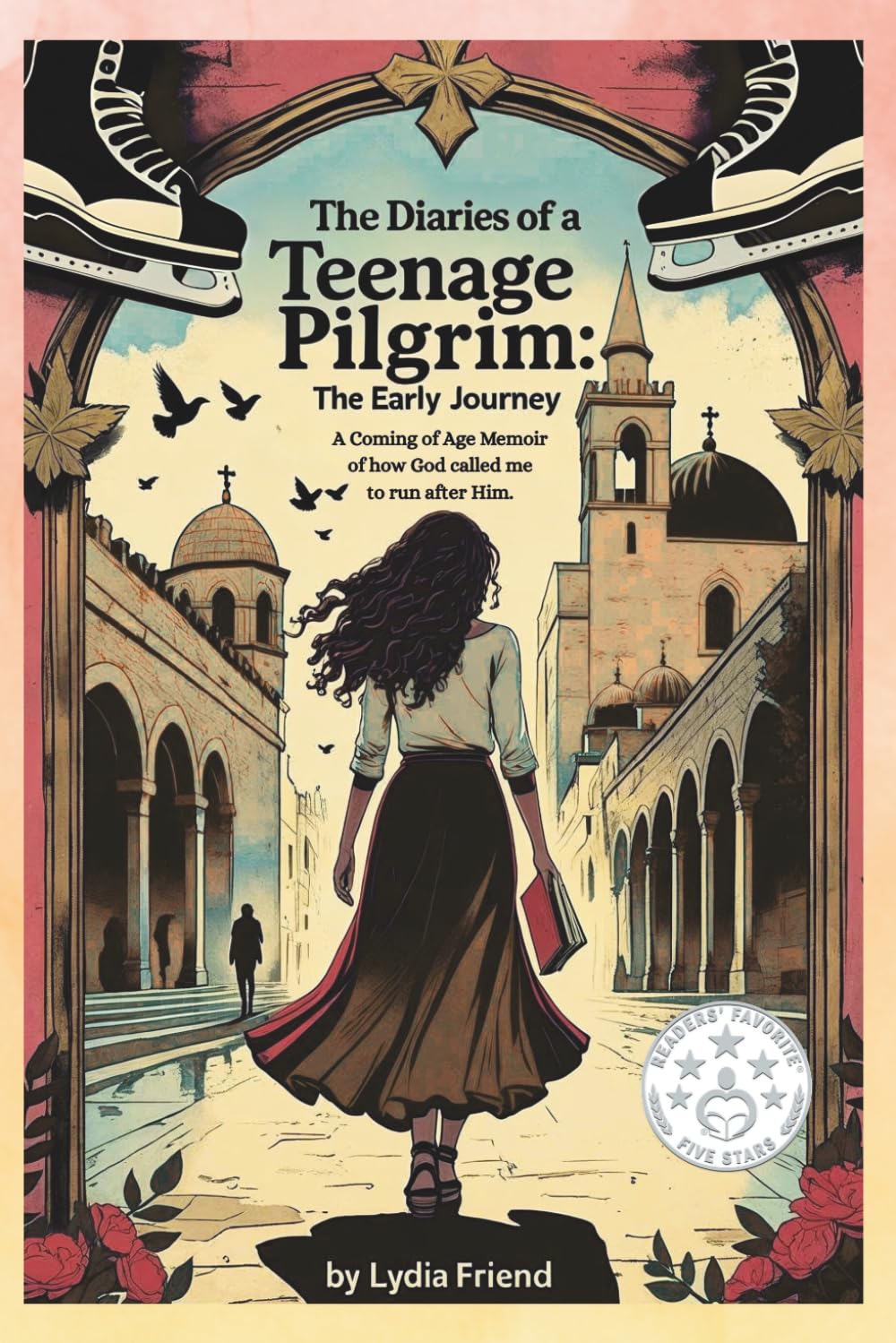
I found The Diaries of a Teenage Pilgrim: The Early Journey to be, at heart, a coming-of-age memoir about spiritual identity under pressure. Lydia Friend begins in the warm, enclosed world of Spooner, Wisconsin, then is swept into a family move to Israel that feels at once providential and deeply destabilizing. What follows is not a tidy overseas faith ministry narrative but a long, uneven apprenticeship in exile: Jerusalem and Metulla, homesickness and fervor, poetry and loneliness, the ache of being pulled between the Ozarks and the Galilee, and finally a devastating car accident that becomes a hinge point rather than a climax. The book keeps returning to one question in different forms: what does it mean to belong when every earthly home feels provisional, and when faith asks not for certainty but for surrender?
I liked the book’s emotional candor. Friend has a gift for rendering memory through texture and atmosphere, so that a white cat in an airport carrier, a farewell quilt from a small church, or a frantic run through Atlanta with a harp on her back can carry real emotional voltage instead of merely serving as anecdote. I admired the way she lets adolescent intensity remain intense. She doesn’t flatten her younger self into someone wiser or more ironic than she was. That gives the memoir a rawness I found moving, especially in the sections where she feels caught between two worlds and can’t tell whether she’s being formed or simply undone. The prose has a luminous, devotional quality. It lingers over rain, cedar, songs, hospital fear, and the strange tenderness of being cared for after catastrophe. There were moments when the language tipped toward repetition or overstatement for me, but even then I felt the pressure of a real inner life behind it.
I also found the book’s ideas both compelling and specific. Friend’s central vision of pilgrimage, displacement, and what she calls being “Stranger Lovely” gives the memoir its theological spine. She reads exclusion, longing, and even creative repression as part of a larger divine romance, and whether or not a reader shares every article of that belief, it’s hard not to feel the force of how fully she has lived inside it. I was especially struck by the way the accident and recovery chapters reframe suffering not as abstract lesson material, but as something bodily, terrifying, and humiliating before it becomes meaningful. That sequence gave the book real gravity.
The Diaries of a Teenage Pilgrim is a sincere memoir, and sincerity here is not a small thing. What I valued most was its refusal to separate spiritual formation from embarrassment, adolescence, longing, family history, art, or pain. Friend writes like someone trying to recover her own song while she’s still hearing its echoes, and that gives the book an intimacy I found affecting. I’d recommend it especially to readers who are drawn to faith memoirs, overseas faith ministry childhood narratives, and stories of displacement that are as inward as they are geographical. It will likely speak most powerfully to readers who have felt out of place in the world and have tried to make meaning of that estrangement without denying its cost.
Pages: 322 | ISBN : B0FP31B2LW


