Blog Archives
I Wrote to Remember
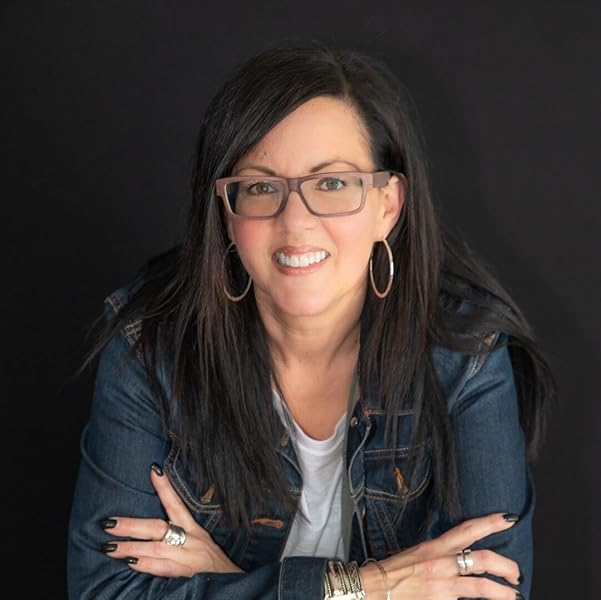
I Finally Have the Smoking Hot Body I Have Always Wanted is a wildly honest, heartbreakingly funny, and beautiful tribute to your late mother, sharing with readers your mother’s bold personality and her passion for life. Why was this an important book for you to write?
Because watching someone you love disappear in slow motion – while sitting across the table from you, eating toast – is surreal, maddening, and in many strange moments, hilarious. Writing this book was how I made sense of it.
It gave structure to the chaos of Alzheimer’s and honoured the woman my mom was before, during, and even after her death.
She was vibrant, feisty, and deeply funny ( sometimes unintentionally), and I wanted readers to get to know Mom and realize just what an incredible woman was taken from us and from the world.
I wanted readers to know that Alzheimer’s erased pieces of her slowly over time, but not entirely…some of those pieces were just rearranged.
I wrote to remember, to grieve, to laugh, to educate, and to honour every single person affected by Alzheimer’s – and hopefully, in the process, help someone else feel a little less alone in their own upside-down world.
I appreciated the candid nature with which you told your family’s story. What was the hardest thing for you to write about?
It wasn’t the big dramatic moments that were hard to write- it was the quiet ordinary ones that were the most difficult to write about …they knocked the wind out of me.
The moments when I saw her doubt herself. When she looked at us with her eyes searching, trying to remember or to find the right words… hoping we’d fill in the blanks.
Writing about her confusion, her fear, reading her hospital records, and the way her confidence evaporated-that gutted me.
And maybe the hardest part? Owning up to my guilt about not having spent as much time with her as I might have, and that I wasn’t her primary caregiver. My dad and my sister were. They were in the trenches daily. I have endless respect for all the full-time caregivers who show up day after day, holding it all together.
During the brief reprieve I gave here and there, I felt heartbreak, more guilt, and helplessness.
Admitting it and writing that on paper made it real, and once published, I couldn’t take it back.
What were some ideas that were important for you to share in this book?
Heartbreak and humour can—and often do —co-exist. That grief can be sneaky and slow and yet, darkly funny. That caregiving in all its forms…matters.
A reminder to always use the “people first” approach. There’s real dignity in that. Being remembered for the WHOLE person they were and not just the Alzheimer’s patient they became.
I also wanted to challenge the notion that writing about illness has to be sterile or solemn. Life is not tidy. Relationships are messy, and family dynamics aren’t perfect.
So, I wrote something messy, funny, painful, and true…because that’s what the journey was…
What do you hope is one thing readers take away from your mom’s story?
I hope readers walk away thinking about their people-the ones who shaped them, annoyed them, challenged them (maybe drove them a little crazy), and loved them anyway.
I want them to feel compelled to tell their stories…even if there’s guilt, cracks, or unresolved issues. Especially if there is. There is healing in the process.
AND I hope readers realize that humour doesn’t minimize the pain – it makes space for survival.
Above all, I hope they fall a little in love with my Mom …because she really was pretty cool.
Author Links: GoodReads | Facebook | Website | Instagram | Amazon
A moving, yet darkly funny, memoir.
Writer, Barb Drummond, grew up in a home filled with crazy antics, love, laughter, and an exceptionally unique and zany mother. Who else had a mom who specifically baked cream pies to throw at people she loved?
Her mom, however, drew the short straw by getting Alzheimer’s in her 60s. She lived with the monster for twenty years, and the disease stole her vibrant personality and voice. When Sybil died, an ordinary obituary just wouldn’t do. She was a glamorous Renaissance woman filled with creativity; a former ER nurse who saved lives; she was what movies are made of.
Barb wrote the quirky obituary with her mom’s voice. No one could’ve predicted her mother’s wild obituary would go viral within 24-hours-worldwide! The New York Post, The Irish Times, The London Times, The Huffington Post, CBC TV & Radio, Global, CTV, Hamilton Spectator, and many more media from Australia, UK, USA, and Singapore, spread the word to millions.
Hundreds of thousands of people internationally soon read about Sybil Marie Hicks and her smoking hot body and they wanted more!
Barb’s memoir takes you into her mother’s life and into the media whirlwind when her mom became an instant world-wide celebrity AFTER she died.
In this hilarious, quirky, and poignant memoir, I Finally Have the Smoking Hot Body I Have Always Wanted, Having Been Cremated, you’ll fall in love with Sybil and wish you’d known her in real life.
(Even if she’d smoosh a cream pie in your face!)
Hopefully Ever After
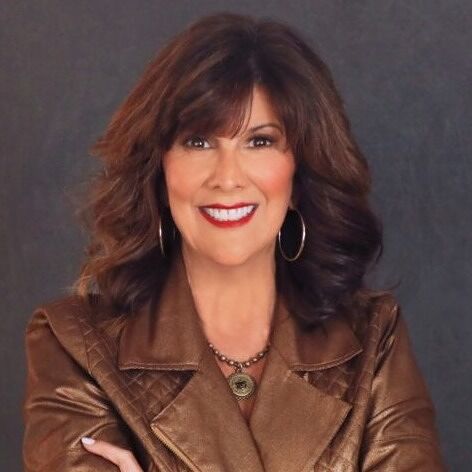
In The Widow Chose Red?, you share the highs and lows of your marriage and professional life, your unshakable faith, and your husband’s heartbreaking journey with ALS. Why was this an important book for you to write?
It was important to write this book for a few reasons: To heighten the awareness of ALS, which is still considered a rare disease. Too many people still don’t know about it. Proceeds from the book are benefiting the LiveLikeLou Foundation.
To have a written record of my life with John as something tangible for my boys to refer to.
To provide inspiration for others who may find themselves facing unimaginable circumstances and give them some support, insights, and strategies for dealing with those curveballs life throws at us. To remind people that we, as believers, we have all been gifted with a supernatural superpower in the form of the Holy Spirit, which is there to comfort and fortify us when we can’t go on..
I appreciated the candid nature with which you told your story. What was the hardest thing for you to write about?
The hardest parts to write about were the day we got the diagnosis, the Christmas we told his family, the day we told our boys, and the day John died. Even though it has been 14 years since John died, the mind is magical and mystical in how it can take us back to that moment in time, complete with emotion and physical presence. It’s never a fun process to go back to those moments of pain, suffering, sorrow and loss, and that is why sometimes, it is best to give yourself some time to process.
What advice would you give someone who is considering sharing their own memoir with readers?
Go for it! It’s your story, and someone will benefit from your sharing it. Get clear on your message. That being said, it is a process that can be lonely, confusing, and tiring, so get some support.
There are so many tech tools available (and I’m not talking AI), like transcription, voice recording, etc, that will make the process of getting it on paper so much easier. If you need to interview someone else to get a perspective…write up a list of questions and submit ahead of your conversation…give yourself a goal for writing…a number of words a day…a chapter a month…published by this date. Otherwise, it can go on forever, and don’t discount the editing process…it’s HUGE!!
What is one thing you hope readers take away from your experience?
Even when your “happily ever after” doesn’t go the way you wanted…you can have a “hopefully ever after” that is beyond your imagination.
Author Links: GoodReads | Facebook | Website | Amazon
“She stood at his service wearing red. Not in defiance, not in denial – but in love. Because grief is not just sorrow; it is the bold echo of a love that never fades. And red is not just a color – it is the flame of the Holy Spirit and the fire that refuses to be extinguished.”
When Rachel Kerr Schneider lost her husband, the world expected her to mourn in black – to withdraw, to disappear into sorrow. But she made a different choice. She wore red. Not because she wasn’t grieving, but because love – real love – is too vibrant, too deep, too enduring to be cloaked in darkness. And because red, the color of fire, is the color of the Holy Spirit – the every-present force that carried her through the valley of grief and into a future she never imagined.
This is not just a memoir about loss – it is a story of resilience, faith, and the bold, sometimes unexpected ways we learn to live again. For anyone who has ever faced heartbreak and wondered if joy was still possible, The Widow Chose Red is a testament to the truth that even in sorrow, life still shines – and the Spirit still burns.
Mama I Owe You Nothing
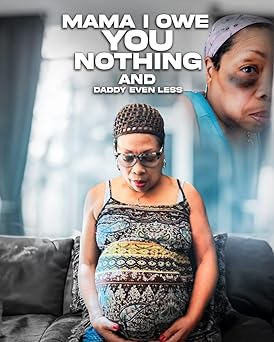

Mama, I Owe You Nothing and Daddy Even Less by Simmer Breeze offers a thought-provoking exploration of the intricate dynamics between parents and their children. The author sets a strong premise, asserting that engaging in consensual unprotected sexual activity demands accountability for any resulting consequences. This stance forms the foundation for a deep dive into the complexities of the parent-child relationship, addressing issues from gender roles and divorce to the challenges of adult children caring for aging parents.
With a comprehensive lens, the book examines family dynamics through biological, social, and legal perspectives, encouraging readers to reassess and expand their understanding of these relationships. The author’s approach is refreshingly direct, moving swiftly from one topic to another while maintaining clarity and focus. Despite its brevity, the book serves as a compact guide to navigating life’s familial intricacies, blending discussions of U.S. laws, societal views, and personal opinions seamlessly.
One particularly compelling aspect is the author’s ability to intertwine diverse elements, from biology to constitutional law, offering readers a multifaceted perspective on family-related issues. There are strong opinions given throughout the book, particularly on sensitive topics like abortion. Early in the text, the author’s perspective on abortion might be interpreted as leaning critical, which could potentially distance some readers with differing viewpoints. While this impression may vary among readers, it slightly shifts the book’s otherwise balanced exploration. Structurally, I think a chronological arrangement, beginning with early pregnancy and moving through the stages of life, including elder care, might enhance the book’s readability and overall coherence.
Mama, I Owe You Nothing and Daddy Even Less remains an informative and thought-provoking read, shedding light on essential aspects of family dynamics that resonate in daily life. I recommend it to anyone seeking to better understand the multifaceted relationships within families.
Pages: 65 | ASIN : B0CNKVQTH6

A Story of Great Courage
Winter Comes in June is a post-apocalyptic sci-fi novel that weaves survival, science, and sorrow through the fractured memories of a family navigating life after an asteroid shatters Earth. What inspired the choice to tell the story through diaries and multiple family perspectives?
I have always wanted to write a dynamic and interesting post-apocalyptic novel where family members share their experience through their memories recorded after an Extinction Level Event. The inspiration to tell the story this way came from another science fiction novel written by a writer, Sheri Tepper, titled The Visitor. It also dealt with a world shattered by an asteroid impact. I felt that by telling this story through several individual voices adds depth to each character and makes them more sympathetic.
How did you balance the technical accuracy of the science with the personal emotional arcs?
In preparation to make this novel a reality, I read several fiction and non-fiction books dealing with asteroid impacts and their awesome destructive power that affected our planet’s evolution in the distant past. The personal emotional arc for each character is unique. Their reaction to the imminent asteroid collision and the life after the impact is also deeply personal. I tried to project realistic human emotion into the story, to make it character-driven. This is a story of great courage in the face of apocalyptic horror and the triumph of the human spirit. In my novel, everyone is touched by a world-shattering tragedy that my characters are able to overcome by their strength, their will, and their humanity.
Did you base the lunar Armstrong base or the Amira Event on any real scientific models or speculative research?
The lunar base Armstrong in my story was partially based on several proposed NASA projects since the first landing on the Moon in 1969. The original NASA plans were to build a permanent manned science base on the Moon. There were several interesting proposals, which were scientifically well grounded but were ultimately canceled because of the lack of proper funds and the danger of long-term exposure to the low gravity of the Moon, which would have had many negative effects on the astronauts’ health. The Amira Event described in my novel is, of course, purely fictional, but is based on the solid scientific data on what an asteroid this size can do if it had struck Earth. The rock that supposedly had killed the dinosaurs was only five to six miles long. In my story, the Amira asteroid was twice as big and caused much more damage.
What do you hope readers take away from the emotional aftermath portrayed in the story, beyond the survival elements?
In my opinion, a good book, just like a painting in a museum or a good movie, must provoke an emotional response. Skipping the survival elements, where the reader can reasonably guess the characters’ motivation and personality, I hope that the readers can take away with them the strong emotional impact and try to place themselves in the fictional character’s position. I believe that my readers will find inspiration from the main characters through their words and actions that often speak louder than words. I also hope that they can learn that no matter what happens, one must never abandon hope. I would also advise them to remember the ancient Greek myth about Pandora’s Box. When she opened the box out of curiosity, all the terrible things came out into the world. But at the bottom of the box, the Hope remained. Our species has survived many great catastrophes and challenges in the distant past. I hope that we are better prepared to face any type of disaster and emerge from it deeply scarred but ultimately victorious.
Author Links: GoodReads | Amazon
Targets of Public Scrutiny

In Out of the Crash, tragedy brings together two families when an author’s son strikes and kills a cyclist with his car. Where did the idea for this novel come from?
Out of the Crash was inspired by two separate but similar tragedies that occurred in my hometown. I watched the aftermath of each incident unfold and read comments on social media in awe of how bold (and cruel) people could be. As quickly as the local media reported on the stories, people formed conclusions about the alleged offenders. What they were doing at the time of the accident. What kind of people they were. And what type of punishment they should endure. Despite a legal system built on the principle of innocent until proven guilty, the drivers of each car became targets of public scrutiny. Ultimately, some of those conclusions had merit; others did not. But it made me sad how easily people jumped to the worst-case scenario. I felt compelled to speak out but didn’t know how.
I also couldn’t help peppering myself with questions about how I would feel if wrapped up in similar circumstances. What if someone I love had sustained injuries in one of those crashes? Or someone close to me had been behind the wheel of one of those cars?
As a mom, I pictured myself trying to defend one of my kids if they’d been responsible for someone else’s grave injuries or even their death. Would I wholeheartedly support my child’s actions under any circumstance? Would I accept the truth even if it destroyed the future I’d foreseen for my family? And how much consideration would I give to the pain suffered by the victim and the victim’s loved ones?
What are some things that you find interesting about the human condition that you think makes for great fiction?
There are countless contexts where I see people taking unyielding sides. It’s black or white. Right or wrong. Us versus them. Life doesn’t seem that clear-cut to me, and storytelling provides the opportunity to give voice to those who might be misrepresented or misunderstood.
In writing Out of the Crash, I set out to convey how multi-faceted the human experience can be—to debunk any suggestion that there’s ever only one side to a story. In a time when the media bombards us with compelling headlines and summary talking points—typically just scratching the surface of a news event—it’s more important than ever to at least avoid passing judgment until the whole story becomes clear.
What are the pivotal moments in the story that you think best define Caroline and Ethan?
Caroline’s character arc is pretty gradual throughout the story. Still, one of the most pivotal moments occurs when she talks with Kyle’s attorney, Valerie, about their different cancer journeys. At this point, Caroline starts to see what everyone around her has seen for years—that she closed herself off from the ones who love her most as she underwent treatment. She put up a wall instead of accepting help from the people around her, like Valerie had done, and channeled her energy toward a career revolving around advocacy for others. The distance she created backfired when she tried to be there for her family after the crash as they’d learned to live without needing her attention.
A pivotal moment for Ethan occurred much earlier in the story when he learned about his mom’s past struggles with alcohol. This realization shocked him to his core and made him question whether he ever really knew his mother at all. Before that moment, he believed they were so close, making her sudden death even more devastating, as now he’ll never have a chance to talk with her about why she never confided in him about something so significant.
What is the next book that you are working on, and when will it be available?
I’m currently working on a book titled Iris Inked. The story revolves around an older woman who is forced to leave her cherished home due to a degenerative disease. She forms an unexpected friendship with a young aspiring social media influencer, who encourages her to share the stories behind her tattoos in a YouTube series. As their bond deepens, both women are compelled to confront their regrets and the challenges that come with embracing change. The book can be compared to The Seven Husbands of Evelyn Hugo by Taylor Jenkins Reid and the classic Fried Green Tomatoes at the Whistle Stop Cafe by Fannie Flagg. My first draft is almost complete, and I hope to start pitching/querying it in early 2026.
Author Links: GoodReads | X (Twitter) | Facebook | Website | Amazon
Restore My Relationships

A Break in the Silence is a memoir in which you confront the heartbreak of family estrangement and the quiet, often painful pursuit of healing, faith, and reconciliation. Why was this an important book for you to write?
The writing of this book weighed heavy upon my heart for years as I’ve seen the decline in traditional family values. I’ve seen and heard the stories of those who have been torn apart by others and the court system as they were separated from the ones they love and cherish. It is my hope that my memoir will restore hope when it comes to reconciliation. I desire to see families that were once broken find their way back to one another, fathers, mothers, sons, and daughters.
What was the hardest moment to write about in A Break in the Silence, and what helped you get through it?
The hardest moment while writing this was thinking back to the memories I hold near and dear to my heart while thinking about the lost time I had with my children. Time waits for no man, once it’s gone, we are never able to get it back. The memories we could have created with our loved ones during a time of separation were never made, leaving us with a sense of hopelessness and great loss. What helped me to press on was my strong desire to find a solution that would restore my relationships with my children whom I’ve always loved and cherished. My passion and desire to make amends is what kept me writing.
How did your spiritual beliefs shape your journey through estrangement and healing?
My faith in the Lord has always been my rock, I know God wants and desires the best for all of his children, He desires us to walk in Love and Unity, one with another. It’s always been his plan from the very beginning, His faithfulness to answer our prayers is unfailing!
I’ve personally seen and witnessed his promises being fulfilled within my life as well as the lives of many others.
How do you hope this book will impact parents who are currently alienated from their children?
It is my prayer that this book will hold the power to impact and inspire not only parents but all those who have become estranged and alienated from the ones they love, to find a way back to each other. The world is full of broken people and I truly believe that my story will speak to the hearts of all of its readers, bringing forth a newfound hope in becoming a part of our children’s lives again, no matter how much time we have lost out on.
It’s never too late to start over again! Believe me when I say this our children are counting on us!
Author Links: GoodReads | Facebook | Website | Amazon
This is where my story begins, with hopes of healing and mending broken families. It’s a story of separation and a desire to reconcile with the ones I’ve always loved and cherished, my children. While reconciliation is never easy, we always prioritize the things that are most important to us. We all desire to live a life full of purpose and meaning, which starts with happiness in our own homes. When homes are broken, lives get shattered. Picking up the pieces to put them back together is a difficult challenge to say the very least. Yet it can come with a lifetime of rewards for you and all others involved.
Please know that it’s never too late to start fresh and try again, no matter how much time you have lost out on with the very ones you love and miss. Our families are counting on us!
Tough Questions
Of Saints and Rivers follows the McClellan family across multiple generations, told through the eyes of the youngest son, who embarks on a relentless quest for purpose and healing that sends him far from home and back again. What was the inspiration for the setup of your story?
A number of real-life family incidents shaped portions of the novel. My great-grandfather witnessed the killing of his family by Indians as a boy before serving as a Texas Ranger, deputy U.S. Marshal, riding the Western Cattle Trail, and homesteading on the Canadian River in western Oklahoma. A daughter was banned from the family for marrying someone from outside the church. The family land was lost during the Depression. As a young man, my grandfather served prison time for hitting and killing a pedestrian while driving when intoxicated.
For many years, I had a troubled relationship with my father, a decorated naval dive-bomber pilot, who once hit me hard in the face for arguing when I was young. My last words to him as he died were that I loved him. I seriously considered the ministry before changing my mind over troubling theological issues. War took a heavy toll on my family. As for early romantic misadventures, I’ll just say that—among my brothers, myself, and others—our family has seen its share.
While a degree of creative license was taken for the sake of story, much of Jordan’s journey was borrowed from my family’s history, and many of his personal reflections mirror my own. To paraphrase the writer, Wallace Stegner: sometimes truth is best told as fiction.
What were some of the trials that you felt were important to highlight Jordan’s development?
At the story’s core is his conflict with a celebrated father, as both men grapple with their pasts and Jordan struggles with the shadow of his older brother. Among his trials is a tragic family accident that leads to alcohol as a means of coping with guilt. Another is youthful desire that culminates in a forbidden love with a married woman—and, in its wake, more alcohol and even greater tragedy—followed by the unthinkable. The novel is, in many ways, a forty-year coming-of-age story of a gifted-but-troubled son’s ongoing struggle with guilt, moral dilemmas, religious doubt, and his search for meaning, atonement, healing, and love.
What were some themes that were important for you to explore in this book?
Aside from the above-mentioned parental conflict, addiction, and religious doubt, I wanted to address prejudice (both racial and gender-related), marital abuse, grief, forgiveness, the role of chance in our lives, and how love and loss so often travel together. I wanted also to ask some tough questions of God and ourselves.
What is the next book you’re working on, and when can we expect it to be available?
I consider myself to be primarily a magazine writer of historical articles. Of Saints and Rivers is my first novel. What began as a simple wish to leave behind, for my family, something of our family roots and what I felt, loved, and believed grew somehow into a book. While I have some ideas for another, at this point they’re still just ideas. I prefer to see how readers like this one before saying more. Thank you so much for your thoughtful interest.
Author Links: GoodReads | Amazon
From the wild frontier days of the late 1800s to the post-war reckoning of the 1950s, Of Saints and Rivers follows three generations of the McClellan family through the eyes of the youngest son. Growing up in the shadow of his celebrated father and brother, Jordan is more into books than farmwork or sports. But when tragedy strikes, guilt drives him spiraling down a path with dire consequences.
His relentless search for meaning and atonement sends him far from home to places as far ranging as the Caribbean, a small Mexican village, and seminary. Yet, no matter how far he runs, the shadows follow. As Jordan grapples with his past and its impact on those he loves, he discovers a new understanding of his father and himself.
Perfect for fans of Kristin Hannah and William Kent Krueger, Of Saints and Rivers is a sweeping historical saga of faith, doubt, resilience, and the unbreakable ties of family.
Strength and Fortitude

Tapestry blends historical fiction with memoir, wrapping readers in vivid, often haunting vignettes of women’s lives shaped by hardship, resilience, and a relentless fight for identity and survival. What was the inspiration for the setup of your story?
The inspiration was from learning my suspicions of my DNA were true, it was the answer I needed to research. As I child, I heard many whispers of my ancestors, it has stayed with me for all of my adult life, however, once the proof of my inquiries was confirmed, I felt it was time to write about the strength and fortitude that my female ancestors lived with.
Did you find anything in your research of this story that surprised you?
Yes, I had no idea that my Aunt Marg was treated with such disdain by the women in my family and that the ‘nasty operation’ I was informed about, would now be termed as medical abuse. I was also surprised at how the Patriarchal legal system termed it as a necessary determent to solve a psychological illness.
What were some themes that were important for you to explore in this book?
The themes came naturally. Each century I wrote about lived very differently from the world we know today. So each century was explored for the differences in the ways women were accepted into society.
I find a problem in well-written books; in that I always want there to be another book to continue the story. Is there a second book planned?
Most definitely the next one is called The Weavers. A story about how we as women keep our tribal stories together. A more modern-day look at the telling of stories in all genres.
Author Links: GoodReads | X (Twitter) | Facebook | Website | Amazon
The journey begins with a mystical exorcism, where soft candlelight dances with shadows, illuminating the ghosts of the past. The narrator calls upon the whispers of her maternal ancestry, inviting them to “come sit with me.” Through this intimate connection, she delves into the lives of the women who came before her-women who stood against the injustices of their time.
These brave souls challenged societal norms, battling the rigid confines of religion, the cruelty of bullying, and the pervasive sexism that marked their world. Many were wrongfully accused of witchcraft, faced the sting of racism, and suffered under the harsh grip of patriarchal oppression. But their struggles did not end there-they also confronted the condescending snobbery and judgment of a matriarchal society that refused to understand their defiance.
Tapestry is a profound exploration of the fortitude and strength of these women, who fought battles on every front yet never lost their spirit. Their stories, once whispered through generations, are now immortalized in this book-a testament to their enduring courage, wisdom, and resilience. Rich in historical detail and deeply personal in its reflections, Tapestry invites readers to connect with the powerful legacies of women who defied the odds and carved their place in history.
Weaving together the past and present, this book is a celebration of female strength, a poignant reminder of the injustice they faced, and an inspiring tribute to their unyielding will. Tapestry: The Book of Lost Worlds will leave readers moved, inspired, and empowered by the incredible stories of women who dared to challenge the world around them.



 LITERARY TITAN