Blog Archives
El legado de Nahia

El legado de Nahia, the third book in El Legado de las Hadas series, dives deep into a rich, multi-generational tale of family, loss, identity, and the eternal tug-of-war between the mystical world of the fairies and the grounding pull of humanity. Centered around Nahia, a fairy torn between love for her human-turned-family and her duties in the Soberanía de las Hadas, this story weaves together folklore, emotion, and a hefty dose of existential pondering. It’s got betrayal, longing, interdimensional drama, and a whole lot of heart.
I was pulled in by the elegance of Bossano’s world-building. That intro on the mythology of fairies is gold. Who doesn’t love the idea of a hidden, ancient race with a code of ethics more complicated than ours? The description of the glamour, their powers, and the strict structure of their matriarchal society sets the tone for a story that isn’t just fantasy—it feels like a believable, fleshed-out parallel reality.
What got me the most, though, was how human Nahia is. Her grief over losing Celeste felt raw and real. She’s not some shiny, perfect fairy—she’s messy, angry, petty even. When she talks about how unfair it is that Celeste died of old age while she, Nahia, still looks eighteen… oof. That bitterness, that jealousy—that’s the kind of vulnerability that made me root for her even when she did something awful.
There were moments when I wanted to shake Nahia. Her hatred for Alaia? It’s kind of intense. I get that Alaia’s a little uptight and maybe not the fairy-loving granddaughter Nahia dreamed of—but it goes beyond petty. Even Nahia’s internal struggle after stealing Calisto—like when she’s hit with the reality of caring for a baby who screams all night was funny and sad and brutally honest.
The writing is lush, poetic in places, and surprisingly down-to-earth in others. Bossano doesn’t shy away from waxing lyrical, but it never feels pretentious. Even when the fairies are flying around glowing like bioluminescent marbles, the story stays grounded in very human emotions: longing, regret, the desire to be remembered, to leave a legacy. That tension between the eternal life of a fairy and the brief, messy beauty of human life? It’s everywhere in this book, and it hits.
El legado de Nahia is about family—chosen, born, and lost. It’s about the ache of time, the price of decisions, and how love—real love—can stretch across worlds. I’d recommend it to anyone who’s a sucker for character-driven fantasy or who’s ever felt like they’re caught between two worlds and not fully at home in either. If you like your fairy tales with a side of real emotion and a splash of bittersweet, this book will resonate with you.
Pages: 305
Native Arcana
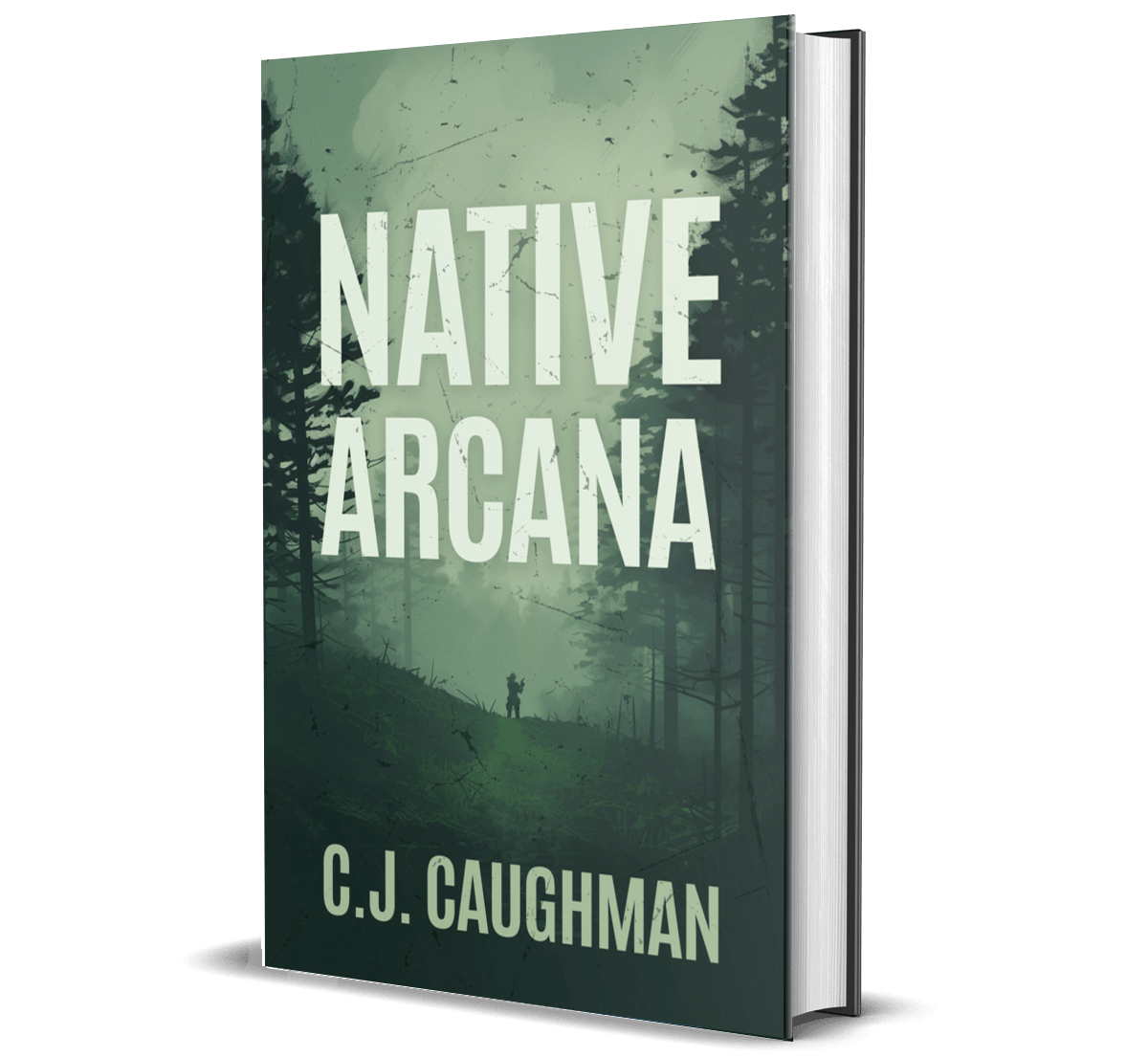
Native Arcana doesn’t ease you in—it grabs you by the collar, throws you into a blast, and dares you to look away.
This book has grit. It’s soaked in real talk, tragedy, folklore, and violence. You feel every punch, every loss, every flicker of memory. Nita Ross, the main character, is not just some badge-toting marshal. She’s layered. Tough as old leather but still bleeding inside. Her pain is palpable, and her strength is relentless.
The book opens on the Oklahoma City bombing and never lets go. It leaves a mark on her and on the readers. Nita is a survivor of this tragic event and has faced a multitude of heartaches throughout her life. Caughman has crafted an incredibly relatable character readers will find themselves clinging to and rooting for throughout her story. It’s part crime thriller, part Native myth, and part emotional gut punch. And it all works.
The dialogue is sharp and natural. Just people talking like people do. There’s no highbrow nonsense. Just raw words and even more raw feelings. The writing hits like a slow-burning bonfire. Warm one minute, raging the next. And just when you settle in—bam—a masked killer with owl eyes shows up.
This story mixes the real and the surreal, crime scenes and shapeshifters, meth and mysticism. And the pacing is wild. One minute you’re watching a kid draw maps, the next you’re in a moonlit brawl in the woods, getting slammed into trees and hunting a monster-man in an owl mask.
And the setting, Eastern Oklahoma, breathes on every page. The dusty roads, the fried food diners, the broken towns, the old men who never left. It feels lived-in. Like the place itself has stories it won’t tell you unless you ask real nice.
But make no mistake, this isn’t a whodunit with clean clues and neat endings. It’s messy. Personal. Deep. It’s about ghosts, literal and not. It’s about culture and loss. It’s about being Cherokee in a world that doesn’t always see you. And it’s about fighting anyway.
I highly recommend C.J. Caughman’s Native Arcana to any reader looking for a thrill ride of a tale. This ain’t your average crime novel. It’s weirder. It’s heavier. It’s better. Read it. But buckle up first.
The Mutant and The Mule
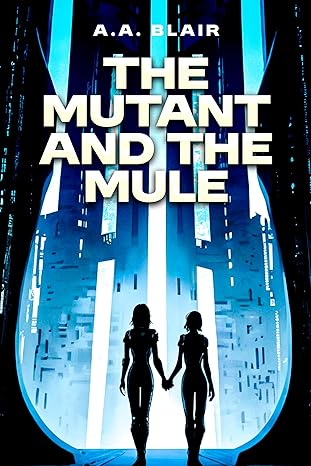

The Mutant and the Mule is a dystopian sci-fi tale wrapped in rebellion, identity, and unexpected friendship. It follows Helia, a Mutant trained for infiltration, as she dives deep into the oppressive Norm society to sabotage it from within. Things go sideways when her mission contact vanishes, and she’s forced to team up with Ari, a snarky, hard-drinking Mule who has zero illusions about the world she was born into. Together, they dodge government thugs, make questionable plans, and form a bond neither of them saw coming.
One of the strongest things about Blair’s writing is how real the world feels. It’s dark and suffocating—domed cities, oppressive governments, and class systems etched into skin tones and uniforms. In the opening chapter, the tension is so thick you feel it crawling up your neck. Helia’s nerves as she sneaks into the Norm compound are palpable, her inner conflict sharp. Blair doesn’t just build a world—he throws you into it, head first, with no map and a lot of heart.
The characters are the lifeblood. Ari stole the show for me. She’s messy, sarcastic, and painfully relatable. Her introduction, waking up in a puddle of her own vomit and annoyed someone’s being loud enough to interrupt her hangover, is peak character work. And then bam—she’s saving Helia from a brutal beating by a Department of Sanitation thug. Her loyalty is messy too, driven more by a gut sense of justice than some grand ideology. That made her feel real.
As much as I liked the action (and the matter blast scenes are wild), what stuck with me most was the quiet stuff. The awkward bonding. The little bits of humor in a bleak world. Blair nails the rhythm of human connection without overplaying it. These characters are absurd and brave in equal measure, and their choices matter because we care. While I enjoyed the story, I felt that some parts of the world-building could have used a somewhat lighter touch. There were moments when the exposition got a bit thick, but it never dragged for too long. The pace always snapped back thanks to some smart dialogue or a sudden twist.
The Mutant and the Mule is for readers who love sci-fi that punches hard but still has heart. It’s gritty, emotional, and sometimes downright funny. If you’re into found-family stories, rebellion against oppressive systems, or just want to watch two unlikely allies stumble their way toward hope, pick this one up. If you enjoy authors like Pierce Brown, Veronica Roth, or Octavia Butler, The Mutant and the Mule will feel like familiar territory—but with its own sharp bite.
Pages: 200 | ASIN : B0DCP4MGWC

Last of the Pops

Skylar Chase. A rising musician on the brink of stardom, until he vanished without a trace. Legally declared dead a decade later, his disappearance remains one of music’s great unsolved mysteries. Yet his limited body of work didn’t fade into obscurity. Instead, it evolved into legend. Even while he was still alive, his songs hinted at something timeless. Long after he was gone, they continued to inspire, to unite, to heal. Through melody, he created a legacy that outlived him, a legacy rooted in the enduring, transformative power of music.
Last of the Pops is a stunning collaborative graphic novel written by Adam Wilson, with illustrations by Dr. Demus, Dapit Jamus, and Erika Paratore. Subtitled A Mixtape for the Death of Radio, the book operates on multiple levels. At first glance, it’s a meditation on the fleeting nature of technology and how innovation renders even the most revolutionary ideas obsolete. But dig deeper, and it reveals a much more intimate reflection on the emotional resonance of music and the invisible threads it weaves between people.
Centered on the mythos of the fictional Skylar Chase, the story unfolds through a constellation of characters whose lives, at first seemingly disconnected, begin to intersect in unexpected, profound ways. What begins as individual narratives coalesces into a larger, more intricate tapestry. The pacing is deliberate, the writing precise, and the structure artfully cyclical, bringing the reader back to where it all began, but with renewed clarity.
True to the spirit of a mixtape, the novel is eclectic and layered. It blends poetic introspection with visual storytelling, balancing narrative complexity with emotional sincerity. At its heart, it’s about family, identity, belonging, and, above all, the shared experience of sound. Each chapter shifts perspective, and with it, both the visual and written style adapt accordingly. This shifting framework gives the book a dynamic rhythm, mirroring the diverse influences that shape each character’s journey.
More than just a tribute to music, Last of the Pops is a dialogue between artist and audience. It explores the deep, often invisible impact musicians have on the lives of their listeners. The artwork throughout amplifies this emotional depth, enhancing the tone of each scene with thoughtful variation and artistic flair. The visual transitions are not just aesthetic choices; they reflect the evolving inner worlds of the characters.
As a lifelong believer in music’s power to connect, heal, and transform, I found Last of the Pops to be a deeply moving experience. The narrative avoided sentimentality, instead grounding its emotional moments in authenticity. What I expected to be a series of fragmented vignettes emerged as a unified, resonant story. That cohesion made all the difference.
This graphic novel isn’t just about the mysterious Skylar Chase. It’s about all of us, the ways we connect, the memories we hold in song, and the legacies we carry forward through the art we love.
Pages: 234 | ISBN : 978-1960869081
How Myths Form
The Borealis Queen follows a resilient young woman marked by a mysterious prophecy who embarks on a perilous journey that intertwines survival, destiny, and the forging of unexpected bonds. What was the inspiration for the setup of your story?
The setup came from wanting to tell a story that felt ancient but emotionally intimate; something that would resonate across time. I was drawn to the idea of a young girl facing the collapse of everything she knows and being forced to survive, not because she’s chosen, but because she’s clever, resourceful, and refuses to break. The prophecy element isn’t about fate in the traditional sense: it’s more about how people interpret strength, especially when it threatens the established order. (A future installment—told as a prequel—will reveal the true origin of the prophecy.)
I wanted to explore how myths form around ordinary people who do extraordinary things. Nin’s journey is perilous, yes, but at its heart, it’s about a girl learning who she is in a world that tries to define her. The bonds she forms (with animals, with her memories, even with silence) came from my belief that survival isn’t just physical. It’s also emotional. And sometimes, it’s the unexpected relationships, even with wild creatures, that save us.
I find the world you created in this novel brimming with possibilities. Where did the inspiration for the setting come from and how did it change as you were writing?
The inspiration for the setting of The Borealis Queen came from a mix of bedtime storytelling, my fascination with prehistory, and a desire to build a world that feels both ancient and mythic—but still grounded in nature and human emotion. I used to tell stories to my kids at night, creating episodes on the fly, and over time, these tales evolved into the foundation of this world. I wanted a setting that didn’t rely on magic or modern tropes, but still felt epic, dangerous, and full of wonder.
The Ice Age gave me that—a time when humans lived closer to the edge when survival depended on wits, instincts, and bonds with animals. The world itself became a character. As I wrote, the setting changed from a backdrop into something almost primal. The wilderness sharpened Nin’s growth, and the creatures—like the Urbaraks and Shadow—took on symbolic weight. It started as a harsh world, but over time, I began to see its beauty and subtle order, just as Nin does. That shift really deepened the emotional core of the story.
What were some themes that were important for you to explore in this book?
ANSWER: I wanted to explore what happens when a person is pushed to the brink—how survival, identity, and resilience take shape in a world that feels hostile, ancient, and raw. One of the most important themes for me was the power of connection—not just between people, but between humans and nature, especially the bond between Nin and the animals she encounters. I was also interested in legacy and mythmaking: how stories about a person can become larger than life, and how that shapes not only how others see them but how they see themselves. Another key theme is agency—Nin is not waiting to be rescued or chosen. She’s crafting her path, sometimes painfully, sometimes defiantly, in a world that would rather crush her than acknowledge her power.
Is this the first book in the series? If so, when is the next book coming out, and what can your fans expect in the next story?
I’m already writing the sequel. The theme is actually hinted at in the final paragraph of Chapter 24, at the end of the book:
‘Word of the tale of the girl slave adorned with beautiful marks on her skin, who rose to become a queen, spread like the fastest birds, soaring across the land and beyond. It traveled all the way to the distant Australis lands, where it caught the attention of an ambitious young king, driven by dreams of world domination…’
That final line opens the door to a larger world and deeper conflicts. It shifts the story from one girl’s survival and rises to something even more expansive—how her legend begins to echo far beyond her homeland, drawing the attention of powers she doesn’t even know exist yet. The theme of how myth and reputation can reshape history is something I’m really excited to keep exploring.
I expect to finish it by early next year. The sequel builds on everything that came before, but with a much wider lens: new lands, new rulers, and greater threats. It explores how one girl’s rise can spark fear, admiration, and ambition across distant lands. I’m enjoying the challenge of expanding the scope while staying true to the emotional core of the first book.
Author Links: GoodReads | Website | Amazon
For readers of Brandon Sanderson and Clan of the Cave Bear—this is not the fantasy of knights and castles, but of raw survival, ancient beasts, and a legend forged in snow and blood.
She was never meant to survive. Nin is the last of her people—captured, scarred, and dragged across the frozen wilds by brutal enemies. But in a land where beasts are dreaded and winter never forgives, she discovers that survival is more than endurance—it’s transformation.
With nothing but a sling, her instincts, and the loyalty of a mysterious saber-toothed Smilodon, Nin must carve a path through ice, blood, and betrayal. As legends rise and clans clash, she becomes more than a girl on the run—she becomes the storm they cannot contain.
The Borealis Queen is a sweeping Ice Age survival fantasy about resilience, instinct, and the powerful bonds between humans and the wild. Perfect for fans of character-driven epics, elemental worldbuilding, and heroines who don’t just fight—but endure.
If you’re seeking a bold, action-packed epic fantasy with emotional depth and cinematic storytelling, this is the adventure you’ve been waiting for.
Colloquialism and Exoticism

Damnatio Memoriae is the final, emotionally raw, and beautifully written chapter of the Nero and Sporus saga. How do you feel now that you have completed Sporus’s story, and were you able to achieve everything you wanted with the characters in the novel?
This is really one long novel, but now that I’ve reached an advanced age, I always worry about being able to finish things so I decide to do it as a trilogy so that even if I were to pass away, that would still be some parts of the book out as separate books. Because of this, I’ve lived with the characters for a very long time. One thing though is that we do know how the story ends, and we’ve always known it because it’s one of the few things that the historical record actually tells us. One problem with releasing the story in smaller chunks has been people getting the last chunk and complaining bitterly about the protagonist’s fate. Unfortunately, it’s one of the few things I couldn’t change without violating the whole idea of a historical novel.
What goals did you set for yourself as a writer in this book?
My largest aim was to truly inhabit the world of the first century and completely eschew any kind of moral or philosophical biases I might have as an inhabitant of our modern era. This is very difficult because so many things that were taken for granted are now shocking, and something that taken for granted today would’ve shocked the Romans. For example, the idea of people actually being equal would have been astonishing. Sex and violence, so much a cause of societal uproar today, were not only not that profound, they were even mostly entertainment. One reader complained bitterly that I didn’t use archaic language. But the Romans didn’t know they were ancient! I had to strike a balance between colloquialism and exoticism. Everyone doing what I do has to find their own happy medium. I hope that that which is exotic or horrific about the Roman world comes across most successfully when it is treated as completely commonplace.
What experience in your life has had the most significant impact on your writing?
Bringing up a child who was completely comfortable as either gender and had no qualms about switching whenever he felt like it. This book is actually dedicated to him. I use the word him because the language I usually speak to him in is Thai, a language in which most pronouns are gender-neutral. People who grow up in this culture simply don’t suffer any agony about pronouns.
What is the next book that you are working on, and when can your fans expect it to be out?
I’m returning to science fiction and fantasy at the moment with a new post-holocaust trilogy set among wolves. I’m also doing a sixth novel in a series that I’ve been working on for over 40 years. It was very popular in the 80s and I’m reviving it. It’s one of those vast Galactic Empire kind of things.
Author Links: GoodReads | Facebook | Website | Amazon
Captured by pirates as a boy and trafficked to the slave markets of Rome, Sporus rose from a poet’s plaything to one of the most powerful figures in the Roman Empire.
The historian Suetonius tells us that the Emperor Nero emasculated and married his slave Sporus, the spitting image of murdered Empress Poppaea. But history has more tidbits about Sporus, who went from “puer delicatus” to Empress to one Emperor and concubine to another, and ended up being sentenced to play the Earth-Goddess in the arena.
The decadence of Imperial Rome comes to life in S.P. Somtow’s Literary Titan Award-winning trilogy about one of ancient history’s wildest characters.
Safe Space
Eastlanders’ Fall is a tale of ancient evil rising again, powerful cults seeking domination, and unlikely heroes trying to stop the world from crumbling—literally. What was the inspiration for the setup of your story?
I drew inspiration from the real world and used my fantasy setting as a safe space for an unbiased reflection on current issues.
I find the world you created in this novel brimming with possibilities. Where did the inspiration for the setting come from and how did it change as you were writing?
In the 90s, I served in the Brazilian military. When cartel violence spiraled out of control, Rio’s governor requested federal troops, and my unit was one of those deployed to assist.
For several months, in between missions, to avoid dwelling in the violence and bleakness, my mind took off. Fantasy books and role-playing games came to the rescue, and the continent of Ananthia was born.
To be in a place where evil and injustice could be fought and defeated—unlike in the real world—was like a drug, so I never left. All the mind space I could spare went into world-building, and seventeen years later, with no plan or ambition, I began laying it down.
The RPG campaign setting I wrote had such an elaborate backstory that I was entreated to tell it all. Eastlanders’ Fall began taking form, and a decade—and eight countries—later, A Drying World trilogy was completed.
Ananthia was so deeply developed in my head that it needed no change to accommodate the story – it was the story.
What were some themes that were important for you to explore in this book?
Bias, hubris, and blind ambition—and how to beat them.
Where does the story go in the next book, and where do you see it going in the future?
Eastlanders’ Fall is the first book of a trilogy. In book 2 (Two Storms), the children of the protagonists, born at the end of the book, take the lead, assisting their whistleblower uncle who’s on to Darvis Talsdrums second phase plans but struggles for decades to prove it. In book 3, the heroes take the fight to the lich.
In the future trilogy, I take the reader to Central Ananthia – the region where the desertification started, now under the sand. It will be told in two parallel timelines: the present, featuring the surviving protagonists, and the past, telling the story of how it all began.
Author Links: GoodReads | X (Twitter) | Facebook | Website | Amazon
The land of Ananthia is dying. Its once-prosperous heart has turned to sand, swallowing Empires and burying faiths. But a darker shadow looms—Darvis Talsdrum, a warlock whose cunning strengthens his demon lord’s grip on the continent.
Talented as he is reckless, veteran wizard Milendil’s mistakes could seal the fate of Ananthia, when bitterness bids him to tip the scales for tragedy.
Air ranger Solostamir never asked to be a hero. Burdened by a family rift and torn between two powerful women—Keera, the elven noblewoman who shares his past, and Lilyanna, a prodigy human archer whose fire reignites his hope—he walks a razor’s edge between love and duty.
When war drives them apart, Lilyanna’s fate becomes entwined with Soraya’s, a battle-hardened warrior whose growing bond defies expectation.
As ancient magic stirs and loyalties splinter, these fractured heroes must unite what’s left of Ananthia before darkness consumes it all. But love is as dangerous as war—and not every heart will survive the fire.
Eastlanders’ Fall is a sweeping epic of sacrifice, redemption, and love tested at the brink of ruin—perfect for fans of high fantasy with heart, grit, and consequences.
Hidden Behind a Screen

In DON’T MESS WITH ANNA, an online troll meets his match after leaving a one-star review and antagonizing an author. Where did the idea for this novel come from?
About ten years ago, I had actually found a 1-star rating for one of my books on a reader site and there was no written review to explain why this person thought it was so bad. For a new author, it was gut-wrenching. Out of curiosity, I clicked on the person’s page and was astonished to see they had given close to a hundred 1 stars with no written explanation to a bunch of high-profile authors all within a matter of minutes and all on the same day. I could only laugh and say, “Wow! Mad at the world or something?” What’s an author to do but shrug and move on. I comforted myself by being included with these illustrious authors. Late last year, a newly minted author friend of mine received a 1-star with no explanation and gave him a little comfort over my own experience. In an instant I had this image of this irritating author troll down in his mom’s basement cackling like a loon while wreaking havoc in his anonymity. Then I laughingly wondered what my characters would think of someone so carelessly bashing their very existence. Milton was born that day. I let my characters have at him.
I found Milton Smith to be such an interesting character. What was the inspiration for his traits and dialogue?
Instead of presenting Milton as a comic book villain, I knew full well that the person who started this journey for me was just a simple human and probably had some sort of character flaw where he was only happy when trashing someone else’s day. What power they must have felt for causing me to hope for a boatload of 5 stars to offset what he’d done to the book in one click. It took me years for that 1-star to slowly get swallowed up by those who actually enjoyed the story. I envisioned Milton as very intelligent, yet socially ignorant. Something had to have caused him to lash out at the world in the only way he knew how. He had to have a way to explain himself out of the mess he caused. He had to have enough brains to finally catch on that you cannot stay hidden behind a screen forever. Karma always comes knocking at some point.
What was your favorite scene in this story?
Without giving too much away, it has to be Godric and Milton by the ‘wall of weirdness.’ I believe this is where the reader will fully understand the emotional pain Milton caused to others he’s never met. It’s chaos theory’s butterfly effect in a nutshell.
What is the next book that you are working on, and when will it be available?
I have a sequel to Don’t Mess with Anna in mind, but that might be a while before I can get it out. I want to adapt this first one into a screenplay. I did that with Visiting Darkness, my mystery thriller, and it made it to the semi-finals in the Hollywood Blue Cat screenplay contest. I basically freaked myself out when realizing I had gone up against close to 3,000 entries from seasoned veterans and placed in the top 3%. Even making it to quarter finals had been a shot in the dark, so going further was mind blowing. Just my luck, Hollywood went on strike shortly after and things in the works died on the vine. I’ve now gotten Visiting Darkness’s sequel screenplay in a lot of contests this year and fingers crossed. I’m also in the middle of completing book 16 of my romance series. My fans there are asking where the heck did I go and when’s the next one, so I surely don’t want to disappoint. Love my readers!
Author Links: GoodReads | X (Twitter) | Facebook | Website | Amazon
Anna DeMarco’s creative world shatters when a remorseless stranger tears it apart—no blood spilled, just her spirit broken. He thinks he’s won. He’s wrong.
Dragged into a realm where karma wields a jagged edge and magic fuels vengeance, Milton Smith faces a brutal reckoning. How dare he make her cry.
This modern-day critic obsessed with medieval lore crossed the wrong writer—and finds himself hurled into a brutal world of his own making. In a land where curses sting sharper than steel and shadowed by magic he can’t comprehend, his arrogance becomes his chains.
Hard labor, spilled blood, and the wrath of those he wronged awaits. But in the end, even the damned might find redemption—if they survive the reckoning.
‘Don’t mess with Anna’ isn’t a warning—it’s his fate.



 LITERARY TITAN