Blog Archives
Dark Humor and Dread

The Muck follows a ghostwriter hired to write the origin story of a crypto magnate that turns out to be a horror story about pollution and power. The Maw feels almost like a character in its own right. How did you build its atmosphere?
I researched what a chemical plant of that era would have looked like and the sorts of buildings and processes involved, as well as what goes into a data center or bitcoin mining operation of today. But really I was aiming for a ruined Gothic castle/cathedral vibe. The Gothic is one of my favorite genres, and so that was a natural fit.
The novel balances dark humor, dread, and social commentary. How did you maintain that balance?
Seems to me that any social commentary these days is bound to be laced with dark humor and dread. I think a lot of what we consider “dark humor” comes from realizing that this fantastical or horrible thing we’re reading or watching is actually on some levels intimately familiar.
If readers look beyond the horror elements, what human truth do you hope they find?
Glenn, the ghostwriter who is lured into the Gothic castle, is an ordinary man with failings and debts, financial and familial. The divorce that he didn’t want is just about final, and his relationship with his daughter is fraught. Brad, the CEO, tempts him with money and status, and he latches onto this as the solution to his problems, but at the risk of his life and his soul. In the end, it’s the women in his life–his daughter, his ex-wife, the Airbnb host he meets when he arrives–who keep him at least somewhat anchored to reality and morality.
Author Links: Facebook | YouTube | Website
When tech CEO Brad Thorsen offers Glenn Hurst six figures to ghostwrite his “origin story,” Glenn jumps at the chance. Thorsen will be difficult. His ambition is bottomless. But Glenn’s a professional—he can handle one narcissistic tech-bro if it means salvaging his career.
Thorsen’s converted an abandoned chemical plant in the Blue Ridge Mountains of Virginia into a sprawling data center—thousands of servers now hum in halls that once produced persistent blistering agents. Plagued by accidents and toxic spills for more than a century, the factory was finally abandoned—but Thorsen sees only opportunity. When Glenn mutters “the pollution IS the product” the CEO’s eyes light up: “I think we have a title for our book.”
Glenn tells himself he’s documenting, not endorsing. But the longer he stays, the harder it becomes to know where Brad’s story ends and Glenn’s collaboration begins.
And there’s something wrong with Thorsen. With the people around him. Something Glenn can’t quite put his finger on.
Like an itch he just can’t scratch.
A neo-Gothic psychological horror-thriller about greed, complicity, and the people and other… creatures… that get under your skin.
Writing A Literary Horror Novel

Blame the Devil follows a wounded outsider in 1967 Jersey City, as she discovers her terrifying identity as an Avenging Angel and confronts an ancient evil hiding behind the face of ordinary authority. What was the inspiration for the setup of your story?
The inspiration for the story was real life. With one exception (which I won’t mention for it would be a spoiler) the evil Victor Varde is a spot-on duplicate of a child molester from my old neighborhood who has haunted me since eighth grade. From that starting point, I felt it was important that I be patient—giving the plotline room to breathe and make shifts, and allowing the physical characteristics, stories, and inner lives of each of the novel’s characters to achieve fullness.
Donna’s journey is both painful and increasingly powerful. How did you approach writing her as more than either a victim or a hero?
I had a couple of things in mind. One, I wanted to avoid a pair of opposing cliches: abused girl as unadulterated victim, and abused girl as super-hero. The second thing was that, obviously, she had to evolve. “A” and “Z” couldn’t be the same. Again, how this change would happen only became clear to me over time. Her nurse Livvy Gomez was key in this, and, potentially, an undervalued character.
The evolution of Donna is very much aligned with what Anne Lamott describes as watching a Polaroid develop—stick around with the story long enough and more and more details, windows, and trap doors emerge.
The novel gives its supernatural horror a very grounded, neighborhood-level presence. Why was it important for evil to feel ordinary before it became cosmic?
It was the way the novel evolved. When I first put fingers to key, I did not have an intention of writing a literary horror novel. A couple of things moved me in that direction. One, was a simple matter of what I’ve written before—that is an exploration of life through the compact landscape of the Jersey City Heights/Plateau of my youth. I had a “been there, done that” recognition. So the realistic was in the groundwork.
Additionally, I had, from the beginning, been describing Victor Varde in demonic terms. From that, the move to going all in on the supernatural came to me quickly. A couple of early readers of the manuscript were against this, arguing that I had a good naturalistic novel in front of me. But the supernatural level was appealing, even compelling. I couldn’t resist going there and engaging the metaphysical questions which have followed me for decades.
When and where will the book be available?
I’m hoping it will be available by early 2027.
Author Link: Instagram | Book Review
The Light Reapers: A Good Day to Die


The Light Reapers: A Good Day to Die, by Gary Hickman, is a post-apocalyptic military horror thriller that follows Priest and the Light Reapers as they face a world overrun by infected monsters, ruthless human enemies, and the rising threat of the Trinity, three intelligent, terrifying beings with plans that reach far beyond simple survival. The story moves from brutal rescue missions and underground battles to safe zones that may not be safe at all. At its core, though, this is a book about loyalty. Who gets saved. Who gets left behind. And what it costs to keep fighting when the world keeps giving you reasons to stop.
Hickman writes like he wants the reader strapped into the passenger seat of an armored vehicle with no seatbelt. The action comes fast, loud, and bloody, but there is more going on here than gunfire and monsters. Priest is written as a man shaped by rage, grief, and purpose, and that mix gives the book its emotional weight. He’s not soft, and the story never pretends he is. Still, the quieter moments, especially the ones built around Dora, Doc, Vivian, Lia, and the larger Reaper family, give the violence somewhere to land. I liked that. Without those moments, the book could have become one long firefight. Instead, it has breath between the explosions.
Hickman’s choices are bold, sometimes harsh, and often intentionally uncomfortable. This isn’t a gentle post-apocalyptic novel. The horror is physical, but it is also moral. The monsters are frightening, yet the human betrayals can feel even uglier. I found myself thinking a lot about how the book treats obedience, power, and protection. The Trinity wants control. The Reapers survive because they choose each other. That contrast works well. The dialogue can be blunt and rough around the edges, but it fits the world and the people living in it. These are soldiers, survivors, killers, parents, lovers, and friends trying to hold a line in a ruined world. They don’t speak in polished speeches. They snap, joke, curse, grieve, and keep moving.
I would recommend The Light Reapers: A Good Day to Die to readers who enjoy gritty military science fiction, post-apocalyptic horror, and action-heavy thrillers with a strong found-family thread. It will especially appeal to readers who like their heroes damaged but loyal, their villains monstrous in more ways than one, and their survival stories soaked in danger from the first page to the last. This is a violent, emotional, high-stakes genre novel, and it fully commits to the brutal, high-stakes story it sets out to tell.
Pages: 381 | ASIN : B0GZZ51ZBW

Nero’s Nile
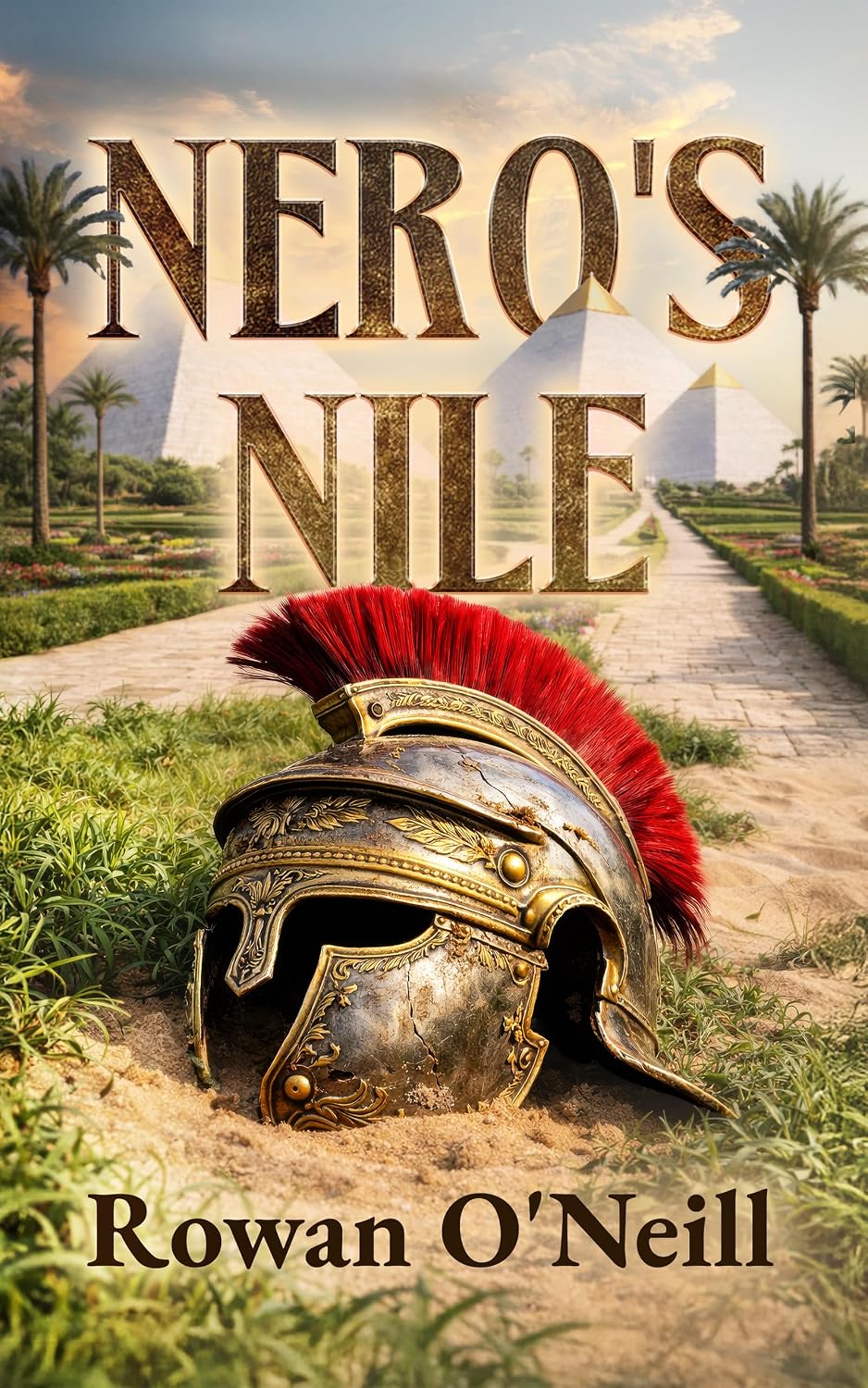

Nero’s Nile, by Rowan O’Neill, is a historical fiction adventure that follows Emperor Nero’s obsession with discovering the source of the Nile. To carry out that ambition, he draws Titus Statilius Taurus back from the quiet life he has earned and sends him into Egypt and beyond, while Rome itself rots under ambition, violence, grief, and spectacle. The novel moves between imperial politics and expeditionary danger, mixing Roman history, Egyptian myth, and supernatural menace into a fast, dramatic story about power and the price of being useful to people who see the world as something to own.
What stood out to me first was the pace. This book doesn’t linger at the doorway. It kicks it open. O’Neill writes in bold strokes, and the result is a novel that often feels closer to a sword-and-sandals epic than a restrained historical drama. Battles, assassinations, betrayals, crocodile attacks, ancient temples, and political murders arrive with steady force. I liked that confidence. The writing sometimes favors impact over subtlety, especially in the dialogue, where characters often say exactly what they mean and say it loudly. That can make some scenes feel theatrical rather than natural. But honestly, that theatrical quality also fits Nero. His world is all performance, blood, gold, and applause, so the heightened style makes a strange kind of sense.
I was most interested in the author’s choice to make the Nile expedition more than a geographic mystery. The book treats the river almost like a living border between history and myth. Titus becomes the steadier center of the novel, a soldier who wants peace but keeps getting pulled toward other men’s dreams of glory. Nero, meanwhile, is written as both ridiculous and dangerous, which can, at times, be a hard balance to hold. He is vain, childish, cruel, and sometimes oddly sad. I found that mix compelling, even when the character work leans broad. The historical fiction genre gives the novel its bones, but the adventure and supernatural elements give it its pulse. By the time the darker mythic material moves closer to the surface, the book has shifted from Roman intrigue into something stranger and more feverish.
I would recommend Nero’s Nile to readers who enjoy historical fiction that is energetic, dramatic, and unafraid to bend history for the sake of the story. If you like ancient Rome, dangerous quests, myth-soaked adventure, and a plot that keeps throwing new hazards into the river, they will probably have a good time with it. I did. The book is a torchlit march into empire, obsession, and chaos, and it knows exactly the kind of spectacle it wants to be.
Pages: 269 | ASIN : B0GY27MQ2B
The Muck: A Neo-Gothic Horror-Thriller
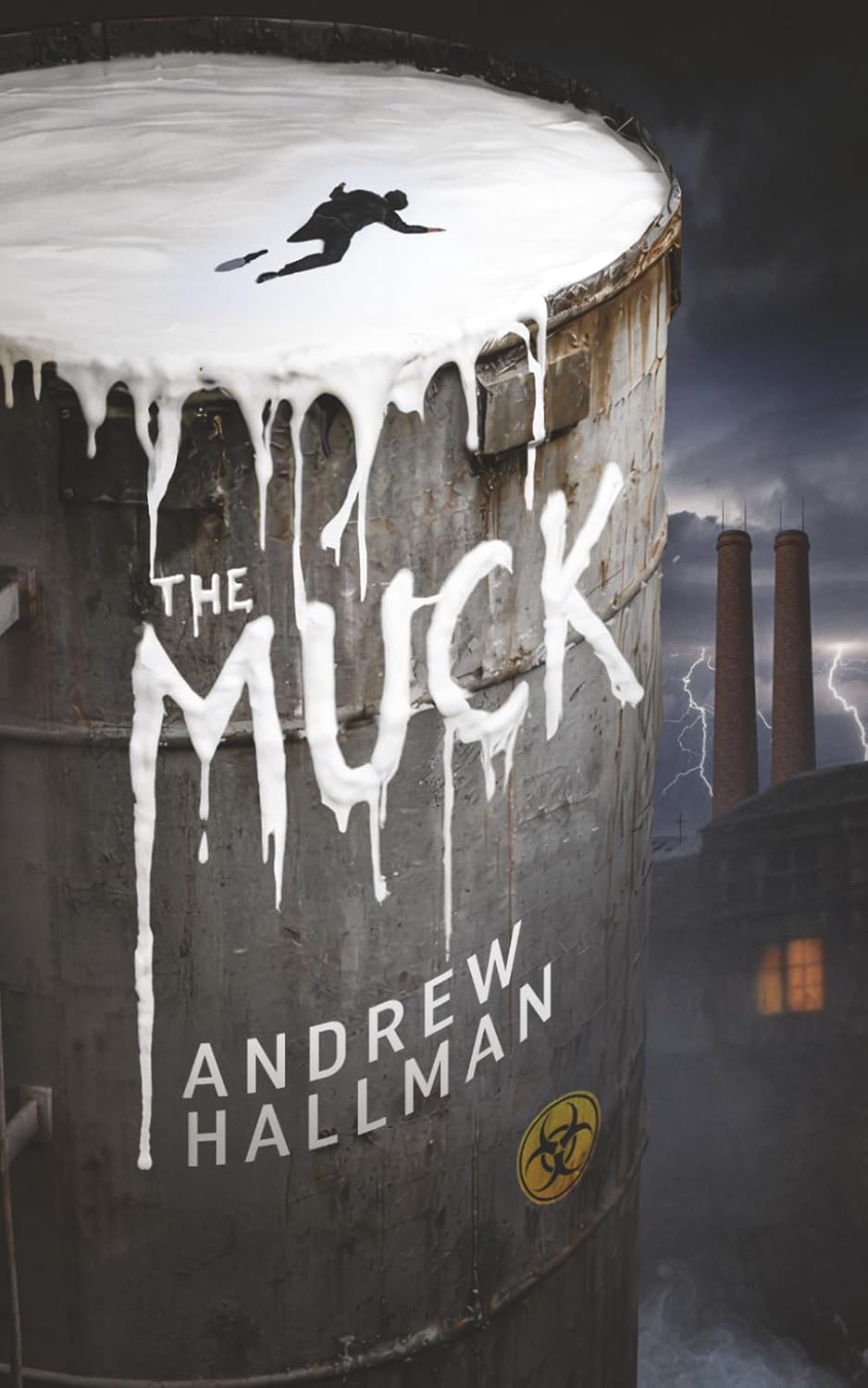
The Muck, by Andrew Hallman, follows Glenn Hurst, a cash-strapped ghostwriter who accepts a lucrative job writing the “origin story” of crypto magnate Brad Thorsen. The assignment brings him to the Mattison Alkaline Works, a decaying industrial complex in rural Virginia known locally as the Maw, where old chemical horrors, corporate ambition, exploited workers, invasive technology, and a maddening itch begin to converge. What starts as a vanity memoir project curdles into a neo-gothic horror-thriller about pollution, power, and the monstrous appetite to turn every human weakness into product.
I was pulled in first by Glenn, who is not heroic in the gleaming, uncomplicated sense. He is broke, defensive, lonely, vain in small ways, and painfully aware of his own failures. That makes him interesting company. His interior voice has a sour wit that never fully protects him from shame, and the book uses that tension well. The Maw itself is the real cathedral here: part factory, part castle, part tomb. Its rusted chambers, poisoned runoff, salt tunnels, and technological altars give the story a thick, tactile dread.
I really enjoyed how the horror keeps widening. The book isn’t content with one monster. It finds terror in chiggers, toxic sludge, AI content mills, billionaire self-mythology, immigration abuse, surveillance, and the old American habit of burying disaster until it leaks back into the water. There are many moving parts, and the momentum can feel almost feverish. But that excess also suits the material. This is a novel about systems that metastasize, and its best passages have the nasty propulsion of an allergic reaction you know you should not scratch.
This book is for readers who like neo-gothic horror-thriller, eco-horror, industrial horror, tech horror, and corporate satire sharpened into a blade. Fans of Stephen King’s character-driven dread and Michael Crichton’s techno-paranoia will find familiar pleasures here, though The Muck has a grimier, more caustic personality all its own. It’s smart, grotesque, and unnervingly contemporary. The Muck turns the American dream into a contaminated site, and dares you to keep digging.
Pages: 392 | ISBN : 978-1969599040
One Family’s Generational Trauma

Witness to Tribulation follows a young woman who learns that Gettysburg’s past is still very much alive after she discovers an old Civil War diary when she inherits her grandmother’s family home. What was the inspiration for the setup of your story?
Gettysburg was the inspiration for this story. As a frequent visitor to the town, I’ve always been beguiled by the history. Having a young woman move there and into an inherited house seemed to be a perfect setup for sharing the history of Gettysburg whilst telling another story about one family’s generational trauma. The protagonist left behind a painful past in the hope of finding a more promising future. The place that had been the turning point in the American Civil War becomes a turning point in this young woman’s life as well.
How much historical research went into writing the Civil War portions of the novel?
I’ve read non-fiction books and essays about the battle in addition to period newspaper articles. However, visiting the sites and hearing the information from the National Park Service as well as seasoned historians in Gettysburg provided what I needed to proceed writing with historical accuracy.
How did you develop Emily as a protagonist, and what aspects of her did you find most relatable?
I wanted Emily to experience Gettysburg in a way I had so many years ago. Like me, she knew about the town because of her studies. However, she had the advantage of hearing personal stories about it from her grandmother. Unlike me, she had a difficult, painful relationship with her own mother. In her case that family dysfunction can be traced back to the battle in 1863. In a way, I can relate to how the lingering effects of experiencing war affected my own family.
What is the next book you are working on, and when will it be available?
I have several ideas for my next novel. One of them is another Civil War story that follows one of the characters from this novel into a new adventure. I’ve written an outline and started to do some research, but it’s not quite at the point where I can share that information.
Author Links: Amazon | GoodReads
Within the stone walls of her ancestral home, Emily discovers an old Civil War diary that pulls her into a world where history refuses to stay buried. Gettysburg’s hallowed ground, steeped in blood and sacrifice, becomes more than just her new address-it becomes a spiritual crossroads. Here, the veil between the living and the dead is thin, and Emily begins to encounter voices and visions that guide her on a journey of forgiveness, acceptance, and love.
As friendships form, mysteries unravel, and old wounds resurface, Emily learns that the scars of war and family tribulation run deep-but so does the strength to heal. In witnessing the tragedies and triumphs of those who came before, she discovers the courage to confront her own past and embrace the future.
Rich with history, suspense, and a touch of the supernatural, Witness to Tribulation is a moving tale of generational bonds, resilience, and the eternal presence of family.
Genuine Horror, Not Just Scares

The Corpse War of 1793 follows a British soldier whose regiment is sent into Norfolk to confront rumors of walking corpses, only to find military discipline, courage, and conscience collapsing under the weight of an undead catastrophe. What was the inspiration for the setup of your story?
As both a military historian of the late 18th century and a big fan of horror and zombie media, it seemed like a pretty natural fit for my debut into fiction writing! While there are a few examples of broadly similar settings (“Pride and Prejudice and Zombies” comes to mind) these tend to read more as parodies and ‘over the top’ stories of cool characters doing ‘cool’, violent things to hordes of the undead. In fact, that seems to be what most zombie media is regardless of its setting! But, that has never been what interested me with the zombie genre. When you think about the what a zombie really is, then what we so often portray as mindless, gore-filled ‘fun’ ought to be an exceedingly tragic, disturbing, and serious affair! After all, the risen corpse that is trying to bite your head off isn’t just a faceless ‘other’, it is your former neighbour, friend, or loved one. Very little media delves into the psychological and social implications of such horrors, and, I wanted to write a story that would give zombies the gravitas and genuine horror, not just scares, they deserve.
In much the same way, while there stands no shortage of media exploring the horrors and privations of modern warfare, the early modern military world very rarely receives the same treatment. But just because the soldiers were wearing colourful uniforms and marching to drums didn’t make their service any easier! Just because early modern soldiers lacked our modern cultural and scientific framework for understanding trauma doesn’t mean they didn’t experience it. Indeed, looking at their writings, their trauma so often jumps off the page, if you know how to look for it. So, it seemed appropriate to combine these two passions of mine, to explore these themes in depth and create a piece of media that I had always wished existed. Ultimately, while the story is totally (blessedly!) fictional, it is intended to reflect a series of very real problems that faced early modern soldiers.
The novel uses period diction, illustrations, a glossary, and mock-historical framing. How did you balance authenticity with readability for modern readers?
Less balancing was needed than you may think! The memoirs, journals, and letters of soldiers from this time period are already fairly accessible, and enjoyable reads. Over the last ten years, I’ve also spent far more time reading those sorts of books than I have modern writing! Alongside just genuinely enjoying the style, I wrote my story in this somewhat archaic fashion to introduce more people to those primary sources. If you’ve enjoyed “The Corpse War”, I’ve little doubt you would also enjoy “The Recollections of Rifleman Harris” and similar works.
The military procedures and battlefield details feel central to the horror. How much research went into the regimental life, weaponry, and tactics of the period?
A great deal, and none at all! As a public historian and historical re-enactor, I’ve been working specifically with the history of the British army from 1764 to 1815 for a very long time. Consequently, a great deal of the information, from the basics of command structures and camp life to the flow of a battle, is all quite familiar to me. I was able to lean on this background when writing the book, regularly refreshing myself by glancing through the likes of Cuthbertson’s “Interior Oeconomy of a Battalion of Infantry” or Lewis Lochee’s “Elements of Field Fortification”. Ultimately, of course, the most important research was reading the memoirs and journals of soldiers and officers from this time period.
What drew you to portraying the undead not just as monsters, but as a crisis of empire, obedience, and conscience?
Like I’ve described above, I think that the zombie genre has so much more to offer than merely an excuse to bash in heads in gory excess. Their very nature, as with so many other classic monsters, has an extraordinary potential to explore meaningful themes. In this case, the undead forced the book’s inexperienced narrator to face the most grim and privative elements of military life, wherein he is not the hero of his story but merely a single piece of a much wider, and much crueller, tale. His suffering does not always have great personal meaning, but is at times necessarily imposed by the institutions around him in order to attain a greater goal. There is no sense to the terrors he witnesses, nor do the virtues of heroism and courage in the face of adversity always end happily. But, I don’t want to go into any more specifics, lest I spoil things!
Author Links: Goodreads | Website | YouTube
Here stands the authentic account of a soldier who bore the whole of The Corpse War witness. Bound by duty and compelled by guilt, he sets down in gruesome detail all that befell him, his comrades, and his regiment from the first devilish outbreak to the Great Battle between the Living and the Dead. His tale is one of woe and unwanted laurels, amidst a field where courage rots more quickly than flesh, and zeal burns hotter than black powder.
Fans of Sharpe and World War Z will devour this debut novel of visceral military horror, in which a common British redcoat confronts unimaginable terrors and bears witness to the Army’s desperate war against the risen dead.
With A Chilling Touch of Authenticity

An Imprint of Evil and Other Hauntings is a collection of ten horror stories centered around cursed objects, hungry gods, and terrible choices. What draws you to the horror genre?
As a kid, I grew up reading EC horror comics and watching TV programs like ‘The Twilight Zone’ and ‘The Night Gallery.’ In my early teen years I started reading classics like Dracula and Frankenstein. I was just drawn in by such stories that slowly create a feeling of unease in the reader. Although supernatural in nature, they echo with a chilling touch of authenticity. And that’s what makes them so frightening.
Many of the stories begin with familiar situations before slowly turning sinister. Why do you think ordinary settings make horror more effective?
It’s the creeping uncertainty about what is real or true in ordinary situations that brings about the more subtle feeling of dread or fear, an unsettling feeling that lingers with the reader well after the story has been read.
Horror can easily become overly graphic or overly abstract, but your stories stay focused and concise. Was restraint an intentional stylistic choice?
Yes. I wanted the stories to build up slowly, with subtle hints along the way that not is all what it seems to be. These are stories that lean on the classic atmosphere of the Victorian-era spinechiller stories. Stories that were meant to be read out-loud by candle light on dark winter nights.
Which story in the collection was the most enjoyable or unsettling for you to write?
Enjoyable – would be ‘The Barn’. It’s my first folk horror story and I actually felt sorry placing the main character in such a desperate situation!
Unsettling – would be ‘Charles Linkwood’. It was difficult to read about the horrors experienced by WWI soldiers while doing my research for the story, and how many returned home as broken lads suffering from ‘shell shock’ (PTSD). I tried to capture some of that horror in my story.
Author Links: Amazon | GoodReads


