Blog Archives
A Universal Understanding of Love

Unchained details your challenges growing up as an LGBTQ youth in a strict Nigerian community as a member of a Catholic family. Why was it important for you to share your story?
While Unchained isn’t a direct account of my personal experiences, it mirrors the struggles of LGBTQ individuals growing up in African societies, particularly where cultural and religious norms are deeply entrenched. When I moved to the UK, I witnessed a society where LGBTQ rights were respected and gay people were accepted as part of the social fabric. This stark contrast inspired me to use my writing as a medium to challenge the narrative back in Africa. I wanted to show that acceptance is possible and that being LGBTQ isn’t something to “pray away” or solve through religion. It was crucial for me to write this story as a call for change, urging African societies to move towards compassion and inclusion.
What was the hardest thing for you to write about?
One of the most challenging parts of writing Unchained was portraying gay relationships in the UK as equally valid and natural as heterosexual relationships. I wanted to vividly depict how love, commitment, and marriage transcend orientation, and I worked hard to normalize same-sex relationships for readers unfamiliar with such dynamics. Striking the balance between authenticity and sensitivity was tough because I aimed to connect these relationships to a universal understanding of love without alienating readers from more conservative backgrounds.
What is one piece of advice you wish someone had given you when you were younger?
I wish someone had told me that nothing is impossible and that I am my own limitation. Growing up in a restrictive environment, it was easy to internalize societal expectations and believe there were limits to what I could achieve. If I had understood earlier that with effort and self-belief, I could break barriers, I might have pursued certain dreams sooner. This advice would have empowered me to embrace my uniqueness and navigate life with more confidence.
What do you hope readers take away from your experiences?
I hope readers understand that societal norms are not fixed—they evolve, and they must make room for inclusion and acceptance. Africa is on the brink of a cultural shift, and the old ways of thinking must give way to new ideas that value the dignity and rights of every individual. I want readers, especially those from African backgrounds, to see that LGBTQ people are not asking for special treatment—they’re asking to live authentically and with the same respect afforded to everyone else. Above all, I hope my story inspires conversations, challenges prejudices, and sparks the cultural change we need to see.
Author Links: GoodReads | Amazon
free from societal constraints to live authentically.
Special Challenge—and Pleasure

In The Cadieux Murders, an architect hired to renovate a mansion soon finds her work opens the door to a long-buried murder mystery. Where did the idea for this novel come from?
I edit a real estate newsletter and found out that if you own a landmark home, you have to call in a specially certified architect to make any changes. I thought, what a great idea—to have such an architect find mysteries in the historic homes she works on! And I’ve always loved old homes: My wife and I live in an 1850 farmhouse and love its quirks.
What was the hardest part about writing a mystery story; where you constantly have to give just enough to keep the mystery alive until the big reveal?
That’s the trick! You want to give readers enough information so they feel they can solve it. The ending should be a surprise but can’t be out of left field. That is, the reader must say “Aha! They were leading up to this!” Consider Murder on the Orient Express. No one combined hints with a final surprise better than Agatha Christie.
Which character in the novel do you feel you relate to more and why?
Wren Fontaine, my architect/sleuth, seems different from me in many ways: she’s a woman and I’m a man. She’s an architect and I have a weak visual sense. She is gay and I am straight. And yet, she’s the protagonist most like me. Wren and I share a difficulty relating to people. Our personalities and ways of coping are very similar. Bringing her to life was a special challenge—and pleasure.
Can we look forward to another installment in the Historic Homes Mystery series?
I’m working on one now with Wren returning to her difficult high school years—transforming a long-closed dormitory for modern use for foreign visiting students. Can she rebuild the dorm, solve a long-ago murder, and work with her former bully?
Author Links: GoodReads | Facebook | Website | Amazon
And the home itself comes with a dark past: In 1955, it was the site of the never-solved murder of its owner, Dennis Blaine. Cadieux himself was alleged to be having an affair with Dennis’s wife, the stunningly beautiful Rebecca. It seems like yesterday’s headlines, but then someone starts killing people with a connection to the house. The home’s new owner—bestselling novelist Bronwyn Merrick—may be using the house to launch a fictionalized account of the 1955 crime. But someone may not want her to. Just how far will Bronwyn’s armed bodyguard go to protect her?
As Wren untangles the threads, she finds they all lead back to the house. Rebecca apparently inspired the strange, yet alluring residence, and both the home and its mistress may have caused uncontrolled emotions that led to tragedy. Wren uses all her architectural skills to decipher the hidden message Cadieux cunningly wove into the home’s design. She must think back 20 years to when, as a little girl, she met Cadieux. Deeply impressed with Wren, he gave her a clue about the house—and his unusual friendship with Rebecca. With her girlfriend Hadley at her side, Wren eventually solves the mysteries of the home and the people who lived there, develops a grudging respect for modernist architecture—and learns something about the difference between love and obsession.
Unchained (A tale of Identity, freedom and self discovery)
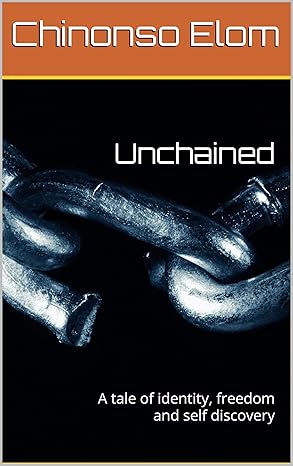

Unchained, by Chinonso Elom, is a memoir chronicling a young man’s transformative journey toward self-discovery amidst the challenges of coming of age. Set against the backdrop of an orthodox environment in Nigeria, Ikenna’s story reveals the struggles of growing up in a conservative Catholic family, bound by rigid expectations that leave little room for individuality. For Ikenna, the weight of these expectations is compounded by his identity as a homosexual, which subjects him to the harsh judgment of his parents and the church. Ostracized and vilified, he faces a series of dehumanizing attempts to “correct” his identity, which only deepen his feelings of alienation, despair, and invisibility. Determined not to succumb to this oppressive reality, Ikenna takes a bold step and relocates to the United Kingdom for higher studies. This decision becomes the catalyst for his transformation. In a foreign land, he discovers love, friendship, and a sense of belonging that empower him to reclaim control over his life. His story evolves into one of resilience, liberation, and the quest for authenticity.
From the opening chapter, the weight of societal expectations looms large, as Ikenna grapples with the pressure to conform to traditional norms. The conversations between Ikenna and his parents, laden with unspoken truths, felt authentic and raw. The contrast between his rigid life in Nigeria and the vibrant, accepting LGBTQ+ community in Northampton is stark and moving.
One of my favorite parts was when Ikenna attends an LGBTQ+ event for the first time. He dons an outfit that reflects his true self, stepping into the space with trepidation but finding only support and admiration. This moment of courage and the subsequent camaraderie among the attendees was heartwarming, showing the power of acceptance. Even as Ikenna finds love and builds a life for himself, he constantly battles the echoes of his upbringing and the fear of his family’s rejection. I was particularly struck by the tension during his parents’ visit to the UK for his graduation. The subtle shifts in their reactions from pride in his achievements to discomfort with his newfound confidence illustrate the chasm between their worlds. Elom handles this delicate dynamic with sensitivity, though I found myself longing for more resolution in these familial threads.
Unchained is an emotional journey of self-discovery that resonates deeply, especially for those who have struggled to reconcile personal identity with societal expectations. Chinonso Elom’s prose is simple yet evocative, and the themes of resilience and belonging are universally relevant. This book is perfect for readers who appreciate character-driven stories about cultural conflict, self-acceptance, and the power of community. Ikenna’s story will stay with me for a long time, reminding me of the importance of living authentically despite life’s challenges.
Pages: 84 | ASIN : B0DHTZ89S8

Seeking Closure: Someday, You Will Understand

Seeking Closure dives deep into the interconnected lives of its diverse cast of characters, blending personal growth, financial intrigue, and societal upheaval. Spanning decades from the 1990s to the pandemic-stricken 2020s, the book intertwines major historical events like 9/11 and the Great Recession with the intimate struggles of love, ambition, and self-discovery. The story’s heart lies in its exploration of universal questions: What defines love? How do we balance personal desires with societal expectations? It’s as much about financial investments as it is about emotional ones.
One thing that struck me immediately was the writing’s layered texture. The author breathes life into characters with rich, nuanced backstories. For instance, Adam, the protagonist, steps into the financial world with all the polished nerves of a freshly minted MBA, yet his journey is anything but linear. His first encounter with the enigmatic Charlie had me grinning and wincing in equal measure, reflecting on how chance meetings often define our paths. The way Adam’s nervousness on his first day mirrors his internal growth later in the book is rewarding. This character progression feels real and heartfelt.
I enjoyed the story but felt the prose occasionally reaches for more than it needs to, with some scenes feeling a bit overexplored. For instance, the meeting between Adam and Charlie in the early chapters, while engaging, sometimes lingers on details that could have been tightened. Even so, these moments also highlight the author’s enthusiasm for crafting vivid and immersive storytelling.
What I loved most, though, was how the book delves into its philosophical undertones. Each character seeks closure, whether through love, career, or family. The chapter on Jane’s sacrifices for her family versus her career ambitions resonated deeply. Her quiet strength is a sharp contrast to Charlie’s brash assertiveness and Adam’s introverted resilience. I found myself rooting for all of them, even when their flaws were painfully evident.
By the time I reached the closing chapters, I felt like I had lived decades alongside these characters. The final moments are bittersweet, leaving you pondering the very meaning of closure. Is it truly an end or just another beginning?
If you enjoy stories that weave personal dilemmas with historical contexts and explore themes of love, identity, and ambition, Seeking Closure is a must-read. It’s perfect for anyone who loves drama with a philosophical twist or wants to lose themselves in a tale that feels both sprawling and deeply personal.
Pages: 345 | ASIN : B0CW1BSJC5
Life Steps In

I Love That Girl follows four young adults navigating the emotional highs and lows of the complex relationships that evolve between high school and early adulthood. What was the inspiration for the setup of your story?
I love this question, yet it’s also a tough one to answer succinctly: Back in 2012, I wrote a novel during NaNoWriMo. Actually, it felt like it wrote itself! That book was I Love That Girl. However, it was a different story with different characters. Those characters were grown-up versions of the teens in another one of my books that, at the time, was unpublished—Till It Stops Beating. Fast forward to 2018, and Till It Stops Beating is published by Black Rose Writing. In the years in between, I rewrote that novel from the 2012 NaNoWriMo with brand new characters and an altered storyline. The only thing that stayed the same was that it was told from 4 different points of view of 4 long-time friends. Not only that, at the advice of my agent at the time, I “spiced it up,” and it became a romance book. I parted ways with that agent and obtained a publisher on my own, The Wild Rose Press, who is publishing it on January 1, 2025. I like to think that I Love That Girl is the book that the main character of TISB would have written if I ever wrote a book about her as an adult. So it’s not a sequel but more of an “inspired by.” By the way, Till It Stops Beating is available on Amazon, as are the three other books in that series.
There is so much to be said about love in this book. What do you hope your readers take away from your story?
Love is love regardless of sexual preference and sexuality.
One of the main characters, Gwen, struggles with the fact that she has fallen for her best friend, Andy, who, way back when, was briefly her boyfriend and who, at that time, came out as gay and ended their relationship. Now, years later, they are reunited under interesting circumstances and find themselves falling for each other again. When Andy comes out as bi, Gwen struggles to fully understand what that means.
There is an old Yiddish proverb: “We plan, God laughs.” This applies to the other couple in the novel, Ethan and Nori. They each have a plan that will change the course of their relationship, and when they struggle to reveal their “secret plan” to each other, life steps in and changes everything. In love and life, we try to control things that we ultimately can’t. Ethan and Nori’s relationship is an example of that.
What were some of the emotional and moral guidelines you followed when developing your characters?
What an interesting question! Overall, I allow my characters to have their own life, so to speak. I may not agree morally or values-wise with everything they do, but that’s okay. That’s art. Emotionally, I allow my characters to act out and behave imperfectly because that’s authentic. I write characters that people can relate to. Morally, I can’t have protagonists, the characters who drive the story, be abusive or sociopathic. That’s just not my jam as a writer!
Can fans look forward to seeing more work from you soon? What are you currently working on?
I am working on two projects. The first one is another New Adult romance influenced by some of the great first love stories I read as a young person—Forever by Judy Blume and Endless Love by Scott Spencer.
The second is a memoir, part romance story, and part self-help book. I know it sounds a little odd, but my life has been part romance story and part self-help book!
Author Links: GoodReads | X (Twitter) | Facebook | Website | Bluesky | Linktree | Instagram | Threads | Substack | Amazon
Queering the Path to Enlightenment, Book One: Beginning the Journey


Queering the Path to Enlightenment, by David Franklin Sparks, offers a bold and invigorating perspective on Buddhist teachings, uniquely tailored to resonate with LGBTQ+ experiences. It challenges traditional narratives, providing a fresh lens through which spirituality and queerness can harmoniously intertwine.
At its heart, the book redefines the Buddhist concept of samsara—the endless cycles of suffering and rebirth—by connecting it to the specific challenges faced by queer individuals. From navigating societal expectations to confronting internalized prejudices, Sparks dives deep into these realities. Yet, he doesn’t stop at acknowledgment; he equips readers with practical tools and meditative practices designed to help break free from these cycles and foster a more liberating spiritual journey.
What elevates this book is its unapologetic celebration of queer identity. Sparks positions individuality not as a hindrance but as a powerful, transformative asset on the path to enlightenment. His message is clear and empowering: authenticity is sacred, and queerness holds a profound value often overlooked in traditional spiritual texts. This is more than a book—it’s a call to embrace your true self, honor your unique journey, and unlock your immense potential for growth and awakening. Sparks skillfully balances respect for Buddhist traditions with a modern, inclusive approach.
His writing is both approachable and profound, making complex concepts accessible to beginners while offering rich insights for seasoned practitioners. The meditative exercises and actionable guidance woven throughout are not just thoughtful additions—they are transformative tools, seamlessly fitting into everyday life while offering profound opportunities for change. Beyond its focus on queer spirituality, the book extends a welcoming hand to allies and anyone seeking a deeper understanding of inclusivity in spiritual practice. It reframes the queer experience as one of strength and wisdom, blending humor and insight to create an inspiring, uplifting narrative.
In a genre often mired in abstraction or rigidity, Sparks delivers a rare gem. Queering the Path to Enlightenment stands out as a work that empowers and affirms, making it a must-read for LGBTQ+ individuals and anyone drawn to a fresh perspective on Buddhism. Sparks’ voice is both warm and inclusive, creating a guide that feels as much a companion as it is a roadmap for self-discovery and spiritual growth.
Pages: 195 | ASIN : B0DH7NHLTP
My Lost Pages

Poetry collections are always an enigma, their depths as varied as the voices that create them. Sneha Sabu’s My Lost Pages offers an immersive journey into the poet’s psyche, where each poem unfolds like a spontaneous dialogue with her subconscious. This collection brims with fleeting moods and restless introspection, carrying the reader through meditations on identity, existence, and the enigmatic essence of being alive.
Written in free verse, Sabu’s poetry defies structure while embracing rhythm, drawing comparisons to literary greats like William Blake, Ezra Pound, and Emily Dickinson. Some pieces stand solitary, sharp and self-contained, while others spill into one another, creating a seamless stream of thought. Reading these poems feels akin to stepping into a lucid dream, where the boundaries between musings and realities blur. Sabu muses on the delicate threads connecting life’s vastness to her inner world, weaving disparate ideas into an intricate tapestry of thought.
The collection invites two modes of engagement. One can focus on the impact of individual poems, letting their emotional resonance linger and evolve. Alternatively, one might search for a greater narrative—subtle connections bridging the poems into a singular exploration of meaning. Both approaches reward the reader with insights that feel both deeply personal and universally reflective. A unique touch comes from Sabu’s candid notes accompanying each piece. These glimpses into her creative process transform the collection into an intimate conversation, fostering a sense of closeness between poet and reader. The transparency adds another layer of depth, allowing the audience to peer into the moments of inspiration behind the verses. Together, these poems form a soothing cascade, washing over the reader with their contemplative tones and evocative imagery.
The collection creates an atmosphere of serenity rarely achieved in prose, inviting reflection and stillness. Sabu’s voice emerges as both plaintive and probing—confident in some moments, tentatively exploring in others. She traverses the complexities of existence with grace and curiosity, seeking to unravel life’s intricate mysteries.
My Lost Pages is a lyrical meditation, one that lingers in the mind and invites repeated readings. It is as much an exploration of the poet’s inner world as it is a mirror for the reader’s own thoughts and feelings. Sabu proves herself a voice worth listening to—raw, reflective, and profoundly human.
Pages: 87 | ASIN : B0CX5CBV6S
Witches and Warlocks

In The Bedfordshire Warlock, a warlock gifted with powers he doesn’t utilize begins to question his fate when he discovers the dark secrets surrounding the new town where he and his mother have settled. Where did the idea for this book come from?
I have always been fascinated by the dark history of The Salem Witch Trials. What if there were actual witches and warlocks with supernatural powers in colonial America who were the initial cause of the hysteria and became victims themselves in the execution of the innocents? In addition, when I was a little boy, the thought of having powers like those of witches and warlocks I saw on television and movies was an obsession of mine. So, in a sense, Dorian’s story is the story I wish had happened to me (the powers, not the Ascension plot line) when I was a kid.
What was the inspiration for Dorian’s traits and dialogue?
In my mind’s eye, Dorian Leeves physical description matches what I imagined Dorian Gray looked like in Oscar Wilde’s masterpiece (the inspiration for Dorian’s name in the novel as he points out). My protagonists are amalgams of my personal traits and characters I admire from literature and media. For example, I’m a scientist and an educator so there is at least one scientific teacher in the mix for every novel I pen. As for the active dialogue, Dorian reflects my thoughts on the issues facing young gay men in the early 1990s during the gay liberation movement when I was also a graduate student in the biological sciences.
What draws you to the paranormal genre, and makes it ripe for you to write such a great mystery story in it?
First, thank you for saying it is a great mystery. Second, I have always been drawn to mysteries involving the supernatural, especially those falling into the horror genre. Because I was in higher education for 25 years, I was expected to write and publish research-based articles for scientific journals. So, the last thing I want to write for pleasure is a strictly factual-based story. The flexibility I have when writing about a world outside the natural laws is freeing. Adding a mystery to the storyline makes it more interesting.
What is the next book that you are working on, and when can we expect to see it released?
My publisher bought the rights to my first self-published novel The Malevolent, a graphic ghost story set in Maine in the early 1980’s. The coast of Maine was a favorite family vacation state when I was a teenager in the 1980s. It is written under my nom de plume, P.F. Roquelaure, because I was still a professor at the time and the last thing I needed was for my students to do an internet search and have this disturbing novel pop up! It will be out in 2025. My literary agency is also shopping my latest novel Bloodstone, set in the Outer Banks of North Carolina, which involves pirates and blood magic. Like all of my novels, the setting is a place where I have lived. In this case, it is a love letter to a beach town where my family vacationed for 45 summers in a row!
Author Links: GoodReads | Facebook | Website | Amazon
Three hundred years later, the force from the well, Beladon, contacts Dorian Leeves, a young man with supernatural abilities, and informs him that he possesses the same powers as Elias Doever. Dorian will accomplish his ascension into powers beyond his belief if he can re-unite the “three bloods” of Elias Doever, himself, and Beladon. However, the body was buried in secret unconsecrated ground. Dorian’s new love interest, Toby Blessing, creates complications for his quest to find the skeletal remains of Elias Doever for his ascension.
Dorian must decide whether to abandon his ascension and power or embrace a life with Toby in the present day.



 LITERARY TITAN