Blog Archives
A Writting Journey

Lycan: Solomon’s Odyssey, Chapter 1 follows a young man with a devil-may-care attitude who finds himself placed into a position of leadership in his community. What was the inspiration for the setup of your story?
The writing of the story itself actually went on quite a journey. This was the first book or comic that I have ever written. The original version of the script was like a sort of mix between a regular book and a comic script. I had given that out to friends and family for feedback in order to help shape the story itself. Eventually one of my friends put me in touch with an editor – Onrie Kompan, who took me under his wing and showed me how to write a comic script. He also gave me other graphic novels to read to get a better idea of how to write, such as A Contract With God by Will Eisner.
Originally the story was told from two different time periods, starting off in the future, or at least the end of the series and then jumping back and forth as a sort of “life flashing before his eyes” kind of situation. However, as Onrie and I laid out the book I decided to remove that storytelling device and focus solely on telling the story from Solomon’s point of view as it was happening. In terms of picking the setting, I had two goals. One was setting the story far enough back that I avoid any currently held ideas of the world’s first werewolf, such as King Lycaon of Greek mythology. But, I also wanted to be able to use the mythology of the world as a sort of sandbox to have this character exist in, traveling along the same path of history as our own, but told as though magic and monsters exist in hushed whispers and operating in the shadows.
This first book sets up the series so certain things need to happen in order to launch the character onto this path. I wanted to show this aloof character be forced into an unfamiliar situation, and while his intentions are pure, making hasty decisions out of desperation, lead to certain consequences that impact him and shape him for the remainder of his journey.
A lot of time was spent crafting the character traits in this novel. What was the most important factor for you to get right in your characters?
For me, the goal was to have characters that are both enjoyable to read about, but also are believable. The interactions between Solomon and his brother, or his friends, is similar to interactions I might have with my brothers or friends. I also wanted to make the reader care about these characters. I love eliciting emotions from people through my work. The interactions between characters are meant to make people feel a bit of that camaraderie or familial spirit, and any losses are meant to make the reader feel a similar level of sadness that Solomon feels. If I can make the audience feel a certain way throughout the books, then I feel I’ve done my job as a writer in properly entertaining them. Even if sometimes what I write might be tragic.
In fantasy novels it’s easy to get carried away with the magical powers characters have. How did you balance the use of supernatural powers?
The thing I like about werewolves, or magical creatures in general, is that they can be incredibly powerful, fear inducing, and awe inspiring, and yet they always have rules. While it does not appear in the book, werewolves, as well as many other monsters, have an aversion to silver. A werewolf, typically, can’t transform unless under the light of the full moon. And with that, the human part of the equation usually loses all control of their own body. It is almost as though it is an entirely different entity behind the wheel at that point. In the story, as Solomon is given this curse, even in a human form he is much stronger, faster, and has enhanced senses and a healing ability. Against normal unprepared humans, it’s not much of a fight. Against another supernatural creature, it is a much tougher fight. He is not completely invulnerable. For the other supernatural character in the book, he seems almost infinitely powerful in comparison to even Solomon, but one thing I always like to think about, is that there is ALWAYS a bigger fish out there. There’s always something more powerful.
Where does the story go in the next book, and where do you see it going in the future?
The next book in the series takes place immediately following the first book. It really delves into Solomon trying to deal with the aftermath of the first book, focusing on guilt and PTSD. The second book also introduces other supernatural elements such as magic and other mythological creatures. The idea with each book is that with each installment, it opens the world up a little more and a little more. The first book was the origin story, it sets everything in motion. Every book in the series after that, while still following Solomon, explores other regional mythologies, folklore, monsters, and gods. The second book delves into ancient Arabic mythology. The third book is best described as HP Lovecraft meets Gilgamesh. And so on. I have the entire series planned out all the way to the last page of the final book. Right now I am planning on a 15 book run, with 3 arcs each being 5 chapters. This will let me really play around with some fun mythology from around the world!
Author Website
The first book in this series is the origin story of Solomon, a man with a devil-may-care attitude who is thrust into a position of responsibility. Desperate circumstances lead to desperate decisions, which could affect the world in unforeseen ways for millenia to come. What would someone be willing to sacrifice to save those they care about most?
Darke Realms: One Tough Temporary She Alpha (Arcana 2)


Michele L. Sayre’s Darke Realms – One Tough Temporary She Alpha drops you into a world where supernatural beings, werewolf politics, and the remnants of a brutal war collide. The book follows Leiry Matthis, a reluctant alpha, forced back to her pack after the death of her rogue mate and father. The stakes are high. Her son is in danger, a self-proclaimed Rogue Alpha King is on the rise, and she has no patience for anyone trying to control her fate. With power struggles, deep emotional wounds, and a fierce determination to protect her own, Leiry embodies the grit and resilience that define Sayre’s heroines.
One of the strongest aspects of this book is its protagonist. Leiry is not your typical heroine. She’s hardened by loss, unapologetically strong, and yet emotionally vulnerable in moments that make her feel incredibly real. From the first chapter, where she steps back onto the packlands she once fled, the weight of her past is palpable. The author does a great job balancing her toughness with raw emotional depth, like when she recalls her mate’s death during the Arcana-Kabaltz War. The trauma is still fresh, and Sayre doesn’t shy away from showing how that grief shapes Leiry’s choices.
The world-building in this book is layered with supernatural history, werewolf customs, and high-stakes politics. Sayre weaves in elements of mythology and war lore, making the conflict feel bigger than just a personal struggle. It’s about survival, legacy, and the balance between light and dark. The concept of the Arcana, beings of light who oppose the Kabaltz, agents of darkness, adds an epic scope to the story. The inclusion of treaties, sacred burial rites, and pack dynamics makes the world feel lived-in, though at times, the sheer amount of detail can slow things down. Still, it’s a rich setting that fantasy lovers will appreciate.
There are moments where the pacing slows, particularly in the middle of the book. Some sections take their time delving into exposition, especially when exploring the mythology and history of this world. While these details add depth and intrigue, they occasionally pause the action. Similarly, some dialogue leans into exposition, particularly when characters reflect on past events. However, Sayre’s snappy writing style and Leiry’s sharp inner monologue keep the story engaging, ensuring the book moves forward in an enjoyable way.
Darke Realms – One Tough Temporary She Alpha (Arcana 2) is a gripping read for fans of supernatural fantasy, particularly those who enjoy strong female leads and intricate world-building. If you love stories with werewolves, war-torn pasts, and heroines who don’t take crap from anyone, this book will be right up your alley.
Pages: 542 | ASIN : B0DXKH34D2

A Recurring Dream

The Prometheus Engine follows three siblings who band together to fight an evil tyrant who has taken over the land and join forces with Elven warriors to restore the rightful ruler to the throne.
I find the world you created in this novel brimming with possibilities. Where did the inspiration for the setting come from, and how did it change as you were writing?
I have always loved the King Arthur legend. I think it is the first true fantasy story written. It was the inspiration behind the FOREVER AVALON Series. The series came from my time as a sailor in the U.S. Navy playing Dungeons and Dragons in my off duty time while deployed. In the 80s, we didn’t have the internet, video game consoles, or satellite TV. So, I played a lot of D&D. Add to that missing my wife and newborn baby, I started having a recurring dream about being with them on an island of fantasy. That dream stuck with me whenever I deployed. Finally, during my last deployment in 2001, I decided to turn my dream into a novel and in that deployment, I wrote my first draft of FOREVER AVALON. After I finished writing it, I stopped having the dream.
THE PROMETHEUS ENGINE is the fourth book in the series. It tells the story of the reign of Mordred the Immortal. After years of suffering and torment, Mordred finally ascended the throne of Avalon through deceit and a coup in the face of despair. The resistance against Mordred is led by the MoonDrake family, a modern family from the outside world stranded on Avalon. They discover Mordred is building a mysterious device called the Prometheus Engine to secure his reign. Hunter MoonDrake, the Gil-Gamesh and Eternal Champion of Avalon, searches for clues to this magical machine while a traitor lurks within their ranks.
What were some themes that were important for you to explore in this book?
The most important themes of THE PROMETHEUS ENGINE are family bonds and good vs. evil. The MoonDrake family is the heart of the entire FOREVER AVALON series. This family is based on the traits and characteristics of my own wife and children, so I feel very close to these characters. The determination and sacrifice this family has made for their adopted home is evident throughout the novel. Lastly, I am a big proponent of good vs. evil. There is no gray zone here. You are either on the side of life or death. Mordred is a villain with no morals, a selfish bastard who only cares for the power he wields. He will do whatever it takes to hang onto that power, even if it means killing anyone and everyone around him. On the other side, the MoonDrake family fight for life, liberty, and love. They have suffered tremendous loss in Mordred’s ascension to the throne, but they fight on for the people of Avalon. Their drive and passion are the polar opposite of Mordred.
Will there be a follow-up novel to this story? If so, what aspects of the story will the next book cover?
The fifth and final book of the FOREVER AVALON Series is called ARCADIA DAWN. This will bring the entire saga to a conclusion as the resistance against the reign of Mordred fights the war on two fronts. The Gil-Gamesh and his siblings invade Purgatory to rescue the Lady of the Lake from the clutches of Abdel ben Faust while King Bowen and the Army of Avalon fend off Mordred and his forces in the ancient elven city of Alfheimer until their return with the sainted lady. This book will end twenty years of work in the first book series I’ve written. As sad as it is to end this story, it is time to move on to some new ideas.
Author Links: GoodReads | X | Facebook | Website
Standing in his way are the children of the Gil-Gamesh: Hunter, Rose, and Ashley. Since their father’s death during Avalon’s Reclamation, these three have resisted Mordred’s reign at every turn from their new home in the ruined Elven city of Alfheimer. Along with the Holy Order of Shield Maidens and the Hîldrägo Boquè, an elite corps of Elven warriors, they fight back to reclaim the throne for the rightful heir, King Bowen, and to restore Avalon to the people.
But even now, Mordred schemes to bring down the resistance by constructing an ancient magical artifact…The Prometheus Engine. Only the immortal king knows its secrets and the power it will bring him, no matter the cost. Hunter and his siblings must race across the archipelago to uncover the engine’s secrets and discover the truth behind Avalon’s
Reclamation.
The story continues in THE PROMETHEUS ENGINE: Book 4 of the FOREVER AVALON
Series!
The Prometheus Engine
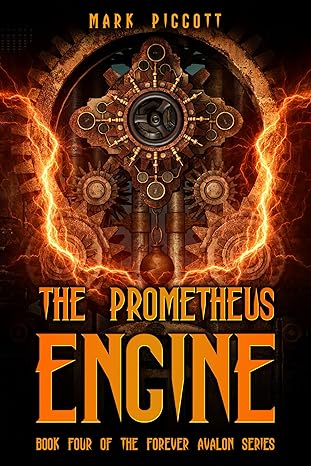

Mark Piggott’s The Prometheus Engine is an epic fantasy filled with magic, war, and alchemical mystery, all wrapped in Arthurian legend. The novel is set in Avalon, where Mordred, the immortal son of King Arthur, rules with an iron fist. At the heart of the story is the Prometheus Engine, a legendary machine capable of harnessing magical elements to create an all-powerful substance called Promethium. The rebellion against Mordred is led by the children of the late Gil-Gamesh, Lord Bryan MoonDrake, as they struggle to prevent the tyrant from using the engine’s destructive power. With high-stakes action, deep lore, and a blend of myth and steampunk-esque technology, the novel spins a fast-paced and immersive tale.
One of the strongest aspects of The Prometheus Engine is its world-building. Piggott paints a rich, layered Avalon filled with history, political intrigue, and magic-infused technology. The descriptions of places like New Camelot and Alfheimer evoke a grand, war-torn kingdom, and the concept of Promethium as a magical element adds an interesting twist to the traditional fantasy setting. The attention to detail in the engineering of the Prometheus Engine itself is fascinating, it’s not just a MacGuffin but an actual machine with lore tied to ancient alchemists and the fall of Atlantis. That depth makes the stakes feel real, not just another cliché “magical artifact” plot device.
The book masterfully weaves together battle sequences, political intrigue, and moments of introspection, creating a dynamic and multifaceted narrative. The final act, when the Prometheus Engine reaches critical mass, is absolutely gripping, delivering an intense and satisfying payoff. Along the way, the story takes time to explore various subplots, enriching the world and adding depth to the lore. The character development shines brightest with figures like Mordred and the rebellion’s leaders, who bring complexity and emotional weight to the tale. Meanwhile, the supporting characters serve as vital threads in the grand tapestry, helping to drive the action forward and keep the momentum strong.
Piggott’s writing style is cinematic and energetic, pulling readers into a world of high-stakes drama and adventure. Mordred embodies the ultimate classic villain arrogant, ruthless, and larger than life bringing a commanding presence to every scene he’s in. Meanwhile, characters like Hunter MoonDrake and Eileanora add a layer of emotional depth, balancing the grand spectacle with genuine, heartfelt moments. The descriptions of battle and magic are vivid and immersive, making the action sequences some of the book’s most exhilarating highlights.
The Prometheus Engine is a thrilling fantasy read that blends mythology, alchemy, and steampunk elements into an exciting tale of war and rebellion. Fans of Arthurian retellings, intricate worldbuilding, and high-action fantasy will find a lot to love here. If you enjoy immersive fantasy worlds with a mix of history and magic, this one is worth picking up.
Pages: 313 | ASIN : B0DP85RNK2
The Plain of Pillars: A Celtic Story Retold

Long before Eden, a melody existed, primal, untamed, and boundless. A boy, spun from the golden strands of a horse’s mane, enters a world where gods walk among mortals, trees whisper secrets to stones, and stones morph into glistening silks. This tale unfolds as an extraordinary bond between kin faces the fires of war, with ancient myths reshaped into bold new forms. Through evocative storytelling, the author bridges antiquity and the present, weaving a vibrant tapestry of hope, resilience, and magic. By journeying alongside these ancient dreams, we might unearth profound truths about ourselves and the world around us.
In The Plain of Pillars: A Celtic Story Retold, Griffith presents a stunning reinterpretation of Celtic mythology. This narrative combines poetic storytelling with a profound exploration of harmony, conflict, and the cyclical nature of life. Set in the eternal land of Siraide, the story centers on The People, who live in unity with the Music that both created and sustains them. But their peace is shattered by Balor, the Oceaner god-king, whose insatiable thirst for power threatens to engulf their world in chaos. As characters wrestle with love, destiny, and loss, their struggles also reflect larger themes of colonization and the gradual erosion of cultural identity.
Griffith deftly juxtaposes Siraide’s interconnected reverence for life with the Oceaners’ destructive authoritarianism, crafting a poignant commentary on resilience and the enduring power of unity in the face of oppression. These thematic undercurrents infuse the story with urgency and depth, creating a tale as reflective as it is captivating.
The prose itself is a triumph. Griffith’s lush descriptions and rhythmic dialogue draw readers deep into the rich, magical world of Siraide. The lyrical tone lends a dreamlike quality to the narrative, beautifully blending the mythical and the emotional. Particularly striking is the figure of the Raven, a modern-day chorus reminiscent of Greek tragedies. This enigmatic voice delivers profound philosophical reflections, implicating readers in the consequences of colonization and unchecked power. This narrative device seamlessly bridges myth and reality, serving as a haunting reminder of what is at stake.
At its core, The Plain of Pillars is a meditation on timeless themes: the conflict between creation and destruction, the preservation of cultural heritage, and the enduring power of love and community. Griffith crafts a story that is both epic in scope and deeply intimate, resonating with fans of mythological retellings like Circe, Ariadne, and A Thousand Ships.
Whether you are drawn by its mythological roots or its reflections on universal truths, The Plain of Pillars will leave you with a sense of wonder and a renewed appreciation for the delicate, eternal balance between creation and destruction.
Pages: 268 | ASIN : B0DLXY4WW6
Itehas

Simran Sadana’s Itehas is a vibrant retelling of Indian epics, meticulously weaving together 59 stories rooted in mythology and spiritual tradition. This book brings alive tales of gods, mortals, and the in-between, providing fresh interpretations of timeless classics. From the selfless sacrifice of Sampati in “Wingless Sampati” to the divine strength of Adi Shakti in “Goddess of Bees,” Sadana’s narratives aim to reintroduce Indian mythology to a modern audience while preserving its depth and cultural significance.
Sadana’s storytelling is vivid and engaging. “Yudishthir & Dharma,” the poignant journey of the Pandavas ascending Mount Meru is beautifully portrayed but remains somewhat predictable, sticking close to the traditional telling. The scenes of Yudishthir’s unwavering loyalty to the dog, revealed to be Dharma, are evocative, but I feel they could have been more introspective. I appreciated the fidelity to the core themes of loyalty and virtue, but a deeper dive into Yudishthir’s internal struggles might have added layers to an already poignant story.
Sadana shines when she ventures into the lesser-explored emotional depths of familiar tales. “Kubera’s Pride” offers a humorous yet humbling portrayal of the god of wealth’s fall from arrogance. Ganesha’s insatiable appetite in this story becomes a metaphor for spiritual hunger, deftly underscoring the futility of material excess. The climax, where a humble handful of rice satisfies Ganesha, felt deeply resonant. It is in these small, yet profound moments that Sadana’s imagination brings a delightful originality to these ancient stories.
Itehas is an enchanting collection that is as much a homage to Indian mythology as it is a creative endeavor to reinterpret it. Simran Sadana’s passion for her subject matter is undeniable and infectious, making it an engaging read for those who love mythological tales or wish to reconnect with India’s cultural roots. While the book may feel dense for readers unfamiliar with these epics, it remains an invaluable bridge for anyone seeking to delve into the spiritual and moral tapestry of Indian mythology. I’d recommend it to mythology enthusiasts, spiritual seekers, and fans of folklore looking for a modern yet faithful retelling of age-old stories.
Pages: 182 | ISBN : 978-9367959978
Pinnacle Goddess Principles – RED STAR
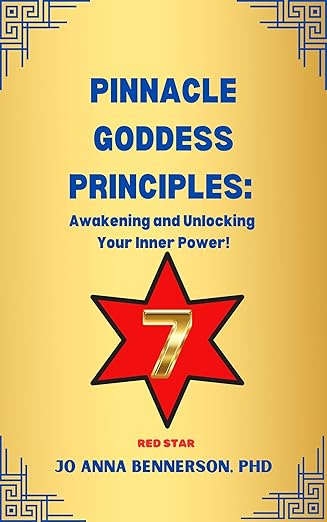
Jo Anna Bennerson’s Pinnacle Goddess Principles: Awakening and Unlocking Your Inner Power! is a captivating guide blending Greek mythology, self-help, and real-world inspiration. The book explores seven transformative principles; resilience, energy, devotion, strategic thinking, transformation, accountability, and renewal, each represented by a Greek goddess and tied to relatable modern figures. Bennerson’s aim is to guide readers toward achieving “C” Excellence, defined as healthy competition, conviction, clarity, courage, creativity, compassion, and cycles of growth.
The writing feels both poetic and direct, a combination that’s uplifting and engaging. I particularly enjoyed how Bennerson weaves mythological stories with actionable advice and real-life examples. This kind of storytelling made the lessons more memorable and gave me a sense of empowerment while reading.
One standout section was the chapter on energy, embodied by Aphrodite. Bennerson’s discussion on the vibrancy of life and passion, punctuated by Eleanor Roosevelt’s tireless advocacy, hit home. Her call to tap into our “reservoirs of vitality” resonated deeply. While I feel the language occasionally veered into flowery territory, the sincerity of Bennerson’s tone kept it authentic. The chapter on accountability, inspired by Nemesis, stood out as particularly impactful. The inclusion of Prince’s commitment to his craft and integrity as an artist made the abstract concept of accountability more relatable. Bennerson also challenges readers to embrace their own creative potential while taking responsibility for their actions. This balance between empowerment and accountability felt refreshing.
Some sections of the book leaned a bit heavily on rhetorical questions, which could feel repetitive at times. The emphasis on letting go of the past to embrace future possibilities felt like a gentle nudge to pause, reflect, and reset. Her advice here is universal, and the examples of both mythology and Robbins’s work tied the book’s lessons together beautifully.
Pinnacle Goddess Principles is a heartfelt and motivating read for anyone seeking a mix of mythology, personal growth, and practical life advice. Jo Anna Bennerson’s ability to connect the ancient with the modern creates a unique and empowering narrative. I’d recommend this book to readers who enjoy introspective self-help books or those looking for inspiration to tackle life’s challenges with grace and determination. It’s not just a book; it’s a call to awaken the goddess—or god—within you.
Pages: 90 | ASIN : B0DGQ3S57M
Dragon of Denmark

Dragon of Denmark, by Jennifer Ivy Walker, is a compelling blend of fantasy, romance, and historical intrigue. The story introduces Ylva Rikardsdóttir, a skilled Celtic healer shunned by her Breton village of Saint-Suliac in Northwestern France. Her ostracism stems from her lineage—the illegitimate daughter of a ruthless Norse ruler who played a pivotal role in the Viking conquest of the region. After abandoning her a decade prior, Ylva’s father unexpectedly reappears, forcing her into a political marriage with Skårde Haraldsson, the bastard son of the Danish king. Bound by circumstances beyond their control, Ylva and Skårde must navigate their uneasy union. Can peace—or perhaps love—blossom between them?
The novel captivated me, particularly the relationship between Ylva and Skårde. Despite his fearsome moniker, “Skårde the Scourge,” the Dragon of Denmark, and a violent history steeped in bloodshed, Skårde surprises with his gentle demeanor toward Ylva. Their connection is underpinned by shared struggles: both are illegitimate children, discarded by their fathers only to be used as pawns in a strategic alliance. These parallels create a foundation for mutual understanding and gradually deepen their bond, even within the confines of an unwanted marriage.
The world-building is immersive, weaving together Norse and Celtic mythologies. Norse gods and goddesses coexist with Celtic deities, enriching the narrative with mystical depth. The inclusion of witches, elves, and shapeshifters adds to the fantastical allure. This interplay of myth and magic enhances the story’s texture, setting a unique stage for the characters’ journey. The prospect of exploring this richly imagined world further in the upcoming installments, Wolf of the Nordic Seas and Falcon of the Faroe Islands, excites me.
While Ylva’s visions were intriguing, they occasionally revealed pivotal events in advance, which made it challenging to fully feel the tension and immediacy of key moments. For example, knowing ahead of time how and when Skårde would be wounded reduced the emotional impact of the event itself. I felt the frequent use of italics to represent Ylva’s inner thoughts in the early chapters was somewhat distracting to me. Additionally, I think the repetition of details about runes and rituals at times slowed the pacing at times. However, these were small critiques in an otherwise captivating and immersive story that I thoroughly enjoyed.
Dragon of Denmark is an engaging start to a promising series. Jennifer Ivy Walker skillfully combines romance, mythology, and history, creating a tale that will appeal to fans of fantasy romance and Viking lore. I look forward to seeing how the saga unfolds in the books to come.
Pages: 322 | ASIN : B0DCQHXVGP



 LITERARY TITAN