Blog Archives
Two Connected Souls


Two Connected Souls follows Derrick, his wife Susan, and their young son Ricky as their cozy New England life shatters when a tragedy occurs that leaves Derrick unresponsive and left in a coma. While his body lies in the hospital, his consciousness slips into a bright, unknown dimension where a silent robed figure guides him through scenes from his life and towards a final destination. Back on earth, Ricky feels every shift in his father’s condition and starts to sense that their connection runs deeper than ordinary love. They realized his cell phone that father and son once used as a simple safety net turn into a strange bridge between worlds, allowing Derrick to call home from that other plane and later letting Ricky call his father back from the edge of a darker place. Their bond solidifies into something almost physical, a shared soul connection that lets them touch, travel, and finally find their way back to the family, with the promise of another soul waiting to join them in the future.
Reading it, I felt like I was inside a heartfelt family story first and a spiritual thriller second. The writing leans warm and earnest, full of sensory detail about seasons, snow, and the quiet routines that makes life feel safe. Sometimes the prose stretches a scene, yet that same intensity gives the big emotional beats real weight. I liked how the cell phone, a very ordinary object, becomes a lifeline across dimensions, even if the device occasionally feels a little on the nose. The dialogue often spells things out in plain terms. Sometimes I wanted more subtext, but the hospital scenes, the accident, and Ricky’s panic and hope held my attention and felt vivid.
What stayed with me most was the way the book talks about love, faith, and choice in very simple language. The story treats the bond between parent and child as something literally cosmic, not just emotional, and I found that oddly comforting. I liked the idea that even “bad” or empty souls still crave warmth and that Derrick’s refusal to give in matters, not just his beliefs or his prayers. The visits to the misty realm, the angels, the hint of hell, and the robed creator figure are pretty straightforward. For me, it felt like listening to someone tell a very personal near-death story. I could feel the wish behind it. The wish that love really does reach across every barrier, and that a child’s trust and a parent’s promise are stronger than fear.
Two Connected Souls is heartfelt, clear, and determined to reassure you that death is a doorway, not a wall. I would recommend it to readers who enjoy inspirational or spiritual fiction, to parents who like stories about fierce parent–child bonds, and to anyone who finds comfort in vivid pictures of heaven, angels, and divine presence. If you want a straight-from-the-heart story about love that refuses to let go, I think this book will be very enjoyable for you.
Pages: 91 | ASIN: B0GDVLW9GG

From Misfit to Mastery

Shamaness: The Silent Seer follows a young girl born mute but also psychic, who, despite a childhood filled with cruelty, grows into a powerful shamaness. What was the first image or moment that sparked this story for you?
I literally dreamed the story of Kreya, the psychic but mute girl whose destiny takes her on a journey from misfit to mastery. Start to finish, including the main characters and events! It’s the only time that’s happened to me, and it took years after that dream to craft the story.
The shamanic teachings unfold slowly, almost as if the reader is being trained alongside Kreya. Was that intentional?
Yes. In high school when my classmates were exploring psychedelics, I was hunkered down on the floor of the dusty stacks at the local library, reading about ancient cultures and healing traditions. I wanted to share those traditions and beliefs in a way that makes sense for today’s readers. As a corollary, I also teach yoga:).
Kreya’s grandmother’s “rainbow voice” is a striking image. How do symbols like that function in your storytelling?
As a clinician working with individuals of all ages and brain-based conditions, I came to appreciate the role of multisensory experience and understanding. I perceive people in five senses! For me, sounds can inspire colors, just as sights can inspire physiological responses smells inspire memories. Amma’s presence seemed to me like a rainbow, so her speech carries that aspect.
You frame the novel between Kreya’s childhood and her sixtieth summer. Why was it important to tell the story from both ends of her life?
I rewrote the story three times, experimenting with different beginnings/endings and timelines. My wonderful critique partner read the second one and told me to “shred this and start over.” It was the best advice! I realized that the reader needed to know from the beginning that Kreya would not be defeated, that her future was solid.
Author Links: Facebook | Website
The Can Sack Ghost

The Can Sack Ghost is a collection of personal paranormal experiences that author John Russell has gathered across a lifetime of psychic work. The book moves through story after story with the ease of someone who has lived these moments so fully that they spill out of him. Russell blends ghost tales, philosophical reflections, humor, and straight talk. He jumps from haunted homes to guardian angels to strange synchronicities and encounters that linger in the mind. He frames it all with a simple aim. He wants readers to feel the mystery he’s lived with since childhood and to see the supernatural as both real and meaningful.
I found myself torn between fascination and a kind of wide-eyed wonder. Russell writes in a voice that feels conversational and familiar. He talks about spirits turning radios on during power outages and unseen guests laughing downstairs in the middle of the night. He writes about odd visitors on motorcycles, and even haunted Halloween candy bowls that carry on like they’re trying to join the conversation. What struck me most was not the strangeness of the events but the sincerity behind them. He tells these stories with such calm conviction that it’s hard not to lean in. At times I felt wrapped up in his world, and at other times I caught myself pausing to think, Did that really happen. His storytelling carries that kind of pull.
I appreciated the honesty that shows up when he talks about loss or doubt or the way people dismiss the unusual. Some chapters made me laugh because the moments were just so odd and human. Others made me feel a kind of quiet sadness. He can shift from soft nostalgia to sharp frustration, especially when he writes about so-called skeptics who refuse to believe their own eyes. He doesn’t pretend to be perfect. He doesn’t claim to always be right. Instead, he writes like a man who has lived a wild and unpredictable spiritual life and wants to share what he has learned. That earnestness makes the ideas really resonate with the reader.
I’d recommend The Can Sack Ghost to readers who enjoy true paranormal tales, personal memoirs with heart, or reflective stories told by someone who has walked a very unusual path. If you like books that make you sit back and say, huh, I didn’t see that coming, this one will hook you.
Pages: 156 | ASIN : B0FFLX1YCV
Bloody Fates, Damned Choices

In the Wake of Golgotha follows the reincarnations of Judas and Pilate through present-day New York as a crucifixion-obsessed killer forces them to confront guilt, justice, and whether any betrayal ever truly ends. What was the inspiration for the setup of your story?
‘The greatest story ever told’ is one full of hope, promise and redemption; however, it is also one of violence, betrayal, pain and punishment. It is this darker side of religion and history, one that too often gets glossed over and painted as mythology and ceremony that I felt was worth a second look. In the Wake of Golgotha is not a story about religion or the Bible, it is a story about bloody fates, damned choices and selfless second chances. It is a story about the death of legend – physically, practically, culturally & ideologically – in both ancient times and in the modern era. If indeed there are two sides to every story, I thought it worthwhile to take a closer look at who was actually responsible for enabling the ‘greatest’ story, why they were chosen, and what price did they pay for their roles in man’s most significant ‘betrayal.’
How did you balance the procedural realism of crime and death-row law with the novel’s spiritual and mythic elements?
When we intellectually and culturally consider capital punishment, we inevitably think in terms of modern era morality and relative to the humanity (adjective, not noun) of crime and punishment. Historical capital punishment is deemed barbaric and neatly banished to museums and mythology. However, despite the cross dangling on billions of necklaces worldwide over the ages, we rarely truly consider the most (in)famous capital punishment: the tortuous and bloody crucifixion of Jesus Christ. Ironically, and fortunately, the cross has become a symbol of peace and harmony; yet as a vessel of crucifixion it was anything but. I wanted to place the act of this particularly painful path of execution in the context of crime and punishment, so believers and non-believers alike would consider the act, the sacrifice, and the men responsible for the ultimate death-row tale. Additionally, I wanted the little we know about the historical elements of the actual trial to be juxtaposed with contemporary criminal trial and death row procedure. While the processes vastly differ, the end result is unequivocally, and frankly unimaginably, the same. Blind faith is a pivotal concept (and trap door) in In the Wake of Golgotha – legally, spiritually and otherwise.
Balthazar’s violence is graphic and ritualized. What role did discomfort play in how you wanted readers to engage with questions of punishment and mercy?
Discomfort is paramount in In the Wake of Golgotha. It is a story about reassessing uncomfortable histories and uncomfortable choices, as well as questioning comfortable mythologies and comfortable beliefs. Religion, and Christianity in particular, essentially is a history of graphic ritualized violence. A bloody history that all too often gets glossed over because of its inherent ‘happy ending’, yet Christianity’s most pivotal chapter and moment is a graphic ritualized act of violence that occured on Calvary Hill, aka Golgotha. My suggestion is that if we are to embrace what happened on that hill, and the divine aftermath, then we must acknowledge the violence that had to occur to fulfill the prophecies and scripture, and acknowledge the men and souls that enabled His bloody fall and ultimate rise. In the Wake of Golgotha casts a shadow about the uncomfortable struggle between God and the Devil, and the impact this eternal confrontation has had on everybody stuck in the middle between them.
When writing scenes of quiet restraint versus lush excess, how conscious were you of pacing language itself to mirror the characters’ inner states?
In the Wake of Golgotha is intentionally paced like a fever dream. Religion (not faith) is a balance of quiet restraint and lush excess – it is a tale of extremes from the lush Garden to the barren Desert. History’s, and literature’s for that matter, greatest and most tragic characters are journey’s into and about the extremes of a soul’s inner states. Ego & Id. Alpha & Omega. Darkness & Light. We all struggle with the shadow we cast in the pursuit of hope and joy while fleeing from regret and despair. Whether in ancient Jerusalem slipping from the pre-dawn stillness of Gethsemane into the gluttonous chaos of Herod’s Court and Temple and up the ragingly sorrowful Calvary Hill, or in modern-day New York stepping from the unnatural hush of an execution chamber into the timeless vacuum of a confessional booth and into the quietly colorful halls of an art gallery – the wildly diverse pacing of time and language relative to calm and chaos is meant to capture the wildly erratic climate of the characters inner states that are caught in a damned timeless maze of moral limbo.
Author Links: GoodReads | Instagram | Website
Judas, now Jude Issachar, an enigmatic social worker and part-time professor, and Pontius, now Peter Pheiffer, an unsettled defense attorney at a ravenous global law firm, have lived many lifetimes since their original encounter. However, Jude is aware of his past and is cursed by the fateful lure of the noose and the tree. Peter is damned by a recurring ignorance, a cruel cyclical awakening that creeps up on him as he is compelled to defend a sociopath who crucified three men.
Condemned for their role in humankind’s darkest betrayal, they must reckon with their pasts-and their futures-after a fateful, bloody collision of violence and addiction two millennia after their sentence began brings these lost souls together once more.
SHAMANESS – The Silent Seer

Shamaness: The Silent Seer is a spiritual coming-of-age fantasy that follows Kreya, a gifted but marginalized girl who grows into a powerful shamaness. The story moves between her sixtieth summer, when she is grieving her husband and preparing for a final journey, and her childhood at Sky Lake, where she faces cruelty, discovers her abilities, and learns the foundations of healing and mysticism. It feels part myth, part memoir, part adventure, all held together by a steady emotional core.
I found myself drawn in by Kreya’s honesty. Her voice is reflective and calm, even when she is recounting childhood humiliation or danger, like the moment she can’t warn a boy about the bobcat in clear speech or the time she senses Sholana’s peril before anyone else understands what is happening. Nothing feels rushed. I liked that she didn’t try to make Kreya flawless. Her frustration, her longing to communicate, and her flashes of humor make her feel real. The writing leans into sensory details in ways that feel earned; when Kreya describes Sky Lake or her grandmother’s “rainbow voice,” the images land gently instead of feeling decorative.
The deeper ideas of the book stayed with me. The fantasy elements feel rooted in emotional truth rather than spectacle. The shamanic teachings are presented slowly, almost like the author wants the reader to learn them alongside Kreya. I found myself curious and occasionally moved, especially by the repeated lesson that healing involves choice, not force. The scenes connecting past and present add a wistful tone. Watching Kreya train her great-grandson while carrying the weight of her promise to scatter her husband’s ashes, I kept thinking about how wisdom is passed forward and what it costs the person who carries it.
The tone of the book never turns grandiose; it stays grounded even when touching on visions, spirit companions, or the mysteries between worlds. This blend of accessibility and quiet wonder is what makes the fantasy genre work so well here. If you enjoy character-driven fantasy, spiritual journeys, or stories that move at the pace of memory rather than battle drums, this book will speak to you. Readers who like reflective narratives with a strong emotional core will probably appreciate it most.
Pages: 265 | ASIN : B0FZDB3RM9

NICK and CLANCY – A Tale of Nine Lives

NICK and CLANCY – A Tale of Nine Lives tells the story of Nick, a gentle and wounded man recovering from severe heart trauma, and Clancy, the sharp, funny, deeply devoted dog who enters his life at exactly the right moment. The narrative moves through years of shared life, illness, dreams, small victories, and fear, often told from Clancy’s point of view. At its core, the book is about survival, companionship, purpose, and the strange ways love shows up when life feels fragile and uncertain.
The writing feels intimate and conversational, almost like someone sitting across from you and telling you a story late at night. I laughed more than I expected. I also felt a quiet ache settle in as the pages went on. The dog’s perspective could have felt gimmicky, but it does not. It feels earnest and oddly wise. Clancy’s humor, guilt, loyalty, and protectiveness landed hard for me. I felt protective of Nick, too, even frustrated with him at times. The writing is messy in a relatable way. It rambles. It lingers. That worked for me. Life rarely moves in neat arcs, and this book does not pretend otherwise.
The theme of borrowed time runs through everything. Illness hangs over each chapter like background noise that never fully shuts off. I felt the anxiety of waiting for the next medical crisis. I also felt the stubborn hope that keeps Nick moving forward anyway. The story made me think about purpose in small terms. Not destiny. Not grand success. Just showing up for someone else. Just staying. There is a tenderness here that caught me off guard. Some sections felt repetitive, and a tighter edit could help in places, but I did not mind lingering with these characters. I cared about them. That matters more to me than polish.
I would recommend this book to readers who enjoy character-driven stories and emotional honesty. It is especially well-suited for animal lovers, people who have faced serious illness, or anyone who has felt unmoored and searching for meaning. This book is reflective and heartfelt and sometimes sad. If you like books that feel personal and lived in, and you do not mind getting a little misty-eyed along the way, this one is worth your time.
Pages: 288 | ASIN : B0FMTS6KZK
Identity and Purpose
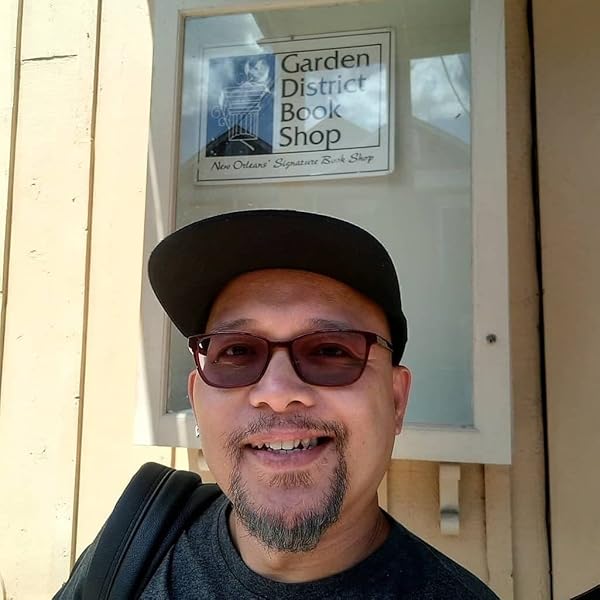
Take My Hand follows a guidance counselor grappling with her own identity and desires while navigating the dangers of a magical realm. Where did the idea for this novel come from?
Initially, I wanted to write a sapphic paranormal romance involving the girl briefly introduced at the end of Take Me Now. However, as I began writing, I realized I wasn’t ready to do the character justice—I felt I needed to read more sapphic fiction to ensure the voice felt authentic and true.
So, I started from scratch and went back to my roots as a coach in my corporate career. From there, Trina took shape. As the story developed, I also felt compelled to write the novel from two points of view, which meant giving Robert a substantial and credible voice—one that could mirror and challenge Trina’s doubts, guilt, and struggles with identity and purpose.
How did you handle the magic in this story, and how did it evolve as you were writing?
For this second book, I wanted to focus on another type of magically gifted individuals I introduced, known as Cloakers. Without giving too much away, they are called this because of their ability to conceal their truest selves and adopt different personas.
Interestingly, before Trina became a guidance counselor, she was originally conceived as a female hitwoman who simply found herself in the wrong place at the wrong time. I’m glad I changed that direction. It allowed me to concentrate more deeply on expanding the world of the Dark District that I introduced in my earlier novellas, Sojourn and Take Me Now, both of which are compiled in the Silver Book Award–winning duology, Dark District Primer.
The female hitwoman may still appear in future stories. Never say never, I say.
What were some themes that were important for you to explore in this book?
The themes of self-discovery and identity became central as Trina’s backstory evolved. Initially, I was drawn to how compelling her power was, but it soon felt necessary to impose a cost for her repeated use of it. Her struggles with self-identity and self-esteem became the most logical place for that toll to manifest.
I tried to inhabit Trina’s inner world as honestly as possible, ensuring that the experiences she goes through would meaningfully change her by the end of the novel. At the same time, I wanted the story to remind readers that vulnerability—especially when we share our true selves with others—always comes with risk.
Ultimately, I hope the book encourages compassion, both toward others and ourselves. I dedicate it to those still searching for who they are, and to those brave enough to cherish the people who walk that journey with them.
Can you give readers a glimpse inside Book 3 of the Dark District series? When can we look forward to seeing it released?
While each book in the Dark District series stands on its own, I enjoy letting characters make brief appearances across the novels to reinforce the sense of a shared universe. These cameos are designed to enhance cohesion without requiring readers to have read the previous books, allowing the series to be enjoyed either as standalone stories or chronologically.
Book 3 will focus on Trina’s best friend, Andrew De Silva, who moonlights as a finder of magical objects while maintaining his day job as a history professor at the country’s oldest pontifical university. He has a loud, chatty personality, but like many in the Dark District, he carries secrets and unresolved issues of his own.
The story will also introduce Robert’s side of the family, expanding the world further with a new lineage and a new branch of magically gifted individuals. I’m currently working on the book and targeting a 2027 release.
Author Links: GoodReads | X (Twitter) | Facebook | Website | Amazon
Mostly, she has the perfect job of sowing the seeds of empathy & understanding by being a guidance counselor at the Forrester Arts College in the magically cloaked community known in Manila called the Dark District. She is beloved by students and has a killer body to die for and to covet.
She had everything figured out until she met Robert Samaniego, the new English professor joining them this term.
With a new semester, a new batch of students to mentor, a new distraction on campus, on top of maintaining a lifelong secret that can unravel at any moment if she doesn’t watch herself, can Trina hold it all together?
Or perhaps the Universe heard her prayers and sent someone to give direction and focus to the life that she thought she was living perfectly.
Someone to hold and protect her.
Someone to share and accept her secret and her past.
Someone to be there for her and take…her…hand.
Literary Titan Silver Book Awards
Celebrating the brilliance of outstanding authors who have captivated us with their skillful prose, engaging narratives, and compelling real and imagined characters. We recognize books that stand out for their innovative storytelling and insightful exploration of truth and fiction. Join us in honoring the dedication and skill of these remarkable authors as we celebrate the diverse and rich worlds they’ve brought to life, whether through the realm of imagination or the lens of reality.
Award Recipients
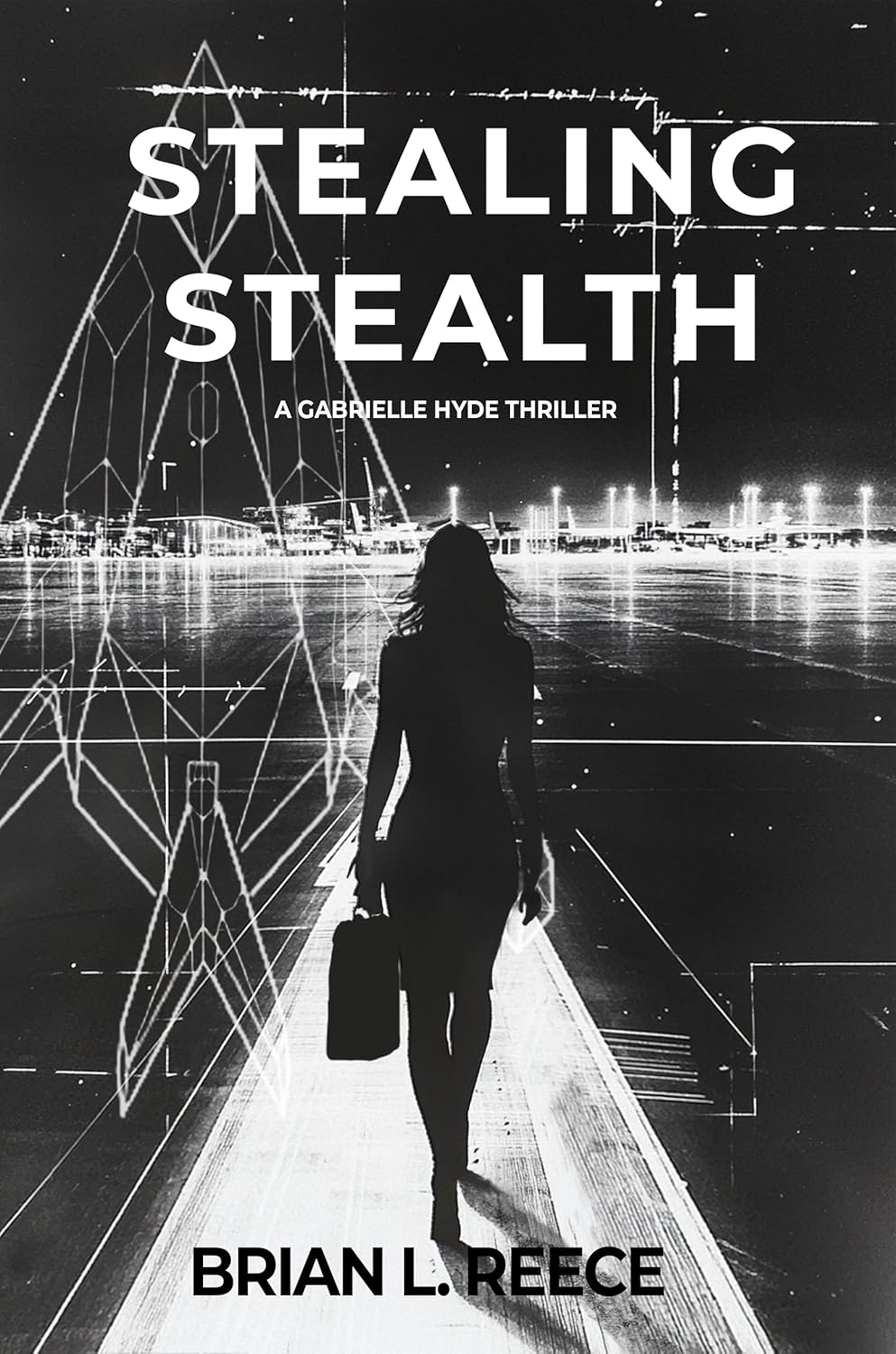

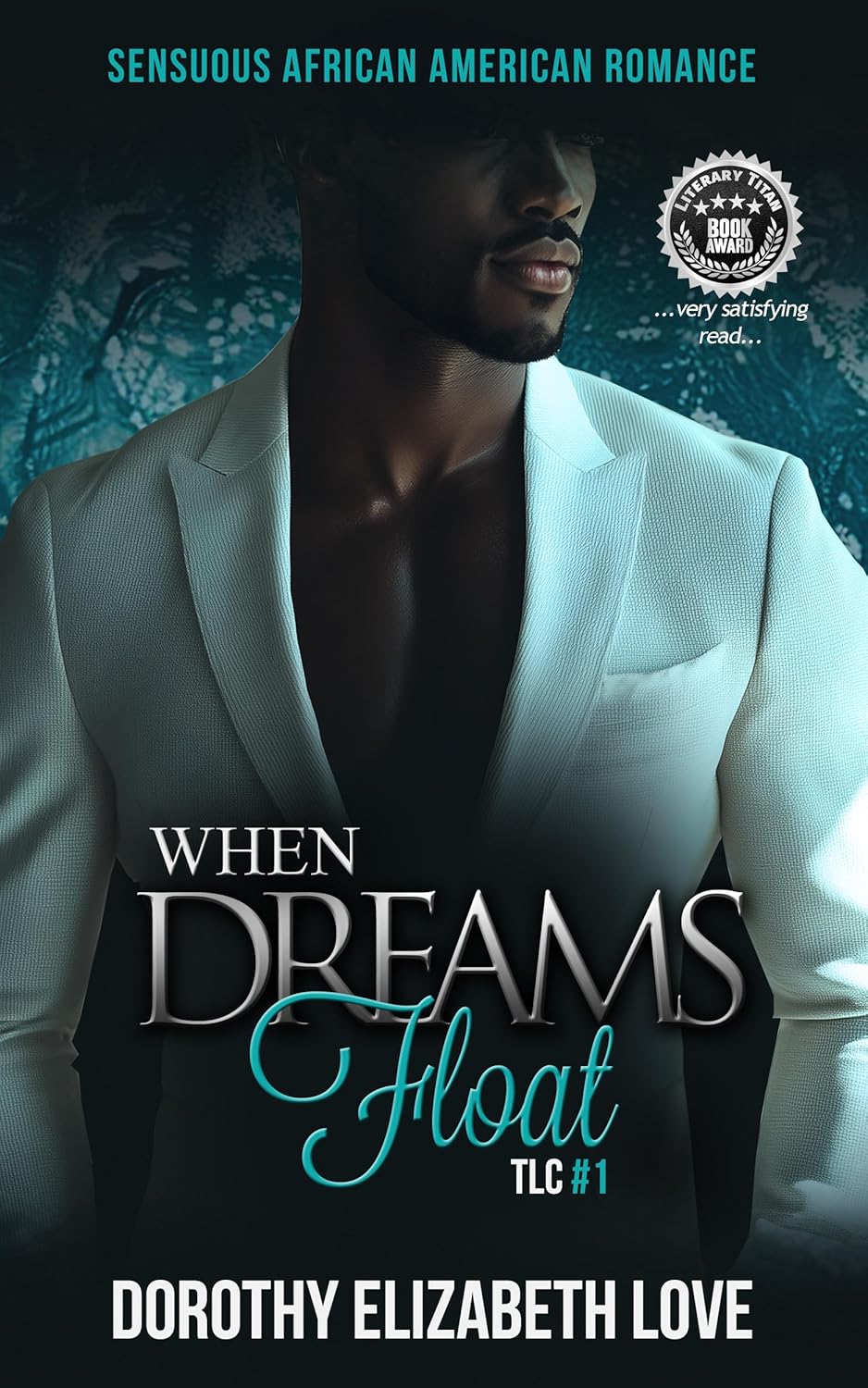






















Losing Mom by Peggy Ottman
This Is For MY Glory: A Story of Fatherlessness, Failure, Grace, and Redemption
Toil and Trouble by Brian Starr
Visit the Literary Titan Book Awards page to see award information.



 LITERARY TITAN