Blog Archives
Glee the Christmas Goblin


Glee the Christmas Goblin, by Emily Jones and Fernando Olivo, gives the familiar Christmas Eve rescue story a playful twist. When Santa’s elves hide the presents because they’re tired of watching children receive gifts, Santa turns to Glee and his fellow goblins for help. The goblins initially eye the toys as treasure for themselves, but reading about the children on the Nice List changes their thinking. It’s an easy-to-follow setup with enough mischief to make this children’s book feel lively from the start.
The story’s real appeal is Glee’s change of heart. Generosity becomes something he experiences, and the other goblins make that discovery alongside him. Their delight in building toys, fulfilling wishes, and traveling with Santa gives the message a cheerful sense of momentum. Young readers can see how doing something kind creates its own kind of happiness, while the goblins’ impulsive personalities keep the lesson lighthearted.
The rhyming text is simple and direct, with short passages that should work well when read aloud. Santa’s worried reindeer, the rebellious elves, and the arrival of whole hordes of goblins give the plot an entertaining storybook bustle. The language places the theme front and center, particularly in the closing idea that taking fills pockets while giving fills hearts. That’s a memorable way to sum up the book’s view of generosity.
Rodrigo Magella’s illustrations make this picture book bright, busy, and warmly comic. Saturated reds, greens, and blues create a strong Christmas atmosphere, while the characters’ enormous shining eyes and exaggerated expressions make every emotion immediately clear. Fun background details, including scattered presents, toy-making goblins, cookie jars, and reindeer wearing name collars, reward a closer look. The parchment-style text panels also keep the rhymes readable without separating them from the action, giving the whole book the feel of an animated holiday special.
Viaje de Autodescubrimiento

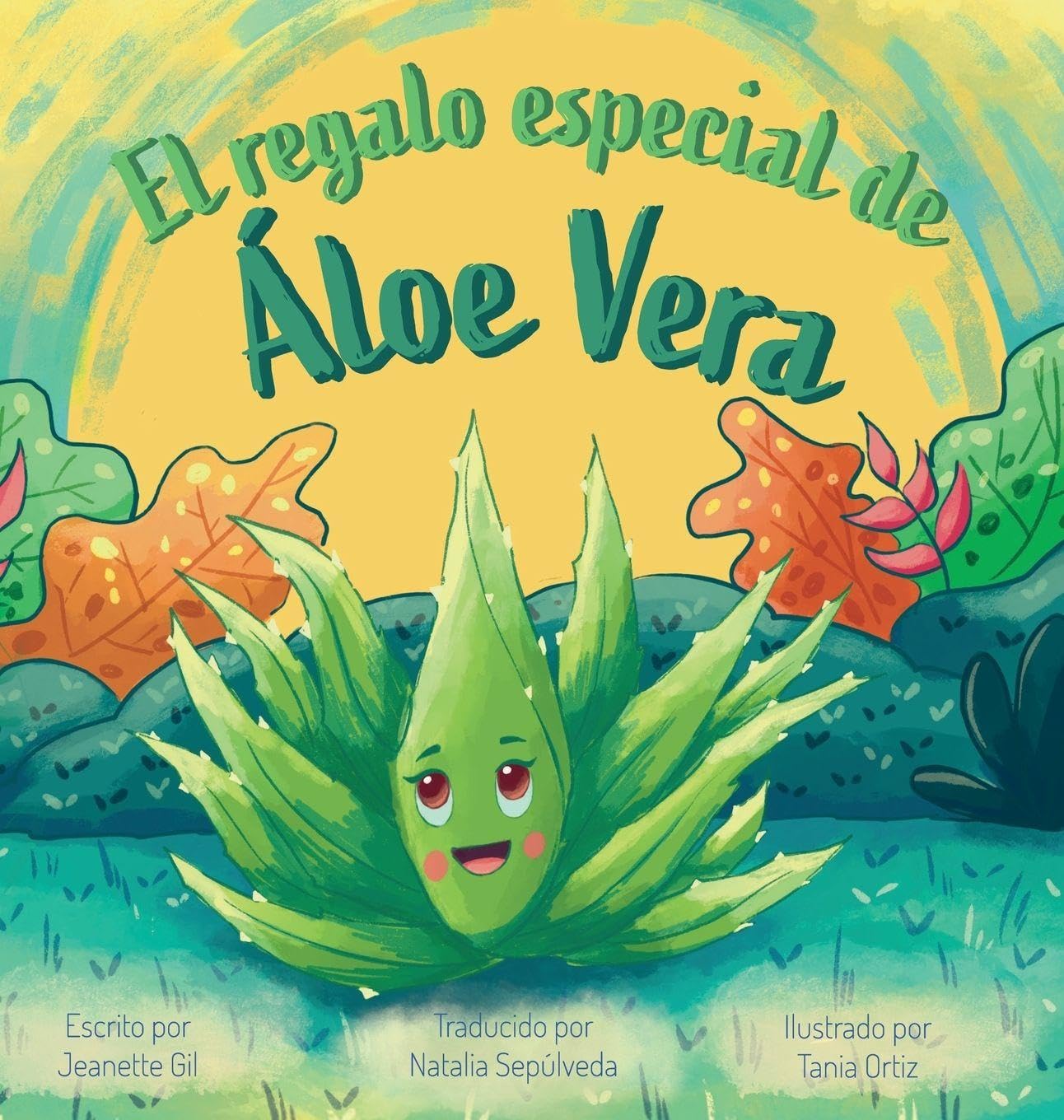
El regalo especial de Áloe Vera sigue a una pequeña planta que, al compararse con las coloridas flores de su jardín, emprende un dulce viaje de autodescubrimiento hasta comprender que su mayor regalo siempre estuvo en su interior. ¿Qué la inspiró a convertir una planta de aloe vera en la protagonista de una historia sobre autoestima y aceptación personal?
La inspiración nació de algo muy sencillo y cercano a mí: el jardín y la manera en que los niños, al igual que las plantas, crecen a su propio ritmo.
El aloe vera no es necesariamente la planta más colorida ni la que primero llama la atención en un jardín. No tiene los pétalos brillantes de una flor, pero posee algo extraordinario en su interior. Esa idea me pareció una metáfora hermosa para hablar con los niños sobre la autoestima, la identidad y el valor personal.
Como madre, abuela y educadora, he visto cuán temprano los niños comienzan a compararse con los demás. Quería crear una historia que les recordara que no necesitan parecerse a nadie más para tener valor. A veces aquello que nos hace diferentes es precisamente lo que algún día se convierte en nuestro regalo más especial.
¿Por qué decidió mostrar el descubrimiento del valor de Áloe a través de la ayuda que brinda a los animales del jardín?
Quería que Áloe descubriera su valor a través de la experiencia, no porque alguien simplemente le dijera que era especial.
A medida que puede ayudar a los animales del jardín, comienza a comprender que aquello que antes veía como una diferencia tiene un propósito. Para mí era importante mostrar que nuestros dones adquieren un significado aún mayor cuando podemos utilizarlos con bondad y para ayudar a los demás.
Los animales también hacen que ese descubrimiento sea mucho más accesible para los niños pequeños. Cada encuentro permite que el mensaje se revele poco a poco, de una manera natural y afectuosa.
Al final, Áloe no tiene que transformarse en otra cosa. Sigue siendo exactamente quien siempre fue; lo que cambia es la manera en que logra verse a sí misma.
¿Cómo trabajó el equilibrio entre el mensaje educativo del libro y la necesidad de mantener la historia divertida y accesible para los niños pequeños?
Siempre quise que El regalo especial de Áloe Vera fuera, ante todo, una historia que los niños disfrutaran.
Mi formación como educadora influye naturalmente en mi escritura, pero no quería que el libro se sintiera como una lección. El aprendizaje debía surgir de la historia, de los personajes, de las emociones y de las experiencias de Áloe.
Por eso utilicé un jardín lleno de vida, animales, pequeños momentos de descubrimiento y situaciones que los niños pueden comprender fácilmente. Los conceptos de identidad, autoestima, empatía y propósito están presentes, pero se encuentran integrados dentro de la aventura.
Creo profundamente que los niños pueden explorar ideas importantes cuando les damos historias que les permitan sentirlas antes de tener que explicarlas.
También me encanta que la conversación pueda continuar después de terminar el libro. Un padre, maestro o cuidador puede preguntar: “¿Cuál crees que es tu regalo especial?” y, de pronto, una historia se convierte en una oportunidad para que el niño piense sobre quién es.
Las estaciones y los cambios del jardín refuerzan de manera muy bonita el mensaje de la historia. ¿Qué importancia tenía para usted incluir ese elemento?
Era muy importante porque el jardín representa crecimiento.
En la naturaleza, nada florece todo el tiempo ni todo crece de la misma manera. Hay temporadas de cambio, de espera, de crecimiento y finalmente de descubrimiento. Quería que el mundo alrededor de Áloe reflejara también su transformación interior.
Los niños están creciendo constantemente, aunque ese crecimiento no siempre sea visible. Sus intereses cambian, desarrollan nuevas habilidades y comienzan poco a poco a descubrir quiénes son.
Las estaciones me permitieron transmitir ese mensaje de una manera muy orgánica: no tenemos que apresurarnos para florecer ni compararnos con alguien que se encuentra en una etapa diferente.
Cada niño tiene su propio tiempo, su propia manera de crecer y algo especial esperando ser descubierto.
Enlaces del autor: GoodReads | Website | Amazon
Un conmovedor libro ilustrado sobre la autoestima, el amor propio, la resiliencia y la magia de la naturaleza.Cuando Áloe Vera observa el jardín, ve flores radiantes y pétalos de todos los colores. A su lado, ella se siente sencilla y espinosa. Nadie parece notarla… hasta que un caluroso día de verano trae quemaduras de sol, raspones y picazón, y Áloe descubre que posee un regalo muy especial.
Al compartir el poder sanador de su gel con sus amigos del jardín, comprende una gran verdad:
aquello que la hace diferente también puede convertirse en su mayor fortaleza.
El regalo especial de Áloe Vera es un hermoso libro ilustrado que inspira a los niños a fortalecer la autoestima, el amor propio, la confianza en sí mismos y la inteligencia emocional. A través de una historia tierna y esperanzadora, los pequeños descubrirán que todos tenemos dones únicos y que la verdadera belleza nace de nuestro interior.
Imaginations Are Incredible

Lucy Lemondrop Dreams She’s a Mermaid follows a creative little girl who falls asleep at the beach and dreams herself into a sparkling mermaid tail and an underwater adventure. What inspired you to create Lucy Lemondrop and her underwater adventure?
I have a great-niece who just turned 1, Phoebe, who I hope learns to use her imagination, and I thought a mermaid adventure would be fun for her and all little girls. They can also learn about the ocean and the wonderful animals that live in it at the same time.
Imagination transforms an ordinary nap on the beach into an enormous adventure. Why was celebrating imagination important to you?
So many kids don’t get to really be kids anymore. With phones, game boxes, and computers, children are not using their imaginations like they should. I believe children should create adventures, dream, and pretend, not just be tethered to a machine that doesn’t inspire creativity. Children are wonderful, and their imaginations are incredible, but they need to use them to make their lives an adventure.
Beneath the mermaid adventure, what themes were most important for you to share with children?
When you dream, you can be anything you want to be. Dreaming and using your imagination gives you adventure, hope, encouragement, and confidence. And so many children don’t live by the ocean and don’t really think about the wondrous world and amazing creatures that live there. This book gives little ones insight into that world.
Do you hope the story encourages children to invent their own adventures after reading Lucy’s?
Absolutely. Children should be pretending to be a mermaid in a pool, or running around the yard on adventures as knights, princesses, pirates, and whatever else they can dream up. You only get to be a child once. It should be filled with wonderment, imagination, and adventures. That will help bring out their creativity.
Author Links: GoodReads | Amazon
Travel through the sea with Lucy, and dream.
Leon the Chameleon

Leon the Chameleon follows a little green chameleon who loves changing colors, even when his parents gently tell him that changing is meant for moments of danger. Restless and curious, Leon runs away and spends months shifting into every shade around him, only to discover that all this constant disguising has left him feeling strangely lost. When he finally returns home, expecting shame, his parents meet him with tenderness instead, reminding him that his true color has been inside him all along.
On the surface, this is a sweet tale about a chameleon learning to be himself, but underneath that, it speaks to something much deeper: the way children sometimes try on different versions of themselves, hoping to be seen, admired, or safe. I liked that the book doesn’t punish Leon for wanting to explore. His curiosity feels natural. His sadness, when he realizes he has become a stranger to himself, feels tender and real. The writing has a lyrical, old-fashioned storybook quality, with rhymes that mostly carry the reader along gently.
The artwork is where the book really breathes. Vivien Sárkány’s illustrations have a soft, dreamy quality, full of leafy greens, glowing oranges, moonlit blues, and tiny forest creatures tucked into the corners. I loved how the colors mirror Leon’s inner life. The brighter pages feel playful and almost fizzy, while the darker, nighttime scenes bring a hush that makes his return home feel safe and intimate. There are spreads I can imagine a child looking over, pointing out snails, frogs, monkeys, and the curve of Leon’s tail. The visual world feels magical.
Leon the Chameleon is a heartfelt picture book about identity, belonging, and the relief of being loved even after you’ve wandered far from yourself. I appreciated its softness, its emotional honesty, and the way it trusts children to understand a big idea through a simple forest fable. I’d recommend it for families with young children who are sensitive, imaginative, or going through a phase of figuring out who they are, and especially for parents who want a bedtime story that opens the door to a gentle conversation about self-acceptance. It left me with the warm feeling that home, at its best, is the place where someone still knows your name.
Pages: 31 | ASIN: 1969499028

Little Bear Betty

Little Bear Betty by Betty Pasghetti is a sweet and energetic children’s book about a little bear who loves spaghetti but has trouble saying the word correctly. Betty’s family even calls her “Betty Pasghetti” because of the way she pronounces her favorite food. What begins as a playful family joke turns into a small but meaningful challenge for Betty when she decides she really wants to learn how to say “spaghetti.” The book keeps that goal simple and easy for young children to follow, while giving Betty plenty of personality along the way.
Much of the story follows Betty as she runs through the forest to find Papa and her brother Teddy before dinner. Along the way, she stops to talk with friends and neighbors, and her mispronunciation keeps coming up in funny, affectionate ways. The turning point comes when Mr. Blandings, a wise old turtle, teaches her to break the word into smaller sounds and practice them slowly. That scene gives the story more substance than a simple joke about a funny word. Young readers see Betty struggle, practice, improve, and finally experience the excitement of getting something right after working at it. The lesson feels especially natural because it grows directly out of Betty’s adventure.
The illustrations by Sunkies Illustration are a major part of the book’s charm. Betty is drawn with big expressions that make her excitement, embarrassment, determination, and pride easy to understand even before the words are read aloud. The forest is bright and inviting, with soft greens, warm browns, sunny skies, flowers, winding paths, and friendly animal characters filling the pages. I especially liked the sequence on pages 16 through 18, where Betty and Mr. Blandings practice “spa,” “get,” and “tea.” The panel-style artwork makes the pronunciation exercise feel visual and playful. Later, when Betty finally shouts “SPAGHETTI!” on page 30, the oversized lettering, confetti, and her raised arms make the moment feel like the celebration it is.
What makes Little Bear Betty work well as a read-aloud is the combination of repetition, humor, family warmth, and a very relatable accomplishment. Kids often have words they can’t quite pronounce or skills that take several tries, so Betty’s victory is easy to understand. The ending brings everyone together around the dinner table, where her family cheers for her and Papa reminds her to keep trying and believe in herself. The book also includes a fun fact page about Blanding’s turtles and a coloring page, which extend the experience after the story ends. Overall, it’s a cheerful story about persistence, learning through practice, and the joy of finally mastering something that once felt difficult.
Pages: 36 | ASIN: B0HG25QT1J
Literary Titan Gold Book Award: Fiction

The Literary Titan Book Award honors books that exhibit exceptional storytelling and creativity. This award celebrates novelists who craft compelling narratives, create memorable characters, and weave stories that captivate readers. The recipients are writers who excel in their ability to blend imagination with literary skill, creating worlds that enchant and narratives that linger long after the final page is turned.
Award Recipients


















The Voice of Cuba by Amarilys Rassler
Visit the Literary Titan Book Awards page to see award information.
Literary Titan Gold Book Award: Children’s Books
The Literary Titan Book Award recognizes children’s books that mesmerize audiences with incredible narratives, vibrant illustrations, charming characters, and fresh ideas. Offering well-earned accolades, we salute the imagination and exceptional skill of authors who create tales that spark curiosity and delight in young minds.
Award Recipients







True Hens Of Kentucky by Don Key
Visit the Literary Titan Book Awards page to see award information.
Literary Titan Silver Book Award

Celebrating the brilliance of outstanding authors who have captivated us with their skillful prose, engaging narratives, and compelling real and imagined characters. We recognize books that stand out for their innovative storytelling and insightful exploration of truth and fiction. Join us in honoring the dedication and skill of these remarkable authors as we celebrate the diverse and rich worlds they’ve brought to life, whether through the realm of imagination or the lens of reality.
Award Recipients


















ȚEPEȘ: VLAD III DRACULA by Sebastian Valerius
Out of the Water by K Browning
The Galaxy of Kon-Ki: Waking on Earth by Colin Nimer
Visit the Literary Titan Book Awards page to see award information.


