Blog Archives
Why Are You Sick? (Audiobook)
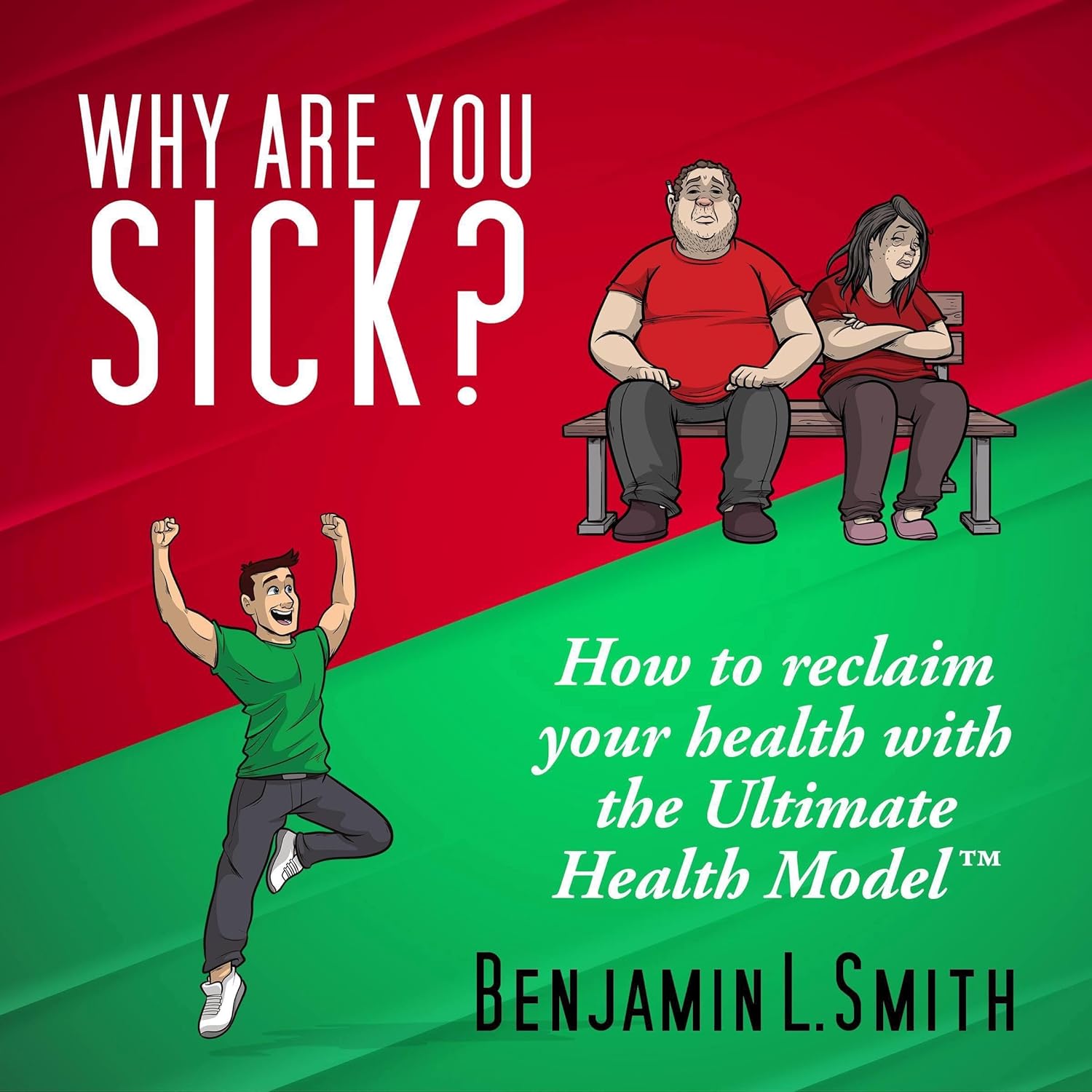

The audiobook starts by pulling back the curtain on the lies and myths we’ve all been fed about health. From the first chapter, the narrator makes it clear that this is not another fad diet manual or a magic-pill promise. Instead, he introduces what the author calls the Ultimate Health Model™, a framework that connects cellular health with lifestyle factors like breathing, sleep, water, food, movement, environment, and even thoughts and feelings. He threads personal stories of loss, his own health struggles, and years of research into a narrative that pushes the reader to think differently about sickness. By the end, it feels less like a lecture and more like a wake-up call to reclaim agency over our bodies.
Listening to the audiobook, I found myself reacting in waves. At times, I was nodding along with genuine excitement, especially when Smith explained concepts like structured water or the overlooked role of chronic dehydration. The narrator’s voice is soothing but carries conviction, which makes the listening experience feel calming and informative. The narrator’s passion kept me engaged, and I couldn’t help but admire the author’s dedication to challenging the status quo.
The mix of narrators, Gillian Williams, GM Hakim, Tom Wayland, and Rachel Sloane, keeps the audiobook lively and dynamic, each voice adding its own energy and tone, and hearing directly from the author himself makes the experience feel even more personal and authentic.
The book feels personal. Author Benjamin Smith shares stories of losing loved ones to cancer, his own battles with asthma and fatigue, and the frustration of watching mainstream medicine ignore what he sees as obvious connections. That vulnerability gave weight to his arguments. I also liked how he broke up serious topics with humor, casual asides, and even a few sharp words. It made the audiobook feel conversational. It was heartfelt and, at times, surprisingly inspiring.
I’d recommend Why Are You Sick? to anyone who feels stuck in their health journey and wants a fresh perspective. It’s not an audiobook for someone looking for a rigid plan or a neat list of do’s and don’ts. It’s more for the curious, the frustrated, and the open-minded listener who’s willing to sift through bold ideas, personal stories, and unconventional advice to find what resonates. If you like your audiobooks passionate and provocative, this one might be exactly what you need.
6 Hours and 22 Minutes | ASIN : B0FN4S3DMB

Digital Stressors

Anxiety Reset 30 Days to Find Calm is a structured 30-day guide to understanding and managing anxiety based on science-backed strategies to assist readers in identifying patterns and mastering self-regulation techniques. Why was this an important book for you to write?
The city that I live in has the youngest average population age in Canada. Also, the highest suicide rate. This comes along with depression and anxiety. Initially, I wanted to help children, but I realized that children learn by mirroring their parents. Thus, I needed to write an anxiety book for adults, not in a lazy way, and also doing something that other books in the genre are not doing.
How much research did you undertake for this book, and how much time did it take to put it all together?
Great question, it took many months of research and around 23 updates leading to the current version available on Amazon. It has been a second full-time job on top of my regular day job. My 3-week vacation this year was almost entirely spent on the book in some component of its updating/advertising, etc.
What were some ideas that were important for you to share in this book?
The idea that we have not evolved to deal with all the modern-day digital stressors and combined inputs that the world demands our attention/focus. Even when grieving, there are so many triggers that our ancestors never faced. Digital Pictures, radio music, connected yet disconnected friends.
What is one thing that you hope readers take away from Anxiety Reset 30 Days to Find Calm?
Any tool that they find beneficial. I realize that most people may not have the energy or time to complete the full 30 days; however, using the summaries at the back and emergency regulation sheets, the chances are high that someone finds a tool that improves their life or someone in their circle’s life. That is a win for me and for humanity.
Author Links: GoodReads | X (Twitter) | Facebook | Website | Amazon
Anxiety overwhelms body and mind, impacting millions of adults in today’s chaos. Anxiety Reset: 30 Days to Find Calm delivers a science-backed, 30-day program tailored for busy adults—a 463-page workbook with narrated pages, relaxing videos via scannable QR codes, and emergency relief cards for instant support.
Inside: • 4-part system to build skills daily • Practical exercises for adult life • Emergency relief techniques and cards • Flexible, schedule-friendly practices • Advanced resilience strategies
What Sets It Apart: Combat workplace stress and digital overload with neuroscience and psychology, enriched by color illustrations, tracking sheets, and multimedia—every page narrated, with day-specific video QR codes.
Your 30-Day Journey: • Days 1-5: Unravel Your Anxiety Triggers • Days 6-10: Master Emergency Techniques • Days 11-20: Cultivate Daily Calm • Days 21-30: Achieve Lasting Mastery • Bonus: Quick-reference guides
Ideal for professionals, parents, or anyone seeking clear, comprehensive tools. Launch your reset today and take control of your emotional well-being!
Always Swing

In Open Water, you share the details of your difficult upbringing, your struggles with mental health, and the mysterious medical condition that ultimately changed your life. What inspired you to share your story with readers?
The goal in writing this book was and is still to help others in any way possible. That could mean just being able to spread awareness of this condition in hopes of eventually finding a cure for people, or also hopefully preventing others from having to go down the dark road that I did in order to find an answer. I am also hopeful that this could reach people or their families with this specific disorder or any other similar diagnosis and make them feel less alone and let them know that there is always hope.
I appreciated the candid nature with which you told your story. What was the hardest thing for you to write about?
I think that while it was honestly quite difficult and emotional to revisit some of those darker places and times, like my stay in Haliston Hospital, the hardest thing about writing all of this was honestly emotionally reconciling all of the difficult family aspects of this and coming to terms with the best way to tell the story 100% truthfully while telling of some of the more difficult moments with family and people that I will always love dearly!
How important was it for you to convey a sense of hope to your readers?
That sense of hope is absolutely critical. Getting through my own struggle or any even remotely similar, requires understanding that there is always hope and you can always persevere no matter what. I can’t think of a more important message to get across and I very much aim for that sense of hope to be something that readers definitely take with them.
What is one thing you hope readers take away from your experiences?
As all of these answers hopefully suggest, raising awareness for this disorder, as well as being able to help others in anyway possible are certainly the main goals. As far as a take away that I would love to be able to relay? Always persevere, always try to press on no matter what, and using the metaphor in the book, always swing, knowing that there is always hope.
Author Links: GoodReads | Facebook | Amazon
Open Water details that journey and communicates many of the lessons that he learned from it and hopes others can benefit from as well. The goal is to ensure that those who might be dealing with similar conditions never have to feel as darkly alone as he did at times, going through his own many-years-long search for a diagnosis and learning to live with a disability. Alex stresses that if reading this can help just one person going through anything even remotely similar to what he went through to feel less alone or desperate or afraid, it will all be worth it to him. He hopes that any such individual’s family or close friends are able to process and understand better what is happening as they move forward as well.
The title, Open Water, is a visual comparison carried throughout the story. Like open water, life can be absolutely beautiful and sometimes terrifyingly stormy as well, with moments when the only choice is just trying to swim and stay above the surface. Times of relative serenity still bring with them the fear of the unknown, not knowing what lies below the murkiness around us. The only thing to do is keep pressing on in hopes of eventually finding clarity.
Self-Care for the Creative: A Survival Guide for Creatives, Empaths and Highly Sensitive People
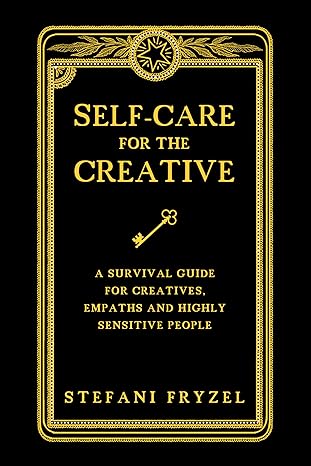
Self-Care for the Creative is part memoir, part survival manual, and part pep talk for empaths, highly sensitive people, and artists who are burning themselves out in pursuit of their craft. Fryzel draws on her own life of gritty lows, career highs, and all the messy middle, to explain how sensitivity and creativity often walk hand in hand, and why that combination demands intentional care. The book blends personal stories, practical tips, and a hefty dose of humor to guide readers through setting boundaries, managing overwhelm, and building a self-care toolkit that actually works in the unpredictable life of a creative.
Fryzel writes with a voice that is equal parts tender and unapologetic. She’s funny without being flippant, and her swearing isn’t there for shock value; it’s exactly how a real conversation with her would sound. I appreciated that she never veered into airy, vague “just love yourself” territory. Instead, she gave concrete, actionable steps, all while weaving in stories that made me laugh, wince, and occasionally nod in recognition. That mix of vulnerability and authority made me trust her completely.
What I liked most was how well she captures the emotional reality of being both highly creative and highly sensitive. She doesn’t romanticize the struggle or paint it as a necessary price for great art. She calls out toxic patterns, talks openly about depression and burnout, and reminds the reader that martyrdom isn’t a badge of honor. At the same time, she treats sensitivity as a superpower worth protecting. Her framing felt liberating, especially for those of us who have been told our feelings are “too much” for as long as we can remember. The book also gave me a few new self-care strategies that I immediately wanted to try.
I’d recommend this book to any creative who feels overwhelmed, stuck, or simply too drained to make their best work. It’s especially powerful for empaths and highly sensitive people who haven’t yet learned how to protect their energy without shutting down their gifts. If you’ve ever felt like your art is costing you more than it’s giving back, Fryzel’s words might just be the reminder you need to step back, take a breath, and start taking care of the most important tool you have… yourself.
Pages: 369 | ASIN : B0CLK5HRQ8
Letting Go

Inner Clarity is a gentle yet powerful guide to releasing emotional baggage and rebuilding an intentional, grounded life. Why was this an important book for you to write?
Most self-help books push you to do more—add habits, chase goals, hustle harder. But I’ve learned that real growth starts with letting go. Inner Clarity is the book I needed years ago: one that helps you first release what’s weighing you down (self-doubt, people-pleasing, resentment) so you can build a life that feels authentic and unforced. It’s not about quick fixes; it’s about lasting change rooted in self-awareness and compassion. Readers often share that it feels like a conversation with a wise friend—structured enough to guide them, but flexible enough to meet them where they are.
What personal experience or turning point inspired you to write Inner Clarity?
The book began as private notes I’d scribbled over 17 years—questions, realizations, and small breakthroughs about my own emotional patterns. Over time, I noticed how freeing it was to name those patterns (like my need for control or fear of judgment) and then actively release them. When my notes grew into a system—Part 1 for letting go, Part 2 for rebuilding—I realized this could help others too. The chapters are distilled from my own trial and error, so they’re practical, not theoretical.
Were there any chapters that were especially difficult for you to write emotionally?
No single chapter was emotionally difficult, but structuring the book was a real challenge! With 34 chapters, I wanted each to stand alone and fit into the broader narrative. Readers can start anywhere—maybe they’re drawn to “Overthinking” today and “Gratitude” tomorrow—but the themes needed to feel cohesive. It took careful editing to keep the tone consistent (warm but direct) and ensure every chapter’s exercises felt actionable, not overwhelming.
How do you balance introspection with actionable steps when guiding readers through such personal territory?
Each chapter follows the same rhythm: insight → action. For example, if you flip to any chapter, you’ll first explore and understand the trait and then understand why it needs to go or why it matters, then immediately get a step-by-step guide to overcome it or cultivate it.
Since readers might start with any chapter, I made sure every chapter includes both the “why” and the “how,” so no one feels lost. The goal is to meet you where you are, whether you’re ready to release a burden or cultivate a new strength.
Author Links: GoodReads
Before you can rise, grow, or become — you must first let go.
Inner Clarity invites you on a powerful inward journey — one of emotional release, mindset renewal, and rediscovery of your most grounded, authentic self.
This transformative guide is divided into two parts across 34 concise, insightful chapters, each filled with timeless wisdom, powerful quotes, relatable examples, and step-by-step practices that make change feel achievable and real.
🌀 Part 1: Letting Go of Inner Burdens
Uncover and release the emotional patterns and hidden beliefs that keep you stuck:
• People-pleasing
• Attention-seeking
• Fear of judgment
• Victim identity
• Overthinking
• Need for control
• Negativity and resentment
Each chapter in Part 1 follows a consistent and actionable structure:
→ Understanding the Trait
→ Why It Needs to Go
→ How to Overcome It (Step-by-Step)
→ Try This Today
→ Reflection Prompts
→ Final Thought to Remember
🌱 Part 2: What to Build Within
Begin to nurture the traits, principles, and inner strengths that support a more meaningful life:
• Authenticity
• Self-confidence
• Resilience
• Gratitude
• Mindfulness
• Self-discipline
• Integrity
• Purpose-driven mindset
Each chapter in Part 2 is structured to help you grow with intention:
→ Understanding the Trait
→ Why It Matters
→ How to Cultivate It (Step-by-Step)
→ Try This Today
→ Reflection Prompts
→ Final Thought to Remember
Unlike many self-help books that focus only on external success or motivational boosts, Inner Clarity goes deeper — helping you gently release what no longer serves you, so you can grow from a place of freedom, not pressure. This isn’t about adding more to your life — it’s about unburdening what holds you back.
Inner Clarity isn’t about quick fixes — it’s about lasting transformation, built gently and powerfully from the inside out.
Whether you’re feeling lost, emotionally burdened, or simply ready for change, this book will meet you where you are and help you gently step into who you’re meant to be.
It’s also ideal for personal use, coaching sessions, self-discovery workshops, and even university-level courses on personal development or emotional well-being.
Start your journey toward clarity, emotional freedom, and inner strength — one chapter at a time.
Anxiety Reset 30 Days to Find Calm: A Self-Regulation Workbook for Busy Adults


Anxiety Reset 30 Days to Find Calm: A Self-Regulation Workbook for Busy Adults is a structured 30-day guide to understanding and managing anxiety. It blends science-backed strategies with practical exercises, moving step-by-step from identifying personal anxiety patterns to mastering self-regulation techniques. The book begins with self-assessment mapping triggers, physical symptoms, and thought patterns before teaching both in-the-moment relief skills and long-term habits. It covers modern stressors like digital overload, workplace pressure, and life transitions, offering tools for building emotional resilience. The program feels intentional, with each day adding a piece to an integrated framework, culminating in a personalized plan for ongoing calm.
What struck me most was how grounded and personal the approach feels. Many books on anxiety either drown you in theory or throw a list of tips at you without context. This one makes you slow down and really notice your own patterns, which was surprisingly emotional. I found myself reflecting more deeply than I expected and connecting dots between physical sensations, old thought habits, and the modern chaos that feeds them. It’s not preachy, and it doesn’t assume you can drop everything for two hours of meditation each day. It works with real-life, messy schedules and all.
The writing is clear, warm, and refreshing. I appreciated the mix of science explanations with relatable stories from people like “Sarah” and “Michael,” which made the material easier to connect with. Sometimes the number of exercises felt a little intense, especially if you’re already stressed, but that’s where the “do what you can” attitude helped. I also liked that it didn’t stop at symptom relief, it’s about rewiring habits and building resilience.
This book is ideal for busy adults who feel stuck in an ongoing cycle of stress and want something more than quick fixes. If you like practical structure but also want space for self-reflection, this will likely hit the mark. It’s a guide you can work through once, then revisit whenever life ramps up again, and it leaves you feeling not just calmer, but more in control.
Pages: 463 | ASIN : B0FH1SK85C

Irony is Overwhelming
Coming of Age in Retirement is a funny, thoughtful, and eye-opening memoir-meets-social-commentary about stepping away from a high-powered advertising career and fumbling through the uncertain terrain of retirement. Why was this an important book for you to write?
I was at the point in my life where I was trying to understand the intricacies of life in general and retirement life in particular. The more I thought about my existence, the less about it I understood. I was lost without my nearly 50-year career, my work-friends, the national TV commercials I wrote and directed, the production shoots that I executive produced, and my packed schedule that included more than 180,000 hours of work I had amassed. It wasn’t replaceable, and certainly not in an instant.
I took to heart the words of the Buddha, who said, “There is no path to happiness. Happiness is the path.” And that clicked with me. From that clickage came my new book, which is my path of revelation and enlightenment. I had heard time and again that the transition into retirement, for many, wasn’t as simple as it appears to be, so it was important for me to share my struggles, fumbles, and missteps in hopes that others might learn from my ineptitude.
What is one of the biggest misconceptions that social media and advertising try to convince people about retirement, and what is the fallout when the truth is revealed?
The misconceptions are so prolific, I barely know where to begin. But the takeaway for anyone, regardless of their age, is that the perceptions about retirement, in many shapes and sizes, are dictated to us — both positively and negatively — by advertising agencies and their employees, who, in many cases, are 25-year-olds. The irony is overwhelming that the impressions created about retirement are messages developed by juniors who know nothing about seniors. It’s sorrowful, but also damaging and damning. In my book, I prove this beyond any doubt.
So, what we have are either perceptions of retirement bliss, mostly in an effort to sell retirees something, either a product or a service, or retirement angst, also in an attempt to sell us something, but by way of fear of losing everything. There’s no effort to empower retirees, only a well-established effort to devour us.
There is prolific research that shows purposeful advertising impressions of seniors and the elderly to be incompetent, technologically incapable, lonely and sad, without purpose, and to be physically wrinkled, dotted with age spots, and even imagery of us drooling. This couldn’t be further from the truth. My retired friends, and I have hundreds of them, are probably in better shape than people I know who are half their age.
What were some ideas that were important for you to share in this book?
It’s difficult to whittle it down, but I think your Editor-in-Chief, Thomas Anderson, did an insightful job when he reviewed my book and wrote, “This isn’t a how-to. It’s not about finances and hobbies. It’s about getting honest with yourself. About reckoning with who you’ve been, who you might become, and what matters in the time you have left. For me, it was both a reality check and a relief.” I think that’s right.
And I also think we owe it to ourselves to be ourselves and not what we are supposed to be because of these myths and stigmas that surround seniors and the notion of what retirement is supposed to look like, which, incidentally, we think of as so American. In fact, most of what we know retirement to be is almost completely shaped by what retirement is in other countries and continents. I would also add that it’s important to find your path, not someone else’s, or some guidebook on how to retire happy. There’s no formula, no concoctions, and certainly no elixir that guarantees some sort of happiness spritzer.
What advice do you have for individuals approaching retirement or who have recently entered it?
Of course, the advice I’ve always given to people, whether it’s business advice, retirement advice, or matters of the heart, has always been, “Don’t take my advice!” That said, I will tell you that I’ve heard from dozens of people and reviewers who have received the ARC (Advanced Reader Copy) of the book that they wished they had read the book before they retired. I do remind them that it’s never too late.
Aside from the fact that this sounds swollen-headed, and I’m typically not that way, I would say read the book; there’s literally never been any book written about retirement the way this manuscript is written, and certainly nothing has ever been written about the history of retirement from the perspective of an ad man, the unblemished truth, supported by one fact after another, how our perceptions of retirement are not our own, and the notion of failure in retirement transitioning, my own, in such a raw and honest style.
Author Links: LinkedIn | Website

The Veil Breaker: Beyond Madness to Freedom

The Veil Breaker is a surreal and emotionally raw journey through mental collapse and spiritual rebirth, set against the backdrop of a dystopian world ruled by psychological manipulation and nanotech illusions. The story follows Marcus, a man caught in the ruins of a once-vibrant world, now shattered by war and the global rollout of CARLY, a mind-controlling simulation technology disguised as a solution to a mass mental health crisis. Through Marcus’s descent into madness and his struggle to reassemble his broken identity, the book becomes both a personal memoir of awakening and a broader call to question reality, authority, and the nature of healing itself.
The writing is fragmented in a way that mirrors Marcus’s own mind, and that’s part of its power. It doesn’t follow a predictable structure or clean arc, but it doesn’t try to. The rawness is deliberate. Some of the prose drifts into stream-of-consciousness, then suddenly snaps back with a chilling bit of clarity. That rhythm, messy, beautiful, unnerving, made it impossible to look away. And the emotional beats hit hard. Especially the scenes where Marcus confronts his inner voices, his past wounds, and the lies he’s told himself. I felt like I was in the room with him, holding my breath.
At times, though, the story weaved between allegory and reality in a way that left me spinning. I liked the ambition. This is a book with big things to say about love, pain, mental health, and the systems that try to fix us. There were moments when the metaphor got dense, and I wasn’t sure what was real anymore. It didn’t stop me from feeling it. In fact, some of the most powerful parts were when I stopped trying to “get” the book and just let it hit me. The message is clear: true healing means facing everything, even the ugliest parts of yourself, and choosing to love anyway.
This is not a book for someone looking for a casual weekend read. It’s heavy. It’s weird. It’s brilliant in parts and bewildering in others. But if you’ve ever been through real darkness, the kind that leaves you gasping for something true, The Veil Breaker might speak to you in a way few books can. I’d recommend it to seekers, to survivors of trauma, to anyone who’s had a brush with mental illness or spiritual transformation and wants a book that gets it. Not in a clinical way, but in a gut-punch, soul-lifting, what-the-hell-just-happened kind of way.
Pages: 114 | ASIN : B0FH717TC6


 LITERARY TITAN