Blog Archives
Sista, Can You Feel A Brother’s Pain?


Sista, Can You Feel a Brother’s Pain? is a deeply compassionate and spiritually grounded exploration of the hidden wounds many men carry from childhood into adulthood. The book weaves Scripture, lived experience, and the author’s years of ministry with incarcerated men into a guide that explains how unhealed trauma shapes identity, relationships, faith, and emotional expression. The heart of the message is clear and powerful. Men hurt. Men hide. Men hope. The chapters walk through silence, shame, verbal wounds, abandonment, generational cycles, and the long reach of emotional, physical, and sexual abuse. At the center of it all is God’s restorative love and the author’s call for understanding, accountability, and healing.
I kept pausing while reading because the writing lands with a kind of emotional weight that really resonated with me. The tone is warm and firm at the same time. I appreciated the way she confronts harsh truths without making the reader feel attacked. I found myself thinking about how many men really do move through life with silence wrapped around their pain like armor. The emotional rawness, the stories of boys treated like grown men, the confusion, the shame, the longing for safety. All of it stirred something in me. The simplicity of the language actually made the message sharper. Nothing felt dressed up. Nothing felt distant. It felt like someone sitting across from me telling the truth that everybody knows, but nobody says.
The chapters on emotional and verbal abuse spoke to me personally. The idea that a man can be well built on the outside but crushed on the inside felt painfully accurate. The writing made me think about how often we misinterpret withdrawal as arrogance or indifference. There is a lot of grace in these pages. A lot of patience. A lot of spiritual encouragement. At the same time, the author does not excuse harmful behavior. She keeps accountability right there on the table. I like that balance. It made the message feel honest. The prayers and reflection questions added a gentle rhythm that slowed me down and made me sit with what I had just read. I noticed how often the book circles back to hope. Even in the darkest chapters, there is this steady reminder that God sees what happened, knows what still hurts, and invites healing anyway.
I walked away moved and encouraged. I would recommend this book to women who want to understand the emotional landscape of the men in their lives, to men who are tired of pretending they are fine, and to anyone involved in pastoral care, counseling, or community leadership. It is also a meaningful read for people who simply want to love better and communicate with more understanding. The book feels like a bridge between worlds that rarely speak to each other. It shines a light on wounds that deserve attention, compassion, and truth so real healing can begin.
Pages: 78 | ASIN : B0GMLN6NJ3

The Wizard’s Apprentice
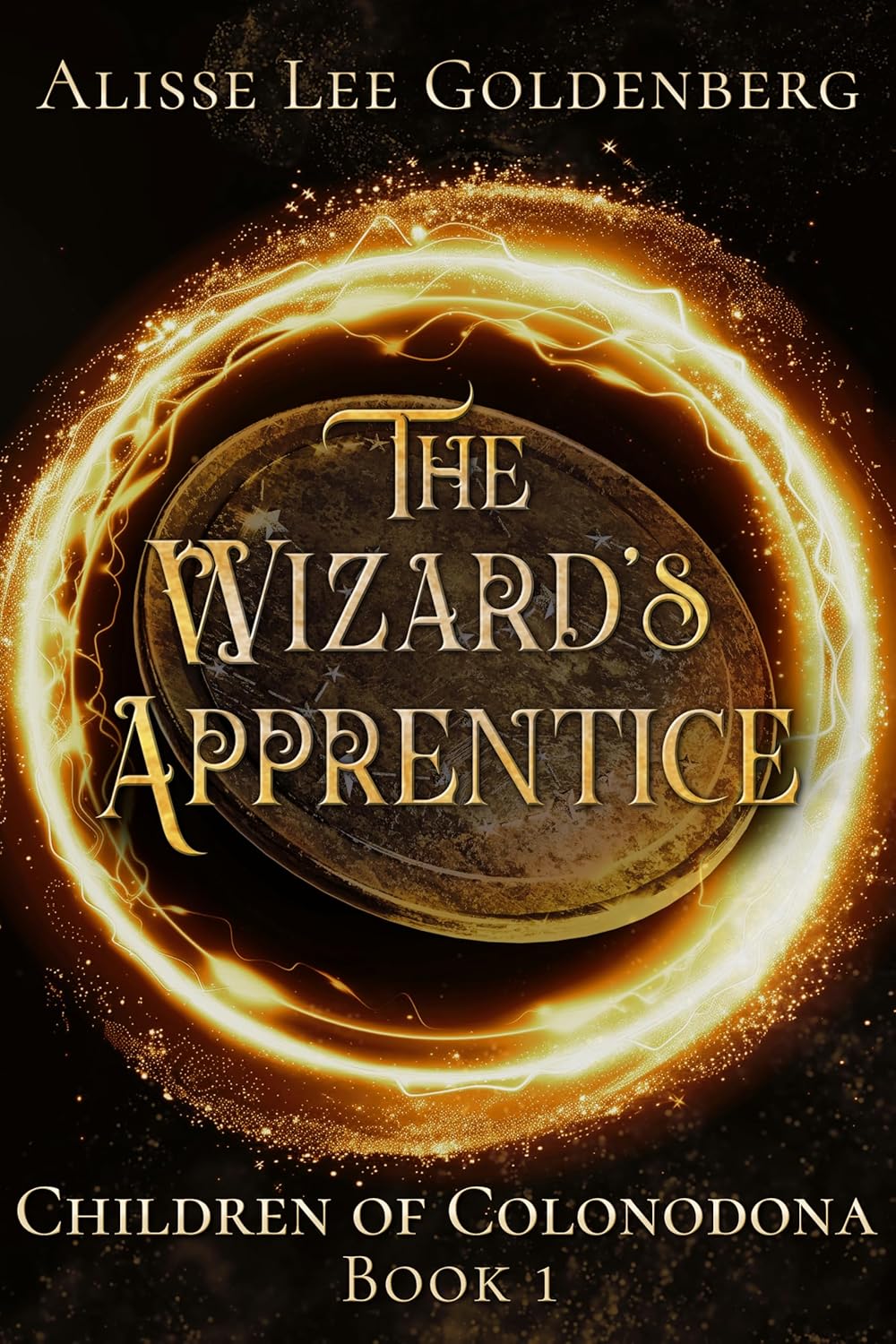
The Wizard’s Apprentice follows sixteen-year-old Prince Lucas of Colonodona as he studies magic with the sharp-tongued wizard Kralc and tries to live up to a heavy family legacy. Night after night, he relives a vision of his kingdom burning, a dream that feels far too real, while a mysterious girl named Lettie walks into the royal orchard claiming to search for her missing father and quickly wins the trust of Princess Audrina and Lucas himself. As the bond between this royal family and their guest deepens, secrets from past generations come to the surface, Kralc’s own hidden history matters more than anyone expected, and Lucas has to face the question that sits under every lesson and every nightmare. Is he the cause of the disaster he sees, or the one person who can stop it.
As a reading experience, I had a good time with this book. I liked the way the story keeps circling back to small, domestic moments in the castle, like breakfasts, walks in the orchard, and quiet scenes in Sitnalta’s salon, then lets those moments crack open into bigger tensions. The character work is the biggest strength for me. Lucas reads like a very believable teen boy, hungry for praise, prickly about being treated like a child, heart first and brain later. Kralc is gruff and very funny in that “I hate feelings, now drink this potion” way, and I enjoyed every scene where his care slips through his bad attitude. Audrina’s mix of entitlement, kindness, and cluelessness feels honest, and her attraction to Lettie has a real spark to it without ever being turned into a joke. The writing itself is clean and very readable. The author likes straightforward descriptions and clear dialogue, and that kept the pages moving. I felt the middle of the book slow a little because Lucas repeats the same pattern of doubt and defensiveness, and Lettie’s coyness about the truth goes on a bit long, yet I still turned the pages because I wanted to see this family finally sit down and tell each other everything.
The nightmare that opens the book is not just a spooky hook, it turns into a question about fate and choice, about what it means to see a terrible future and then decide how you will live with that knowledge. Lucas’ fear that he will be the one who burns his own home felt very raw to me, especially in a world where he has real power and no full control over it. The book also plays with class in a simple, clear way. Lettie carries the anger and shame of growing up poor and illegitimate, and when she walks into this kind, shining royal family it’s easy to see why she wants both love and payback. The story is also about legacy. Kralc’s bond with the dead Learsi and the magic coin that holds pieces of all three of them gives the ending a quiet, emotional punch. Their little conversation in the green field, and her message to Sitnalta, gave me that warm ache you get when a fantasy story lets its ghosts speak with love instead of just horror.
I would recommend The Wizard’s Apprentice to readers who enjoy classic, character-driven fantasy with a strong family focus and a light, hopeful tone. It feels right for teen readers who are ready for themes of grief, guilt, and complicated loyalty, and also for adults who grew up on older school series and want something familiar yet emotionally honest. The Wizard’s Apprentice reads a bit like Harry Potter and the Sorcerer’s Stone, with a young hero learning magic and facing a dark destiny, but it trades the bustling school setting for a more intimate focus on royal family drama and personal legacy. If you like training sequences, prickly mentors, messy siblings, and magic that always has a cost, this is a solid pick.
Pages: 290 | ASIN : B0GMK611PR
Forge New Paths

Goldie Bird follows an 11-year-old girl who copes with her sister leaving for college and her great aunt’s death on the same day, and navigates grief and loneliness, while searching for belonging. What was the inspiration for the setup of your story?
When a longtime friend read through my first draft of the book, she asked me what percent of Goldie was ME. I hadn’t thought that I was writing bits of who I was into my main character, but in looking back, how could I not? We write what we know, and fiction gives us the power to embellish our own experiences and forge new paths and outcomes. I have memories of traveling with my mother and siblings to lay my great-grandmother to rest. The backdrop to my story, the small town of Charlotte, Illinois, is a fictional place that takes much inspiration from bits of things and places that have meant something to me. My characters, too, have qualities that remind me of pieces of personalities and mannerisms of people I have known.
Goldie experiences multiple losses at once. Why was it important to layer those changes together?
Goldie must certainly have anticipated spending time differently with her mother once Elise would be at college. She never got to find out what that would be like, though, as the timing of her great aunt’s death and the events that followed changed the course of what Goldie had expected. I believe the compounded losses have a strong impact on Goldie as well as readers of the book—Goldie has much to overcome and figure out, and the pain is magnified by her own grief and her mother’s unavailability. Goldie must figure out how to navigate her days as she settles into her new place in her family.
Why weave in references to The Little Prince, and what does that story mean to Goldie?
Goldie’s first and subsequent encounters with Kip revolved around The Little Prince, a book assigned to Kip as a class project. Goldie had also read the book with her beloved sister before she left for college. The book serves as a connection to Kip and to Elise, but also, as the story progresses, to Goldie’s father, who highlighted part of the text before sending his copy of The Little Prince to Goldie. Goldie finds parallels with characters in the book as she explores her new relationships.
The “small world” realization near the end is powerful. Why was that moment important?
I believe Goldie’s discovery of who her father is showed her that we are always growing and changing, and when we are going through losses and challenges, there is also hope—and there are new, joyful discoveries waiting for us.
Author Links: GoodReads | Facebook | Website | Amazon
But when she joins her mother for a trip to Heritage where her late aunt lived, Goldie forms an unlikely friendship with Kip, a sweet boy with an infectious sense of adventure. Kip shows Goldie the carefree thrills of birch bending and secret caves where the two bond over common experiences and escape the complexities of the adults around them.
As she reluctantly returns to her life, Goldie must adjust to being a middle schooler as things at home become more challenging. Despite her deep love for her sister and mother, Goldie feels unsure of where she fits in their lives, forcing her to grapple with the bittersweet aspects of growing up and letting go of the way things used to be.
With her frequent letters from Kip and her new friend, Kate, by her side, Goldie tries to navigate all that comes her way on the quest for acceptance and belonging. In this timeless, coming-of-age novel, Goldie symbolizes the universal experience of deep familial connections, friendship, and self-identity.
Abducted
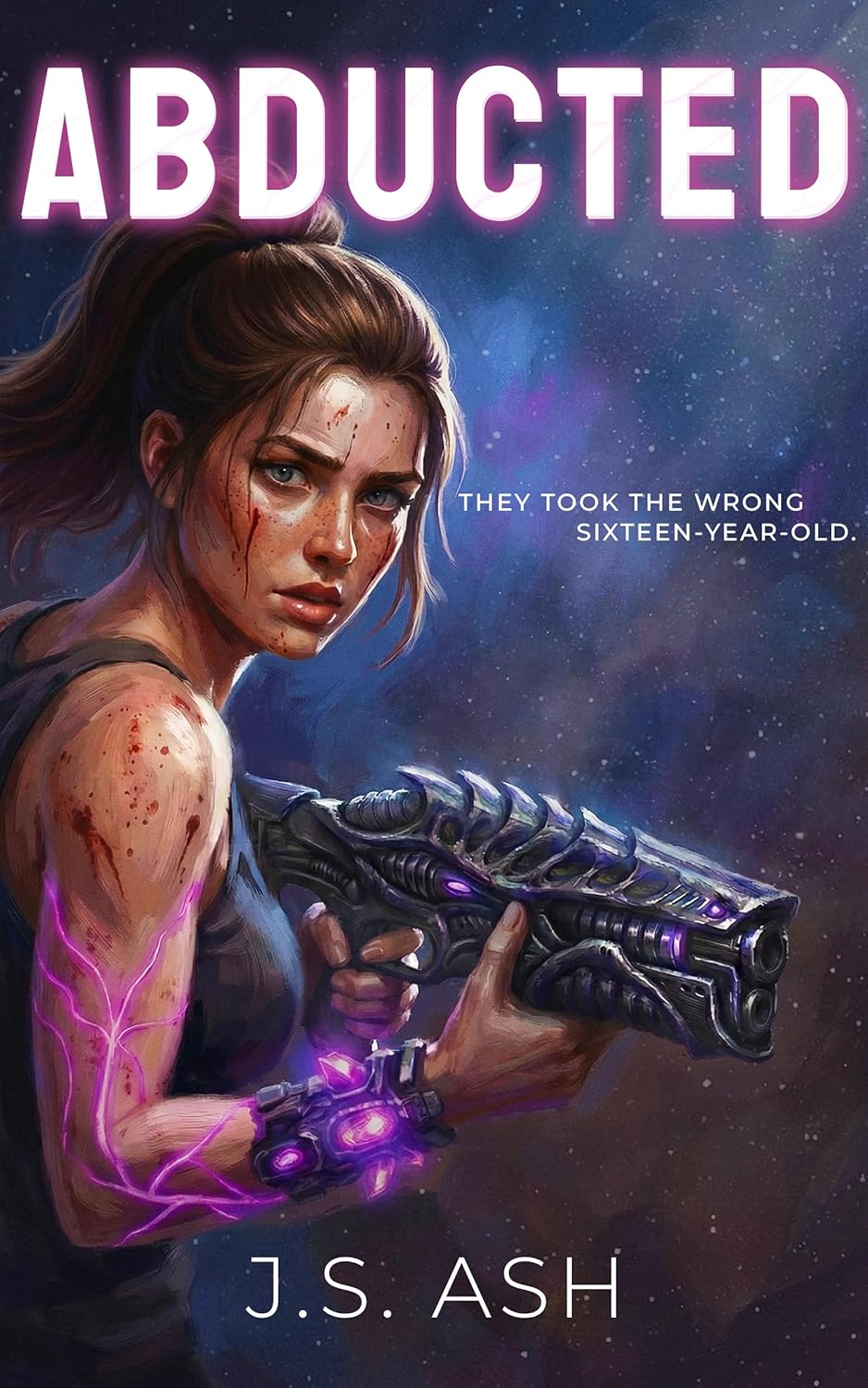

Abigail Ashby is sixteen, chronically grounded, and tired of being treated like an annex of her sheriff father, until the night she sneaks out to be there for her best friend, Harris Barnett, whose parents vanished and whose dad returned claiming an alien abduction. One reckless, emotionally tangled evening later, Abigail and Harris are pulled into something brutally literal: a living ship called The Beast’s Burden, built on an organism that has to “recharge” in Earth’s atmosphere, with a sadist named Phaust steering the cruelty. What follows is part survival-run, part rescue mission, part coming-of-age under fluorescent terror, Abigail clawing for agency while the people she loves become both ballast and blade.
I didn’t expect the opening to feel so teen-soap, with the sharp social pain, the humiliations, the almost-kiss interrupted at precisely the wrong moment, and then for the book to pivot and simply drop the floor out from under it. The contrast is the point: it’s not just “small town” versus “space,” it’s the way adolescent feelings already behave like an alien environment. When the sci-fi horror arrives, it doesn’t replace the emotional stakes; it weaponizes them. Even the recurring idea of instincts you’re trained to bury becomes a practical matter, not a motivational poster but something you either exhume in time, or you don’t.
My strongest reaction was how physical the danger feels. Slick membranes, crackling amethyst energy, the sense that the ship itself is an organism with moods. The action often reads like panic with choreography: fast, messy, but strangely lucid. And I appreciated that the book doesn’t let bravery stay clean. Abigail’s competence isn’t a glow-up montage; it’s bought with hard choices and aftertaste, including a recurring question of what “hero” means when survival requires spilling a lot of not-your-blood. The adult plotline running alongside, Donovan Barnett’s history aboard the ship, and the grim science of what was done to him and his wife, adds a darker undertow that kept me reading.
If you like YA science fiction, alien abduction, action-adventure thriller, and romance that refuses to be tidy, this is aimed squarely at you, especially if you enjoy stories where a heroine’s self-trust is as important as her weapon. In vibe, it reminded me of The 5th Wave-era tension (ordinary teen life interrupted by invasive, uncanny war), but with a meaner streak of body-horror and a more intimate fixation on loyalty as a survival skill.
Pages: 312 | ASIN : B0GJQTDBBG
Goldie Bird

Goldie Bird follows Goldie, a quiet eleven-year-old who feels stuck in the middle of big changes. Her big sister Elise leaves for college on the same day their great aunt Aida dies, so Goldie and her mom drive to clean out Aida’s apartment at the Courtyard. There Goldie meets Kip and his grandpa Charlie, discovers a secret lagoon and “birch bending,” and starts to see the world in a new way, with sunsets, birds, and books like The Little Prince woven into her days. Later, back home over the shop where her mom works, she finds her own place with Mr. Quinn, his daughter Rosa, and even Aida’s bird Smiley, slowly building a new little circle of people who feel like family.
The writing is gentle and cozy, like someone telling you a long, honest story. I liked being in Goldie’s head. She is not loud or dramatic. She notices tiny things instead. The smell of soap in Aida’s bathroom. The way Kip’s hair curls up at the edges. The sound of Rosa chanting “Goldie. Bird.” at the cage. Those small details made the book feel real for me. The whole birch-bending scene by the lagoon felt like pure childhood magic, messy and muddy and a little dangerous, and I could almost feel the cold water when they crash into the lagoon and laugh so hard their stomachs ache.
The ideas underneath all that quiet stuff resonated with me more than I expected. The book leans hard into grief, change, and found family, but it does it in a very tender way. I liked how often the story comes back to birds and sunsets and The Little Prince. Those threads make the book feel like one big tapestry about being small in a huge world and still mattering. Grandpa Charlie talking about sunsets staying with you when you feel like you have nothing left really got to me. I also liked the “small world” feeling near the end, where Goldie starts to notice how people connect in surprising ways and realizes she might not be as alone, even in her family history, as she once thought.
It is not a fast book though. Sometimes the plot just strolls along, and the focus stays inside Goldie’s thoughts. If you want huge twists or big action scenes, you might feel impatient. There are a lot of quiet kitchen talks, slow days in the shop, long letters, and moments of Goldie just thinking and feeling. Personally, I liked that pace. It gave me space to sit with her sadness about her dad and her sister and Aida and also watch her slowly stretch into someone braver. It feels more like real life than a high-drama movie.
I would recommend Goldie Bird for middle-grade readers who enjoy thoughtful, character-focused stories, probably ages ten to fourteen, and also for adults who like gentle coming-of-age books that still carry emotional weight. It is perfect for a kid who feels like the quiet one in the family, or someone going through big changes like a move, a loss, or a sibling leaving home. If you like books with found family, soft boys like Kip, kind grandpas, and shy girls who are secretly very brave, this one will probably land right in your heart.
Pages: 257 | ASIN : B0G3KHDBP6
The World’s Scariest Haunted Lighthouses, Vanishings, and Murders

The book delivers a sweeping tour through some of the world’s eeriest lighthouses, pulling together ghost stories, tragic histories, strange vanishings, and unsettling folklore into one long chain of atmospheric tales. Each chapter focuses on a different lighthouse and mixes documented events, local legends, and paranormal claims. From the child spirits said to roam the St. Augustine Lighthouse to the grim disappearance of the Flannan Isles keepers to the piano-driven madness on Seguin Island, the book moves quickly from story to story, tying them all together with a clear fascination for the lonely, haunted nature of lighthouse life.
I was pulled in by the sheer variety of stories. Some chapters felt almost tender in their sadness, especially the tales involving children and grieving families. Others hit me harder, with their accounts of shipwrecks, murders, and unexplained deaths. The author uses simple, steady language to walk through each event, and I appreciated how easy it was to sink into the scenes. I actually enjoyed how the stories flowed one after another. The steady pace kept me immersed, almost like sitting by a campfire and hearing ghost stories, which gave the book an exciting, continuous energy.
I also liked how the book has a sense of empathy. The author never treats the tragedies lightly. Even in the more sensational chapters, there’s a clear respect for the people who lived and died in these remote places. It gave weight to the paranormal claims, even when the supernatural elements may have felt a bit embellished. Some moments had me smiling because the stories leaned into classic ghost-story theatrics. Other moments actually gave me a chill. The mix worked for me. The book doesn’t try to convince the reader of the paranormal. It simply invites you to experience the atmosphere, and that made the whole thing feel warmer, more human, and honestly more fun.
I’d recommend this book to readers who enjoy ghost lore, maritime history, or just a good eerie tale told with heart. It’s a storyteller’s collection, and it works best when read that way. Anyone who loves abandoned places, lonely coastlines, and mysteries that refuse to be solved will find something here to enjoy.
Pages: 94 | ASIN : B0GCTPPW1G
Bringing His Story to Life

Yasuke: Dead Man Walking follows two men shaped by power and survival as destiny draws them toward a collision that will change history. What was the inspiration for the setup of your story?
The inspiration came unexpectedly one day while I was scrolling the internet. I came across an image of a Black man dressed in full samurai armor, standing beside an Asian woman and their mixed-race child. I stopped immediately and asked myself, “Who is this?” That question led me down a research rabbit hole that changed everything.
I discovered his name was Yasuke, and I became completely intrigued. How could a Black man wear samurai armor in feudal Japan? As I dug deeper into his history, I uncovered this incredible connection to one of my secret obsessions—Asian culture and feudal Japan specifically. The more I researched, the more I realized there were significant gaps in Yasuke’s documented history. Entire periods of his life remain a mystery. I felt a responsibility to honor what we do know while using fictional prose to fill in those missing pieces and bring his full story to life. That’s how Yasuke: Dead Man Walking was born.
Why did you choose to frame the novel around both Yasuke and Oda Nobunaga instead of centering on one figure alone?
Framing the story around both Yasuke and Oda Nobunaga was absolutely critical to the type of narrative I wanted to tell. At its core, Yasuke’s story is a “fish out of water” tale, but I also wanted to explore this fascinating “odd couple” dynamic between two men from completely different worlds. After all, it was Lord Nobunaga who elevated Yasuke to the unprecedented position of samurai within his military ranks—there’s no telling Yasuke’s story without telling Nobunaga’s.
Interestingly, I chose to open the novel with the first three chapters dedicated entirely to Lord Nobunaga. At first, I questioned that decision—it felt bold, maybe even risky—but ultimately, I realized it was necessary. I needed to establish the world of feudal Japan, educate readers on the political landscape and cultural dynamics of that era, and introduce Nobunaga as a young man destined to inherit his father’s lordship and transform Japan forever.
In my mind, there was no way to authentically portray feudal Japan—its economy, its people, its brutal beauty—without giving Nobunaga the rich backstory he deserved. By the time he reached the peak of his power, the Oda clan’s dominance was undeniable, and readers needed to understand how he got there. When Yasuke finally appears in Chapter 6, both characters have been so thoroughly developed that their meeting feels genuine and weighted with significance. Even though their true working relationship doesn’t develop until many chapters later, that foundation made their bond feel earned and authentic.
What were some themes that were important for you to explore in this book?
The central theme, as I mentioned, is the “fish out of water” journey. You take Yasuke—a man enslaved from the Sudan—and place him in feudal Japan, where he knows nothing: not the land, the people, the religion, the commerce, the politics, the warfare tactics, or even the language. It’s the ultimate setup for a hero’s journey, and it fit beautifully within the three-act structure I used to craft his arc.
But beyond that, I was deeply interested in exploring the “odd couple” dynamic between Yasuke and Lord Nobunaga. Here are two men who don’t even speak the same language, yet they share core qualities: natural-born leadership, a desire to inspire strength in those around them, and an unshakable presence that commands respect. Watching that relationship develop—slowly, authentically, through mutual respect rather than words—felt natural and right. It became one of the most rewarding aspects of writing this novel.
I also wanted to explore themes of identity, belonging, and what it means to find your place in a world that sees you as fundamentally “other.” Yasuke’s journey isn’t just about survival—it’s about transformation and legacy.
Will there be a follow-up to this story? If so, what aspects will the next installment cover?
Absolutely. There’s already a graphic novel that picks up exactly where Yasuke: Dead Man Walking ends. It’s called Yasuke: Resurrection, and it takes the story in a direction I don’t think anyone expects—into full fantasy territory.
Resurrection is a “what if” story that extends Yasuke’s journey beyond death itself, exploring his legacy through a fantastical lens. It pays homage to incredible works like Afro Samurai and classic Japanese and Chinese tales where samurai and warriors battle deities, demons, and otherworldly forces. This allowed me to flex my creative muscles in a completely different way—moving from grounded historical fiction into epic fantasy while still maintaining the authenticity and emotional core of Yasuke’s character.
The graphic novel format was perfect for this evolution. Visual storytelling brought a new dimension to the mythology I was building, allowing readers to experience Yasuke’s world in vivid, dynamic ways that prose alone couldn’t capture.
And to answer your question fully: even beyond the duology—the novel and graphic novel—there will be many more comics to come. The ending of Resurrection contains subtle hints about what’s next, and I’m excited to continue expanding Yasuke’s universe across multiple stories and timelines.
Author Links: GoodReads | X | Facebook | Instagram
From the slave markets of India to the battlefields of feudal Japan, Yasuke: Dead Man Walking tells the extraordinary historical fiction story of history’s first African samurai. Torn from his family and sold into bondage, Majok endures unimaginable hardships until fate delivers him to Oda Nobunaga, the most powerful warlord in 16th-century Japan. Through courage, honor, and an unbreakable spirit, he transforms from nameless slave Majok to legendary warrior Yasuke, earning the respect of emperors and the hatred of those who refuse to see beyond the color of his skin. But when betrayal strikes at the heart of the empire, Yasuke must face his greatest enemy in a final battle that will determine not only his own fate but also the future of Japan itself. A gripping tale of transformation, brotherhood, and the timeless truth that a man’s worth is measured not by his origins, but by his choices.
Lab Rat (Chronicles of Avilésor: War of the Realms Book IV)

In Lab Rat, author Sara A. Noë drops readers into Cato’s head the way the story drops Cato into captivity: abruptly, violently, with the taste of metal already in my mouth. He wakes bound inside a closed truck bed, is delivered to the underground Agency of Ghost Control, and gets reclassified as “Subject A7,” a “half-breed” anomaly whose powers can be forced on like switches. The book’s early movement is a gauntlet, chemical “Detox,” electrical testing, and surgically implanted ports, before Cato lands in Project Alpha’s cages beside other young prisoners (Ash, Jay, RC, Finn, Reese) and the feral, feared A6, while a larger prophecy thread hums in the background: seven and eight, roles and fates, pieces being placed whether anyone consents or not.
My first reaction was physical. Not “oh wow” physical, more like clenching-my-teeth, shoulders-up-by-my-ears physical. The prose leans into sensation with a kind of unblinking stamina: the “Detox” sequence reads like a ritual of dehumanization dressed up as procedure, and I kept noticing how often Cato’s dignity is treated as an inconvenience to be managed. When the story escalates to the port implantation, drills, the cold ring, the doctor who refuses the comfort-lie of “you won’t feel a thing,” I found myself admiring the author’s nerve even as I wanted to look away. It’s body-horror with a bureaucratic clipboard hovering nearby, which somehow makes it worse.
Alpha isn’t just a scary room; it’s a system that tries to “unname” people, sanding them down to numbers and compliance. That idea, identity as contraband, is what gave the brutality a point beyond shock. And then there’s Ash: her quiet endurance, the way the others speak around her pain because naming it out loud would re-open the wound, and the night-raid scene that is written to disgust rather than to titillate. The book’s tenderness arrives in odd places, like a stolen conversation with the holographic system ECANI, or Cato insisting on names instead of serials, and those small mercies felt hard-won.
Lab Rat is for readers of dark fantasy, paranormal fantasy, dystopian science-fantasy, and YA-adjacent captivity/escape thrillers, especially anyone who wants a morally ugly villain structure and a stubborn ember of found-family refusing to go out. The premise gave me flashes of The Institute by Stephen King, kids turned into “subjects,” cruelty rationalized as research, but Noë twists it through ghost physiology, Divinities, and prophecy math until it feels like its own bruised mythology. Lab Rat explores the cost of being remade by force and how a name, spoken, claimed, and defended, can be a kind of escape.
Pages: 460 | ASIN : B0G4SXMQ6C


