Blog Archives
Moral Indignation


Moral Indignation: Embryonic Stem Cells, DNA, and Christians is a long, fiery walk through science, theology, and ethics from a very outspoken Christian point of view. Author Sherman P. Bastarache sets out to make a Christian case for supporting stem cell research and other modern biomedical tools. He moves from big questions about knowledge and faith, through DNA and evolution, into abortion, euthanasia, and the soul, then circles back to what it means to be truly “pro-life” in practice, not just in slogans. The book mixes Bible study, personal stories, popular science, and social commentary, and it ends with a push toward compromise and concrete ways to back research that aims to reduce human suffering.
I found the voice to be bold and charming. Bastarache writes like someone talking across a kitchen table, not like a distant academic. He leans on scripture, then jokes about Yoda, then swings into stem cell basics, and it holds together most of the time. I appreciated the very personal, unfiltered style of the writing. The chapters move freely, the arguments often circle back for emphasis, and some analogies linger in a way that lets the ideas sink in. The tone ranges from gentle and pastoral to strongly assertive, and even the occasional bit of coarse language highlights how deeply the author feels about the issues at stake.
His core line hits hard: ignorance is not holy, and refusing to use knowledge that could ease suffering is its own kind of moral failure. When he unpacks the old fear of “playing God” and reframes humans as responsible co-workers who need to grow up and act, I felt that was both theologically interesting and morally bracing. His use of real cases around high-risk pregnancies, late-term complications, and new reproductive technologies makes the debate feel grounded in actual lives. I appreciated that honesty. On the other hand, his strong feelings about certain pro-life arguments give the book a clear, unmistakable stance. He tends to focus on the human cost of inaction more than on every fine-grained worry about embryos and possible future abuses, which keeps the spotlight on real lives. I could feel the passion in those pages.
I would recommend Moral Indignation to Christians who feel torn between loyalty to their faith community and respect for modern science, and to believers who suspect that “do nothing” is not a morally neutral stance in medicine. It could also interest secular readers who want to see a serious Christian wrestle with stem cells, DNA, and bioethics without hiding behind easy platitudes. If you appreciate strong feelings and a very human voice that tries to drag faith and reason into the same room, you will find Bastarache’s thoughts inspiring.
Pages: 314 | ISBN : 978-0992159412

Christ Sent Me Not to Baptize: Paul’s Gospel and the One Baptism


Christ Sent Me Not To Baptize by Michael Del Brown lays out a sweeping study of every baptism in Scripture and funnels it toward one sharp claim. Paul teaches that only a single baptism applies to believers today. The book begins with a lexical deep dive, wanders through ancient rituals, walks carefully through Israel’s history, then lands on Paul’s letters where the author argues that Spirit baptism alone defines the present dispensation. It is a detailed trip. The argument keeps circling back to Paul’s insistence that he was sent to preach and not to baptize. That idea becomes the backbone of the entire work.
The writing often feels like a scholar talking straight at a kitchen table, which I sort of liked. It moves briskly from word studies to cultural history to doctrinal claims. The author clearly cares about precision. He keeps coming back to identification with Christ as the core theme behind baptism. I found that emphasis refreshing. I found myself energized by the pace. The ideas come one after another, and it pushed me to pause on my own and really let each point sink in. I ended up appreciating how the steady movement kept me alert and thinking as I read.
Emotionally, the strongest pull for me came from the sections that place Paul in contrast with the Twelve. That contrast shapes the whole book. It felt bold and at times almost confrontational. I appreciated the author’s confidence, though. He really believes that Paul’s revelation changes everything about how we read baptism. Whether or not one agrees, the conviction behind the writing gives the book a kind of charge. I found myself nodding, arguing back, agreeing again, shaking my head, and then leaning forward to see what he would say next. It kept me engaged even when I wrestled with the conclusions.
The book reads like a long conversation that mixes study, passion, and a firm desire to set the record straight. I walked away with a clearer sense of why the author believes water baptism belongs to Israel’s program and not to the Body of Christ today. I also walked away with plenty to think about. I would recommend this book to readers who enjoy deep dives into Scripture, to pastors sorting out doctrinal questions, and to anyone who likes wrestling with big theological claims. It rewards methodical reading and a curious mind.
Pages: 137 | ASIN : B0FSVGGFFC
Through the Lens of an Ancient Yisra’elite Bible Study

Through the Lens of an Ancient Yisra’elite Bible Study is a deep dive into Scripture that invites the reader to step out of a Western mindset and into the ancient world of the Yisra’elites. The author walks through history, language, culture, and theology to peel back layers of tradition and interpretation that have built up over centuries. From the opening pages, the book frames its goal clearly. It challenges readers to see how personal background, denominational teaching, and cultural habits shape the way the Bible is understood. It also aims to restore a more original, rooted perspective by examining Hebrew concepts, early calendars, festivals, and worldviews.
The author opens the book with the story of his own struggle in academic settings where the teaching felt out of sync with the Jewish foundation of Scripture. There is a real sense of longing in his words. A longing to understand the Bible as its writers meant it, not as later cultures reframed it. I could feel his drive to challenge the status quo, and even though the material gets dense, his sincerity comes through. The book really resonated with me because I’ve wondered about the same tensions, especially when modern teachings don’t quite match what the text seems to say. The book pushed me to slow down, rethink assumptions, and notice how much I bring to the page without even realizing it.
I also had moments of overwhelm. The amount of research is enormous. The book covers linguistics, sociology, astronomy, theology, ancient practices, and more. It is clear that the author spent decades digging into sources, and that commitment shows. There were moments when I hoped for a little more guidance on certain ideas. I admired the depth of the material, but there was much to take in, and that mix made the experience feel fuller and more engaging. I appreciated the effort to take readers past surface-level teaching. The author doesn’t hide difficult topics or soften them. He wants the reader to confront hard truths and reconsider traditions that many people accept without question. That boldness gave the book a refreshing kind of confidence that made me want to keep going.
I think this book is a great fit for readers who enjoy intensive Bible study and who don’t mind digging through challenging material to uncover deeper meaning. It would be especially valuable for people who feel that something is missing from modern interpretations and who want to explore Scripture from a historical and cultural angle. If you like to question, research, and wrestle with big ideas, this book will feel like a rich and rewarding journey. For anyone hungry for a fuller picture of ancient faith and practice, though, I’d absolutely recommend it.
Pages: 893 | ASIN : B0FBRLXSTB
Identity Crisis: Who Am I, Really?
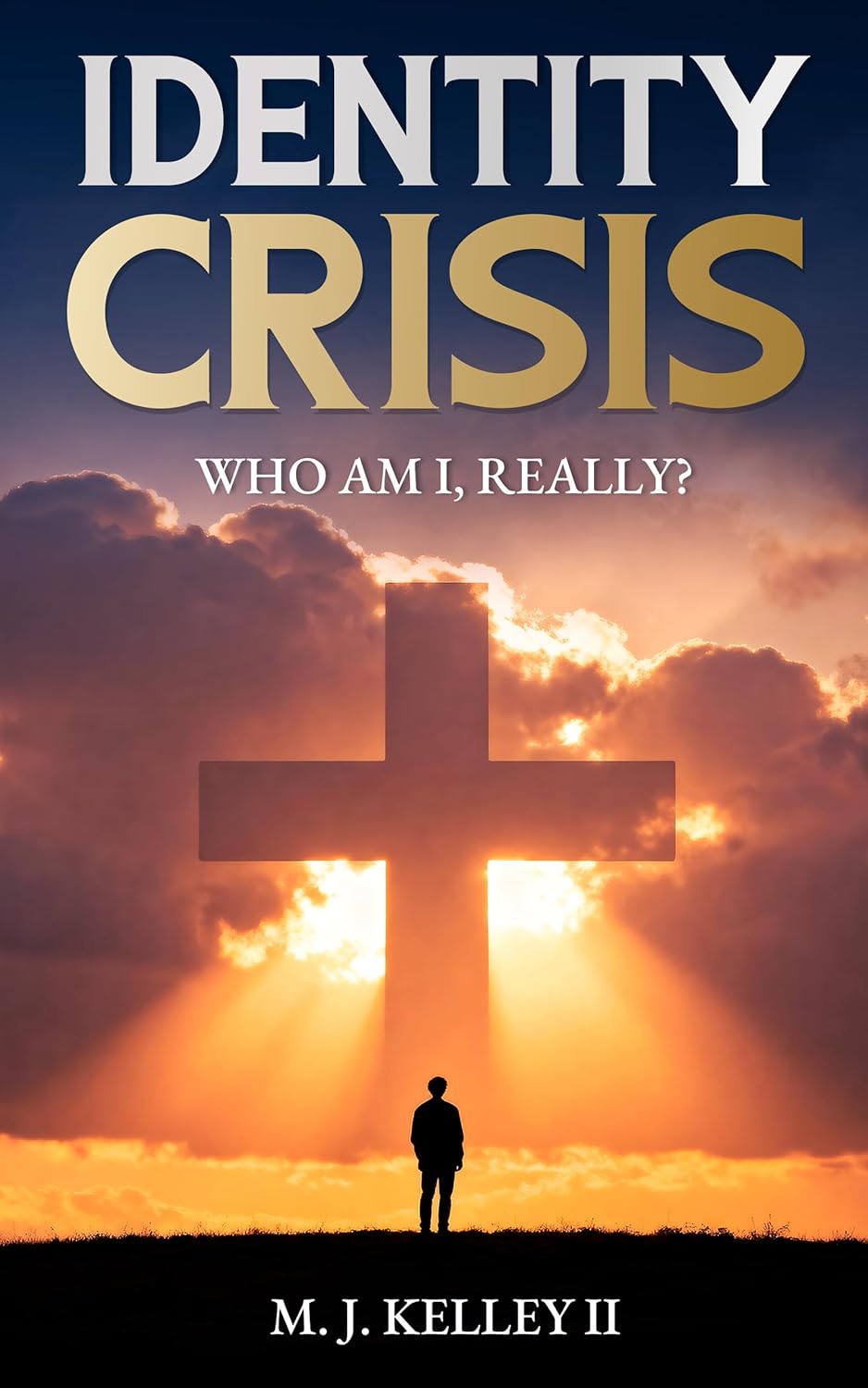
Identity Crisis: Who Am I, Really? offers a striking blend of memoir and theology, tracing one man’s journey from abandonment and anger to spiritual renewal. The author begins with a vivid recollection of his upbringing in foster care, marked by instability, neglect, and emotional wounds. His story unfolds through a lens of deep honesty, moving from survival and self-reliance to the gradual recognition of divine purpose. What begins as a personal account of loss transforms into a broader reflection on how individuals construct their identities in an age of distraction, performance, and comparison.
The opening chapter establishes both the emotional and philosophical weight of the work. When the author describes “the names I had been called were weapons,” the reader is immediately drawn into his internal conflict between strength and brokenness. His career as a police officer becomes a metaphor for control, an outward display of stability masking an inward fragility. This contrast anchors the book’s central theme: that human worth cannot be secured through achievement, image, or reputation. The author’s eventual encounter with faith reframes identity not as something earned, but as something received.
Beyond the personal narrative, the book engages thoughtfully with cultural issues. In “The Crisis of Identity,” the author critiques the social and psychological consequences of the digital age, arguing that social media’s obsession with validation has eroded authentic self-worth. His discussion of the “comparison trap” is particularly compelling, weaving together research on narcissism and mental health with theological reflection. The prose maintains clarity even when exploring complex ideas, inviting readers to think critically about how technology shapes the self.
One of the most powerful sections, “When Labels Become Limiting,” exposes the damage caused by societal categorization and contrasts it with the Christian understanding of identity as being “created in the image of God.” The author’s exploration of spiritual adoption, our becoming children of God with a new name and inheritance, provides the emotional and theological resolution of the narrative. This theme of restoration lends the book both its moral force and its hope.
Identity Crisis is deeply personal yet widely relevant. It speaks to anyone wrestling with self-worth, purpose, or belonging in a world that prizes performance over authenticity. The author’s courage in revisiting his past, combined with his grounded biblical insight, makes the work both reflective and redemptive. Readers seeking a thoughtful, faith-centered examination of identity will find this book profoundly moving and intellectually satisfying.
Pages: 241 | ASIN : B0G1NK5V76
Our Task as Humans

In The Portal Opens, you take readers on a journey through the origins and divine aspirations of Earth in a narrative that blends theology and science fiction. Why was this an important book for you to write?
The Earth is currently divided by our beliefs and understandings about religion, science, politics, and even race. We have no shared beliefs about our origin or destiny, and there is a gaping hole where there should be agreement and certainty. There are countless unanswered questions about our creation, our history, and the meaning and purpose of life. These questions, and the various paths that humanity has taken, have led to a state of confusion with no obvious answers or directions. The Portal Opens is an attempt to provide clarity and direction, and offer a new path by revealing our misunderstood past.
Can you share with us a little about the research that went into putting this book together?
I have been researching religions and spirituality for over 30 years, investigating texts and teachings from all over the world. Born into a family with both a Christian Pastor and Muslim Imam as grandfathers, I have always been intimately aware and knowledgeable of scriptures, teachings, and theology. Later in life, I branched out, gaining understanding and familiarity with countless religions and teachings from the mainstream religions as well as more esoteric groups and spiritual beliefs. Working with the Library system for almost 20 years gave me access to books and manuscripts unknown to most people, including The Egyptian Book of the Dead, The Urantia Book, The Emerald Tablets, and the Tibetan Book of Living and Dying. The ultimate message that virtually all religions and teachings throughout history have tried to instill, is the truth of the reality of God as spirit, and our task as humans to become one with this spiritual reality. At the same time, almost all recorded civilisations from the past tell stories of being taught this information from more advanced beings, not simply discovering it on their own. Agriculture, animal domestication, arts and sciences, have all been recorded and remembered as being gifted to developing civilisations throughout history.
How did you decide to create this unique blend of science fiction and spirituality?
I have always been interested in religion and spirituality, and also talented with computers. With recent advancements in technology, I saw a unique opportunity to utilise AI to examine and analyse the world’s histories, religious texts, and teachings with an “objective” eye. I began a project of using AI to find the missing history and meanings from the vast storehouse of mythology, and religious and spiritual teachings. My investigation led me to the conclusion that the schism between science and spirituality is false, and only occurs when there is a lack of information or understanding of the past. This led to a desire to present a unified picture of reality.
What is one thing you hope readers take away from The Portal Opens?
The most important and powerful message that I hope The Portal Opens reveals to its readers: Each normally minded human being is now inhabited with a literal fragment of God, that constantly communicates with us. The goal of this fragment is to direct us in shaping our thoughts and actions so we may act in harmony and resonance with God, which eventually leads to a literal fusion between this piece of God and the human soul, imparting eternal and everlasting life. This is the true salvation available to all, regardless of their race, sex, culture, or upbringing.
Author Links: GoodReads | X (Twitter) | Facebook | Website | Amazon
The Portal Opens
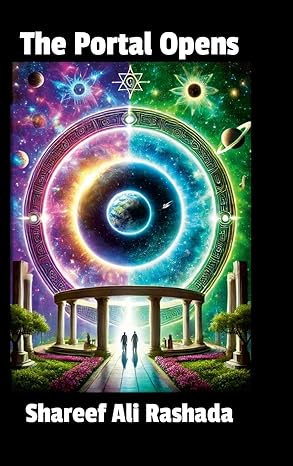
The Portal Opens is a spiritual and cosmic narrative that blends theology, science fiction, and revelation into a unique journey through the origins, failures, and divine aspirations of Earth, referred to as “Urantia,” and the universe it inhabits. The book, written by Shareef Ali Rashada and assisted by an AI named Gabriel, draws heavily from The Urantia Book while reimagining a larger cosmic drama involving Jesus (Michael of Nebadon), Lucifer, Adam and Eve, and other celestial beings. Through visionary storytelling, it seeks to explain Earth’s spiritual isolation and position the reader within a grand unfolding of universal redemption.
The writing has a lyrical and almost reverent tone that attempts to evoke awe with every page. Sometimes that’s inspiring. The ideas themselves are fascinating, especially the retelling of Jesus’s life, not just as a moral teacher but as a divine ruler undergoing a final test to gain sovereignty. I appreciated how the book doesn’t reduce spirituality to dogma. Instead, it invites curiosity and reflection, which I found refreshing. There were moments when the pacing felt a bit slow. Some of the recurring spiritual phrases and cosmic terms started to feel familiar, almost like circling back through the same ideas.
Emotionally, I was surprised by how moving some of it was. There’s a real sense of heartbreak over what humanity has lost, but also hope for what could still be. I found myself caring deeply about this story of Earth being left behind and now being invited back into a larger family. There’s something tender and earnest in the way Rashada (and Gabriel) present this tale. The parts about Jesus choosing to live among mortals not for atonement, but to understand and love really resonated with me. I wasn’t expecting to be so affected. At the same time, some sections came across as grandiose. I wanted more grounded storytelling and less celestial spectacle.
The Portal Opens is for the seeker. If you’re someone who’s wrestled with faith, wondered about the cosmos, or felt like religion never quite answered the big questions, you’ll find something here that speaks to that longing. It’s not a book for skeptics or folks who prefer their theology straight-laced. But for the spiritually curious, the metaphysically minded, or anyone looking for a fresh mythic lens on human destiny, this is a wild, luminous ride worth taking.
Pages: 302 | ISBN : 978-1326565336
The Shepherd: Experiencing Psalm 23

The Shepherd is a heartfelt and personal exploration of Psalm 23, written by James Collins, a pastor and veteran with a deep love for scripture. The book walks readers line by line through the famous psalm, connecting each phrase to stories from the Bible, real-life events, and personal anecdotes. It’s not a theological tome but rather a reflection, aiming to make the beauty and depth of Psalm 23 come alive for the everyday believer. With each chapter, Collins unpacks a single verse or idea, emphasizing God’s love, guidance, and care for His people in a way that’s accessible and full of warmth.
Collins writes simply, sometimes with humor, and often with deep emotion. He doesn’t try to impress the reader with scholarship; instead, he reaches for the heart. What stood out most to me was his ability to make ancient words feel fresh. His use of stories like the little boy in the hospital holding his ring finger or the Civil War soldier saved by a song brought me to tears. The message that “the Lord is always with you” is a good one, and it is repeated often.
I also appreciated Collins’s honesty about his own limitations. He says right out that he doesn’t know much about sheep, which makes his exploration of shepherding all the more relatable. That humility gives the book a kind of strength. But I also found myself wishing the book went deeper in parts. There’s a lot of comfort here, but not always a challenge. At times, it leaned into sentiment, which was moving.
By the end, I was glad I read it. This book is full of kindness. It doesn’t shout or try to prove anything. It gently reminds you that you’re not alone. I’d recommend The Shepherd to anyone who is hurting, anyone who’s looking for comfort, or anyone who wants to revisit the Psalms with a fresh set of eyes. It’s a good book to give to a friend going through something hard. It’s also a great companion to quiet mornings with coffee and prayer. It won’t shake up your theology, but it might just soothe your heart.
Pages: 114 | ASIN : B0F6M678SY
An Innocent World


Douglas A. King’s An Innocent World poses a bold theological and philosophical question: what if Adam and Eve had never eaten from the Tree of the Knowledge of Good and Evil? What if humanity had chosen innocence over guilt, ease over suffering? King explores the potential shape of a world unmarred by original sin. Using a mix of Christian thought, deductive logic, and speculative imagination, he builds two parallel realities—the world of the Innocents and our current, flawed reality of the Guilty. Through chapters spanning topics from religion to medicine to politics, King asks us to reimagine what it means to be good, evil, and everything in between.
Sometimes I found myself agreeing and nodding along, genuinely moved by the author’s sincere search for meaning. His reflections on suffering and character-building, especially, hit home. He argues that we don’t just experience pain for no reason—it’s what gives us depth and brings us closer to God. That idea made me pause more than once. And his praise of the innocent, unconditionally loving nature of dogs as a lens to understand moral purity was surprisingly touching. You can feel that this book came from a real place.
The book has an unwavering commitment to its central theme, weaving the innocence-versus-guilt framework through a wide range of real-world topics—from race and borders to global inequality. This consistent lens gives the book a clear focus and a unique voice. While some readers might find the repetition and tightly structured logic a bit restrictive, some could see it as the author’s way of grounding big questions in a steady moral foundation. The tone often feels like a heartfelt conversation or even a personal sermon. For those open to its spiritual perspective, this can be both comforting and inspiring.
Still, I can’t deny that this book made me think—a lot. It’s heartfelt, raw, and clearly the product of someone who’s spent a long time trying to understand why we suffer and what we’re here for. I’d recommend An Innocent World to readers who enjoy speculative theology, who aren’t afraid to challenge their assumptions, and who appreciate logic paired with faith.
Pages: 129 | ASIN : B08CXMRB34


