Blog Archives
Bravery of Women

Lottie Beauchamp’s War follows a woman searching for information on her great aunt who served in the Women’s Auxilary Air Force during WWII. What was the inspiration for the setup of your story?
Thank you for inviting me to interview. A few years ago I read about women serving in the Women’s Auxiliary Airforce (ATA) and found their stories fascinating. From there, I began to research other areas where women’s contributions were significant to Allied success in WW2. Their bravery can never be underestimated. It made me think how incredible it would have been to have worked with these women.
From these wonderful accounts, Lottie Beauchamp’s War began to evolve. I wanted to combine fiction with some fact and my research began.
Lottie’s life is fascinating, and you included so much detail readers will be able to experience life during WWII. What kind of research did you do for this novel to ensure you captured the essence of the story’s theme?
I read a lot of books and searched internet archives about the lives of the women. I also delved into as much detail as I needed for authenticity, for example, what transport was available, what certain streets looked like, the time the moon rose on a certain day in France, etc! It’s amazing just how much information is out there. I should stress, Lottie, her personal story, all dialogue and representation of the people who existed, is fiction but I’ve tried to make the story as authentic as possible within the historical setting.
What were some themes that were important for you to explore in this book?
To celebrate the astonishing bravery of women in WWII and highlight some of the inequality that existed in their roles.
What is the next story that you’re writing, and when will it be published?
I’m just beginning research on another area of history…
Author Links: GoodReads | Twitter | Instagram | Facebook | Amazon
Her great-niece, Charlotte Beauchamp, visits the care home where she’s spent her final years.
Despite the family connection, Charlotte’s never met her great aunt.
The manager tells Charlotte what little she knows about Lottie and gives her a box of belongings.
Charlotte feels compelled to find out more about the secret life of Lottie.
The Thread Of Life

White Cat unveils the intricate life of a centenarian through letters and artifacts, weaving a tapestry of history, emotion, and mystery across eras like World War 2 and the approach of apartheid-era South Africa. Why was this an important book for you to write?
Initially, a family connection made it important: Barbara was my aunt and the last of her generation, and, during her last years, shared with me a lot of family history and anecdotal material which, I suspected, no other family member had been aware of. The instigation for the actual writing was her disclosure of her extra-marital relations with the army spy whom I have called Hugh in the book. In fact, she refused to tell me his real name, which I put down to the unwavering wartime sense of duty of her generation. She suffered for this relationship and it became important to me to witness to the resilience and courage – evidenced also by her own wartime actions – of the person she was. Then my therapist persona jumped in and I realised that I had the material for a favourite theme of mine, namely, the passage of our lives through our heredity mixed with our contacts with others, the strands from which the thread of life is spun.
Can you elaborate on the real events that inspired “White Cat” and how you balanced historical accuracy with creative storytelling?
Wars, in this case, the Boer War in South Africa and World War 2, provide grand tableaux which, if we are not careful, distract us from the reality that it is the lives of the people which make up the picture. I knew that my grandfather lost a leg in an engagement in the Boer War, that a granduncle drowned in South Africa in undocumented circumstances and was ‘disappeared’ by his family, and that Barbara’s paramour, the military spy, vanished in Vienna. The great events provided a stage on which to play this out, but the real drama was about the lives of individuals. I had considerable material from my firsthand acquaintance with many of the individuals. I also had family anecdotal evidence of the personalities of the generation before, enough to be able to ‘write back’ some family traits which I knew of from my own day. So the narrative of the story grew also from what I could believe or impute for the characters concerned. This formula, such as it was, gave me enough scope for creativity in storytelling. The one enigma was Harry, my granduncle, and, whilst I offer a therapist perspective on his death, I leave it for the reader to decide.
The book’s narrative structure, weaving together elements of historical fiction, memoir, and mystery, is unique. What challenges did you face in crafting this multi-layered story, and how did you overcome them?
This was a challenge. I knew how I was going to start and I knew where the book was going to end. In fact, I wrote the final chapter not long after the first and I changed it very little. I knew I had two main storylines, the love story of Barbara and Hugh, and the tragedies of the family in South Africa: they were roughly 50 years and 10,000 miles apart. That in itself intrigued me. It was the letters that gave me the answer. Within my cast of characters over four generations, there were enough people who either did, because I had some letters, or plausibly could have, written to each other across the generations, for this to provide the continuity and create for Barbara the pivotal role in the overall drama.
What is the next book you are working on, and when will it be available?
The first sequel to White Cat is already out. It is called And Then There Are The Stories. It follows the fortunes of Hugh and Nobomi, starting in Vienna and then moving back to South Africa, ending in the Drakensberg mountains on the border between Eastern Cape and Lesotho. It is largely fictional – I was unable to find any trace of a likely Hugh in the National Archives once he moved from his military unit to the FSS. But there is one scene in Vienna for which I found sufficient family material to make possible a reconstruction. I have adopted a different format in this sequel, the main storyline being carried by the accounts given by a series of ‘outside’ characters, whose lives become involved in different ways.
I am now working on the third and final sequel, which is more or less present-day, though with allusions to some material in White Cat, as well as to the two main characters of the first sequel. The two figurehead names of White Cat reappear, though they might not be related to their namesakes there, but they continue my theme of the thread of life. This final sequel is called River.
Author Links: Goodreads | Facebook | Website | www.life-counselling.co.uk
This family saga begins at an end, with the death of Barbara at 104, the last of her generation, and the end of an era. She was the custodian of memories and memorabilia from four generations – her larger-than-life grandfather converted by a Quaker nurse, a father in the Boer War in South Africa, an uncle who mysteriously drowned in the Indian Ocean, his African girl-friend and the child he never saw, Barbara’s own paramour a spy in post-war occupied Vienna…and her own heroism in that war.
The reader passes through the abandoned rooms of her house, as the story unfolds by way of narrative and letters which create an immediacy, even intimacy, with the various players in the drama.
“… a confusion of sets and settings when the action moved, sometimes you could see it but sometimes it was offstage and reported, and then you have to trust the word passed down across the terraces of history, the hardships, the joys, the resentments, the hopes, the terror, the humanity, the resilience… and somewhere back along the way, still tolling, the bourdon bell which marked the tide of war.”
The White Cat? – no, six in all, and a question left unanswered.
Swift Sword: The True Story of the Marines of MIKE 3/5 in Vietnam, 4 September 1967
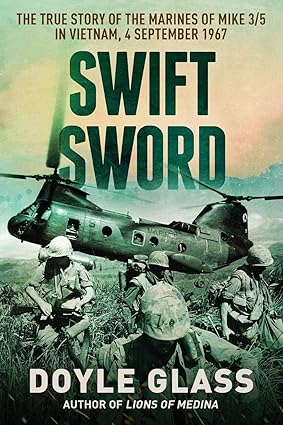

In Swift Sword, the masterful storyteller Doyle Glass expertly transports his audience into the throes of Operation Swift in the Que Son Valley, Vietnam. His vivid narrative is the fruit of true accounts shared by veterans who managed to emerge from the chaos of the Vietnam War. Glass marries raw information and first-hand testimonies in his work, deftly encapsulating the myriad of emotions and adversities encountered by the US Marines during this devastating ambush, which resulted in the unfortunate loss of 124 soldiers.
The author skillfully illuminates the profound trials endured by these veterans, with a particular emphasis on those who served in the Vietnam War. Swift Sword pays homage to the gallant warriors who put everything on the line for their country. The narrative serves as a stark testament to the men who made the ultimate sacrifice and the survivors who bear the lifelong burden of losing their comrades.
The visceral depictions of the trauma experienced by these soldiers are woven skillfully throughout the book. Glass provides a somber reflection on the pervasive and enduring destruction caused by war on the lives of those involved. Yet, within this turbulent narrative, he manages to highlight the resilience of the human spirit, showcasing how these brave men found hope, maintained loyalty to their comrades, and nurtured deep love for their families.
Swift Sword provides readers with an invaluable glimpse into the operations of the Marines and the stark realities of the Vietnam War. While the narrative may occasionally prove complex due to the use of military abbreviations and jargon, Glass astutely includes a comprehensive glossary at the end of the book to aid understanding.
This book is a remarkable testament to Glass’s meticulous research and unflinching dedication to honoring war veterans, even when it meant navigating painful memories. His work proves to be both enlightening and educational, a truly compelling read.
If your literary appetite gravitates towards personal narratives, especially those of war veterans, then Swift Sword is an indispensable addition to your reading list. Brace yourself for a deep-dive into the poignant and profoundly human experiences of those who served in the Vietnam War.
Pages: 295 | ASIN : B00LGDVLYY

Secrets of the Kashmir Valley
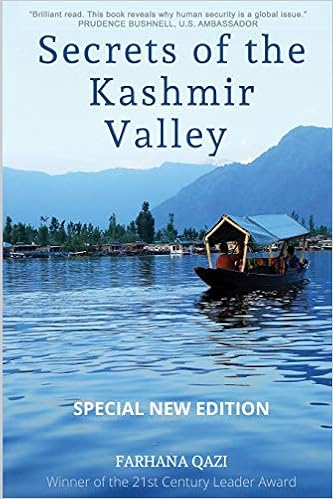
Secrets of the Kashmir Valley is a must-read for anyone who wants to understand the untold truths of the Kashmir Valley. Farhana Qazi does an excellent job of bringing to light the true stories of women in this region who have suffered immense pain, loss, and terror. The stories are not only filled with sadness but also with hope for a better future.
The author effectively conveys the reality of life in one of the most militarized zones in the world, where the Indian government has imposed strict control, making it difficult for the voices of the Kashmiris to be heard. Despite the constant fear of detention, curfew, and violent raids, the women of Kashmir continue to celebrate happy occasions, but always with the underlying fear of what might happen next.
This emotional book highlights the atrocities committed by the Indian army, including mass graves, restrictions on basic human rights, and the countless incidents of rape, even of women as young as 17 and as old as 80. The writing style is simple yet powerful, making the reader feel the pain and suffering of the women in the region.
Secrets of the Kasmir Valley is a moving and eye-opening account of the struggles faced by the people of Kashmir. These powerful stories bring awareness to this country and what the people endure. For those that want to learn more about this region and understand what it is like to live there as a woman, this informative and passionate look at life in the Kasmir Valley will shed light on the decades of suffering and the unstoppable desire for survival.
Pages: 186 | ASIN : B08D68Y5FL
Neville Chamberlain’s War

Neville Chamberlain’s War: How Great Britain Opposed Hitler 1939-1940 by Frederic Seager is an analytical retelling of the decisions made in the lead-up to and during World War II. Readers will become familiar with “The Phoney War” and its aftermath. Seager has thoroughly researched the events of World War II to support every facet of his argument that Chamberlain’s inactions constituted a “Phoney War” and led Great Britain and France to dig themselves into a spot they could not climb out of. Seager’s in-depth research and analysis of the day-to-day choices made by the leaders in WWII make this a masterful retelling of the events of a war that readers thought they already knew. After reading this book, they will think otherwise.
Until Germany invaded Poland in September of 1939, World War I had only been known as The Great War. With tanks rolling in, bullets piercing the air, and aircraft slicing through the skies, thus began the Second World War. Adolf Hitler was the epitome of evil and a formidable foe. He dreamed of world domination and was willing to go to great lengths to achieve his dream, while most world leaders do not wait long for war. British Prime Minister Neville Chamberlain was no different. He took a wait-and-see approach to the advancement of the Nazis, and his inaction led to devastating consequences.
Neville Chamberlain’s War: How Great Britain Opposed Hitler 1939-1940 by Frederic Seager shows that World War II was not just a series of battles between good and evil. There were carefully-crafted tactics that were scrutinized repeatedly before being put into action. This book is an excellent read for anyone interested in a more in-depth look at the history of the second world war with a different, thought-provoking perspective.
ASIN B09BQ2D67B | Pages: 288
Good people are imperfect. Bad people aren’t.

The Smallest War follows a group of military operatives who go up against Russian operatives in a battle to control a new oil source. What was the inspiration for the setup to your story?
I was a Cold War kid so thought it would be fun to pitch the old enemies into a battle. During research for The Smallest War, I came across the USA/USSR Maritime Boundary Agreement and realised I’d found the catalyst for the confrontation. The first draft of The Smallest War was a heavyweight, weighing in at a little over 140K words. It detailed the backstory of the United States buying Alaska from Russia and how the error in the alignment of the boundary across the Bering Sea came to be. Sadly, there was a “Kill your darlings” year during which I slimmed the novel down. That said, it is a better book for the cuts.
Did you create an outline for the characters in the story before you started writing or did the characters’ personalities grow organically as you were writing?
A bit of both. I wrote outlines for the characters detailing their looks, speech patterns, habits, heritages and dreams. I also wrote a plot which was around 17K words. As The Smallest War developed, so did the characters, but the more refined development came with the assistance of an editor. There was no particular guidance given, more just observations about the characters themselves. In the draft the editor read, the main characters were verging on superhuman, and the editor thought they could do with taking a toilet break (i.e. do those things that people do as a matter of course each day, such as being injured if they were involved in a car crash).
What were some themes that were important for you to explore in this book?
I sweated over the epigraph “Good people are imperfect. Bad people aren’t.” It’s the main theme of The Smallest War, and I hope I’ve crafted the characters to fit the premise. We are all flawed, but overwhelmingly we are good. There are only a few of us that are perfectly malevolent, like Major Regina Volkov.
What is the next book that you are working on and when will it be available?
In light of what I learnt writing The Smallest War, I’m re-writing the first novel I wrote. The first novel did the rounds with the agents in Australia and was put in the drawer while I wrote The Smallest War. It’s not a sequel or prequal, just another book I’d like to read. It will be published in 2023.
Author Links: GoodReads | Twitter
Small War is the United Nations’ best kept secret: the end of conventional warfare. Acting in self-interest, the United States’ military buries it.
Oil—enough to build a superpower—is discovered by the United States, only for Russia to lay claim. The United States threatens war, but a resurgent Russia ruthlessly executes a play years in the making. Dominos fall: a fire the size of England, a bloody naval skirmish, breath-taking political manipulation. Small War will decide who exploits the oil.
Unprepared, the United States exhumes its Small War capability and staggers into a contest of hunter and prey: five relentless rounds of pursuit by any means necessary, winner takes all.
Press-ganged into the fray, Danny “The Beef” Wellington joins his two teammates, Kimimela Thunderhawk and Matt Balthazar, planning to do just enough to stay alive, but there’s a hitch. A traitor lurks, and only Danny can tip the balance to give the United States a fighting chance.
Full of unrelenting cat-and-mouse, rapid-fire action and characters pushed to their limits, this book is perfect for fans of I am Pilgrim by Terry Hayes, Ice Station by Matthew Reilly and Inferno by Dan Brown.
If you can catch a breath, you’re not reading The Smallest War. Get it now!
The Smallest War

The Smallest War, by Mark Sheehan, is a rollicking action tale of political intrigue. The global balance of power is at stake when viral sabotage leads to an international incident in the Bering Sea, which happens to be home to a massive, newly discovered oil reserve. Calling upon a little-known process laid forth by the charter of the United Nations, the Russian Federation seeks to solve a potentially world-ending dispute with the United States of America through a “Small War.” Through a series of bizarre circumstances, the US team is made up of a ragtag group of individuals who were chosen not for their skills but for their failures.
The Smallest War is quite a ride. While the fantastical story is grounded in reality, the reader must embrace their suspension of disbelief to follow the events leading up to the “small war.” Impossible viral attacks, an absolute dereliction of duty by the US Department of Defense, the military-industrial complex pulling all the strings to guarantee nothing but massive warfare, while the Russian federation uses dirty tricks and a loose interpretation of international law to get their way… on second thought that all seems incredibly feasible.
I had a good time reading The Smallest War, despite some shortcomings. It reads very much like a Hollywood blockbuster, with locations spanning the globe, giant action set pieces, and characters ranging from damaged, struggling anti-heroes to absolute villains who will do anything to accomplish their goals. The characters are tried and true tropes of the genre: the Americans feature greatest hits such as the strong dumb guy, the mouthy rich guy, and the level-headed woman who can pull the team together. Each has their own flaws that bring a bit more to the stereotype.
The Smallest War: an action-adventure thriller is a riveting military and war novel. Readers will encounter suspense and thrills in each chapter as they wait to find out how this small war will play out and who will end up with control over the oil.
Pages: 406 | ASIN : B0B7P4ZKMF
Fiction Rooted In Reality
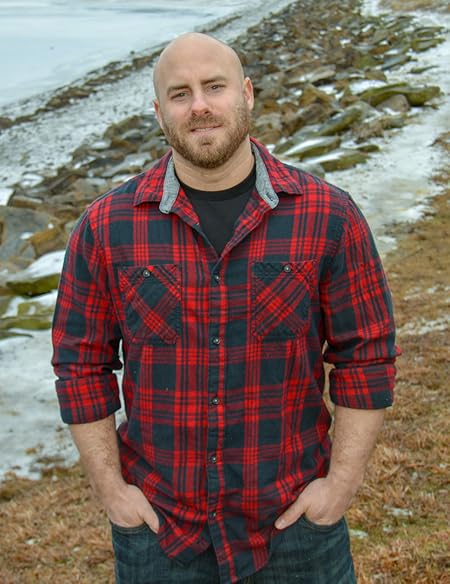
No Pistol Tastes the Same follows a military veteran who is struggling with PTSD as he tries to repair his relationship his son, his wife amid earths impending doom. What was the inspiration for the setup to your story?
As a veteran who has battled the effects of PTSD and had friends who lost that battle, it was important for me to write a story that confronted the topic. I think PTSD is something worthy of a tale like this, fiction rooted in reality, to bring awareness, change, understanding, and maybe even hope to those affected by its symptoms.
Sergeant JP Grimm is an intriguing and well developed character. What were some driving ideals behind his character’s development?
I think JP has a lot of myself in him. While a lot of my characters do, I think for JP, I really wanted the reader to see the mental struggle that plagues someone with PTSD. At the surface, he is a self-destructing character who is also destroying the one thing he cares so much about: his family. But on a deeper level, we can see the inner-workings of a tormented man, husband, and father that wants to fight his fight alone and his way, not passing his burden on to the ones he loves. But in his stubbornness to stand in the fire alone, ultimately, it’s his family that gets burned.
What were some themes that were important for you to explore in this book?
The mental struggle that comes with PTSD. The destructive phases that were prevalent in my own struggles with PTSD and alcoholism. The metaphor of PTSD being this slow-burn, apocalyptic disaster that if left unchecked can truly destroy the world you’re living in. Humanity. The bond and strength of family. The stigma that tough men often face when it comes to mental health and the barriers that get in the way of them seeking help.
What can readers expect in book two of your PTSD Disaster series?
Book 2 will see the characters trying to survive in their new apocalyptic world. We’ll see healing and hurting. PTSD still ravaging the Grimm family, but in ways the reader may not have expected. The reader will also see the darker side of PTSD (formed from my own thoughts and experiences) where JP and Sgt. Grimm will teeter on the edge of becoming this viscous beast bent on protecting his family at all costs and the loving, caring, funny, personable human being he once was before the war.
Author Links: GoodReads | Twitter | Facebook | Website
Sergeant JP Grimm didn’t pull the trigger. Now his Marine brothers are dead. All victims of a child in a suicide vest…a child that resembled Sgt. Grimm’s very own. But how are you supposed to take a child’s life? How can you kill someone that looks just like your own son?
Those same hazel eyes he saw in his scope continue to haunt him long after he left the desert death lands as he tries to reconnect with his son, Adin. JP battles another war at home against PTSD and the worthless, dejected thoughts that he is the reason his friends are dead. His wife, Lisa, struggles to let her stubborn husband work it out on his own terms. She does all she can to give him space, support, and strength—but her love can only go so far.
As the world shows signs of impending doom from a weakening magnetic field and flaring sun, JP, too, shows signs of his own impending doom. After pushing everyone away, JP must face his nightmares to restore his relationship with his son, save his marriage, and save himself before the modern world burns out in a fiery, electromagnetic disaster.



 LITERARY TITAN