Blog Archives
The Exception Code: How to Make Culture, Retention, and Customer Loyalty Profitable by Leading Like No One Else
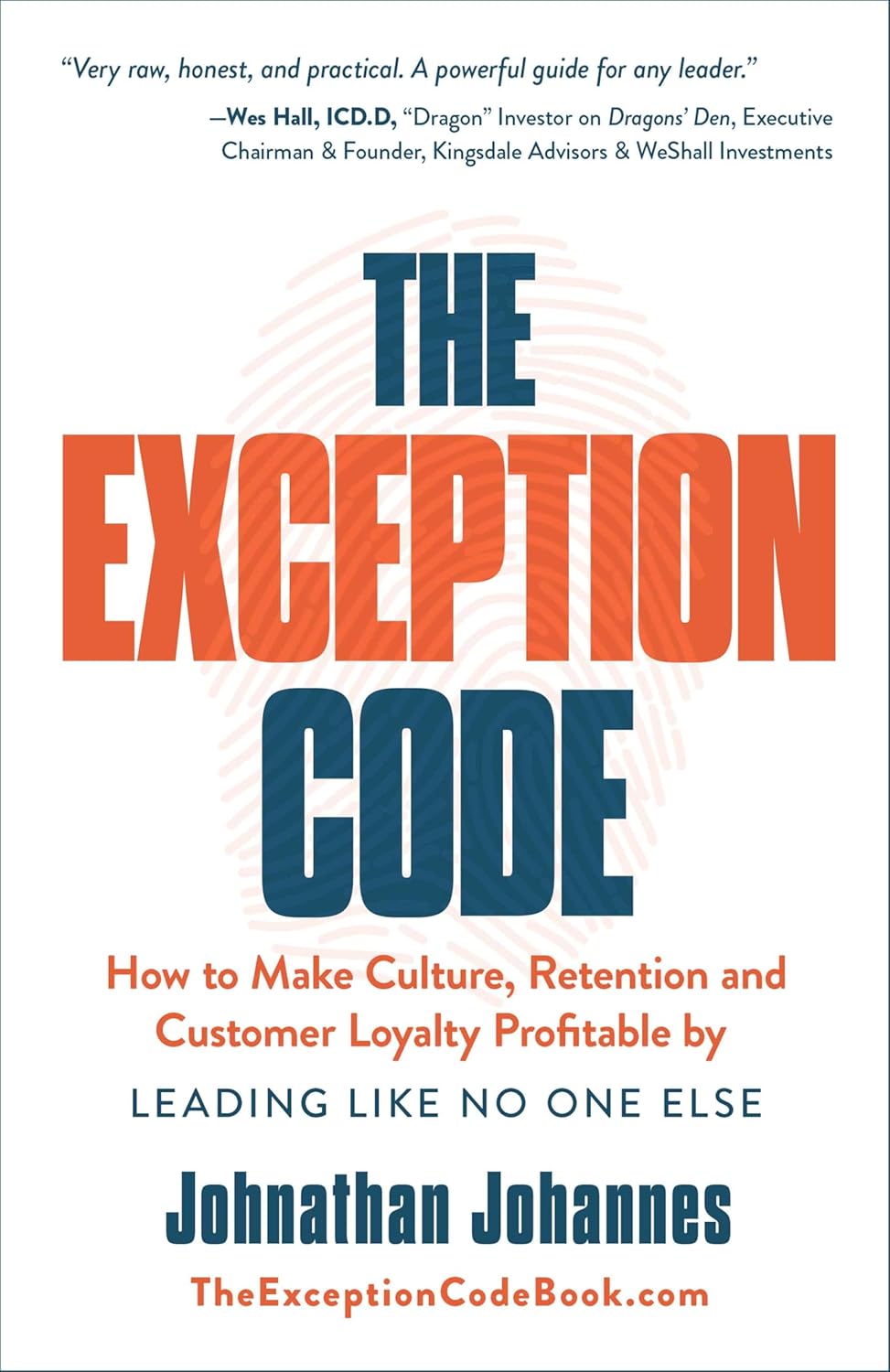

The Exception Code is a leadership book that blends manifesto and field manual. Author Johnathan Johannes draws on his experience leading a Caribbean bank through undercapitalization, a major acquisition, and the COVID crisis to argue that leaders need to stop performing and start being “the exception.” He organizes the book around the C.O.D.E. framework: Courageous Mindset, Original Approach, Driven Impact, and Enduring Legacy, and fills each part with stories, tools, and models like the Purpose Power Core and the Purpose Alignment Map that link culture, retention, and customer loyalty to real profitability.
The tone feels like a seasoned mentor talking across a table, not a distant guru on a stage. The personal stories really resonated with me. The scene where he discovers the bank’s capital hole and starts hustling for investment, and the episode with his wife in the hospital during the pandemic, give the book emotional weight and make the big ideas feel earned rather than rehearsed. I also liked how he circles back to a few anchor themes, especially purpose and integrity, so the argument feels cohesive. The content behind them is usually solid, clear, and easy to act on.
I think the book is strongest when it links purpose to daily behavior. The sections on meetings, onboarding, and performance reviews show how “exceptional” leadership can show up in very simple routines. His insistence that innovation is often cultural, not technological, felt very true, and the examples from Patagonia, Unilever, and Warby Parker help connect his banking world to a wider business landscape. While the book stays focused on clear lessons rather than deep dives into every tradeoff or setback, the streamlined case numbers and fast-paced success stories keep the narrative tight and energizing, and the core claim that purpose is anchored in conviction, compassion, and contribution not only feels right, it feels genuinely practical.
I would recommend The Exception Code to leaders who are already in the arena and feel the gap between their metrics and their meaning. Founders, senior managers, HR and culture leaders, and ambitious middle managers who sense “I’m winning the wrong game” will get the most from it. If you want a reflective, practical nudge to rethink how you show up, how you run your team, and what legacy you are quietly building every day, this book is a good fit and worth your time.
Pages: 335 | ASIN : B0G2YTBRLL

Be Clear and Intentional

Communicate Like a Champion provides straightforward advice for enhancing professional communication, along with strategies that emphasize clarity and empathy. Why was this an important book for you to write?
This book was important for me to write because I’ve seen time and again that the success or failure of projects, teams, and even careers often comes down to communication. As a leader in telecommunications and during my doctoral studies, I recognized how often components of communications, such as clarity and empathy, were missing in professional exchanges. I wanted to create something concise, practical, and easy to use, something people could apply immediately in their workplace, whether they’re leading teams, collaborating across departments, or simply trying to be better understood.
What is one misconception you believe many people may have regarding effective communication in the workplace?
One of the biggest misconceptions is that communication means more words. People often think that long emails or detailed presentations equal effectiveness. In reality, effective communication is about being clear and intentional, saying the right thing, not everything. Another misconception is assuming silence means agreement. “No questions” doesn’t always mean understanding or alignment, and that’s where leaders need to confirm, follow up, and create space for feedback.
Did you learn anything that surprised you while you were researching and writing Communicate Like a Champion?
What surprised me most was how consistently small actions can create significant results. It wasn’t the grand speeches or high-stakes presentations that made the most significant difference; it was the everyday habits that mattered most. Things like summarizing a meeting in a single clear sentence, asking one good clarifying question, or pausing to reflect before responding. Those small, consistent habits are what transform someone into a “champion communicator.”
What is one thing you hope readers take away from this book?
If there’s one thing I want readers to take away, it’s that communication is a skill you can practice and improve. It’s not just for extroverts, executives, or “natural speakers.” With small, intentional steps clarifying intent, listening actively, and following up, you can become the kind of communicator who builds trust, fosters collaboration, and leads with confidence. That’s what “communicating like a champion” is all about.
Whether you’re a new professional, a seasoned leader, or someone navigating the complexities of hybrid teams, Communicate Like a Champion offers practical, proven strategies for improving your connection, leadership, and collaboration in the workplace.
This concise and actionable guide walks you through the core elements of strong communication—from clarifying your intentions to using empathy and follow-up effectively. With relatable examples, reflection prompts, and a 28-day challenge to build habits over time, this book helps you go beyond just “getting your point across.”
You’ll learn how to:
Communicate clearly across departments, hierarchies, and mediums
Recognize internal and external factors that influence every message
Use tone, clarity, and follow-up to earn trust and foster collaboration
Apply tools and tech that elevate your tone and clarity
Lead conversations with empathy, even when conflict is unavoidable
Whether you’re sending an email, running a meeting, or managing change, this book provides a reliable framework for ensuring your message lands and builds stronger relationships.
Communicate Like a Champion
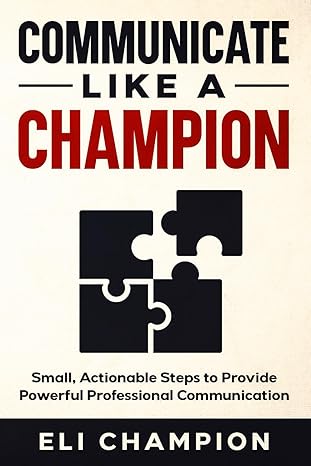

Eli Champion’s Communicate Like a Champion is a straightforward, practical guide to improving professional communication. The book breaks down why communication matters, how intentions shape interactions, what factors influence the way messages are received, and how to put strategies into practice with clarity and empathy. It’s full of simple, actionable steps, like clarifying your purpose before a meeting, checking tone in emails, and following up after conversations, that aim to make anyone a more confident and respected communicator.
What stood out to me initially was the book’s emphasis on practical application rather than abstract theory. Champion illustrates this with the example of a manager calling for “a quick meeting” without providing context. As he explains, such ambiguity often leaves employees uncertain and anxious, unsure whether they have erred or whether the meeting is merely routine. I found this example particularly resonant, having experienced the situation from both perspectives as the uneasy employee and as the manager who failed to provide sufficient clarity. The recommended adjustments, such as stating the purpose of the meeting at the outset or clarifying next steps before closing, are deceptively simple yet highly effective. I could immediately envision how these practices would have alleviated unnecessary tension and improved understanding. This emphasis on directness and transparency exemplifies the book’s core message: communicate with precision to minimize confusion and foster confidence.
I found the chapter on the “7 Components of Communication” particularly instructive. While the framework, clarity, confidence, respect, listening, tone, empathy, and follow-up may appear familiar, Champion’s illustrations prompted meaningful reflection on my own communication practices. One example contrasted the response “I don’t think that will work” with the more considerate phrasing, “I see your point, but can I offer another perspective?” The distinction is subtle yet powerful, highlighting how word choice and tone can determine whether a message is received as dismissive or constructive. Confronted with this comparison, I recognized moments when I have defaulted to the blunt response, often unintentionally undermining collaboration. The example served as a useful reminder of the value of consistently striving for a more respectful approach.
Another notable feature of the book is the 28-day communication challenge. Organized around weekly themes, such as clarity, listening, empathy, and follow-up, it provides daily prompts that encourage practical application, including exercises like restating a colleague’s point to confirm understanding or sending a follow-up email after a meeting. I appreciated that this section moves beyond theory to establish a structured practice routine. When I applied one of the suggested exercises, clarifying my intention at the beginning of a meeting, I was struck by how much more effectively the conversation unfolded. The challenge, paired with the book’s approachable tone, created the sense of being guided by a mentor offering encouragement, rather than being instructed by a prescriptive voice.
I found Communicate Like a Champion to be highly practical and accessible. Rather than relying on jargon or overly complex frameworks, it presents straightforward tools and encourages consistent application. I would recommend this book to early-career professionals seeking to develop confidence, to managers aiming to strengthen their leadership presence, and to anyone who has left a conversation feeling uncertain about its outcome. With reflection and deliberate practice, the strategies outlined here have the potential to significantly improve the way one engages in meetings, correspondence, and professional interactions more broadly.
Pages: 65 | ASIN : B0FG71T9MZ
Paper Safe: The triumph of bureaucracy in safety management
![Paper Safe: The triumph of bureaucracy in safety management by [Smith, Gregory]](https://i0.wp.com/images-na.ssl-images-amazon.com/images/I/41qFOgokVsL.jpg?w=604&ssl=1)

Gregory Smith starts the book by explaining the basics in health and safety industry. Reading through the pages, one gets to understand why the author had to write this book. In his book, Gregory Smith clearly explains the difference between trivial health and safety rules, and bureaucracy. On the former, he explains that rules may be trivial, but would have a link to their purpose more often than not. The rule acts as a handrail so you may not fall down the stairs. In essence, the rule and purpose are connected. On bureaucracy, the author noted that the challenge comes because it has lost its connection with purpose. Though both bureaucracy and trivial health and safety requirements are somehow attached, the author insists that doing away with trivial health and safety requirements in the workplace does not certainly make health and safety less bureaucratic; it may not automatically display a clearer image of health and safety.
The author‘s use of real-life examples when expounding on topics was a big plus. As a reader, I sometimes fail to immediately understand the terminologies used in the text. I fully get the concept when the author uses examples which I can relate to.
In my opinion, The Safety Paradox was the most interesting topic in the book. The author started off by explaining the two triumphing mindsets. I enjoyed reading about the “more is better” philosophy, that sometimes multi-day inductions are better than a short 20-minute summary of key points vis a vis the second mindset which suggests that things done in the name of health and safety will essentially produce good health and safety outcomes. The author gave his stand either at the end and or between all discussions. On this particular one, he opined that neither of the two propositions was right.
To say that Paper Safe: The triumph of bureaucracy in safety management is a spring of knowledge would be an understatement. This book has tons of information relating to safety management, that I believe people in related fields should keep it on their desks for everyday reference.
Apart from the amazing explanations in the book, one gets to be introduced to new words. The author’s vocabulary is vast. He has a great diction and he is talented when it comes to interpreting distinct terms. Each chapter is well written for the reader to grasp the content of the book. One learns a lot from the introduction to the final thoughts.
Reading Paper Safe: The triumph of bureaucracy in safety management will definitely expand your mind. Apart from the general information about safety management and reporting, workplace tools, bureaucracy, auditing, and accreditation, one feels like they are getting schooled as they read on.
Pages: 177 | ASIN: B07HVRZY8C

Like Peaches and Pickles

Like Peaches and Pickles follows Georgia Davis as she fights to maintain her position in a work place that is quickly changing. Georgia has worked her whole life for her success. But just as her career goals are about to come to fruition the new University President hires an old friend of his. New Vice President Carl Overstreet quickly sets himself up to be the sour pickle in this story. Easily unlikable, but somehow, Georgia has a romantic connection with the man that the rest of the staff is plotting to overthrow. With her job on the line, and soon her reputation, Georgia is faced with the adage; when life gives you lemons, make lemonade.
While Georgia Davis fights to maintain the success she has we get to see office politics play out in a entertaining yet believable way that leaves Georgia endearing. If you’ve ever worked in an office then you can easily place these characters into your own workplace. Far too often have I seen people like Carl Overstreet walk over people like Georgia Davis in my career. It’s nice that this book looks at those relationships and expands them in a story that moves along quickly with smart writing and easy prose.
While Carl sets out to, seemingly, directly offend everyone, somehow, Georgia has romantic feelings for him. I don’t want to ruin things here so I won’t say more, but I will say that things don’t end up the way you think they might, which was a nice plot twist for me and one of those small examples that kept me turning pages just to see what happens next.
Georgia is doing all that she can to remain a great team player and save the public face of the University. Unfortunately, members of her team have concocted a way to get the Vice President fired at the cost of their most valuable team member, Georgia. I enjoyed the soft of internal office war that breaks out as people begin to realize that others are plotting and scheming; that could end up giving the University a bad name.
I liked that this book felt familiar to me. It allowed me to easily empathize with the characters. It’s so hard not to give away so many juicy details here, but rest assured, you will want to read this book for yourself. I recommend this book to anyone who enjoys a great drama in a professional setting with a hint of romance.
Pages: 256 | ISBN: 1612969798


