Blog Archives
The Wall


The Wall, written and illustrated by Natalia Morris, is a thoughtful and emotionally engaging children’s book about sensory overwhelm, social anxiety, and the longing to belong. The story follows a young girl who finds comfort in quiet, familiar activities but struggles when faced with the unpredictable sights, sounds, and interactions of a busy playground. What seems like an ordinary outing becomes an emotionally complicated experience as she navigates her desire to connect with other children and the overwhelming feelings that make doing so difficult. Morris approaches these experiences with sensitivity, creating a story that encourages readers to consider how differently children can experience the same environment. At its heart, this is a book about wanting to participate in the world while learning to manage the challenges that come with it.
After a brief introduction, Morris allows the illustrations to carry nearly the entire narrative. The wall itself serves as a powerful visual representation of the barriers that can arise between a child and the social world around them. Its imposing presence makes an internal struggle visible and understandable, even for younger readers who may have difficulty articulating similar emotions. The book also incorporates sign language, facial expressions, and body language as meaningful forms of communication. This approach gives the story a distinctive rhythm, inviting readers to slow down, observe the characters, and consider what their gestures and expressions reveal.
Morris uses a combination of vibrant colors, soft watercolor-like textures, and expressive character drawings to create an atmosphere that shifts with the protagonist’s experiences. The girl’s bright yellow coat and patterned boots make her immediately recognizable, while the reddish brick wall provides a striking visual contrast. Particularly effective are the illustrations showing the girl curled up beside the wall, where her small posture conveys a powerful sense of vulnerability. Other images capture the energy of children playing, with colorful playground equipment, changing seasons, and lively movement. These details give the illustrations warmth and personality while helping readers understand the emotional distance the protagonist sometimes feels.
What makes The Wall especially meaningful for me is the personal experience behind its creation. In an author’s letter, Morris explains that her daughter’s experiences with autism, language impairment, and sensory overload inspired the story. That perspective gives the book an authenticity that comes through in its attention to emotional challenges and the importance of patience. Morris recognizes that connection can require considerable effort and that every child’s progress follows a different path. The book offers families an opportunity to talk about neurodivergence, empathy, inclusion, and the many ways children communicate their needs. With its expressive artwork, gentle storytelling, and compassionate understanding of childhood experiences, The Wall is a touching book that encourages readers to look more closely at the feelings and experiences of those around them.
Pages: 49 | ASIN : B0HKGGKVSD

A Little Mystery

Brave Like Me follows four woodland friends who encounter a mysterious figure in a snowy forest and discover that true courage comes from friendship, compassion, and facing fears together. How did you decide which personality traits would represent different expressions of courage?
Over the past 20 years, through my work with Moment by Moment, I’ve met thousands of children facing extraordinary challenges. One of the most meaningful lessons they’ve taught me is that courage and bravery do not look the same in every child.
Some children are naturally curious and eager to explore, while others are sensitive, cautious, or anxious about the unknown. I’ve learned that none of these qualities makes a child any less brave. In fact, sometimes the quietest child demonstrates the greatest courage.
I wanted each of the four woodland friends to reflect a different personality that children could recognize in themselves. Benny Bear is sensitive and gentle, Remy Raccoon is curious and adventurous, Ruby Rabbit is thoughtful but sometimes anxious, and little Mabel Mouse reminds us that courage has nothing to do with size.
I wanted readers to see that none of these woodland friends has to change who they are to become brave. Instead, they discover courage in their own way, with a little encouragement from their friends.
That was especially important to me because I’ve witnessed firsthand how meaningful it can be when a child begins to recognize their own strength through the help of family and friends.
I believe that we should not just tell children, going through any life circumstance, that they are brave; we should help them see it through their own lens of the world. My hope is that every child who reads Brave Like Me will see a little of themselves in one of these friends and realize that being scared and being brave can exist at the very same time.
The mysterious figure creates both suspense and opportunities for self-discovery. How did you balance the excitement of the unknown with reassurance for young readers?
I believe a little mystery can be a wonderful way to help children explore their emotions in a safe and interactive way. When I first imagined this story as a child, surreal 50 years ago, I was drawn to the excitement of discovering something unexpected. As my story evolved, especially after my 20 years working with children through my nonprofit, Moment by Moment, I wanted that mystery to carry a deeper message and began to write Brave Like Me from where I see the world now.
Children encounter the unknown all the time, whether it’s their first day of school, meeting someone new, trying something difficult, or facing a medical experience. What might seem small to an adult can feel enormous to a child. I wanted young readers to experience that sense of uncertainty alongside the four friends, but never feel overwhelmed by it. The snowy forest creates an atmosphere of mystery, while the friendship and different personalities of the characters and their working together to solve the mystery provide reassurance along the way. I wanted children to discover that sometimes the things that we fear are things we simply don’t yet understand.
Ultimately, the story is about discovering that appearances aren’t always what they seem, and recognizing how much easier it can be to take that first brave step when someone (a friend or a loved one) is beside you.
My hope is that children finish the book feeling not only reassured, but a little more confident about facing their personal fears of the unknown.
Your story emphasizes that bravery doesn’t mean being fearless. How do you hope children will apply this message when facing challenges in their own lives?
One of the most important lessons I’ve learned through 20 years of Moment by Moment is that courage isn’t the absence of fear; it is finding the courage to take the next step, even when you are afraid. In 2018, I was in a teenager’s patient’s room, and she had written this on a poster: “Being brave doesn’t mean you’re not scared. It means you keep going when you are.” Those words stayed with me because they captured something I had witnessed in children for so many years. Courage wasn’t about being fearless. It was about finding the strength to keep going, even when life felt overwhelming.
That moment helped me recognize the deeper message I wanted my childhood story to carry. Nearly 50 years after I first imagined those woodland friends, their adventure became a way to share what thousands of children have taught me about courage.
My hope is that children who read Brave Like Me will recognize that bravery exists in their own everyday experiences, whether it’s trying something new, making a friend, or facing something that frightens them.
It is perfectly okay to feel nervous, uncertain, or scared, and those feelings don’t diminish their courage. I also want them to recognize that asking for help, showing kindness, and leaning on others can be expressions of bravery. I especially hope the book encourages parents, teachers, and caregivers to notice and celebrate those everyday moments when children step outside their comfort zones.
Jordan Foster’s illustrations beautifully capture the characters’ emotions and the changing winter landscape. How did your collaboration influence the story’s atmosphere and emotional impact?
My collaboration with Jordan Foster is especially meaningful because our relationship goes back long before Brave Like Me was ever imagined as a published book. Jordan’s mother is one of my closest friends, and I’ve had the wonderful privilege of watching Jordan grow up from the day she was born. Over the years, I’ve watched her creativity and artistic talents unfold, eventually leading her to a career on the digital marketing team at Warner Bros.
A few years ago, while I was working at UCLA Children’s Hospital, I invited Jordan to dinner in Los Angeles. I was beginning to explore the possibility of bringing my childhood story to life and thought that, through her creative connections, she might know a freelance illustrator who would be interested in the project. What I didn’t expect was that Jordan would say she’d like to give it a try herself, and that evening marked the beginning of a very special creative partnership.
This was the first children’s book for both of us, so we found ourselves learning the intricacies of layouts, storyboards, and the illustration process together. While much of the process was new to both of us, Jordan brought a natural artistic vision and remarkable sensitivity to the characters from the very beginning. I had carried these four little woodland friends in my imagination for decades, but Jordan was the one who gave them their faces, expressions, and personalities on the page. Young readers can recognize their curiosity, fear, and ultimately their bravery and courage, even before those emotions are expressed in words.
The winter woodland setting plays such an important role in creating the story’s atmosphere. There’s something magical about a snow-covered forest, but also something mysterious about its stillness, the shadows among the trees, and not knowing what might be waiting just beyond them. Jordan captured that delicate balance beautifully, creating a world that feels both inviting and a little mysterious. The snowy landscape draws children into the adventure, building just enough suspense to make them wonder what the four friends will discover. As the story unfolds, her illustrations help shift that feeling of uncertainty toward warmth, understanding, and reassurance.
I think that’s what made our collaboration so special. I brought a story I’d carried with me since childhood, and Jordan brought the artistic vision to give it life. Together, we created a world where children can not only follow the adventure but also feel the emotions behind it.
Author Links: GoodReads | Website | Amazon
When a mysterious figure appears, Benny Bear, Remy Raccoon, Ruby Rabbit, and Mabel Mouse are filled with questions—and a little fear. One by one, they venture into the cold to investigate. But the more they look, the more the mystery seems to change . . .
With courage, curiosity, and a lot of heart, these four friends discover that sometimes the unknown isn’t so scary after all—especially when you face it together.
This delightful rhyming tale celebrates friendship, bravery, and the magic of seeing things clearly—with just a little help from the morning sun.
Literary Titan Gold Book Award: Children’s Books

The Literary Titan Book Award recognizes children’s books that mesmerize audiences with incredible narratives, vibrant illustrations, charming characters, and fresh ideas. Offering well-earned accolades, we salute the imagination and exceptional skill of authors who create tales that spark curiosity and delight in young minds.
Award Recipients




Visit the Literary Titan Book Awards page to see award information.
Literary Titan Silver Book Award

Celebrating the brilliance of outstanding authors who have captivated us with their skillful prose, engaging narratives, and compelling real and imagined characters. We recognize books that stand out for their innovative storytelling and insightful exploration of truth and fiction. Join us in honoring the dedication and skill of these remarkable authors as we celebrate the diverse and rich worlds they’ve brought to life, whether through the realm of imagination or the lens of reality.
Award Recipients











F F F by Al X. Griz
Pixie by Nightdancer Slater
Ada, Old and New: A Brother-Sister Tale by Madeleine Van Hecke
A Child’s Guillotine by Daniel Klein
The Restoration of Man-A Journey to Healing, Identity and God-Anchored Masculinity by Eli Brackenbury
The STEWARD Blueprint: A Compass for a Purposeful Life by Andy Tseng
Visit the Literary Titan Book Awards page to see award information.
So You Want to Be an Interior Designer

Linda Soules’ So You Want to Be an Interior Designer is a delightful children’s book that introduces young readers to a creative career they might not have considered before. I really enjoyed how the book takes something as familiar as a bedroom, classroom, or favorite restaurant and encourages kids to see it through fresh eyes. It explains how interior designers shape the spaces where people live, work, learn, and relax, while showing just how much thought goes into making those places comfortable, attractive, and functional. Soules has a friendly, engaging writing style that makes the information approachable, and her enthusiasm for the profession comes through on every page. I especially appreciated the way she connects design decisions to everyday experiences that children can easily recognize.
One of my favorite things about this picture book is how much interesting information it packs into its pages. Readers learn about floor plans, lighting, color choices, furniture, building codes, and the many tools designers use. The book also explores some unexpected specialties, including designing airplane cabins, hospitals, and even spaces for people with disabilities. There are fascinating historical details, surprising facts about how rooms influence our behavior, and introductions to influential designers whose work has helped shape the profession. I enjoyed the balance between practical explanations and fun discoveries. Soules also discusses the challenges of the job, giving children a thoughtful understanding of the patience, problem-solving, and teamwork involved in bringing a design to life.
The illustrations are another wonderful part of the reading experience. They’re colorful, detailed, and full of personality, with a warm, inviting quality that makes each setting enjoyable to explore. From cozy living rooms and busy design studios to construction sites and imaginative interiors, the artwork gives children plenty to look at while reinforcing what they’re learning. I particularly liked the illustrations showing designers interacting with clients, examining materials, and solving everyday problems. There’s also a charming sense of playfulness in some of the scenes, especially those featuring secret rooms, curious animals, and unusual design challenges. The pictures make the profession feel tangible and help readers visualize how a designer’s ideas become real spaces.
What stayed with me most about So You Want to Be an Interior Designer is its emphasis on designing for people. Soules makes it clear that good design involves listening, observing, and understanding what others need. I loved that message, especially for younger readers who are beginning to explore their interests and imagine future careers. The hands-on suggestions and creative activities are a nice touch, inviting kids to experiment with room layouts, notice their surroundings, and try solving design problems themselves. This is the kind of children’s book that could inspire a child to start sketching a dream bedroom or looking at familiar spaces with new curiosity. It’s an enjoyable, informative read that celebrates creativity, empathy, and the satisfaction of making everyday environments work better for everyone.
Pages: 44 | ASIN: B0HNPL7QJR
A Bedtime Tradition

The Tale of Violet the Bear follows a beloved plush bear’s imagined journey through friendship, courage, and motherhood as Nanie transforms its worn patches into a bedtime story for Mika. What was the inspiration for the setup of your story?
The inspiration behind A Plushy Story actually came from a bedtime tradition I shared with my own daughter. Rather than choosing a book for us to read, she would pick one of her beloved plush toys, cuddle up beside me, and eagerly wait for me to tell her its story.
Together, we’d venture into a world of imagination, where an ordinary stuffed animal could have lived an extraordinary life filled with adventures, friendships, challenges, and love.
And so, A Plushy Story was born from those precious bedtime moments with my daughter and the belief that perhaps the things we cherish most aren’t beautiful despite their imperfections, but because of the stories those imperfections tell.
How did you develop Violet’s patches to connect her imagined experiences with the physical wear of the bear in Mika’s arms?
I wanted Violet’s patches to be more than just physical details. Each one represents a moment in her imagined life, an experience that helped shape who she became. As her story unfolds, the patches gradually take on meaning, transforming what might otherwise be seen as flaws into symbols of courage and challenges she has lived through.
By the time we return to Mika’s bedroom, my hope is that readers no longer see a worn-out teddy bear. Instead, they see a character whose imperfections have become the most meaningful parts of her story.
And perhaps, in some small way, they’ll begin to look at their own imperfections with a little more kindness, too.
How does Violet’s friendship with Clover shape the confidence she carries into later life, including caring for cubs of her own?
I believe the relationships we form throughout our lives have a profound influence on the people we become. Sometimes, all it takes is one person who believes in us to help us discover the strength we’ve had within us all along.
Clover represents that kind of friendship for Violet. Their bond is built on acceptance, trust, and the freedom to be themselves without fear of judgment.
Through their experiences together, Violet learns that courage doesn’t necessarily mean being fearless. Sometimes, it means finding the strength to face uncertainty because someone has reminded us that we’re capable of doing so.
As Violet grows older and eventually becomes a mother herself, those lessons remain with her. The love, patience, and reassurance she once received become the very things she offers her own cubs.
I wanted to illustrate how kindness and love have a way of carrying forward, often long after the moments that first inspired them.
What did Michelle G. Rocque’s changing seasonal palette bring to Violet’s life story and the emotional effect of returning to Mika’s bedroom?
The changing seasons were an important part of how I wanted Violet’s journey to unfold, both visually and emotionally.
I’ve always found something deeply poetic about nature and the way it mirrors our own lives. Spring brings new beginnings; summer offers warmth and discovery; autumn reminds us of change, and winter invites us to reflect on everything that has come before.
Through the illustrations, I wanted readers to experience the passage of time almost instinctively, without needing it to be explained. The shifting colours and atmosphere help convey the joy, uncertainty, tenderness, and bittersweet beauty of growing older.
And when the story eventually returns to Mika’s bedroom, there’s a deliberate contrast between the vastness of Violet’s imagined world and the quiet simplicity of a child holding her beloved bear.
After everything Violet has experienced, she’s right where she belongs.
To me, that return captures the heart of the story: love has a way of making even the smallest, most ordinary things extraordinary.
Author Links: Goodreads | Website
A Plushy Story is a bedtime series written in language that hums like a lullaby, inviting children into poetic storytelling, woven with hints of symbolism.
Meet Violet—a tender purple cub finding her way in a world full of wonder. Through snowy forests, star-filled skies, and quiet moments of courage, she discovers that strength doesn’t always roar…
sometimes, it lives softly within.
A comforting story of resilience, self-acceptance, and connection—written for little ones, and for the grown-ups who read to them.
• Perfect for bedtime reading
• Enables gentle emotional learning
• Opportunity for parents and children to bond and share
Drift gently into dreams… one page at a time.
Meaningful Memories

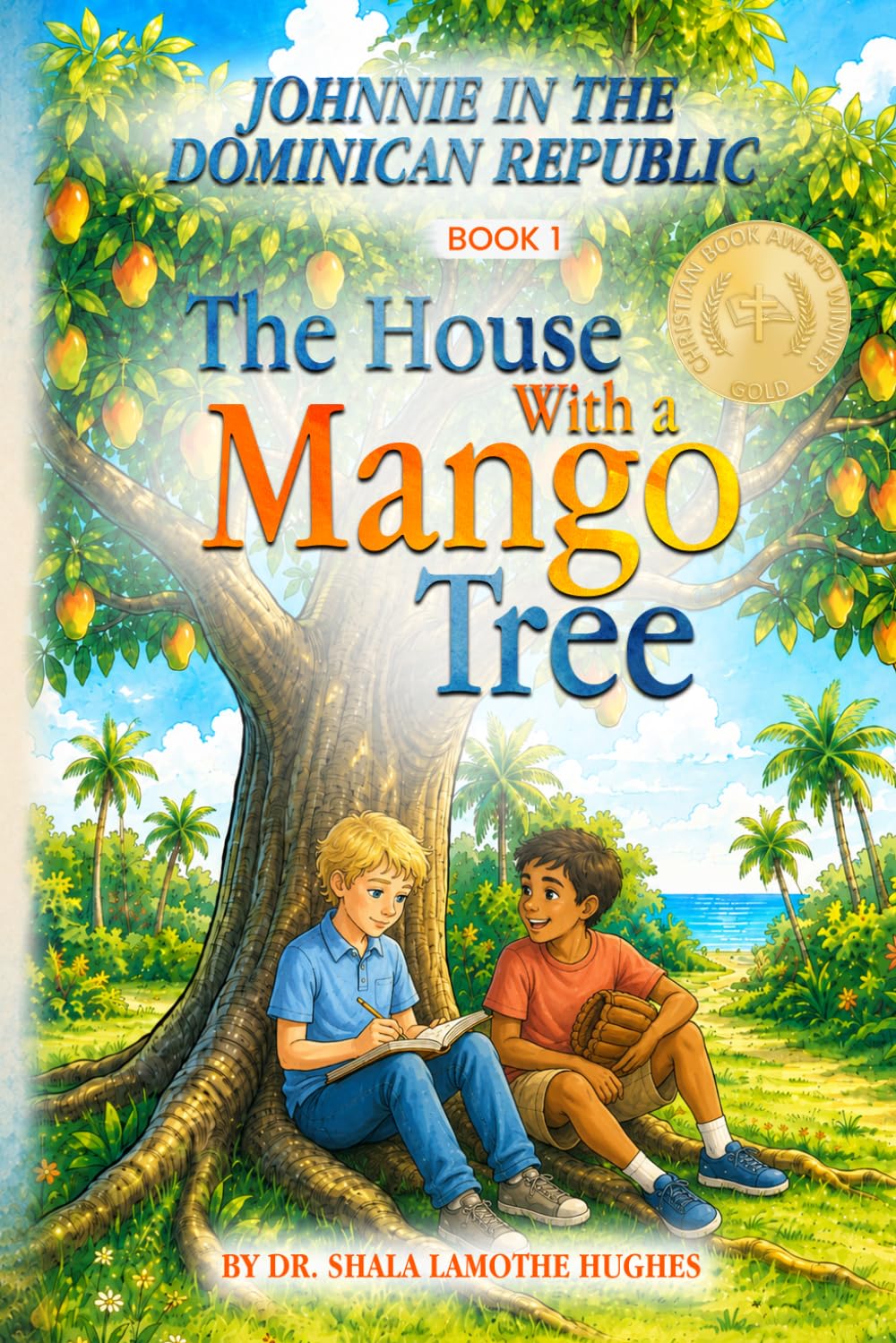
The House With the Mango Tree follows a twelve-year-old as he adjusts to moving from the United States to the Dominican Republic, navigating change, new friendships, and the search for belonging. Where did the idea for this book come from?
My own experience living and serving as a missionary in the Dominican Republic gave me the foundation for this story. Moving to another country brings wonderful opportunities, but it also means leaving people and familiar things behind. Even when you believe God has led you somewhere, the adjustment can be difficult.
I wanted to explore that experience through a child’s eyes. Adults often decide on a move, while children have to find their place in a life they didn’t choose. Johnnie’s story leaves room for both the sadness of leaving and the possibility that a new place can become home.
How did you approach portraying his sadness about leaving behind friends, school, and familiar routines?
I wanted to take his feelings seriously. For a twelve-year-old, friends, school, and everyday routines make up so much of his world. Leaving those things is a real loss, even when the adults around him are excited about what comes next.
It was important to give Johnnie room to miss home without making him seem ungrateful. Children can enjoy a new friendship and still wish they could see an old friend. They can trust God and still feel lonely. I wanted his adjustment to feel gradual, because belonging usually grows through small experiences rather than one moment that suddenly makes everything better.
Why was it important to show ordinary neighborhood life rather than focus only on the differences Johnnie notices?
Some of my most meaningful memories of the Dominican Republic are of ordinary moments—teaching, sharing meals, having conversations, and spending time with people. Those experiences helped me build relationships and feel connected to the community.
I wanted that sense of everyday life in Johnnie’s story. His neighbors have their own families, responsibilities, friendships, and concerns. As he gets to know them, he begins to see beyond what feels unfamiliar. I hope young readers experience that with him and recognize feelings they understand: wanting a friend, wanting to be included, and wanting somewhere to belong.
What advice would you offer aspiring authors who want to explore cultural experiences and faith in children’s literature?
Begin by listening. Learn from people who live in the culture you’re writing about, and give them an opportunity to tell you what you’ve misunderstood or overlooked. Personal experience is valuable, but there is always more to learn.
Give the child’s emotional experience the same care. Let children ask questions, make mistakes, feel disappointed, and grow. Faith can come through naturally in how characters respond – offering kindness, asking forgiveness, praying when they’re unsure, or learning to trust God through change.
Above all, tell a story children want to read. Give them people to care about and a reason to turn the page.
Author Links: GoodReads | Facebook | Website | Amazon
What if leaving everything familiar is the first step toward discovering where you truly belong?
Twelve-year-old Johnnie never asked to move to the Dominican Republic.
Back home, he had his school, his best friend, his basketball hoop—and a life that made sense. But when his parents move the family to a colorful new neighborhood for missionary work, Johnnie suddenly finds himself surrounded by unfamiliar sounds, unfamiliar words, and a culture he isn’t sure will ever feel like home.
Then he meets Mateo.
With a baseball glove, a quick sense of humor, and plenty of patience for Johnnie’s Spanish, Mateo gives the new kid something he desperately needs: a friend. And beneath the branches of a sprawling mango tree, through neighborhood adventures, unexpected power outages, glowing fireflies, and opportunities to serve others, Johnnie begins to see his new home differently.
Maybe belonging doesn’t happen all at once.
Maybe sometimes it begins with one friend, one act of kindness, and the courage to make room for something new.
The House with the Mango Tree is the heartwarming first book in the Johnnie in the Dominican Republic series—a faith-centered children’s story about friendship, courage, cultural discovery, service, and trusting God through life’s biggest changes.
Perfect for young independent readers, family read-alouds, Christian families, homeschoolers, classrooms, churches, and children’s reading groups.
A warm and hopeful story for every child who has ever left something familiar and wondered if a new place could ever feel like home.
The New Dog, A Story About Finding Your True Home
In The New Dog, author Leia Barrett introduces readers to Tiny, a lovable, oversized dog with a big personality and an even bigger desire to belong. Tiny’s life starts in a cozy home, but when he grows too large for his surroundings, he finds himself at an animal shelter, surrounded by unfamiliar faces and plenty of noise. Told from Tiny’s perspective, this charming children’s book follows his experiences adjusting to change, meeting new people, and discovering what it means to become part of a family. Barrett gives Tiny a wonderfully distinct voice, blending confidence, vulnerability, and a healthy dose of mischief. His observations feel just like something a dog might think if given the chance to tell his own story.
The book’s humor comes naturally from Tiny’s enthusiastic approach to everyday life. Whether he’s navigating exercise, attending obedience school, or exploring the household toy collection, Tiny has a way of seeing things that makes even ordinary situations entertaining. His friendship with Odd, a much smaller canine companion, adds another delightful dimension to the story. Their differences in size and temperament create plenty of opportunities for laughter while also highlighting the gradual process of getting comfortable with someone new. Barrett’s conversational writing style makes Tiny an engaging narrator, and his occasional uncertainty gives the story emotional depth without weighing down its playful atmosphere.
Illustrator Shannon McKeon brings tremendous personality to this picture book through lively, expressive artwork that captures the delightful chaos of life with dogs. Tiny’s long legs, exaggerated ears, and animated facial expressions make him especially endearing, while Odd’s scruffy appearance provides an amusing visual contrast. The illustrations have a loose, sketchlike quality, with energetic black outlines and soft washes of blue, green, pink, and brown. Particularly entertaining are the scrapbook-inspired pages featuring snapshots, handwritten notes, and playful captions that document Tiny’s experiences. These details encourage readers to linger over each spread, discovering small jokes and visual surprises that complement the storytelling. McKeon also makes clever use of spacing and movement, allowing the artwork to communicate emotions and personality beyond the words on the page.
The New Dog is a warmhearted exploration of belonging, patience, and the relationships that make a place feel like home. Barrett approaches the subject of pet adoption with sensitivity, acknowledging that adjusting to a new environment takes time, even when everyone has the best intentions. Young readers will recognize feelings of nervousness, excitement, and uncertainty in Tiny’s experiences, making his story relatable beyond its canine perspective. Families who love dogs, especially those familiar with rescue animals, will appreciate the affectionate portrayal of their quirks and individual needs. With its appealing narrator, playful illustrations, and thoughtful message about finding your place, this is a children’s book that invites both laughter and meaningful conversations about kindness, understanding, and welcoming someone new.
Pages: 39 | ISBN: 9781736710364


