Category Archives: Interviews
Compelling Mystery
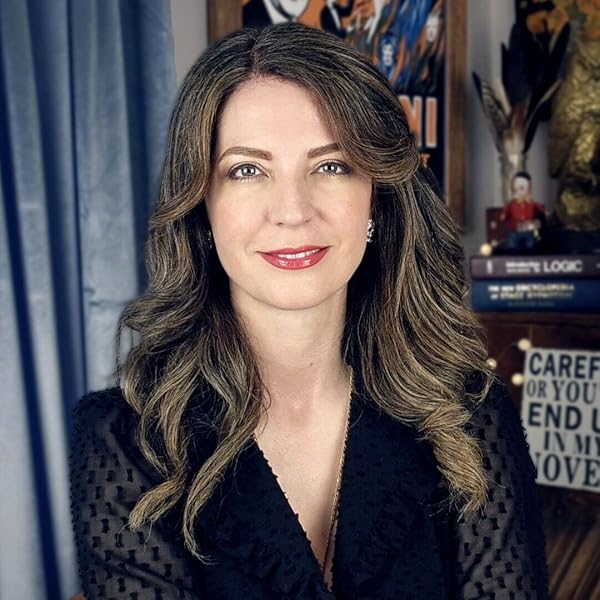
The Magician’s Wife follows a small-town journalist who gets pulled into the mysterious disappearance of a magician’s glamorous assistant who vanishes during a live TV performance, only to reappear a week later, dead. What was the inspiration for the setup of your story?
First and foremost, I wanted to write a novel with a compelling ‘impossible’ mystery at its heart, and give the book the kind of hook that would instantly make a reader want to know exactly how such an impossible event could have occurred. My starting point for this particular mystery was the teleportation illusion, a classic of stage magic. A magician’s assistant gets into Box A on a live TV talent show and is supposed to reappear in Box B, but vanishes for an entire week. She then does reappear in Box B on the show’s next round… but she’s dead. My journalist, Clare, is as shocked by this as everyone else. As the books are told from her perspective, she is echoing what a reader is perhaps thinking as the narrative unfolds. It also appealed to me to have a character drawing the reader in who cared deeply about a missing person case, which is the reason Clare became a journalist in the first place, something we learn more about as the story progresses. A broader inspiration for this book (and the upcoming books in the series!) has been my husband, who is a professional stage and TV magician and with whom I worked backstage for a time. It’s been very useful having a magic advisor on hand while writing this book, especially when devising some of the methods and effects!
When creating Clare, did you have a plan for her development and character traits, or did they grow organically as you were writing the story?
I think it was a bit of both! The two main characters in this story are Clare Deyes and Mara Knight. They’re unlikely allies as they’re such different people from different backgrounds. Originally, I conceived The Magician’s Wife in third-person, to centre more around Mara. But compared to Clare, Mara can be cynical and brittle, a little dismissive and subversive. Certainly in commercial fiction, I find that a character with these traits usually has to be offset by a foil, more of an ‘everyman’ that a greater percentage of readers are able to identify with straightaway. It was true of the Sherlock Holmes stories (a big inspiration for me), and I think it still holds today. In contrast to Mara, Clare sees the good in everyone, is optimistic, and friendly. So Clare and Mara have a real Watson/Holmes dynamic. Clare’s the heart and Mara the brain; you can’t have one without the other. And it’s the contrast between these characters’ personalities that drives much of the novel’s pathos and tension. Saying that, some of Clare’s background and core motivations did grow organically as I was writing the book. As much planning as you might do, as a writer you always tend to make some discoveries about your characters as you go along – and these can often be the most exciting parts of the story!
What was the most challenging part about writing a mystery story, where you constantly have to give just enough to keep the mystery alive until the big reveal?
The Magician’s Wife is my first novel in the crime/mystery genre, and I’ve often heard other writers say that it’s possibly the most difficult genre to write in. Not only do you have to create a compelling mystery in the first instance, but you must ensure that you’re feeding clues to your reader in an ‘honest’ way, so that none of the ultimate reveals come out of nowhere. However, one of the most challenging things I found when writing this book – particularly as the story is told from the first-person perspective of Clare – was keeping in my head what a reader/Clare was thinking about the mystery at any given time (the story’s ‘logical progression’), versus what I knew was actually happening. It certainly kept me on my toes throughout the various drafts! I found having a detailed chapter-by-chapter breakdown written out before I started work on the book was invaluable, and I’ll definitely tackle future novels in the series in the same way.
When will Book Two be available? Can you give us an idea of where that book will take readers?
I’m currently working on the next book in The Magician’s Wife series, and it should be widely available to readers in early 2026! It’s called Second Sight and tells the story of a young boy who claims to be having unsettling visions of the future, visions that appear to be coming true. Even stranger, these visions only started happening after a cornea transplant the boy had to save his sight. When the child makes his most disturbing prediction – that his own life is in danger – it’s up to Clare and Mara to get to the bottom of what lies behind it all in order to save the boy’s life. The setting is a bit of a contrast to the world of TV studios and stage magic in the first book, as Second Sight is largely set in an inner-city London housing estate. I’m hugely enjoying writing this series so far and have lots more impossible mysteries up my sleeve for future books. My biggest hope is that readers will enjoy them as much as I do, as entertaining someone who has parted with their money to read my work is – and has always been – extremely important to me.
Author Links: GoodReads | Instagram | Facebook | Website | Amazon
When Angel, the wife of magician Dex Devereaux, mysteriously vanishes on a live TV talent show, journalist and wannabe investigator Clare Deyes cannot resist trying to work out what happened. But a week later, when Angel reappears dead during the show’s next round, Clare is certain she is out of her depth.
Clare soon realises only one person can help: the brilliant, brittle Mara Knight – magic consultant, psychologist and wife of the world famous illusionist Travers – whose husband’s disappearance is still unexplained.
Can Clare and Mara together solve the puzzle of Angel’s death before the talent show’s live final, when they are sure someone close to Angel has something even more extreme planned?
—
The Sherlock Holmes stories meet Jonathan Creek in this fast-paced, twisty mystery with a generous peppering of pathos and humour. Perfect for fans of Richard Osman and Elly Griffiths, The Magician’s Wife is the first in a brand new series from internationally published author (and real-life magician’s wife) Lora Jones.
Insane Extremes
Uncommon Sense is a raw, unfiltered, and unapologetic deep dive into the heart of American dysfunction, exploring the problems with both parties, and helping Americans understand how we got to this point and what we can do to correct the course. Why was this an important book for you to write?
We all know the country is more divided than it has ever been, and we all know that it has become the norm to hate those with whom we disagree…simply because we disagree. I just had enough of the shouting and the hate and the noise; I had enough of the lies that are never questioned and the misinformation that is readily accepted as fact. So, I set out to offer context and a tough reality check. Writing this book was the only way I could think of that I could contribute to the solution, to help the country get back to what we were intended to be. My biggest hope is that enough people will read it and be moved by it to wrest the control of society away from the insane extremes on both sides and restore it to the vast majority of voters closer to the middle- where governing and growth can happen.
What is a common misconception you feel people have about how America has drifted so far from its founding principles?
I am not sure I understand what you mean by misconception. America has objectively drifted from its founding principles. I believe mass media and social media are to blame. Too many people accept memes as news and headlines as information. Too many people don’t understand enough about history and the foundation of this country to see that most of what they see is just wrong. If the people shouting the loudest understood the Constitution, for example, they would see there is no reason to shout.
What were some ideas that were important for you to share in this book that can help voters start to heal the division that is dividing the country?
The most significant idea to be found on the pages of this book is that we can disagree and still be friends; that disagreeing doesn’t make us enemies; that supporting conservative ideas does not make one a nazi and supporting liberal ideas does not make one a communist; that the answer to everything that ails us can be found in the middle.
What is one thing that you hope readers take away from Uncommon Sense: For the Voters Who Can Save America From Itself?
Beyond what I have already said, I hope readers take from this book the courage and tenacity to always ask the follow-up questions until they get real answers; to never accept talking points as answers; to hold their elected officials accountable for doing what is right for their constituents, or to vote them out regardless of party affiliation. Mostly, I hope they take away the ability to agree to disagree.
Author Links: GoodReads | Instagram | Facebook | Website | Amazon
The immeasurable abundance of misinformation and outright lies, combined with the unfettered vitriol cloaked in the anonymity of the internet, are feeding the beast of hate faster than anything ever has in our history. If the misinformation and hatred don’t end, America will.
Drawing from American history, the Constitution, and the voices of past leaders, Uncommon Sense makes the case that it’s not politicians who will save America, but informed, engaged, and principled voters who dare to think critically, ask questions, and speak civilly.
This is not a book for the far left or the far right—the extremes on both sides may hate its message. Uncommon Sense is for every American who’s tired of the shouting and the noise and the hate; for every American who is willing to have a real conversation.
Getting there is going to require that we put away our biases and party allegiances; that we take a deep breath and open our minds; that we flush away everything we have been told about governing and politics by network media corporations, social media content creators, and clickbait talking point headlines. We must adopt a position of simple pragmatism and logic—we must all think it through to find the simplest solutions for voters and politicians alike to pursue and tap into the true greatness America has to offer in the twenty-first century and beyond. Getting there is going to require that we ask more questions and listen to more answers . . . and that we normalize talking about it civically.
Fight For What Matters

American Entropy is a collection of poetry that swings from political outcry to spiritual yearning, from queer love to existential doubt, and ignites readers’ desire to fight for what matters. What inspired you to write this particular collection of poems?
It was largely just paying attention to the news and seeing how every day, Trump is violating the Constitution, trying to force universities and museums to adopt right-wing propaganda and treat it as fact. Like all fascist authoritarians, Trump hates it when truths that contradict his lies proliferate, so I felt it important to do my part to tell those truths.
Doing it in a way that makes readers want to fight for what matters, rather than just dwelling on the darkness of modern American life, was important to me too, because if you don’t focus on what we still have, it becomes all too easy for people to give up.
The poems about love, metaphysical, spiritual topics, and queer love are all just examples of me writing what I know.
Your poetry tackles deeply emotional and politically volatile topics while also touching on hope for the future. How do you approach writing about deeply personal or emotional topics?
“Power through and write what’s true,” like it says in the poem “It’s Not Too Late.” I just get it out onto the page as accurately as I can before giving myself a chance to question how honest is too honest. I feel like if I’m too reserved in writing my poetry it won’t be as relatable, and the reader will be able to tell I’m holding something back, and it won’t foster empathy as much as I hope my work does by being unflinchingly honest.
How has this poetry book changed you as a writer, or what did you learn about yourself through writing it?
This book really crystalized for me that poetry is an important type of resistance, which is something I think my work has always been when it comes to fighting heteronormativity and homophobia and other bigotries, but this is the first time I’ve dedicated so much of any one poetry collection to raging against one corrupt administration and detailing all the ways it’s trampling our rights and waging war against the American people.
I’ve learned about myself that I really just don’t give up no matter what, and I can help others not give up either.
What is one thing that you hope readers take away from American Entropy?
That this isn’t normal, the way Trump is shredding the Constitution and speaking to our worst natures, and the way Republicans in Congress and conservative Supreme Court justices are complicit in enabling it. That it’s bigoted Nazi fascism, and we don’t have to just roll over and take it.
Author Links: GoodReads | Facebook | Website | Amazon
Through explorations of the metaphysical, religion, and relationships, the poems delve into both darkness and the light born of efforts to expand human consciousness. Despair is given unflinching witness, making the discovery of hope all the more profound. And love—raw, imperfect, and essential—is celebrated as a balm for our plugged-in yet detached modern lives.
If you’re disillusioned with an America sliding toward fascism and the strain it places on relationships, American Entropy may reignite your fire to keep fighting for what matters, keep loving, and hold faith in something greater than ourselves.
Unexpected Surrealism

The Queen’s Dark Ambition follows a fourteen-year-old girl whose struggle to belong in a new town plunges her into a sinister fairy world where trust is perilous and survival demands courage. What was the inspiration for the setup of your novel?
What prompted me to write the first few chapters was when I dreamt of standing in a local wood, jumping over a stream, and finding a whole strange world of hostile fairies on the other side. Those first few chapters were written over ten years ago, when I was still at University, and the story itself developed slowly since then. I guess that shows the power of an idea or story, that it can stay with you.
I intentionally wanted the main character’s curiosity towards a stranger she meets to be what draws her back, as equally, if not stronger than, the dangerous pull of the wood and the fairy abode. A core part of the story explores the development of their relationship. The stranger, Bower, who is a wizard, helps Stacy, the main character, to question life and explore the bigger issues, whilst untangling the true and unexpected nature of the fairy domain.
A pivotal part of the story is about her finding not only her courage, but her voice as well, as fighting for what’s right. I initially thought of her as an introvert, like myself.
It wasn’t until much later in the revision and editing process that she really started to surprise me with just how strong a character she is and what she’s capable of.
Stacy’s voice feels raw and unfiltered, especially in her messy emotions. What inspired you to write her with such honesty rather than softening her flaws?
I’m an emotionally driven writer and love exploring characters’ thoughts and emotions. The protagonist, Stacy, is a teenager, and I craved leaning into that emotional space for the sake of the reader, for them to be taken along for the ride and feel those messy emotions along with Stacy.
The story shifts from domestic drama to eerie fantasy, almost like stepping from one world into another. How did you balance the real-life struggles with the supernatural elements?
I don’t think it’s much of a balancing act, but a question of putting Stacy’s domestic drama into perspective. She’s still obsessed with her phone and is wrestling with teenage worries. She realises the importance of her friends, from whom she is estranged, as well as her parents, whose love she’s been doubting recently, what with a family move and arguing with her Mum. Her friends have also shunned her due to the move. Despite this, she would do anything to protect them all and to get back to them, even in a perilous and unfamiliar world.
Throughout the story, I’ve sprinkled in some real-life grit, which hopefully makes it more believable and resonates widely with readers. I think that’s the glue between the two worlds, as well as seeing both through Stacy’s eyes. I hope I’ve created moments of unexpected surrealism and joy from Stacy’s perspective, too, though.
The fairies in your book are both beautiful and menacing. What drew you to portray them in such a dangerous, unsettling way?
I really wanted the main villain to be alluring to Stacy and to readers, hence why Elantra, the Queen, is beautiful too, to create jarring and unexpected undertones. Honestly, I think the most dangerous thing about the Queen could be that she’s relatable, and, at times, Stacy has sympathy for her. She gets under Stacy’s skin, and Stacy wants to understand how she got like that.
Author Links: GoodReads | Website | Amazon
Life for fourteen-year-old Stacy takes a terrifying turn when she discovers a parallel world hidden within the mysterious woods near her new home. After witnessing a child’s sacrifice, she becomes trapped in a realm where fairies aren’t the gentle creatures of bedtime stories. Under the watchful eye of Bower, a centuries-old wizard bearing the weight of his own tragic past, Stacy uncovers a sinister plot involving imprisoned children and a pure malevolence that will stop at nothing to claim the power of the stars.
Can Stacy find the strength to challenge a Queen who once turned her back on love itself? And if she fails, what fate awaits not only the imprisoned children, but the entire human world?
Are you drawn to magical realms, powerful adversaries, and tales of courage in the face of darkness? Then you’ll be spellbound by this captivating story.
If you like authors Laini Taylor, Melissa Albert or Holly Black, you may like The Queen’s Dark Ambition.
At the core of this low spice, character driven fantasy, Stacy’s journey explores themes of found families, fitting in and finding her voice, which will resonate with many YA readers.
If you enjoy these themes and fillings, The Queen’s Dark Ambition, may appeal to you: belonging/identity, glow up/ fish out of water, chosen girl, hidden heritage, confidence/self-love, power and agency, coming of age, angst & grit, plot-twists, mean girl, tear-jerkers, end of the world, clean Christian mystery.
Lifelong Learner

Nurse Florence®, What is a Mast Cell? follows three curious schoolgirls and their approachable school nurse, who discuss mast cells and their role in the immune system. What inspired you to write about this topic?
Nurse Florence® seeks to spark a global movement of health promotion and literacy. We explore how the human body works in each book, as well as discuss disease topics with our numerous disease-related books. We will be publishing around 700 books in the series, and this topic finally came up to the top of the list of books needing to be written.
How did you decide what to include and leave out in your Nurse Florence books?
Writing the Nurse Florence® books is an art since we don’t want to overload kids with too much science information, but we need to bring college-level information down to a fifth grader’s level. Every book is a little complicated to write, and I decide what to include out of inspiration from my illustrator’s drawings. Disney might say they have Disney magic to help produce their movies, while we have DCE magic to produce Nurse Florence® books to help even adults stay engaged with each page of the books.
What was the most challenging part of writing these books, and what was the most rewarding?
The most challenging is to decide what info to include, and the most rewarding is getting feedback that whole families are learning from each book.
What is one thing that people point out after reading your book that surprises you?
Grandparents have even said on GoodReads that they are learning. I was surprised at first since I thought I was writing just for kids. I’m happy to hear that everyone is learning. Being a lifelong learner is so important in the world that we live in.
Author Links: GoodReads | Website | LinkedIn | YouTube | Nurse Florence Project | Amazon


Education and Evangelism

From Hill Town to Strieby explores the life of Reverend Islay Walden, a man born into slavery who overcame blindness and hardship to return home as a minister and educator, and the legacy the Hill and Lassiter families left on the community. Why was this an important book for you to write?
As descendants of the original families that helped found the church and who continue as trustees today, we worried as we watched the last of the generation before us pass away that our history would be lost if we did not make a concerted effort to preserve, share, and uplift it. As the writer in the group, they looked to me to help that happen. In addition, just as other African American community descendants are concerned about erasure, not just benign neglect, we wanted to do all we could to be certain that the history of the church, school, community and its founder, Rev. Islay Walden, would always be an acknowledged and celebrated part of Randolph County, North Carolina history, and be part of the broader American History of African Americans and the rural South. I didn’t want anyone in Randolph County to ever say again as someone once had, “Strieby? Never Heard of It.”
With regards to Islay Walden himself, I had come to realize, as I researched his life, that in his lifetime, he was not an obscure poet, as some had portrayed him. In addition, I realized that none of the biographical essays about him had really understood that his passion was not poetry, regardless of his success. His passion was education and evangelism. No one had reflected on that in writing about him, so I wanted to pay homage to him as a 19th century African American poet, but even more important for me to elucidate was his legacy in education and ministry.
How much research did you undertake for this book, and how much time did it take to put it all together?
At the time that I made the decision to finally write the book, I had been researching the community for over twenty years and had already written a book about the history of one family, the Miles Lassiter family. At the same time as discussions about writing the book, family members were also asking about historical preservation. As part of that, I prepared an extensive, documented history of the church, historic school, and cemetery in application for the county’s Cultural Heritage Site designation, which we received. That application became the first draft. It took two more years of research and writing before the book was completed in 2016.
What were some ideas that were important for you to share in this book?
The level of educational excellence that the school stood for had been praised and celebrated at every turn by the entire community. This was a community with nearly 100% literacy in the early 1900s, when that achievement was rare for any community in the rural South. This community had placed a high premium on education, and members had gone to great lengths to seek additional opportunities, even leaving the community to do so, yet always returning to share love and encouragement with the next generation. In fact, this community had produced at least one young teacher by 1900, and several more soon followed.
What is one thing that you hope readers take away from From Hill Town to Strieby?
I hope readers see that rural communities of color have been seeking the same things that their urban siblings have been seeking — opportunity. They seek educational opportunities, which they hope, like everyone else, will provide them with other opportunities, including economic security, whether they leave the countryside or not.
Author Links: Goodreads | Facebook | LinkedIn | Website | Amazon
Ethical Accountability
The Broken Gavel: A Sneak Peek is part memoir, part manifesto, and part legal dissection, sharing your story of betrayal, both personal and institutional, experiences with a trusted attorney who failed you, and a friend who used your private pain as creative capital. Why was this an important book for you to write?
The Broken Gavel: A Sneak Peek was born out of necessity, both personal and moral. I needed to reclaim my narrative after experiencing betrayal from trusted institutions and individuals who weaponized my vulnerability. Writing this book gave me the power to turn pain into purpose and silence into accountability. It became my way of transforming what was meant to destroy me into a movement for truth, justice, and self-restoration.
What were some ideas that were important for you to share in this book?
I wanted readers to understand that justice is not just a legal term; it’s a human experience. I focused on themes like ethical accountability, truth versus perception, and the emotional toll of fighting systems that have the power to silence victims. The Broken Gavel is a call to action for transparency, courage, and moral responsibility.
What was the hardest thing for you to write about?
The most difficult part was revisiting the emotional betrayal by people I once trusted deeply, particularly a friend who used my story for her own gain. It forced me to relive moments of pain, humiliation, and disbelief. But it also reminded me of the importance of integrity and emotional boundaries. Writing through that discomfort became an act of healing and reclamation.
How has writing your memoir impacted or changed your life?
This book completely redefined my sense of power and purpose. It helped me move from surviving injustice to leading with resilience. Writing The Broken Gavel taught me that storytelling is not just about catharsis, it’s about creating community and inspiring accountability. Since releasing it, I’ve connected with readers, educators, and advocates who see themselves in my story, which reinforces why I wrote it in the first place.
Author Links: GoodReads | Website | Amazon
Before the full memoir arrives in 2026, The Broken Gavel: A Sneak Peek pulls back the curtain on betrayal, power, and the fight for justice in a way you’ve never read before.
Dashawn Mayweather trusted the system and the people inside it, only to discover her divorce finalized without her knowledge and her most intimate secrets repackaged in a “friend’s” book. What begins as a private legal battle explodes into a story of survival, resilience, and the courage to speak when silence is no longer an option.
Blending raw memoir with sharp legal insight, this preview doesn’t just tell a story, it challenges readers to ask: What happens when the very institutions built to protect us become the ones that try to break us?
Part testimony. Part case study. 100% unforgettable.
This is not the whole book, it’s the spark. The fire is coming in 2026.
When the gavel breaks, the illusion of untouchable power shatters. And from those cracks, a movement begins.
Inner Peace
Healing by His Spirit is a raw, deeply personal journey through pain, endurance, and redemption, as well as an emotional story of faith, trust, and the miracles God performed in your life. Why was this an important book for you to write?
Healing by His Spirit was important to write because it not only released the burden of shame and guilt I carried, but it also allowed me to inspire others to try and overcome their hardships through spiritual healing.
What were some ideas that were important for you to share in this book?
My travels across the globe helped me to find the inner peace I so desperately sought. It helped me to focus on who I truly am.
I appreciated the candid nature with which you told your story. What was the hardest thing for you to write about?
The hardest part for me to write about was the rape scene. Because a child was conceived from it, I had to try and make the best decision about her future, and I decided it had to be me. It took two weeks to write one paragraph, because of the flashbacks I experienced.
What do you hope is one thing readers take away from your story?
The one thing I hope readers will take away is God’s healing power. It saved my life.
Author Links: GoodReads | Amazon



 LITERARY TITAN