Lab Rat (Chronicles of Avilésor: War of the Realms Book IV)


In Lab Rat, author Sara A. Noë drops readers into Cato’s head the way the story drops Cato into captivity: abruptly, violently, with the taste of metal already in my mouth. He wakes bound inside a closed truck bed, is delivered to the underground Agency of Ghost Control, and gets reclassified as “Subject A7,” a “half-breed” anomaly whose powers can be forced on like switches. The book’s early movement is a gauntlet, chemical “Detox,” electrical testing, and surgically implanted ports, before Cato lands in Project Alpha’s cages beside other young prisoners (Ash, Jay, RC, Finn, Reese) and the feral, feared A6, while a larger prophecy thread hums in the background: seven and eight, roles and fates, pieces being placed whether anyone consents or not.
My first reaction was physical. Not “oh wow” physical, more like clenching-my-teeth, shoulders-up-by-my-ears physical. The prose leans into sensation with a kind of unblinking stamina: the “Detox” sequence reads like a ritual of dehumanization dressed up as procedure, and I kept noticing how often Cato’s dignity is treated as an inconvenience to be managed. When the story escalates to the port implantation, drills, the cold ring, the doctor who refuses the comfort-lie of “you won’t feel a thing,” I found myself admiring the author’s nerve even as I wanted to look away. It’s body-horror with a bureaucratic clipboard hovering nearby, which somehow makes it worse.
Alpha isn’t just a scary room; it’s a system that tries to “unname” people, sanding them down to numbers and compliance. That idea, identity as contraband, is what gave the brutality a point beyond shock. And then there’s Ash: her quiet endurance, the way the others speak around her pain because naming it out loud would re-open the wound, and the night-raid scene that is written to disgust rather than to titillate. The book’s tenderness arrives in odd places, like a stolen conversation with the holographic system ECANI, or Cato insisting on names instead of serials, and those small mercies felt hard-won.
Lab Rat is for readers of dark fantasy, paranormal fantasy, dystopian science-fantasy, and YA-adjacent captivity/escape thrillers, especially anyone who wants a morally ugly villain structure and a stubborn ember of found-family refusing to go out. The premise gave me flashes of The Institute by Stephen King, kids turned into “subjects,” cruelty rationalized as research, but Noë twists it through ghost physiology, Divinities, and prophecy math until it feels like its own bruised mythology. Lab Rat explores the cost of being remade by force and how a name, spoken, claimed, and defended, can be a kind of escape.
Pages: 460 | ASIN : B0G4SXMQ6C

From the Shallow End to the Deep End
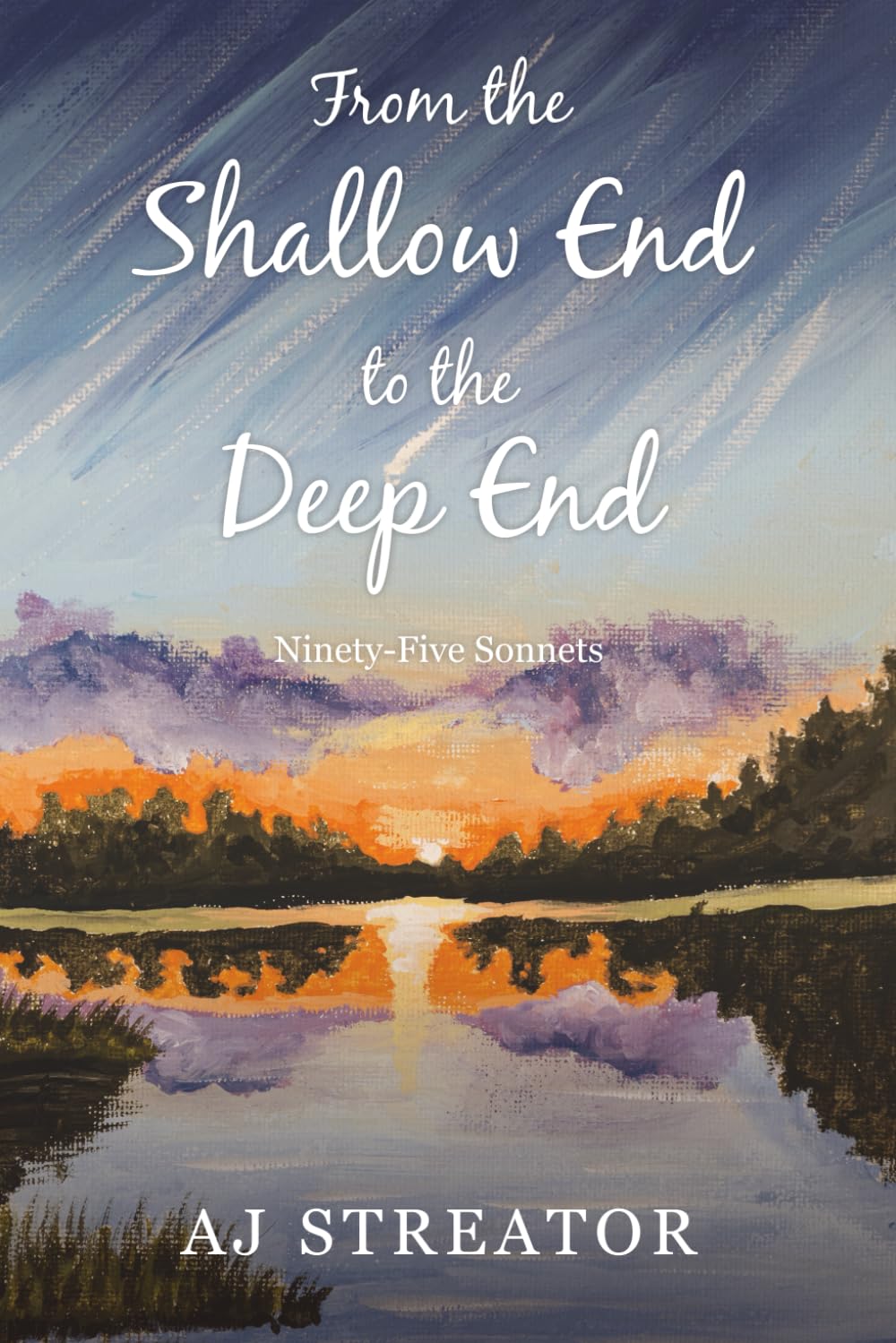
From the Shallow End to the Deep End is a rich and deeply personal collection of ninety-five Shakespearean sonnets that moves through childhood memories, family histories, heartbreaks, faith, despair, and redemption. The book travels in a steady descent from innocence to complexity and then rises again toward clarity and grace. Its structure mirrors the stages of a life that has been lived with open eyes and a bruised but persistent heart, and each section lays bare a different layer of the poet’s world. Streator uses the traditional sonnet form to anchor experiences that feel modern, messy, and often raw, and the tension between old structure and new emotion is one of the book’s strongest features.
I was surprised by how quickly the writing pulled me in. The language is formal on the surface, but beneath it flows a current of sincerity that feels warm and human. I kept pausing at lines that carried a punch not because they were fancy but because they were honest. The poems about childhood felt especially sharp. Scenes of brothers growing apart, parents missing from the stands, and friendships fading hit harder than I expected. They had this way of stirring old memories in me, making me nod along and think, yes, I’ve been there, too. The sonnets in the middle section became heavier and darker, and I admit they made my chest tighten. When the poet spoke about loss, depression, and the desperate quiet of survival, the writing felt intimate. I appreciated that. It made the collection feel alive.
Sometimes the rhyme scheme amplified the weight of the words and made the pain or the joy ring louder. I caught myself smiling at the poems about his children because they warmed the whole book. They softened the darker stories without pretending everything is fixed or simple. That mix of light and shadow felt real to me, and I found myself admiring how Streator holds both without flinching. The shift toward faith in the later sonnets felt authentic, not preachy, more like a man trying to keep his footing after being tossed by life one too many times. It gave the final stretch of the book a quiet sense of hope.
I walked away from this collection feeling both moved and grateful. I’d recommend From the Shallow End to the Deep End to anyone who loves poetry that speaks plainly about life’s messiness while still finding beauty in it. I think it’s well-suited for readers who appreciate traditional forms but want the content to feel fresh, personal, and unguarded. It’s also a meaningful pick for anyone who has lived through family storms, heartbreak, or the slow rebuilding of a life. The book isn’t afraid to wade into deep water, and it invites you to step in with it, one sonnet at a time.
Pages: 109 | ASIN : B0GCPRF4RD
Blank Checks

In Blank Checks, author Genevieve Marshall drops a clean, addictive “what-if” into the modern world: an app that lets anyone enter, then, once a month, chooses one person to receive a literal blank check and write any amount, “tax-free,” for whatever dream they dare to price. The book moves in a kind of braided mosaic: we watch different lives in different places tilt on the hinge of possibility, while a quiet thread of investigation runs underneath, who built this thing, how it knows so much, and what the game is really doing to the people it touches.
What I liked most was the book’s globe-trotting energy. The scenes keep changing temperature, from silvery San Francisco fog to glossy Singapore opulence to European glamour, so the story never settles into a single neighborhood’s problems. Even when the premise flirts with pure wish-fulfillment, the author keeps tugging it back toward character; the money isn’t a magic wand so much as a spotlight. I found myself enjoying how the book treats “Dream BIG” as both an invitation and a test, because the most revealing moments aren’t the winners’ numbers, but their private logic for choosing them.
I also appreciated the author’s willingness to let the game misfire in ways that feel almost mythic. The standout example for me was the Düsseldorf model, who swings for an absurd amount and gets smacked by the bluntest message imaginable, “Insufficient Funds,” a little morality play delivered by touchscreen. That beat sharpens the whole book: it sets a boundary around the fantasy, and it hints that the “mastermind” isn’t just tossing money like confetti; there’s intention, constraint, maybe even a philosophy hiding behind the theatrics. When the curtain starts to lift on the tech (identity verification, location checks, the dart-at-a-spinning-globe randomness), the story shifts into a more conspiratorial key without losing its travelogue gloss.
I think Blank Checks is for readers who like mystery, suspense, techno-thriller intrigue, and contemporary adventure with a strong travelogue sheen, plus anyone who can’t resist a premise that asks, “What would you write, and what would it reveal about you?” The unraveling of the game’s machinery gave me a faint Dan Brown flavor, jet-setting secrets and engineered revelations, though Marshall’s tone is warmer, more interested in lives rerouted than puzzles solved. Blank Checks gives readers a glossy dream, a hidden hand, and the delicious question beneath it: what does your number say about you?
Pages: 480 | ASIN : B0G9B99VTY

The Prince’s Dress Dilemma

The Prince’s Dress Dilemma, by Sara Madden, follows young Prince Eric, a kid who seems to have it all. He is growing up in a palace with his twin sister, Erica, and their dog, Arthus. His days are full of games and little adventures, and every night he pulls on his favorite nightgown and drifts off to sleep completely content.
One morning, though, everything feels different. Eric wakes up to discover he’s had a growth spurt. Overnight, he’s shot up so much that none of his clothes fit, especially not anything fancy enough for the upcoming royal ball. He’s worried, but his parents aren’t. The king and queen quickly come up with a plan: they’ll send him to the dressmaker to have a royal ballgown made just for him. Once his new outfit is finished, Eric heads to the ball ready to enjoy himself, confident that he looks exactly the way he wants to look.
The Prince’s Dress Dilemma, by Sara Madden, is a short children’s book that feels perfect for young kids, especially as a bedtime read or a cozy rainy-day story. The plot is simple, the language is accessible, and the pictures help carry young listeners through the story without losing their attention.
It’s hard to talk about this book without mentioning the obvious: Eric wears nightgowns to bed and prefers dresses during the day. The book is welcoming to the LGBTQIA+ community, even though those terms never appear in the book, and it tells a supportive story for anyone who may find themselves in Eric’s shoes. Eric’s family accepts his clothing choices without fuss, and that quiet, steady support turns the story into one about exploring and celebrating gender expression that doesn’t always fit traditional expectations. The warm and charming artwork reinforces this, especially scenes from the ball that show same-sex couples dancing together.
Parents who want their children to grow up seeing and valuing diversity are likely to embrace The Prince’s Dress Dilemma. The story itself is gentle and good-natured. It encourages kids to feel comfortable in their own bodies and their own choices. That’s a message many parents can stand behind. And for the children who read this book, there’s a clear and valuable lesson: acceptance and kindness toward people who are different from you are not just important, they’re normal, and they’re good.
Pages: 43 | ASIN : B0C5P1TN2H
Out Of Step – Part One, A Memoir of the Vietnam War
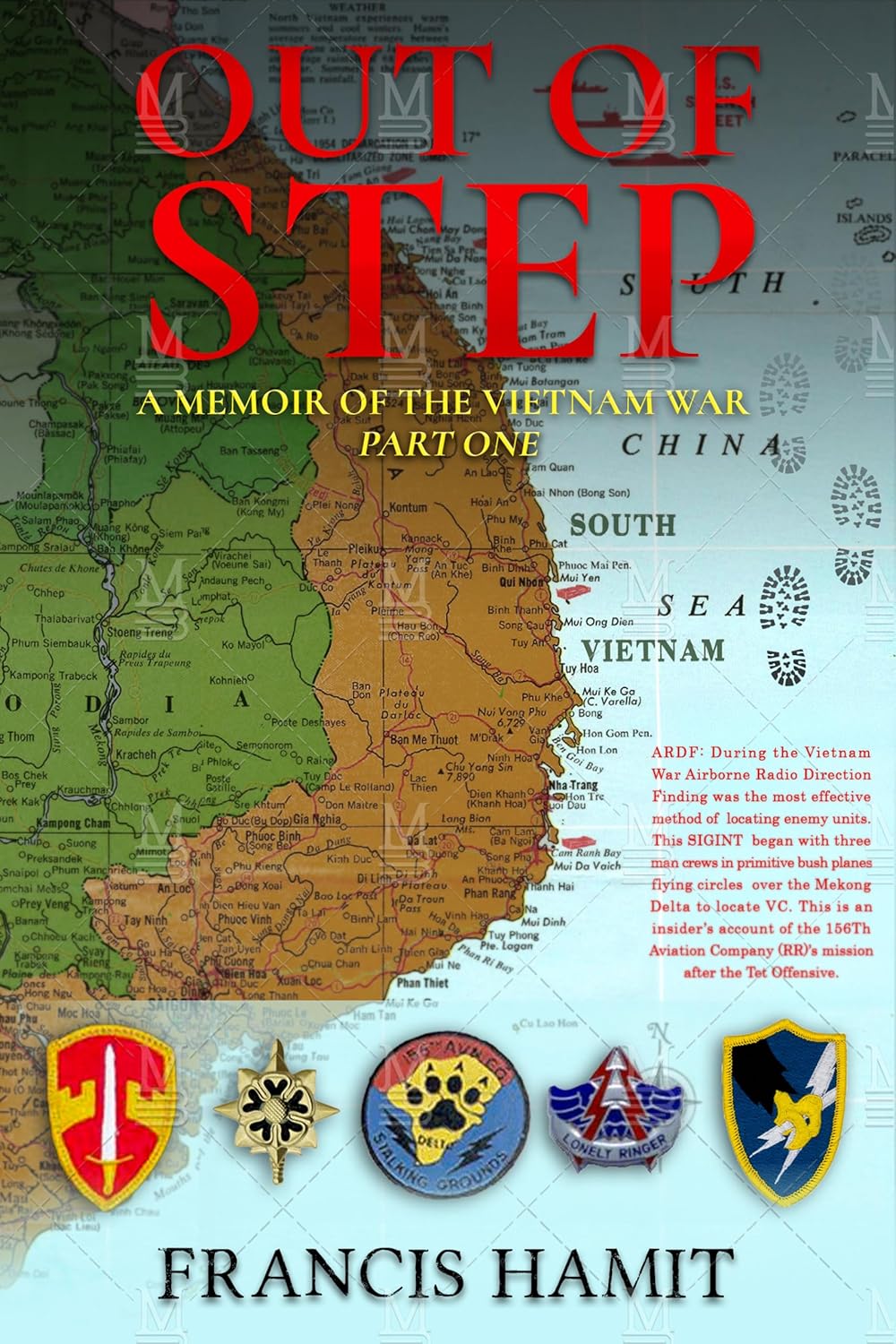
In Out Of Step, author Francis Hamit walks readers through the Vietnam-era hinge where a messy young life gets snapped into military shape, first in Basic Training and stateside intelligence schooling, then into the quieter, stranger corridors of the Army Security Agency (ASA) and its SIGINT world. He frames the war as an intelligence contest as much as a jungle contest, admiring (with a bit of grudging awe) how North Vietnam built a formidable cryptographic service and set the terms of visibility, see clearly or be seen clearly, long before Americans turned it into a slogan.
What struck me first was the book’s refusal to behave like a tidy “war story.” Hamit’s voice is candid, prickly, and alert to the social physics of the Army: who gets hazed, who gets protected, who is quietly sacrificed to bureaucracy. He’s funny in a sharp-edged way, humor as a scalpel, not a comfort blanket, and he’s willing to show himself unflatteringly, including the bad motives that shove him into enlistment and the petty humiliations that sandpaper a person down. The prose keeps swiveling between the personal (family pressure, wounds, lust, shame) and the institutional (orders, cover stories, the odd not-quite-Army status of ASA), which made me feel the claustrophobia of being processed by a machine that doesn’t pause for individual anatomy.
My second reaction was an admiration for the way Hamit describes “realistic training” metastasizing into something darker, particularly the Tactical Training Course at Fort Devens, where simulated capture and interrogation drifts into sanctioned cruelty. Reading about the “menu” of coercion, electric shocks, the “Apache pole,” waterboarding, lands with a delayed thud, because it’s delivered not as a sensational reveal but as another entry in a long ledger of what people will justify when they think the future demands it. And yes: he warns early that sex is plentiful and the story is also a coming-of-age account, which changes the temperature of the memoir. This isn’t antiseptic recollection, it’s lived-in memory with sweat still in it.
This will hit best for readers who like memoir, Vietnam War, military history, espionage, SIGINT, and coming-of-age narratives, especially anyone curious about the war’s less cinematic strata: cover names (“Radio Research”), invisible bounties, and the daily discipline of not drawing attention to yourself while doing work the broader Army barely understands. If Tim O’Brien gives you the war as moral weather in The Things They Carried, Hamit gives you the war as a lived system, bureaucratic, occasionally absurd, and always humming with consequences. In the end, this is a memoir that doesn’t salute the myth of Vietnam; it interrogates it, and keeps its balance while doing so.
Pages: 196 | ASIN : B0G5483Y6L
Recognizing Emotions

Elsie’s Adventures to Harmony Hills: The Big Move follows a seven-year-old girl who faces a move that turns her world upside down and learns that big feelings don’t have to be scary. Was Elsie based on a real child, a personal experience, or a blend of many stories?
Yes, Elsie is inspired by a combination of my own experiences as a mom and my work as an educator. I’ve seen firsthand how moving can turn a child’s world upside down, whether it’s a local relocation or a family starting over in a new country. Many of the children I’ve worked with were English language learners navigating not just a new home but a whole new culture and environment. I’ve also worked with students in higher education who are teachers or aspiring principals, and through their experiences, I’ve seen how families cope with big changes and how children adapt and grow in the process. All of these experiences helped me shape Elsie’s story, allowing me to explore the mix of fear, excitement, and resilience that children feel during major transitions, and to show that big feelings, while challenging, don’t have to be scary.
Anxiety can be hard to explain, even to adults. How did you decide what language would feel safe and understandable for kids?
Anxiety can be an abstract and sometimes intimidating concept, even for adults, so making it understandable for children required careful thought. I wanted to create language that felt safe, clear, and relatable, so that kids could see their own experiences reflected without feeling overwhelmed. In my first book, Elsie’s Adventures to Brainy Cove, I introduced children to the brain science behind emotions, helping them understand why they feel what they feel in a way that is concrete and empowering. With The Big Move, I wanted to take that a step further by addressing anxiety—a feeling that can be confusing and even scary.
To make it approachable, I rely on visual language, metaphors, and storytelling. Illustrations and scenarios in the book also help children see that big feelings are normal, that they come to everyone, and that there are ways to cope and feel safe. My goal is for children to not only recognize their feelings but also feel validated and equipped to navigate them. Ultimately, I hope the book gives children the language and understanding to talk about anxiety and know that big feelings don’t have to be frightening—they can be understood, managed, and even a source of growth.
What skills do you hope children carry with them long after reading the book?
I hope children gain a strong sense of emotional literacy and resilience from reading the book. I want them to recognize and name their big feelings, understand that it’s completely normal to feel nervous, anxious, or overwhelmed, and know that these feelings don’t have to be scary. Beyond just recognizing emotions, I want to give children practical coping skills—ways they can calm themselves, stay grounded, and navigate change with confidence. A key part of this is helping them identify how anxiety or worry feels in their own bodies, so they can notice early signs and respond in healthy ways. Ultimately, my goal is for children to carry the understanding that their feelings are valid, that it’s okay to ask for support, and that they have tools to move through life’s transitions with courage, resilience, and self-awareness.
Will this book be the start of a series, or are you working on a different story?
Yes, this book is part of an ongoing series following Elsie’s adventures. Each book is designed to explore a different emotional challenge or growth moment, giving children practical tools and strategies for understanding and managing their feelings. Through Elsie’s experiences, readers can see that it’s normal to have big emotions, that they can navigate change and uncertainty, and that learning about feelings can be both empowering and even fun.
I’m also exploring new stories that continue to center on children’s emotional and social development, so there is much more to come from Elsie and her world. Each installment will introduce relatable situations, imaginative storytelling, and supportive lessons that children and the adults guiding them can carry into their own lives. My hope is that the series grows into a resource that children can return to again and again, helping them build resilience, empathy, and confidence as they face the ups and downs of growing up.
Author Links: GoodReads | Facebook | Website | Amazon
When Elsie finds out her family is moving to a brand-new town, she’s not so sure she’s ready for the big move. Her stomach flips, her chest feels tight, and her thoughts begin to spiral. Luckily, Granny Grace is there to help her understand what’s going on in her brain and body—and how to work through those big feelings.
Through imaginative storytelling and relatable characters, Elsie’s Adventures to Harmony Hills introduces young readers to helpful coping strategies like deep breathing, positive self-talk, and identifying emotions. With the help of Granny Grace and a clever metaphor involving a brain “guard dragon,” Elsie learns how to tame her anxiety and step into her new adventure with courage and confidence.
🌟 Includes a “Learning Spot” for caregivers and educators—featuring practical tips for recognizing signs of anxiety in kids and guiding them through emotional regulation strategies.
Perfect for ages 5–10, this book supports social-emotional learning (SEL) at home and in the classroom.
Life-Changing Injury

The Legend of Harry Gardner follows a Harvard student journalist, his connection with a football star, and the consequences of a life-changing injury. Where did the idea for this novel come from?
Although I’ve spent most of my writing life in the world of history and biography, I’ve always dreamed of writing a novel, especially one about college football in the 1920’s. The Legend of Harry Gardner is the result of that dream. The inspiration for the major character in the book is the celebrated sports figure, Hobey Baker, who is still considered one of the greatest American college athletes of all time – a star in football and hockey at Princeton. But it wasn’t just his sports heroics on the field that intrigued me, but his sense of character, humility, and sportsmanship, a trait I tried to instill in Harry. The “life-changing injury” incident came from a real Harvard football game in 1909, when Harvard Captain Hamilton Fish hit an opposing player so hard (not maliciously) that the player died the next day. Fish missed several games as a result, but then rejoined the team. As to “Peabo” Elliott, I guess I loosely based him on George Plimpton, the famous “participatory journalist” of modern times, who was from a well-to-do family, dabbled in sports, and was a keen observer of sports heroes.
Is there anything pulled from your own experiences included in Peabo or Harry’s storylines?
Playing high school football helped me get a sense of the sights and sounds and chaos of an actual game from ground level. Attending graduate school at Harvard (and attending several Harvard-Yale games) gave me a sense of place and the color and excitement of a college football game and the look and feel of the stadium.
What research did you do for this novel to get it right?
I read newspaper accounts – both in the Harvard Crimson and New York Times – of old college football games; read several books about Hobey Baker; re-read F. Scott Fitzgerald’s This Side of Paradise (a fictional character named Allenby is based on Hobey Baker); and read everything George Plimpton ever wrote.
Can we look forward to more work from you soon? What are you currently working on?
Yes, I am currently at work on a non-fiction book titled, Harvard Boys, about the intersecting lives of several extraordinary characters as they navigate – both personally and professionally – many of the most important events of the twentieth century: Revolutionary John Reed; columnist Walter Lippmann; World War I poet Alan Seeger; “Putzi” Hanfstaengl, Adolph Hitler’s favorite piano player; and artist Waldo Peirce. I’m also at work on a humorous collection of fictional short stories called Cat Bubbles, Roadsters, and Other Peculiar College Tales, about the adventures and misadventures of a colorful cast of college sports jocks, social gadflies, scoundrels, eccentrics, and one or two kind-hearted souls.
Author Links: GoodReads | Amazon
Forgotten History

On the Wings of Flying Tigers follows a Florida farm boy turned pilot who goes from rural poverty into the morally uncertain skies of prewar China, where choosing to act may matter more than choosing sides. What was the inspiration for the setup of your story?
The almost forgotten history of the Flying Tigers, how they began our unofficial entry into the Second World War.
I used my recollections of a place where I had lived for several years, Palatka, Florida, to make the story more lifelike. As writing instructors say, “Write about what you know.” This farm town launched my story.
What boy doesn’t marvel at his first sighting of a prop plane sputtering overhead? I, too, held that fascination, but unlike my main character, I did not pursue that curiosity into a lifetime career. I chose instead the study of microbes that led to my becoming a pathologist. It’s a story about early impressions and where they might lead us.
One of the book’s strongest tensions is moral rather than military. Why did you want to focus on prewar ambiguity instead of clear-cut conflict?
Life is a constant struggle between what is right and what is easy. People are constantly torn between which fork in the road to take. Often lost in the noise of battle is the tenderheartedness of those in the trenches. I chose to focus on this aspect and not create just another story filled with bombs dropping and active trench warfare.
The book lingers on mechanical, physical details—oil-stained hands, training rituals, engineering problem-solving. Why were those moments important to you?
I felt it was important to transmit the experience of working on these machines, the training involved in getting the skills to put together these marvelous machines, and the constant technical attention to maintaining them to be airborne ready quickly to save lives. The mechanics who work on these fighter planes are unsung heroes.
What do you hope readers take away about conviction, courage, and responsibility?
I hope my readers take away the understanding that courage and conviction in doing what’s morally right isn’t always easy. One must live with the consequences of one’s choices, which may not be those that were truly right for us at the time.
Author Links: GoodReads | Amazon
But dreams come at a cost. Determined to serve and soar, Albert joins the military, enduring grueling hardship and sacrifice as he rises through the ranks. His journey eventually takes him halfway around the world, where he becomes part of the legendary Flying Tigers—an American volunteer group fighting under the Chinese Army’s banner during World War II.
In the cockpit, Albert finds the freedom he’s always sought. Yet every mission tests not only his courage but his very sense of self, reminding him that true freedom often demands the highest price.


