Blog Archives
THE BROKEN MIRROR (A transition from military and civilian lifestyle and beyond
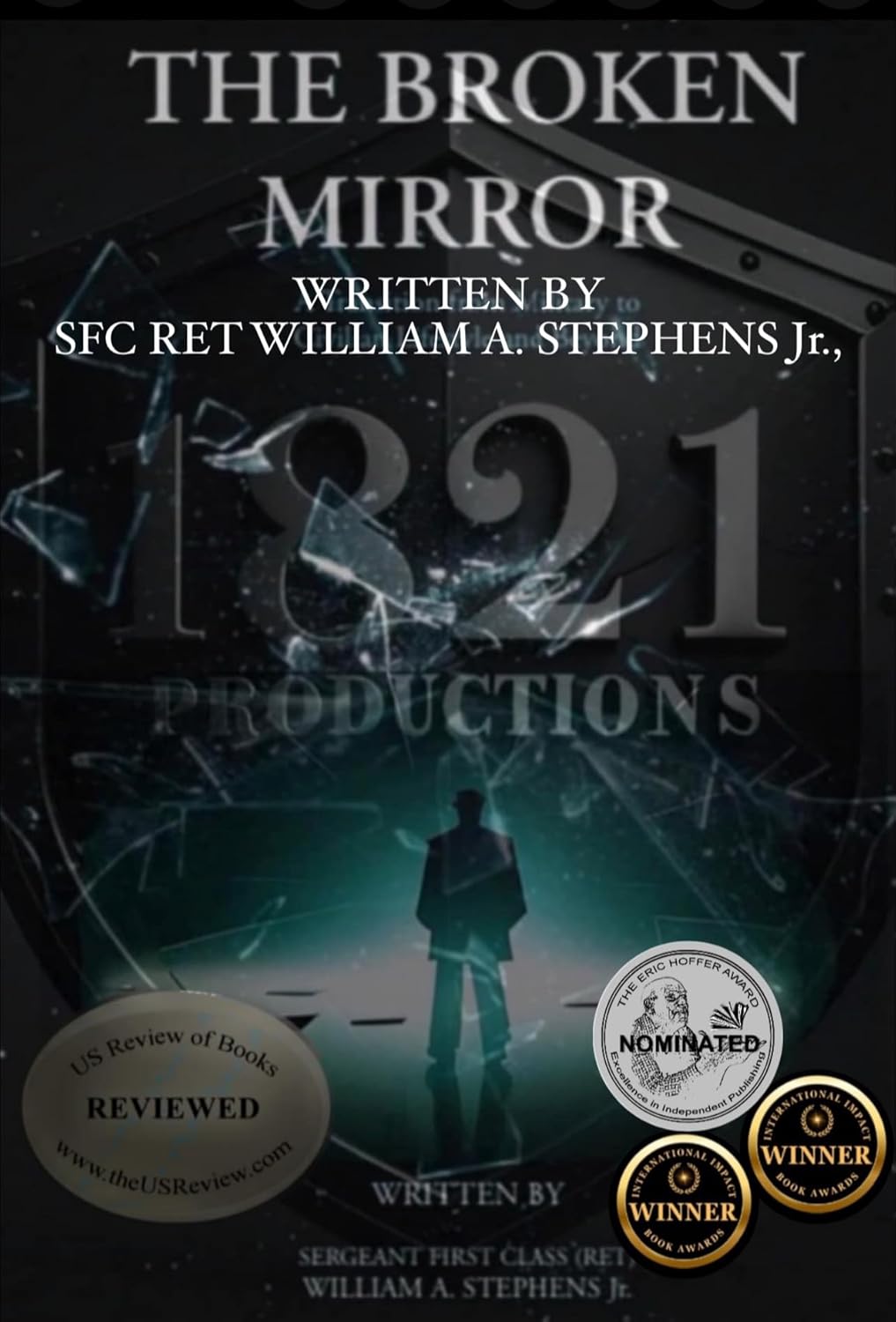

The Broken Mirror is a raw and unflinching account of a soldier’s life after war. It begins with his transition from military service into civilian life, tracing the jagged path of PTSD, broken family ties, and personal battles that stretch across decades. He writes about his service, his divorce, the loss of his parents, the distance with his daughter, and the constant shadow of invisible demons. This isn’t a straight line memoir. It’s more like a series of entries pulled directly from his mind and heart, sometimes sharp, sometimes wandering, always honest. This is a story about survival, regret, and the hope that love, especially the love between a father and daughter, can outlast the damage of war.
Some passages were tough to get through because of how blunt he is. I could feel the pain dripping from them. I admired his bravery for putting it all out there. He’s not pretending to be a hero. He’s showing the ugliness and the shame alongside the small moments of healing. His style jumps around, which mirrors the chaos of PTSD. It was hard to follow at first, but then I realized it pulled me closer to his state of mind. It felt less like I was reading a neatly packaged book and more like I was sitting across from him while he unloaded years of grief and rage.
There’s also a tenderness in these pages that surprised me. His love for his daughter is obvious and heartbreaking. I could feel his desperation to make sure she knows he tried, that he never stopped caring, even when he fell apart. Those parts made me pause and think about the weight kids carry when parents stumble. His reflections on family, loyalty, and betrayal were heavy, but they were also deeply relatable. He doesn’t ask for pity. He just wants someone to hear him out, to acknowledge that the fight doesn’t end when the uniform comes off.
I walked away from this book feeling grateful. I’d recommend this stirring memoir to anyone who wants to understand what living with PTSD feels like from the inside. It’s especially important for family members of veterans because it shows the ripple effects of war long after the battlefield is gone. And for veterans themselves, it might feel like sitting with a brother-in-arms who isn’t afraid to tell the truth. The Broken Mirror is powerful, and it left me with a deep respect for the fight he continues every day.
Pages: 142 | ASIN : B0DLLD2CXC

Sisters and Mothers


Angry? That’s Okay! follows a group of seven animal friends on a camping trip who learn some important lessons on coping with the overwhelming feelings that result from frustration and disappointment. Where did the idea for this book come from?
As sisters and mothers with backgrounds in mental health and play-based education, our goal is to not only create space for children to feel their emotions but to give them tools that will help navigate life’s challenges. We wanted to address anger because it is an emotion everyone feels but not very many people understand how to navigate it. Our own children were the inspiration behind our characters, and we wanted this story to feel relatable to kids everywhere.
What is your collaboration process like? Do you have any routines in place for sharing ideas?
Living on separate continents brings a unique and oftentimes a little manic to our collaboration process. But thanks to technology, it is easier for us to keep track of said manic. We do mostly everything on our phones. We have a separate chat group that is just for book talk. And it helps that we are very much embedded in each other’s lives in the sense that we talk almost every day. So you hear of “power naps” but what we do are “power chats” wherein a small amount of time and competing with a 100 “look at this mums,” we share updates, thoughts, and action plans.
What do you hope young readers and their families take away from your story?
Anger often carries a heavy stigma—as if it’s a “bad” emotion. Because of that, many children (and even adults) aren’t equipped with the tools to handle it in a healthy way. We want our readers to understand that anger is a completely natural and normal emotion. The key isn’t to avoid it but to learn how to manage it in ways that are safe and constructive.
What is the next book that you are working on, and when will it be available?
We don’t have a specific title to announce just yet, but we do have a few exciting ideas in the works! Like our previous books, these upcoming stories will continue to focus on social-emotional learning and growth mindset themes. We’ve been releasing a new book each year since we began writing professionally, and as such readers can likely expect our 4th book sometime next year.
Author Links: GoodReads | Facebook | Website | Amazon
Through relatable scenarios, this book explores the different ways anger can look and feel. From clenched fists to racing hearts, young readers will learn to identify the physical signs of anger and discover simple, effective strategies to manage their emotions. Whether it’s deep breathing, body scans, or taking a break, each character in the story finds a method that works for them.
With vibrant illustrations and an encouraging message, Angry? That’s Okay! empowers children to understand that anger is a natural emotion-but learning how to handle it can make all the difference. Perfect for parents, teachers, and caregivers, this book is a valuable tool for fostering emotional awareness and resilience in young readers.
Angry? That’s Okay!: A Book on Recognizing and Managing Anger


Angry? That’s Okay! invites readers on a delightful camping trip alongside seven close friends, each bubbling with excitement, until things don’t go as planned. Whether it’s struggling to pitch a tent, feeling disappointed about not spotting the brightest star, or missing a parent, each child faces moments of anger and frustration. Instead of letting their emotions spiral into tantrums, they pause, acknowledge their feelings, and choose joy over outbursts.
Selvanathan and Fassbender have crafted an accessible, engaging narrative that speaks directly to children’s emotional experiences. The message is clear and empowering: feeling upset is normal, but how we respond matters. The story gently guides young readers toward self-awareness, offering a toolkit for emotional regulation wrapped in a relatable storyline.
The illustrations are vibrant and inviting, creating a visual playground that encourages further discussion between children and adults. This makes the book not only enjoyable to read but also an excellent resource for initiating conversations about feelings. It’s a valuable addition to any classroom library and equally impactful in a home setting.
What stands out most is the simplicity of the scenarios. The authors intentionally choose everyday situations, minor setbacks that children frequently encounter, making the emotional responses feel authentic and approachable. At the end of the book, readers are offered practical strategies for managing big feelings, which parents and educators alike will find useful when revisiting the story.
Angry? That’s Okay! is a heartwarming, insightful read that validates children’s emotions while teaching them healthier ways to cope. A must-have for young readers learning to navigate the ups and downs of growing up.
Pages: 40 | ISBN : 978-0975648339
Communication Structure
Anger Management Solutions for Parents is a hands-on, compassionate guide aimed at helping parents understand and manage their emotional responses, especially anger, in the context of parenting. Why was this an important book for you to write?
I am passionate about families being the most important cornerstone of great people. Children are our future.
What were some ideas that were important for you to share in this book?
That sharing feelings and setting up boundaries are all structures needed for family and life communication. Parents are the biggest influence on a child’s experience and learning.
What is one piece of advice you wish someone had given you when you were younger and struggling with the frustrations of parenting?
I wish my parents were more open and understood what they were teaching me as a child in how to handle my anger, by handling theirs with us and each other.
What is one thing you hope readers take away from Anger Management Solutions for Parents?
Build a communication structure with their children that makes a difference in that child’s life and all the people they interact with throughout life. Instill confidence in who they are and ensure that what they are communicating is effective and not damaging to another or themselves.
Author Links: GoodReads | Facebook | Amazon
As a parent, navigating the emotional challenges of raising children can often feel overwhelming. The daily mix of joys, frustrations, and responsibilities can stir up anger and frustration, making it difficult to maintain a peaceful household. You’re not alone in feeling this way.
Does this sound familiar?
• You’re trying to keep your cool, but your child’s actions push you to the brink.
• In stressful moments, communication becomes strained, leading to misunderstandings.
• You regret your reactions in heated situations, wishing for a better approach.
• Despite your best efforts, the home feels tense, and you worry about how your anger is affecting your relationship with your child.
It’s normal to feel overwhelmed, but it doesn’t have to define your parenting journey.
Managing anger in parenting is a skill that can be learned. In Anger Management Solutions for Parents, you’ll discover practical strategies to regain control over your emotions and create a more harmonious family environment. This book will guide you through understanding your anger, identifying triggers, and applying effective techniques to stay calm.
By the end of this book, you’ll have practical tools to improve your relationship with your children and foster a nurturing, positive family atmosphere.
Key insights from the book
• Understanding Anger: Learn the psychology behind anger and how to turn it into a constructive force in your parenting.
• Identifying Triggers: Discover methods to identify what sparks your anger and how to manage those reactions.
• Mindfulness Techniques: Gain tools to stay calm and present, even in challenging moments.
• Effective Communication: Learn how to communicate effectively with your children, reducing conflict and misunderstanding.
• Building Emotional Resilience: Strengthen your emotional awareness and foster a supportive environment for your family.
• Practical Strategies: Discover actionable techniques, including journaling, breathing exercises, and timeouts, to regain control over your emotions.
• Creating a Support System: Learn the importance of seeking support from others, including professional counseling and connecting with other parents.
Whether you’re new to parenting or have years of experience, Anger Management Solutions for Parents provides essential tools to help you stay calm, positive, and engaged with your children. Ready to transform your approach to parenting? Start the journey today!
For The Difficult People Who Sometimes Never Know

Sarah Elliston Author Interview
Lessons from a Difficult Person: How to Deal with People Like Us is a guide for people who find themselves dealing with people they find difficult. Why was this an important book for you to write?
As a recovering difficult person, I find myself aching for the people who didn’t say anything to me as I gaffed, who avoided me rather than take the time to help me see how annoying I was. I wrote the book for all of us who avoid difficult people, to help them actually have conversations with them. And I wrote it for the difficult people who sometimes never know how they are perceived by others and feel lonelier and angrier and distanced from others.
I understand that you are a successful workshop leader and trainer. What is one common misconception you find that people have about ‘difficult people’?
One common misconception people have about difficult people is that their behavior is purposefully hurtful; deliberately unkind.
I enjoyed the personal stories you shared. Was this always going to be a guide book, do you think this could have easily been a memoir?
I wanted to help people understand how difficult people are unaware of their impact on others and to do that I had to use my own life stories. It could have been a memoir but my passion is helping difficult people discover that they can change and the only people who tell them would be the readers. Thus, I included the exercises and practice processes for having a conversation.
What do you hope readers take away from your book?
I hope readers will look at difficult people differently and look for ways to help. I hope readers will see that difficult behavior is a habit, and it can be changed.
What is the next book that you are working on and when will it be available?
I am currently working on a book with more stories about my life in terms of how I changed, with the focus on how difficult people can change; either a reader or a friend of a reader.
Author Links: Facebook | Twitter | Website
 The funny thing is that Sarah Elliston never realized she was “a difficult person,” –someone who harangued people until she got her way, threw snip fits and temper tantrums, talked over her bosses and pointed out what she thought were their misconceptions. In her family, where she felt bullied, the only way she knew how to get someone’s attention and approval was to voice her opinion–and loudly! Without standing her ground, how could she do what she thought was best for herself and everyone else around her. She wasn’t intentionally mean-spirited. She was just trying to do what she thought was RIGHT!
Until a kind, but firm, boss woke her up! With great compassion, and strength, her boss pointed out that her actions had consequences. That in being “difficult,” she was not only disrupting the office camaraderie and production, but impeding her own professional advancement.
That’s the beginning of Sarah’s transformation– when she started on the journey to leave behind the difficult person, and become the woman who teaches others how to deal with difficult people. Sarah “Sam” Elliston is now bringing forth her vital manual on how to awaken the challenging personality, and change both the relationship and the environment with her new book Dealing with Difficult People; Lessons Learned from a Difficult Person.
Today, Elliston is a highly successful workshop leader and trainer, who offers wisdom learned the hard way–and through rigorous study and certification in many areas of professional training that aid her in her work — Values Realization, Parent Effectiveness Training and Reality Therapy. She is a faculty member of the William Glasser Institute. Glasser is an internationally recognized psychiatrist and developer of Reality Therapy, a method of psychotherapy that teaches people they have a choice in how they choose to behave.



