Blog Archives
Nurse Dorothea Presents A Comprehensive Discussion on Mental Well-Being
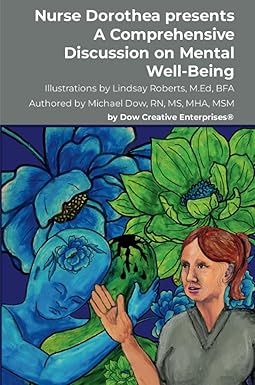

Nurse Dorothea Presents A Comprehensive Discussion on Mental Well-Being is a remarkable guide that delves into the intricacies of mental health, offering readers an engaging and insightful exploration of well-being. Framed as an interactive after-school club led by Nurse Dorothea, the book aims to demystify mental health topics and provide practical tools for managing emotions and life challenges. This blend of educational storytelling and practical advice makes it a valuable resource for young and adult readers seeking to improve their mental well-being.
The writing style is straightforward and inviting, making complex concepts accessible to a broad audience. One of the standout features is the way Dow seamlessly integrates scientific explanations with everyday scenarios. For instance, the section on neuron communication and brain function is particularly enlightening. Dow’s ability to explain such detailed biological processes in a manner that’s easy to grasp without oversimplifying is commendable. It’s like having a friendly chat with a knowledgeable mentor who genuinely cares about your mental health journey.
Another aspect I appreciated is the book’s focus on practical applications. The discussions on resilience and protective factors include actionable steps and personal reflections from fictional students. This approach helps readers relate the content to their own lives. For example, the Serenity Prayer is introduced as a tool for accepting life’s challenges and focusing on what can be changed. This blend of practical advice and philosophical insights provides a well-rounded perspective on mental health.
The book strongly emphasizes the importance of self-awareness and situational awareness, reinforcing these crucial concepts throughout. This consistent focus helps ensure readers understand these ideas. However, I think some sections, such as the explanation of systems thinking, could be even more engaging with additional real-life examples to help readers visualize these abstract ideas better.
Nurse Dorothea Presents A Comprehensive Discussion on Mental Well-Being is a comprehensive and compassionate guide to mental health. It’s perfect for anyone interested in understanding mental health better, whether they are students, educators, or simply individuals looking to enhance their emotional resilience.
Pages: 598 | ASIN: B0D9R53ZNS

CONEtrolled: How We’ve Lost Our Freedom and How to Reclaim it


CONEtrolled delves into the intricate dynamics of power structures and societal control mechanisms through an innovative concept termed the “Cone Model.” The book is divided into several parts, exploring the origins of societal issues, the manipulation of needs and solutions, the development of systems into dogmas, and the ultimate rise and fall of these controlling structures. It concludes with a hopeful vision for reclaiming individual and collective freedom.
Dr. Israel’s writing is both engaging and thought-provoking. She skillfully uses metaphors and detailed examples to illustrate complex social phenomena. For instance, in Chapter 1, the discussion on Core Certainties and their transformation is particularly compelling. The author’s ability to connect abstract concepts with everyday experiences makes the book accessible without oversimplifying the issues. However, there are moments when the dense academic language might overwhelm readers who are not accustomed to such in-depth analyses.
One of the most striking parts of the book is Chapter 16, “Belly of the Beast,” which delves into how Cone Systems devolves into sluggish bureaucracies while expanding its power and reach. Dr. Israel vividly describes the propagation of rules and the ills of bureaucracy, illustrating how these systems prioritize self-preservation over the welfare of individuals. The chapter’s exploration of the expansion and colonization of Cone Systems is particularly relevant, shedding light on how power structures entrench themselves and stifle innovation and freedom. This chapter not only critiques the inefficiencies and oppressiveness of bureaucracies but also serves as a cautionary tale about the dangers of unchecked power.
CONEtrolled is a rigorous exploration of societal structures and the mechanisms of control. It is particularly suited for readers interested in sociology, psychology, and political science. Dr. Israel’s book challenges readers to critically assess the systems around them and consider active steps toward reclaiming personal and collective autonomy.
Pages: 707 | ASIN : B0D6WKCKRY
First Nations Culture

Luka and Little Feather follows two First Nations siblings living on a reservation who discover a wishing stone that takes them on an underwater adventure. What was the inspiration for your story?
As an educator, I see the inequities in literature and I wanted to be the change. There are very few First Nations authors and very few stories that depict First Nations characters as the heroines of the story. I wanted to write a story that highlights First Nations culture while also providing a way for children to really “imagine and dream” of what it would be like to really find a wishing stone. Kids who live in survival mode need stories like this that enable them to look beyond the world as it is.
What were some educational aspects that were important for you to include in this children’s book?
Language and culture are critical when it comes to understanding Native culture. Everything you see in the book has meaning. Their clothing, toys, posters on the walls, hair clips, etc… Every page also has a hidden message that highlights a Native cause… “We are still here,” “MMIW,” “honor the treaties” etc.. I want kids to see these hidden messages and ask… “what does that mean!?”
I am currently working on a supplemental First Nations curriculum based on the hidden messaging in the book. Teachers are starving for better and more culturally responsive ways to teach Indigenous studies, and this gives them a way that is current, fun, and less threatening.
The art in this book is fantastic. What was the art collaboration process like with illustrator Nix Doxtater
Nix is also Native and comes from the same tribe as myself. She understood how important it was to get the cultural aspects of the story right. She is a visionary and was able to capture my thoughts and ideas beautifully.
Is this the first book in the series? If so, when is the next book coming out, and what can your fans expect in the next story?
We are hoping this story becomes a series. There are SO many places they could go! I am hopeful another Luka and Little Feather book can be published by 2026!
Author Links: GoodReads | Facebook | Amazon
While out exploring by the river, Luka finds something that will change their lives forever-a yotnʌyátku, or “magic stone.” Luka and Little Feather take it home, where they make their wish to see their beloved ocean. At first, this stone seems like just a plain old rock, but when they awake, they realize they have been transported to an underwater world of magic and amazement.
Together with their friend Whaliam, the girls explore the blue sea. The vibrant colors, new friends, food, and experiences are more than the girls could have ever asked for. However, Luka and Little Feather soon realize that even with their dream coming true, nothing is as extraordinary as the comforts of home.
A Blessing and a Curse

In Sentience Hazard, artificial intelligence takes center stage when the cognitive abilities of beings developed by both the US and China threaten humanity. What was the inspiration for the setup of your story?
We are now witnessing the biggest explosion of Artificial Intelligence development in history. Although I have strong reservations that the current path of generative AI and machine learning can lead us to true AI, I am sure that what we now call AI is here to stay, and it will impact all our lives. Despite warnings from specialists, AI finds its way more and more into the military. Nowadays, powerful countries seem to slip further into autocratic regimes. As someone who lived seventeen years in a country led by a dictator, I worry about empowering such governments with strong AIs.
With Sentience Hazard, my goal was to say that we need to focus our efforts on creating AI in a way that is, as much as possible, compatible with us. We need to raise it to be aware of our shared human values and, once we give it free agency, it should want to help us. AI needs to be born in a place that values democracy and freedom. Otherwise, all of humanity will be in trouble.
What are some things that you find interesting about the human condition that you think make for great fiction?
Humans are complicated beings. Civilization advances on the eternal struggle between love and empathy on one hand, and hatred and tribalism on the other. So far, we have made amazing progress, but the availability of mass destruction weapons has the potential to spin things in a nasty way quickly. Human nature is simultaneously a blessing and a curse. Fiction writing is one of the best tools we have to steer humanity on the right course.
What type of research was required to perfect the scientific aspects of your novel?
I’ve been interested in Artificial Intelligence since the late ‘80s when I was first exposed to ELIZA, an early chatbot created by Joseph Weizenbaum, a professor at MIT. Although ELIZA was built on much more primitive tech compared to the likes of chatGPT, it certainly made an impression on me as a young boy. ELIZA and my desire to study AI made me go into Computer Science. In the late ’90s, I had the chance to work on one of the first general AI projects with Ben Goertzel, who coined the term “Artificial General Intelligence” and continues to work on creating AI. In 2012, I was accepted into a Neuroscience PhD program at the University of Southern California – that I ultimately decided not to pursue because of circumstances beyond my control. All my life I read a lot of books and scientific papers about the human mind and AI. In time, I formed my own opinions, and I selected the research I find most promising. One challenge with writing Sentience Hazard was to take a few interesting aspects of the human mind and present them in simple language, somewhat coherently, wrapped in a story that keeps the reader engaged.
What is the next book you are working on, and when will it be available?
I would like to write a sequel to my first book, The Soul Machines, which is something that readers asked for. I also purposely finished Sentience Hazard so that I could continue the story in many directions. Either way, my next book will certainly not come out this year.
Author Links: GoodReads | X (Twitter) | Facebook | Amazon
The US and Chinese artificial beings, developed with radically different principles, share one essential quality: their cognitive abilities go well beyond those of any human being. The future of the world hangs in the balance. Can humanity survive the clash between two sentient forces of its own creation?
Small Acts of Caring

World Citizen follows a seasoned humanitarian as she navigates war-torn regions, aiming to foster resilience and compassion while grappling with the harsh realities of conflict and displacement. Why was this an important memoir for you to write?
Conflicts continue to erupt in regions where I traveled with international humanitarian and human rights organizations decades ago. The stories in World Citizen provide an historic context and put a face on victims and survivors, invoking compassion and understanding. Small acts of caring can provide hope and healing to those who have lost everything,
Throughout your travels, you’ve encountered diverse cultures and hardships. Which experience had the most profound impact on you personally?
In 1984, I went to Central America during the height of the “Contra Wars” in Nicaragua and El Salvador. I met with Sandinista leaders, with peasant farmers working their fields under gunfire, people sheltering in a church severely damaged by a recent earthquake, and with women who were selling their bodies in order to feed their children. The journey taught me the consequences of war and ignited a lifelong passion to support humanitarian intervention and promote peace and justice around the world.
What were some ideas that were important for you to convey in your book?
We are all World Citizens and should be aware and responsive to the needs of others. At the end of my book, I included the Universal Declaration of Human Rights. After World War II, all United Nations member countries signed the UDHR and agreed to uphold the basic human rights of their people. As World Citizens, we must hold them responsible.
What do you hope readers take away from your book about their role in the global community, and what steps can individuals take to contribute positively to humanitarian issues?
I hope that readers will see themselves in my stories of survival and resilience and will understand that we are connected as a global community, more alike than different. What affects one impacts all. Love and hope can be powerful healing agents.
Author Links: GoodReads | Amazon
Proof of Alien Intelligence
In Journey to Antares, two teens become pioneers in space exploration when drawn together by a mysterious radio message from a distant star. What was the inspiration for the setup of your story?
I’ve presented educational programs for nearly 10,000 elementary students in schools, libraries, planetariums, and at the Smithsonian National Air & Space Museum to teach them about space science and history. The most common question I get from the students is, “Are aliens real?” To address this possibility, I wrote Journey to Antares as a science fiction story about how people might respond someday if we ever found proof of alien intelligence in the form of a radio message from space.
What character did you enjoy writing for? Was there one that was more challenging to write for?
My favorite character to write for was VISTA the robot. She’s the most logical and intelligent, but she also enjoys writing songs and speaks in musical tones as she did in my TV series, Space Quest with Dr. Jim. VISTA cares very deeply about PIPER, the other robot, but she is careful not to let him know her feelings as she chides him for his silly jokes. The most challenging character to write was PIPER the robot who was learning about humor, since it wasn’t easy to come up with so many space-related jokes for him to test out on the other characters.
I find that, while writing, you sometimes ask questions and have the characters answer them. Do you find that to be true? What questions did you ask yourself while writing this story?
The biggest question I had was how to justify the selection of teenagers Tommy Cosmo and Laura Starr to be the most qualified researchers to design the new technologies for the Aurora space-time ship to reach the star Antares. It would be too easy for them to become “Mary Sue” characters, so I had them answer that question themselves in flashback scenes set five years earlier in the story. Through their actions at an earlier age, both Tommy and Laura proved their intellectual qualifications and I’ve received positive feedback for clearly addressing that issue.
Can fans look forward to more books from you soon? What are you currently working on?
I have a full set of notes for a sequel about how the characters help to save the aliens who sent the message from Antares since it turns out to be a distress call. Before I write the next book, I’m currently recording the audiobook version of Journey to Antares which will include twelve original songs that are in the text. This way, the audiobook readers will get to hear the melodies of the songs as well as the lyrics that are in the printed book. I’m also working on some animated video shorts for key scenes in the story.
Author Links: GoodReads | X (Twitter) | Facebook | Website | Amazon
In the captivating space adventure novel Journey to Antares, we follow the remarkable tale of two young scientists, Tommy Cosmo and Laura Starr, along with their trusty companion robots, Piper and Vista. Their mission: to design and construct the spacetime ship Aurora, enabling them to journey to the past of an alien planet within the Antares star system. This extraordinary odyssey takes them to the very heart of the mystery surrounding the alien message and humanity’s response to it.
Journey to Antares is a thrilling narrative inspired by the award-winning Space Quest with Dr. Jim public-access and YouTube TV series. To aid readers in delving into the depths of space and science, the book includes a helpful glossary of scientific terms used throughout the story.
Experiences of Grief and Loss

The Dreamer and the Dreamed is an evocative collection of poems that delve into themes of queer love, memory, and self-discovery. You share your personal story with readers in this collection; how hard was it to put this out in the world for people to read?
At the end of the collection I include a Postscript with the poem “Juncture.” The final lines of the poem read: “…And all those keepsake odes,/Their golden locks and keys—/Worn smooth as ancient river/Stones: the hard-earned remains/From the art of a nameless dying.” So in answer to your question: Yes, it was both hard, and a hard-earned completion of poems in the making that I’d been living with for decades. In terms of the personal aspect of many of the poems, my hope (as in the words of the psychotherapist and author Carl Rogers: “What is most personal is most universal.”), is that the stories they tell resonate as universal.
What were some ideas that were important for you to share in this collection?
The title of the collection: The Dreamer and the Dreamed, a line taken from the centrepiece poem of the “Young Joseph’s Dream” section of the book, in many ways runs through the entirety of the collection as it explores the interaction between dream consciousness and reality-based time & space consciousness.
Many of the poems concern themselves with experiences of grief and loss. I include a poem titled “In Memoriam” which chronicles a springtime experience of coming to terms with my mother’s death. I summarise this experience with the inclusion of these two lines: “The day you mourned her passing/Is the day the world was reborn.” These lines, and what they suggest in the context of the poem and the universal experience of human suffering, share a kinship with this declaration from Rainer Maria Rilke: “Oh, tell us, poet, what do you do/—I praise./ But those dark, deadly, devastating ways, how do bear them, suffer them?/—I praise…” It is significant that my experiences of grief of loss, having found their way into my poetry making, also bring with them a transformative sense of praise.
What is one thing you hope readers take away from your poetry?
I’m going to again reference R. M. Rilke who says a work of art is the product of having gone to the very end of an experience; that it should spring from necessity and be judged by its origins. Borrowing from this insight, I would hope that whomever finds their way to Young Joseph’s Dream gives their experience of my work a favourable judgement.
Can you tell us about the second volume of poems, and when it will be available for fans to purchase?
Poetry making has its own timetable — at times the ground is fertile, at other times, definitely not. That being said, if you go to www.joeleahey.com and check out some of the material in Joe’s Poems, therein lies clues as to what Vol. 2 of The Dreamer and the Dreamed might eventually look like.
Author Links: GoodReads | Twitter | Facebook | Instagram | Website | Amazon
More than an exploration of the passage of time, these poems inhabit the liminal space between reality and the dream world. They consider the ways altered states of mind and dream consciousness influence life and art. Film, popular music, and literary icons infuse these words with rhythm, style, and musicality. They illustrate the ways different forms of expression and lyricism inspire the poet. Readers will recognize the influences C.P. Cavafy, Edna St. Vincent Millay, and James Baldwin, among others.
Poetry lovers will enjoy the breadth of scope in this collection. From astrological phenomena and spirituality to homoeroticism and death, The Dreamer and the Dreamed reveals the complicated experiences of existence.
Sincerity and Authenticity
The False Queen follows a young fairy who arrives on an island and is thought to be royalty due to her appearance and she does her best to give back to the islanders. Where did the idea for this fantasy story come from?
The answer to this question takes place at an inspiring moment. I’m just now writing a story for a fantasy anthology, which includes the same protagonist, Viola. In the book The False Queen, I didn’t reveal why Viola left her former life behind and arrived at Swing Island. My separate story goes back in time and shows the background of the escape – but it is a story of its own and may now remain a secret. My novel involves many real-life events, modified, of course. I know people who have gone through the same situations. They have failed, left the old life behind, and tried to make a fresh start elsewhere. Depending on the person, the results have been different. For some, a new beginning allows correcting past mistakes, but others become even more entangled in the same sorrows. In The False Queen, Viola is an ambitious and stubborn fairy girl. Initially, she is just looking for possibilities to benefit from others’ trust and faith and enjoys the opportunities and attention brought by misunderstandings. Even after her deception is revealed, the essential motivation in her actions is still realizing her dreams—to some degree, surviving in a difficult situation, making up for the fraud, and finding a place in this Swing Island fairy society.
What creative element about this story inspired your imagination the most?
The book’s other crucial main character, the fairy boy writing a play in the treetop hut, is close to me. I sometimes feel like a similar observer of life. It was nice to write about how he saw much more from his viewpoint than others and was then able to influence the course of events in his gentle way.
I can relate well to this quiet playwright’s passion for writing down and expressing, through art, everything he saw and experienced. He also gets to live those moments when the results of his work come out and bring joy to others. I feel happy thinking about the fairy boy’s play becoming—under the drama director Viola—an event that finally unites the entire fairy community. This play is like life itself. It can accommodate various types, and the best result is achieved if everybody flourishes in their role.
As a source of inspiration, I would like to mention the old villa at the center of the events of The False Queen. It has its counterpart in reality. In a small town on the west coast of Finland, there is a beautiful yellow villa where I’ve had my summer bookstore for the eighth summer. I’ve imagined many stories to take place in that old building and the surrounding garden. Some of them I have written as separate books or short stories in children’s magazines; some are still waiting, ready in my head.
What were some themes that were important for you to explore in this book?
The most essential theme in this story is sincerity and authenticity. People should learn to be honest with themselves and others. Lies and pretense do not create a sustainable result. Cooperation should be based on mutual trust. That is, it must extend to both one’s own and others’ abilities, and it must not be deceived. Patching the losses is difficult and takes a lot of time!
Many of us desire and aspire to achieve something bigger and better. Still, the goal should be more than one’s personal interests, reputation, and honor. And the means used should not be exploitative or unfair.
The False Queen is yet another story about the power of collaboration. It is valuable that we learn to function as part of different communities and to respect the contributions and goals of others. A well-functioning group needs various members. The community becomes even more vital when we learn to tolerate, understand, and appreciate differences.
In a way, this book also praises art in its various forms. It shows multiple opportunities for self-expression. Using them awakens new sides in people or brings back to the surface previous skills and abilities. The enthusiasm of former amateur actors in my story makes me happy, too!
Do you enjoy writing longer fairy tales, or do you prefer writing picture books?
I have to admit right away that I’m happy with both! The main thing is that I get to write for different target groups to whom I have something to say.
Writing longer texts allows me to express my thoughts more efficiently and in detail because the book’s scope does not set strict limits. Also, thinking about and coordinating the illustration with the story’s narration does not cause an extra headache.
On the other hand, the challenge of a short fairy tale is fascinating. It is rewarding to notice that even a small story can fit a whole world. Even a text that is short in terms of words can convey essential and significant questions for the reader to think about. I often talk about the space between the words and the lines. That is truly important because it carries tremendous emotion and energy – messages that travel directly between the hearts of the writer and the reader.
Cooperation with my network of international illustrators has also given me a lot of joy. I appreciate the work of skilled visual artists. The enthusiasm and effort of young and novice illustrators are refreshing. More experienced artists bring their expertise and, sometimes, more independent interpretations. I recognize when the illustrators are involved with their hearts. Such cooperation creates incendiary moments both for the book’s author and later for the readers.
I write stories with motifs from many countries or cultures, or they are set worldwide. I also like to work with artists from various countries to illustrate my stories. I trust that we all have much in common, wherever we come from.
A new way of combining authors and illustrators from different cultures also stimulates fresh thoughts in the readership. Building cultural bridges is essential in children’s literature, and a certain amount of open-mindedness is an asset. Both the longer stories for children and lovely picture books can equally cherish and develop our lives worldwide!
Author Links: GoodReads | Facebook | Website | Amazon



 LITERARY TITAN