Blog Archives
A Trusted Source

Nurse Florence®, What is Albumin? follows three friends who are talking to the school nurse as she outlines what albumin is, its role in the bloodstream, and its significance in overall health. Why was this an important book for you to write?
The human body is amazing, and we should all learn how it operates. Human physiology should be taught from a young age all over the world so that we have societies that perform at high levels due to increased knowledge and healthy living. Nurse Florence® seeks to support that objective.
How much research did you undertake for this book, and how much time did it take to put it all together?
I referenced a research document about albumin from the Mayo Foundation for Medical Education and Research to guide my writing. Nurse Florence® always uses research-based documents to guide all discussions so that the series can be a trusted source of medical information. I review these documents and then summarize the findings into a fifth-grade reading level.
What were some ideas that were important for you to share in this book?
I wanted to make sure the purpose of albumin was clearly stated, as well as issues that can occur if there are low levels of albumin in the blood. Hopefully, this book helps remove a little bit of the complicated mystery that the human body is.
What topic are you currently in the middle of writing a book on?
We have around 150 Nurse Florence® books in production, with a new book published every 3-7 days. We hope to not just bring knowledge to the world, but also motivation for current and future generations to live a healthy life so that we can be as productive and helpful as possible.
Author Links: GoodReads | LinkedIn | Nurse Florence Project | YouTube | Website

Mask of Romulus


Mask of Romulus, by Mark Jamilkowski, is a sweeping historical novel that bridges the grandeur of Rome with the mysticism of ancient India. The story begins with the rise of Augustus and stretches across continents, weaving Roman ambition with Eastern spirituality. It follows Kamala, a visionary oracle from Ujjain, whose divine insight leads her into the political currents of two powerful civilizations. The book paints vivid portraits of Julius Caesar, Augustus, and their world, while revealing an unexpected connection between these empires through diplomacy, faith, and human yearning. It’s a dense and cinematic journey that turns history into living, breathing drama.
Reading this book felt like walking through marble halls and dusty roads at the same time. The writing is lush, descriptive, and deliberate, but also deeply emotional. I admired the author’s attention to historical detail, yet I found myself pulled in even more by the human side of it all. The conversations between Caius and Marcus, the moments of fear and defiance, had a strange intimacy that stuck with me. It’s not an easy read, sometimes the prose is heavy, and I felt the pacing is a bit slow, but it feels earned. Every page builds toward something larger, like watching a fresco take form stroke by stroke.
What I enjoyed most, though, was the way Jamilkowski handled belief and destiny. The Roman hunger for order meets the Indian hunger for meaning, and somewhere between them, you feel the question that still haunts us: what does it mean to be guided by fate? The author writes with both reverence and rebellion. At times, the dialogue feels ancient and formal, and at other times, raw and modern. I caught myself pausing, rereading sentences not because I had to, but because I wanted to. They hit somewhere deep, stirring something old and familiar. There’s real heart here. It’s not just history, it’s longing dressed in Latin and Sanskrit.
I’d recommend Mask of Romulus to readers who love sweeping historical epics and who don’t mind getting lost in layered storytelling. It’s for those who like The Eagle of the Ninth or The Palace of Illusions and wish someone had tied them together. It is more than a worthwhile read that rewards patience, curiosity, and empathy.
Pages: 342 | ISBN : 978-1959127482

What Bear Said: About Life, Love, and Other Stuff


What Bear Said is a tender and beautifully illustrated children’s book following the conversation between a wise bear and a curious child. Through a series of heartfelt exchanges, the book explores themes like friendship, love, forgiveness, grief, and the importance of being present. Each chapter touches on a different life lesson, framed in simple yet profound dialogue that feels timeless. The story doesn’t follow a traditional plot but instead unfolds like a walk through the woods, where each stop along the trail offers a new truth about what it means to live, love, and grow.
Reading this book felt like sitting by a fire with someone who understands life’s messiness. The writing has this soft rhythm that slows you down. I loved how Wiens captures the innocence of a child’s questions and pairs them with Bear’s gentle wisdom. It’s not preachy or forced. It feels natural, even when the topics get heavy. The artwork complements the words perfectly. The imagery is warm, earthy, and full of quiet emotion. I found myself smiling at some pages. The talk about grief and forgiveness hit me hard. It reminded me of my own moments of letting go, and how much courage that takes.
What really stood out to me was the honesty of the book. It doesn’t sugarcoat pain or pretend that love fixes everything. It just says, “This is how it is, and that’s okay.” The simplicity of the language makes it easy to read, but the ideas stay with you long after. There’s a humility in Wiens’ voice, like he’s still learning along with us. The bear isn’t some all-knowing creature; he’s patient, kind, sometimes unsure, and that makes him real. The book feels less like a children’s story and more like a letter to anyone who’s ever struggled to understand their own heart.
I’d recommend What Bear Said to anyone who loves reflective, soulful reads. It’s perfect for parents and grandparents to share with kids, but also for adults who need a quiet reminder that love, kindness, and forgiveness still matter. This isn’t a picture book you rush through. It’s one you sit with, maybe under a tree or on a rainy afternoon, and let its calm wisdom sink in.
Pages: 98 | ASIN : B0DNRH1H8F
Safe Haven – Where Hope Lives
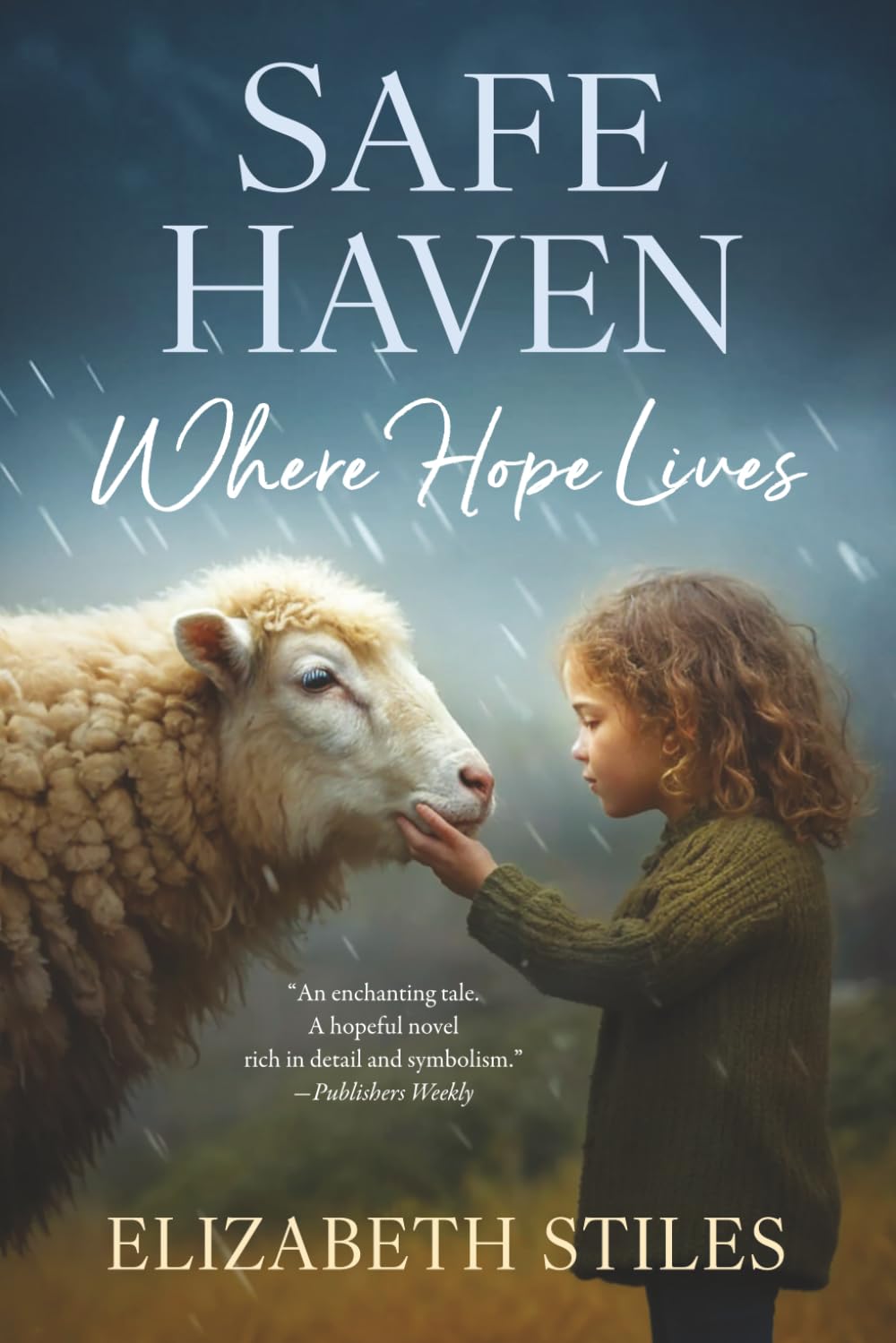
Elizabeth Stiles’s Safe Haven: Where Hope Lives tells the story of Michael Russo, a Chicago news anchor whose seemingly perfect life shatters overnight. After losing his career and fiancée, he retreats to a crumbling farmhouse in East Haven, hoping to rebuild both his home and himself. There, he meets a cast of characters who carry their own wounds. Mac, a man haunted by loss; Sally, a sharp-tongued shop owner raising her nonverbal son; and Charlie, a tough young woman scarred in ways that go far beyond the physical. What begins as a story of personal failure grows into a web of redemption and second chances. The novel weaves pain, love, and hope into something honest and deeply human.
From the first chapter, I felt swept into the quiet ache of this story. The writing has a cinematic pull. Clean dialogue, vivid imagery, and just enough restraint to make the emotional moments land hard. Stiles doesn’t rush anything; she lets grief breathe. Her prose reads like conversation, unpolished in a way that makes it real. The story asks what happens when life strips away all the things you think define you. I liked that it never promises easy answers. At times, the pacing slowed, but the stillness fit the theme. It felt like sitting beside someone who’s hurting and finally ready to talk.
This book hit me harder than I expected. I caught myself caring about these people as if they were neighbors. There’s a quiet beauty in the way Stiles writes brokenness, not as tragedy but as possibility. The connection between Michael and Mac, and later with Sally and Henry, shows how love can exist in small gestures, in the messy middle of pain. The themes of faith and suffering run deep, yet they never feel preachy. What stood out most was how the story treats hope not as something shiny or naive, but as something fought for. It reminded me that redemption doesn’t come in one grand moment; it seeps in slowly, like light through old windows.
It’s emotional but not sentimental, thoughtful without being heavy-handed. The story speaks to anyone who’s ever had to start over, anyone who’s loved and lost and dared to love again. I’d recommend it to readers who enjoy character-driven fiction, to fans of Nicholas Sparks or Kristin Hannah, or to anyone looking for a story that feels grounded in real pain and real grace.
Pages: 300 | ASIN: B0DS16ZBCX
The Cathedral of Quiet Power

Evan Yoh’s The Cathedral of Quiet Power is a poetic manifesto about surviving modern life without losing your soul. It’s part memoir, part philosophy, part self-destruction manual. Yoh takes us through his journey from sleeping in a leaking car to becoming a successful consultant, then tearing it all down to find what freedom actually means. The book moves like a confession and a sermon at once. It’s written in sharp, metallic prose that cuts through the noise of self-help clichés. Instead of offering comfort, Yoh offers confrontation. He argues that the world isn’t broken but rigged, that systems of power feed on our noise and dependence, and that real strength lives in quiet rebellion.
Yoh doesn’t sugarcoat a thing, and I admired that. His stories about corruption, burnout, and the “golden handcuffs” of success hit hard because they’re not abstract ideas; they’re lived pain. The writing is raw and unfiltered, full of short sentences that land like punches. And yet, underneath all the anger, there’s an aching tenderness. He’s not trying to burn the world down; he’s trying to build a new one inside himself. Some parts veer close to nihilism, but his insistence that silence, integrity, and sovereignty can coexist feels strangely hopeful. It’s messy hope, the kind that comes after losing everything.
What struck me most was Yoh’s honesty about ego and self-delusion. He admits to weaponizing ambition, mistaking control for love, and building a life that looked perfect but felt hollow. Those chapters were hard to read. They felt like someone holding up a mirror. The prose switches between poetic intensity and quiet introspection. But that’s also the beauty of it. This isn’t a book you breeze through. It’s one you wrestle with. Yoh doesn’t want followers. He wants witnesses–people willing to see the architecture of their own cages. His “doctrines” at the end of each chapter make the ideas stick; they’re like little grenades of wisdom you carry long after closing the book.
The Cathedral of Quiet Power isn’t a guide. It’s a reckoning. I’d recommend it to readers who are disillusioned by hustle culture, who’ve burned out and need a new kind of strength, not louder, but steadier. It’s for anyone ready to stop performing and start rebuilding from the quiet ruins of who they really are.
Pages: 166 | ASIN : B0FX8MG5C3
A Trail in the Woods
A Trail in the Woods follows Epiphany Mayall, a psychic counselor in her sixties who sets off with her son and granddaughter for a summer retreat in Lenox, Massachusetts. What begins as a family getaway turns into a haunting journey filled with mystery, loss, and spiritual reckoning. The story drifts between realism and the supernatural, weaving ghosts, psychic visions, and tangled histories into a tale of grief and renewal. O’Connor paints both Florida and New England with lush, sensory detail, and her characters are written with the quiet melancholy of people trying to understand both the world around them and the worlds beyond.
I found the writing to be smooth and deeply atmospheric. The author’s voice has that old-fashioned warmth, steady and patient, but it also hides sharp edges. I loved how the conversations between Epiphany and her son capture that mix of affection and frustration that defines family life. Some scenes, especially those with the ghosts, felt almost cinematic. Others lingered on explanation, and I caught myself wanting the story to move faster. Still, the pacing fits the theme. It’s a book about healing, and healing never happens in a rush.
Emotionally, the novel caught me off guard. It isn’t scary in a horror sense, but it’s haunted in a quieter, sadder way. I felt the weight of regret, the pull of memory, and that fragile thread of hope that keeps people going after loss. O’Connor’s use of dreams, coincidences, and spirit encounters makes the reader question where grief ends and magic begins. I admired that. It made me think of how every family carries ghosts, visible or not.
A Trail in the Woods isn’t just a ghost story; it’s a meditation on love, forgiveness, and the strange ways the past reaches into the present. I’d recommend it to readers who like slow-burning mysteries with a spiritual twist, to anyone drawn to stories about mothers and sons finding common ground, and to those who don’t mind a few eerie chills mixed with heartfelt emotion.
Life-Changing Journeys

Awakening Stories is a collection of personal essays written by twenty-three individuals who share their spiritual and emotional transformations. What was the inspiration behind putting together this collection of stories about personal awakening?
After navigating my own spiritual transformation over the past ten years and listening to the stories of others, I recognized a pattern. People often felt alone, sometimes crazy, as if no one else could possibly understand what they were going through. Since these types of experiences are so unique— deeply personal and often traumatic—it is important that we break the stigma and mystery surrounding spiritual awakenings. This anthology covers a variety of themes and experiences in the hope that readers will find at least one story that resonates, realizing that they are not alone and are always supported.
What was your process to collect the stories, and how did you decide what to include in this anthology?
For this anthology, I sought out authors from diverse demographic backgrounds who had successfully navigated a variety of life-changing journeys. I wanted readers to see themselves in those stories, to know that they are not crazy, not alone, and that there is light at the end of the tunnel. The authors who said “yes” to this project recognized the importance of sharing; they were willing to be vulnerable in order to assist others. They felt called to this project, and I am in gratitude for their contribution.
Did you find anything in your research of this book that surprised you, or that you found especially moving?
What surprised me, truly, was the authors’ courage—their willingness to tell their stories boldly and revisit sometimes painful memories. Even those who didn’t experience a “dark night of the soul” had navigated events that were challenging for them to integrate, such as an NDE, UFO encounter, or out-of-body experience. As the anthology editor, I was moved by their strength and tremendously grateful for their gift to humanity.
What is one thing that you hope readers take away from Awakening Stories?
My hope is that readers who have navigated (or may, in the future), their own spiritual transformation will find advice, refuge, and strength in these stories…that they will recognize themselves in the words of our authors and know that, though the ride might be bumpy, the outcome will be beautiful.
Author Links: GoodReads | X (Twitter) | Facebook | Website | Amazon
What Is Unseen

J. Andrew Rice’s What Is Unseen weaves together the stories of people wrestling with grief, faith, morality, and redemption in small-town Texas. The novel follows several characters, Kyle Luman, a grieving widower; Phylicia Jones, a civil rights attorney returning home after loss; and Ben Mueller, a hardworking man dealing with betrayal and corruption. Their paths cross in a world where hope and pain walk hand in hand, and where unseen forces, faith, conscience, and community, shape every life. The story unfolds gently, yet it builds momentum through layered perspectives and a shared struggle for meaning. Rice uses East Texas not just as a backdrop but as a living presence, a place heavy with history, heat, and hidden grace.
Reading this book hit me harder than I expected. The writing has an easy rhythm, simple but deep, like someone telling you their story over coffee on a quiet porch. Rice doesn’t rush his characters or their pain, and that patience made me care about them. Kyle’s loss felt real, almost raw, and his slow climb out of grief was both painful and uplifting. The dialogue felt like a homegrown conversation, unpretentious and familiar. At times, though, the story takes its time, and some descriptions felt more like journal entries than storytelling. Still, there’s beauty in the way Rice captures human resilience. The message about hope, faith, and the unseen hand that steadies us is one that sticks with you.
I’ll admit, I didn’t expect to feel so attached to these people. Rice brings out a kind of emotional honesty that sneaks up on you. The novel reminded me that good and bad often live side by side, and sometimes the right thing is murky, not shining. The characters are flawed, sometimes unlikeable, but always relatable. There’s something tender about that. The way grief meets faith, how bitterness bends toward forgiveness, it all feels earned, not forced. The story doesn’t preach, but it does nudge you toward reflection. It made me think about what I hold onto and what I let go of.
I’d recommend What Is Unseen to anyone who likes stories about redemption, faith, or small-town life with real heart. It’s perfect for readers who enjoy character-driven fiction and don’t mind a slow burn. This isn’t a thriller or a love story, it’s a quiet journey through brokenness toward light. For those who’ve lost something or someone and are still figuring out what comes next, this book will feel like a friend.
Pages: 364 | ASIN: B0F861FZ9Z



 LITERARY TITAN