Blog Archives
The Two Dogs Who Stayed
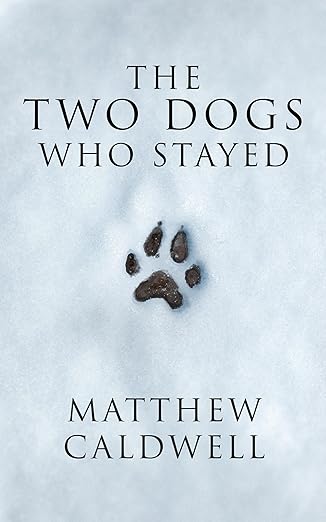

The story follows Rusty, a quiet man living alone in Alaska, who stumbles upon an injured dog beneath an abandoned porch on his fifty-eighth birthday. What starts as an act of compassion turns into a bond that reshapes his life. The book drifts between his routines, memories of lost love, and the growing companionship with the dog he names Goober. Along the way, he reconnects with people from his past, builds unexpected new relationships, and faces the ghosts of his solitude. It is, at its core, about second chances, about what it means to be seen, and about the quiet power of loyalty.
The writing is plainspoken. It’s stripped down, direct, almost conversational. That style made me lean in, like I was hearing Rusty tell me these stories over coffee instead of flipping through pages. I enjoyed how ordinary details, like the smell of cedar or the sound of snow under boots, were given weight. It reminded me that the small, everyday things are where life actually lives. Rusty’s reflections sometimes circled the same ache. Still, that’s part of what made it feel real. Grief and love do repeat themselves.
What surprised me most was how emotional I got. Goober isn’t just a dog in the story. She’s a mirror. She reflects Rusty’s loneliness, but also his stubborn hope. Watching him wrestle with old wounds while learning to trust her presence was touching, even frustrating at times, because it reminded me how often people push away the very thing that could help them heal. I felt protective of Rusty and Goober, like they were people I knew. And when the book delved into his lost love and family tensions, it cut deep. Not because the writing was fancy, but because it was honest.
I’d recommend this book to readers who like slow, thoughtful stories that don’t rely on spectacle. If you’ve ever loved a dog, or if you’ve ever carried the quiet weight of being alone longer than you wanted, this book will hit you where it hurts and where it heals. The Two Dogs Who Stayed is a tender and heartfelt story that I enjoyed reading.
Pages: 232 | ASIN : B0FQ3CC7FN

The Meteor Symphony: Stories and Poems
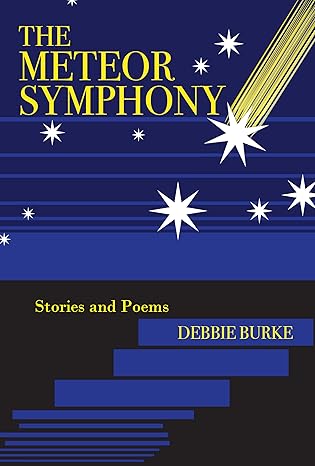

The Meteor Symphony is a colorful mix of short stories, poems, and microfiction, stitched together with music, humor, grief, and hope. It moves from tales of jazz musicians and stolen saxophones to intimate portraits of aging, love, heartbreak, and resilience. Some pieces lean into whimsy, others lean into sorrow, and many hover in the strange, honest space in between. The title story ties it all together with an imaginative search for a lost symphony, but the book itself feels like a symphony of voices, moods, and rhythms.
I enjoyed the range in this book. One page had me laughing at the absurdity of a sax heist, and the next had me sitting with the weight of a widow’s quiet grief. Burke writes with sharp clarity, yet there’s also a looseness in her storytelling that feels natural, like listening to a friend talk late into the night. I loved that she didn’t try to polish away the odd details. People misstep, conversations derail, feelings clash, and it all feels real. At times, the jumps between stories and poems felt a little jarring, but in a way, that’s what made it lively. The collection refuses to settle into one mood.
I also found myself connecting with her fascination with ordinary people. She doesn’t write grand heroes or villains, but flawed, funny, messy people. That resonated with me. Her style is direct but not cold, and she doesn’t shy away from emotions. Some of the poems hit me harder than the stories, brief as they were, because they carried that distilled punch of truth.
I’d say this book is best for readers who like variety, who don’t mind skipping from lighthearted banter to heavier reflections, and who enjoy the intimacy of short-form writing. If you’re open to being surprised, amused, and sometimes gutted all in one sitting, Burke’s collection is worth your time. I’d recommend it to anyone who loves music, who has wrestled with family, or who has ever paused at sunset and felt the ache of beauty and loss in the same breath.
Pages: 114 | ASIN : B0DTJ37FVK
No Filter: From Skateboard Kid to Entrepreneur

No Filter tells the story of a man who grew up in a home marked by abuse, found escape in skateboarding, entered the Army at 19, and lived through combat, trauma, and broken relationships before turning his pain into purpose. Author William Stephens lays out his journey with raw honesty. He doesn’t hold back on the violence he witnessed as a child, the battles he fought overseas, or the mistakes he made as a father and husband. Woven through it all is the growth of his platform, 1821 Productions, a community built on giving voice to those who feel unheard.
The writing itself isn’t polished or pretty, and that’s what makes it powerful. The short bursts of thought, the blunt admissions, the cursing when softer words won’t do. It all feels alive and immediate. I could hear his voice in every sentence, like he was sitting across from me, telling it straight. Sometimes the stories are hard to read because of the pain inside them, but that rawness makes them believable. It’s the opposite of a filtered memoir. At times, I felt frustrated with the choices he made, especially in how he treated his family, yet I also felt the weight of the demons he carried. That mix of honesty and imperfection made me respect the story even more.
What also stood out was the message underneath the chaos. Stephens isn’t asking for pity; he’s asking people to listen, to learn, and to keep going. His thoughts on credibility, leadership, and authorship resonated with a kind of tough love I didn’t expect. He’s not telling readers how to be successful. He’s warning them about the traps, the scammers, and the fake promises that he himself fell for. I could feel his hope that others might avoid the same scars. That blend of hard lessons and encouragement gave the book a surprising warmth, even when the stories got dark.
I’d recommend No Filter to anyone who values real, unvarnished storytelling. It’s not for readers looking for smooth prose or neatly tied-up endings. This is for people who want the truth, spoken in a voice that shakes but doesn’t quit. Veterans, struggling parents, survivors of abuse, and even aspiring writers will find something here to hold onto. It’s a tough book, but it’s also a hopeful one, and I’m glad I read it.
Pages: 80 | ASIN : B0FNZ89LND
The Wonder of Archaeological Digs

Finders follows a group of university students on an archaeological dig in Cornwall who uncover an ornate, gem-encrusted Celtic relic filled with ancient mystery. What was the inspiration for the setup of your story?
I’ve often felt there’s something magical hiding just out of reach in the British landscape. I like walking to hillforts, standing stones, burial mounds, and the like. And I’m interested in reading about archaeological discoveries, watching videos about digs, and listening to history podcasts. All that came together in the opening of Finders.
Capturing the personalities of college students while keeping the story focused and moving forward can be a challenging task. What character did you enjoy writing for? Was there one that was more challenging to write for?
I especially enjoyed writing as Ozzie, mostly because of his wry sense of humour about the world and himself. I got stuck some way through the first draft when my bare, vague plot plan didn’t work, but Ozzie kept making me want to discover what happened next.
It was hard to express the main antagonist’s narcissistic megalomania and at the same-time make him seem like a real person rather than a moustache-twirling, melodramatic villain.
What were some themes that were important for you to explore in this book?
The fascination of exploration and discovery, particularly the discovery of what lies beyond the material realm; and, tied in with that, shifts in awareness. At least I think those are themes. To be honest, I never thought about the book’s themes until my developmental editor asked me what the central theme was . . .
Where does the story go in the next book, and where do you see it going in the future?
Mercie, Ozzie and Petroc journey through what Petroc calls “a more subtle level” of existence, where the relationship between mind and matter is different, as is the relationship between one mind and another. After confronting two of their enemies there, the three return to the dig. Now seeing the “normal” world in a new light, they confront the third of their enemies in a way they did not anticipate.
Author Links: Website | Instagram | Substack
Meaningful Work Is Messy Work

Serving the Leftovers shares with readers your journey from a fractured marriage and unfulfilling jobs into a life defined by compassion, chaos, and canine companionship. Why was this an important book for you to write?
I thought I was simply documenting the brutal mathematics of animal rescue—the endless cycle of intake and loss that defines the South’s overpopulation crisis. But somewhere between chronicling emergency calls and heartbreak, I realized I was excavating something deeper: the emotional archaeology of a life rebuilt from scratch. People think we just “like” dogs, but I was drowning in stories I couldn’t tell at dinner parties—stories that revealed I’d been rebuilding myself one rescue at a time, transforming from someone just existing through disappointment into someone living with purpose. The book became my way of honoring both the dogs we’ve saved and the ones we couldn’t, while showing readers that animal rescue isn’t charity work—it’s emergency medicine for a crisis most people never see. It is also proof that transformation can happen to anyone brave enough to follow what calls to them, no matter how impossible it seems.
What were some ideas that were important for you to share in this book?
I realized I’d documented a blueprint for quiet revolution—completely reimagining your life when everything feels impossible. The core message: the life you’re meant to live is already speaking to you. For me, it was that first dog I couldn’t turn away from. Each rescue was the universe saying, “This is your work.” Transformation doesn’t require permission or perfect timing. I started with a fractured marriage—hardly ideal conditions for a life-changing mission. Stop waiting for readiness that never comes. That thing pulling at your heart isn’t a hobby—it’s your next chapter trying to get your attention. Sometimes you have to trust the pull toward something that makes no logical sense.
Ultimately, our vision isn’t too big. Our current life is too small.
What was the most challenging part of writing your memoir, and what was the most rewarding?
Untangling the Beautiful Mess
The biggest challenge was trying to impose narrative order on what felt like controlled chaos—how do you create a coherent storyline when one day you’re fielding divorce calls while having an epiphany about purpose? Writing forced me to connect dots I’d been too busy living to notice—that every dog that changed my life had arrived exactly when I needed the lesson they carried, and that I hadn’t just been saving dogs, I’d been saving myself, one rescue at a time, building the person I needed to become to handle the life I was meant to live.
What do you hope is one thing readers take away from your story?
I hope readers walk away understanding that meaningful work is messy work—and that’s not a bug, it’s a feature. I want readers to stop waiting for a calling that comes without complications. The work that will transform your life isn’t the work that fits neatly into your existing schedule or makes sense to everyone around you. It’s the work that demands you become someone bigger than who you were yesterday—and becoming bigger always involves growing pains. The unglamorous parts aren’t obstacles to your dream—they ARE the dream. The sleepless nights, the impossible decisions, the moments when you’re too emotionally spent to remember why you started—that’s not evidence you’ve chosen wrong. That’s proof you’ve chosen something worth the fight.
Author Links: GoodReads | Facebook | Website
I’m Happy I’m Me!
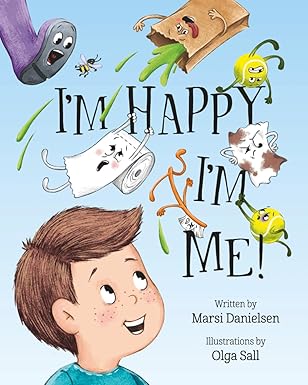
Zeke thinks he’s stuck in a terrible day where nothing goes right. Then, to his astonishment, one of his socks begins speaking. The sock confesses envy; imagine being forced to endure the stench of feet all day. Soon, a cotton swab joins the chorus, admitting it, too, would prefer life as a boy. One by one, other household objects, baby wipes, toilet paper, and more, offer their own complaints. By the time they finish, Zeke begins to see his situation differently. Perhaps his life isn’t so bad after all.
I’m Happy I’m Me by Marsi Danielsen is a short, illustrated children’s book that recalls the playful, whimsical spirit of certain Dr. Seuss classics. Much like those stories, it begins with a child dissatisfied with life and evolves into a gentle lesson about perspective.
Parents will recognize the familiar challenge of a bored or unhappy child. Danielson captures that sense of restlessness through Zeke’s voice. Children often feel frustrated with who they are or what they have, and many adults wrestle with the same truth for years. The book’s charm lies in its message: learning to appreciate oneself is both difficult and deeply rewarding. Delivered with humor, sometimes silly, sometimes a touch gross, the story highlights that no matter how imperfect life feels, others may have it harder.
The use of inanimate objects as storytellers gives the book its delightful quirk. Combined with bright, colorful illustrations, the lesson becomes vivid and memorable. Although the book’s simplicity may not resonate with older children, younger readers will likely find it entertaining and meaningful. Ideally, they’ll finish the story feeling more comfortable in their own skin, with a new perspective on gratitude that may stay with them as they grow.
I’m Happy I’m Me succeeds as both an entertaining story and a gentle reminder about gratitude. Its playful premise and cheerful illustrations make it engaging for children, while its underlying message carries lasting value. Parents seeking a lighthearted yet meaningful read-aloud will find this book a worthwhile addition to their collection.
Pages: 43 | ASIN : B0FCYM18GK
The Sins We Inherit
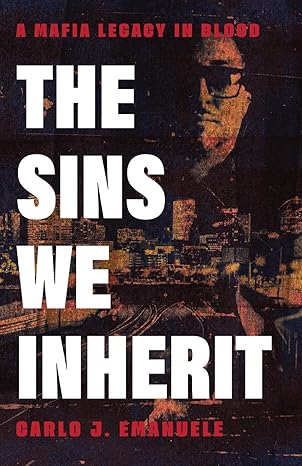
Carlo J. Emanuele’s The Sins We Inherit is a bruising, heartfelt story about family, legacy, and the ways the past refuses to stay buried. The novel follows Costantino “Cost” Caduto II as he returns to his family’s orbit after the death of his grandfather, Tiger, a man whose shadow looms over Milwaukee’s underworld and over Cost’s own conflicted heart. The book moves through wakes, eulogies, burials, backyard feasts, and street confrontations, blending the intimacy of family drama with the sharp edges of a crime saga. It’s about fathers and daughters, fathers and sons, and the ways love can be messy, protective, and even dangerous.
Right from the opening pages, where Cost stands at Tiger’s wake, worn down and haunted, I felt pulled into the smoke-filled rooms and tight-lipped exchanges that define this world. The writing is cinematic without being overstuffed; little details like the smell of cigar smoke or the scrape of pews in a church make the world feel alive. At times, though, the heaviness of description slows things down, especially in the funeral chapters, but I didn’t mind lingering there. It felt true to the weight of grief, and it set the stage for the power struggles that follow.
I also appreciated how Emanuele balances the personal with the criminal. Cost isn’t just an heir to a mafia empire, he’s a divorced father trying to stay close to his daughter, Maddy, even as she slips through his fingers. The moment when she addresses him as “Dad” at the wake, only to retreat into the crowd, struck me with particular force. That small interaction captured more distance and heartbreak than any shouting match could. Later, when Frank Vistoso tries to assert himself at the altar during Tiger’s funeral, it’s not just a clash of egos; it’s a reminder that Cost can never fully escape this world, no matter how much he wants to. I found myself rooting for him, even when I suspected he wouldn’t get the peace he craved.
What I didn’t expect was how much heart the book carries in its quieter moments. A favorite scene of mine was the repast after the funeral, with sausage sizzling on the grill and cousins arguing over poker. The food, the noise, the laughter, it all felt warm and familiar, and it reminded me that this story isn’t only about violence and legacy, but also about belonging. I could almost smell the garlic bread and hear Sinatra crackling on the speaker. It’s those scenes, where love and menace share the same table, that give the book its punch.
The Sins We Inherit left me thoughtful and stirred. It’s not just a mob tale, it’s a story about trying to be better for the people you love, even when the past won’t let you. I’d recommend this book to readers who enjoy crime dramas with a human center, especially fans of The Sopranos or Dennis Lehane. But I’d also recommend it to anyone who’s ever wrestled with family expectations, or who’s wondered how much of our lives are chosen versus inherited. It’s a dark, gripping read, but underneath the gunmetal, there’s a father’s love beating strong.
Pages: 258 | ASIN : B0FKN76L1K
Adobo In The Land Of Milk and Honey
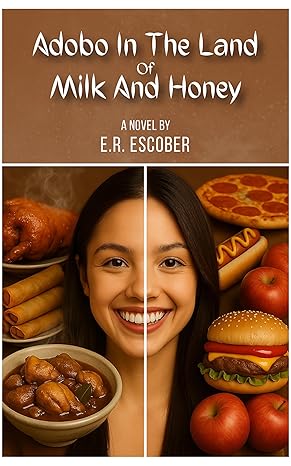
E.R. Escober’s Adobo in the Land of Milk and Honey is, at its heart, a story about identity, loss, and the complicated dance between assimilation and heritage. We follow Mirasol Mendoza Moreau, a sharp and ambitious Filipino-American executive who is sent to the Philippines to oversee the acquisition of a struggling fast-food chain, Pinoy Jubilee. What begins as a business assignment quickly becomes a deeply personal journey, forcing her to reckon with her late boyfriend’s absence, her mother’s silence about the homeland, and the messy, beautiful reality of a culture she has always kept at arm’s length.
Escober’s prose is remarkably vivid; rather than merely describing Manila, he immerses the reader in it. The airport scene, in which Mirasol is immediately enveloped by a wall of heat and commotion, vendors calling out, families embracing in noisy reunions, captures the overwhelming disorientation of arrival with striking immediacy. And later, the kalesa ride through Intramuros, Mirasol annoyed, Ramon smug, the horse nosing her shoulder, was both funny and strangely tender. I loved how Escober uses small, almost absurd details (like a horse drooling on a silk blouse) to pull Mirasol out of her polished New York shell. The writing has this knack for being sharp one moment and unexpectedly warm the next, which felt very true to the push and pull of identity crises.
What stood out most to me was how food served as the narrative’s foundation. The balut scene is a perfect example: Mirasol, determined to prove she isn’t just another “Fil-Am tourist,” dives into the duck embryo with salt and chili while Ramon watches like a judge at a reality show. It could have been written for laughs, but instead, it becomes a turning point, breaking down Ramon’s skepticism and showing Mirasol’s willingness to embrace discomfort. Later, when she eats Rosa’s adobo at the original Pinoy Jubilee, it isn’t just a meal, it’s an initiation into the heart of what the restaurant represents: family recipes, sacrifice, and tradition. Escober makes food not just symbolic, but alive, messy, and deeply emotional.
I felt conflicted about Ramon; his air of superiority often proved as frustrating for me as it was for Mirasol. His constant testing, comparing her to Olivia Rodrigo, making her ride a kalesa instead of a car, lecturing her about “real” Filipino culture, sometimes felt heavy-handed. But then Escober complicates him by revealing his own past heartbreak with another Fil-Am who “came back home” only to leave again. Suddenly, his sharp edges made sense. He wasn’t just gatekeeping culture; he was guarding against disappointment. That shift made him more compelling, and I found myself grudgingly rooting for the dynamic between him and Mirasol to thaw.
By the time I closed the book, I felt like I had been on the journey with Mirasol, not just through Manila’s crowded streets, but through the strange space of being between two worlds. Escober doesn’t sugarcoat it. The book is messy, emotional, and sometimes frustrating, but that’s exactly why it works. It’s not a polished postcard of the Philippines; it’s a story about finding pieces of yourself in unexpected places, whether in a noisy street market or in a bowl of perfectly braised adobo.
I’d recommend Adobo in the Land of Milk and Honey to anyone who enjoys stories about identity, grief, and rediscovery, especially second-generation immigrants who’ve ever felt the pull of a “homeland” that doesn’t quite feel like home. Even if you’ve never wrestled with cultural roots, the humor, the romance, and the sheer sensory detail make this a rich, rewarding read. It’s not just a business story. It’s not just a food story. It’s a story about being human and hungry, for meaning, for connection, and, for really good adobo.
Pages: 302 | ASIN : B0FHSZ95N7



 LITERARY TITAN