Blog Archives
Authentic Power
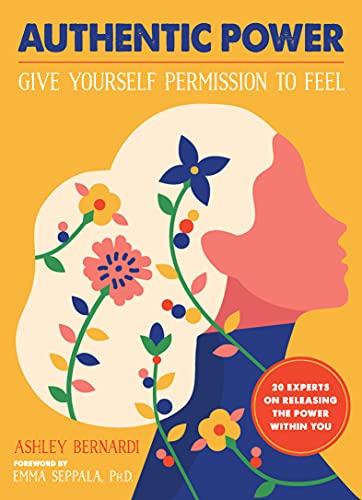

Authentic Power: Give Yourself Permission to Feel, is a thought-provoking self-help book by author Ashley Bernardi. This inspirational collection of anecdotes and affirmations is compiled in a book that is part journal and part self-help, providing information on how to handle trauma and the overwhelming emotions that go with it.
The author draws on her hurtful past experiences of witnessing her father lose his life to a fulminating heart attack when she was nine years old. She also opens up about the long process of searching for a diagnosis for a mysterious chronic illness that left her severely debilitated. Bernardi offers readers different insights and strategies that they can use to navigate stress and trauma in their lives.
This helpful book is a unique work that is different from traditional self-help books. The layout is in the form of a journal, where each chapter begins with a small introductory text and includes a paragraph with a positive affirmation to be said aloud, a quote, and a blank space where the reader is encouraged to put into practice the proposed exercise. Some examples of the exercises included are to make a list of objects for a self-care kit or to express their thoughts after their first attempts at meditation. This organization and structure makes for a safe environment where anyone can express their emotions freely, away from third-party judgments.
It should be noted that the author’s strategies and tips are validated with evidence-based data, and she makes sure to cite the sources in between pages. This makes her work stand out from other self-help books that might rely more on religious doctrine and be as adamant about following scientific guidelines.
The book includes approaches to challenges that have arisen amidst COVID-19. This updated work is another differential that will lend a hand to those struggling with social distancing and losing loved ones during the pandemic.
Authentic Power: Give Yourself Permission to Feel is a secular, science-based self-help book for those that are looking for a fresh approach to dealing with grief and trauma. Readers will learn how to build emotional wellness through the steps set forth in this well-researched book.
Pages: 195 | ASIN : B09FTLLSLM

NO ONE walks alone!

Not a Blueprint: It’s the Shoeprints That Matters is a very personal story for you. How hard was it to put this story out in the world for people to read?
Firstly, you must know that I grew up in a house full of secrets. Whatever went on in the family, we were taught to keep it in the home. So, as an adult and a single parent, I was compelled to live a secretive and private life. I made a practice to rarely reveal what was happening in our lives. Even back then, those that knew of me had very little knowledge about me.
Secondly, for many decades, my journey with toxic relationships was deep seated, raw, and buried inside me. What you have to realize, I kept it all in a diary. Never realizing I was exactly telling a story about our life that would one day become an opened book to others. Unknowingly, this writing was a healing medium that many may have called writing therapy.
Initially, during the editing phases, all I could do was cry, cry, and cry while trying to relive those painful and hurtful events. There was an instance, I recall when the editor and I had bumped heads; since I could not break through those raw emotions to express my thoughts clearly and precisely. It was extremely bad that the publisher had to intervene. After the conversation with her, she had me to take four days off to recover from that ordeal.
Finally, once we’d gotten back to the writing, I still couldn’t break through those unsettling emotions. It was then I came up with a conclusion to take the portion out. Therefore, I wrote in its chapter titled, Finding Peace and Comfort.
I appreciated the candid nature with which you told your story. What was the hardest thing for you to write about?
Truly, there were many challenging moments. The pain was just overly great and hurtful, I wanted to scream in an octave range; to the top of my lungs. But, I’ll share with you these crucial ones . . .
The challenges surfaced when writing about the guilt and steps taken into being someone’s mistress. Knowingly, the pain I had ‘cause another with the interference I’d made in their lives. And how horribly I’d abused myself by giving up my self-worth; self-dignity; and all those other self-dimensions one possesses. Through it all, I’ve come to realize we can be our worst abuser.
The most sharpening and piercing piece was writing the horrible news about my child. Being that parent and having to watch one so young go through a grown folk’s disease ─ can be the most devastating experience ever endured. It even breaks my heart (now) to write it here. You know, life can be so unfair? Yes, then again, whoever said life was fair?
You have to remember, I was reared in a Christian environment. So, once I let go of my religious and spiritual beliefs, there I was holding on to that poison of unforgiveness. It took decades to find my way through the darkness that kept me in a fixed space with an inability to move forward.
Finally, those years of experiencing losses took its toll traumatically, and overpowered me mentally. I had become a basket case. Surprisingly, I didn’t see that until it was on paper! To become housed living inside a world of trauma was not only terrorizing, but horrifying. Perhaps, that may be difficult for one to understand what it’s like − unless he or she has walked that journey.
What do you hope is one thing readers take away from your story?
Unfortunately, that’s a tough question, I can’t clearly say there is one thing but many . . .
It’s story speaks about the good, the bad, and the ugly stuff life throws at us. Not only that, it was raw and canned. Thinking about relationships, there’s no way to prevent an engagement with them. Every integral piece is a vital part of living, period.
Ultimately, it’s message will reveal the importance that life brings many challenges; with each there are lessons learned along the way. And with each relationship, one can learn to recognize whether it has a toxic or non-toxic impact. Flipping through those pages, it illuminates the beauty of love, compassion, courage, determination, and strength.
As an end result, I can only hope readers reach an enlightening height from the lessons learned while walking on the journey. And realize that the engagement of toxicity affects everyone in one form or another. But, know when walking, NO ONE walks alone!
What is a common misconception you feel people have about toxic relationships?
In many cases, it could be that some feel they’re making the wrong choices or poor decisions when it comes to unhealthy relationships. However, they fail to realize you don’t chose a toxic person, they chose you.
In another instance, some are failing to realize the dangerous effects their interactions play out. But first they must understand what is a toxic relationship? “A toxic relationship occurs when two or more people interact in a way that is detrimental to their life.” Or, “Anything that is poisonous and capable of causing sickness or death.” In either case, all one has to do is think about how deadly COVID-19 has impacted our lives, daily. With that in mind, it’s evidence that a toxic relationship becomes nothing to play.
Author Links: GoodReads | Twitter | Facebook | Instagram | TikTok | Website
Not a Blueprint; It’s the Shoeprints That Matter

Relationships play a significant role in human experiences throughout life’s journey. Nina Norstrom, in her memoir Not a Blueprint: It’s the Shoeprints That Matters refers to the toxic relationships she lives, endures, and learns through as a daughter, mate, mother, and working woman. The reader is taken on the author’s journey as they follow the shoeprints she leaves along her life path and those left behind by many others in her life. By going along with these shoeprints, the by-products of her life, readers learn about her battle against toxic relationships in various forms.
There are seventeen chapters in the memoir, which begin with an account of the author’s life. In the first nine chapters of the book, the author describes her experiences and struggles with domestic violence, both as a child witness it and in her own personal relationships. Throughout the remaining chapters, the author vividly recalls, her experiences while dealing with the toxic relationship with cancer that invades the life of her angel, her daughter.
In addition to expressing the author’s diverse emotions, the book pays homage to Nina Norstrom’s daughter, who tragically succumbed to a diseased toxic relationship in her life. My experience as a reader was emotional, and I commend the author for being open about her feelings while letting the readers inside the usually restricted area of a person’s psyche. The poems written for the departed soul of her daughter are beautifully expressed, seeping out the multitude of emotions of a parent. Moreover, the other feelings expressed in the book, whether it’s grief, anger, or resentment towards certain people, fate, or God, are raw and genuine.
This inspirational non-fiction story recounts Nina Norstrom’s journey of grief, guilt, and anger at God, to the path of finding peace with the will of God. Apart from providing solid shoes with which one can walk the hard paths of life, God also accompanies His children as they leave their shoeprints along the life journey. In the end, four appendices provide support resources, centers, and reading materials for those who are caught up in toxic relationships and would like support.
Not a Blueprint: It’s the Shoeprints That Matter is a deeply personal memoir that is recommended for those who want motivation from a genuine account of a battle with toxicity and self-reflection in the aftermath of trauma.
Pages: 179 | ASIN : B016X198SO
Carry on Castle
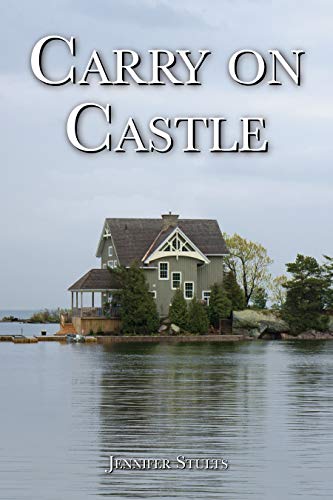
There are certain kinds of grief no one should ever have to endure, but nonetheless happen every day. Losing the love of your life at an early age is one of these, and one that author Jennifer Stults had to endure. Although she expected to live happily ever after, life had other plans. Chronicling the journey of loss and learning to live with the pieces, Stults details a life she never would have, or even could have, imagined for herself and her daughter. The story she tells is in turn heartbreaking and heartwarming as she illustrates the stages of grief in startling clarity.
In Carry on Castle, Stults relays the good, the bad, and the incredibly ugly that comes with unexpected loss at an extremely unexpected time in life. Her brutally honest narrative, and vivid details of the night her husband Dan died, leaves nothing to the imagination. During the course of the book she details each of the stages of grief and her own reaction to them. It’s a hard fact to accept that while life is shattered it must still go on, but Stults unflinchingly describes doing so, even on days when she has no interest in doing so. Despite the support system in her life, her family, Dan’s family, her friends, and her daughter, among others, the loss of her husband creates a vacuum that Stults feels powerless against, with the feeling resurfacing at the most random times.
Stults’ book is just as much a roadmap for others dealing with the same grief as it is catharsis for her own journey. She is open about the fact that writing was never an aspiration of hers, yet her style and tone flow so easily, it would be reasonable to guess she had done it all her life. Even with the melancholy subject matter, Stults manages to infuse enough humor to keep it from becoming too heavy, as well as showing the value of laughter as a coping mechanism. For those who have suffered this type of loss, the book is a solid reminder that no one is alone in their struggles. For those that haven’t, it is a rollercoaster of a ride that they can never completely understand. Her candor helps to convey such an incredible story.
Carry on Castle is such a well written and riveting story that I’m certain wasn’t easy to put on paper. Whether you have been through a similar experience or not, Stults provides some wisdom for both sides of the coin.
Pages: 254 | ASIN : B07Q2DX7HG
The Casual Evaporation Of My Individuality
Soul Afterlife delivers a thought-provoking examination of life, death, and the afterlife. Why was this an important book for you to write?
Several years ago, I was studying at Wat Yaranna Rangsee, a suburban Thai Buddhist Monastery in northern Virginia. Although the topics of life and death were occasionally discussed, any tolerance for hard-hitting afterlife debates were almost always tabled or played down.
Let me explain why something like that might occur. Buddhists believe that it is the human ego that triggers suffering when we struggle to find our personal compassion for death and a possible karma driven afterlife. Additionally, they have an uncommon expectation about what occurs after we take our final breath when compared to the general population. These unconventional views are conveyed in the Buddhist doctrine of anatman – the principle of “no self/no soul” that is discussed in the book .
I found anatman to be a difficult concept to support. My explanation for that struggle? My ego’s outright refusal to accept that upon passing I am basically a ball of energy that dissolves and wanders off into the cosmos. I could not comprehend the casual evaporation of my individuality – the essence of who I am.
As a result, my ongoing mystical questions and the narratives within the book were attempts to unearth what is required to “emotionally balance” what I have held as historical spiritual beliefs against newly acquired information.
In writing about a Soul Afterlife, I was not testing my Buddhist friends tenets; I was humbly seeking to understand unusual beliefs that conflicted with my understanding of otherworldly adventures.
What I did not expect, however, were the powerful opportunities, and unorthodox possibilities that the soul guide Laz shared.
What is a common misconception you feel people have about near-death experiences?
I am not sure I would classify anything I have learned as a misconception regarding near-death experiences. Certainly, there is a scientific community that suggest multiple explanation as to why someone might have mental, emotional, or visual outcomes when their biological systems shut down. Additionally, there are a number of academic and philosophical professionals who have a wide variety of explanations regarding human consciousness and they would add to the debate.
In Soul Afterlife I tell the story of a former patient, Whitney – it is the only earthly exposure I have had with a near-death experience. As I began asking questions about an afterlife, it was my ability to recall that encounter that led me to believe that there might be something beyond what many individuals encounter. As my questions were laid out and the answers were forthcoming, I tried to imagine something beyond what I found in research and discussions with religious scholars – something that might just be extraordinarily different.
For any readers seeking to examine conventional expectations from near-death experiences I suggest visiting the University of Virginia’s School of Medicine – Division of Perceptual Studies. For others looking for a more mystical “life after Life” exposure Michael Newtons works, including “Destiny of Souls” is an option.
As for me? My guide was insistent that near-death walked along the parameter of an afterlife experience and as a result souls experienced aura attachments, human memories, religious beliefs, or alternative lives in near-death – beyond those boundaries everything becomes more complex.
I appreciated all the candid reflections on life and life after. What were some themes that were important for you to explore in this book?
Throughout my ten-year adventure into the world of souls there were three primary themes that were laced throughout the five unconventional memoirs that have been published, including Soul Afterlife – Beyond the Near-Death Experience.
The first was the part my human ego plays in suppressing the awareness required for me to see beyond the obvious. The second was the reminder that I am largely made of undying energy and the third was how I am fixed to the critical elements of life, especially water.
To answer your question, however, let me briefly explain the influence of the human ego, it is the essential theme played out in Soul Afterlife.
To begin, my Buddhist friends have always promoted the human ego as a heartless regime that is on an untiring mission to suspend the development of my human mind and to a degree I concur with that approach. I was encouraged by my monk companions to liberate my ego’s authority over how to live my life – by imagining that nurturing this ability would make available an unpolluted release of both daily life and spiritual awareness. Essentially, I came to trust that there is much more to be understood that the human ego will permit to be known, and if permitted to an unlocked (aware) mind, unusual afterlife possibilities can be explored.
I believe the premise that reverberated most throughout the year long journey was this – “stagnation only comes with the human shell, and when that occurs, the human ego takes over stalling out the soul’s evolution”. I found it odd that throughout life we intentionally rely on our ego for support and strength while developing our earthly plan and self-esteem, yet “soul awareness” might be more achievable if the human ego is silenced.
What is one thing you hope readers take away from your book?
I believe there might be two that I recommend. First, from a spiritual or soul perspective, we are more than we could possibly imagine. Too often we become locked into the expectations of others and present-day dogmatic understandings – assuming life just becomes easier to navigate under such a mindset. I was consistently invited to think about how traditional spiritual teachings assist during daily human activities yet may delay how a soul might navigate an afterlife. How regrettable, I thought, if this is true.
The second takeaway was Laz presenting the image of old fashioned “key”. He disclosed that it represented the ability to become mindful to discretionary prospects after we die. Suggesting that newly formed afterlife alternatives might create unobstructed pathways for our future soul travels. I was plagued by that comment.
As a final commentary – The Socratic dialogues contained in Soul Afterlife are unquestionably “offbeat” and remarkably unlike other approaches to a life after death. There are countless opinions about how we exist now and hereafter, including that there is no life after death. Soul Afterlife is offered merely as an alternate point of view.
Author Links: Website | Facebook
Grief Looks Different For Everyone

Dead Mom Disease is a heart-felt memoir about the loss of a loved one and the roller-coaster of emotions that come with it. Why was this an important book for you to write?
I always wanted to be a writer, but I never wanted to be an author. I can’t tell you how many times people told me I should write a book, and my answer never changed – I didn’t want to. In college, I had an assignment in a lit class. We had three or four options of the type of project we would turn in. One of them was to write the first three or four chapters of our autobiography. That option is the only one that I had any interest in, and I didn’t even think about the subject – my sister and I had coined the term, “Dead Mom Disease,” a few years prior, and we already floated around the idea of using it for a book title. A few years after I graduated, I was offered a freelance job to edit a book. That’s what made me realize that I could absolutely write a book. I guess the only reason I never really wanted to before was because I didn’t think I could. So, was it important in the sense that I set a goal for myself to write the book, and I wanted to accomplish it? Yes. But, I never really thought of writing the book “Dead Mom Disease” as something that was important for me to do – it was more like I wanted to write a book, and it was only natural that this is the story I would tell.
What is one thing you hope readers take away from your book?
I hope, whether it’s through my book or any other means, more people start to realize that grief looks different for everyone and that it lasts forever.
What is one piece of advice you wish someone had given you when you lost your mother?
Honestly … nothing. I had all of the advice I needed. What I didn’t have was the understanding. For a while, I wished that I had listened to more people – about how time is precious and not to take people for granted. But you just can’t understand some things until you have experienced them. I was a kid. Of course there are things I would have done differently then if I knew what I knew now, but I think pretty much everyone can say that about everything.
My mom’s advice was always, “Follow your heart.” And my dad has always reminded me that “There’s a time for everything.” I have carried these two pieces of advice everywhere with me since I was a small child, and they will go with me to my grave.
What was the writing process like for you to complete this book?
Well, it was a process, that’s for sure. It was interesting, fun, sad, weird, eye-opening, educational, and so much more. While writing the book, it’s as if my mind was subconsciously aware that I was working on something, so it was bringing all of these memories to the surface. I remembered things I had long forgotten, realized I forgot things I never thought I would, it made me curious about things I never questioned before, it forced me to face a lot of darkness, and it made me so proud to hold the finished manuscript in my hand. It was something that I put a lot of effort into, and I was motivated to do it even though I had no idea what I would do once I was done writing it. It also taught me how important it is to define goals, make plans to achieve them, and hold yourself accountable. I used to wonder how people wrote books, and now I know – the same way anyone does anything … you have to start.
Author Links: GoodReads | Facebook | Twitter
Dead Mom Disease
![Dead Mom Disease by [Lucy Layne]](https://m.media-amazon.com/images/I/51pVeJFmadL.jpg)

Dead Mom Disease, by Lucy Layne, is a memoir of a teenager who talks about a rather uncomfortable topic for most people – Death, especially the death of a mother. In this book, she narrates her experience witnessing her mother die, of living without a mother after her death, of how grief makes people uncomfortable so they offer you advice to be happy when you don’t want to be happy, and the never-ending process of grieving. She tells us about the gut-wrenching moment of losing a loved one and of life, all through her own thought-provoking words. It also talks about the all-encompassing maternal love and how the balance of life can never be restored after the death of a mother.
Lucy Layne writes honestly and unapologetically about a topic that makes people leave the table when it is brought up. The death of a loved one is a dark topic and people are afraid of the dark. It takes courage to introspect on one’s dark feelings and then write about them with openness and humility.
The author was very realistic in narrating a painful death experience. She moves through the book while capturing the lasting process of grief very aptly. She takes you through the various emotions of anger, denial, depression, deep sadness, and finally acceptance and how these emotions are a necessary part of experiencing the death of a loved one. The book provides a glimpse into a terrifying reality but also reassures you that even after such an abysmal moment in life, you will still survive.
Another critical aspect of the book is how important it is to let the bereaved grieve. Grief is unavoidable in such a circumstance and to take that moment of sadness away from the bereaved can be very damaging on both a mental and physical level. While society fixates on being happy, a person with a great loss must go through grief slowly to provide a channel for emotions to flow out. This is important to get back into the routine of life.
Lucy Layne’s narration feels personal, like you are not alone in this grief. This book makes you cry and laugh as well. It’s not a depressing tale, but rather an uplifting and insightful one. It gives you honest details of what the death of a loved one feels like and brings you solace through shared human experiences of tragedy, joy, tenderness, fear, and love.
Pages: 146 | ASIN: B07KVHMYDN

Brittany’s Rose: Finding Peace After Losing a Loved One
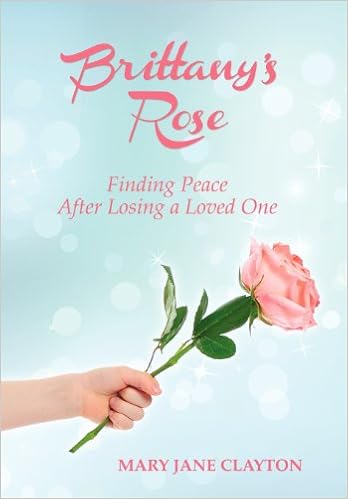
She was a bubbly and jovial little girl one day and sickly the next. Brittany’s condition deteriorated along with her family’s spirit. When a loved one passes away, they leave with a part of us. You are left with a big hole in your heart that you have no use for. How then do you get past the loss? How do you feel the sun on your face again? How do you accept the loss and learn to live with it rather than let it derail your life? How do you finally find some peace despite the ache in your heart?
Brittany’s Rose is the story of a little girl’s death and her family’s journey through grief. It tells the story of their struggles with mourning. Mary Jane Clayton gives a candid account of what she and her family went through for the benefit of the reader. You can never truly prepare for such a loss. But with a book like Brittany’s Rose then you can hope for a better day. You can hope for a day when the grief will be more of a background ache than an earth-shattering life stagnating condition.
This is a quick read meant to help you get past the fog. To hold your hand through this turmoil. Because, really, there is no way to avoid it. The only way to get through it is to go through it. The author creates a sense of kinship with the reader by being honest and open. This book is written with the utmost empathy and is all heart. It is evocative and sad but comforting at the same time. It works whether your loved one passed recently or a decade ago. It is personal and uplifting and written in simple language. It is almost casual but still in a tone that lets you take in the message therein.
The simplicity of this book, the tone, the emotion, the personification of it and the honesty and transparency all make this book a great companion. Sometimes you have to let the healing happen naturally rather than forcing it. It is a natural process. You will also learn the importance of faith in the process.
Brittany’s Rose is a personal story that is always important and useful to someone. The one telling the story requires bravery and courage to tell their story especially one of this caliber so kudos to the author for letting us in. May all who have suffered losses be divinely guided through their grief to a space of peace and acceptance.
Pages: 206 | ASIN: B0792Y4LFF



 LITERARY TITAN