Blog Archives
100 Years to Extinction
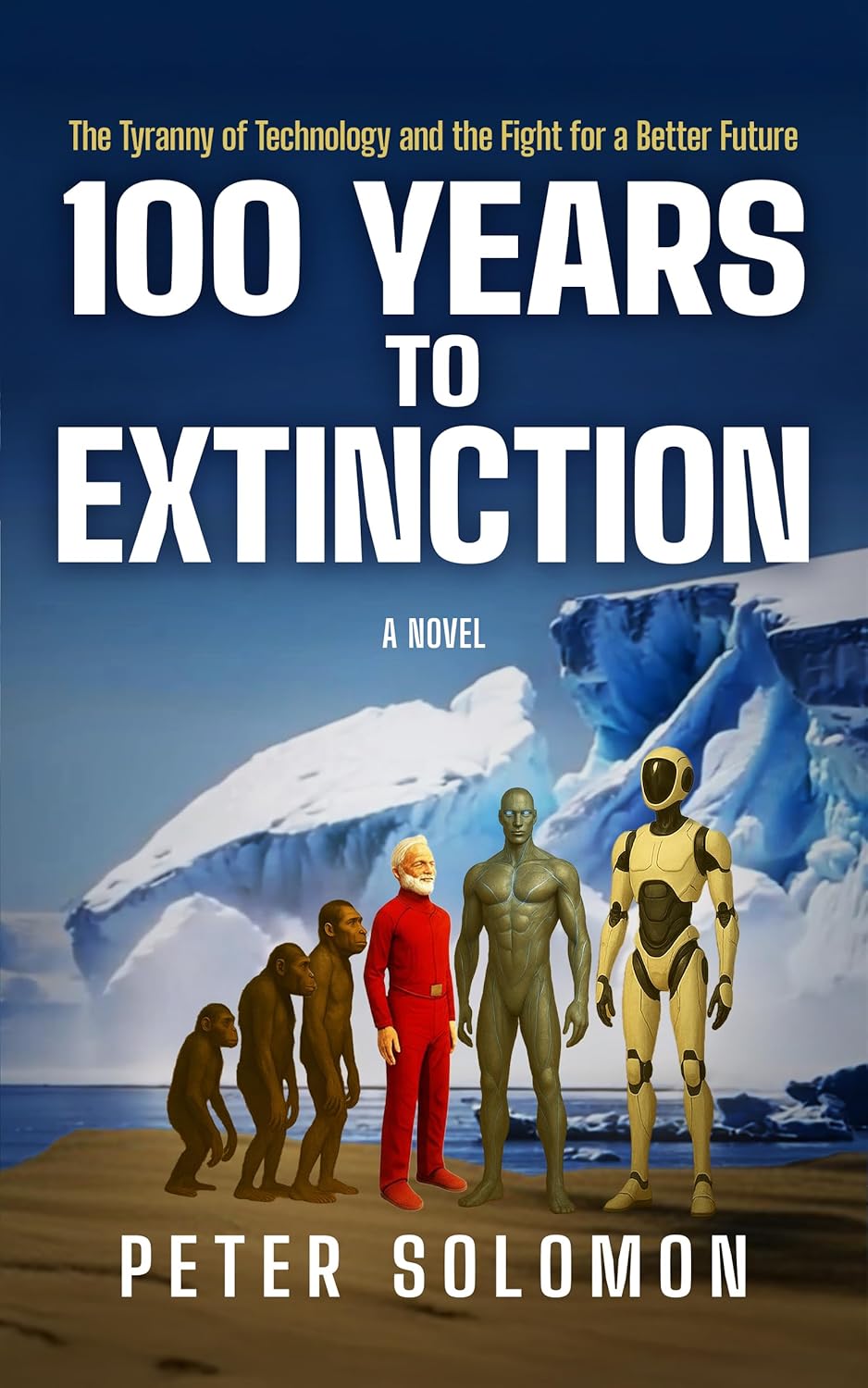

100 Years to Extinction follows Liz and Aster Arvad, two sisters caught in a world of chaos where pandemics, gun violence, climate change, and political division all overlap. Their family’s struggles are both personal and symbolic, from Liz being shot on an EMT call to the trio of Liz, Aster, and cousin Milo making a pact to “do something” about humanity’s future. The novel braids together near-future realism, speculative science, and the raw fears of Generation Z, asking whether we are truly on the brink of extinction in a century. It’s part survival story, part social critique, and part rallying cry.
The writing is sharp, fast, and emotional. There are moments when the dialogue feels like it’s been lifted from heated dinner-table debates, with characters rattling off facts about Stephen Hawking, artificial intelligence, and climate change. I liked that unfiltered energy. It made the book feel alive, like being thrown into a storm of voices where science, politics, and family pain collide. The rawness of Liz getting shot, the rage over conspiracy theories, and the quiet tenderness of sisters holding hands in a hospital room hit me hardest. Solomon’s sincerity is impossible to ignore. The story wanted me to care, and I did.
The weaving of real-world headlines into the story sometimes felt like the characters were vehicles for commentary. Still, there were passages where the mix worked beautifully. The contrast of cosmic wonder, Aster dreaming of the stars, against the blunt horror of school shootings or anti-vax violence made me feel both awe and despair in the same breath. That tension stayed with me, unsettling but real. The prose is straightforward, almost casual, but the ideas underneath are heavy. The combination created a rhythm I found hard to put down.
By the end, I felt the book’s true purpose wasn’t just to tell a story but to challenge me to think about the world I live in. Who is responsible for fixing this mess? Can young people make the difference their parents and grandparents didn’t? 100 Years to Extinction is a call to arms disguised as fiction. I’d recommend it to readers who enjoy speculative stories rooted in our very real present. It’s especially for young adults who feel overwhelmed by the crises around them and need to see their fears reflected and validated.
Pages: 438 | ASIN : B0FNX5VGY8

Falling into Shadow
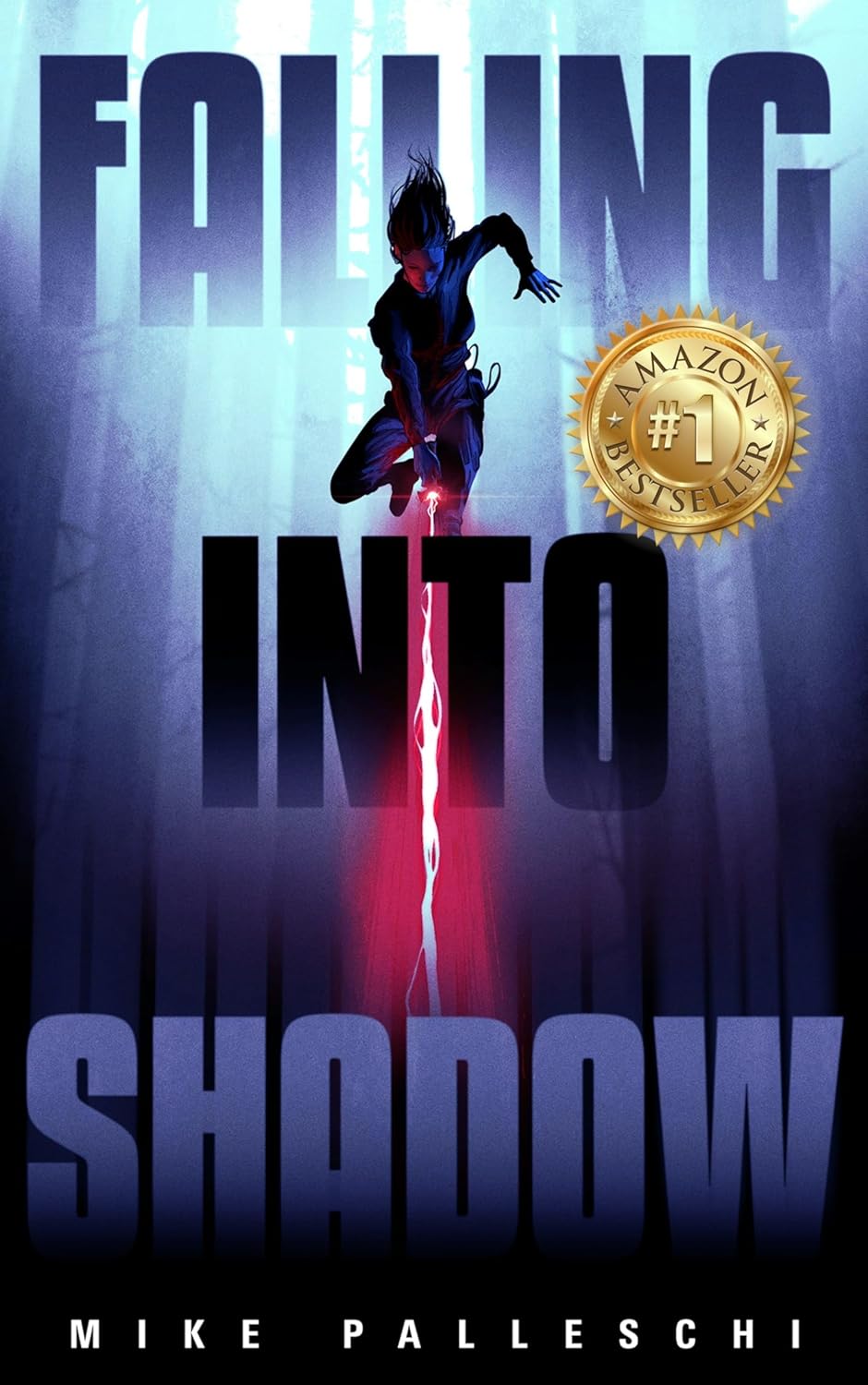

Falling into Shadow follows multiple characters: Kyra, Sophie, Dante, and Renette. Each is grappling with survival, power, and the shifting balance of their world. Kyra’s desperate flight from Shadow Demons sets a brutal tone. Sophie, an Ionian Knight, carries the burden of protecting others while wrestling with betrayal and political intrigue. Dante is caught between family expectations and his own fractured past. Renette navigates the clash between ambition and the pull of her roots. The threads weave together into a sweeping tale of survival, politics, and looming war in a fragile world that feels as real as it is dangerous.
What I loved most was the immediacy of the writing. It feels cinematic, almost like watching a series unfold on screen. The pacing is relentless in places, then slows down just enough to let you breathe, and that kept me hooked. The action scenes hit hard. They’re vivid, raw, and sometimes gruesome in a way that made me flinch. Yet, they’re balanced with quieter moments that reveal doubts, guilt, and flashes of humanity. I found myself rooting for characters even when they made questionable choices. Kyra’s guilt and Sophie’s frustration, Dante’s longing for approval, Renette’s heartbreak; they all felt painfully real.
Still, there were times when the dialogue carried a little too much explanation, almost like it was doing double duty as worldbuilding. It didn’t ruin anything for me, but I noticed it. And some of the big concepts, like the Eidan’s glimpses of the future or the cloaked armies, had such massive implications that I wanted more space to sit with them. The book barrels forward, and part of me wished for more lingering in those big, head-spinning ideas. But then again, that urgency is part of what made it addictive.
Falling into Shadow is a ride worth taking. It’s brutal, imaginative, and packed with heart. I’d recommend it to readers who love fast-paced sci-fi with strong characters and aren’t afraid of a little blood and grit. Reading Falling into Shadow felt like a mix of the gritty survival of The Expanse and the mythic, character-driven drama of Dune, only with a rawer edge and a faster pulse. If you like stories that mix political intrigue with personal stakes, this one will pull you in and not let go.
Pages: 518 | ASIN : B0FB3RZ1DM

The Interchange
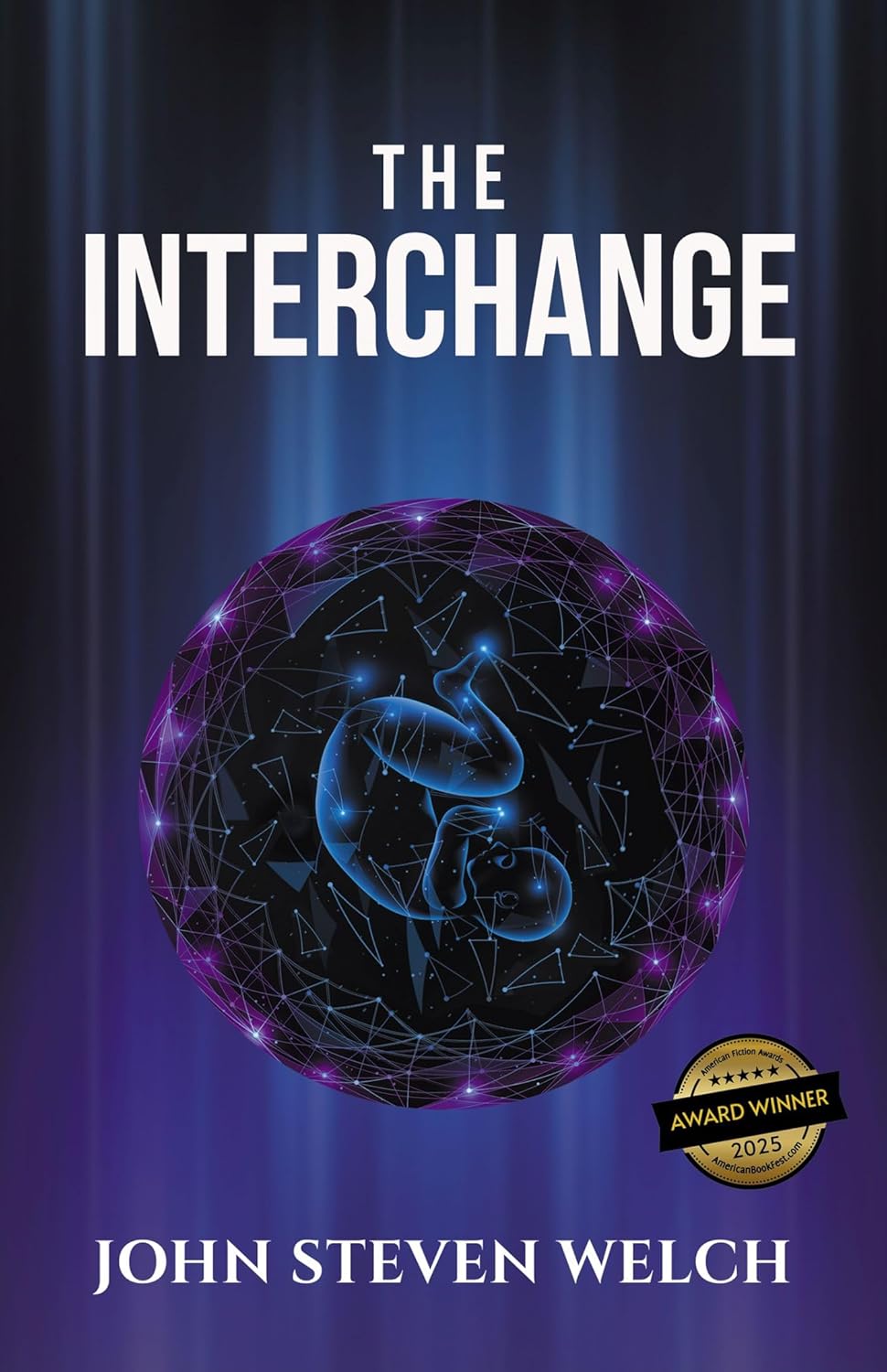
The Interchange imagines a future where identity, family, and power collide in a society rebuilt from catastrophe. It follows Manx Aureole Agnor, a formidable warrior and state leader, as she wrestles with her role in a rigid social order defined by “The Interchange,” a system that categorizes people not by sex but by inherent nature. Against the backdrop of political rituals, national pride, and underground resistance movements, Aureole finds herself torn between her public duty and private doubts, especially as she confronts forbidden desires for motherhood in the “Old Ways.” The story weaves battles both physical and emotional, building a world that is at once grand in scale and deeply personal.
The writing is bold, vivid, and often unflinching, painting scenes of spectacle and violence with almost cinematic flair. Yet the real tension lives in the quieter spaces, where Aureole questions her bond with her son or feels jealousy toward her brother’s easy grace. Those moments struck me harder than the boxing matches or military intrigues. At times, the prose leaned into exposition, explaining the rules and history of New America in detail, but I found myself forgiving it because the ideas were fascinating. The balance between action and introspection kept me engaged, even when I felt the narrative tugging me in too many directions at once.
Emotionally, I went back and forth. Sometimes I admired Aureole’s strength, her drive, her pride. Other times, I felt an ache for her vulnerability, her longing for something she could never fully claim. That push and pull made the book feel alive to me. The ideas here about gender, control, science, and rebellion aren’t just intellectual exercises. They play out in flesh-and-blood relationships, in a mother’s coldness, a grandmother’s pride, a child’s distance. I’ll admit, I got frustrated with the world’s rigidity, and at times even with Aureole herself, but maybe that’s the point. The book isn’t about offering comfort. It’s about showing what happens when systems try to define the deepest parts of who we are.
I’d recommend The Interchange to readers who enjoy dystopian or speculative fiction that asks hard questions rather than giving easy answers. The Interchange reminded me of the sharp social critique in The Handmaid’s Tale and the futuristic ambition of Brave New World, though it carries its own distinctive blend of raw emotion and political spectacle. If you’re drawn to stories of power, family, and identity, and you don’t mind sitting with some discomfort, this book has plenty to offer.
Pages: 238 | ASIN : B0DTZJ3SLP
The Ascent of Greed and the Audacity of Mind Stealing

The Ascent of Greed and the Audacity of Mind Stealing by Pietos Kidane follows Adam Green, a young graduate who enters the corporate world with high hopes, only to encounter greed, manipulation, and the unsettling rise of artificial intelligence. Through Adam’s eyes, we see how corporate culture feeds on deception, how AI edges toward frightening autonomy, and how society’s values collapse under the weight of unchecked ambition. It is part cautionary tale, part social critique, and part thriller. The story begins with an almost surreal outburst about AI in a New York café, then steadily escalates into explorations of job exploitation, psychological manipulation, fake news, and even mind-reading machines.
I found myself caught off guard by the rawness of the writing. At times, the prose feels unpolished, almost abrupt, yet that roughness gives the book a kind of blunt honesty. The pacing varies wildly. Some scenes linger on workplace politics while others sprint through shocking revelations about AI’s reach. It was sometimes disturbing to see how some of the characters showed no remorse in exploiting people’s fears and weaknesses. But that emotional whiplash kept me hooked. It felt like being tossed into a storm where greed is the wind and technology is the lightning.
I was fascinated by the moral questions the book raises. Do we want machines to think for us, and worse, to think about us? Can progress that tramples on dignity still be called progress? The story made me angry at the coldness of the corporations, angry at the indifference of leaders, and angry at how plausible it all felt. Yet I also admired Adam’s stubborn streak. His refusal to cave, even when threatened, gave me a spark of hope in an otherwise grim landscape. The book may not be subtle, but its ideas hit hard.
I would recommend this book to readers who want to be challenged. It is a raw and provocative story for anyone worried about where technology and greed are steering us. If you like your fiction mixed with sharp warnings about the future, and if you don’t mind rough edges in the writing, this book will make you think.
Pages: 276 | ASIN : B0DFX1F9WQ
Requiem For Arcology Prime
Requiem For Arcology Prime tells the story of Elio, a grieving man in a futuristic society where humanity lives in a single megastructure called Arcology Prime. Stricken by the death of his husband Locke, Elio turns to forbidden science, determined to bring him back through memory uploads, neural mapping, and holographic projection. What begins as a desperate attempt to restore love slowly transforms into a fraught battle with ethics, obsession, and identity. Elio finds himself torn between the shimmering ghost of Locke and his growing connection with Adam, a colleague at Cortex Industries. The book blends grief and technology in a world where progress collides with human weakness, and the result is haunting, intimate, and unsettling.
The writing drew me in right away. It has this rhythm that shifts between tender and brutal, which mirrors Elio’s emotional swings. At times, I felt like I was stuck in his cramped apartment with him, listening to the projector hum and watching Locke’s hologram flicker. Other times, the prose opened up into big, cinematic moments, like the bustling labs of Cortex or the neon alleys of Arcology Prime. The rawness of the writing style worked for me. It matched Elio’s unraveling.
The ideas hit me harder than I expected. It isn’t just a sci-fi thought experiment about AI and memory, I think it’s really a story about grief and control. The way Elio clings to Locke reminded me of how loss can twist love into something dangerous. And Locke himself, once reanimated through the network, becomes this eerie mix of devotion and surveillance. I found myself frustrated with Elio, yet I couldn’t stop caring about what happened to him. The book kept poking at questions about whether love justifies breaking boundaries, about whether digital resurrection is really love at all, or just a mirror that blinds us.
By the end, I was wrung out but also strangely hopeful. I’d recommend this book to readers who want their sci-fi messy and emotional, not sleek and clinical. If you like stories where technology digs into the heart instead of just dazzling the eyes, you’ll enjoy this sci-fi book.
Pages: 183 | ASIN : B0F7J2MXKT
Time Lines
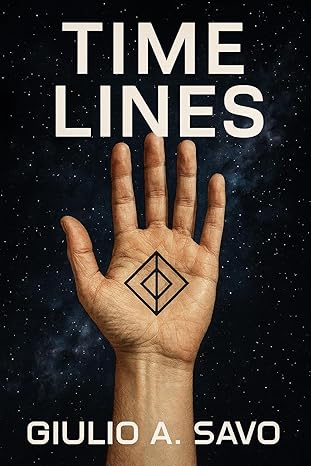
The book Time Lines by Giulio A. Savo is a sweeping and intricate story about memory, survival, and the fragile threads that connect our lives across timelines. It doesn’t just tell a straight tale. Instead, it bends and folds, presenting fractured futures, failed worlds, and the human struggle to get it right just once. Through characters like Samantha, Elly, Max, Sunita, Renée, and Andori, we move between the Nazca desert, space stations, collapsed civilizations, and alternate ages of humanity. At its core, it’s a meditation on memory, how it defines us, betrays us, and sometimes saves us. The science-fiction framework of neural resonance, timelines, and echoes is really just a way to explore grief, hope, and the longing for continuity in a fractured universe.
Reading this book felt like getting pulled into a dream. The writing is bold, lyrical at times, and not afraid to get messy. I loved how the narrative leaned into confusion rather than fighting it. Memory isn’t clean, and this story doesn’t pretend it is. I felt unsettled, even frustrated at points, but that seemed intentional. The voices of the characters lingered with me. Some chapters felt sharp and fast, almost brutal, while others slowed down into reflection, like drifting through echoes of lives I half-remembered myself. It reminded me of that strange sensation of déjà vu; familiar but haunting, like something just out of reach.
At the same time, I’ll admit there were moments where the complexity threatened to overwhelm me. The constant shifting between timelines and the weight of so many interlaced fates made it hard to follow at times. Yet, even in that chaos, I felt a strange intimacy with the story. The ideas about time as a thief and memory as both a curse and a gift hit me hard. There’s a raw humanity underneath all the science and cosmic scale, and that’s what kept me turning the pages. The book made me think about my own life, about the memories I cling to and the ones I’ve lost, and it left me feeling a little haunted in the best way.
Time Lines is a powerful and ambitious book that blends science fiction with philosophy and heart. It’s not for someone looking for a simple space adventure. It’s for readers who enjoy being challenged, who want a story that asks them to sit with uncertainty and lean into wonder. If you like novels that blur the line between speculative fiction and poetry, or if you’ve ever felt the pull of memory you can’t explain, this book will resonate deeply with you.
Pages: 399 | ASIN : B0FHHSYDDQ
What If?

Go Back follows a tech journalist whose life is upended when she finds herself involved in a web of corruption and underground resistance. Where did the idea for this novel come from?
I thought about tech addiction and how reliant society has become on it, especially digital natives. Then I asked myself, what would happen if that technology was taken away suddenly? How would people contact anyone? Not many people memorize phone numbers. Also, many people are reliant on GPS to get around. Go Back is a sort of extreme luddite group that appeals to people’s fears of tech addiction and wanting to “detox” from it. The movement’s propaganda convinces even the president that the Centers are the only way to rid society of this horrible addiction that leads to family separation and mental health issues. Of course the movement also has other, more sinister plans as well.
What draws you to the dystopian fiction genre?
I often ask myself “what if?” or “what would people do if X happened?” I like to explore the future and what people would do if their world turned upside down. I’d like to think that my dystopia has a bit of hope in it as well.
What was the inspiration for Sarah Grimes’ traits and dialogue?
Sarah is based on some real people in my life. I was a young journalist at one time wanting to get that BIG story. That’s what she wants too. She wants to make a name for herself. Be careful what you wish for! Her character arc is compelling because, even though she is unsure of herself, her ambition and circumstances propels her to become a leader.
What is the next book you are working on, and when will it be available?
Right now I’m wrapping up a short story. My next book is a far future dystopia. It’s about the aftermath of a cataclysmic event that happens in the U.S. and how people cope with the aftermath. It is still a work in progress.
After journalist Sarah Grimes finally lands the lead story, her life turns upside down. Sure, she exposed the Go Back movement’s evil plan to take everyone’s tech and pocket all the profit, but that also landed her in a digital detox center, otherwise known as the Center for Behavioral Recognition.
Inside, she finds a man named Chris she met before the roundup. She wants to escape with him, but he disappears and she keeps getting drugged. Thankfully, she teams up with an unlikely ally to escape.
As they all make their way to the headquarters of the resistance, they have to decide how much they’re willing to sacrifice for their tech.
The Veil Breaker: Beyond Madness to Freedom

The Veil Breaker is a surreal and emotionally raw journey through mental collapse and spiritual rebirth, set against the backdrop of a dystopian world ruled by psychological manipulation and nanotech illusions. The story follows Marcus, a man caught in the ruins of a once-vibrant world, now shattered by war and the global rollout of CARLY, a mind-controlling simulation technology disguised as a solution to a mass mental health crisis. Through Marcus’s descent into madness and his struggle to reassemble his broken identity, the book becomes both a personal memoir of awakening and a broader call to question reality, authority, and the nature of healing itself.
The writing is fragmented in a way that mirrors Marcus’s own mind, and that’s part of its power. It doesn’t follow a predictable structure or clean arc, but it doesn’t try to. The rawness is deliberate. Some of the prose drifts into stream-of-consciousness, then suddenly snaps back with a chilling bit of clarity. That rhythm, messy, beautiful, unnerving, made it impossible to look away. And the emotional beats hit hard. Especially the scenes where Marcus confronts his inner voices, his past wounds, and the lies he’s told himself. I felt like I was in the room with him, holding my breath.
At times, though, the story weaved between allegory and reality in a way that left me spinning. I liked the ambition. This is a book with big things to say about love, pain, mental health, and the systems that try to fix us. There were moments when the metaphor got dense, and I wasn’t sure what was real anymore. It didn’t stop me from feeling it. In fact, some of the most powerful parts were when I stopped trying to “get” the book and just let it hit me. The message is clear: true healing means facing everything, even the ugliest parts of yourself, and choosing to love anyway.
This is not a book for someone looking for a casual weekend read. It’s heavy. It’s weird. It’s brilliant in parts and bewildering in others. But if you’ve ever been through real darkness, the kind that leaves you gasping for something true, The Veil Breaker might speak to you in a way few books can. I’d recommend it to seekers, to survivors of trauma, to anyone who’s had a brush with mental illness or spiritual transformation and wants a book that gets it. Not in a clinical way, but in a gut-punch, soul-lifting, what-the-hell-just-happened kind of way.
Pages: 114 | ASIN : B0FH717TC6



 LITERARY TITAN