Blog Archives
The Adventurers and the Enigma of the Lagoon
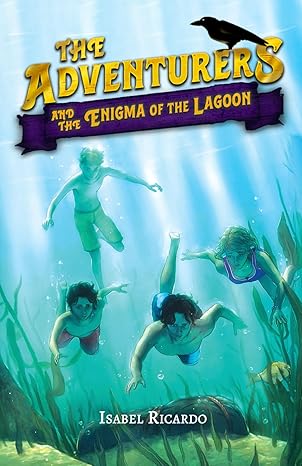

This book is a delightful mix of mystery, history, and good old-fashioned adventure. It follows four kids, Bea, Chris, Tony, and Daniel, plus Jack, a talkative, mischief-loving crow, as they head to Óbidos Lagoon in Portugal for a camping trip. What begins as a fun getaway quickly morphs into a suspenseful journey involving odd nighttime conversations, historical legends, sneaky strangers, and a whole lot of curiosity. With its blend of real locations, local folklore, and fast-paced action, The Adventurers and the Enigma of the Lagoon feels both grounded and fantastical.
What really pulled me in was the charm of the characters, especially Jack the crow. His goofy lines like “Shoo, pests! Shoo!” and “Well, whaddya know?” gave the story so much life. The dynamic between the kids was warm and familiar, with snarky sibling comments, inside jokes, and all the awkward chaos of real friendships. One of my favorite early moments is when Jack mimics the train whistle and causes such a ruckus that passengers switch train cars. That’s the kind of energy this book carries, playful and slightly unhinged in the best way.
I also appreciated how rooted the story is in the setting. The descriptions of Óbidos are just beautiful, like when Bea exclaims, “I’ll come and live here one day! I’m in love!” I shared the same sentiment. The castle, the winding streets, the lagoon, it all feels vivid and alive. Plus, the historical facts sprinkled throughout (like the tale of Afonso Henriques and the Traitor’s Gate) are fascinating without ever being dry. It’s clear the author knows and loves this place deeply. That passion is contagious.
The mystery itself, while not wildly complex, is satisfying. There are shady adults, missing items, whispers in the night, and even a bit of environmental commentary on lagoon pollution. I wouldn’t say it had me on the edge of my seat, but I was definitely eager to find out what the deal was with Margarido and the weird noises at night. It’s a mystery more about atmosphere and tension than plot twists, which works for a younger or middle-grade audience.
The Adventurers and the Enigma of the Lagoon is fun and wholesome without being boring, adventurous without being reckless, and smart without being preachy. If you like The Famous Five or Nancy Drew, but with a European twist and a slightly more magical bird, this is right up your alley. I’d recommend it to kids around 9–13, families reading together, or anyone who enjoys lighthearted adventures in charming places.
Pages: 181 | ISBN : 1962185478

Chronicles of Iron: Thunder Road


Chronicles of Iron: Thunder Road is a gritty coming-of-age tale set against the harsh backdrop of the American frontier, told through the eyes of young Ian, whose life is upended by the sudden suicide of his father. Thrust into adulthood far too early, Ian’s journey begins with trauma and spirals into a rugged path of survival, heartbreak, and ultimately, redemption. From the rural fields of his childhood to the dust-covered roads of salesman caravans and the unrelenting reality of a cowboy’s life, this book weaves together themes of grief, betrayal, hard-earned wisdom, and the search for belonging. Chilson gives us a western that’s as psychological as it is physical, and that’s where its power lies.
As someone who grew up devouring westerns, I didn’t expect this one to hit me the way it did. The tone is raw and visceral. The pain is real, and the opening chapter sets the foundation for everything that follows. And it ain’t just about survival or gunslinging—this story digs into what it means to grow up hard and fast when the world ain’t offering you a single lifeline. Ian’s descent into guilt and self-blame, followed by his attempts to find work, his failures, and the heartbreak of losing Bess, the horse he cared for, made the story feel more like a psychological duel than a shootout. Yet somehow, it still holds onto that cowboy code of grit and quiet honor.
What really got me was the switch in the second half—from broken boy to sharp-tongued hustler under the wing of Silas. That arc reminded me of the classic western trope of the young buck learning the ropes, except here it’s twisted. Instead of becoming a hero, Ian learns how to manipulate, lie, and cheat—and then pays the price. I wanted to shake him when he betrayed Silas, a man who genuinely gave him a shot. Chilson’s writing is sharp in those parts—not flowery, not dressed up—just bare-boned truth. There’s a beauty in that kind of honesty, the kind of storytelling where every misstep matters.
By the time the story shifts to Henry, a more grounded version of Ian trying to find peace and purpose on a struggling farm, you start to feel the tide turn. The relationship between Henry and Lucas brought it all home. It’s the kind of mentorship that defines a man, built not on words but actions. From fixing busted irrigation systems to fighting off rabid wolves with nothing but grit and a stick, these chapters scream classic western, but with soul. Lucas’s line, “There’s a code… a cowboy code,” resonated with me. It wasn’t just about riding tall or shooting straight. It was about keeping your word, being decent when it costs something, and doing right by others even when no one’s watching.
If you’re a fan of traditional westerns packed with dust, blood, moral gray areas, and characters that stick with you long after the fire’s out, Chronicles of Iron: Thunder Road deserves a place on your shelf. But it’s more than a western—it’s a story about being lost and clawing your way back, about learning that being strong doesn’t mean being cruel. This one’s for readers who appreciate depth in their cowboys, who want a story that punches first and comforts second. Kelly Chilson wrote something real here.
Pages: 87 | ASIN : B0F3V99JWV
Ancient Wisdom and Future Technology Collide

The Legacy of Festoria follows five gifted kids, each with a special connection to an element—shadows, wind, water, fire, or earth—who are called to seek out a mysterious sage who holds the key to balancing their ancestral powers with emerging AI technology. Where did the idea for this novel come from?
The idea for The Legacy of Festoria was born out of a deep curiosity about what would happen if ancient wisdom and future technology were to collide. I’ve always been fascinated by elemental magic and the idea that nature holds secrets we’ve barely begun to understand. But I also wanted to explore how modern innovation, especially AI, might not oppose that wisdom but enhance it. The story came to me like a vision: children gifted by nature, living in harmony with the elements, who must journey to uncover not just magical truths but also the role of advanced intelligence in preserving that harmony. It’s a tale of inheritance—both spiritual and intellectual—and the power of unity in a time when the world is at a crossroads between tradition and transformation.
The Legacy of Festoria begins in a traditional way, but then takes a turn that defies the conventional fantasy story, blending fantasy with AI technology. What was your approach to writing the story?
I wanted the story to feel like a gentle unfolding—a familiar beginning in an enchanted village that slowly peels back layers to reveal a far more complex world. My approach was to root the reader in timeless, almost mythological elements—earth, water, wind, fire, and shadow—and then introduce the unexpected: the fusion of those elemental gifts with artificial intelligence. Instead of framing technology as an invasive force, I chose to write AI as something that could coexist and evolve alongside ancient magic. This blend creates a narrative tension that mirrors our modern world’s dilemma—do we abandon the old ways, or do we find ways to adapt and evolve them? Writing this book was about creating harmony between opposites and allowing the characters to be the bridge between them.
What were some themes that were important for you to explore in this book?
At its core, The Legacy of Festoria explores the balance between nature and technology, past and future, and solitude and connection. One key theme is identity—each child must come to terms with their unique gift, their ancestry, and what it means to use their powers responsibly. Unity is another essential thread—though the characters are wildly different in temperament and talent, they are strongest when they come together. I also wanted to explore legacy—what we inherit from those who came before us and how we choose to carry that forward. And finally, the story delves into purpose—not just finding it but forging it, especially when the path is unclear. The fusion of AI with elemental magic became the perfect metaphor for growth: honouring the roots while reaching toward the stars.
Where do you see your characters after the book ends?
When the children step through the portal and meet Solon, it’s just the beginning of their actual journey. I see each of them stepping into a new chapter—not just as individuals mastering their gifts, but as Guardians of a new era. Aria will likely become a Seer of unparalleled wisdom, learning to read not only shadows but the complex moral patterns in the world. Leo might become a Messenger between realms, interpreting the shifting winds of change. Marina could become a diplomat of sorts, mediating between the old magic of nature and the logic of AI. Ember would thrive as a protector, defending their world with passion and courage. And Sage—steady and grounded—might grow into a builder of bridges, both literal and symbolic, between the elements and technologies that shape their future. Together, they’ll form the foundation of a new kind of harmony: one where magic and innovation walk hand in hand.
Eastlanders’ Fall
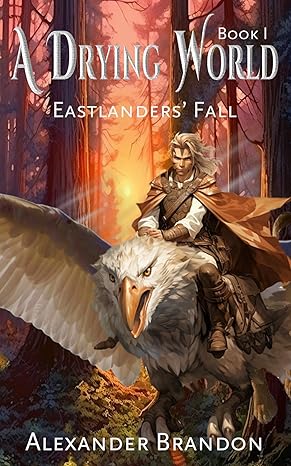

Eastlanders’ Fall, the first book in the A Drying World series, is a sprawling epic that plunges readers into the richly imagined continent of Ananthia. It’s a tale of ancient evil rising again, powerful cults seeking domination, and unlikely heroes trying to stop the world from crumbling—literally. The story kicks off with a chilling prologue featuring a cultist ceremony that goes sideways in a burst of divine justice and continues across time and space with mages, paladins, and political intrigue all grappling with the fallout. Brandon weaves together threads of high fantasy, horror, and philosophical musings about power and knowledge in a setting where the land itself is dying.
What I really loved about this epic fantasy novel was how unapologetically ambitious it is. The prologue alone is cinematic—seriously, the cult scene in “The Black Mass” is intense, grisly, and gripping. The way Brandon sets up Darvis Talsdrum as this menacing, dark priest of undeath is fantastic. I couldn’t stop thinking about that moment when the undead plunges a dagger into the elven girl’s chest just as paladins storm the room. It was horrifying and heartbreaking, but also incredibly effective storytelling. It’s rare to find a villain introduced with that much weight so early. I was hooked.
Some characters, like Milendil—the rogue wizard dabbling in necromancy—really worked for me. He’s a blend of tragic, arrogant, and brilliant, and I couldn’t help but root for him even as he spiraled. His quiet descent and eventual disgrace (and bitter sarcasm during sentencing) felt both earned and kind of sad. I genuinely felt for him, especially during his scenes with Villiena. That tension—knowing he’s doing something wrong, but for reasons that almost make sense—kept me glued. But not every character felt as rich. Maybe because there’s just so much going on that they don’t get as much time to breathe.
Brandon clearly has a massive world in his head, and while that can be a strength (the lore, the politics, the factions—it’s all super cool), it can be a lot to take in. There were chapters where I felt like I was swimming through exposition or trying to decode dwarven history. But then, just when I was about to put the book down, he’d hit me with something awesome—like the mage tower drama, or the way the desert literally eats cities. Those moments made the slower parts worth it. The writing style itself is vivid, sometimes poetic, and definitely leans dark fantasy, which I like.
Eastlanders’ Fall is a wild, sometimes brutal, always thought-provoking ride. If you like your fantasy epic, dark, and packed with morally gray characters, this is for you. Fans of Brandon Sanderson, Joe Abercrombie, or even older D&D-style storytelling will find something to love here. It’s not an easy read, but it’s a rewarding one—and I’m absolutely curious to see where the story goes next.
Pages: 413 | ASIN : B0DNG6RY4Q

Adding Depth to My Characters

The Oberon Stone follows a group of friends who are searching for an ancient artifact of immeasurable power, when one is kidnapped, turning their mission into a desperate rescue. What was the inspiration for the setup of your story?
I wanted the second book to break away from the artifact-hunting structure of the first, so I set up the story to make readers believe the search for the artifact was the main plot—only to subvert that expectation when the real quest became the Mage’s rescue. That shift came as a shock, flipping the narrative focus. If you look at the book’s climaxes, they’re tied more to the rescue than to the artifact itself, even in the “coming back home” moment. The artifact hunt ended up taking more of a side-quest role.
Removing the MC’s mentor was also intentional. It allowed other characters to step into the mentor role, shifting the dynamics from Book 1. The different quests also gave me the opportunity to define the rules of magic in more depth, breathing more life into the Downtown-verse—something I couldn’t fully explore in the first book without overwhelming the reader.
What character did you enjoy writing for? Was there one that was more challenging to write for?
Ada was a difficult character for me. I was very cautious about making her more than just an unpredictable sidekick. I wanted someone loud, someone who would steal the scene multiple times, but she also needed to be deeply flawed—a character that would play with the reader’s emotions. I couldn’t push her so far that readers would put the book down because of her, but I wanted to push right up to that emotional edge, making her memorable not for her wins, if that makes sense. The hardest part was figuring out where that fine line was for different readers.
I really enjoyed writing Montgomery. It’s easy to write a classic arch-enemy—just make them all bad and powerful. But if you know anything about me, you know I’d never lean into that cliché, just as much as I dislike Deus Ex Machina solutions. So yes, Montgomery needed to be awful, but he also needed a history behind his awfulness—one that readers could relate to, enough to humanize him. I loved crafting his background: the family dynamics, the bad parenting that shaped him, his desperate need for his father’s attention, and how discovering a half-brother only deepened his existing insecurities. I especially enjoyed writing Montgomery as a father—desperately overcompensating with Rachael, trying to give her the love he never had, without realizing he was creating another version of himself. Different paths leading to the same destination.
Yes, Montgomery was a fantastic creative process.
When you first sat down to write this story, did you know where you were going, or did the twists come as you were writing?
Mostly, yes — I knew where it was going, at least for the main ideas. But side stories and details tend to change as I populate the story. I base the overall plot on Vogler’s Hero’s Journey structure, which gives the main plot a very well-defined progression. Then, I break the story into bigger chunks, which usually turn into one or two chapters each. From there, I start layering the side stories — the events that make character interactions unique and develop each character’s individual trajectory.
For example, Bruno and Sarah’s broken romance is a side story. Sarah’s emotional progression — learning self-love and accepting that she often gives more than she receives — is another side arc in itself. These subplots, along with side quests, can shift as I write. I also tend to place unexpected obstacles in the characters’ paths that I hadn’t planned initially. This adds a sharp edge of anxiety to the quest, making readers wonder whether success is even possible. Sometimes I let the characters overcome these hurdles, and sometimes they are forced to find a workaround — a plan B. These choices often happen at the last minute. Yes, I’m the kind of author who ruins my characters’ lives — and you’ll love it.
When will book three be available? Can you give us an idea of where that book will take readers?
Book three (The Temporal Scythe) is already available for pre-order on Amazon (Kindle only). It will be released — along with the physical copies — on June 10th, 2025.
You can expect a deeper, darker, and more emotionally intense story, just as you could notice the progression from book 1 to book 2. The characters are also more emotionally mature, with their arcs intensifying both in magical knowledge and personal growth. The stakes are higher, and the long-awaited climax of the trilogy arrives, featuring the much-anticipated final battle between good and evil.
Without giving too much away, readers should prepare for the emotional rollercoaster they already know they will get from my works — only this time, with higher speed, sharper loops, and a broken track somewhere that might just as well launch them toward their doom.
Author Links: GoodReads | X | Facebook | Website | Trilogy Website
“This jam-packed, … cross-genre tale proves consistently entertaining! A smashing final-act turn makes checking out the sequels a virtual necessity.” – Kirkus Reviews
The Wishing Shelf Book Awards Nominee
Eric Hoffer Da Vinci Eye Nominee
Reader’s Favorite Five Stars YA SF / Dark Fantasy
_____________________________________________________________________
Liam Hale’s world spirals into chaos when he receives a message in his late mother’s handwriting-delivered by a friend who should no longer exist. This is no coincidence. As he searches for answers, he unearths something far worse: the prophecy foretelling the end times has been shattered, tearing apart the fragile barrier between the Houses of the Living and the Dead.
With the Megaverse on the brink of collapse, Liam and his companions-alongside the enigmatic druid Sarah and the unpredictable witch Bruno-set out to restore the balance. Their only hope lies in the Oberon Stone, an ancient artifact of immeasurable power. But when McCormick is kidnapped by the merciless Winifred family, their mission turns into a desperate rescue.
Devil’s Spit: Prequel to The Ironborn Saga

Devil’s Spit is a gritty, booze-soaked detective noir tucked inside a fantasy world teeming with corruption, gang violence, and moral rot. The story follows Inspector Jack Greaves, a rum-drenched city guard with a haunted past, as he investigates a brutal murder scene that turns out to be more than just another night in Ironbay. With a rookie constable at his side and enemies lurking around every corner, Greaves dives headfirst into a tangled mess of bodies, secrets, and vendettas that refuse to stay buried.
This book had me hooked from the first swig of devil’s spit. The writing is razor-sharp, fast-paced, and just oozes atmosphere. That opening scene? Chef’s kiss. Greaves gambling away his last coin while downing the nastiest rum in Ironbay, sitting across from Malrick “the Spider,” oozes tension and worldbuilding without ever slowing down. The rum hierarchy alone—ranging from royal honeysap to the gut-rotting devil’s spit—says more about the city’s soul than any info dump ever could. Cavanagh’s prose is tight, punchy, and unpretentious. You feel the, the weight of Greaves’ regrets, and the heavy buzz of danger around every alley corner.
What really made the story sing for me, though, was Greaves himself. He’s the perfect mess of jaded, broken, and quietly noble. I loved how he lies through his teeth, drinks like it’ll stop the ghosts in his head, but still throws himself into danger to protect a girl he doesn’t even know. That whole bit with Boulder—the sweet, gentle giant pretending to be an “angry dog” to scare off thugs was surprisingly wholesome in a book full of body parts and gangsters. Also, Greaves biting off a dude’s thumb and spitting it out mid-fight was horrifyingly satisfying. There’s violence, yeah, but it never feels gratuitous. Every drop of blood feels like it means something.
Devil’s Spit is a wild and bloody ride through a city where justice is hanging on by a thread and everyone’s got a knife hidden somewhere. If you’re into detective stories with a fantasy twist, flawed but fascinating characters, and a whole lot of creative cussing, you’re gonna love this. Fans of The Lies of Locke Lamora, grimdark fantasy, or even just gritty noir with heart—this one’s got your name written all over it.
DON’T MESS WITH ANNA: A RECKONING IN BLOOD AND INK

Celeste Prater’s Don’t Mess With Anna is a wild, genre-melting ride that throws a petty online feud into a fantastical medieval meat grinder. When relentless troll Milton Smith takes one jab too many at author Anna DeMarco, karma doesn’t just knock—it drags him kicking and screaming into a brutal otherworld where knights don’t wear shining armor and dungeons are disturbingly real. Packed with vengeful magic, dark humor, and a strange sense of justice, the book follows Milton as he pays, painfully and hilariously, for every snarky comment he’s ever typed from the comfort of his mom’s basement.
Okay, first off—this book is bonkers in the best way. Prater doesn’t tiptoe around the setup. She throws us straight into Anna’s emotional breakdown over a brutal one-star review and it just spirals gloriously from there. But it’s when Milton starts feeling “icy tendrils” in his gut and faceplants into a keyboard that I knew I was in for something completely different. Prater doesn’t hold back. Her writing swings between hilarious and visceral, and the pacing is relentless. You’re either on this ride or you’re roadkill.
The fantasy world Milton lands in is where the story really flexes its muscles. It’s rich, weirdly believable, and mean as hell. These knights are not your noble, gallant types. More like angry executioners with perfect hair and better comebacks. Godric, Damon, and Jasper have big “don’t test me” energy, and watching Milton—a troll through and through—get absolutely wrecked by their world was satisfying in a primal, slightly guilty way. Milton’s journey through humiliation, fear, and growth, is uncomfortable but compelling. He’s kind of awful, but he’s also kind of us at our worst. That’s smart writing.
Now, don’t expect a subtle tale of redemption. This is more medieval-flavored revenge fantasy with a keyboard warrior at the center, and I loved that about it. But it’s not all snark and swords. Prater weaves in some really clever commentary on internet toxicity, cancel culture, and the emotional labor of creators. The queen and king’s fury over Anna’s mistreatment feels both over-the-top and totally justified. It’s like watching an entire fantasy kingdom rage-quit the internet on her behalf.
Don’t Mess With Anna is for anyone who’s ever read a one-star review and thought, “Wow, who hurt you?” It’s for writers, for readers, for anyone who’s been on either side of online drama and lived to tell the tale. It’s messy, chaotic, wildly entertaining, and unexpectedly sharp. If you’ve got a thing for dark fantasy, poetic justice, or just want to see a professional troll get medievaled, this book is for you.
Pages: 322 | ASIN : B0F22X4FVD


