Blog Archives
Vampire Assassin

The Awakening features a wolf-vampire hybrid on a journey to save his mate and who is accompanied in his quest by both allies and enemies. Where did the idea for this novel come from?
The idea for Nathan comes from my Longing Mates series, which relates the love of a werewolf and a vampire and their efforts to bring peace between their two races. At the end of this series, the characters have a child, and thus Nathan was born. I immediately knew that he needed his own series. Obviously, the world has changed over the past centuries from when his parents lived. In addition to saving his mate, Nathan has so much more to do. One of his goals is also to claim back his throne and remove the current Queen, who chased him out of his kingdom. The Awakening is the second book of the Blood and Kisses series, which will have five books.
What draws you to the supernatural genre?
When I read a book or write, I want to get away from everyday life and stress. I need a book that will sweep me away to a world where people are more busy preventing a dark prophecy from happening and finding love at the same time than worrying about what to cook for supper and the chores that need to be done.
Do you have a favorite among your unique cast of characters? One that was especially fun to craft?
Nathan is my favorite character just because he cares about the woman he loves and is strong despite all his challenges. But Caleb, the vampire assassin, was especially fun to write. He is such a dark and morally grey character. He pushes the boundaries of what is acceptable and what is not.
What can readers expect in Book 3 of the Blood and Kisses series? Where will it take readers?
Book 3 of the Blood and Kisses series is called Dragons’ Rebirth. So obviously, you can expect dragons. It will take readers on a wild ride where the dragons, which were extinct, return. Nathan is on a quest to retrieve his mate, who was abducted. And Caleb is fleeing the furies of a Goddess.
Author Links: GoodReads | Facebook | Website | Amazon
The woman Nathan loves has been taken from him, and now his wolf is restless. The half-vampire hybrid will tear the world apart to find her. But what he discovers is more than what he bargained for. Hurt and betrayed, he will face his legacy.
Caleb awakens as the goddess’s son and the instrument of her vengeance. How will he react when he meets a woman he can’t kill? The vampire assassin is soon faced with a choice for which nothing could have prepared him.
After discovering the truth about the birth of the elven race, Elaine must find a way to save their magic, even if it means bringing dragons back to life. But her path is strewn with pitfalls, and the king has been tainted by darkness.
In this tale of passion, lust, betrayal, and death, enemies ally as they share a common goal: to restore the draconic race.
An Evocative Voice

Visage of Moros follows a man searching for answers over the death of his daughter, only to have it turn into an all-consuming need for justice, leading him down a path of paranoia, violence, and self-destruction. What was the inspiration for the setup of your story?
It’s hard to pinpoint the initial conception of the narrative in my mind. I think it was more of a gradual, collective thought processes. It’s interesting that you mentioned the movie Prisoners in the review because I believe that the movie, along with Memento, had significant influences on the shaping of the story.
I felt that there were a lot of great twists and turns throughout the novel. Did you plan this before writing the novel, or did the twists develop organically writing?
Some were pre-drafted in the initial plot outline but I think most came to me as I further embraced and developed the scenes and the characters.
What were some goals you set for yourself as a writer in this book?
I ventured outside of my comfort zone a little bit with this story as this is much closer to home than my other works. But, just like my other writings, I strive for an evocative voice that embodies the style and the essence of my storytelling.
What is the next book that you are working on and when can your fans expect it to be out?
Currently, I am simultaneously and intermittenly working on the sequel to Visage of Moros and another collection of stories.
Author Links: GoodReads | Website | Barnes & Noble
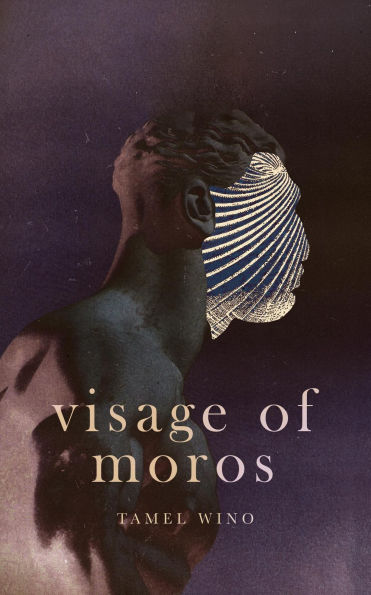
A riveting tale of suspense, the first installment from the Decay Abloom series that probes into the psychological toll of grief and the blurred lines between justice and vengeance.
In the wake of the brutal murder of his daughter, Drystan Caine finds himself on the verge, his life thrown into chaos. With the investigation stagnating, he embarks on a self-imposed crusade. However, as Drystan becomes increasingly consumed by this undertaking, his personal and professional life starts to unravel.
Driven by deep resentment and reckless desperation, this rogue pursuit of justice rapidly takes a treacherous turn. As Drystan draws closer to uncovering the truth, he must confront how far he is willing to go before succumbing to darkness.
The Idea of the Good Man
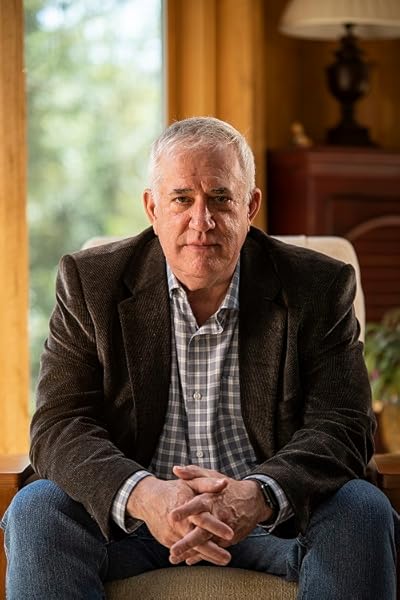
Reciprocity follows a retired US Navy SEAL to the Philippines who is leading a search mission for a missing relative who has been kidnapped by human traffickers. What was the inspiration for the setup of your story?
An old friend of mine suggested the idea, saying that the ending of Montagnard, my previous novel in the series, was a perfect segue into it. This friend volunteers to sponsor women who are getting out of bad situations. I resisted the idea. I was not sure I wanted to do it. Human trafficking is such a dark topic. Then, I saw the movie Sound of Freedom; that movie had a profound effect on me. After seeing that movie, I watched a couple of documentaries on the subject, leading me to do some research. What I found shocked me. I just decided it was a subject that needed to be talked about. The story just naturally grew from there. I guess my friend was correct; it was a fantastic lead-in – at least, in my opinion.
My books cover dark topics that some might find depressing or destructive. But, as my editor once told me, moral or redemptive threads always wind through the story. I think those threads bring hope.
How has character development for the main character changed for you through the series?
I would start by saying I love my characters. I treat them like real people, and most are composites of the many people I have met, gotten to know, been friends with, or even enemies of over 60+ years. So, they are genuine to me. And I think all people have the capacity for great good or great evil. Few are completely good or downright evil. I believe my characters illustrate that idea.
As far as JD Cordell, my main character, I guess you could say that he represents who I wish I were. I mean, what man would not want to be handsome, intelligent, dangerous, passionate, quiet, mysterious, patriotic, and underneath it all, just a good man? Being human, we all have our strengths and weaknesses; it is just human nature. In fiction, anyone can escape to a world where heroes still exist.
I certainly think JD has seasoned a bit over the series. He retained much of his family values and upbringing when he became a Navy SEAL. For example, I don’t think he even used one curse word in the first book, Serpents Underfoot; even though the men he serves with all curse like sailors. Being a former military member, I think that is pretty typical; nobody says “golly gee whiz” when the bullets are flying. Now, in the third book, Reciprocity, I think JD says, “shit” or “damn” one or two times. So, in a way, you could say JD is evolving. But to me, the important thing is that, throughout the series, JD’s core values and principles do not waiver or change. He is who he is. I see that as a good thing. I think JD epitomizes the idea of the good man.
I felt that the action scenes were expertly crafted. I find that this is an area that can be overdone in novels. How did you approach this subject to make sure it flowed evenly?
Forty-five-plus years of traditional karate training focused on self-defense probably helps. In that environment, as in the operating environment of a spec ops warrior, there’s no trophy to win. You want to go home at the end of the day. The goal is not to win a fight, but to shut down the attack. So, these scenes will not resemble the 20-minute battle royals you see in the movies. Even in Taylor’s unsanctioned fights, while euphemistically seen as a sporting event, efficiency would be key to surviving. These fights are brutal, so you don’t want them to go on longer than necessary. I try to make the fight scenes short enough not to be overdone, but realistic and efficient. And that is something I have learned to do. Nobody likes a good fight scene more than me, and with my martial arts background, it is easy to add too much detail. I had to learn to keep that under control.
Can you tell us more about what’s in store for JD Cordell and the direction of the next book?
I plan to back off from the globe-trotting nature of the first three stories in the series and do something within the US. Perhaps a family vacation to the Adirondack Park in upstate New York that goes awry, and JD becomes embroiled in a bad situation. It’s not new, so I must create a unique twist. I think I have a few good ideas floating around in my brain.
Also, I like my characters, Hana Hahn and Bill Taylor. I am trying to decide if a ‘Hana origin’ story or the ‘future adventures of Bill Taylor’ might be worth venturing into. And then there is Ajax, the SEAL k9, from the first two stories. I loved the dog’s character, as did most of my readers. Some were quite mad at me for how things unfolded in Montagnard. This was due to a newbie timeline error on my part in Serpents Underfoot. So, Ajax did not get the treatment he deserved, being such a loved and heroic character. I would not be surprised to see an ‘Ajax” story emerge in the future to correct this injustice.
Author Links: Goodreads | X (Twitter) | Facebook | Website | Amazon
When a gang of human traffickers kidnap two young ladies who are leaving their troubled past in Vietnam to start new lives in America, their dreams suddenly become a nightmare.
JD Cordell, a retired US Navy SEAL, and relative of one of the young ladies, races to the Philippines to lead a rescue team through the dangerous streets of Manila’s infamous Tondo district, searching for a former American Special Forces sniper lost in its dark and violent underbelly of cheap alcohol, fast women, and unsanctioned fights – and who just may be their only hope to locate and rescue the two girls.
Death lurks around every corner as the clock is ticking. Will JD and his team be able to rescue the girls in time, or will these two young ladies become the latest victims in a deadly game of kidnapping and vengeance?
Where Eagles Fly Free
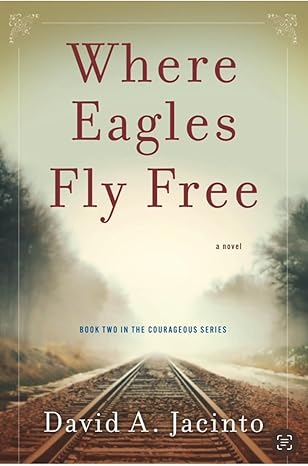

David A. Jacinto’s Where Eagles Fly Free is an immersive historical novel that whisks readers back to 1868, following Tom Wright and his family as they embark on a grueling transatlantic journey from England to America. Their story is one of resilience, hope, and unyielding determination as they flee the oppression of the British aristocracy in pursuit of a dream to live freely on their own land. Throughout, the narrative teems with vivid imagery, from the breathtaking Irish Sea to the cramped, unsanitary ship conditions, and highlights the toll of physical and emotional hardships faced by immigrants.
Jacinto’s writing made me feel present in every scene. His descriptions of the Colorado ship, the swaying wooden masts, the pungent smell of mildew, and the ever-present threat of the Atlantic’s fury were so vivid I felt seasick myself. One standout moment was when the ship endured a violent cyclone, complete with cracking masts and desperate sailors. It was heart-pounding and terrifying, yet it highlighted Tom’s courage under pressure. At the same time, the book’s pacing allowed for reflective moments, particularly during the extended inner monologues about America’s promise, which offered a hopeful and idyllic vision of the future that added depth to Tom’s dreams.
The novel shines brightest in its portrayal of human relationships. Annie, Tom’s pregnant wife, was a standout character for me. Her compassion and sheer grit stole the spotlight repeatedly. I found myself rooting for her during the scene where she faced off with the ship’s detestable cook, Mr. Bunnings, over the rotten food being served to sick passengers. Her determination to improve conditions for everyone, even as she battled her own exhaustion, was inspiring. Tom’s interactions with his wife left me conflicted. While his dreams for America were noble, his occasional dismissiveness of Annie’s struggles added a layer of tension that felt unresolved.
The bonds of family and the pain of loss are central themes. Tom and Annie’s shared grief over their son Henry’s death added a poignant layer to their relationship. Scenes like Annie comforting her ill nephew or witnessing a mother and child being buried at sea were gut-wrenching. These moments grounded the story in raw emotion and reminded me of the immense sacrifices immigrants made for the hope of a better life.
Where Eagles Fly Free is a deeply evocative tale of perseverance, filled with memorable characters and stirring imagery. While it occasionally leans into idealism, the novel’s focus on family, faith, and the pursuit of freedom will appeal to readers who enjoy richly detailed historical fiction. I’d recommend it to anyone with a taste for emotionally charged narratives, particularly fans of stories about immigration or survival against the odds.
Pages: 400 | ASIN : B0DZY69F2J

A Universal Message
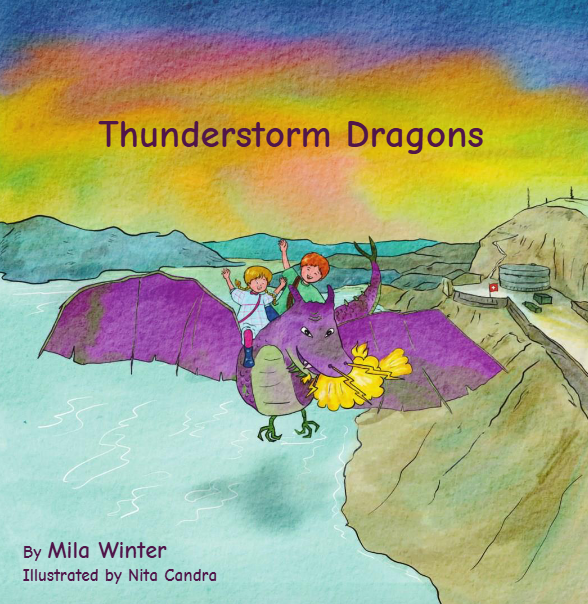
Thunderstorm Dragons is a heartwarming adventure where two kids uncover the magic within a storm, learning that fear can transform into wonder if you dare to see it differently. What was the inspiration for the setup of your story?
My daughter was afraid of thunderstorms, and I told her the thunderstorms mean that the dragons at the mountain pilatus are coming. Thunderstorms come directionally from Mount Pilatus where we live. She then imagined how she would stomp on the dragons with her princess shoes. The story evolved thereon.
Lotta and Leo have such distinct personalities. Did you base them on real people?
Yes, they are based on my son who is 6, and my daugther is 4. Both of my children are very active and outgoing. My son is fearless and gives his younger sister nudges and confidence to become more independent.
The book beautifully conveys the idea that fear doesn’t disappear but evolves. Was that always a central theme for you?
No, this theme isn’t central in my writing in general. What is central, however, is that so far all of my children’s books (3) have a universal message which applies equally to children as it does to adults. The messages are not moralistic, but life lessons.
How did you collaborate with Nita Candra to bring the dragons to life through illustrations?
Nita has a beautiful classic style and is a pleasure to work with. I start with providing her with the complete text and a description of each scene, sometimes with pictures or very rough sketches. We then agree on the key characters. She then makes the sketches, which we do a few versions of, adding some details in each iteration before moving on to the illustrations. While it is my vision we are implementing, it is important to me that she has free creative range. I continue to be impressed by how well she illustrates dynamic and complex scenes.
Author Links: Facebook | Website | Instagram
CROSSING BORDERS AND GENERATIONS: One Man’s Journey To Search For His Ukrainian, Greek, And Bulgarian Roots
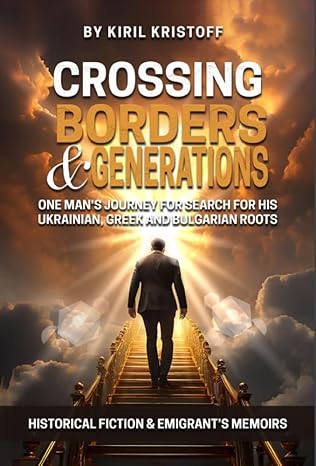

Kiril Kristoff’s Crossing Borders and Generations follows an epic journey of family, history, and identity. Blending memoir, historical fiction, and a touch of the spiritual, the book follows George, a Bulgarian immigrant, as he navigates life in America while uncovering his family’s past, spanning Ukraine, Greece, and Bulgaria. The story unfolds with surprising twists, including a near-death experience that enables George and his grandson Alex to travel through time, witnessing the hardships and victories of their ancestors—many of whom they had barely known existed. At its core, this is a book about survival, faith, and the sacrifices made by those who seek a better life—not just for themselves, but for the generations to come.
Kristoff’s writing shines when he details the harrowing realities of immigration and the emotional weight of exile. The depiction of George’s struggles in both communist Bulgaria and capitalist America is striking. One particularly moving passage describes his time in a Soviet-controlled Bulgaria, where food was scarce and hope even scarcer. His determination to escape, despite the risks, is both heartbreaking and inspiring. Kristoff skillfully captures the isolation of an immigrant trapped between two worlds—too unfamiliar for his new home yet too transformed to return to his old one—compelled to forge a new identity in uncharted territory.
The novel’s structure is bold and unconventional. The blend of historical narrative, spiritual exploration, and generational storytelling creates a layered reading experience. The time-traveling, near-death elements feel jarring at times. While the afterlife journey adds a unique touch, it occasionally disrupts the story’s emotional momentum. For instance, the moment George and Alex find themselves in 1948 Bulgaria, reliving George’s youth, is gripping, but it sometimes overshadows the real-world immigrant experience, which is the book’s strongest element.
Kristoff’s prose is passionate and personal. His descriptions of family traditions, the immigrant experience, and the weight of history feel deeply authentic. The dialogue can sometimes be heavy-handed, particularly when characters serve as mouthpieces for historical exposition. At times, the book leans into overly sentimental moments, but given its themes of faith and family, this is forgivable. The storytelling is at its best when it lets the characters’ struggles speak for themselves, such as George’s heartbreaking survivor’s guilt over the friends he left behind in Bulgaria.
Crossing Borders and Generations is a deeply personal and ambitious novel that will resonate with those who appreciate stories of immigration, resilience, and family legacy. It’s a book for history lovers, for anyone who has ever felt caught between cultures, and for readers who enjoy narratives that mix reality with the metaphysical. Kristoff delivers a compelling story about the price of freedom and the power of remembering where we come from.
Pages: 399 | ASIN : B0CZJ5Q376
A Touch of Quirkiness

In The Meeting Place, a community fights for survival following an environmental disaster and a devastating public health crisis that tears three friends apart. What was the inspiration for the setup of your story?
The context of the story – an environmental crisis and a pandemic -are what we already live with a slight increase in factors that could possibly happen over the next few years or decade. I have always had a fear of mass round-ups and I wanted to explore the hypothetical situation of adding in a round-up of community members in the Northern Rivers, within the backdrop of devastating drought.
I chose to look at this scenario from the point of view of 3 different characters each landing in different places and with their unique strengths and weaknesses that would come to play in their survival. The three characters could be said to represent different parts of myself but also different parts of our community.
Did you plan the tone and direction of the novel before writing, or did it come out organically as you were writing?
I was compelled to write this story. It would nag and nag at me to be written until I committed to it and even then it took several years. I had no ideas beyond the initial hypothetical and the three characters. The rest of the story only emerged as I put pen to paper, with my left hand. That said the dark tone with a touch of quirkiness was somewhat intentional, as well as a slight exaggeration to characters and the context as well. Stretching truths a bit, I saw it in my mind as a film and that is how it revealed itself to me, frame by frame. To tell you the truth it was quite a gruelling, challenging writing process. I would become so frustrated about the lack of knowing where the story was going. I had to learn to be patient and to trust that when I picked up the pen the words would appear, voila!, just like that.
The style of the book is quite choppy, the way our thoughts and flashes of memories of disaster times can be. Some people would probably like more backstory about the baddies but that part of the story was not available to me, or perhaps that just does not interest me that much. Who does it and why… not as interesting as how the community survives and stands up eventually and overcomes.
What is the next book that you are working on, and when will it be available?
I am working on the sequel now.
Author Links: GoodReads | X (Twitter) | Facebook | Amazon
With the pulse of a thriller, The Meeting Place is a dystopian place-based novel about ordinary people confronted by extreme circumstances.
Pieces of Ourselves

Abigail Henley, A Southern Tragedy, follows a corporate attorney who receives an old journal drawing her into the investigation of the murder of a seventeen-year-old girl. What was the inspiration for the setup of your story?
The prologue was the inspiration for the setup. It was originally a short story that I wrote in 1998 in my English Literature class. Our final writing assignment was to write a short story without the usual prompt that our instructor provided for every writing assignment in the class. He selected mine to read aloud to the class. We all used pseudonyms instead of our names on all of our assignments, and when he started reading, I remember clearly that I was looking down in my notebook. I slowly looked up, my heart racing and he glanced in my direction. At the end, he asked if he could share the name of the author with the class whose comments were this person should write a book. Of course, at the time, I simply wanted to graduate from college. So, as I was looking back through my writings, I came upon the prologue entitled A Desperate Decision. At first, I struggled with how to proceed with the story, but after I began to type my thoughts onto the screen, it took on a life of its own. As with all of my books, there was no outline, or reflection on how to proceed once I started writing. Now, the inspiration for the prologue was from one of my sociology classes at the time when we were discussing the death penalty.
What are some things that you find interesting about the human condition that you think make for great fiction?
Well, I presume this is in reference to emotions, experiences, and challenges we all face as human beings regardless of our culture, race, ethnicity, etc. I think great fiction often connects us in a way that elicits common shared feelings about a particular subject. In other words, our challenges and experiences shape and influence our identity, self-esteem, and emotional well-being. When we relate to a story, it’s often because we see pieces of ourselves reflected in the characters’ struggles, triumphs, or emotions. Visualizing ourselves in their shoes allows us to connect deeply with the plot and even gain insights into our own lives. It’s one of the reasons storytelling is such a powerful tool for empathy and self-discovery. A book is not just a story, it’s life.
What was the hardest part about writing a mystery story, where you constantly have to give just enough to keep the mystery alive until the big reveal?
This particular novel was a bit difficult because Abigail’s death was presented in the prologue. When I started writing the story, I had no idea who killed Abigail, where, or why she was murdered. But I knew that whoever murdered her would need to present it in their own words so that the emotional aspect of her death wasn’t lost in translation. Also, I didn’t want it to be the same generic idea of a murder. When the plot was presented with the journal, I knew the missing pages would tell the story. I wanted readers to be able to empathize with the murder, although we knew that, ultimately, they deserved to be vilified.
What is the next book that you’re working on, and when can your fans expect it out?
My next book was actually released on the 16th of February. The Tydareus Kingdom, Alliance of Nations is set in an ancient world where rivalries and political intrigue collide, an unlikely alliance of nations must unite to thwart a dark prophecy threatening The Tydareus Kingdom’s very existence. Alliance of Nations explores the lives of six Kings as they set course on a journey to unite their kingdoms and prepare for war while maneuvering through the trials and tribulations of negotiation. Eventually, each King must confront his own demons to clear the trail of conflicts and chaos, which threaten to derail their strategies for a successful union.
Author Links: GoodReads | Facebook | Website | Amazon
Set in the rural town of Reidsville, North Carolina, the suspense-driven story is a mystery laden with intrigue, romance and thirty years of secrets and lies. It’s a tragic tale of forbidden love affairs gone wrong, and how one family’s attempt to hide the truth ultimately destroys two families in the process. This story highlights the message that silence kills and delivers a deadly lesson that a lie strives to survive.
Faith’s journey for the truth takes her down several paths, which lead to danger, romance and self-awareness. She must find the courage to confront the antagonists determined to destroy and bury her with their secrets as well as the strength and humility to face the ghosts of her pasts. She has spent her entire life in Harold Johnson’s shadow hiding her own identity in plain sight while attempting to be someone else¬—someone besides a Johnson. A scarlet name synonymous with the most horrendous death in the county; the murder of Abigail Henley.
Her journey also reveals issues, lies and deceptions in her own family’s history that allows her to finally understand who she is and why love and relationships were so difficult for her to maneuver. She is forced to confront the anger and resentment of those who she believed had abandoned her and forced her to live without the love, support and attention she craved for most of her life. She learns to accept a new truth that not everything is as black and white as it may seem.
Through all the twists and turns of the past’s secrets and lies, danger and romance, what Faith ultimately discovers is that Abigail Henley’s death gave her the courage to live. Her hardest lesson learned is that sometimes we become victims of life’s circumstances, and we are forced to make desperate decisions. No one is immune to life’s tragedies.



 LITERARY TITAN