Blog Archives
Literary Titan Book Awards Nov 2023

The Literary Titan Book Award proudly celebrates enchanting children’s books that captivate hearts with their standout storytelling, luminous illustrations, delightful characters, and inventive concepts. Bestowing well-deserved recognition, we applaud the exceptional authors behind these literary gems, honoring their boundless creativity and remarkable talent in crafting stories that ignite imaginations and bring joy to young readers.
Award Recipients


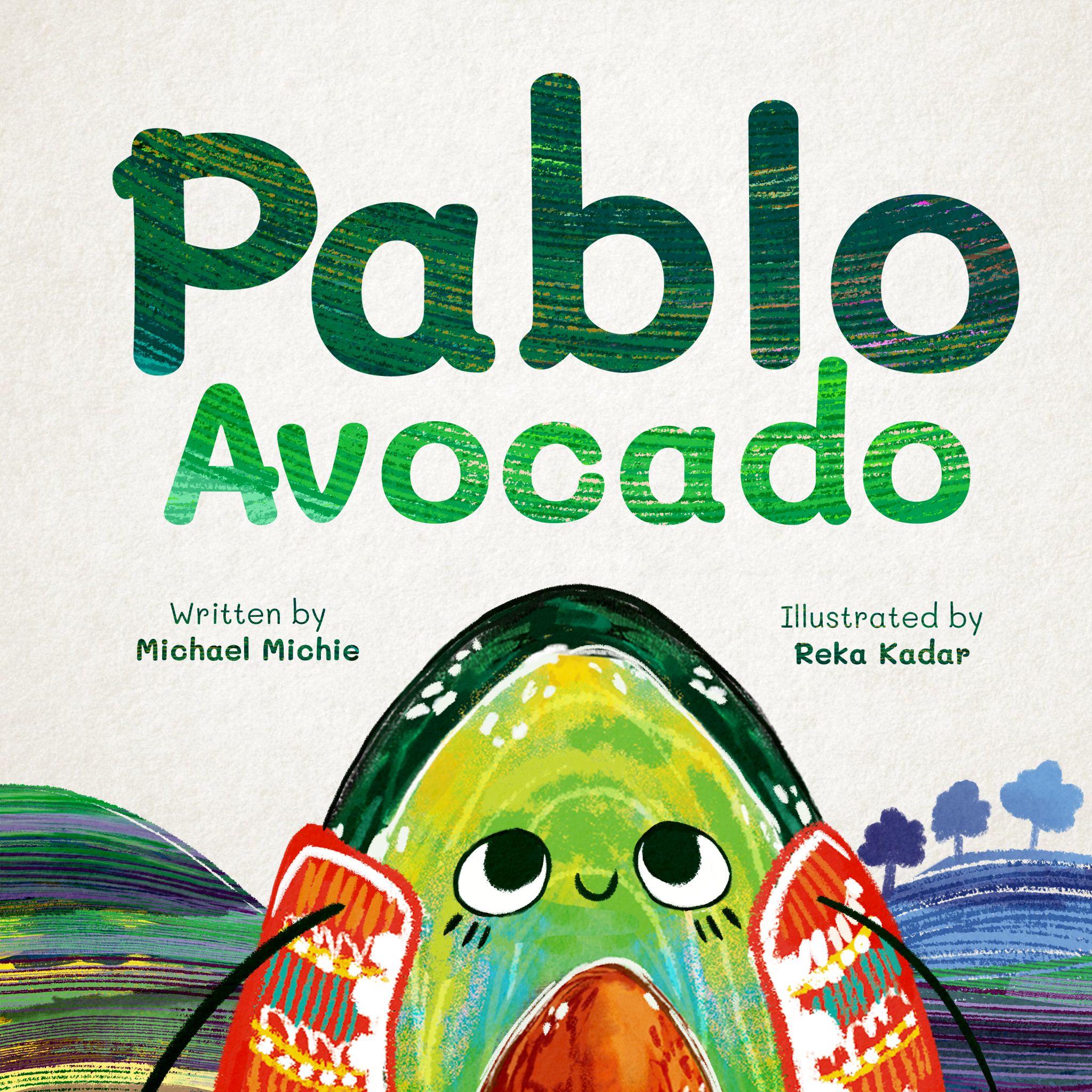






Visit the Literary Titan Book Awards page to see award information.
Literary Titan Book Awards – Nov 2023
Honoring the talent of brilliant authors who captivated us with unique writing styles, vivid worlds, and compelling characters. Delve into a universe of original ideas, celebrating books that not only mesmerize us but also stand out with their innovative concepts and extraordinary narratives. Join us in applauding the dedication and hard work of these exemplary authors as we spotlight and praise the magnificent realms they’ve brought to life through their award-winning books.
Award Recipients


The Life And Times Of Henry J, And Elsie Flushie Fuhrman by Brian Toung
Visit the Literary Titan Book Awards page to see award information.
The Middle Generation: A Novel of John Quincy Adams and the Monroe Doctrine
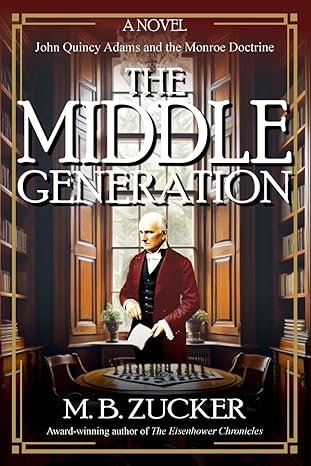

In The Middle Generation: A Novel of John Quincy Adams and the Monroe Doctrine, M. B. Zucker elegantly crafts a historical fiction narrative spotlighting the life and times of John Quincy Adams, one of the notable Presidents of the United States. Set against the backdrop of 1817, the tale plunges us into the heart of the White House, where Adams, serving as Secretary of State, aids President James Monroe in navigating the pressing diplomatic challenges of their era. Readers are introduced to eminent figures like Andrew Jackson, John Calhoun, and Henry Clay. Zucker also paints a compelling depiction of Adams’ wife, Louisa, highlighting the intricacies of balancing domestic responsibilities with public duty.
This meticulously researched novel not only provides a deep dive into history but also offers an engrossing portrayal of dialogues and deliberations involving European dignitaries like Lord Castlereagh, George Canning of Britain, and Metternich, the Austrian Foreign Minister. Taking information from Adams’ personal diaries, Zucker is able to immerse readers into the past and experience the conversations with these famous people from history. Themes such as the contentious issue of slavery are tackled with nuance, illuminating the diverse perspectives of that period.
While the novel is dialogue-rich and action-light, it offers a reflective experience that may resonate more with readers who appreciate a deep exploration of characters and their conversations. I yearned for a deeper insight into John Quincy Adams by the story’s conclusion.
The Middle Generation will undoubtedly resonate with enthusiasts of American political history, offering a fresh perspective on a crucial chapter of the nation’s past. This engaging work of biographical fiction provides readers a look at the life of this often-overlooked political figure.
Pages: 507 | ASIN : B0CKY9DKW3

Love Song to Cape Cod

Water Music: A Cape Cod Story follows a twelve-year-old girl whose family is falling apart in all directions who finds solace in her music and her love of Cape Cod. What was the inspiration for the setup of your story?
I confess that Water Music was inspired by personal experience: my deep love for the many summers I spent on Cape Cod with my family, as well as my love for the cello and the music that has nourished me my entire life.
Like Lily, I had a marvelous elderly cello teacher each summer. And like Lily, my family had its share of discord. I wanted to explore how a girl, growing up in the 50s, might try to make sense of friction in an extended family, and how the women in her life were navigating (or resisting) the roles open to them.
Why choose this place and time for the setting of the story?
In a way, Water Music is my love song to the Cape Cod of the 50s, before Kennedy’s presidency and the National Seashore brought it to the attention of mainstream vacationers. But the 50s were also incredibly strict about expectations for women’s roles, and I wanted to explore how a young girl might try to make sense of all that.
It was important to me to include the sinking of the Andrea Doria in 1956. She was youthful—she had completed only one hundred crossings. In contrast, the Ile de France, who came to the Doria’s side, had launched a quarter of a century earlier. I saw in that relationship a potent—and poignant—mirror of the longed-for mother-daughter relationships in Water Music, both between Lily and her mother, and between Lily’s mother and grandmother.
I imagined the motif of the tether—the bridge that tethered Cape Cod to the mainland as well as the searchlight that “tethers” the Ile de France to the Andrea Doria—to be expressions of fragile family bonds. Especially between mother and daughter.
What were some themes that were important for you to explore in this book?
The 50s were brutal on smart, talented, educated women. I saw in Lily a confusion about how to understand her own prospects versus those of her mother. And how, in music, they both found the potential to redeem both their faults and disappointments.
When working on Water Music, the idea of competition—both as a destructive force and an impetus for growth—wouldn’t let go of me. For me, the rivalry between Lily’s father and his brother contrasts with the competition Lily frames for herself while learning the cello.
What is the next book you are working on, and when will it be available?
I’m working on a novel about a stolen cello. It’s a love story with a mystery. In it, I try to look at which loves serve to define us and which ones we must let go of. Competition—and what it can drive us to do—also plays a role in this book. There is also a mother-daughter subplot. I guess that’s an itch I keep needing to scratch!
Author Links: Goodreads | Facebook | Website | Amazon
Thus twelve-year-old Lily Grainger, while safe from ‘communists and the Pope,’ finds her family suddenly adrift. That was the summer the Andrea Doria sank, pilot whales stranded, and Lily’s father built a house he couldn’t afford. Target practice on a nearby decommissioned Liberty Ship echoed not only the rancor in her parents’ marriage, a rancor stoked by Lily’s competitive uncle, but also Lily’s troubles with her sister, her cousins, and especially with her mother. In her increasingly desperate efforts to salvage her parents’ marriage, Lily discovers betrayals beyond her understanding as well as the small ways in which people try to rescue each other. She draws on her music lessons and her love of Cape Cod—from Sagamore and Monomoy to Nauset Spit and the Wellfleet Dunes, seeking safe passage from the limited world of her salt marsh to the larger, open ocean.
A Humbling Journey

Enter the Bull’s Burrow follows the Guardians as they try and rescue villagers taken as slaves, and Kar, who must decide where his duty lies. What was the inspiration for the setup of your story?
The set-up for this story was my first book in the trilogy, Eleven Arrows (2020). Kar, the protagonist, was born in a time of great change—the expansion of the Akkadian Empire in 2300 BC. His character journey involves understanding his place in the world. He is conflicted by learned ideals and his own sense of justice. I think this is a universal dilemma that we all face to some degree in our lives. Do you follow the expected path or walk your own way?
How has character development for Kar changed for you through the series?
This is an interesting question because once Kar was created he took on a life of his own. He found a voice in Book 1 and I feel like he told me what he needed to do or say next, especially when he is asked to speak for himself at the Guardian table. Arman, a secondary protagonist in the novel, also became real to me. I feel like I know him and I hope the readers feel this connection with him too.
What did you enjoy most about writing this book?
What I enjoyed most was exploring what would happen if all these diverse characters, the Guardians, were grouped for an ultimate journey. Kar was too young to be a part of the conversation in Book 1, Eleven Arrows. I name Enter the Bull’s Burrow the heart of the novel trilogy because the Guardians of the East, all that are left, show themselves for who they truly are. They are flawed but I think there is a beauty in each character’s weakness.
Has writing and publishing a book changed the way you see yourself?
Brilliant question. What first springs to mind is the view that even fiction writers only write about personal experience. I could not believe this idea given the concept of my novel trilogy. Over time, however, I started to identify connections. For example, I met the tallest person I’ve ever seen when I was told to go to a particular bar to find him. I transferred this experience in Book 1, Eleven Arrows. Like Kar, I lost my mother when I was just becoming a man. Writing a historical fiction trilogy as a new author is not something I would advise. That said, I am so glad I took this path. I explored the ancient past that was not taught in school. I explored the meaning of life that is still debatable. I learnt more about myself and identified my own strengths and weaknesses. My final book in the trilogy, End of Morrow, has been published. I think I’m still processing the journey. I’ve been humbled by the journey but at the same time I’m extremely proud of my endeavour.
Author Links: GoodReads | Facebook | Website
From a hidden tower, east of the Zagros Mountains, a cohort of experienced Guardians embark on a deadly mission west to rescue villagers thought taken as slaves. Kar, the youngest Guardian man, must decide whether his duty is to protect those who remain at the tower or another tribe in peril.
Millennia later, in Cairo 1850 AD, English archaeologist Fred Baker follows an account of the Guardians’ journey beyond Nineveh, believing it could reveal an undiscovered city-the ultimate dig site. If he can identify it before his meeting with the Egyptian librarian who loaned him the ancient manuscript, a daring journey in the footsteps of the Guardians awaits.
J.P. Manning’s second novel awakens the ancient past in splendid detail, leaving no sword unsheathed in book 2 of the Guardians of the East trilogy.
Setting the Record Straight

Eva of the Nation: Romance and Rebellion in the Irish Famine follows a woman during the Great Famine of Ireland and her use of her poetry and essays to protest government policies. What research did you do to understand the backdrop for your story?
I began my research into Eva’s life decades ago when I chose her poetry as a focus for my dissertation in 19th-century British literature. At the time, Ireland was producing excellent women writers: Evan Boland, Maeve McGukian, Nuala Ní Dhomhnaill. I hoped to trace the evolution of women’s writing in Ireland. When I discovered Eva, Mary, and Speranza, I began reading through microfilm copies of the Nation, the Dublin periodical that made Eva and her contemporaries famous. Eventually, I was able to arrange a study abroad opportunity in Dublin where I spent weeks in the National Library of Ireland.
There were a few sources that documented Eva’s story, but most of what was written focused on her husband and the men who surrounded her. Eventually, I found a notebook that she wrote when she was a widow living in Brisbane. From that, I gleaned a few more details; however, her personal life remained sketchy. Source material on Young Ireland, however, is plentiful. There are several books that detail that historical record, and I found the proceeding of Kevin’s trial on the Internet. Of course, the events of the Famine are also well documented.
Did you find anything in your research of this story that surprised you?
I was surprised at how incredulous were those loyal to the colonial government. Even when faced with detailed accounts of disease, starvation, and abuses by landowners, Irish citizens failed to act. It took me awhile to come to some understanding that the memory of the failed rebellion of 1798 was fresh in their minds and that the Irish feared retribution. Developing Edward Kelly’s character gave me the insight to better understand the refusal of many to support Young Ireland.
What were some themes that were important for you to explore in this book?
Primarily, I wanted to set the record straight about Eva and her contributions to Irish literature, especially to women’s writing. I also doubted historians who claimed that Eva met Kevin while he was in prison, their romance blossoming there. He was imprisoned less than two months before his sentence was handed down, when she declared that she would wait for him. Given the atmosphere of a prison with guards and other inmates present, I doubted that the two had much privacy. Their passion had to have been cemented over more than a few meetings. I was inspired to explore Eva’s romance with Kevin as having had an origin different from what historians claim. Of course, the dominant theme of the book is the Famine and the horrific treatment of Ireland’s tenant farmers by landowners and the government. That part of history provided the backdrop for the story.
What is the next book that you are working on, and when will it be available?
In the mid 19th century, immigration to American was strong throughout Europe. Like my Irish ancestors who fled the Famine, I have Scotts in my heritage who took advantage of a surprising source for emigration, the Church of Latter Day Saints. My great-grandmother and great-grandfather were brought to the U.S. by their parents under the auspices of the Mormon church. The church needed inhabitants for “Zion,” the Utah territory, and it provided a well-run and complex system of transportation, housing, and employment for those who converted. My great-grandparents eventually left Utah for Idaho and Montana where my great-grandfather was killed in what is believed to have been a Nez Perce raid. I expect that book will take me a good year to complete as the story requires a great deal of research for authenticity.
Author Links: GoodReads | Twitter | Facebook
Enter the Bull’s Burrow (Guardians of the East, Book 2)


Enter the Bull’s Burrow, the second entry in J.P. Manning’s “Guardians of the East” series, expertly marries history with fantastical adventure and rich mythology.
Nestled within the sprawling canvas of the Akkadian Empire, Manning’s prose dances poetically, ensnaring readers within a luminous and enigmatic realm. The narrative deftly intertwines ethereal supernatural elements with the timeless conflict of deities and mortals, forging a tapestry of wonder that captivates from start to finish.
Manning crafts characters, notably Kar – the fledgling Guardian, with intricate care. Their layers of personality and ambition are unveiled with grace, stirring deep emotions as they grapple with the challenges of persecution and existential threats. The mounting suspense, rooted deeply in the characters’ visceral fears, ensures the readers are constantly engaged.
Manning navigates between two intertwined eras: the Guardians’ odyssey in 2300 BC and the 1850 AD exploits of English archaeologist Fred Baker. This duality injects an intriguing depth into the narrative, forging a bridge between antiquity and a more recognizable past. Manning’s meticulous historical nuances and evocative imagery resurrect the bygone era with astonishing vitality.
Enter the Bull’s Burrow stands as a testament to J.P. Manning’s narrative brilliance, making it an essential read for fans of historical fiction and fantasy alike. It is a great recommendation for readers in pursuit of a deeply enriching literary journey.
Pages: 504 | ASIN : B09KC4T1JG



 LITERARY TITAN