Blog Archives
Lamba’s Journey with Jesus
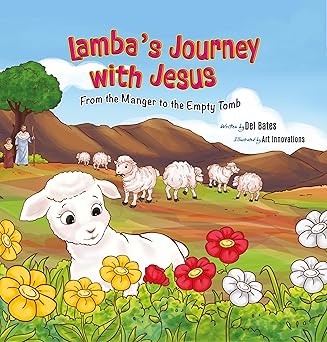

This sweet little picture book tells the story of Lamba, a curious baby lamb born on a cold night in Bethlehem. As he grows, Lamba’s natural wanderlust leads him on unexpected adventures—from meeting baby Jesus in the manger, to witnessing the events in Jerusalem during Palm Sunday, all the way to discovering the empty tomb on Easter morning. Through Lamba’s eyes, kids are gently guided through key moments in the life of Jesus.
As a mom who reads a ton of bedtime stories (and has heard “read it again!” more times than I can count), this one really warmed my heart. The writing is simple and rhythmic, which makes it easy for my little one to follow along. And the fact that it’s all told from a lamb’s point of view is genius. My kid was instantly hooked. It gave him someone small and innocent to connect with, and the way Lamba gets a little lost but always finds his way back—it just tugged at my heart. It reminds me of how we all sometimes stray and still get called home with love.
But what really got me was how the story weaves in the big parts of Jesus’s life without making it too heavy or confusing for young minds. It felt spiritual without being preachy, gentle without being watered down. The illustrations are bright, expressive, and just the right mix of realism and whimsy. Lamba’s eyes are so bright and expressive.
Lamba’s Journey With Jesus is the kind of children’s book I’d keep on our shelf year-round, not just for Christmas or Easter. It’s perfect for faith-based families who want to introduce Jesus’s story in a way that’s approachable and heart-centered. I’d recommend it to moms of toddlers and early elementary kids, Sunday school teachers, and honestly, anyone who wants to see the gospel through fresh eyes.
Pages: 96 | ASIN : B0DNRQW7N8

A Writting Journey
Lycan: Solomon’s Odyssey, Chapter 1 follows a young man with a devil-may-care attitude who finds himself placed into a position of leadership in his community. What was the inspiration for the setup of your story?
The writing of the story itself actually went on quite a journey. This was the first book or comic that I have ever written. The original version of the script was like a sort of mix between a regular book and a comic script. I had given that out to friends and family for feedback in order to help shape the story itself. Eventually one of my friends put me in touch with an editor – Onrie Kompan, who took me under his wing and showed me how to write a comic script. He also gave me other graphic novels to read to get a better idea of how to write, such as A Contract With God by Will Eisner.
Originally the story was told from two different time periods, starting off in the future, or at least the end of the series and then jumping back and forth as a sort of “life flashing before his eyes” kind of situation. However, as Onrie and I laid out the book I decided to remove that storytelling device and focus solely on telling the story from Solomon’s point of view as it was happening. In terms of picking the setting, I had two goals. One was setting the story far enough back that I avoid any currently held ideas of the world’s first werewolf, such as King Lycaon of Greek mythology. But, I also wanted to be able to use the mythology of the world as a sort of sandbox to have this character exist in, traveling along the same path of history as our own, but told as though magic and monsters exist in hushed whispers and operating in the shadows.
This first book sets up the series so certain things need to happen in order to launch the character onto this path. I wanted to show this aloof character be forced into an unfamiliar situation, and while his intentions are pure, making hasty decisions out of desperation, lead to certain consequences that impact him and shape him for the remainder of his journey.
A lot of time was spent crafting the character traits in this novel. What was the most important factor for you to get right in your characters?
For me, the goal was to have characters that are both enjoyable to read about, but also are believable. The interactions between Solomon and his brother, or his friends, is similar to interactions I might have with my brothers or friends. I also wanted to make the reader care about these characters. I love eliciting emotions from people through my work. The interactions between characters are meant to make people feel a bit of that camaraderie or familial spirit, and any losses are meant to make the reader feel a similar level of sadness that Solomon feels. If I can make the audience feel a certain way throughout the books, then I feel I’ve done my job as a writer in properly entertaining them. Even if sometimes what I write might be tragic.
In fantasy novels it’s easy to get carried away with the magical powers characters have. How did you balance the use of supernatural powers?
The thing I like about werewolves, or magical creatures in general, is that they can be incredibly powerful, fear inducing, and awe inspiring, and yet they always have rules. While it does not appear in the book, werewolves, as well as many other monsters, have an aversion to silver. A werewolf, typically, can’t transform unless under the light of the full moon. And with that, the human part of the equation usually loses all control of their own body. It is almost as though it is an entirely different entity behind the wheel at that point. In the story, as Solomon is given this curse, even in a human form he is much stronger, faster, and has enhanced senses and a healing ability. Against normal unprepared humans, it’s not much of a fight. Against another supernatural creature, it is a much tougher fight. He is not completely invulnerable. For the other supernatural character in the book, he seems almost infinitely powerful in comparison to even Solomon, but one thing I always like to think about, is that there is ALWAYS a bigger fish out there. There’s always something more powerful.
Where does the story go in the next book, and where do you see it going in the future?
The next book in the series takes place immediately following the first book. It really delves into Solomon trying to deal with the aftermath of the first book, focusing on guilt and PTSD. The second book also introduces other supernatural elements such as magic and other mythological creatures. The idea with each book is that with each installment, it opens the world up a little more and a little more. The first book was the origin story, it sets everything in motion. Every book in the series after that, while still following Solomon, explores other regional mythologies, folklore, monsters, and gods. The second book delves into ancient Arabic mythology. The third book is best described as HP Lovecraft meets Gilgamesh. And so on. I have the entire series planned out all the way to the last page of the final book. Right now I am planning on a 15 book run, with 3 arcs each being 5 chapters. This will let me really play around with some fun mythology from around the world!
Author Website
The first book in this series is the origin story of Solomon, a man with a devil-may-care attitude who is thrust into a position of responsibility. Desperate circumstances lead to desperate decisions, which could affect the world in unforeseen ways for millenia to come. What would someone be willing to sacrifice to save those they care about most?
A Different John; In The Year of The Open Door
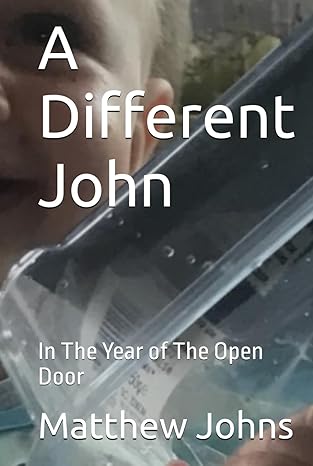

A Different John is a sprawling, poetic explosion of spirit, self, and something far bigger. The book feels more like a living thing than a static read—part scripture remix, part soul-slam, part cosmic diary scribbled by a mystic halfway between prayer and panic. At its core, it’s a conversation. Sometimes between the narrator and God, sometimes between different versions of “John,” and often between brackets and verses and loops of thought. There’s no tidy plot, but there is a clear journey: one of wrestling with identity, love, divine presence, and the weight of being “called.”
The opening pages hit like spoken word laced with theology and tech slang, wrapped in riddles. It’s playful and reverent all at once. Reading it felt like decoding a sacred meme—or trying to follow someone’s dream while they’re still half asleep. The weird formatting—the caps, the brackets, the spirals—threw me at first, but then I realized: this book isn’t asking for understanding. It’s inviting surrender. The early passage “mOving art is what we are” stuck with me. It’s said offhandedly, but it sums up the vibe. We are movement, symbols, spirit. We’re trying to remember something we’ve forgotten.
About halfway through, I stopped trying to read it like a regular book. That’s when it clicked. This isn’t meant to be linear. You have to feel your way through. There’s joy in that surrender, especially in the middle sections, where lyrics, psalms, and riffs on pop culture and prophecy mash up into something surprisingly moving. The voice flickers between confidence and doubt, sorrow and giddy hope. There are echoes of scripture but filtered through real, raw, almost street-level speak. One moment you’re hearing about swans and sharks, the next it’s deep soul talk.
The end felt like a soft landing after an ecstatic flight. There’s this beautiful moment that reads like a lullaby from God, laced with lyrics about birds, stars, footprints in sand and air—it’s all over the place but somehow still lands right in the gut. After all the wild swings and symbolic gymnastics, the book closes like a hand on your shoulder. Comfort. Release. Hope
A Different John isn’t for everyone. It’s not easy, and it’s definitely not traditional. But if you’ve ever felt like a misfit mystic, if you’ve ever heard the voice of God in a lyric or a laugh, if you’ve ever scribbled something wild in a notebook and thought, “Wait, maybe this is truth?”—this one’s for you. It’s messy. It’s holy. It’s human. And for me, it was worth every tangled line.
Pages: 374 | ASIN : B0F25CY4B3
Adding Depth to My Characters

The Oberon Stone follows a group of friends who are searching for an ancient artifact of immeasurable power, when one is kidnapped, turning their mission into a desperate rescue. What was the inspiration for the setup of your story?
I wanted the second book to break away from the artifact-hunting structure of the first, so I set up the story to make readers believe the search for the artifact was the main plot—only to subvert that expectation when the real quest became the Mage’s rescue. That shift came as a shock, flipping the narrative focus. If you look at the book’s climaxes, they’re tied more to the rescue than to the artifact itself, even in the “coming back home” moment. The artifact hunt ended up taking more of a side-quest role.
Removing the MC’s mentor was also intentional. It allowed other characters to step into the mentor role, shifting the dynamics from Book 1. The different quests also gave me the opportunity to define the rules of magic in more depth, breathing more life into the Downtown-verse—something I couldn’t fully explore in the first book without overwhelming the reader.
What character did you enjoy writing for? Was there one that was more challenging to write for?
Ada was a difficult character for me. I was very cautious about making her more than just an unpredictable sidekick. I wanted someone loud, someone who would steal the scene multiple times, but she also needed to be deeply flawed—a character that would play with the reader’s emotions. I couldn’t push her so far that readers would put the book down because of her, but I wanted to push right up to that emotional edge, making her memorable not for her wins, if that makes sense. The hardest part was figuring out where that fine line was for different readers.
I really enjoyed writing Montgomery. It’s easy to write a classic arch-enemy—just make them all bad and powerful. But if you know anything about me, you know I’d never lean into that cliché, just as much as I dislike Deus Ex Machina solutions. So yes, Montgomery needed to be awful, but he also needed a history behind his awfulness—one that readers could relate to, enough to humanize him. I loved crafting his background: the family dynamics, the bad parenting that shaped him, his desperate need for his father’s attention, and how discovering a half-brother only deepened his existing insecurities. I especially enjoyed writing Montgomery as a father—desperately overcompensating with Rachael, trying to give her the love he never had, without realizing he was creating another version of himself. Different paths leading to the same destination.
Yes, Montgomery was a fantastic creative process.
When you first sat down to write this story, did you know where you were going, or did the twists come as you were writing?
Mostly, yes — I knew where it was going, at least for the main ideas. But side stories and details tend to change as I populate the story. I base the overall plot on Vogler’s Hero’s Journey structure, which gives the main plot a very well-defined progression. Then, I break the story into bigger chunks, which usually turn into one or two chapters each. From there, I start layering the side stories — the events that make character interactions unique and develop each character’s individual trajectory.
For example, Bruno and Sarah’s broken romance is a side story. Sarah’s emotional progression — learning self-love and accepting that she often gives more than she receives — is another side arc in itself. These subplots, along with side quests, can shift as I write. I also tend to place unexpected obstacles in the characters’ paths that I hadn’t planned initially. This adds a sharp edge of anxiety to the quest, making readers wonder whether success is even possible. Sometimes I let the characters overcome these hurdles, and sometimes they are forced to find a workaround — a plan B. These choices often happen at the last minute. Yes, I’m the kind of author who ruins my characters’ lives — and you’ll love it.
When will book three be available? Can you give us an idea of where that book will take readers?
Book three (The Temporal Scythe) is already available for pre-order on Amazon (Kindle only). It will be released — along with the physical copies — on June 10th, 2025.
You can expect a deeper, darker, and more emotionally intense story, just as you could notice the progression from book 1 to book 2. The characters are also more emotionally mature, with their arcs intensifying both in magical knowledge and personal growth. The stakes are higher, and the long-awaited climax of the trilogy arrives, featuring the much-anticipated final battle between good and evil.
Without giving too much away, readers should prepare for the emotional rollercoaster they already know they will get from my works — only this time, with higher speed, sharper loops, and a broken track somewhere that might just as well launch them toward their doom.
Author Links: GoodReads | X | Facebook | Website | Trilogy Website
“This jam-packed, … cross-genre tale proves consistently entertaining! A smashing final-act turn makes checking out the sequels a virtual necessity.” – Kirkus Reviews
The Wishing Shelf Book Awards Nominee
Eric Hoffer Da Vinci Eye Nominee
Reader’s Favorite Five Stars YA SF / Dark Fantasy
_____________________________________________________________________
Liam Hale’s world spirals into chaos when he receives a message in his late mother’s handwriting-delivered by a friend who should no longer exist. This is no coincidence. As he searches for answers, he unearths something far worse: the prophecy foretelling the end times has been shattered, tearing apart the fragile barrier between the Houses of the Living and the Dead.
With the Megaverse on the brink of collapse, Liam and his companions-alongside the enigmatic druid Sarah and the unpredictable witch Bruno-set out to restore the balance. Their only hope lies in the Oberon Stone, an ancient artifact of immeasurable power. But when McCormick is kidnapped by the merciless Winifred family, their mission turns into a desperate rescue.
Giving People a Tool to Heal

Your Healing is a Song is a unique blend of Self-Help, spirituality, and music therapy that aims to help readers heal their emotional wounds and raise their vibrational energy. Why was this an important book for you to write?
I have spent many years and a lot of money working with healers, especially around my music career, and I feel strongly that the amount of work and money it takes is out of reach for many people. Because I am a performer and songwriter first, when I discovered what the true purpose of music was, I wanted to share it in the easiest and most economical way possible. My job with Your Healing is a Song is to boot up your internal guidance system and then put the tool for healing your emotional body in your hands.
How much research did you undertake for this book and how much time did it take to put it all together?
My instinct that music was more than we realized was always on my mind. I wrote a three-part fantasy series about music as a creation language. But it took about six years to distill the mechanics of what was happening and learn how to find the energy each song works with. Through my work in Soul Realignment, basically a Soul mechanic, I discovered I had a unique frequency in my voice that could move energy. What I do goes way beyond traditional sound healing and gives every single person who reads the book the tool to heal themselves.
What were some ideas that were important for you to share in this book?
Radical Responsibility is key. Every individual attracts situations and emotions that vibrate in sync with them. Nobody is doing anything to us. We are creating it all so that we can see where we need to release stuck energy. Want better emotions and situations? You have to vibrate faster. That’s why the subtitle is ” raising your vibrational point of attraction through music.” Radical Responsibility makes you an incredibly powerful human.
I also want people to be reassured that they do not have to relive trauma to release it. When done in conjunction with my music, which is freely available, it becomes effortless to release stuck and qualified energy–stuck energy is what is lowering your vibration.
Also important is the fact that we are not here to learn to be spiritual beings. We are all that already. We are here to learn to be human and manifest our desires. That’s the game.
What is one thing that you hope readers take away from Your Healing is a Song?
They are the powerful creators of their reality, and with this book, you can become a master at it.
Author Links: Facebook | Website
The core concept of Your Healing is a Song is that we are all energetic beings, constantly vibrating at different frequencies. When unprocessed emotions and past traumas create blockages, our “vibrational point of attraction” lowers, hindering our ability to experience joy, fulfillment, and our true potential. Lansberg introduces “Transformational Entertainment™,” a proprietary modality that empowers readers to reconnect with their “Divine Source Energy” and raise their vibration to manifest their desires.
This book fills a crucial gap in the market by offering a clear, relatable explanation of complex, energetic concepts. Lansberg uses the relatable analogy of power lines and electricity to illustrate how our souls act as conduits for energy. When these “power lines” become disconnected, or a “fuse blows” due to emotional blockages, we lose connection to this vital life force. This accessible metaphor simplifies the understanding of energy flow and provides readers with a tangible framework for understanding their own energetic state.
Your Healing is a Song directly addresses the root cause of many emotional and physical ailments: trapped energy stemming from unprocessed emotions. Lansberg argues that this trapped energy contributes significantly to a low vibrational point of attraction, impacting every aspect of our lives. By providing practical tools and techniques, the book empowers readers to clear these emotional blockages, restore the natural flow of energy, and elevate their overall vibration. This process of clearing and reconnecting is likened to an electrician restoring power, offering a potent image of restoration and renewal.
This book also explores the concept of our individual “song”-our unique energetic signature. Understanding and embracing this signature is key to navigating life with greater harmony and purpose. This provides readers with a sense of individual empowerment and connects them to a deeper understanding of themselves.
Critically, Your Healing is a Song is not just theoretical. Part two provides a comprehensive workbook designed for practical application. This workbook includes exercises and techniques to identify and release emotional blockages, elevate one’s vibrational point of attraction, and foster a deeper connection with one’s “Divine Source Energy.” Uniquely, Lansberg incorporates her own music, readily available on streaming platforms, as a powerful tool for facilitating this process, offering readers a multi-sensory and deeply engaging experience.
Your Healing is a Song offers a unique blend of accessible theory and practical application, empowering readers to take control of their emotional well-being and create a more fulfilling life.
The Oberon Stone

In this second installment of the Conjurers’ Prophecy series, the stakes are higher, the darkness is deeper, and the emotional gut-punches come harder. The Oberon Stone dives right back into the chaos where book one left off, with Liam’s powers growing out of control, old enemies regrouping, and new villains entering the game. We get a peek behind enemy lines—into the twisted mind of Montgomery and the broken-but-desperate heart of his daughter, Rachael. The story stretches across magical dimensions, haunting memories, and existential questions about fate, free will, and what it really means to be “good” or “chosen.”
The book kicks off with a literal storm of dark energy, grief, and desperation. Montgomery flying through chaos, clutching a dying Rachael is intense. And weirdly emotional. He’s awful—seriously, he’s terrifying—but seeing his panic over his daughter gives you this whiplash moment of almost-feeling sorry for him. The writing here is theatrical, like a twisted fairytale. The fairies trapped in a dark cave scrubbing stone for eternity is both horrifying and weirdly beautiful.
Then we’ve got the heart of the book—Chiara. Watching her spiral, question everything, and fall for Rachael’s manipulation felt like watching someone you love walk straight off a cliff while you’re screaming at them to stop. In the scene where she spies on Liam and Ada through water pipes I could feel her guilt like it was my own. But what really broke me was the final confrontation with Rachael. The choking spell, the pain, Chiara trying to survive and not wanting to hurt anyone was brutal. Rachael’s cruelty felt personal. The moment Chiara dies (or seems to—Franco loves to keep us guessing) was so vivid, so devastating, that I actually had to stop reading for a minute.
And Liam… poor Liam. He’s unraveling in real-time. One of my favorite moments is when he looks at Ada and says, “I’m tired.” It’s not dramatic. It’s raw. He’s lost so much—his mom, Chiara, maybe even Ada—and he’s still standing, still chasing birds and cryptic notes like his life depends on it. That moment when Titan (his maybe-dead, maybe-magical bird) leads him through the portal into a new world was actually kind of magical. For a second, there’s peace. Wonder. Then everything falls apart again, but that pause? That pink-sky, giant-mushroom pause? It gave the book a necessary breath before plunging us back into the deep.
I absolutely recommend The Oberon Stone. But be warned—it’s darker than book one. It’s emotionally heavier. It’s also bolder, messier, and richer. If you loved the first book, this one will break your heart and make you thank it for doing so. It’s for fans of character-driven fantasy who aren’t afraid to feel a little wrecked. Anyone into morally gray characters, epic stakes, and stories that feel like myths and memories wrapped into one—this is for you.
Pages: 277 | ASIN : B0CLDCT9D7
Death Kindly Stopped For Me: A Book of Poetry Inspired by Emily Dickinson
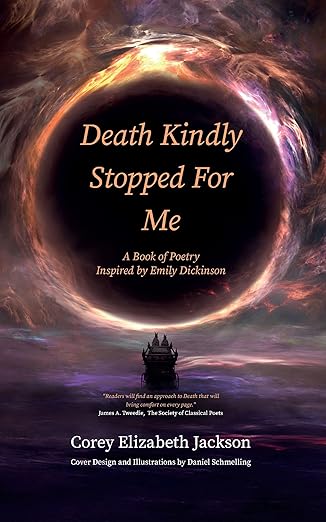
Corey Elizabeth Jackson’s Death Kindly Stopped For Me is a haunting, luminous collection that channels the spirit of Emily Dickinson while carving a voice all its own. Through meditations on mortality, transcendence, and the soul’s voyage beyond the veil, Jackson crafts poetry that is both graceful and profound. Divided into four sections, Death Befriended, Kindred Spirits, Death Released, and Soulscape the collection reimagines Death not as an adversary, but a quiet companion. Dickinson’s enigmatic tone lingers like a spectral echo, yet Jackson infuses each page with vivid, celestial imagery that feels strikingly original.
Jackson’s emotional range is remarkable. There’s a delicate balance of sorrow and tenderness throughout, most evident in poems like Death Wrapped a Shawl Around My Shoulder, where Death emerges as a caregiver gentle, yet unnerving. In Death Amongst the Daffodils, the afterlife glows with warmth, casting eternity as a sunlit field. Light and shadow dance across the verses, invoking Dickinson’s own paradoxes while offering fresh interpretation.
What distinguishes this collection most, however, is Jackson’s distinctive, modern voice. Poems like Barbie Could Not Stop for Death and With Covid Deaths We Can More Widely See ground the work firmly in the present, bringing contemporary resonance to timeless themes. These pieces are bold and thought-provoking, yet seamlessly integrated with the more classical compositions.
The illustrations by Daniel Schmelling deserve high praise. Ethereal and deeply emotive, they do more than accompany the text, they elevate it. Each image enriches the atmosphere, pulling the reader further into the dreamlike world Jackson constructs. The visual and verbal elements work in harmony, enhancing the immersive quality of the collection.
Jackson’s ability to evoke deep feeling with spare, lyrical lines is her greatest strength. When First I Saw My Baby Boy is heartrending in its simplicity a quiet elegy for a lost child. In contrast, Owl Ensconced on Oaken Branch offers quiet wisdom and gentle reflection. The final section, Soulscape, concludes the journey with wonder and serenity. Poems like Galaxies with Memories transform death into a cosmic return, a homecoming among the stars.
Death Kindly Stopped For Me: A Book of Poetry Inspired by Emily Dickinson is an essential reading for admirers of Dickinson, Poe, or Mary Oliver for anyone who cherishes introspective poetry that lingers long after the last line. Jackson doesn’t merely contemplate death she reimagines it. Her work invites us to walk with it, to find comfort in the mystery, and perhaps even, to dance.
Pages: 162 | ASIN : B0D1GL5J23


 LITERARY TITAN