Blog Archives
Navigating Memory Loss: Essential Questions and Answers on Alzheimer’s and Dementia


Navigating Memory Loss lays out a clear and heartfelt guide to understanding dementia. It moves from the author’s personal story into practical explanations of different dementia types, then on to communication hurdles, safety issues, care strategies, and end-of-life planning. It also unpacks new treatments and ongoing research in a way that feels grounded and approachable. The book combines medical know-how with lived experience, and it makes complex ideas feel manageable.
The writing is simple, steady, and open in a way that feels like the author is sitting beside you. I appreciated how she explained science without drowning the reader in big terms. Her honesty hits hard at times. When she describes the slow changes in her mother or the fear families feel as reality shifts, I found myself pausing and taking a breath. The book has a calm tone, yet the emotional weight underneath is unmistakable. I liked that she doesn’t pretend there are easy answers. Instead, she talks in a straight line about what actually helps and what does not.
The sections on anosognosia and differing realities stayed with me the most. They made me rethink how communication breaks down, not because someone is being stubborn, but because their brain no longer gives them the tools to understand. That idea alone softened some of my own assumptions. The pieces on care planning also stirred a lot of feelings. The frank discussion about feeding, autonomy, and the way a person might slowly be kept alive without truly living made me uncomfortable and moved me at the same time. Still, the writing never feels grim. It feels like someone offering a light so you can keep walking.
This book is a solid choice for anyone who loves someone with dementia, anyone worried about their own risk, or anyone who wants to understand how memory changes shape a life. It works well for caregivers who need guidance, families who need language for hard conversations, and even clinicians looking for a more humane perspective. I’d recommend it to people who want facts and also want comfort. It reads like a companion for a long and complicated road.
Pages: 83 | ASIN : B0G16QR467

Essential Guide for Caregivers of Parents with Dementia: Proven Strategies to Support Mental Clarity, Extend Independence, Plan for What’s Ahead, and Avoid Burnout

This book is a heartfelt and deeply practical guide that walks readers through every emotional and logistical step of caring for a parent with dementia. Wesley Thomas blends personal stories with grounded advice, weaving a clear roadmap for families who suddenly find themselves in the role of caregiver. The structure, organized around his “Circle of Care™” framework, covers recognition, adjustment, connection, protection, sustenance, compassion, and restoration. Each chapter moves from understanding to action, explaining not only what to do but also how to stay steady while doing it. The tone is warm and conversational, yet it never shies away from the hard parts. Thomas offers real-world tools for everything from home safety to medical decisions, while constantly reminding readers that love and dignity should guide every choice.
Thomas’s writing is simple and kind, never clinical or distant. He tells stories that feel real, the confusion of early signs, the ache of lost connection, the quiet grace of small wins. I appreciated how he didn’t drown the reader in jargon or pretend there’s a one-size-fits-all plan. Instead, he speaks directly, like a friend pulling up a chair and saying, “Here’s what helped me, and here’s what might help you.” His emphasis on self-care resonated with me. Caregivers often forget themselves in the process, and his reminders to rest, breathe, and seek help felt both necessary and comforting. Some moments are tough to read because of their honesty, but that’s part of the book’s strength. It makes you face the pain while showing you how to survive it.
Emotionally, this book left me both drained and uplifted. Thomas captures the heartbreak of watching a loved one fade but also the unexpected beauty that can appear in small gestures of patience and humor. His compassion is contagious. I found myself slowing down, reflecting on how I treat my own family, and realizing that caregiving is as much about who we become as it is about what we do. The writing is full of short, punchy sentences that carry weight. It’s not polished in an academic way. It’s real, raw, and human. That’s what makes it powerful. I could feel his sincerity in every chapter, and it kept me reading even through the heavier sections.
I’d recommend this book to anyone caring for a parent, spouse, or relative with dementia, and honestly, to anyone preparing for that possibility. It’s perfect for readers who crave guidance but don’t want to be overwhelmed by medical language. It’s for those who want a companion more than a manual. Essential Guide for Caregivers of Parents with Dementia gives both knowledge and hope, and it leaves you feeling less alone.
Pages: 156 | ASIN : B0FPTTKBJ6

What Lurks in the Woods
![What Lurks in the Woods: Struggle and Hope in the Midst of Chronic Illness, A Memoir by [Nicole Bell]](https://m.media-amazon.com/images/I/515QnfyIVML.jpg)
What Lurks in the Woods by Nicole Bell is a heart-wrenching, real-life love story that deals with a family’s struggle with early-onset Alzheimer’s Disease. Nicole Bell and her husband, Russ, are living everyday life in North Carolina with their two toddlers Ryan and Hailey. Life is fast and hectic, with Nicole’s ever-increasing work in her high-tech medical device startup, which she joined when she was six months pregnant with Ryan. The fights and frustration became so frequent and overwhelming that Nicole considered leaving Russ when she saw the first sign. It was nothing big, just an issue with the home security alarm. But once she started noticing, the symptoms became more and more apparent. Placing the bowl in the wrong place, forgetting to pick up the kids. Russ had Alzheimer’s.
The book is a brilliant compilation of detailing various minor incidents and everyday life for a family dealing with a chronic disease. What makes this book stand out from other memoirs written about chronic illness and Alzheimer’s is that it isn’t written from the patient’s perspective. It highlights the struggles that not just the patient faces but how it impacts the people around them. We often forget the impact on the family and their contribution against this fight with fate and how their presence makes everything better and much more bearable. This memoir highlights a wife’s journey of love and dedication to her partner throughout his journey.
What Lurks in the Woods is an inspirational and emotional memoir that I would highly recommend for its heartfelt, raw, and authentic depiction of how a single member’s chronic illness impacts an entire family. This book is perfect for anyone with chronic disease as a significant part of their life, be it firsthand suffering or secondhand experience via a family member or a close friend.
Pages: 222 | ASIN: B09CJWWC9L
Enhancing our Capacities

Shantha Kumar Author Interview
Functional Nutrients For Brain Health is a perfect title for this book as it outlines the different foods that can cause different health effects. What is a common misconception people have about food and brain health?
As we enter a new millennium, we are endowed with astounding knowledge about our Universe and ourselves and it is in our best interest to use them to our maximal advantage. We have to strive to protect our environment, our health and well-being and continue the momentum in the right direction. For this, we have to harness and combine the wisdom of the past with the insight and progress gained in the current information era. Lifestyle options with adequate and nourishing food, exercise and rest are needed to cope with the challenges we face every day.
Thus, the focus of this book is to provide guidelines for preserving and enhancing our capacities of intellect and thinking with proper dietary practices. This is especially important as we have extended lifespans, a plethora of commercial food products, food supplements, food fads and drugs that may be baffling to consumers. With increases in incidence of neurodegenerative diseases like Alzheimer’s, dementias and symptomatic brain disorders like autism, a retrospective look into how diet can influence proper brain function can help alleviate these conditions.
The brain is the control center of the body and as such, it has to function ideally for the rest of the body to be in perfect health. Besides its role in coordinating motor and sensory functions, the human brain has a major function in higher-order thinking and information processing skills. The role of the brain in fact extends beyond the physical into the meta-physical realm and consciousness.
A common misconception that people have about food and brain health is that what is good for the body is also good for the brain. However, this may not always be true, because every system in the body is specialized and nutrient needs are based on this. A high protein diet may favor an athletic body but may not be an ideal composition for brain functional activities. Similarly, a ketogenic diet may favor weight loss but may not be the best fuel for the brain. Also, growing fetuses, infants and children can have different nutrient requirements than adults for proper brain development.
What were some topics in the book that were important for you to cover?
I would consider this book as a preliminary attempt to understand the relation between diet and brain health. There are contradictory views on the effects of foods on brain health and the diversity of dietary practices, cultures, food availabilities makes it challenging to discern the right foods to use and the wrong foods to avoid. The approach I used for my book is to look closely at “best practices” in cultures where brain health was a priority and use scientific data to support their dietary styles. Another approach was to look at studies where specific diseases were correlated to dietary principles and try to have a disease model with a scientific basis to fit into these conditions.
However, to make the book useful to consumers, I have some dietary guidelines, plans and recipes which is the ultimate goal and this is a work-in progress.
One thing that I discovered with some of the food discussed was that although foods have health benefits they often also carry negative affects. What is a food that carries more health benefits than negative affects?
The ideal food, especially for infants and children, is milk. It is a complete food with correct proportions of macro and micronutrients and fluids. For adults, adequate and optimal quality and quantity of nutrients is important and foods can be beneficial when this principle is applied. Foods should also be customized according to a person’s needs and health status to maintain the body in homeostasis.
Do you plan to write more book on health and well being?
At this time, I would like to concentrate on making my ideas and work useful by applying the knowledge base about diet and health into the actual practice of planning diets. Also, providing people with better awareness and information regarding scientific evidence and strategies, so they can make informed choices in their food habits.
Author Links: GoodReads | Website | Facebook
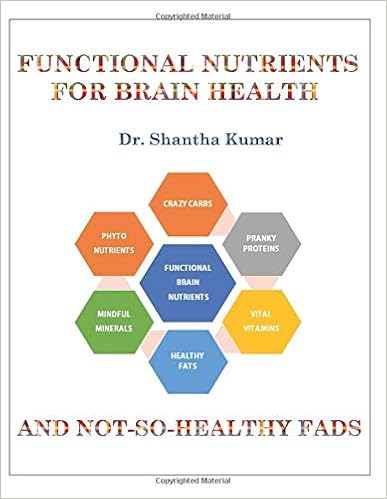 The evolution of mammals and humans is marked by a massive expansion of higher thinking abilities which has paralleled changes in associative regions of the brain and inter-neuronal connections.. This book aims to portray the role and influence of dietary factors in brain health and its intricate networks and has suggested menu options in diet planning for preserving healthy cognitive functions and preventing disease. With increasing life span, it has become a challenging issue to preserve the normal functions of the nervous system and prevent cognitive decline due to aging processes. The rising rates of diseases like obesity, diabetes, Alzheimer’s, autism, depression disorders that affect personality and brain health can be countered by dietary practices that establish better equilibrium and homeostasis in the body and central nervous system. Thus, optimal brain health involves nurturing and maintaining these capabilities and the structural and metabolic networks in the brain. Some of the relevant macronutrients (Caloric Energy, Carbohydrates, Proteins and Fats) and micronutrients (Vitamins, Minerals, Phytonutrients – Flavanoids, anti-oxidants, etc.) and their cellular and systemic functional roles in normal and abnormal health are discussed. Traditional practices in dietary control in cultures with a strong history of mental abilities have been used as the foundation for many of the recipes and suggested diet plans, while scientific advances in our understanding of the nervous system has been used as the rationale for some of the dietary modifications to achieve optimal cognitive abilities and preserve memory functions, especially in the aging process.
Functional Nutrients for Brain Health
![Functional Nutrients For Brain Health (Diet Planning for Brain Health Book 2) by [Kumar, Shantha]](https://images-na.ssl-images-amazon.com/images/I/41ENobzYMLL.jpg)

It’s fascinating and scary thinking that the center of our bodies can contemplate its own demise. Our brains can study, research, and fear ailments like cancer and Alzheimer’s. And finding a healthy combination of these reactions might be our best chance at avoiding these terrible conditions. Dr. Shantha Kumar’s Functional Nutrients for Brain Health: A Vegetarian Perspective seeks to help readers find that balance.
Dr. Kumar undertakes a noble, yet challenging, task: helping the mind keep pace with a body that continues to live longer and longer. To do this, she applies her knowledge and experience to a full body type of medicine. In other words, the book’s advice goes beyond nutrition and includes commentary on exercise, sleep, and stress. In our current hashtag nutrition culture, where foods are elevated to savior status with little to no explanation, Dr. Kumar’s words become particularly refreshing. Take this passage for instance, “Olive oil is an Omega-9 monounsaturated fat which is a healthy option for the brain, although it is more cholesterol genetic (increasing blood cholesterol) than other unsaturated fats” (12). Rather than just uplift olive oil as a cure-all superfood, she takes the time to explain how some substances that increase brain health can simultaneously put other parts of the body under duress.
Additionally, the book provides a wealth of nutritional information that though aimed at vegetarians can apply to anyone. I particularly liked the section on fruits – which she lists hierarchically to indicate that not all fruits contribute to the same level of brain health. Just as useful was what food to avoid. I’ve heard a lot about why I shouldn’t eat artificial sweeteners or food coloring, but only now do I know it’s because they “increase free radical formation” and can “trigger generalized allergic reactions” (24).
Unfortunately, this fantastic information is buried in technical jargon. It’s not unusual to come across passages like, “the major apolipoprotein constituent of HDL-like particles in the CNS is ApoE which transports cholesterol and other lipids made by astrocytes and microglial cells to neurons” (14). Passages like the one above, as well as charts that occasionally stretch on for multiple pages, can discourage the average reader. In fact, one might think the book is intended for a professional audience were it not for the lack of sources backing up the information. Dr. Kumar is upfront about this approach. But this combination of medical terms and missing sources leaves the book in a weird middle ground: too complicated for average readers; too simple for medical experts.
Yet, discouraged readers should commit to reaching chapter four’s “Menu Planning Criteria and Strategies.” Here Dr. Kumar breaks away from the medical jargon and dives into specific dos and don’ts of brain health. This chapter transitions into recipes – which again prove more useful than the early sections of the book: even this meat loving reviewer admits that the bean salsa sounds delicious. People motivated to improve their brain health can trust they’ve found a worthwhile guide.
ASIN: B07JLNLZ79
The Dragons of Alsace Farm

 The Dragons of Alsace Farm by Laurie Lewis is a contemporary romance with a deeply engaging plot that will pull at the emotions of the reader. Despite dragons being in the title it is not a fantasy fiction book. The three main characters of the novel are Noah, Agnes, and Tayte. The common bond that brings these three together is woven throughout the novel and each chapter provides a new twist in the plot or a deep divulge into the past lives of the characters that make their story all the more endearing. The romance in this novel is slow building. You will not find steamy sex scenes, rather you watch the deep connection between Noah and Tayte form over their mutual love of the women Agnes.
The novel starts out with Noah living and working in Myrtle Beach South Carolina. The initial impression you get of Noah is a gruff biker with a past that you don’t want to mess with. His story however is borderline tragic and it is only by the grace of his uncle John that his life turns into something beautiful rather than just existing, hiding in the back rooms and shadows of SC. Next you meet Agnes, an old French woman living on a farm in Fredrick Maryland. Agnes is suffering from dementia and is haunted by her past having trouble separating the past from the present. Last we meet Tayte, an artist living in Miami Florida running from her own past. Tayte has challenges forming intimate relationships with people and also has OCD with things being clean and neat.
Noah is brought to Fredrick Maryland by his sick uncle, in a last ditch effort to mend the wrongs of the past before cancer takes him away from all that he loves. At the same time Tayte is brought up from Miami to attend the funeral of her parents that have died in a car accident. Tayte is the estranged granddaughter of Agnes. The three are brought together through Agnes. Noah comes on to help Agnes with her farm and keep an eye on her while his uncle and wife Sarah spend his remaining days together. Noah’s specialty is woodworking and his uncle John encourages him to put those skills to good use. Noah and Tayte are both hired on to work on a special community project to honor a local hero, Ely Eppley. The Eppley’s are a modest family with two children that won a prize to have a custom deck built and portrait painted with hand carved frame built. The project throws Noah and Tayte together in addition to them both living and helping Agnes. The reader may wonder what the point of the project is, as the Eppley’s seem to have no clue how they were even awarded this honor. The answer to that comes in the end with a dramatic turn of events.
Overall this book is very compelling, the reader is drawn into the lives of main characters learning about their pasts, and how all the other characters fit into their complex story lines. The way that Noah goes from rough and unapproachable to the compassionate loving gentleman friend to elderly and children is a beautiful transformation. The emotional journey Tayte makes is complex and deep, this isn’t a novel where everything ends up perfect, it shows real life struggles, and shows that sometimes even the best intentions are not going to work out every time. Tayte is a very relatable character. All the characters come off as real and genuine, no one is too good to be true and perfect, everyone has flaws and good sides.
Dragons of Alsace Farm will draw the reader in, it will stir up emotions and will leave the reader with a sense of “this could happen” rather than being so far out of the norm. From dealing with aging loved ones, losing loved ones, mending family rifts and finding love after believing your unlovable, this book has something for everyone.
Pages: 376 | ISBN: 1534909141
Love Is Not An Illusion

Anthony Maranise Author Interview
Worth Holding On To is a memoir about how you found and lost the love of your life. Why did you decide to write about something so beautifully tragic?
It goes without saying that writing this particular book was no easy task. I remember dating the real life Cyrena (which is an alias, of course) just like it was yesterday. In fact, I remember all elements of that romance and its fallout just as vividly, but I wanted to write these things all down so that should there ever come a day when my memories start to fade, I will still have captured the reality of what was while it was still “fresh,” if that makes any sense. I will never forget her or what we shared; that, I’m sure is evident, but I also wrote this novella as a form of closure. What began as a writing project simply with the end-goal of a sort of ‘self-improvement’ exercise became a source of immense interior strength and spiritual journeying that I felt compelled to share with the world. I knew I wasn’t the only one who ever had experienced a love like this… I wasn’t the first and I won’t be the last, but hopefully as readers take the journey with me through the book, they will reflect on their own loving relationships eventually coming to the realization that I did. Love is not an illusion; it is not some made-up philosophical construct. Love is alive; Love is transcendent; Love is a Person. God is Love and if we are all made “in His/Her image and likeness,” then Love is, as God is, all-good, unending, and cannot be overcome by darkness, evil, hatred, sin, sorrow, or shame.
There is a sense of love and innocence throughout the novel. How were you able to capture those feelings and put them into words?
When I knew the real Cyrena, she was indeed a very “innocent” young 18 or 19 year old woman. Of course, then, I was only 20 or 21, but in a number of ways was “not so innocent.” This may sound like the beginnings of a sort of “tale of corruption,” but as the book itself well demonstrates, I never thought of Cyrena as any sort of a “romantic conquest” or anything even remotely close to that. In fact, she was my turning point. What I mean by this is that prior to her entry into my life, I was rather cavalier with the women I had dated. She changed that… The whole experience changed that aspect of my life. I no longer date with the intention of “good feelings,” but rather with an eye, a mind, and a heart towards being for another person what they have yet to find. Rather than showing them another man who “only wants one thing,” the aim now is to show them not even myself, but the reflection of the One greater than I who lives through me.
There is so much to be said about love in this book. What do you hope your readers take away from your story?
Memories are a beautiful thing… of that, we can all be certain. For every single one of us, we also can be sure that there are painful memories. These are all things that are subject to change, however. Memories fade. Experiences do not. There is “something” – maybe it’s in the ether or maybe it’s ensouled within us – but there is definitely “something” that remains with us even when the memories have faded or the experiences are long over. And, we can always carry that with us; we can always go back to it; no one can take it from us; it even follows us into the next life. I believe it is all bound together through, with, and in Love itself. Take this as an example: When a person with Alzheimer’s has reached the advanced stage, they rarely recognize people they have known their entire lives. They truly appear to be a mere shell; almost completely devoid of who we’ve known them to be, but the fact remains that they ARE! They are who we’ve always known; who we’ve always loved. What, then, is it exactly about them that has NOT changed? That is what I want readers to take away from this novella: When we encounter good in this life – no matter how great or how small – there is an “essence;” that “something” about which I have just spoken that we carry with us… That goodness pushes us forward. It gives us hope for better and brighter days and “hope does not disappoint!”
I understand that you currently serve as life-coach and chaplain. Do you feel that these experiences influence your writing?
Certainly, I think they do. As much as others think I am helping them, I find that I am often helped just as much, to be entirely honest. When you interact on a regular basis with the teen struggling with a number of life changes, I see myself in that person and know that I was once where they are. When I encounter the ill child fighting cancer but still desiring to be happy, to experience life, and to “be normal,” I see in them that very hope that I know I need to press on and that we all need from time to time. The people I encounter in my work are not just people; they are reflections of God’s very self.
Author Links: GoodReads | Twitter | Website
“You never forget your first love,” according to the old adage. Most of us would probably agree that this is true. However: contrary to what would seem reasonable, our first love need not necessarily be the first, second, or even third romantic relationship we’ve held. Neither must it be the longest one by any stretch of the imagination. Rather, our first love typically ‘touches’ us, indeed, ‘moves’ us in an inexplicable way that is unique and different to each person. What causes one person to love so dearly may repulse another and the other way around, but the real measure of the sincerity of this loving is when someone ‘imprints’ their very memory within your heart.



 LITERARY TITAN