Blog Archives
Conflict & Peace: At Home with Jesus
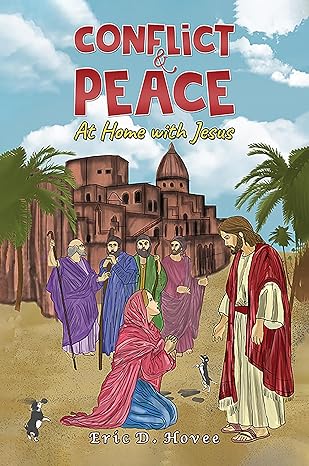

When I first opened Conflict & Peace: At Home with Jesus, I expected a familiar retelling of biblical stories, but instead I found something far richer and more layered. The book walks through twelve figures ranging from Matthew and Mark to Constantine and Luther and explores how each shaped, struggled with, or even fractured the Christian story. Eric D. Hovee doesn’t shy away from pointing out contradictions, tensions, and the uneasy balance between faith and evidence. What emerges is less a polished theology and more a raw chronicle of pioneers wrestling with belief, doubt, politics, and power. The book argues that Christianity has always lived at the crossroads of conflict and peace, heresy and orthodoxy, struggle and hope.
The writing style surprised me. It’s not slick or overly academic, and that’s what makes it work. Hovee mixes scholarship with a kind of candid storytelling that feels personal and searching. He admits where his own faith has faltered, where scholarship has raised more questions than answers, and where interpretations may lean too heavily in one direction. I appreciated this honesty. The detail can be overwhelming at times, with deep dives into language debates or church history that slow down the flow, but even then, I never felt the effort was wasted. It gave weight to his central claim that truth isn’t always clean or easy.
What I liked most, though, was the emotional undercurrent. This isn’t just about doctrine, it’s about Hovee’s father, about legacy, about the ache of wanting faith to feel real in a world of contradictions. I felt that ache with him. When he points out Matthew’s overreach on prophecy, or the way Constantine’s empire-building warped Christianity, I didn’t just learn facts, I felt the tension of a man trying to reconcile devotion with doubt. The book left me inspired. It made me look at my own beliefs with sharper eyes and a softer heart.
I think Hovee’s work is best for readers who want faith that is not easy, neat, or dogmatic. It’s for Christians wrestling with the weight of history, skeptics curious about the roots of belief, and anyone who values honesty over certainty. If you want a book that stirs you, challenges you, and leaves you thinking long after you close it, then Conflict & Peace: At Home with Jesus is well worth the read.
Pages: 401 | ASIN : B0F5641XR1

The Songs of a Sinner


The Songs of a Sinner, by Norman Cairns, is a reflective collection of poetry that combines biblical stories, religious musings, and personal confessions. The poems vary in form, from free verse to heroic sonnets, offering the reader a blend of narrative and lyrical explorations. Cairns grapples with themes of faith, sin, redemption, and the human struggle for spiritual meaning, all while infusing his work with references to Christian scripture and personal reflection.
One of the strengths of The Songs of a Sinner is its honest grappling with faith and doubt. Cairns doesn’t shy away from admitting his own spiritual shortcomings. This straightforward admission of human imperfection resonated with me. It’s refreshing to see an author embrace their flaws in such a candid way, and it made me feel like I was on the same journey of introspection with him. The poems often feel like conversations—between the poet and himself, the poet and God, or the poet and the reader. The result is both intimate and relatable.
I was also intrigued by the way Cairns uses scripture as both a foundation and a lens through which he examines modern life. In poems like “The Carpenter from Galilee” and “Pontius Pilate,” Cairns reimagines biblical narratives, not just retelling familiar stories but infusing them with his own interpretations and questions. I appreciated how Cairns connects these ancient moments to broader themes of justice and morality. However, there were times when I felt the biblical retellings were more like summaries than deep dives into the emotional or spiritual weight of the events. I found myself wanting more layers of introspection in some of these moments. That said, one of the highlights of the collection for me was the sense of personal vulnerability that runs throughout. The theme of seeking forgiveness, whether through prayer or poetry, adds a reflective weight to the entire book.
The Songs of a Sinner is an engaging collection for those who appreciate poetry grounded in faith and personal reflection. Cairns doesn’t claim to have all the answers, and that’s part of what makes this book feel authentic. If you’re someone who enjoys exploring themes of spirituality, sin, and redemption, or if you’re simply curious about how poetry can engage with faith, you will find this book rewarding. It is a thoughtful, heartfelt collection that invites readers to reflect on their own spiritual journeys, all while offering a glimpse into the mind of a poet wrestling with his beliefs.
Pages: 58 | ISBN : 978-1304094834
SOLD OUT: WHEN YOU SACRIFICE YOUR LIFE

Sold Out: When You Sacrifice Your Life, by Manu Philip, is a unique blend of biblical stories and imaginative narration, offering a vivid retelling of the lives of key biblical figures. The author adopts the perspective of a modern-day journalist, using interviews to explore the emotional and spiritual experiences of characters such as Adam, Noah, and Enoch. It covers a wide range of stories from the Old and New Testaments and touches on themes like sacrifice, faith, and the consequences of disobedience. The tone is conversational, and the approach is highly creative, aiming to bring ancient biblical stories to life in a way that feels immediate and relatable.
One of the things I found most engaging about this book is how Manu Philip creatively sets himself up as a reporter, interviewing key figures from the Bible. This unconventional method makes the stories feel fresh and accessible. For instance, when the author “interviews” Adam, there’s a sense of emotional reflection in Adam’s answers, especially when discussing the loss of Eden. It’s not just a retelling of biblical events but a humanized raw interpretation. The writing, while sometimes poetic, maintains an informal and engaging style, making the content easy to follow even for those not familiar with the Bible.
The author’s approach to blending history, biblical references, and vivid imagination is also praiseworthy. At times, the book feels more like an epic narrative than an informative exploration of sacrifice. I appreciated the way the author attempts to derive lessons from these biblical events. In particular, the story of Cain and Abel, as told through Abel’s “interview,” felt personal and thought-provoking, diving into the roots of jealousy, anger, and the consequences of sin. The author uses these ancient narratives to reflect on modern human emotions, which makes the material feel relevant.
Sold Out: When You Sacrifice Your Life is a unique spiritual journey that combines biblical storytelling with an imaginative modern twist. It would appeal to readers who enjoy a creative, reflective take on familiar Bible stories, especially those interested in a deeper understanding of faith, sacrifice, and divine justice. It offers a thought-provoking and emotionally rich reading experience for those seeking to connect with biblical themes on a personal level.
Page: 260 | ASIN : B0CW7PHP3P
The Creation Of A Bloodthirsty Icon

The Prophet and the Warrior takes the biblical stories of Moses and Joshua and transforms them into works of historical fiction, creating a comprehensive narrative. Where did the idea for this novel come from?
The idea for the novel came from my reading the books of Moses in the Bible (KJV). I became aware of how the typical teaching about Moses glosses over the horrible atrocities the man committed in the name of God. I realized then that the big three religions (Judaism, Christianity, and Islam) were not so much interested in teaching the whole truth as they are in teaching a version that suits their purpose (control of the population). This is, in fact, brainwashing, a procedure used by all people who want control and power (think of the Roman empire, the various Kahns, and Adolph Hitler).
What kind of research did you do for this novel to ensure you captured the essence of the story’s theme?
I read and reread Exodus, Numbers, and Deuteronomy looking for obvious departures from what we now consider moral behaviors (There are many). I researched the archeological evidence of the existence of Moses and could find none. When Moses supposedly died they buried him in an unmarked grave (Deuteronomy 24 and others) supposedly to keep his many enemies from corrupting it. I realized that this is a good cover story if one is trying to create a religious icon from stories passed down by word of mouth about a legendary national hero for which there is no solid archeological evidence.
There are no writings in Egypt or other countries of the period, no trash piles or graveyards in the wilderness areas supposedly inhabited by thousands of refugees for forty years. There would have had to have been many graves and skeletons of bodies preserved in the ground in that arid climate. There would have been trash piles with broken Egyptian pottery and the like (which do not decay). The absence of these pieces of evidence and the absence of Egyptian records of something as economically transforming as the Exodus are hard to dismiss.
What is one thing that people point out after reading your book that surprises you?
I have heard little from readers outside of a few who liked the open context of the book and one rather ignorant condemnation that claimed I was condemning the actions of Moses and God. This is exactly what the book is about, the creation of a bloodthirsty icon who is on a first-name basis with God. I am very careful not to condemn God because I believe in a creator God who loves all creation. Here I use the word “which” instead of “who” because no human has ever seen God and so it is natural to create a God in a super-human mage. A friend, who read the book with a Bible at his side (to check references) said it was like two books in one. This is because Moses starts out as a well-meaning, though slightly paranoid, young man who builds a new life with a nomadic tribe after he kills an Egyptian. Later he appears to develop delusions (schizophrenia?) and goes on to become a powerful and psychotic dictatorial leader.
What is the next book that you are working on and when will it be available?
Actually, I have three other published books, available at bookstores, and a fourth and fifth ready for publication. Peter Olaf – The New World At Last, and its sequel, Suddenly A Larger World – Sons Of Peter Olaf, and AcrossThe Chasm, which is a paranormal love story are in print and are being converted to audiobooks. A manuscript, The Scrolls Of Elizaphan is being made into an audiobook and will be published as a paperback, possibly in two volumes because of its size (400+ pages). A manuscript, Alltrust – The Alliance Of Trust, a world government story, is ready for publication. And I have started a new novel.
Author Links: Goodreads | Amazon
Son of the Serpent
![Son of the Serpent (Fantasy Angels Series Book 2) by [Quiroz-Vega, Vashti]](https://i0.wp.com/images-na.ssl-images-amazon.com/images/I/51KDyAGVXWL.jpg?resize=196%2C313&ssl=1)
Son of the Serpent by Vashti Quiroz-Vega is a fantasy novel of vengeance and revenge told from the dual perspective of Dracul, the Son of the serpent, and Lillith, his mother.
Dracul arises in a cave and discovers that he’s encased in a demonic body. He’s filled with agony and confusion as he pieces together his memories to determine how he arrived there. In a painful and shocking epiphany, he realizes that he is the son of Lilith, and that Lilith had tried to kill him. He vows to find out what happened and avenge himself. On this bloodthirsty journey, he faces death, destruction, and betrayal. People, encounters, and events further cement his determination for revenge. The author breathes new life into a host of fantastical characters, often from Biblical settings. Their lives and stories are familiar, yet enshrouded in darkness.
What I found most striking about the book was the depth of its darkness and morbidity. Vivid, gory scenes of slaughter left me uncomfortable, but totally engrossed. Lilith’s sections were almost unbearable. Scenes of Lilith’s cruelty towards others was always accompanied by a fascinating glimpse into her psyche. There’s a lot going on in her and just a surface glimpse was enough to leave me mesmerized. It’s been a while since I encountered such a well-portrayed and dislikable antagonist.
Dracul was just as well-written. His struggle to be good in the face of his own destiny was oddly inspiring. To fight where he came from, to whom he belongs, and the core of his being- his pain and loneliness were palpable. The ending was unexpected, but upon consideration, entirely perfect. Maybe it’s not inherent to him, but it’s clear that Dracul is a good creature.
The Biblical settings and references provided a whole new perspective on the worn-out stories. From angels to Cain and Abel, the otherworldly features heavily in this book- and not always in a favorable light. The Biblical events portrayed from a first-person and real-time perspective were super imaginative. I think it would be difficult to assign a genre to this book. Although it is set primarily in a fantasy world, the dashes of horror, romance, and the occult would make it an interesting read for nearly anyone. The world created by Vashti Quiroz-Vega is totally immersive. I was glad for the escape from reality and I would definitely visit again.
Pages: 303 | ASIN: B07HS4C3B7

Moments in Time
![Moments in Time: Poems of Life Love Faith by [Reinheardt, Larry]](https://i0.wp.com/images-na.ssl-images-amazon.com/images/I/415cfVULHdL.jpg?resize=232%2C349&ssl=1)
Moments in Time is a collection of Christian poetry by author Larry E. Reinheardt. The collection holds poems that range in length, style, and tone but they all encompass the messages of faith, love, and experience. The poems are meant to present the experience of one person and share them with all. These poems are a way to connect with each other and God.
Some of the poems in this collection feel more like prayers while others have more of a sense of a story. I liked that there was variety in these poems as it kept each one feeling fresh and unique. Another advantage of this choice is that it makes the book reach more people. Each poem will resonate strongly with different people, but there is enough variety of experience presented in the collection that each reader has a strong chance of finding many poems that resonate deeply for them.
Reinhardt uses language that is simple and clear but holds an honest tone and deep desire to share their experience with others. This makes each poem feel strong, heartfelt, and beautiful. This book is clearly meant for Christian readers but does not discourage other readers. I found the earnest tone and the biblical story references to be particularly engaging elements of the collection. Many bible stories have poetic rings to them, so I liked seeing some of them addressed in entirely poetic language. It reminded me of being told a story verbally, listening to the melody within it.
This collection is perfect for poetry lovers that also have deep faith. The combination of the two creates a beautiful and thought-provoking book that is an enjoyable read. The poems are fairly short, the longest of them still fitting on a single page, making them short but sweet and many holding powerful messages. You can tell while reading this book that Reinheardt put himself into the words and you can see his desire to spread love and life to all.
Pages: 132 | ASIN: B0793QNPTG
Allegories of Biblical Narratives

Arnold Holtzman Author Interview
The End of Days follows the tragic story of Avrum as he spends his young life making his way to America to build a life for himself and hoping to reunite with his brother. What was the inspiration for the setup to this emotional novel?
TO THE END OF DAYS can best be understood when the characters and episodes are visualized as allegories of biblical narratives. The saga begins with the covenant between God and Abraham (through his mother). That covenant is in effect a prophesy that foretells of the forced separation between the brothers (the separation between the tribe of Judah and the “lost”, or dispersed tribes of Israel – and their eventual reunification.
Avrum and his brother share a tight bond with one another that I truly appreciated. What were some themes that guided you when creating their relationship?
Ianuk, the giant lumberman at the start of the story is the Pharoah of biblical Egypt who held Avraham (the Hebrews) for those years in slavery. The Hebrews then cross the Red Sea to the land of Can’nan (here the water crossed is the Atlantic – and America is the “promised” land). Bella reflects the infamous Golden Calf, Fanny represents the extremely fanatic biblical clerics obsessed with purity (the Essens) – those responsible for the destruction of the temple and the loss of Jerusalem. “The Doctor” (among the woodsman) and “Strulevitch” in Montreal represent Sodom and Gomorrah. Israel’s prophets are represented in Kapitolnik. Avram’s battle with the street gang that so violated Fanny reflects the wars of Israel against those who had so violated the Holy Land and Jerusalem and successfully redeemed it – bonding with an evolved Fanny. The reunion at that time between Avrum and his brother reflects the reunion between all the tribes of Israel in the rebirth of the land (the ingathering of the exiles)
I felt myself immersed in the sights and sounds of early 1900’s America. What kind of research did you do to ensure you maintained accuracy?
I am 80 years old born in Montreal to parents who reached Montreal in the 20″s. No research was necessary.
What is the next book that you are working on and when will it be available?
There are 2 other books I would like to share with you: Dead-End Sex – 42 accounts from the 42 years of my clinical work as a psychologist. These introduce serious problems with intimacy and failures in relationships, and explaining their core failures. Neurotic Children as Adults: a book as much for people who suffer their lives going nowhere as for truly caring mothers of young infants.
Author Links: GoodReads | Amazon
 To the End of Days is a pulsing theater rich with allegories of Old Testament narratives. This is the story of a heritage delivered by a mother to her very young sons in the last hours of her life. It is a heritage which man could not modify, time could not temper, and the expanse of oceans could not distance from their lives. This is a book of secrets. The steamy alchemy of will, fate, and destiny deliver a kaleidoscope of everything human and inhuman in man. It is an epic saga charged with life and the thick rich of blood. where lawlessness and anarchy are the vehicles of timeless and inexorable laws of this universe. But all that was promised becomes delivered.
Sacred Secret: Take Eat: This is My Body
![Sacred Secret: Take Eat: This is My Body... by [Varga, Wendy]](https://i0.wp.com/images-na.ssl-images-amazon.com/images/I/51Ig74K0KzL.jpg?resize=305%2C471&ssl=1)
Have you ever wondered about the importance of communion? What really is the root of all this power the blood of Jesus is purported to have? How can human beings harness this power as God wishes?
Wendy Varga’s Sacred Secret is an in-depth analysis of the Communion. We often use blatant explanations of God’s instructions. But man is protected from all sorts of evil if he marks himself with the blood.
If faith is shallow, little is expected. People should know the limitless capabilities of God as this affects their level of faith and consequently, how impactful He will be in their life.
Wendy Varga’s passion helps to eloquently unravel many biblical mysteries. Her fervent writing had me craving to know more about communion; I found myself often referencing my bible. By the end of this book I felt that I had a better understanding of the power of the New Testament Covenant Meal. The author’s eagerness to truly understand God’s purpose for the Passover is evident. Her break down of the relation between His blood and God by use of scientific explanations is startlingly enlightening. Her insistence to not just know God, but also know Him intimately is a recurring theme. I’ve read other religious books on similar subjects, but they often only touched on this subject before quickly moving on. But it is the focal point in this book. It’s refreshing to see a book take a deep dive into one aspect of faith.
I consider this a knowledge check for anyone who knows their Bible well, but what I truly appreciated was the unique perspective in which the information is presented. Be prepared to ask yourself questions you never have before. In the end, I appreciated how this book left me reevaluating my relationship with God. This book will arm you with the knowledge and power of the blood and thus strengthen your faith. I believe that this book will unlock the potential of God’s power in your life through faith.
Pages: 156 | ASIN: B072M8R6JG


