Blog Archives
Literary Titan Book Award: Children’s Books

The Literary Titan Book Award recognizes children’s books that mesmerize audiences with incredible narratives, vibrant illustrations, charming characters, and fresh ideas. Offering well-earned accolades, we salute the imagination and exceptional skill of authors who create tales that spark curiosity and delight in young minds.
Award Recipients













Visit the Literary Titan Book Awards page to see award information.
Literary Titan Silver Book Award
Celebrating the brilliance of outstanding authors who have captivated us with their skillful prose, engaging narratives, and compelling real and imagined characters. We recognize books that stand out for their innovative storytelling and insightful exploration of truth and fiction. Join us in honoring the dedication and skill of these remarkable authors as we celebrate the diverse and rich worlds they’ve brought to life, whether through the realm of imagination or the lens of reality.
Award Recipients
















The Adventures of Mrs. Hats: The Mayan Headdress by Christopher Corbett
Visit the Literary Titan Book Awards page to see award information.
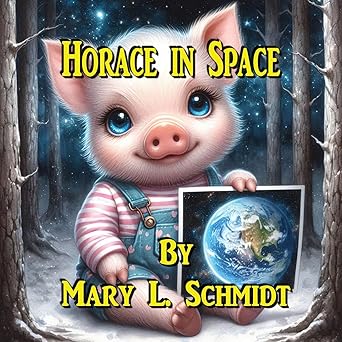
Horace in Space


Mary L. Schmidt’s latest children’s book follows young Horace, who is no ordinary pig. He’s a dreamer with his snout pointed firmly toward the stars. His greatest ambition? To venture into space. Yet, despite his lofty hopes, he quietly doubts that his dream will ever lift off. Until, unexpectedly, it does. A formal invitation arrives, and Horace is headed to the International Space Station.
Horace in Space is a delightful children’s book that effortlessly blends whimsical storytelling with factual space education. Tailored for children aged 1 to 8, this charming tale is brief in length, fitting for young attention spans, but rich in imagination and heart. The book’s vibrant illustrations serve as both emotional cues and narrative anchors, helping children see what Horace feels, thinks, and experiences.
Schmidt captures Horace’s sense of awe with genuine warmth. His naive excitement, so relatable for young readers, evolves into a more grounded understanding as his fantasy meets the real-world challenges of space. In doing so, Schmidt crafts a gentle lesson: reality might differ from dreams, but that doesn’t make it any less extraordinary.
The book strikes a thoughtful balance between imaginative adventure and educational value. Without ever sacrificing the fun, it introduces children to life in orbit, from the thrill of liftoff to the peculiarities of floating in microgravity. Facts are woven naturally into the narrative, ensuring that learning feels organic rather than instructional.
While Schmidt’s prose may not echo the playful cadences of Dr. Seuss or the clever wordplay of Shel Silverstein, Horace in Space still stands as a delightful addition to any young reader’s collection. Horace himself is an endearing protagonist, one whose journey feels ripe for expansion. It’s easy to envision this story as the launchpad for a larger series.
Horace in Space delivers more than just a tale about a pig in orbit; it offers young readers a chance to explore, imagine, and discover alongside a character who is every bit as curious and wide-eyed as they are.
Pages: 26 | ASIN : B0F9VX3XZ7

Things You Didn’t Know About Chimneys

John Hughes’ Things You Didn’t Know About Chimneys is a quirky, character-driven tale set in the fictional village of Piddly Bottom. The story follows the pompous Syngen-Hyde family, particularly the clueless Lord Charles and Lady Priscilla, who inherit the crumbling Monkspew Manor. As they hire the hapless but well-meaning Bert Bogglethrop and his ragtag crew to refurbish the property, chaos unfolds in a series of oddball adventures. At the center of it all is young Millicent, the quiet niece with a tragic past, who slowly uncovers more than just soot in the manor’s ancient chimneys. Part farce, part folk tale, the book is packed with eccentricity, old-school British humor, and a surprising heart.
I found Hughes’ writing incredibly charming. His characters are cartoonish and exaggerated, and that’s the point. Bert Bogglethrop, with his sardine-scented suit and wheezy van named Jenny, had me laughing. I genuinely loved the way Hughes commits to the ridiculousness. The dialogue is full of clever turns, regional slang, and enough cheeky wit to fill a chimney flue. But it’s not all slapstick. There’s something quietly touching about Millie’s journey. How this overlooked, lonely girl finds courage and belonging in a house full of ghosts, literal and metaphorical.
There’s a lot of setup, a lot of jokes, and a lot of shouting. Some chapters meander like Bert’s van, and not every punchline lands clean. The villains, especially Charles and Priscilla, are so delightfully detestable that I found myself wishing for a sharper emotional payoff. But honestly, I didn’t mind the detours. The story has a cozy, fireside rhythm. There’s a homespun charm in the way Hughes writes, like a tall tale being told in the back room of a village pub.
Things You Didn’t Know About Chimneys is a playful, warm-hearted read. I’d recommend it to anyone who enjoys old-fashioned British humor, offbeat characters, and a bit of magical mischief tucked between soot and rafters. It’s perfect for fans of Roald Dahl, Terry Pratchett’s gentler side, or those who just want a good laugh with a cup of tea. It will absolutely brighten your day.
Pages: 168 | ASIN : B0DSLTHZKD
Fear Is Normal

The Bird Who Was Afraid to Fly follows a young sparrow who is afraid to fly, prompting him to embark on a journey that leads to self-discovery, quiet bravery, and ultimately, a leap of faith. Where did the idea for this story come from?
I have always had a crippling fear of falling. To me, it just seems obvious, like, I could die if I fall from this height, so clearly I’m freaking out. Of course, my friends are dancing on the edges of mountains, so it’s not quite the universal fear of imminent death, it seems to me! Anyway, I was spending a few weeks in Italy, and while visiting a friend in Siena, I was taken by the Torre del Mangia in the city’s main square, Piazza del Campo. I had never written a children’s book before, but for some reason, my imagination took flight (pun not intended!), and I couldn’t help but think about how terrifying it would be to be at the top of the tower. And at dusk, birds would circle above the piazza, and I don’t know when I connected it, but I realized I wanted to write about a bird who is afraid to fly. So when I got back home to Los Angeles, I set about writing it!
What were some ideas that were important for you to share in this book?
I wanted it to be a lesson about understanding that fear is normal and even healthy. Fear is our mind’s way of protecting us when it perceives we’re in danger, so there’s nothing to be embarrassed about when you’re afraid. And I thought having Sam just work up the courage to take that first step out of his fear was obvious and easy and had been done a million times. So I wanted another lesson to be that it’s okay to accept help from others when we’re not strong enough to do something ourselves.
What scene in the book did you have the most fun writing?
I really enjoyed writing about the different kinds of birds there are in the world. Birds who swim and birds who can’t fly, and how Sam is envious of bats because they can’t see well, and how he wants to flit with the fireflies, and how he imagines starlings to be like stars and bluebirds like patches of sky. I got to be really creative building the world through Sam’s tiny worldview.
What story are you currently in the middle of writing?
I have two more completed children’s books. Up next is Violet’s Pretty Purple Playground, about a little girl who loves purple so much that she wishes for the whole world to be purple (I mean, it sounds lovely to me), and when her wish comes true, she finds that variety–not singularity–is what makes the world so rich. The second is about a young unicorn whose horn doesn’t change color to mark his passage to adulthood, and he worries that means he isn’t special. I also have a story about a tomboy damselfly and a Christmas story called Holly Jolly about a mischievous white cat, both of which still need to be written. And I’m working with a producer on notes for my mind-bending psychological thriller screenplay, The Alexandrite Ring, to get it into shape so he can start looking to attach a director. There’s always a lot happening!
Author Links: GoodReads | X (Twitter) | Facebook | Website | Amazon
What are you afraid of?
Sam is afraid to fly.
Being a bird makes this awkward.
His parents don’t understand.
His brothers and sisters don’t understand.
Sam himself doesn’t understand.
He wants to bob with the bats and flit with the fireflies and soar with the starlings.
But he can’t even look over the edge of his nest.
What to do when fear stops you from living?
Suitable to be read to younger children, or read by ages 8–11, The Bird Who Was Afraid to Fly will captivate readers with charming illustrations of Sam, his family, and the Italian countryside while they learn that it’s OK to be afraid and to accept help from others.
Bella and Bird Explore Anger
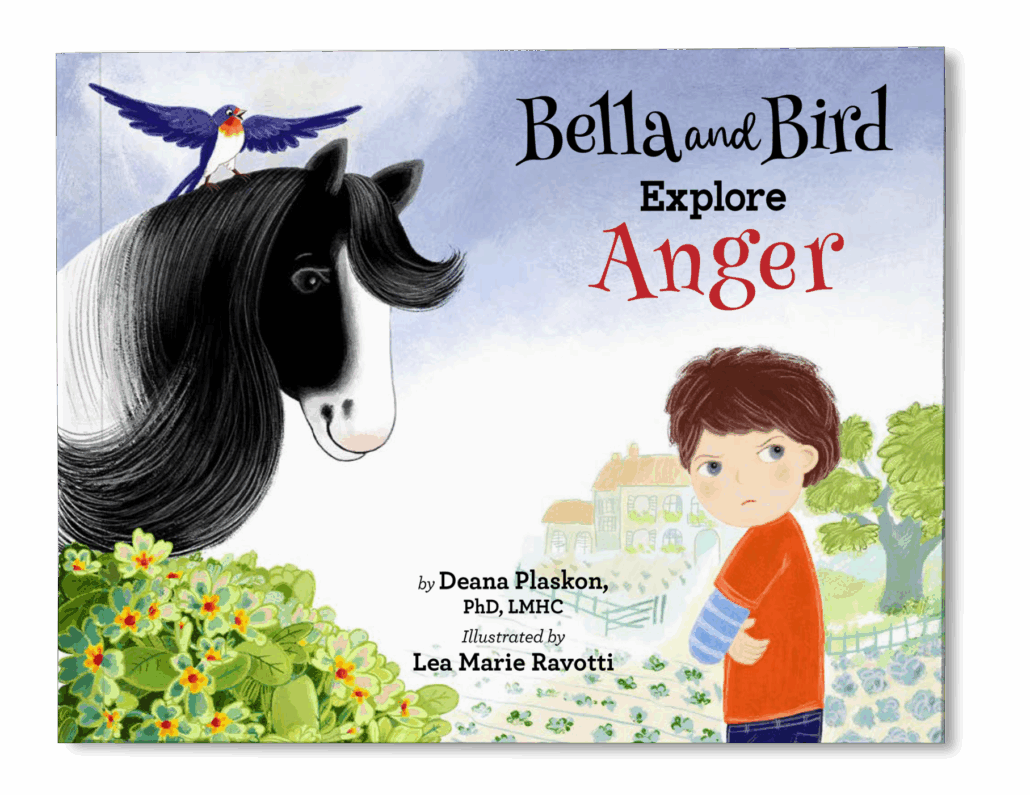
Bella and Bird Explore Anger follows a young boy named Henry who’s having a rough day. He’s angry because he can’t have his favorite pie. Enter Bella, a gentle horse, and Bird, her cheeky companion. Together, they help Henry name his feelings, understand what’s going on inside his body, and learn tools like box breathing and cool-down counting to manage his anger. Along the way, Henry learns that emotions aren’t bad, but what you do with them matters.
I found the writing clear and thoughtful, but also playful enough to keep kids interested. The pacing moves along well, and the dialogue between characters feels natural. Bella is the calm, reassuring type. Like the adult you’d want nearby during a meltdown. Bird adds a touch of humor that keeps things light. What impressed me most was how the book tackles a tough subject without being preachy. It doesn’t shame anger, which is a big deal. Instead, it treats it like something normal, something manageable, something even adults mess up sometimes.
I also really liked the breathing exercises and the way the book tied feelings to physical sensations. That’s such a smart and helpful concept for kids, and it’s presented in a way that feels doable. Honestly, the pie metaphor might be my favorite part, it’s funny, but also relatable. We’ve all gotten mad over something that feels huge in the moment but ends up being something small and understandable once we calm down. The artwork throughout the book is colorful, beautiful, and full of warmth, wrapping each page in a comforting glow.
I think Bella and Bird Explore Anger is a kind and clever picture book that would be great for kids ages 5 to 10, especially those who are learning to handle big emotions. It would be just as useful in a classroom as it would be at home, and it’s perfect for any child who sometimes explodes. It’s comforting, practical, and full of warmth.
Intellectual Stimulation

Passamaquoddy Legends Puzzle Book takes readers on a journey through a mix of puzzles, crosswords, mazes, cryptograms, coloring pages, and storytelling, featuring Master Rabbit as he navigates trials and encounters with the Passamaquoddy people. What was your creative process for developing the activities in your puzzle book?
While researching and writing “Passamaquoddy Legends (Annotated Edition): Glooskap, Lox, Master Rabbit and other tales”, I was looking for an activity book like this. Although this puzzle book series is based upon my “Passamaquoddy Legends (Annotated Edition)”, the reader can ascertain the answers by contextual clues. This series provides hours of intellectual stimulation while learning about their culture as you solve puzzles. It contains word searches, fill-in-the-blanks, cryptograms, hidden messages, crosswords, coloring, hand-drawn mazes, fallen phrases, double puzzles, escape mazes, tic tac toe, connect the dots, and Sudoku. Because this is a book series, I incorporated reader feedback regarding some of the puzzle complexity into future volumes.
What were some educational aspects that were important for you to include in this children’s book?
The study of knowledge (or epistemology) for an activity book designed to learn cultures and basic language is grounded in constructivist and socio-cultural epistemologies. How this knowledge is taught (or pedagogy) is presented through experiential, inquiry-based, and play-based pedagogies. It’s important to me that cultural learning is interactive, socially relevant, engaging, and enjoyable. For instance, a crossword, cryptogram, or word search promotes inquiry-based learning by encouraging the reader to deduce answers from contextual clues and decode cultural phrases. Similarly, a simple coloring page engages experiential learning through artistic expression. Likewise, a maze is a play-based activity that utilizes motor skills while providing a fun and engaging experience. A straightforward fill-in-the-blank activity supports constructivist learning because it prompts the reader to recall and apply story details, which reinforces cultural understanding. This applies to children and adult readers.
I hope the series continues in other books. If so, where will the story take readers?
I think there’s material for another three puzzle books. I’m currently working on Passamaquoddy Legends Puzzle Book Volume 4 – Chenoo Legends and Thunder Stories. Unlike the previous three volumes, which mirrored the first three chapters, Volume 4 consolidates chapters four and five. I have drafted the first four puzzles, and I limit each puzzle book to 100 pages. Because these chapters are shorter, I may incorporate At-o-sis the Serpent chapter as well. I’m in the dissertation phase of my doctoral program and working on another book, so I don’t anticipate the next puzzle book installment until next year.
Author Links: GoodReads | X | YouTube | Website
Train your mind with the Passamaquoddy Legends Puzzle Book Volume 3 – Amazing Master Rabbit, learn about Native American culture, and have fun with a variety of puzzles★ Over 100 Native American inspired puzzles
★ Great way to relieve stress & relax
★ Perfect for road trips, flying on airplanes & in waiting rooms
★ Word searches, Fill-in-the-blanks, Cryptograms, Crosswords, Sudoku, Mazes, & more
★ Solutions at the end of the book
★ Large print
The Passamaquoddy Legends Puzzle Book directly corresponds to each chapter in the “Passamaquoddy Legends (Annotated Edition)”. However, the reader can ascertain the answers by contextual clues or information gathered from other puzzles. This will provide hours of intellectual stimulation while allowing a rare opportunity to learn about the Passamaquoddy language and Native American legends.
If a particular puzzle is too challenging and you do not have access to the source material, the solution to each puzzle is in the back of this book. However, the more the reader struggles to achieve each answer, the greater the chances of learning and retaining aspects of the Passamaquoddy language and legends.
From the author of Passamaquoddy Legends (Annotated Edition)
Michael W. Cook is the author of Passamaquoddy Legends and creator of the Passamaquoddy Legends Puzzle Book series. These puzzle books are designed to help you escape everyday stress and relax while learning about the fascinating legends from the Algonquin-speaking world.



 LITERARY TITAN