Blog Archives
Delving a Little Deeper
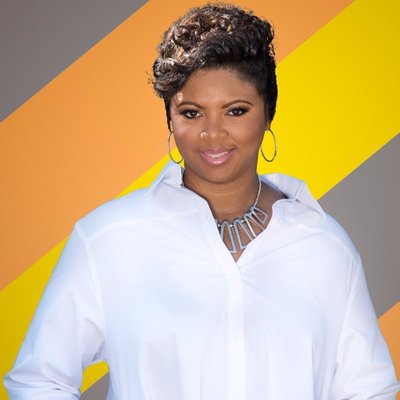
Dr. Chenee’ Gilbert Author Interview
It’s Okay, I’m Watching follows LaTrell Wiggins, a caring young girl who loses her mother to cancer and is left to raise her family. What was the inspiration to write this heartfelt novel of love and strength?
It’s Okay, I’m Watching is the second book I’ve published, but the first of the Dear Grief Series. I lost my mother to cancer when I was nineteen. I was a sophomore in college. I was on the cusp of adulthood. Yet, I felt like a small child lost at a mall. Instead of verbally communicating, I wrote my thought and feelings in a journal. Years later during my stint as a classroom teacher in urban city schools, I encountered students who struggled with emotional and social issues. After delving a little deeper into those situations, I found that they all shared one thing in common, grief. They either lost their loved one to death or through absence. Having gone through a life changing experience of losing my mother I could relate to the different characteristics displayed by these students. This prompted me to turn my journal into my first children’s book entitled, “Mama, Did You Mean To Leave So Soon?” It’s Okay, I’m Watching is the sequel. It goes into more detail with describing the family dynamics and the perspective of parenting as a single father.
It’s Okay, I’m Watching opens the door to conversation with those experiencing all forms of grief. What is one thing that you hope readers take away from your novel?
Wow! I wish there was only one take away. In fact, there are three. I want readers to know you don’t have to grieve alone, you can express your emotions without doing harm to yourself and others, and the importance of communicating feelings to trusted adults.
One of my favorite characters is Shajuan Martinez, LaTrell’s friend. Sassy and confident; she tolerates very little. What were the driving themes behind your characters as you were creating them?
I wanted to take realistic situations and based them off of real-life friends. There’s a lot of single parent homes and kids who have one or both parent’s enlisted in the service. I wanted this book to educate the reader on what Grief is. Grief doesn’t only relate to death. It’s simply a big reaction to a loss.
It’s Okay, I’m Watching is the first book in the Dear Grief series. In which direction does book 2 go in and when will that be available?
Book 2 will highlight LaTrell in her seventh grade year. She wants to test the waters a little bit with her self-image. She is trying to figure out how to fit in and be comfortable within her own skin. The readers will also get a chance to see the different issues Daryl and Luis (LaTrell’s brother & father) experience and how they are coping since the loss of Paulina. Communication will still be the highlight and the one thing that keeps the family bond intact. Book 2 will be released in September 2017.
Author Links: Amazon | Twitter
Growing up in Scott Park, Florida, ten-year-old LaTrell Wiggins lives a normal life. She has it all—two loving parents Luis and Paulina, her humorous younger brother Daryl, and ride-or-die childhood friends, Chandler and Shajuan. But this all changes when cancer takes LaTrell’s mother. The Wiggins are left to pick up the pieces and figure things out emotionally. If this isn’t enough, puberty introduces itself to LaTrell, causing her to reluctantly accept that her body is changing. During this adjustment period the Wiggins quickly learn that communicating is key. Can Luis handle the pressure of raising LaTrell and Daryl alone? Will LaTrell be expected to fulfill her mother’s shoes? It’s Okay, I’m Watching is a story of love, loss, and expected discovery of the strengths in each of us and our loved ones, whether they are with us or not.
It’s Okay, I’m Watching


It’s Okay, I’m Watching, written by Chenee Gilbert, is a novel based around LaTrell Wiggins- a caring young girl who lives with her younger brother Daryl and her parents, Luis and Paulini. Tragedy strikes the family as Paulini’s life is taken by cancer. Grief-stricken, the family begins to process death in their own ways and learns that grief can appear in all shapes and forms. Meanwhile, LaTrell is beginning middle school which comes with the inevitable stage of life- puberty. During this confusing time, Luis, Daryl and LaTrell must come to terms with life without Paulini and the changing dynamics of their family environment.
It’s Okay, I’m Watching opens the door to conversation with those experiencing all forms of grief. LaTrell Wiggins, the main character, loses her mother to cancer whilst entering a vulnerable stage of her life- middle school and puberty. An easily relatable character, LaTrell’s journey shows how families can show strength in the face of terrible adversity.
It’s Okay I’m Watching discusses how our lives are enriched in traditions and questions the reader’s thoughts on what traditions they would pass on to others. It reminds the reader that time waits for no-one and unfortunately, circumstances are out of our control. Personally, it reminded me of the importance of holidays and the unique nuances that make my family my own and what traditions would be present in a memorial for my loved ones.
If you are looking for a companion after experiencing loss, look no further. It’s Okay, I’m Watching will help begin the healing processes and start the pathway to acceptance. This is done through discussion questions at the end of each chapter which helps the reader to reflect on their own circumstances. It explores how grief is a reaction and a release of an array of emotions. Tragedy can strike anywhere at any time and you will be able to empathize with the characters and their journey.
One of my favorite characters is Shajuan Martinez, LaTrell’s friend. Sassy and confident; she tolerates very little. LaTrell discusses with her friends her grief counselling sessions and they begin to identify whether it is something they could benefit from. LaTrell’s other friend, Chandler, begins to acknowledge his own grief that he had been trying to mask. Her two friends shine a humorous side to LaTrell’s darkest days.
Teenagers experience loss and grief through death, break-ups and even loss of pets. Exposure to novels such as this will help them begin to understand the grieving process in an already confusing time of their life. It allowed me to normalize my own grieving processes and the impact these times had during my youth.
What I loved most about this novel is that it opens up the idea that grief isn’t restricted to those experiencing death and instead can be felt by those who are feeling alone, sad or missing someone. I would recommend this to anyone who is looking to understand their own journey in regards to grief and loss.
Pages: 110 | ASIN: B01MXKCY8R

Bean Takes a Walk
 Bean in the Garden is the first book of the children’s series, Bean in the Garden, by Ann Bevans and Matthew Ethan Gray. The books are designed with preschool children in mind, so Bean in the Garden is short, colorful, and easy for young children to understand.
Bean sets out to take a walk around the garden, and packs his favorite toys in his backpack. On the way, he meets Mrs. Berg, who has a new teapot but is out of tea. Bean offers to get her some tea as part of his adventure. Along the way, he meets three little peas who are about his own age, and they all have toys just like his. When he discovers a hole in his backpack and all of his toys are gone, he realizes the three peas were trying to return what they had found. The story is all about sharing, making friends, and being kind; a great message for preschool kids.
The first thing that struck me about the book was the illustrations. Mr. Gray’s artistry fills the page with bright colors and engaging images. This is a world of vegetable people. Bean is, of course, a bean and his mother is a lovely red beet. His neighbors include a friendly lettuce, Mrs. Berg, and a potato, Miss Tots. The clues to Bean’s toy dilemma are right there in the pictures so adults can encourage their children to search for the “lost” toys as they read along. Kids may also want to look at the pictures and imagine their own Bean adventures.
Another message I got from the story is that some things that seem bad, like a hole in your backpack, don’t have to be a big crisis. Bean reacts with shock when he realizes his toys are lost, but instead of being angry, he realizes that the three peas were trying to help him all along. It’s a good way to teach children about kindness and understanding, especially since kids who will be reading this are learning how to control their expectations and emotions.
There are three books in the series thus far, each available in both print and eBook formats. For toddlers and preschoolers, you can’t go wrong adding this book to their reading list. You can get more information about the authors, the series, and links to purchase the print and eBooks at http://beaninthegarden.com/
Pages: 36 | ASIN: B01LNRBK7K
You Are Not Broken!

Brady Stefani Author Interview
Eight years since her grandfather tried to kill her, Courtney has suffered strange dreams and delusions of aliens standing over her bed. What was the motivation to write a young adult book that deals with emotional and mental trauma?
My motivation to write a young adult book that deals with emotional and mental trauma came from my own childhood experience, and the desire to present teen readers with a fantastical story that doubles as a road map out of suffering alone. Alienation is a story that demonstrates what happens when you burry childhood trauma: it comes back, creeps up from your unconscious, and continues to traumatize you until you deal with it. It is also a story about how powerful and resilient the human mind can be. No matter how different or damaged you feel, you are not broken!
I suffered debilitating anxiety as a child and throughout my early adult life. My anxiety was caused by previous traumatic experiences, or more specifically, by my inability as a child to deal with the frightening emotions that resulted from my experiences. Unfortunately for me, as opposed to seeking out help and discussing my growing fears and feelings of hopelessness, I did my best to bury those emotions and any memories that had to do with them. This only resulted in more anxiety, fear, and loneliness. I became afraid of my own mind—the horrible thoughts and feelings it created.
Nobody likes feeling frightened or hopeless or lonely. It’s extremely uncomfortable, and can quickly become overwhelming. Fortunately, we all have these types of feelings from time to time, and they are nothing to be ashamed. Nor is the trauma behind them. The way to make these horrible feelings go away is not to bury them like I did. It is to talk about them and any traumatic experience the feelings are rooted in.
Now, that said, I did not want to simply write a book about girl who is suffering emotionally as a result of past trauma, and show her dig into her past and resolve her issues. While it was important for me to present that story line, complete with a road map out of suffering, I also wanted to challenge the idea of mental illness and the stigma of being different. I wanted to challenge the idea of what is ‘real?’ What is ‘normal?” And what in the world is wrong with being ‘special’ or ‘unique?’ So with this in mind, I wrote a book about a teenage girl who is traumatized by past events and must dig into her past to resolve them. But when she does so, she discovers two things: 1) she is not so crazy after all, but very different in a gifted way; and 2) not only does she have to wrap her head around the discovery that she is different, but she has do it quickly, because the survival of the world depends on her embracing her unusualness.
Courtney, as well as the other characters, are well developed. Did you use anything from your own life to help develop these characters?
Courtney’s mom could be seen as a horrible selfish person who is more concerned with her daughter appearing to be a normal popular high-schooler, than she is with her daughter’s actual mental health. This was a huge exaggeration of my parents. But let’s face it, there are parents who are so concerned with the image their child presents, and with their child’s accomplishments and accolades, and how their child‘s image reflects on them as parents, that they ignore their child’s emotional needs. The same could hold true for teachers, peers, siblings, or the criminal justice system. I’m not playing the blame game here. But kids and people of all ages are hurting. The way to help one another is to talk about how we feel, help one another understand our feelings. So Courtney’s mom, the character who is most criticized by book reviewers as being too mean or too horrible of a parent, is to me, one of the most important characters in the book. By far she has more impact on Courtney’s life and her mental well-being that all of the bad guys Courtney is forced to face off against, and if you’ve read the book, there are some pretty unsavory characters who put Courtney through the ringer.
As for Agatha, I never had a friend like her, but I certainly wish I had. She is a badass, alien and Norwegian black metal obsessed chick with mad sleuthing skills and enough life experience to know that the first step in healing is to tear off the bandage start repairing yourself from the inside out.
As to Courtney’s character, I have to admit that I chose to tell the story through a female protagonist, as opposed to a male, because it was too painful for me to write the panic attack and nightmare scenes in first person point of view using a male teen character. It was too close to home. And Courtney being female bought me just enough separation from my own past experience to allow me to dig into the dark areas.
I understand that you have a graduate degree in law. How did you think that has helped you in your writing?
A law degree, or let’s say the experience of law school—where you spend three years learning to be analytical and precise—had a great impact on my story developing skills. My fiction doesn’t involve law, or courts, or crime investigation. Yet, what I took away from law school was that there are not merely two or three sides to every story, but more like one hundred and three sides. So, in my writing and story development, the analytical part of my brain developed in law school helps me keep asking ‘what if’ over and over and over, until I find exactly what I feel a scene or character’s decision should be.
That said, I may have been better off spending those three years in a doctoral or masters of fine arts creative writing program. Who knows?
What is the next book that you are working on and when will the book be published?
Currently, I am working on a couple projects. But my main focus is a sequel to The Alienation of Courtney Hoffman. I left a few balls up in the air at the end of that book, and I am really excited to pick up the story where Alienation ended. Alienation was written as a standalone book. By that I mean there is certainly resolution of the conflict by the book’s end. But at the same time, I spent quite a bit of time (or words) setting up a situation for my characters that is not going to go away overnight. So, I have a really great adventure I am writing where the bad guys strike back, and some of the same protagonists, now more mature but also damaged, use what they learned in Alienation to conquer great obstacles. I think it is going to be a really exciting read. Given that the stage was set (the world-building laid out) in Alienation, in the second book I am able to focus more on the meaning of things, and the psychology of the characters. As I mentioned earlier, the universal difficulty and often confusion that is involved in developing psychologically from a child to an adult is of great interest to me. While Alienation is the fast-paced story of Courtney’s journey of self-discovery and her physical battle to save herself and the world, I tried to allow the reader to discover along with Courtney the emotional impact that past events were having on her. That is what rings true to me in a good story: Not defeating the bad guy, but letting readers in on what it feels like for a teenager to be forced to push themselves to explore and overcome their fears to achieve a higher level of self-awareness. So, to put it bluntly, after having written Alienation, I cannot just sit around and wonder what psychological impact the events of Alienation had on Courtney and the other characters. They went through a traumatic ordeal of epic proportion. They are no doubt affected. But rather than hide from their new understanding of the world, and burry their painful emotions and memories, these characters have learned there is a better way through. Courtney is a unique person, with unique gifts, and she has a calling. But like every other human being, in order to tackle new dilemmas, be they epic and otherworldly or not, she needs to digest what has happened to her, and take care of her emotion needs. Unfortunately for Courtney, I throw her right back in the fire, forcing her to heal and grow while on the fly. But heal and grow she will, because the world is falling apart around her!
I don’t know when the sequel will be published. But I am working at a furious pace.
Author Links: GoodReads | Website
Fifteen year old Courtney wants to be normal like her friends. But there’s something frighteningly different about her—and it’s not just the mysterious tattoo her conspiracy-obsessed grandfather marked her with before he disappeared. She’s being visited in her bedroom at night by aliens claiming to have shared an alliance with her grandfather. And imaginary or not, they’re starting to to take over her mind. “Mental illness is a slippery slope,” her mother warns her.
The last thing Courtney wants to do is end up crazy and dead like her grandfather did. But what about the tattoo? And the aliens trying to recruit her? With her new alien-savvy friend Agatha and her apocalyptic visions, Courtney begins connecting the dots between the past, present and future—of her bloodline, and the ancient history that surrounds it. Is she going insane, like her family claims her grandfather did, or is she actually a “chosen one” with ancestral connections to another world? Either way, Courtney has a mission: untangle her past, discover the truth, and stop the apocalypse before it’s too late for everyone.
Intensity of Emotion
 Black Inked Pearl is a romance story following a young woman who falls in love with a mysterious man and then must search for him through Heaven and Hell. I found Kate to be a very well written and in depth character. What was your inspiration for her and her emotional turmoil through the story?
My reading: above all (as you’ll see from the similes) Homer and the mystic love poetry of Shakespeare, Blake and Rumi. Music – the dreams in which the book was given to me (from where?), one dream / one chapter a night for about two months, were interlaced with my hearing classical music through the night, most poignantly Bach, slow Mozart piano and John Rutter’s ‘Blessing’. But most of all my life, living through it:, I think no serious novelist can write of love or emotion of searching unless she has experienced it herself, at least in imagination (what else?): as the agreed poet Aeschylus rightly summed it up ‘learning through suffering … ‘
Within this book you flawlessly blend poetry with prose that brings beauty and intrigue to the story. It takes exceptional talent to blend the two genres together. How did you go about blending the two genres without disrupting the story?
I don’t think they’re essentially so very different, in fact some of the ‘poetry’ could equally well be set as rhythmic prose (my publisher – lovely Garn Press – had quite a discussion about which should be which, we changed our minds several times), and ‘prose passages’ could equally appear as poetry (actually, some of the ‘prose’ similes are now set as verse in my Poems from Black Inked Pearl: after all many of them came directly from, or were inspired, by Homer, the great arch poet). Also as I learned when I was writing my book Oral Poetry it’s really only a fairly recent typographical western convention that makes prose ‘look’ different from poetry. Ultimately it’s the SOUND and the INTENSITY OF EMOTION – or so I think -that are fundamental to poetry, and that, for me anyway, runs all through the book. So in a way it’s all poetry and I couldn’t feel any break between them. That said, interestingly, the poems came separately, also in dreams (each one already made, complete, perfect – well as perfect as it was ever going to get anyway) over the months BEFORE the novel started, mysteriously, to arrive. I thought they were independent poems. But when the novel chapters were written I saw that, all the time, they were part of the story and needed to be there. So now, there they are.
I felt that Black Inked Pearl is about love, romance, and life experiences that shape the person we become. Is there any moral or idea that you hope readers take away from the story?
I think – as in The Alchemist (a kind of soulmate book with mine) follow your dream, whatever anyone else says – and maybe at the end of that rainbow what you will find will be the pearl, yourself. Love is all, even if unrequited – that has its deep treasures too. The ‘new’ words (the Garn Press copy editor said there were hundreds!!) just came to me; they were just standing there already in my mind (like the poems were), complete, ready to be written. When I looked back (having forgotten…) I saw that they were (almost) all because they made the line SOUND better, more rhythmic. Roll on the audio, oral, version for its full realization, much influenced by my experience of African (and Irish) oral story telling. Oh and often it turned out to be sense too – some subtle change from the meaning conveyed by the ‘ordinary’ form – didn’t James Joyce and Homer and even Shakespeare sometimes find they had to do the same? (sorry, what a comparison….)
Author Links: Facebook | GoodReads | LinkedIn | Twitter | The Open University | Garn Press
An epic romance about the naive Irish girl Kate and her mysterious lover, whom she rejects in panic and then spends her life seeking. After the opening rejection, Kate recalls her Irish upbringing, her convent education, and her coolly-controlled professional success, before her tsunami-like realisation beside an African river of the emotions she had concealed from herself and that she passionately and consumingly loved the man she had rejected. Searching for him she visits the kingdom of beasts, a London restaurant, an old people’s home, back to the misty Donegal Sea, the heavenly archives, Eden, and hell, where at agonising cost she saves her dying love. They walk together toward heaven, but at the gates he walks past leaving her behind in the dust. The gates close behind him. He in turn searches for her and at last finds her in the dust, but to his fury (and renewed hurt) he is not ecstatically recognised and thanked. And the gates are still shut.



 LITERARY TITAN