Blog Archives
The Death Wizard Chronicles: Volume 1
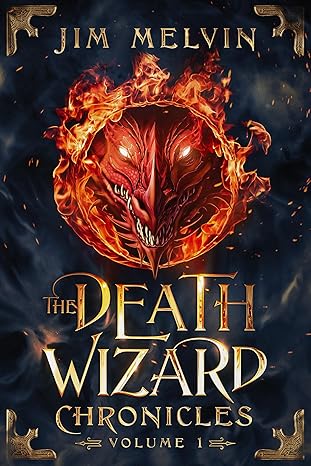

Jim Melvin’s The Death Wizard Chronicles: Volume 1 is a sweeping and gritty epic fantasy novel that plunges the reader into the war-torn world of Triken, where magic, violence, and fate collide. The story centers on Torg, a Death-Knower—a warrior-king who dies and resurrects repeatedly, gaining mystical powers with each return. As the leader of the desert-dwelling Tugars, he stands alone against Invictus, a rising sorcerer whose dark magic and monstrous allies threaten the very balance of existence. When Torg trades his freedom to save a peaceful race known as the Noble Ones, the tale shifts into a tense meditation on sacrifice, loyalty, and power. The plot is fast-paced and cinematic, with vivid world-building and sharp dialogue.
Reading this book was like stepping into a dream soaked in blood and moonlight. I found myself torn between awe and discomfort. Melvin’s writing is intense. Every sentence is packed with texture and movement. He doesn’t shy away from the raw stuff: pain, rage, lust, and death are all front and center. Some of it is genuinely brutal, but it fits the world he’s built. What impressed me most wasn’t the action (though it’s stellar), but the psychological depth of Torg. He’s not your average sword-swinging hero. There’s a stoic grief to him. A strange tenderness even when he’s cracking skulls. That complexity kept me emotionally hooked, even when the violence became overwhelming.
Melvin’s prose is lush and immersive, often leaning into a rich, almost poetic style that brings the world of Triken to vivid life. He isn’t afraid to slow things down with detailed exposition and bold philosophical themes, giving the story a thoughtful, almost meditative weight. The villains are unapologetically dark, embodying evil in a way that feels mythic and larger-than-life. While the lines between good and evil are stark, it adds to the high-stakes drama and classical tone of the tale. What truly stands out is Melvin’s fearless storytelling. He dives deep into spiritual allegory without losing the grit and guts that define epic fantasy.
This isn’t casual fantasy fare. It’s a deep dive into the violent, mystic, and strangely poetic mind of a world at war with itself. If you’re someone who loves dark fantasy with spiritual weight, who doesn’t flinch from graphic content, and who wants more from their fantasy than just dragons and quests, this one’s for you. I wouldn’t hand it to a casual reader, but for the seasoned fantasy fan craving something fierce and different, it hits like thunder.
Pages: 502 | ASIN : B0F3MVZWWD

King of the Forgotten Darkness: A Raven’s Tale Fantasy

King of the Forgotten Darkness, by Erik Goodwyn, is a sweeping portal fantasy that follows Liam Panregon, a trauma-scarred man wrestling with his past in a polished, tech-obsessed society called Midworld. But Midworld isn’t the only world. Liam is from Erentyr, a dark, war-ravaged realm of magic and myth, which he fled as a child after a devastating family tragedy. Now, haunted by memories, tormented by dreams, and drifting in emotional limbo, Liam learns his mother may still be alive—and the only way to save her is to return to the very nightmare he escaped. What unfolds is a deeply personal tale of grief, recovery, and reckoning, layered with high fantasy lore, psychological nuance, and existential stakes.
Goodwyn’s prose walks that delicate line between poetic and punchy. Moments of vivid beauty flash alongside gut-wrenching internal monologues and bursts of raw action. The first half is a slow burn, and I mean that in the best way. We linger inside Liam’s trauma, his simmering anger, the mundanity of a life that doesn’t fit, and the emotional cost of “normalcy.” It felt brutally honest. I found myself really feeling for Liam—not because he’s noble or heroic, but because he’s lost, complicated, and relatable. The world-building, split between sterile sci-fi futurism and moss-drenched fantasy realms, is done with skillful contrasts. The tech-saturated Midworld is chillingly familiar, while Erentyr oozes mythic weight and danger.
What really stuck with me, though, was the emotional arc. This book doesn’t just dabble in trauma—it stares it down. The nightmare sequences are genuinely haunting. The tension between forgetting and remembering, between escape and confrontation, gives the story real soul. There were a few places where the dialogue dipped into exposition a bit too heavily, and some transitions between worlds felt slightly abrupt. But those are small bumps in a ride that’s otherwise immersive, meaningful, and heartfelt. Goodwyn’s background in psychology shines through, lending the story layers of metaphor without ever feeling clinical.
I’d recommend King of the Forgotten Darkness to readers who love fantasy that goes deeper than dragons and quests, though it has those too. If you’ve ever wrestled with ghosts of your own, or questioned where you belong, this one’s going to land. Fans of Neil Gaiman, Robin Hobb, or even Ursula Le Guin’s more introspective work will find a lot to chew on here. It’s for those who want their escapism laced with truth, and their heroes cracked but unbroken.
Pages: 344 | ISBN : 978-1803417653
Honesty in Writing

Ciao, Amore, Ciao follows a jaded journalist whose career is fading fast, who discovers an old WWII photo in his dying father’s home, and after posting it online, he begins to uncover long-buried secrets and a dark legacy that needs to remain hidden. What was the inspiration for the setup of your story?
The inspiration was both cathartic—I began the novel a week after my dad passed away, and I hardly even recall writing the first draft—and to tell the story of my family, a family of no ones, and the story of boys whose sacrifices were conveniently forgotten by the very people who sent them to their deaths. I guess you could say the inspiration was personal: a personal account to try and make sense of what happened—to me, to my uncle (who was one of the tens of thousands who vanished into the Russian steppes in 1943), and my dad, who spent a life living with the wounds of that tragedy.
Some events in the book bear chilling similarities to real-life events. Did you take any inspiration from real life when developing this book?
A lot of the novel is based on “true events”, including many of the scenes with the narrator watching his dad’s slow passing. The war scenes, too, were taken from hundreds of sources and a decade’s worth of research. I tried to meld all those soldiers’ recollections into the novel so that the novel remains true to what those boys suffered in Stalingrad. I think that’s what resonates in the novel, the “truth” of it. When you read those scenes, it’s sobering to remember that hardly any of it came from imagination. They’re just a retelling of stories told by survivors, and diaries and letters from those who, like my uncle, never came home. Not even their bodies, they just vanished into the ice. The tragedy was both what happened to them during those horror-filled days of their retreat, and what happened to the survivors because it was over a decade before any of their recollections were allowed to be published. Not until the mid-’50s did Italy begin to understand the true depth of the disaster. By then, of course, Italy was already in a hurry to move on to a new future, and that entire history was conveniently forgotten by everyone except those who were there, and those families who had to find a way to deal with that unspeakable heartbreak.
What was one of the hardest parts of Ciao, Amore, Ciao for you to write?
Writing about my family and my dad was difficult because the novel could only work if I wrote honestly. And honesty in writing is the most difficult thing of all because there’s no hiding once you choose to go on that path. Reliving the moment when I saw my dad, the night he left, and I had come to the hospital alone to see him there in his bed—that was hard. I edit a lot, that’s part of my process, but for that scene, I wrote it once and never went back to it again. Sometimes, a first take is all it takes, and editing that scene would have been to try and polish a raw emotion. That’s never a good idea because instinct is to try and change things, to make the “hero” a better man or whatever.
What is the next book that you are working on, and when can your fans expect it to be out?
My next novel is Book 2 in Alex Lago’s series, set in South Africa. The “hero” this time around is the legendary South African golfer, Bobby Locke. I know, golf, right? But Locke is a perfect metaphor for the true hero of the book, Johannesburg, in all its tragic, violent colour. Similarly to both my previous novels—Ciao, Amore, Ciao, and Tracks: Racing the Sun—it’s a dual-timeline historical fiction/mystery/autofiction. Yes, maybe one day I’ll find an actual genre! But probably not. My novels are about emotion, and this new one tells the story of a man who spent his life running from them. And what that cost his family was unimaginable. I expect it to be published in 2026, the manuscript is virtually complete.
Author Links: GoodReads | X (Twitter) | Facebook | Website | Amazon
In the winter of 1942, an Italian army of young men vanishes in the icefields of the Eastern Front. In the summer of 1945, a massacre in Schio, northeastern Italy, where families grieve the dead, makes international headlines.
In present-day Veneto, an ordinary man is about to stumble onto a horrifying secret.
Alex Lago is a jaded journalist whose career is fading as fast as his marriage. When he discovers an aged World War II photo in his dying father’s home, and innocently posts it to a Facebook group, he gets an urgent message: Take it down. NOW.
Alex finds himself digging into a past that needs to stay hidden. What he’s about to uncover is a secret that can topple a political dynasty buried under seventy years of rubble. Suddenly entangled in a deadly legacy, he encounters the one person who can offer him redemption, for an unimaginable price.
Told from three alternating points of view, Martini’s World War II tale of intrigue, war, and heartbreak pulls the Iron Curtain back to reveal a country nursing its wounds after horrific defeat, an army of boys forever frozen at the gates of Stalingrad, British spies scheming to reshape Italy’s future, and the stinging unsolved murder of a partisan hero.
Ciao, Amore, Ciao is a gripping story of the most heroic, untold battle of the Second World War, and a brilliantly woven novel that brings the deceits of the past and the reckoning of the present together.
Lesser-Known Story

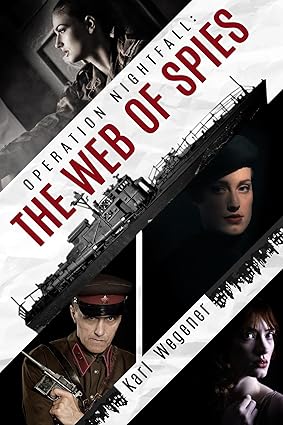
Operation Nightfall: The Web of Spies follows two women, a former SOE operative and an MI6 agent, who secretly enter Poland to meet with a sleeper agent and anti-communist insurgents, not realizing their mission has been compromised by a mole deep inside British intelligence. What was the inspiration for the setup of your story?
The story takes place against the backdrop of the Cold War and was inspired by three historical events – the Polish anti-communist insurgency, a covert British intelligence operation to roll back communism in Poland and throughout the Baltic to the borders of the USSR, and the Cambridge spy ring. I wanted to create a story that highlighted this lesser-known story of the Cold War era.
Most people do not realize that when WWII ended in Europe in May 1945, fighting continued in Poland for another 8 years. Poles continued to fight for their independence from the Soviet-backed, communist government until the anti-communist insurgency was finally crushed in 1953.
The insurgency received covert assistance from the British, who infiltrated agents, fighters, arms, and money into Poland and throughout the Baltic. Unfortunately, the British operation was undermined from the start. The Soviets were tipped off to the British plans, most likely by Kim Philby and Donald Maclean, two members of the notorious Cambridge Five. Over the life of Operation Jungle, the British infiltrated nearly 250 agents into the region. Every agent was either killed, captured, or turned.
What character did you enjoy writing for? Was there one that was more challenging to write for?
Many of the characters in my book are based on people who actually lived. The character Luba Haas is one of my favorite characters and I based her on a woman who was arguably Great Britain’s greatest spy during WWII, Krystyna Skarbek, or Christine Granville as she was known in the UK. She was a heroic character, and her real-life exploits are legendary. But the character that was the most challenging to write for was the main antagonist, Lt. Colonel Yuri Sokolov. This character was also based on a real person, a man by the name of Vasili Blokhin, who was Stalin’s handpicked executioner. Blokhin is said to have executed more than 10,000 prisoners by his own hand, including around 7,000 at the Katyn Massacre in 1940. He’s even listed in the Guinness World Records with the ignominious title of “most prolific executioner.” It would have been easy to fall back onto stereotypes when writing him. Blokhin was an alcoholic and mentally unstable. But we actually learn about what made him the man he would become. It doesn’t excuse his actions – both Blokhin and Sokolov are incredibly cruel characters, but they are also complex characters with deep emotional scars. Showing the human side of a murderous psychopath was challenging.
How did you balance the action scenes with the story elements and still keep a fast pace in the story?
I’d love to take full credit for that, but I have to say that my editor, a remarkable woman named Caroljean Gavin really helped me maintain the intensity and keep the book flowing. Her developmental edits really helped me sustain that page-turning tension throughout the book. She helped me find a way to keep the reader engaged by creating scenes that made them always want more at the end of each chapter.
What is the next book that you are working on, and when can your fans expect it to be out?
I’m continuing with the Cold War theme with another lesser-known story of the era. I am currently working on a book that has a working title, The Missiles of Vogelsang. It is a novel, and it is based upon what I call the world’s first missile crisis. In 1959, three years before the Cuban Missile Crisis, the Soviets deployed nuclear missiles to East Germany. These were the same missiles they attempted to place in Cuba three years later. I’m in the early stages of writing but I hope to publish sometime in 2026.
Author Links: Goodreads | Facebook | Instagram | Threads | Website | Amazon
Inspired by the true events of Poland’s anti-communist insurgency, the Cambridge Five spy scandal, and a covert MI6 operation which attempted to rollback communism to the borders of the USSR, Operation Nightfall: The Web of Spies sheds light on a lesser-known story of the Cold War and immerses readers into the shadowy world of counterintelligence and spy versus spy operations.
Literary Titan Gold Book Award: Fiction

The Literary Titan Book Award honors books that exhibit exceptional storytelling and creativity. This award celebrates novelists who craft compelling narratives, create memorable characters, and weave stories that captivate readers. The recipients are writers who excel in their ability to blend imagination with literary skill, creating worlds that enchant and narratives that linger long after the final page is turned.
Award Recipients











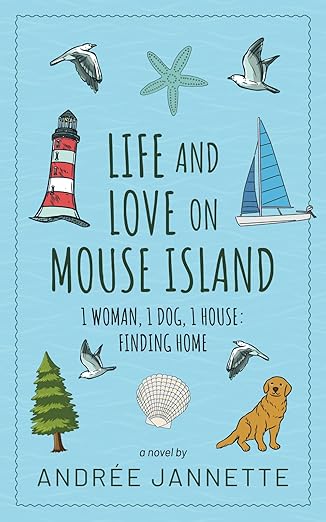


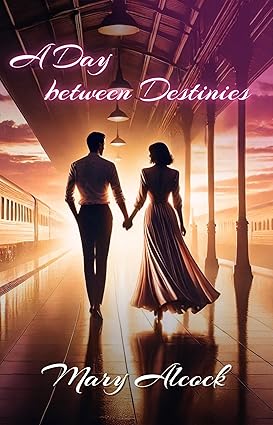
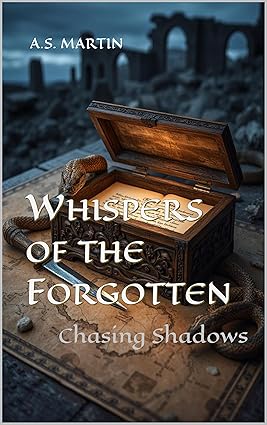


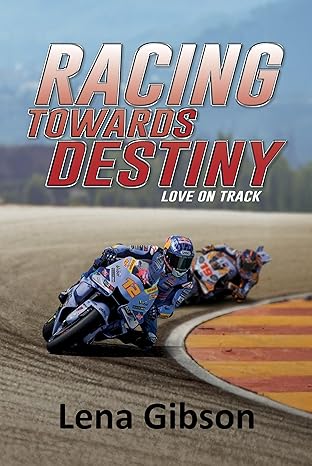










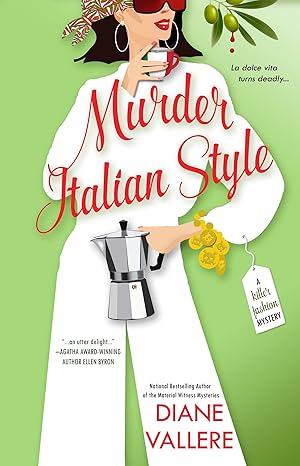
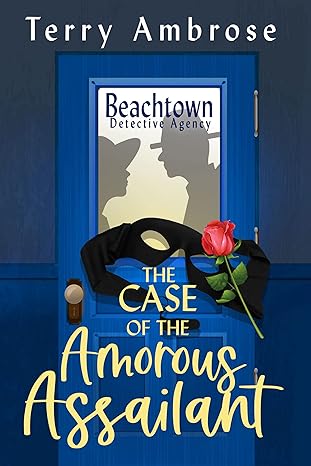
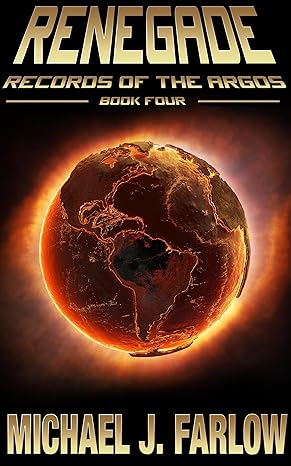
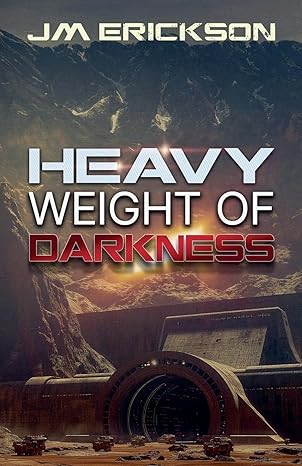

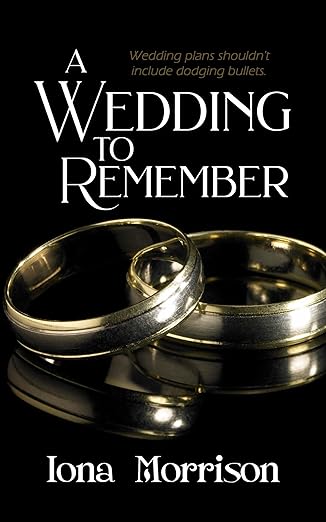

Finding Manhood in Scotland by Victor Atyas
Viper Island by Cameron K. Moore
The Ballad of Midnight and McRae by Jess Lederman
Visit the Literary Titan Book Awards page to see award information.
Literary Titan Silver Book Award
Celebrating the brilliance of outstanding authors who have captivated us with their skillful prose, engaging narratives, and compelling real and imagined characters. We recognize books that stand out for their innovative storytelling and insightful exploration of truth and fiction. Join us in honoring the dedication and skill of these remarkable authors as we celebrate the diverse and rich worlds they’ve brought to life, whether through the realm of imagination or the lens of reality.
Award Recipients
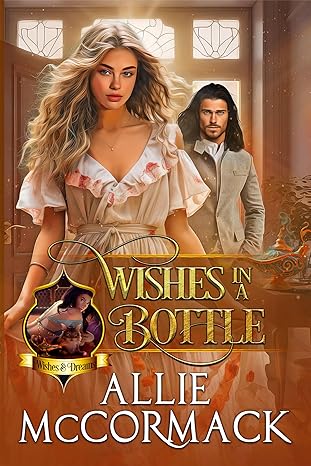


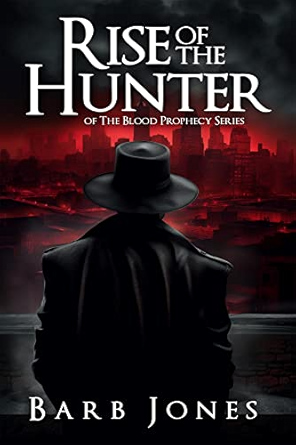


















Visit the Literary Titan Book Awards page to see award information.
Out of Body: Straight to Hell

Out of Body: Straight to Hell is a wild, genre-defying ride that blends psychological drama, speculative science, supernatural horror, and heartfelt coming-of-age storytelling. The novel follows Harley Baker, a paralyzed young man who, after a childhood trauma tied to a dream-world soulmate and a very real fall from a second-story window, sets off on a determined, mind-bending journey to rediscover the truth of those dreams. Armed with government-declassified astral projection guides, banned hallucinogens, and a stubborn belief in the soul’s reality, Harley risks everything to find Stephanie—a woman who may or may not exist. Along the way, he tangles with literal demons, the CIA, and the biggest enemy of all: his own doubt.
I didn’t expect to get sucker-punched by emotion so often in a story that features Satan as a literal antagonist. But Chater does something special here. His writing has this knack for yanking you through a dozen moods in a single chapter. One minute, I’m laughing at Harley’s razor-sharp sarcasm and tragically millennial monologues, and the next, I’m stunned into silence by the sincerity of a line about loneliness or parental love. Chater’s voice is sharp, raw, never too polished, and it suits Harley’s inner chaos perfectly. Some of the scenes, especially those involving the black-eyed dream demon or Harley’s aching memories of his dog Barney, hit harder than I expected. And while the dialogue flirts with melodrama at times, it never crosses into the unbelievable. Harley’s voice is exactly what it needs to be: brutally honest, emotionally bruised, and relatable.
Now, the ideas in this book? They’re bonkers—in the best way. We’re talking government-funded psychic training, astral projection as espionage, spirit dogs quoting hip-hop, and an actual demon with a libido and a vengeance. And yet… it works. Chater doesn’t dump exposition on your head. He lets you piece together the crazy through Harley’s obsession. There’s a surprising amount of research under the hood—Gateway tapes, Monroe Institute lore, CIA documents—and it’s all used not to impress, but to deepen Harley’s desperate search for truth. The line between madness and metaphysics is always razor thin, and Chater walks it like a tightrope artist. Sure, some plot turns stretch credibility, but so does reality when you’re twenty-two, emotionally shattered, and chasing your dream girl through multiple dimensions. I bought in—and I stayed in.
If you’ve ever wondered what would happen if The OA made out with Stranger Things while reading a Monroe Institute report high on DMT, this book is your answer. It’s heartfelt sci-fi for the spiritual misfit, horror for the sensitive soul, and a love story written in the language of astral projection, regret, and raw hope. I’d recommend this to readers who crave deep weirdness with emotional bite—fans of Chuck Palahniuk, Neil Gaiman, or anyone who’s gone down a rabbit hole at 2 a.m. and come out wondering if any of it was real.
Pages: 216 | ASIN : B0F4ZJ8WVG
Oceans of Thoughts Book One
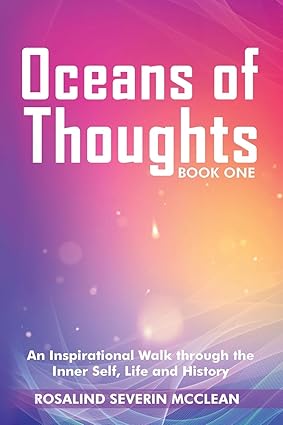
Rosalind Severin McClean’s Oceans of Thoughts: Book One is a soul-stirring collection of poems and reflections that journeys through loss, memory, identity, and spiritual awakening. Woven with rich cultural threads from the author’s Dominican roots and anchored in emotional honesty, the book moves through grief and resilience—most notably in the heartfelt tributes to her late sister Yvonne—and offers powerful insights into family, society, and selfhood. Each piece pulses with raw feeling, blending biblical, spiritual, and philosophical touchstones with vivid, everyday language. There are sections dedicated to homeland pride, family struggles, and poignant memories of Convent School days in Dominica, all wrapped in poetic sincerity.
Reading McClean’s work felt like stepping into someone’s journal. Her voice is unfiltered, brimming with emotion, sometimes aching, sometimes rejoicing. She doesn’t just describe her pain; she hands it to you, palms open. Her poems about Yvonne—especially the “Floods of Emotions” series—hit hard. They’re full of yearning and beauty and that special kind of ache that comes from love not lost, but changed. And the spiritual reflections? They’re raw, unguarded. She praises, questions, and obeys the divine call, all in the same breath. There’s something brave in how she lets her faith carry the reader through the peaks and valleys of her experience.
But the book isn’t just about grief or even poetry—it’s about memory and voice. The school recollections are rich and playful, filled with sensory delight and childhood charm. Her style doesn’t chase polish. It doesn’t try to be highbrow. It’s emotional and lyrical, but not pretentious. Some lines are jagged, others smooth. And that’s the beauty—it breathes. Her use of dialect in parts adds authenticity and flavor, keeping the text rooted in the real while reaching for the divine.
This is not a light read, nor is it something you breeze through. It’s reflective, spiritual, and often mournful—but healing too. I’d recommend Oceans of Thoughts: Book One to anyone grieving a loved one, anyone who feels the push and pull of family ties, and anyone curious about the sacred in everyday life. It’s especially meaningful for those with Caribbean roots or a love for memory-laced storytelling. You’ll find yourself pausing, rereading, and maybe even crying. It’s not just a book. It’s a heart cracked open.
Pages: 165 | ASIN : B08NSCFR8W




 LITERARY TITAN