Blog Archives
Literary Titan Silver Book Award
Celebrating the brilliance of outstanding authors who have captivated us with their skillful prose, engaging narratives, and compelling real and imagined characters. We recognize books that stand out for their innovative storytelling and insightful exploration of truth and fiction. Join us in honoring the dedication and skill of these remarkable authors as we celebrate the diverse and rich worlds they’ve brought to life, whether through the realm of imagination or the lens of reality.
Award Recipients
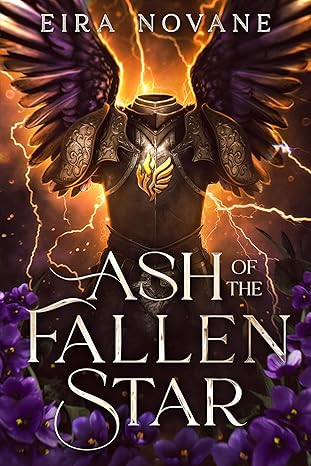


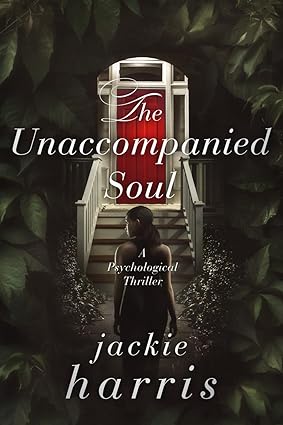

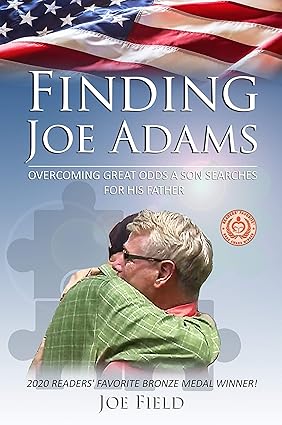


















The Adventures of Mrs. Hats: The Mayan Headdress by Christopher Corbett
Visit the Literary Titan Book Awards page to see award information.
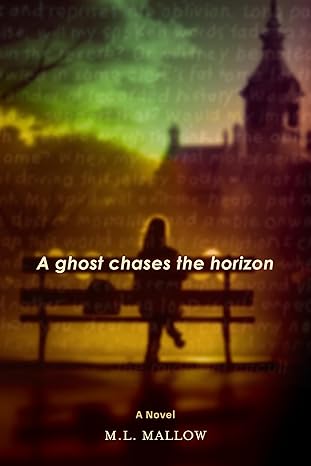
A Ghost Chases the Horizon

A Ghost Chases the Horizon is a genre-blending novel that weaves historical fiction, paranormal exploration, and literary introspection into a haunting and emotional tapestry. Set around the sentient remains of the real-life Trans-Allegheny Lunatic Asylum, the story unfolds through the perspectives of four people. Henrietta (1905), Eugene (1935), Brittany (1999), and Neil (2019–2063). Each is drawn to or consumed by the ghosts of Weston Hospital, both literal and figurative. The kicker? The entire story is narrated by the Kirkbride building itself, a character as rich and conflicted as the people it has seen. Through the hospital’s perspective, the book examines mental health, time, memory, and the invisible scars passed from person to person and place to place.
I was floored by how emotionally resonant this book turned out to be. I went in expecting spooky stories and dusty corridors, and sure, there are ghosts, there are screams, and there’s a killer twist or two, but what lingers is the aching humanity in every chapter. The prose manages to be both tender and unsparing. Some lines made me stop and think. Mallow doesn’t shy away from ugliness. People die tragically, are forgotten, are misremembered. But he handles these moments with such care and control that it’s never gratuitous. The characters feel incredibly alive, even as they drift toward death. Brittany’s fear and loneliness, Neil’s broken heart, Henrietta’s stolen future, these aren’t just beats in a horror plot. They feel real.
The book isn’t linear. It jumps decades and switches narrators frequently, which can feel a little jarring, especially early on. But once I got into the rhythm of it, I found the payoff worth the work. I also appreciate how the supernatural elements never completely steal the show. They serve the characters rather than the other way around. There’s a quiet sadness in how ghosts operate here, not as evil entities but as snapshots of pain stuck in place. The Kirkbride’s voice, which is a sentient building mourning what it has seen, sounds like a mournful poet or a tired historian. It’s weird, but it works.
This is the kind of book I’d recommend to readers who like fiction with real emotional depth and a twist of the surreal. If you’re into literary horror like The Haunting of Hill House, historical fiction with teeth, or anything that asks hard questions about time and memory, give this one a shot. It’s a ghost story, but it’s also a story about what it means to be remembered, to be misunderstood, and to be left behind. M.L. Mallow has written something really special here.
Pages: 338 | ASIN : B0F4KYQVT9

Madison’s Mission
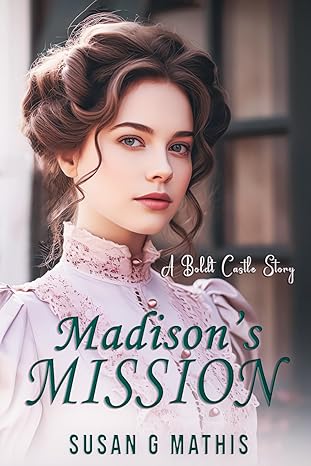

Set against the lush backdrop of the Thousand Islands during the Gilded Age, Madison’s Mission is a heartwarming historical romance that follows Madison Murray, a devoted lady’s maid to the ailing Mrs. Boldt, as she navigates grief, love, and personal purpose. The story unfolds around the construction of the grand Boldt Castle, a real-life monument to love, as Madison’s world entwines with that of Emmett O’Connor, the castle’s construction foreman. With faith and courage as her guide, Madison must confront painful memories and uncertain futures while discovering unexpected hope and the possibility of love.
I was pulled in right away by the vivid descriptions of the setting. Susan Mathis paints Heart Island and Boldt Castle with such affection that you can almost hear the river lapping at the shore and feel the spring sun cutting through the mist. The writing has a gentle rhythm to it that mirrors the emotional cadence of the story itself. I liked the slow build between Madison and Emmett; it wasn’t forced or too polished. There’s something really comforting about the way Mathis lets the characters take their time, especially in a world that feels so rich in tradition and expectation.
The heart of the story is Madison’s inner journey, and I found myself really rooting for her. She’s lost so much, and her devotion to Mrs. Boldt feels honest and deeply earned. I also appreciated that the romantic thread with Emmett didn’t take center stage in a cloying way. It’s balanced with themes of purpose, grief, and faith. That said, some of the villainy (especially with Bruce Clawson) felt a little too on-the-nose, like the classic “bad guy” mold. But it didn’t ruin the ride. The story still delivered enough real emotional moments to keep me invested.
I’d recommend Madison’s Mission to anyone who enjoys historical romance with a strong sense of place and a thread of faith running through it. If you like sweet stories about finding strength in unexpected places and believe that love can come quietly, patiently, and with a bit of divine timing, then this one’s for you. I closed the book feeling a little misty-eyed.
Pages: 328 | ASIN : B0F9QQ5N8V
Orphans of the Living: A Novel
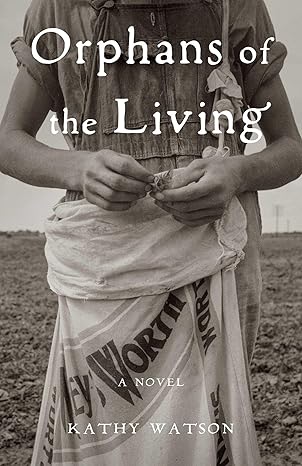
Orphans of the Living is a novel steeped in generational trauma, racial violence, and the slow unraveling of the American dream. Kathy Watson tells the story of Lula Stovall and her tangled family history, spanning from a Mississippi plantation in the 1920s through decades of poverty, migration, and social change. Lula, a white sharecropper’s wife, becomes both victim and agent in a life defined by loss and desperation. The novel, inspired by Watson’s own family, shifts between perspectives and decades, revealing how choices, often forced, sometimes chosen, echo through generations. It is part historical fiction, part personal reckoning, layered with the grit of real events and imagined truths.
Watson’s writing hits like a storm. The language is raw, unvarnished, and aching with honesty. The prose feels lived-in, like the old quilts and wood stoves that fill her characters’ homes. The pain is immediate and unrelenting. Lula’s desperate act with a piece of fencing wire early in the book stunned me. Not just because of what happened, but because of how real it felt. Watson doesn’t write for comfort. She writes to bear witness. There were moments when I had to put the book down and walk away, not because I didn’t want to keep going, but because it hurt too much to stay in the scene. That kind of writing is rare.
But it’s not just the writing that stuck with me. It’s the ambition of the book. Watson dives deep into race, class, history, and motherhood, often all at once. She gives space to the Black characters in Lula’s orbit, making sure they aren’t just there to prop up a white story. Violet Byrd, especially, is a force. Her presence radiates power and calm in a world built to crush her. The author makes the brave decision to include racist language and brutal events for historical accuracy. Nothing in this book is simple. No character is purely good or purely bad. Everyone is just trying to survive.
Orphans of the Living is not just a story about one woman’s brutal life. It’s about inheritance. What we’re given, what we pass on, and what we bury. I respected the story deeply. It’s a hard, unblinking book that left me gutted, moved, and wide awake. I’d recommend this book to readers who aren’t afraid of discomfort. If you’re drawn to stories like Jesmyn Ward’s Salvage the Bones or Toni Morrison’s The Bluest Eye, this will resonate. It’s a hard read, emotionally, but one worth sticking with. Anyone interested in Southern history, generational trauma, or the quiet violence of poverty should read this.
Pages: 352 | ISBN : 978-1647429782
The Image Maker

The Image Maker is a historical novel that follows the intertwining lives of three ambitious men, John Mather, Charles Miller, and Patrick Boyle, as they chase opportunity, legacy, and identity in the booming Pennsylvania oilfields during the Civil War era. Mather is a driven photographer obsessed with capturing the rise of the oil industry. Miller, a soldier turned industrialist, transforms hardship into wealth through sheer discipline. Boyle, full of restlessness and bravado, joins the Union army as a wide-eyed teen and matures through the brutality of war. Their separate but overlapping journeys unfold across muddy roads, oil-slicked rivers, and tense political moments, painting a vivid portrait of ambition, loss, and grit in 19th-century America.
What struck me most about this book was how real the characters felt. I found myself rooting for Mather even as he neglected his wife to chase photos of oil gushers. He was flawed but fascinating. His obsession with documenting progress, even if it meant losing himself, hit a nerve. The writing was clean, not flowery, which made the emotions hit harder. Flanders doesn’t drown you in exposition. Instead, she invites you into the sweat and smells and hunger of the time. It felt like watching history from behind the lens of someone who was living it, not reading it from a textbook. The story had a pulse, even in its quiet moments.
There were times, though, when some transitions were abrupt. At times, I would have enjoyed seeing the characters wrestle with the weight of what they were doing. Especially Boyle, his growth was interesting, but I wish we’d stayed longer in his head during those pivotal moments. Still, I was impressed by how well Flanders balanced historical detail with forward momentum. You don’t need to know a thing about oil or the Civil War to be pulled in. It’s the people who keep you turning the pages.
I’d recommend The Image Maker to readers who love character-driven historical fiction with a sense of place and a heartbeat. If you like stories about ambition, sacrifice, and chasing something bigger than yourself, even when it costs you, you’ll probably get something out of this. This book reminded me why I love historical fiction when it’s done well. It doesn’t just tell you what happened, it shows you what it felt like to live through it.
Pages: 272 | ASIN : B0F7M1FBSY
The Altar of Victory
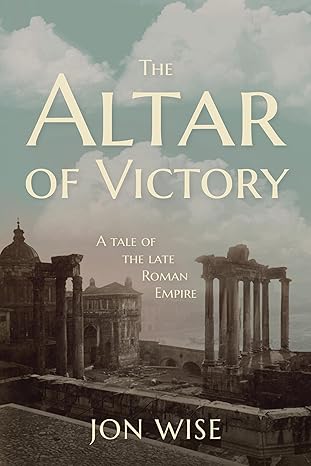
The Altar of Victory is a historical novel that plunges the reader into the waning days of the Western Roman Empire, centering around the death of Emperor Valentinian I and the political maneuvering that follows. Set in 375 A.D., it opens with Valentinian’s dealings with barbarian tribes and internal dissent, leading to his sudden death after a fit of imperial rage. The story then shifts into high-stakes political chess as the ambitious general Merobaudes races to install young Valentinian II on the throne before rivals can seize control. Along the way, the novel wrestles with themes of legacy, power, faith, loyalty, and the slow unraveling of an empire.
I found myself immediately immersed in its stark, lived-in world. The writing is richly atmospheric and historically informed, without ever feeling like a lecture. Every decision, every letter, and every small detail, like the crack in the aqueduct or the placement of a chair, feels purposeful. The prose is tight, clear, and evocative. What struck me most was how human the characters felt, especially Valentinian. He’s brutal, weary, proud, and oddly sympathetic. When he collapses mid-sentence, the emotional weight lands hard. The tension is just as strong in the quieter moments, furtive whispers in palace halls, long rides through uncertain terrain, as it is in battles and tribunals. I especially appreciated the balance between dialogue and action; the pacing kept me glued.
That said, what I really liked was the depth of the ideas. The book takes a hard look at power and how it mutates in uncertain times. The clash between the old gods and Christianity is not just window dressing; it’s a lens through which every character sees the world. Merobaudes, in particular, is a fascinating figure. He’s clever, opportunistic, not fully Roman yet entirely molded by Rome’s ideals. The women in the story, especially Justina and Mirjeta, are sharp and compelling, with agency that matters. There’s also an aching sense of decay in every corner of the empire, ruined towns, forgotten monuments, fading gods, that gives the story a haunting quality. I found myself thinking a lot about how empires die, not just politically, but spiritually.
I’d recommend The Altar of Victory to anyone who enjoys political intrigue, ancient history, or character-driven stories with bite. It’s a slow burn, but a rewarding one. If you like your historical fiction thoughtful, gritty, and emotionally textured, this one delivers. It’s not light reading, but it’s deeply satisfying, and in more than a few places, surprisingly moving.
Pages: 537 | ASIN : B0DCQ783YW
Conflict Over the Centuries
Whispers Through Time follows a successful writer whose life is upended when a former lover reappears with a stack of photographs and a secret about her origins, leading her on a journey of cultural identity and into a decades-old mystery surrounding the American Indian Movement. What was the inspiration for the setup of your story?
The inspiration for Whispers Through Time came from a trip my husband, Kevin, and I made in 2000 to South Dakota, which is a truly magical state. While there, we visited, among other historical places, the Pine Ridge Indian Reservation, the Wounded Knee Memorial, and the American Indian Movement (AIM) Museum, which commemorated AIM’s 1973 Occupation of Wounded Knee. As I stood beside the Wounded Knee Creek, near where the original massacre had occurred, I had a strange, empathic experience that changed my life…and gave me the most important kernel of truth to build on in Whispers Through Time: Heroine Sierra Masters learns that through her newly-discovered Lakota maternal bloodline, she can receive visions that help her ‘see’ historical mysteries and solve them.
The supporting characters in this novel were intriguing and well-developed. Who was your favorite character to write for?
That’s a really hard question because I love them all, but I think – outside of Sierra Masters – my favorite character to write had to be Nathan Winterhawk. He was based on several Lakota elders I met while on our vacation, or have followed over the years. He came to life immediately. His humor and optimism were interspersed with his love of tradition, and his right-below-the-surface, always-simmering rage was almost eerie in its truth. His dialogue and unusual way of expressing his feelings wrote themselves, as did his compassion for Sierra’s situation. He was certainly the easiest character to write because I felt like I knew him intimately after 20 years of research.
What were some themes that were important for you to explore in this book?
These are really great questions – thank you so much! More than anything else, I wanted to tell a really great story.
But I also wanted to show both sides of the White/Indian conflict over the centuries and to explore the vantage point of both ethnicities, from a historical view as well as from the White, without making the novel a political commentary of left vs. right. I think we’ve had enough of that. I also wanted to illuminate to people of all races across the US and the rest of the world the truth about the 1973 Occupation of Wounded Knee, and what AIM was trying to illustrate by taking it over. Finally, I wanted to create a real, honest-to-God love story between a man and a woman that was long-lasting with real heartache that had occurred many years earlier, but still affected them now.
When will Book Two be available? Can you give us an idea of where that book will take readers?
I’m nearly finished with the first draft of Journey of the Heart, Book Two of the Whispers Through Time series, so I don’t know at this time when it will be out. It will take readers into Comanche Indian territory on the Llano Estacado of Texas, a centuries-old treasure hidden in a canyon located on a Panhandle ranch belonging to Sierra’s best friend’s grandfather, and the final truth about a young girl with red-gold hair captured by Comanches during the 1860s.
Author Links: GoodReads | X (Twitter) | Facebook | Ronni Hoessli | Website | Amazon
Hunter Davenport realizes the evidence he’s shared with Sierra could indeed destroy her—but it could free her as well. The decision is yanked from her hands when the past and present collide through a historical portal on sacred Native American land. Will she take the gift that is offered? And will Hunter do what he didn’t do twelve years earlier—stand by her? Only time will give them their answers.
“What if ….”


The Secret Hamlet follows a brave and intuitive young woman gifted with a mysterious spiritual connection who gives birth to her daughter under extraordinary circumstances, causing her and her found family to seek a life away from the threats. What was the inspiration for the setup of your story?
It started with a “What if ….”. The ongoing barrage of news and media was woven with overwhelming stories around war. Brian starting thinking … Are women starting these wars? Are they involved in the planning? What if they did … and they were. Would the world be a different place today? Women aren’t the power brokers at the war tables. They, and children, are always the victims. What if women could have a deep and ongoing voice and strength?
Originally, more books were planned, but as we dove into it, multiple changes happened. More characters evolved. They spoke to us—even challenging some of the situations we wrote and the dialogue used. Skills started to surface in book 1, The Secret Journey that weren’t originally thought of, they just bubbled up as we wrote together—never in our minds in the beginning.
Brian had a first draft and joined forces with Judith, someone who had written several books and had an expertise in writing about women. Wanting to help Brian get the book done, the characters took her over, waking her at night. She was committed to completing the book, not realizing that they had a solid series in their hands.
We write differently from other partners. One of us will start a chapter in a Word document, then it’s Zoom time where Judith becomes the wordsmith and types away as they both talk, view, and verbally write together for a two or three hour stretch nonstop in a full collaboration.
Typically, we complete a chapter within one to two sessions. During those sessions, we banter back and forth as Judith writes and talk forward as to what we see is coming or needs to be created to fill a void that has bubbled up as we work together. What works here is we are both in the same place, with the same mind/talk think., bouncing live ideas off of each other … and then a “Yeah, that works…”
I found the characters in your story to be relatable and engaging. What character did you enjoy writing for?
Always Nichol and what we could do with her. The “what if she …” was a common phrase between the two of us. Nichol became part of us, almost like family—the one who bypassed fear did what needed to be done. Judith loves to describe her as a “badass young woman who can take down four men in one minute with a bow and arrow—something that was never imagined in the beginning. As Brian says, “Why not have a young woman do great things, unexpected things … why is it always the men in stories?” We let Nichol’s vision become the roadmap for us … often not knowing what she would reveal as the writing evolved.
The monk Timo was just this kind man who was open for Nichol to be what she was and would become. His nonjudgment has become a huge strength in her … and himself. Timo was always going to be a good guy and friend. We didn’t see him as a major character and he let us know he was and will be forward in the series.
Shadow, the wolf pup introduced in the first book, The Secret Journey, was a “bubbled up” storyline that became a major in all the books. As a protector of Nichol, she’s one smart wolf, reading sign language and anticipating Nichol’s and her children’s needs.
Was there one that was more challenging to write for?
Book 1, The Secret Journey introduced three cruel characters—Astrid the cruel mother, Fredric the vicious half-brother, and Priest Loupe who dripped with everything bad about the church. Astrid withers away in The Secret Hamlet, but we allowed Fredric and Priest Loupe to gather in building turbulence throughout and we planned deliciously for their downfall. What awful things could we do? You will see in Book 3 The Secret Rise!
What were some themes that were important for you to explore in this book?
Women are hot! Women can be smart … Women can get it done. Women can meet and handle challenges. And that working together works. The theme of family and caring for others, even when they are family, is important—for them and for self. The power of building a community and creating a gathering place where the glue can be spread and trust developed.
In the beginning of The Secret Hamlet, with Nichol and her family on the run from the greedy and evil Priest Loupe, she comes across a young woman in a daze who recently gave birth from a rape and not wanting anything to do with the baby. She and the infant were thrown away by the young woman’s family. Instantly grasping the situation, Nichol, on the run herself, promises her sanctuary and saying, “Your child will become my son. All I ask is that provide him milk until he no longer needs it. I will care for him with my infant daughter.”
Where does the story go in the next book, and where do you see it going in the future?
Empowerment runs through Book 3 The Secret Rise and the mystical Lady remains with her, her three children, and those she is in close contact with. Also scandal, tragedy, and triumph. Her strengths continue to grow and she now sees variations of them within her children. Nichol becomes a trusted advisor to Duke Richard—saving his life—and Shadow has pups, introducing them to become heroes and setting the stage for Book 4, The Secret Awakening.
Author Links: X | Facebook | Website
WINNER! American Fiction Awards … Fantasy Historial Fiction
Can the Hamlet of Harmonie Remain Hidden?
It’s the 11th century and Nichol with an infant daughter must escape Paris with her extended family. In Book 2 of the Harmonie series, The Secret Hamlet, the power of Nichol is turned loose. At her side is Shadow, her wolf-dog. In the bitter winter, she has become the target of the ruthless priest Loupe and her evil brother Fredric, both in pursuit of her and her daughter, Lucette.
With her expanding vision and skills coupled with the guidance of the Lady, Nichol leads her family, and those in need, to the creation and development of Harmonie. Hidden within the Kingdom of Normandy, Harmonie abuts No Name, another hidden hamlet.
Will the jeweled dagger stay in the hands of the rightful owner?
Will Nichol’s friendship with the new Queen of England benefit both?
Will the alliance with the Duke of Normandy protect the Harmonites?
Will more secrets be revealed by Nichol, Robert, Ezra, Helene, and Timo?
And … will the alliances last? Will the Lady stay by Nichol’s side?
The Secret Hamlet is Book 2 in the Harmonie series.
Authors Brian Barnes and Judith Briles weave a book series for the reader to open and fall into. It’s historical fiction that unravels the 11th century. Out of the darkness comes the empowerment of Nichol … a sanctuary, and the revelation of what women with vision can achieve.



 LITERARY TITAN