Blog Archives
Walking Their Walk

All About Us follows a young woman living in the height of the Jim Crow era as she and her siblings fight seemingly endless obstacles in search of a brighter future. What was the idea, or spark, that first set off the need to write this book?
As flight attendants, we often had nice layovers in New Orleans. It was 1995. I flew with a co-worker who was from Yazoo City, Mississippi, a place I had never heard of. My co-worker asked that I ride the three-hour drive with her to visit relatives. Upon entering the city, I was surprised. I could see how downtrodden the area was. Yazoo City’s downtown is a place with colorful dilapidated buildings surrounded by poor areas. I knew growing up that my family, like many other black families, was poor. However, the city was shocking.
The residents were poor, poorer, and poorest. I witnessed families without running water and electricity. Sagging tin roofs appeared to be the norm. Thick plastic used as makeshift barriers for windows and doors. Houses without indoor plumbing. The need for infrastructure was visible.
This was a wake-up call for me to write a story about poor blacks. Of course, I knew I would insert in this story a few experiences of my own growing up poor, as well as friends and neighbors I once lived around. I knew I had a story to tell and blending other’s experiences with my own would, maybe just maybe make a great novel.
What was your approach to writing the interactions between Caiti and her siblings?
Realizing that siblings play an important role in the development of social skills, I wanted to incorporate pretend-play interactions between younger and older siblings. I felt this could teach empathy, sharing, and cooperation between the characters.
It was important that nonverbal interactions be established early on. I did not want too many speaking interactions with the younger siblings until later in the story. After making that decision, I decided to showcase the younger siblings by taking their personalities, and rather than have dialogue, their physical mannerisms would lead mostly until they were a little bit older.
There is a lot of time and care spent with descriptions and building the setting and tone of the story. Was this out of necessity to develop the depth of the story, or was it something that happened naturally as you were writing?
Definitely a necessity. Giving vivid descriptions was an attempt to make the reader feel as if they were right there with the characters, walking their walk and experiencing their pain, joy, and their surroundings.
What is the next novel you are working on, and when will that be available?
Tainted Money, how it ruins lives, relationships, and at times murder, is about a young male Venezuelan, named Vincent, in the United States illegally. He meets Riley and falls in love with her. Months later in a convenience store, he purchased a lottery ticket and won two million dollars. Apprehensive about having anyone cash his ticket was wearing him down.
He finally selects Riley as the one person he could trust with the winnings. He would often think of the things his winnings could mean for him. He would hire an attorney to help him obtain legal status in the USA. Start his own business and perhaps purchase a house and marry Riley.
Riley cashed in the ticket and disappeared. After a few days, he set out to find her. He visits the places they had ventured together. He sought out her friends and relatives and they all claimed to have no knowledge of her whereabouts. He was becoming angrier and angrier at Riley. Why and how could she do this to him?
It now becomes a manhunt for Riley who was skilled with firearms. Although Vincent was not one who was interested in firearms. He had migrated from a country where guns were laid out like your favorite coffee mug.
It soon becomes a cat-and-mouse game. The one thing Vincent was good at was a slingshot. It had saved him and Rico, his traveling buddy, from a brutal attack as they made their way through the dangerous jungles of Venezuela.
Stay tuned, the book will be out in the summer of 2024.
Author Links: Goodreads | Amazon
Horrible conditions beat down the older kids, buckling their spirits. Their strong determination to protect their family while simultaneously being pulled in opposite direction resulted in a life of early labor, despair, anxiety, and subsequent murder. One child, scarred for a lifetime, something Pres and Caiti must keep to themselves. A best friend admits at a youthful age a secret they both must keep until their friend tragically meets his death.
Determined to remove themselves from their troubling past, was not an easy thing to do, particularly during the height of the Jim Crow era. One by one each of the Morris children left home in search of a better life, gambling on their dreams but not without obstacles. Their adult lives came with tragedies they never imagined.
Literary Titan Book Awards – Oct 2023

These books masterfully craft universes, breathe life into unparalleled characters and weave plots that keep us hanging on every word. With innovative themes and a knack for turning words into elegant prose, these stunning books effortlessly elevate the art of storytelling. Here’s to the brilliant authors who’ve turned fresh ideas and heartfelt narratives into beautifully written journeys. Your remarkable talent deserves every bit of this recognition.
Award Recipients





The Mole Vol X NWP Sextet: In Defence of Peace Not War by Ron Raye
Greenhorn by Cheryl Hunter
Women Leading the Way Peace by Mitchell Katy Garner
Visit the Literary Titan Book Awards page to see award information.
Literary Titan Book Awards October 2023
Honoring the talent of brilliant authors who captivated us with unique writing styles, vivid worlds, and compelling characters. Delve into a universe of original ideas, celebrating books that not only mesmerize us but also stand out with their innovative concepts and extraordinary narratives. Join us in applauding the dedication and hard work of these exemplary authors as we spotlight and praise the magnificent realms they’ve brought to life through their award-winning books.
Award Recipients


66 MINUTES by Jeffrey Arnold
Visit the Literary Titan Book Awards page to see award information.
Connecting the Ancient and Modern Worlds

Pompeii Fire features two enthralling romances, one set in ancient Pompeii and the other set in modern times. What was the inspiration that created the fantastic journey your characters go on?
Right before the pandemic, in January 2020, I took advantage of an opportunity to visit Pompeii, Herculaneum, and Naples. I realized that there were stories to be told; every character in the ancient part of the book is based on either a documented person (like Stephanus, the fuller) or a set of remains. I wanted to give voices to them. I also wanted to connect the ancient world to the modern one, to show that people are not so very different, no matter what era we’re in. We all want to live safely, have enough food and water, good shelter, and loving relationships. Making Damiano and Stephanus analogous to Drusilla and Suetonius allowed me to make that tie.
What character did you enjoy writing for? Was there one that was more challenging to write for?
Suetonius was difficult; I had to really delve into the world of gladiatorial sport, and it definitely wasn’t a pretty picture. I had to deal with enslavement, violence, and the social mores of Ancient Rome, which are far different than those of the present day. By the same token, I loved writing Drusilla; she lives within the strictures of her time but knows there is more out there. She dares to dream of something more than marrying her father’s friend (most marriages during this time period were arranged, with the bride being as young as 12 or 13 years old and the groom usually much older).
What were some of the emotional and moral guidelines you followed when developing your characters?
I believe that every character is the hero in his or her own story. No one does things without a reason. So, even when they’re not a good person, such as how I portrayed Stephanus, they aren’t behaving from a place of evil. Now, for all I know, Stephanus could have been the nicest guy in Pompeii; he was a freedman who owned the fullonica, which is where clothes were cleaned, and he had a great deal of money. His motivation is that he doesn’t want to be told “no” ever again. So, he behaves accordingly. The main guideline I followed was “How would an ordinary person have behaved in this circumstance?” After all, these characters are not nobles at court, or senators; they’re merchants and slaves, for the most part. However, I also wanted them to experience a full range of emotions.
What is the next book you are working on, and when will it be available?
I’m working on two projects right now. “Second Chance in Shalbourne” is the follow-on to my award-winning contemporary romance, “Rose in Bloom.” “Highland Fire,” which will take place in both modern-day and 1690s Scotland, is in the research phase right now. Look for both of them in 2024.
Author Links: GoodReads | Facebook | Website
Drusilla was the woman of his dreams. Suetonius swore his eternal devotion to the merchant’s daughter.
A gladiator’s word is his bond.
Present Day
Classics professor Damiano De Luca feels ridiculous in the gladiator costume he wears after losing a bet, and seeing Stephanie Marlowe waiting in line outside the Pompeii Archaeological Park makes him feel even worse. She’s gorgeous … and looks so familiar. Without thinking, the handsome Italian addresses Stephanie in the old tongue: “Salve, Drusilla.”
Her reply? “Salve, Thraex.”
Through untold disaster in the recesses of time and up to the present day, Dom and Stephanie must discover the truth about Pompeii Fire.
Plowman: Harvest of Grain and Innocence

Plowman: Harvest of Grain and Innocence by Charles Bruckerhoff is a captivating exploration into the literary awakening of two young girls, Stella and Hana. Guided by their Academy’s resident writer, Mrs. Benedictus, they unearth compelling discoveries in their grandparents’ attic. This find propels them into their maiden literary venture as they immerse themselves in wartime journals from their ancestors, leading to transformations in their views on war, peace, and the human condition.
Bruckerhoff brings to life the harrowing realities of warfare, embedding them in intricate settings and poignant themes. Readers confront stark episodes of inhumanity, such as the chilling portrayal of an assassin poised to strike down an aged civilian. The tale also boasts an eclectic ensemble of characters, encompassing valiant war heroes, spiritual leaders, fearsome assassins, young soldiers, and, notably, samurai and prodigious scholars.
One of the standout features of Bruckerhoff’s work is his ability to traverse a plethora of themes — from war and theater to the nuances of writing and education — testifying to the narrative’s vast expanse. The author seamlessly intertwines diverse historical periods, unfurling a vast spectrum of intriguing characters. A testament to this is the reader’s effortless journey from the realm of a 16th-century samurai to a 19th-century headmaster’s pursuit of literary excellence, all within a mere two chapters. This multifaceted approach not only enriches the narrative but also ensures sustained reader engagement.
Yet, at its core, Plowman: Harvest of Grain and Innocence challenges us with profound queries concerning classified information, accountability, and the driving forces behind genocidal campaigns. As a revealing historical odyssey and a cerebral journey, it presents invaluable reflections on warfare, education, and the essence of understanding. While I think there’s room for enhancing certain narrative elements, Bruckerhoff’s offering remains a riveting read, ushering readers into deep introspection and reflection.
Pages: 293 | ISBN : 978-0-9905838-9-9
The Cost of Progress

A Delicate Marriage follows two people who, during their marriage, change and develop opposite political views causing a rift paralleling the country’s own troubles. What was the inspiration for the setup of your story?
My grandparents’ love story was the original inspiration for the book. My grandmother was a debutante from a wealthy family, and her father strongly objected to her infatuation with my grandfather, who came from very modest means. Their courtship survived my great-grandfather’s interference, and they married and lived happily ever after. But that doesn’t make for good fiction, so I decided Isa and Marco would have opposing political views. That enabled me to illustrate how being a U.S. colony has affected the island in both negative and positive ways. The give and take in Isa and Marco’s marriage mirrors the relationship between the U.S. and Puerto Rico, which remains fraught with tension to this day.
What kind of research did you do for this novel to ensure you captured the essence of the story’s theme?
When I set out to research the 1930s to 1950s in Puerto Rico, I ended up getting an education. I learned how the independence movement was largely silenced, how the population was manipulated by politicians, and how the hopes and dreams of the Puerto Rican people were exploited in the name of progress. Whenever possible, I accessed primary sources like speech transcripts, the writings of the politicians of the time, government records, and newspaper accounts of current events. I also interviewed historians and experts in different fields of study relevant to my work. And, of course, I had a first-hand account of the time from my grandparents and other friends and relatives. It’s easy to see what happened in retrospect. But many of those living at the time only saw the benefits of progress and not its potential cost.
What were some goals you set for yourself as a writer in this book?
Well, I wanted to, first and foremost, write a good, compelling story. But I also wanted to bring to light Puerto Rico’s history and continued status as a colony. Most Americans know very little about the island, even though it’s part of the U.S. I’ve been asked if my home was near a village (I lived in a high-rise on the beach in the city of San Juan) if I have a green card (Puerto Ricans are U.S. citizens), and why I don’t “look” Puerto Rican (we come in all shades, from pasty white to darkest ebony). My college roommate freshman year called me “María” for two weeks. I guess she’d seen West Side Story too many times.
So I wanted to tell a good story wrapped around the history of my island, particularly during the first half of the 20th century, which was a time of tremendous change. I hope readers enjoy the ride while falling a little in love with Puerto Rico.
What is the next book that you are working on and when will it be available?
While conducting research for A Delicate Marriage, I learned that the birth control pill was tested on low-income Puerto Rican women in the late 1950s. The women were not told they were participating in a drug trial, and the results were problematic. Nevertheless, the pill received FDA approval based on the results of this study. That’s my next story.
Author Links: GoodReads | Twitter | Facebook | Instagram | Website
Isabela, a wealthy woman, sacrifices her artistic aspirations to marry Marco, a penniless man dedicated to improving conditions on the island. As the island’s insular government enacts pro-U.S. policies, Marco builds a real estate empire while struggling to maintain his populist principles. Meanwhile, Isabela feels unfulfilled in her traditional role as a wife and mother and becomes disillusioned with Marco’s shifting moral compass. She begins to identify with anti-U.S. factions, leading a dangerous double life that puts her family in peril.
As political violence threatens their paradise, Isabela and Marco question whether their marriage, like the island’s relationship with the U.S., should continue. Margarita Barresi’s debut novel celebrates Puerto Rican culture while delving into themes of class, oppression, and the effects of colonialism through the lens of a marriage.
The Magic Claymore


Embark on a transcontinental and generational journey with The Magic Claymore, a riveting historical novel with enchanting threads of fantasy. Set against the rugged backdrop of 1746 Scotland in the unsettling aftermath of the Battle of Culloden Moor, we are introduced to Robert Cambelton, a loyal lowland Scot, whose discovery of his youthful cousin Bruce’s lifeless body sets the stage for a tale interwoven with mystery, familial bonds, and supernatural elements. With the cousin, Bruce, lies a parchment and a strip of family tartan cloth, intriguingly linked to a mystic claymore sword reputed to harbor magical properties.
Fast forward to a century later, in 1850, as we meet the Honourable Dougal Cambelton, a descendant of Robert, who, after a tenure in the Bandol War in Africa, finds himself thrust into a maelstrom of conflict and accusation in his home village. An old adversary, a tavern fight, and an ensuing allegation of attempted murder precipitate Dougal’s hurried escape back to the African continent. There, a serendipitous encounter brings him into possession of the selfsame Scottish claymore, revealing its astonishing and potent magical capabilities, propelling him into adventures that defy imagination.
The author intertwines past and present, compellingly connecting the Cambelton lineage and the enigmatic, power-laden claymore. Readers are submerged into vibrant depictions of 18th and 19th-century Scotland and Africa, enveloped by the atmospheric historical settings and entwining experiences of the characters.
The Magic Claymore is a rich tapestry of historical detail, from the poignant struggles of the Jacobite uprising to the shattering aftermath of the Battle of Culloden Moor, paired intricately with an inviting fantastical element. This novel explores themes of loyalty, heritage, and the indomitable spirit of the familial connection, resonating powerfully throughout the unfolding tale.
Delve into the deeply sculpted characters of Robert and Dougal Cambelton, relatable and vividly realized, guiding readers through their respective struggles, duties, and heartfelt desires. The narrative is heightened with unexpected twists and turns, anchoring the reader’s attention from the compelling start to the satisfying finale.
The Magic Claymore is a captivating, meticulously crafted novel that perfectly blends history and fantasy. It beckons to those who find delight in historical fiction, spiced with undertones of magical realism and adventure, promising a read that is as enchanting as it is intellectually stimulating.
Pages: 216 | ASIN : B0CG3GKZQD

Unlikely Friends
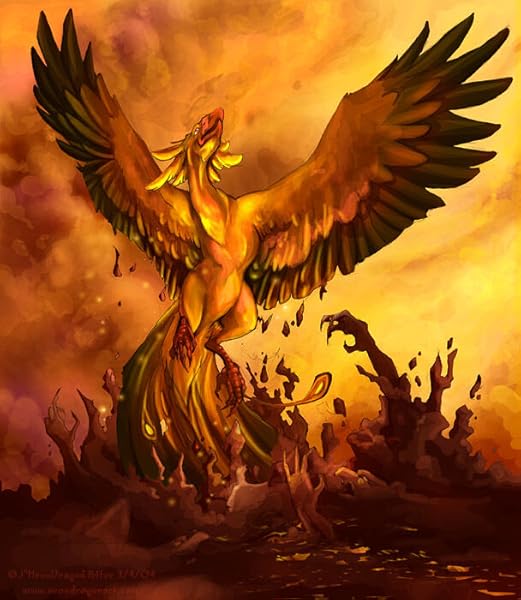
Brazzaville: A Sequel to Casablanca picks up where the iconic film ends with the memorable main characters fighting for their lives in the midst of Nazi-occupied Europe. What was the inspiration that drove you to share your vision of this sequel with readers?
First of all, I have loved Casablanca ever since I first saw it, and I never tire seeing it again and again. My curiosity finally got the better of me, and I decided to explore what happens after the movie ends with Rick Blaine saying to Louis Renault, as they walk into the fog, “I think this is the beginning of a beautiful friendship.” Where does such an unlikely friendship lead these two men? I wanted to see what the war might do to them and how they face life and death challenges.
Sure, Ilsa and her husband escape to Portugal, but Lisbon is an open city where English and Nazi spies work the streets. A big catch like Victor Laszlo might escape spies in Morocco but not so in Lisbon. Rick’s obligation to the people who helped him in Casablanca drives him to forge alliances with the French Resistance and free his friend Sam, Mister Ferrari, and others. Through their efforts in North Africa, we witness as this dedicated group of fighters keeps the Straits of Hercules open and helps to turn the tide of the war in North Africa and beyond. The concerted efforts of this close-knit family of friends help to thwart the advance of the Third Reich.
I imagine the research for this novel was extensive. Can you share with us a little about your process?
I research as I write, wherever the story takes me. I can do this primarily through many historical sites online which corroborate facts and offer insights into war, geography, and war-time situations that further my story. Writing a historical fiction novel gives me the opportunity at times to adjust facts that don’t exactly fit the dynamics of my story, but I try to be as historically accurate as possible.
Were you able to achieve everything you wanted with the characters in the novel?
Yes. I think so. We see how the lives of two ordinary people make a tremendous difference in the conduct and the prosecution of the war. We begin to see how a few individuals in a concerted effort make sacrifices that matter and step up to the challenges that confront them.
Will there be a third installment?
We could continue with the Algerian push for independence from France after the war. The idea that intrigues me is how Rick, Lisa, and Louis deal with this revolutionary movement and if they do or do not support the will of the Algerian people.
Right now, I’m working on a dystopian novel with themes that are more current and poignant.
If not, what can readers expect to see from you next?
We have several books already published that might interest readers:
Animal Court allows animals to put an African prince on trial for his crimes against nature. The judges, jurors, and attorneys are all animals. Even the news reporter for ANN (Animal News Network) is an animal. This modern fable reads like trial proceedings in a courtroom, and it is both educational and amusing. A story for all ages.
The Lilium is about the children of Lilith, the mother of demons, and how a few of her offspring reject their demonic impulses to try to find redemption and attain their humanity.
Also, The Apocryphal of Lazarus. Lazarus, the brother of Mary and Martha, is raised from the dead, but he cannot die. What happens to him as he never ages and outlives one family after another? Where does he go? What does he do? We follow him until he finally starts seeing signs of aging in himself.
Author Links: Goodreads | Amazon | Website



 LITERARY TITAN