Blog Archives
Literary Titan Silver Book Award May 2023
The Literary Titan Book Awards are awarded to books that have astounded and amazed us with unique writing styles, vivid worlds, complex characters, and original ideas. These books deserve extraordinary praise, and we are proud to acknowledge the hard work, dedication, and writing talent of these brilliant authors.
Award Recipients


Visit the Literary Titan Book Awards page to see award information.
Old San Antone
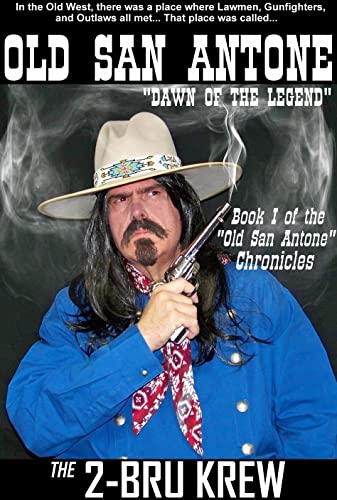

The allure of a captivating Wild West tale is undeniable. The gunfights, horses, cowboys, outlaws, Indians, and rangers have delighted readers’ imaginations for decades. However, Captain Hondo Stone’s amazing story stands out for its raw honesty and vivid depiction of the era. From his early days as an orphaned lone survivor of his family’s homestead massacre to his rise through the ranks, Stone’s friendships, foes, and steadfast principles made him a Texas legend. Against overwhelming forces of lawlessness, corruption, and depravity, the fight for what is right is fierce.
Old San Antone: Dawn of the Legend is an epic historical fiction novel authored by The 2-Bru Krew. The authors set out to create an honest and detailed story against the rich and raw backdrop of the realities of the Reconstruction-era American South. This is not a story for those who cannot stomach some improper language or depictions of violence and lawlessness of the late 19th-century American reality. Written in a blunt and direct style, the book portrays real heroes possessing integrity, kindness, and humanity who shine brighter against the uncensored reality they had to live and operate in.
This gripping book is extensively descriptive, full of intricate details, and undoubtedly aimed at a mature audience who appreciates the art of historical fiction. The language is complex, and in some parts, writers use certain spellings to convey the language of certain social groups of the era. Each page will keep the reader intrigued and engaged as they follow complex characters navigating impossible situations and making tough choices.
Old San Antone is a must-read for those who love historical fiction and are drawn to the Wild West era. This book is a shining example of what can be achieved when authors are dedicated to creating a genuine and detailed portrayal of a historical period. In addition, anyone who loves the Wild West and is drawn to complex characters navigating impossible situations will find this book fascinating and engrossing until the end.
Pages: 738 | ASIN : B08XMG8K6M

Soul Scepter

Eric Westergard’s Soul Scepter: Time Marauders transports readers on a thrilling adventure that seamlessly blends history and fantasy. The story follows Will Donovan and his friend, who find themselves in the midst of a battle for a powerful scepter while playing paintball in Idaho. After being chased by a militant organization, they suddenly find themselves transported to medieval England. In this new world, they must navigate through history without altering the course of events.
The book is a captivating page-turner, with action-packed scenes around every corner. The author’s ability to set the scene and develop the characters will leave readers in awe from the opening chapters. From the first page, readers will be drawn into the non-stop action, adventure, and plot twists that keep going throughout the entire novel.
Westergard’s writing style and attention to historical accuracy are admirable, making it feel as though the reader is transported back in time. I could vividly imagine the battle scenes, smell the stench of England, and picture the grandeur of The Tower of London. The more I read, the more invested I became in the characters’ emotions and experiences. The author’s inclusion of themes surrounding depression and mental health is commendable and adds another layer of depth to the story. This is a story of self-discovery as much as a quest to stop evil from altering history. Will’s journey is one that teens will be able to relate to while rooting for him.
Overall, Soul Scepter: Time Marauders is a gripping action and adventure novel through time and medieval England. This excellent book is a must-read for teens and young adults with a passion for fantasy and history. I look forward to reading the next installment in this series and continuing the adventure with Will and his friends.
Pages: 390 | ASIN : B0C2GBTLRH
Magical And Educational
Find Me in Time: Meeting Columbus follows a group of friends with a magical treehouse who travel through time to see history take place in real life. What was the inspiration for the setup of your story?
The concept of time travel has always been fascinating to me, and I wanted to create a story that would not only entertain children but also educate them about important historical events. The idea of a magical treehouse that transports a group of friends to different eras seemed like the perfect way to make the story both magical and educational.
What was your inspiration for the characters and their relationships?
The characters’ relationships were inspired by my experiences growing up and my relationships with my peers. I wanted to show how a group of friends can work together to solve problems and achieve their goals. As society becomes increasingly diverse, I sought to reflect this reality with a wide range of relatable characters that could provide valuable insights and knowledge.
What were some educational aspects that were important for you to include in this children’s book?
Accurately portraying the historical events that my characters experienced was of utmost importance to me. To achieve this, I researched the era extensively and consulted with historians to ensure the details were precise. Moreover, I underscored the significance of learning from the past and how historical events influence contemporary society.
Furthermore, I intended to introduced students to the conflicting versions of history. It is crucial for children to comprehend that history is not always clear-cut, and that diverse perspectives and interpretations can shape our perceptions of the past. By delving into different viewpoints, my objective is to encourage critical thinking and instill a greater appreciation for the intricacy of history.
What will the next book in that series be about and when will it be published?
The next book in the series will take the characters to 1961 to explore the first lunar landing. I’m excited to take readers on this journey and show them what it was like to witness such a historic moment. The book is scheduled to be published in August 2023, so keep an eye out for it!
Author Links: GoodReads | Website
A normal day of hide-and-seek turns into a discovery of a lifetime when five young friends are transported back in time after finding a secret clubhouse at the top of a sycamore tree. Dubbing themselves the Tree House Club, Ashley, Emma, Keith, Aaron, and Harry learn that events of the past didn’t necessarily unfold the way they learned in school.
The treehouse has magical abilities that take Ashley and her friends to Guanahani in 1492, a time the kids requested to witness Christopher Columbus’s first arrival on his voyage to the New World!
There, the friends—dubbed the Tree House Club—meet the kind and generous Taino Lukku-Cairo tribespeople who welcome their new visitors with food and gifts.
It isn’t long before the Taino chief, Tiburon, and the Tree House Club friends see three sailing ships approaching. With history on their side, the kids realize it is the famed explorer, Christopher Columbus, who quickly makes his claim for the Taino’s native land for the Queen of Spain.
The kids soon learn that what their history books did not teach them was some of the lesser-known facts about Columbus, his greedy intentions in Guanahani—or San Salvador, as he named it—and his poor treatment of the humble Taino people.
But the children’s friendships with the Taino put their own lives in danger from the European colonists. Will the treehouse save them in time? Order your copy now and find out!
They Conquered And Destroyed Civilizations

History of Lies follows two people attempting to unlock the secrets of past lives in order to stop a powerful organization from controlling the world. What was the inspiration for the setup of your story?
This book has been a long time in the making (over 15 years), and the original concept was much more basic. My writing partner and I came up with an idea for scientists to find a way to help blind people see. They created a technology that converted brain waves to visual images. At first, it worked as they expected, but when they applied the technology to different parts of the brain, the scientists realized they were accessing memories. Eventually, they realized they were memories from past lives. As the ideas continued to flow, the story became bigger and bigger until we considered the concept that there are some people who can remember their past lives, and these people have been manipulating the world for thousands of years. From there, the story required a lot of research because we had to recreate the world’s history under this new paradigm. At times, it was a lot of fun learning about the different historical periods, but it was also complicated as we had to keep track of the various timelines and storylines, but in the end, we were proud of the story we’d created.
The element I’m most proud about is having a story structure where the past not only informs the present storyline (for readers), but the present also informs the past. It sounds strange, but little tidbits that the reader may not be focusing on will come into play, so it works both backward and forward.
What was the collaboration process like for writing this novel?
It was challenging because my writing partner and I both work full-time. That’s one reason the book took as long as it did. The other books we wrote together were much easier because the concepts were more straightforward.
Did you find anything in your research of this story that surprised you?
I learned a lot about the Romans, and they were far more controversial than I realized. Some of their values are questionable, and the way they conquered and destroyed civilizations was also surprising. Many of the emperors were not good people, at least from what we know, which leads me to the next big lesson I learned from writing this story. Many people reference history in a very factual manner, but none of us were there, and we only have bits of evidence. The true history is likely far more complex than we’ve been taught in school.
Do you think there’s a single moment in everyone’s life, maybe not as traumatic as discovering past lives, that is life-changing?
Yes, but just like many key historical events, sometimes you need enough time to pass before you understand the significance of it. When you experience something in the moment, you may not realize the ripple effect that it will ultimately have on your life until you’re several years or decades down the road and you understand just how significant something was. As an example, I was born later in the year, and my mom had the choice of holding me back in kindergarten or pushing me into first grade. I was small to begin with, and I believe that if I had been pushed into first grade, the whole trajectory of my life would’ve changed. I don’t think I would’ve done as well in school or sports. There are of course other moments that you know are significant at the time like getting married and having kids.
Author Links: Website | GoodReads | Twitter
Throughout human history, people have speculated whether we have past lives. In this fast-paced epic thriller, that question is answered—we do. Unknown to the masses, there are a select few who possess the ability to remember them. With knowledge and skills acquired over multiple lifetimes, these individuals are anything but ordinary, and they’ve used their gifts to manipulate the world for thousands of years.
When Ben Preston, a history professor, uncovers the lies created by this clandestine group, he becomes their number one target. Now they’ll stop at nothing to silence him and keep their secrets safe. Ben’s only chance for survival is to learn the true history but doing so means he must face the truth about himself.
From India to Rome and Alexander the Great to seventeenth-century pirates, History of Lies transports the reader around the globe to key moments that changed the world forever—but not the way found in most books.
Filled with real historical events and fascinating details, History of Lies is a unique blend of fact and mind-bending fiction that will keep you guessing and change how you view history.
To Improve Tolerance And Understanding
Homespun follows the people from two small South Carolina towns who struggle with adapting to the changing world. This is an intriguing setup for a novel that is high in social commentary. What was your moral goal when writing this novel, and do you feel you’ve achieved it?
I wanted to showcase the South in a fresh light, and I accomplished that, I do believe. The characters aren’t perfect, but you grow to care about them, and that’s the main moral goal—to improve tolerance and understanding.
Ginny and Jack face a moral dilemma in dealing with her family’s opposition to them seeing one another, but my real purpose in that situation was more along the lines of showing how each party’s stubbornness caused the most lasting harm. Conflict inevitably occurs in all families, but to hold grudges forever can be literally heartbreaking, as we see in Homespun.
Promoting the development of empathy has always been an underlying goal of The Silk Trilogy. I think most novels do achieve this, at least to an extent. Let’s hope that my distinctive characters—for example, Ginny’s domesticity as opposed to Vivian’s more outgoing lifestyle—put that empathy-learning curve on the accelerated track. Empathy makes for kinder, not-so-dismissive people; plus it’s simply intriguing to try to figure out what prompts certain decisions. Everyone has reasons for what they do, even if they’re bat-shit crazy ones—but more often, they’re not.
That said, Homespun is perhaps less motivated this way than the other two novels in the trilogy. I’m afraid it even tends towards campy at times. Maybe that has to do with it being inspired, in large part, by true events or rumors—which are all highly fictionalized. For instance, the story of Henry up in the tree, waiting to jump down on Buford, was inspired by a real-life situation I heard about my great-grandfather. In retrospect, I probably didn’t plumb the true depths of his feelings there, though I suppose I must have seized on some of his rationale.
Neglect is a great evil that can’t so much be applied to Jessie’s host of negative traits, so it seemed only fair to bring it up. It’s one fault that our new antagonist, Zingle Caddell, is imbued with, and it causes his family much grief. With many millions of refugees in the world today—whom I rarely hear about anymore in the news—and more specifically the refugee camps near our border with Mexico, it seems important to be cognizant of what harm comes from neglecting people. Factory farms for livestock animals terribly neglect their basic needs for movement and fresh air as well, violating nature in the extreme—and I suspect those creatures can bear it less well than humans, actually, as we are more cerebral and can escape through deep conversation and within our imaginations, at least.
Each character in this novel is unique and memorable. What character did you enjoy writing for the most? Was there one that was more challenging to write for?
Vivian was the most fun to write, of course! When I was penning the trilogy’s early draft, I even had a dream of Vivian going off and parachuting into the jungle—only afterwards realizing that her personality was being tapped from a friend of mine who really did go rafting down the Amazon. She was her sorority’s president and became an ER doc and ran marathons. She’s working on a book, too, and is an advocate for patients’ rights. She can do anything, and it’s all in the attitude. She’s bright enough, certainly, but there are countless people just as bright and attractive who never have the courage nor the vision to succeed like her. Vivian even looks like her, I realized. The great-aunt whose spot she fills was someone I never met and know very little about—except for that whole baby-giving scene. It was inspired by my grandfather’s indignation, even into his old age!
You might be surprised to learn that Ginny was the most challenging character to write. Her perspective felt narrow, even claustrophobic. Ginny wasn’t a reader, and she was secretive and held grudges—but she was also loving. I was trying to depict how she’d been damaged by her upbringing, absorbing some of Jessie’s behaviors without necessarily sharing her mentality. Those formative earliest years had been different for Vivian, who had her mother, and Gaynelle, who had Vivian, and even for Annie, who had Ginny. I’m afraid, though, that Ginny comes across as more flawed than I’d meant for her to, although some of those flawed aspects of her personality were there, too, in the ‘real’ Ginny, if not to that extent. Her character is based on my granny, a woman who was actually such a comfort to be around that the local hospital once offered her a job to simply come and sit with patients—that’s how soothing she was. I’m convinced I did not capture that portion of her personality very well, and I’m sorry for it. Isn’t it fascinating that she came across as so incredibly soothing—and yet once had a nervous breakdown herself?
As this ends the trilogy, where do you see your characters after the book ends?
Since this is a highly-fictionalized version of my own genealogy, I have a very clear idea—undoubtedly clearer than most novelists—of what happens to all the characters afterwards. The epilogue in Homespun actually gives a broad overview.
What are your plans now that this series is completed? Have you started another story?
I’m writing two separate series, both entirely different. The Silk Trilogy has a slender connection, however, with one of them. In Tapestry: A Lowcountry Rapunzel, the middle book of The Silk Trilogy, there’s a brief discussion—to Rosa Pack’s embarrassment—about how she is descended from King George II. Well, my next book happens to be about King George II’s mother, Sophia Dorothea of Celle. Set in the Baroque era in the Holy Roman Empire, it’s a biographical novel about her life—but in that story, I don’t purposely change the names, nor is it quite so fictional!
You might be surprised to learn that the other series is a YA Fantasy about a runaway princess, a wild boy, and a wolf-dog. At this point it is a duology. It may stay that way, as that was my original intent, but I was surprised at the end of the second novel’s draft when I left it set up for another adventure, as if I couldn’t help myself, so we will see if that’s how it stays. This storyline came into being when we went on a trip to the Poconos, where my favorite childhood author vacationed as well—we’d actually visited Lloyd Alexander near Philadelphia for our first anniversary, so he was high in my thoughts as we headed back to Pennsylvania for another anniversary (when I was twelve, I’d even dreamt that he was my actual father—hence my pen surname). I might have been in the midst of writing Sophia Dorothea’s story at the time of our Poconos vacation, but the connection to Lloyd Alexander called for something different; he had been writing-obsessed during his own Poconos vacation, as well, as he related in his charming book about his wife, Janine is French. I’d already been toying with the idea of starting a fantasy novel in his honor while there, but when I fell sick with a miserable flu early during our vacation and couldn’t go out, that cinched it. I seized the opportunity to begin my first fantasy novel, hoping to draw inspiration through that special place with that amazing fantasy author. I think it might have worked.
Author Links: GoodReads | Twitter | Facebook | Website
Meet Zingle Caddell, who doesn’t regret the destruction left in his wake so much as he is annoyed by it. Figuring no man can continue to have such bad luck, Zingle is waiting for his fortunes to improve. He knows what he likes–alcohol, women, and family, in about that order–and he’ll continue on with them as before. That is, until he’s surprised by a violent encounter with his match, Jessie Bell, when her stepdaughter doesn’t come home as expected. Bad blood is rampant between the Bells and the Caddells by the time Jessie’s daughter and Zingle’s nephew unwittingly fall in love. Forbidden to see one another, the couple must decide how much they’re willing to risk. Is it worth being ostracized from their families? Destitution? Their very lives?
Find Me In Time: Meeting Columbus

What if you could journey back in time, witness historical events firsthand, and unearth the truth? Would such revelations reinforce or challenge our understanding of history? When five close friends discover a magical treehouse during a game of hide-and-seek, they soon realize that its enchanting powers extend beyond invisibility—it can transport them through time. Calling themselves the Tree House Club, Ashley, Emma, Keith, Aaron, and Harry embark on a thrilling adventure to uncover that history may not have unfolded as they were taught.
In Find Me in Time: Meeting Columbus, the first installment in L.T. Caton’s Find Me in Time series, the young protagonists travel back to 1492 and arrive at the island of Guanahani, now part of The Bahamas, just in time to witness Columbus’s arrival in the New World. However, they quickly learn that the historical narrative of a heroic discovery belies the brutal reality: a violent massacre of the indigenous Taíno people, driven by the Spaniards’ avaricious motives. Upon returning to the present, the group vows to share the truth about these tragic events.
Caton’s engaging work of historical fiction, aimed primarily at children and young readers, offers a concise and enlightening history lesson accessible to all. This compelling book provides an informative and eye-opening account of natural history, presented in a manner that is neither tedious nor traumatizing. The story is skillfully crafted, with a well-paced plot that smoothly transitions from one event to another. While the characters may not be intricate, their warm, genuine friendship dynamic underscores children’s inclusivity and open-mindedness when unencumbered by adult biases.
One of the most notable aspects of this book is the author’s ability to portray even harrowing historical events in a delicate yet honest manner. Accompanied by charming illustrations, Caton’s ingenious historical retelling and smooth storyline contain appealing visuals and, most importantly, its critique of the biased way history has often been recorded. It is recommended for young readers and adults, particularly those seeking to gain insight from the perspective of the conquered rather than the conquerors.
As the adage goes, history is written by the victors. So, with eager anticipation for the next installment in the Find Me in Time series, readers will undoubtedly look forward to joining the Tree House Club on their next captivating adventure.
Pages: 57 | ASIN : B0BVVDLFBS
A Lesson in Woo-Woo and Murder
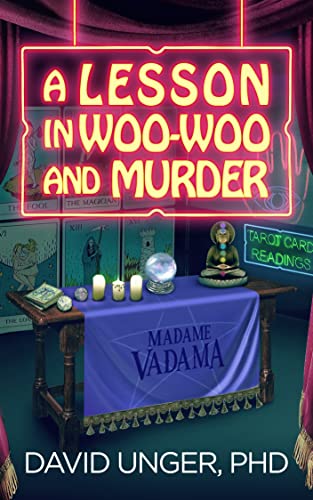
In A Lesson in Woo-Woo and Murder, author David Unger introduces us to David, an unconventional therapist who accompanies his clients on offbeat adventures. Invited by Eve and Sheridan to attend The Whole Life Expo—a diverse gathering of vendors specializing in the new age, natural health, metaphysical, and even extraterrestrial subjects. While not David’s usual interests, he finds himself being drawn into this world and starting to believe. Soon, however, he finds himself embroiled in a mysterious death that may not be an accident.
Unger’s writing style is both witty and direct, immediately drawing the reader into the world of the quirky protagonist, David. By telling the story from David’s perspective, the reader gains an intimate understanding of his thoughts and outlook on events. Unger masterfully sets up the murder mystery at the New Age convention and builds tension throughout the narrative, keeping readers on their toes with unexpected twists. Unger adds some romance in with a psychic foretelling that romance is in his future, though David is skeptical at best when receiving this news.
The novel’s exploration of New Age topics adds a refreshing and engaging dimension to the story, which many readers may find relatable and intriguing. In addition, the diverse cast of characters, such as aura-reading Eve and fortune-telling Madame Vadama, further contribute to the story’s mystique. Initially skeptical of their abilities, David begins to question the reality of their supernatural talents, and readers are drawn deeper into the story’s enigmatic atmosphere.
A Lesson in Woo-Woo and Murder is a distinctive and entertaining amateur sleuths mystery. This engaging novel is highly recommended for those seeking a satisfying and open-minded literary experience.
Pages: 254 | ASIN : B0BSRKGD37



 LITERARY TITAN