Blog Archives
The Beauty of Horror

Ghost Train follows a samurai’s daughter living during the time that Japan is experiencing a battle between modernization and tradition, who accepts help from a kitsune in exchange for confronting the demons rampaging Kyoto. What was the inspiration for the setup of your story?
True events were the inspiration! I’m a former journalist who loves sharing real stories of real people with audiences who can learn or grow from reading about them. Historical events and recurring societal reactions to them can reveal so much about humankind; my hope is we can recognize the harmful patterns in time to break them, so as not to repeat history, but rather, grow and evolve positively from it.
1877 was a pivotal year in Japan; the Samurai Rebellion (a la The Last Samurai) was taking place, roughly 270 years after the events of Shogun. Feudal Japan had just fallen, only to be replaced by Imperial Japan, which saw the re-opening of Japan’s borders to the world for trade and diplomacy after almost three centuries of self-isolation. The world was eager to work with Japan, so the Japanese saw an influx of technology imports and Westernization in a very, very, short time, and I always wondered how that would have affected the human psyche to experience such rapid change.
Today, in 2024, we are living in globalization and information (and disinformation) eras. We know something of rapid changes and waking up to find laws turned upside down, new technologies rolling out, and conflict and agreement between nations. But we also have a greater concept of the world around us, and firmer grasp on greater contexts to these inventions and events, thanks to the internet, social media, and access to journalism. In 1877 Japan, they didn’t have all of the answers at their fingertips, which meant that they often had to fill in the gaps of knowledge on their own — which usually resulted in making up their own answers and pulling from folklore.
Ghost Trains are a real phenomenon that happened in the 1870s and 1880s. Conductors were driving trains for hours and hours (they were much slower then!) and often operated alone, leaving them fatigued to the point of exhaustion. They sometimes hallucinated things they feared: including crashing their train into another one. It’s similar to long-range truck drivers who share their experiences of seeing cars or animals that don’t exist, due to fatigue. But when I heard about “ghost trains” I got to thinking: what if, instead of a rational, science-based explanation, the folklore the Japanese believed in at the time was real? And who would be best to tell this story? I chose a young woman, on the brink of adulthood, who was experiencing a social status change and trying to find her own identity in this new world while witnessing the changes from Old Japan to New Japan. From there, I devoured history books, and firsthand accounts, and researched through thousands of sources, working to tell the story of the summer of 1877 Kyoto.
There is a lot of time and care spent with descriptions of the scenery, the setting, and the story’s tone. Was this out of necessity to develop the depth of the story or was it something that happened naturally as you were writing?
I would say yes — a little of both. Kyoto and its summer atmosphere served as a second main character in some ways; the city was alive, and felt the pain of the changes — both cosmetic and undertones — and breathed and sighed with Maru. The trees bent with the winds both in the air and from the gasp at the Emperor’s decisions. I took a lot of my experience from living in Japan and experiencing summers in Kyoto and weaving them into the story, almost as if I were transposing parts of my diary, or describing photos I had taken.
I really wanted the audience to step into the world and be caught up in the mystery and tension of it all, and help them forget their world around them. When I started writing, a lot of the descriptions came first so I could get a feel for the setting and where the characters would see ghosts and demons, where conversations would take place, where main activities would be held, and so forth. Then in the editing process, I curbed some details, but then emphasized some specific points to really help it come alive and evoke the time period, to give a heightened sense of danger and awareness that the reader needed to have. I really wanted them to come away from the story feeling as if they not only visited but learned something, too.
What were some themes that were important for you to explore in this book?
First and foremost, Ghost Train is a coming-of-age story of a young woman going through the tumultuous experience of growing up, and the chaotic early reign of Emperor Meiji. Her personal world was mirrored by the changes of her external world; and I hoped that readers who suffer from anxiety and fear over change may find comfort in her confusion, mistrust, and disdain for all that is happening. Maru also suffers from grief and depression, which is a theme in a lot of my writing. Those emotions are some of the deepest humans can feel, and I think a lot of readers, like myself, are always looking for more ways to cope through difficult times and learn others’ perspectives.
And, of course, Ghost Train is also a ghost story. The beauty of horror is it’s more than just scares: it’s a social commentary wrapped up in a package that is meant to disorient and challenge the reader. Ghost Train wants people to look at history through another lens and see that progress, while usually not a linear path, can be both good, but come with a price and sacrifice. In 1877 Kyoto, that price came in the form of a loss of women’s rights, though Japan gained a number of allies, a new government, new social structure that healed their old divides, and strengthened economy that pulled them out of starvation and plagues. These fears and the pain of these losses are described through Maru’s sightings of ghosts: listless, and in need of help.
Maru’s journey too is about overcoming her own doubts and reliance on her family to become her own person and find her own strengths from within. She always relied on others, like her friends or family, for validation and decisions. But this is a new world, in which she can make her own path and has a say in her future. So as she grows up, she also learns to harness her voice and find herself. It’s what we’d all like to do for ourselves, right?
I find a problem in well-written stories in that I always want another book to keep the story going. Is there a second book planned?
Thank you! I am so excited you and other readers are asking for more. And, you’ll be happy to learn: there is both a second and a third! I wrote all three books at once; which also explains the pacing and the heavier descriptions in Ghost Train. The second book would pick up from the very next day that Ghost Train ends, and each character would go a lot farther. If I can share anything at all, it’s this: the third is my favorite.
There are a lot more mysteries yet to be revealed and pivotal moments in that time period to explore and experience through the eyes of Maru. In fact, a lot of Ghost Train really lays out the pieces that set up the ultimate climax of the trilogy, so I think readers will feel a lot more confident after learning all of the terminology and getting to know these characters. They will also truly get all of the answers that they may still be looking for after finishing Ghost Train. If sales go well, you may just see those two in bookstores in the near future!
Author Links: GoodReads | Instagram | Threads | Website | Amazon
Inspired by true historical events and based on myths of yokai, this story began taking shape first in 2010. With guidance by historians both in Japan and the US, subject matter experts in geisha, kimono, and samurai life, and countless beta readers and supporters, Natalie Jacobsen has carefully crafted this historical fantasy to reflect 19th century life during the tumultuous, society-altering leadership of Emperor Meiji… just with a few more ghosts.
Demon Heart 2 Never Say Die
![Demon Heart 2 Never Say Die by [David Crane, Mary Holzrichter]](https://m.media-amazon.com/images/I/41CL4-wKdnL.jpg)

Demon Heart 2 Never Say Die by David Crane follows Naoko Kitamura who is forced to start a new life in Japan after saving her city of Osaka from a nuclear meltdown. With her new life in Tokyo she gets married and has children. She lives a normal life in the suburbs but secretly works for a covert organization sworn to protect Japan from supernatural threats. Unable to leave her past behind her she must face off with an old enemy that is determined to destroy her and her hometown. She must use her extraordinary powers of darkness and light to protect her country and, most of all, her family.
Crane has done an incredible job developing captivating characters in this spellbinding story. Naoko is a complicated character but you begin to connect with her and understand her battle with her inner darkness. I enjoyed reading about the characters’ history and their abilities. David Crane has a fresh take on demons and what they are capable of doing. The author’s description of Tokyo is picturesque and eloquent. His description of the culture implies that he has done his research and maybe even spent time in Tokyo. This book makes for a fast paced read that is full of action and explosive story development. At times it was a little tough to keep up with the story because of all of the action and movement of different characters. This does not take away from the story though. The non stop action and drama made it feel like I was watching an action movie.
Demon Heart 2 Never Say Die is an action packed supernatural thriller that has you rooting for Naoko the entire time in hopes that she will save her country and her family. I had high hopes for David Crane’s follow up novel to Demon Heart and I was not disappointed.
Pages: 322 | ASIN: B07F1BFC7V

Cursed with Immense Powers

Demon Heart follows a a cop in Osaka who must hide the fact that she’s a demon hybrid while stopping a fanatic from acquiring an ancient artifact. What was the inspiration behind the idea for this suspenseful novel?
There were three important factors that contributed to the creation of this novel. The first was the exposure to the Japanese animation and cinema after my immigration to the United States in 1987. I am a great fan of the movies of Akira Kurosawa and also a great fan of Japanese anime, which is very beautifully made and with great attention to detail and emotional realism. My second inspiration came from the exposure to the Japanese customs and traditions as well as a unique way of thinking. Japan is the most technologically advanced country in the world and yet it is deeply rooted in old traditions. I admire their hard work, their designs and their great emphasis on personal honor and respect of people and nature. The third reason for the creation of this book was my strong and enduring friendship with my beautiful Japanese female friend, a young lady whom I met in college. My main character Naoko Kitamura is partly based on her character and her looks, and she is very beautiful!
Naoko Kitamura’s lineage and background were immensely interesting. How did you develop her background and what were some aspects that were important for you to focus on?
In my character design of Naoko Kitamura I made a reference to the formula followed by the writers and artists of Japanese manga and American graphic novels. This formula is simple. If you are an extraordinary person, it’s very hard for you to live an ordinary life. This is true of all superheroes, and Naoko Kitamura can be definitely classified as one. In developing her background and human-demonic lineage, I wanted to present her as a unique creature of both worlds, material and spiritual, a being of darkness and light blessed and cursed with immense powers and capability for great destruction. At the same time, I wanted her to take responsibility for everything she does. Since Naoko is Japanese, she does receive guidance and wisdom from her demonic ancestral memory and her mother, who is herself a demon hybrid. I wanted to present my protagonist as a strong, intelligent and independent woman and yet vulnerable both emotionally and physically, even if she can recover from almost any injury.
Osaka Japan is beautifully detailed in this story. What kind of research did you undertake to ensure things were accurate?
It is very important for every writer to get things right, especially if he or she is writing about another culture and people that represent that culture. A full year of intense and fascinating research went into creation of this novel. I wanted to understand not only how the modern japan works but to understand the intricacies of the Japanese mindset, their philosophy, history and their attitude toward life and death. I explored everything from food to movies to Japanese novels as well as interviews of my Japanese friends and study of books about Japan written by both academics and travelers, as well as fiction writers who studied Japanese culture and shared their findings with the world. Working on research for this novel was a great fun and a labor of love. I often try to place myself in my protagonist’s shoes and visualize their thoughts and actions to achieve the best literary as well as cinematic effect.
Do you have more stories planned that include Naoko?
Yes, I do have more stories planned for my demon hybrid protagonist Naoko Kitamura. Demon Heart is the first novel of the trilogy, which I plan to gradually introduce to our readers in the near future. Sometimes it is hard to determine whether or not the story would have a continuation. To make the series featuring a single main protagonist required a large amount of material to work with. I ended the Demon Heart novel with a scene that would hint on Naoko’s continuing adventures and a new life and a new identity that she would have to assume after making a heroic sacrifice to save her city from destruction. In the following novels, Naoko Kitamura will once again rise to defend her country and people she loves not just on the national but international scale. To my readers I would like to stay tuned for the more upcoming adventures of Naoko. One thing I would like to add is that she will return!
Author Links: GoodReads | Facebook | Amazon
Living in modern-day Japan, Naoko Kitamura has a dark secret she must hide from her family and friends. She is a demon hybrid, a descendant from an ancient union between a samurai and a female demon. Possessing awesome powers that manifest in times of danger, Naoko tries to maintain the balance of her demonic powers and her human soul while concealing her terrifying potential. But being extraordinary, she cannot live an ordinary life.
With her demon awakening as a result of a brutal assault, Naoko seeks a personal challenge in life after experiencing love and personal tragedy. Choosing a career as a police officer, she is thrust into a secret war between powerful corporations, the underworld, and a fanatical environmentalist organization. Old and new enemies arise to alter the future of the Land of the Rising Sun.
Sworn to protect Japan against its enemies, Naoko fights her battles in a world where ancient magic will point the way to her country’s destruction or salvation. . . .
Demon Heart
![DEMON HEART by [David Crane, Mary Holzrichter]](https://m.media-amazon.com/images/I/413zrSkv86L.jpg)
Published in 2017, David Crane’s dramatic Sci-Fi novel, Demon Heart, is set in Osaka, Japan. It explores the roles of light and darkness in shaping the human experience. It is a powerful narrative about Naoko Kitamura, the protagonist who realizes that she is half-demon. Living amongst human beings, the character learns how to manage this dark side – by controlling the intensity of her powers.
Crane’s readers realize that learning one’s true identity has a significance in their life journey. All the challenges faced by Naoko, prove her strength and ability to achieve victory, regardless of all the tough circumstances at play.
I give this book a 5-star rating for numerous reasons. First, it was cathartic to read it in first person narration, as this made me feel closer to Naoko, the protagonist. It was easier to understand all the psychological battles within her mind, by progressing with her thoughts, throughout the story.
Furthermore, the book gives an account of the themes of good and evil, and the basis of human existence. Naoko reveals to her characters the importance of accepting one’s identity. Suppressing the shadows and demons within us only leads to chaos. If she wasn’t aware of her true identity, it’d be difficult for her to understand the origin of all the darkness around her.
Through the writing of Crane, the readers perceive demons from a different light. We have been taught, so often, that demons are destructive, and don’t want the best for humans. This is quite clear when Naoko is expected to keep her true identity a secret. Human beings cannot handle the intensity of divinity thus, they shouldn’t know much about this world. Keeping it a secret is also psychological since humans would not have the capacity to understand the healing powers of a demon-hybrid.
However, Naoko manages to engage the readers’ empathetic sides, as she thrives to create a balance between good and evil in the world. She is indeed one of the genuine police officers, who attempt to create this balance, while greatly fighting against evil.
This book also teaches its readers about Japanese cultures, traditions and beliefs, and it is a great narrative for readers like me, with a keen interest in the spiritual realm.
The story captured my attention, right from the title, and I’ll be sure to give it a second reading due to how much I related with the protagonist and her experiences.
Pages: 272 | ASIN: B074DSSBPY
In the Realm of Ash and Sorrow
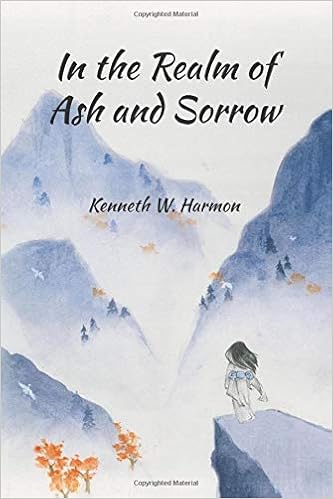
In the Realm of Ash and Sorrow was a unique historical fiction novel colored with themes of guilt, sorrow and suffering over all that had been lost. Although this was a very emotional novel, it wasn’t all negative emotions, it also had happiness, romance, and a (possible) love like no other, mixed in with some supernatural elements and fantastical hints of history. The story caught my attention in the first couple of pages, remaining consistently entertaining throughout with only rare moments that seemed to slow a bit due to necessary exposition. The detail throughout the book is absorbing and really pulls you into 1940’s Japan. When it came time for the atomic bomb to drop I could see the horror surrounding Micha as he searched for Kyomi, the burning bodies that he came across and the fear that he would never find her or Ai. I could visualize most every scene, which is something I truly appreciated in a novel that covered such a cataclysmic event that reshaped human history.
While Kyomi’s character was interesting I wanted to see more of her personality. Her character seemed monotone at first, but after awhile her character began to grow on me just as she developed in the novel. I liked Micah from the first page, I’m not sure if that’s because he was the first character introduced to me or because I could empathize with him, perhaps it’s because I felt bad for him after the plane crashed. I liked Ai’s character from the beginning as well, children are always fun characters and Ai was no exception. The three of them together made for a great read with interesting interactions and I liked some of the other spirits that they came across along their travels.
Something that made me enjoy the book even more was how the author used the actual terms used by the Japanese such as calling the military Kempeitai instead of using one of our military terms like Army, Navy, Coast Guard, etc. This happens frequently throughout the book which showed me that the author did thorough research for this book and it also helped me learn a few terms. This is an example of the authors dedication to historical detail in this book. Something that I praise the author for is the way that this novel helps you see different points of view from the American and Japanese sides in World War 2. It is also an exploration of Japanese culture at an interesting time in their history. It covers how the Japanese lived, their culture, their work, routines, the hardships they face and much more. I really loved having bits of history weaved into the pages and the way it gave me a new insight. History and fiction meld seamlessly in this novel to deliver a captivating story.
Pages: 344 | ASIN: B083Q4WRPD
Vexing Stages of Culture Shock

Michael Greco Author Interview
Plum Rains on Happy House follows an American who is trying to turn an Inn into a school but is thwarted by the house’s strange creatures. What was the inspiration behind this unique story?
I live in Japan, and it’s a place I know well. The book’s dedication probably says it all:
This book is for Japan. It’s the place I call home—though it may not want me to. For over 25 years I have grappled with the dos and don’t’s of my host country, destroying the language in conversation, giving up, resuming more study, eventually resigning myself to the boundless plateaus of almost-speech.
And Japan abides. Like a patient steward, it absorbs the frolics and the ribbing, while providing a solacing habitat in which to write and teach and parent and grow.
I came over to Japan in the 80’s and I’ve lived in some pretty seedy guesthouses—what we call gaijin houses. In creating the residents of Happy House, I just mingled the characteristics of a few of the unique people I’ve met over the decades in Tokyo and in Los Angeles. In some cases, I didn’t need to exaggerate at all.
On one level Plum Rains on Happy House is a detective story. A fellow named Harry Ballse invites the protagonist, nicknamed the Ichiban, to Japan. But the residents of Happy House all deny any knowledge of this mysterious Harry Ballse.
Some readers may pick up on the references to the 1973 film The Wicker Man, about a policeman who is lured to a Scottish island to investigate the report of a missing child. It’s a game of deception. The islanders are playing with him. The paganism and the sexual activity the sanctimonious policeman finds so objectionable are simply part of the selection process—to see if he possesses the characteristics to burn in their wicker effigy so that the village will have subsequent successful harvests.
In Plum Rains on Happy House, the Ichiban must undergo his own horrific sacrifice to appease the house. My novel is in many ways a tribute to that remarkable film, and it has the same foundational plot lines, but I’ve laid down a hearty layer of satire and lots of cross-cultural lunacy.
There are some weird and fascinating things happening in this story. Was this an easy outlet for your creativity or was there some effort put into creating these things?
Nothing is easy. If women will forgive me the metaphor, creating Plum Rains on Happy House was like giving birth—it hurt a lot. There were points when I considered giving up because it was just too hard. I’m not a funny person, but I have little trouble dreaming up wacky stories and characters. The residents of Happy House had to be distinctively quirky. I didn’t know how bawdy things were going to become, or how much depravity would creep its way into the story. But once I had the characters they took charge, and I relegated myself to being, more or less, their stenographer.
Dialog was also something I paid close attention to. Of course, sharp dialog is vital in any story, but for this kind of back-and-forth humor to succeed, I felt it really had to have zip. Just like a comedian practices his delivery line, the dialog exchanges had to have real punch. As with most writing, dialog should say a lot , with very little. The communication isn’t in the words being said but in the subtext. Good dialog says it without saying it. One quick example from Chapter One has the resident of Room 3 (nicknamed The Goat) explaining to the new resident about his missing foot:
“I saw you looking at the bottom of my leg.”
“Your foot?”
The Goat scowled. “Obviously, you can see that no longer exists.”
“It’s in Cambodia.”
The Goat went into a cross-eyed fluster. “What is?”
Sometimes readers need to work a bit to understand the exchange, and I think they appreciate that. Dialog is an organic process. It’s the way characters talk in my head, and I think I know how to write them because they are all a part of me. It all works toward satisfying the element of what a good scene often comes down to: one person trying to get something from another.
Mix that in with the baffling idiosyncrasies of Japan and its language, and the vexing stages of culture shock, which frame the Ichiban’s adventure in Happy House, and readers have a lot to juggle, especially those uninitiated to living in other countries. I’m hoping this confusion is a part of the magnetism of the story. On top of that, one should remember the old guesthouse is haunted:
“Happy House is an amoeba everlasting, a floating world—capturing and sealing the self-indulgence of the red-light districts, the bordellos and the fleeting, delightful vulgarity of ancient Japan, an eternal time capsule of the flamboyant and the boorish.”
What do you find is a surprising reaction people have when they read your book?
The book has received mixed reviews. Of the five books I have up on Amazon, Plum Rains on Happy House was the first to receive a customer review of one star—perhaps rightfully so: the reader was “disgusted” by some of the more explicit scenes, and I think that was my fault; the earlier cover gave no indication of the sexual content within, and this poor woman was clearly ambushed. With the one star, I know I’m finally an author, and wear it as a badge of honor.
There are, however, cultural elements in the story that some will not understand: the usage of the various slipper customs inside a house, the daily beating of the futon, the laundry poles, the shockingly steep stairwells, the neighborhood garbage trucks that play cute tunes to let you know they’re coming, the confusion between the colors of blue and green.
The dichotomy of substance versus form also plays an important part in underscoring the tension—in the way one swings a tennis racket, or walks in a swimming pool, or plays baseball, or eats particular dishes: What should predominate—what you are doing or how you are doing it?
On another level, the story examines language acquisition and the role of structure within the learning process. The residents all have their various opinions: As teachers, should English be taught through some kind of lock-step formula, or would one be better off approaching it in a more hands off manner, rather like painting? Everyone seems to have an opinion.
The idea of structure comes to the forefront again when discussing what one character, Sensei, calls the hidden structure of the house, which, like the neighborhood (or any cityscape in Japan) appears as an amorphous sprawl. But look underneath this sprawl and one sees the organism. Sensei says that the randomness, or chaos, embraces a flexible, orderly structure, and he likens the house to an amoeba that has the ability to alter its shape. Similarly, this amoeba can be seen as a microcosm of Japan as a whole.
What are you currently working on and when will it be available?
I’ve finished the first few drafts of a story about Special Needs teens who discover time travel. But the adult teachers at the school find out what’s going on and abuse this ability to travel back into time for their own selfish needs. It turns out the ones with the Special Needs are not the teenagers—who are all somewhere on the Autism spectrum—but the supposed grownups, and it’s up to the teens to save the day. It should be out in autumn.
Thanks for having me!
Author Links: GoodReads | Twitter | Facebook | Website
![Plum Rains on Happy House by [Greco, Michael]](https://images-na.ssl-images-amazon.com/images/I/51Q1wl7Un%2BL.jpg) In Japan, the little inn called Happy House welcomes its guests … unless it’s rainy season. When the “plum rains” arrive, trying times of volatility and decadence begin for everyone.
In Japan, the little inn called Happy House welcomes its guests … unless it’s rainy season. When the “plum rains” arrive, trying times of volatility and decadence begin for everyone.
The American in Room 1, however, is dead-set on turning the derelict Happy House into a burgeoning English school.
The house has other plans, and Room 1’s attempts are thwarted by a freakish creature that lives under the floorboards called “the Crat”.
Plum Rains on Happy House
![Plum Rains on Happy House by [Greco, Michael]](https://images-na.ssl-images-amazon.com/images/I/51Q1wl7Un%2BL._SY346_.jpg)

Lawrence Thornberry thinks he is ready for his year in Japan. However, nothing could have ever prepared him for the experience he is about to have. An experience he can never truly understand but astonishingly accepts. He discovers new elements everyday. Some of these strange things would deter anyone but not the Ichiban. A nickname he got because of the room he was assigned, room number one. This American English teacher teaches at the Slop Bucket. When he is not there he encounters strange things at the Happy House. Strange things that are brought on by the rain. Just a good old Japanese experience.
One of the strange but weirdly comfortable things is that this story is told by crow. A tale that slides seamlessly from first to third person and back. The crow has strange characteristics of its own. Note the overuse of the word strange. It is a recurring theme in Plum Rains on Happy House. The crow though not exactly living in Happy House is one of the many eclectic characters in the book. Michael Greco has done a good job of building otherworldly characters but still maintain a light touch. Another grumpy but delightfully humorous character is the Goat.
Oh the words. The author has a special gift. He weaves words into a beautifully crocheted poncho. A poncho that envelopes the reader in pure literary induced ecstasy. An example is that bit where Titty is introduced. It is so funny and accurate, I imagine. The reader cannot help but picture it. Speaking of which, the character development in this book is quite good. Not in a way that one can relate to them but in a way that makes the reader comfortable. The reader feels at home in a house that requires a symbiotic relationship between it and the resident. It is uncanny how that can be possible.
It is truly wonderful that despite the Ichiban noticing some peculiarity as he was trekking up to the house. He kept going. He continued to see the crooked house but it was like he saw something completely different. Like all the strange things were supposed to be part of the experience. It is good to take things in stride like that.
There are two issues with this book. While the language is well utilized, it still requires a bit of polishing. The plot is unique, but the story is confusing at times. Bits that arise abruptly and disrupt the flow of everything. Some people may like this as it brings a little unpredictability to the story.
This is an entertaining book with interesting characters and an imaginative creative plot. All of that and a whole lot of quirk.
Pages: 248 | ASIN: B07DWQ3R68
Kumite For Love
![Kumite For Love by [Malcolm, Judy]](https://images-na.ssl-images-amazon.com/images/I/51Ksm8%2BMYhL.jpg)
Kumite for Love is a compelling story about Aiyana Amari. A Japanese-American that learned martial arts from her father before he died in a tragic accident. Aiyana is obsessed with winning an international Kumite, a type of Japanese martial arts, tournament in Japan to save their families gym. Once she arrives in Japan, she encounters genuine artifacts in the back of a souvenir shop. She leaves the shop with a beautiful comb at the insistence of the shop owner, and after placing it in her hair, finds herself transported to 1850’s Japan. Aiyana meets an intriguing ship Captain, has a hand in a few historical events, and struggles to find her way back to the present, while wondering if she’d rather stay in the past.
Kumite for Love by Judy Malcom is a very well written romance novel with a lot of depth and historical intrigue. The book had a background setting that is more interesting than you’ll find in a lot of romance novels. It was really interesting to read about Japanese culture and historical events and to journey with Aiyana as she is mistaken and subsequently becomes a geisha in the 1850’s. Captain Blackburn is an American ship captain posing under a Dutch flag in 1853 Japan where American traders are not welcome. He seeks out a geisha at a local establishment and there he finds Aiyana. The romance and building of the two main characters is done really well and I was rooting for, and very attached to, their love by the end of the book. Not to mention, the love scenes are hot.
The beginning of the book starts off with Aiyana and her friend Peter at the gym practicing karate. There are only a few pages of discussion about Aiyana’s present-day life before she flies to Japan and ends up thrust back in time. I wish there had been a little more build up and description of her current life and background before she flies to Japan and jumps into the story line from the past. I think it would have helped tie the book together better and would help you become more invested in Aiyana’s struggle when she is stuck in the past with no way out.
Throughout the book, Aiyana struggles with indecision as she becomes more entrenched in the world of Edo (present-day Tokyo) and Captain Blackburn. She wants to get back home, so she can compete in the Kumite tournament and win the money her family needs to save their gym. She also worries about never seeing her mother again, whom she had a fight with and left on a sour note before she flew to Japan. At the same time, she is enjoying this new life, the time she gets with Captain Blackburn, and sharing her knowledge of history as its occurring. She doesn’t know what the right answer is or what to do. Should she keep fighting to return to the present? Or embrace this new life in the past?
Pages: 179 | ASIN: B073YKFCZV


 LITERARY TITAN