Author Archives: Literary_Titan
It’s NOT Just About Money

The Leader Connection – The Foundation dives deep into the human side of leadership, covering topics like empathy, communication, adaptability, and the nuances of eight distinct leadership styles, as well as providing actionable strategies for leaders. Why was this an important book for you to write?
Observing the current discussions and insights about labor, staffing shortages, and turnover, I felt compelled to share my journey and passion with a broader audience.
What is a common misconception you feel people have about leadership and employee connection?
It’s only about the money!
What were some ideas that were important for you to share in this book?
1. Understand Your Leadership Style
2. The Importance of Your Role in Building Connections and Enhancing Culture
What is one thing that you hope readers take away from The Leader Connection – The Foundation?
The book serves as a crucial resource for both novice and seasoned leaders, offering valuable insights to help achieve success.
Author Links: Facebook | Website
“The Line of Horror”

A Dangerous Friendship follows a woman navigating heartbreak, loneliness, and the lure of risk, who, after a failed marriage, is drawn to a magnetic yet volatile woman whose energy feels both liberating and destructive. What was the inspiration for the setup of your story?
Any kind of loss that forces a woman to question her future and identity sends me into story-telling mode. Especially against the backdrop of New York City in the 1980s, where there was an electric vibe and the possibility that anything could happen if you were open to it. I lived in the City during that time and it was magical. Wealth, street art, theater, fantasies of changing your life in a New York minute—it was heaven.
What was the inspiration for the relationship that develops between Tina and Spike?
Every female friendship I’ve had or witnessed since high school. We know the archetypes of the popular girls, the mean girls. What about the dangerous ones? What about the women who promise to give us power. Who tell us stories that we want to believe are true because are own lives seem so meh. Also, in the 1980’s, there was a second wave of feminism with women fighting for equal rights and questioning cultural and social norms. That history fans the flames of the relationship between Tina and Spike and their confusion: wanting to be powerful in their right but also looking to be elevated to a different reality by wealthy men.
What were some themes that were important for you to explore in this book?
Reinvention after loss. I like to explore the ways women navigate identity and self-worth when their lives take an unexpected turn. Also, truth vs. fiction. I’m fascinated by the stories we tell ourselves and each other to survive. Finally, the thin line between attraction and danger. Tina calls this “the line of horror,” which she refuses to cross at first, then leaps over, believing that Spike, like a cult leader, will change her world.
What is the next book that you are working on, and when can your fans expect it to be out?
My next novel is The Enlightenment of Henry Pike. It leans even further into dark humor than A Dangerous Friendship. It follows a slightly unhinged philanthropist who’s being swindled out of his fortune by those closest to him. At its core, it’s also about loss and reinvention—and our endless obsession with wealth, power, and the lives we think we deserve. Readers can expect it in the next two years.
Author Links: GoodReads | Instagram | Facebook | Website
In 1980s New York City, aspiring writers Tina and Spike bond in a complex, all-consuming friendship that will change their lives forever.
Desperate to redefine herself after a failed marriage, twenty-nine-year-old Tina embarks on a thrill-seeking journey to feel alive again. When she meets thirty-five-year-old Spike, a beautiful, seductive, seemingly invulnerable woman, she becomes enthralled by the older woman’s stories of NYC power brokers, sex, wealthy men, and her past. Tina latches on to Spike as someone who can save her from mediocrity and show her how to be the kind of woman who can have power over men—both in romance and in life.
Chasing adventure and the writing life, Tina and Spike rent a cabin together for the summer in the rural backwoods. There, they go on a wild, manic, darkly humorous journey involving dive bars, drugs, men, and all-night dancing, becoming increasingly psychologically entangled in each other’s lives along the way. But eventually Tina realizes just how dangerous Spike is, and is forced to act to save herself.
Filled with New York wit and fast-paced dialogue, this is a story of loss, betrayal, survival, and blurring the line between attraction and peril.
Honoring the Clubmobile Women

Forged in Fire tells the true story about the women who joined the American Red Cross’s Clubmobile program during World War II, sharing what life was like for the courageous young women who served in war zones to bring some humanity to the soldiers. Why was this an important book for you to write?
Because my mother was in the clubmobile program and the program served as the perfect way for her to get past a personal tragedy, and assist American GIs directly. Her World War II experiences helped shape the person she was to become.
How much research did you undertake for this book, and how much time did it take to put it all together?
My research for this book stretched over four decades, including extensive interviews, and the actual writing of the book took seven years.
What were some ideas that were important for you to share in this book?
I wanted to underscore and highlight how unique and brave the women of the Red Cross clubmobile program were, and the substantial contribution they made to the war effort. But I didn’t want to sugarcoat the story or ignore the real issues they all faced with sexism, sexual assault, racism, and people undervaluing their efforts.
What is one thing that you hope readers take away from Forged in Fire?
Although the sexism of the 1940s severely limited what American women were allowed to contribute to the war effort, millions of women found a way to get involved at home and abroad. The women of the clubmobile program left home and family for years at a time and risked their lives simply to bring a little taste of home to millions of GIs and to help their morale. In that effort they were highly successful. And it should not be forgotten that at least eleven clubmobile volunteers were killed and never returned home.
Author Website
They weren’t soldiers, but they served in war zones. They didn’t carry weapons, but they fought every day—to lift morale, restore humanity, and bring a taste of home to battle-weary troops.
Forged in Fire tells the true story of the Red Cross Clubmobile Department—an innovative wartime effort that deployed courageous American women on a remarkable mission across Europe during WWII. Driving 2½-ton trucks loaded with coffee and doughnuts, these women braved bombings, buzz bombs, and battlefield trauma to serve those risking their lives.
Through the eyes of Blanche Barnes, a shy Midwestern woman transformed by tragedy and service, we follow the clubmobilers from England’s foggy airfields to the ruined cities of France and Germany. They flew in B-17s, danced with spies, and crossed paths with generals and journalists—showing resilience and humor in the face of war.
More than just a support operation, the clubmobiles became a lifeline to thousands of soldiers—and a proving ground for a generation of strong, capable women.
For readers of World War II history and biographies, this is an unforgettable, true account of grit, compassion, and an untold story on the front lines of World War II.
An Indoctrinated Horror Enthusiast
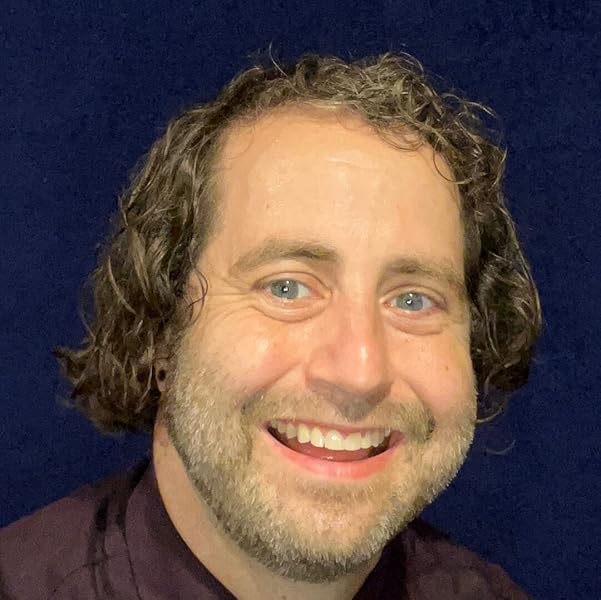
Witches and Pumpkins, Fur and Fangs is a collection of twenty short stories surrounding Halloween, bringing together tales of monsters, goblins, ghosts, witches, and everything scary. What was the inspiration for creating this collection of stories?
I got the idea for this collection after I saw the movie Trick ‘r Treat. I first watched that movie in 2009, which also happened to be the year I started writing for the first time. I remember thinking how amazing it was that the movie (almost) had a little bit of everything in it, and how it all took place in the same town on the same night. I thought to myself how cool it would be if a book or movie literally had EVERYTHING in it. Something like that movie, but on a grander scale. A year later, I wrote Jack of the Lantern. After that, I kept adding stories, always making sure they stood alone on their own, but secretly including Easter eggs that connected them to the others. I took the secondary characters from previous stories and threw them into the spotlight for their own stories. I made sure each one either addressed a different type of monster, or revolved around a different Halloween tradition or legend. Almost every character in the book appears multiple times. ‘Science Make Me Mad’ and ‘Can You See Me’ feature the same mad scientist antagonist. The librarian from ‘Hob Gob’ is a main character in ‘Incorporeal Beings’. Things like that. I encourage anybody reading to try to pay attention to the characters and all the connections, because there’s a lot of them.
What intrigues you about the horror and paranormal genres that led you to write this book?
I became an indoctrinated horror enthusiast since I was eleven. I was a child of the 90’s and grew up on late night television specials like Joe Bob Brigg’s Monstervision every Friday and Saturday night. I would catch Sunday afternoon showings of American Werewolf in London and Children of the Corn, complete with commercial breaks, just to find out later that the only parts they really cut out when editing for television was the nudity and cursing. All the scary parts were mostly still intact. I became fascinated with all things scary, and as a teenager I began reading Stephen King and Dean Koontz. I write other stories in the realm of science fiction or fantasy, but I always end up leaning towards the darker sides of things.
Do you have a favorite story in this collection, and if so, what makes it so appealing to you?
I have a couple. ‘Jack of the Lantern’ has always held a special place in my heart. Not only was it my first to write, it was also my first short story to ever get published. When I was reading these stories again for this collection, I stopped at ‘Incorporeal Beings’. I remember telling myself, “Wow I actually wrote this. This is pretty damn good.” I like a good ghost story, especially when it becomes clear that the ghosts are a real threat and can actually kill you. That story was a lot of fun to write.
What is the next book that you are working on, and when can your fans expect it to be out?
I am actively working on a novel entitled I Don’t Want to be a Monster. Imagine if Dexter was the Wolfman; that’s the basic concept. It’s about a werewolf who targets serial killers, rapists, child molesters, etc. I currently have several interested parties requesting the manuscript, and I’ve been given an early December deadline to complete (it’s almost done!). Hopefully you’ll be seeing that one soon.
Author Links: Facebook | Instagram | TikTok | Threads | YouTube
Will Humans Become Obsolete?

100 Years to Extinction follows two sisters and their cousin who are caught in a world of chaos where pandemics, gun violence, climate change, and political division all overlap, and they make a pact to do something to save humanity’s future.
I found the science in the novel to be well-developed and engaging. What kind of research did you conduct to ensure you got it right?
My research, combined my knowledge, books on space exploration and AI, help from a fellow physicist on speed of light space travel, advice from a physician on medical issues, use of Google search for articles and the Google AI function, and advice from a NASA expert on the magnetic field for Mars.
What were some themes that were important for you to explore in this book?
The main theme is a world threatened by the Tyranny of Technology and dysfunctional politics. My three young Gen Z protagonists, Liz, Aster, and Milo, want a better world for everyone. The subthemes are the threats from global warming, nuclear security, unchecked AI, and misused genetic engineering. The cover image is a future that my protagonists fantasize: Genetic engineering creates a super-humanoid species that wipes out humans only to be eliminated by robots. All with the background of melting glaciers.
I find a problem in well-written stories, in that I always want there to be another book to keep the story going. Is there a second book planned?
Yes. My three protagonists, a little older now, are living in what is called the AI Singularity, predicted to occur in 2045. It is at this point that Artificial Intelligence becomes as intelligent and as powerful as humans. What will occur then? Will humans become obsolete? My three protagonists use their skills, intelligence and experience to ensure that humans and AI live together in harmony for mutual benefit.
My new novel, 12 YEARS TO AI SINGULARITY,follows Liz, Aster and Milo as they cope with the new reality. It is coming out in the spring of 2026.
Author Links: X | Facebook | Website
When EMT Liz Arvad is shot while saving a life, her recovery sparks a deeper awakening. Maybe the world isn’t just chaotic, it’s unraveling. Alongside her genius sister, Aster, and politically charged cousin, Milo, Liz makes a vow—do something, anything, to help save humanity. It starts with a promise in a sunlit room, and becomes a mission that could change everything.
In 100 Years to Extinction, physicist and award-winning STEM author Peter Solomon, Ph.D., blends heart-pounding fiction with scientific foresight. Inspired by Hawking’s dire warning that humans may face extinction by 2117, this gripping novel explores the runaway threats we can no longer ignore: climate collapse, pandemics, war, gene editing, AI, disinformation, and more.
But this story isn’t just about what’s going wrong—it’s about what we can still do. Backed by decades of experience founding clean-tech companies, leading multimillion-dollar government research, and writing 300+ scientific papers, Solomon brings unmatched clarity and urgency to the question: Can we still save ourselves?
With characters who feel heartbreakingly real and science that hits close to home, 100 Years to Extinction is both a wake-up call and a rallying cry. It dares readers to imagine a better future … and to fight for it.
Will you join the Earthling Tribe?
Pick up your copy today—and take the first step toward making Earth great again… before it’s too late.
About the Author: Blending heart-pounding fiction with clear, accessible science, physicist and award-winning STEM author Peter Solomon, PhD, explores the runaway threats we can no longer ignore—climate collapse, pandemics, nuclear war, genetic engineering, artificial intelligence, disinformation, and more. Solomon offers unmatched clarity on the question: Can we still save ourselves, and how might we do it?
Understanding and Solidarity

Well, Mama, This is It (it’s Now Or Never) is part confession, part storytelling, and part letter-writing, all stitched together with raw honesty and a strong emotional pulse with reflections on love, faith, and the messy business of being human. Why was this an important book for you to write?
This book was important for me to write because it allowed me to explore different characters and express what I had imagined. It was a way for me to connect with readers who may be going through similar struggles and offer them a sense of understanding and solidarity. This book is a testament to the power of vulnerability and the beauty of embracing our imperfections.
What were some ideas that were important for you to share in this book?
There were key ideas that I found important to share. Some of these ideas include the importance of self-love, unapologetically being yourself, and the value of perseverance in the face of challenges.
How has writing this book changed you as a writer, or what did you learn about yourself through writing it?
Writing this book has changed me as a writer, and it’s all thanks to amazing readers like yourself and everyone who has been a part of this journey. I have learned that I am capable of overcoming challenges and self-doubt to produce a work that I am truly proud of. This experience has not only improved my writing skills but also boosted my confidence in my abilities as a storyteller. Writing this book has shown me that with dedication and passion, I can achieve my writing goals and continue to grow as an author. Once again, thanks to everyone!
What do you hope is one thing readers take away from Well, Mama, This is It (it’s Now Or Never)?
I hope that readers take away a sense of empowerment and inspiration.
Author Links: GoodReads | Snapchat
We don’t have to fight
We do not have to cry for the rest of our lives
Cause Boys
Girls
And Everyone we know
Seems to drift away just a little bit
That’s life”
Step into a world where love knows no bounds and equality reigns supreme. In this gripping tale, a group of men and women defy the odds and fight for their right to be themselves. As they navigate the twists and turns of their lives, they discover that the greatest strength comes from within.
Meanwhile, teenagers grapple with their own struggles, trying to find their place in a world that often seems to be against them. But as the characters’ stories intertwine, they learn the power of love, the importance of equality, and the beauty of being true to oneself. This is a story that will inspire young women and men in our community to embrace their uniqueness and strive for greatness. So come along on this unforgettable journey of self-discovery and empowerment, and discover the power of love and equality in a world that often seems to be lacking in both.
Manifesting the Impossible
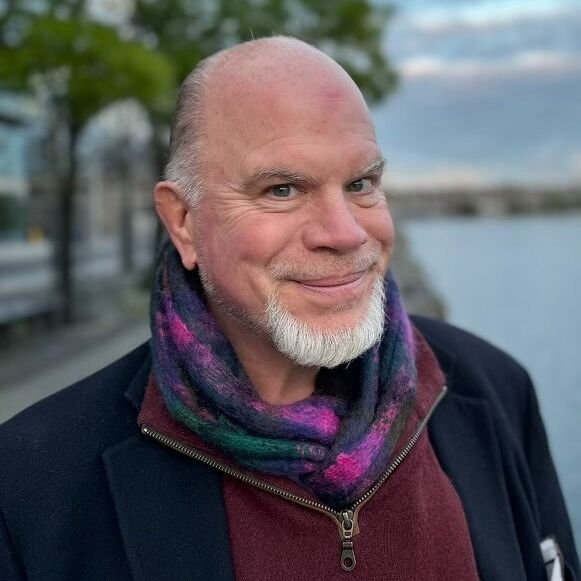
In The Dressing Drink, you share both the memories and challenges of growing up with a mother born of high society and an absent father. Why was this an important book for you to write?
My mother passed away when I was 11, and I met my father at 14. He died when I was 15. Because I never really knew my parents, I felt it was important to explore their scrapbook, memorabilia, and the stories of personalities from show business and friends. This process was essential for me to create a mythology around them and to gain a better understanding of who they were for my mental health, especially at the age of 22.
I appreciated the candid nature with which you told your story. What was the hardest thing for you to write about?
The most challenging perspective I faced was that of a lost child. I lived a wild life, mostly in boarding schools. It never felt like I was lost; I simply moved from one situation to another, either happy or high. It wasn’t until I entered rehab that I had a conversation with my inner child, who looked up at me and said, “You tried to kill me.”
Did you learn anything about yourself while planning and writing this book?
Everything I have done in my life feels like “manifesting the impossible.” Even the journey of writing and compiling this book seemed like an unrealistic goal from the outside. Therefore, it’s a significant accomplishment to document my mother’s life, my father’s life, my family’s life, and parts of my own life. The five books that emerged from this effort are just a small glimpse into the larger story of my life.
What is one thing you hope readers take away from your experiences?
Certainly, the concept of being a survivor is about transcending survival to reach recovery. If we are honest, we are all in the process of recovery, whether we acknowledge it or not. I have been sober for 26 years and consider that borrowed time. Writing the book at 22 and publishing it at 68 is a lifelong compilation of my experiences.
Author Links: GoodReads | Facebook | Website
From the grand estates of old money to the memoir, which spans decades and explores themes of money, power, alcohol, deceit, death, war, and murder, Thomas King Flagg navigates a complex labyrinth while pulling up the roots of his family tree with all its glory and devastation.
Thomas King Flagg is the great-grandson of David Hazlitt King Jr., renowned for his significant contributions to the assembly of the Statue of Liberty. Flagg’s mother was a debutante and a radio personality who graced the cover of Cosmopolitan Magazine. At the same time, his father was a dancer and comedian who starred in several theatrical productions and some movies. He also starred on Broadway with Ethel Merman in Hello Dolly. Unfortunately, Thomas did not reconnect with his father until shortly before his death, missing out on a connection that could have profoundly influenced his life.
Once you begin reading The Dressing Drink, you won’t be able to stop until you’ve savored every last drop!
Victim and Villain
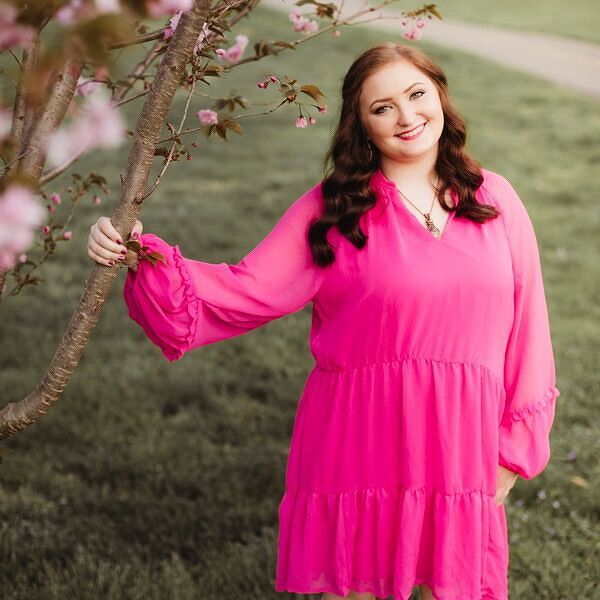
Raven follows a deeply flawed woman whose love affair leads her down a road of dangerous secrets, obsession, and self-destruction. Where did the idea for this novella come from?
Raven is one of, if not the most, intense books I’ve ever written. Delilah was first introduced in EverGreen, the first book in the EverGreen Trilogy, years ago. At that point, she was kind of a classic mean girl character. But even then, I knew that she had a troubled background. Raven is a companion novella that gives the reader some insight as to what was happening to Delilah before the events of Fallen Snow, the last book in the trilogy. It sounds a bit cliché, but sometimes my characters play a part in writing their own stories. Delilah knew what her backstory was, and she led me down the path of writing Raven.
I always take a lot of inspiration from my personal life. Raven is no exception. Abuse and sexual violence are topics that are very close to my heart. Unlike in Fallen Snow, I wanted Raven to feature an imperfect victim that was also a villain. However, I wanted to make it clear to the reader that Delilah’s actions and the way she treated others do not justify or excuse what happened to her. As the saying goes, hurt people hurt people. Like I said, I’m not necessarily trying to make the reader feel sympathy for Delilah or make them view her as less evil. At the same time, I do want to reflect that victims of abuse and sexual violence aren’t always (or even usually) perfect, and that’s completely normal. We can acknowledge that what happens to Delilah in Raven is a tragedy without revoking her status as an antagonist in the EverGreen Trilogy.
Delilah is an incredibly well-crafted character. What was your inspiration for her traits and dialogue?
I am extremely proud of being able to create a character that is as complex as Delilah. The more I wrote and planned the storyline, the more fleshed out and fascinating her character became. As I said before, she started out as your typical high school bully that took things way too far. But as I kept writing, I continued to follow her journey and realized where that ultimately led her. In Raven, we see Delilah at the lowest points in her life. Throughout the story, she thinks that her choices are acts of self-preservation, but they’re actually the opposite. She’s typically a very calculated individual, but her obsession with Silas (which I will make clear is an obsession, not real love) completely throws her off. In Silas, she’s met her match in terms of ability to manipulate. The two of them being in a relationship was never going to work, no matter how hard they tried. In a relationship, there has to be concern and respect for the other person. Neither of them had that. Her traits are those I imagine a person diagnosed with an extreme case of psychopathy, or antisocial personality disorder, would exhibit. All of her dialogue stems from that. Similarly, Silas is a malignant narcissist. Neither of them should be in a relationship, and certainly not with each other.
What do you find to be the most challenging aspect of writing a trilogy? What is the most rewarding?
The most challenging part of writing a trilogy is remembering little details. This can be something as simple as a character’s eye color, etc. The most rewarding is being able to watch them grow. I love seeing my characters transform into what is typically a better version of themselves. Obviously, that wasn’t the case for Silas or Delilah.
Can we look forward to more work from you soon? What are you currently working on?
I recently completed my first adult romance, titled Crazy For You. It’s a clean billionaire romance with an antihero MMC (main male character) and a sweet female protagonist with a heart of gold. They are actually one of my favorite couples I’ve ever written. I’ve never encountered a clean billionaire romance before, so when the story came to me, I decided it was definitely worth writing. I’m currently contemplating a sequel focusing on some of the side characters from Crazy For You and getting an idea of what that might look like. It’s definitely something I see myself writing in the future, but no promises.
Author Links: GoodReads | Facebook | Website
Delilah Banks was never the type of girl to let herself be manipulated by a man. But when she becomes involved with a tempting stranger, Silas, everything changes. Between the events of Moonlit Skies and Fallen Snow, Delilah discovers that no one is above having their heart broken. After all, we are each the hero in our own story.



 LITERARY TITAN